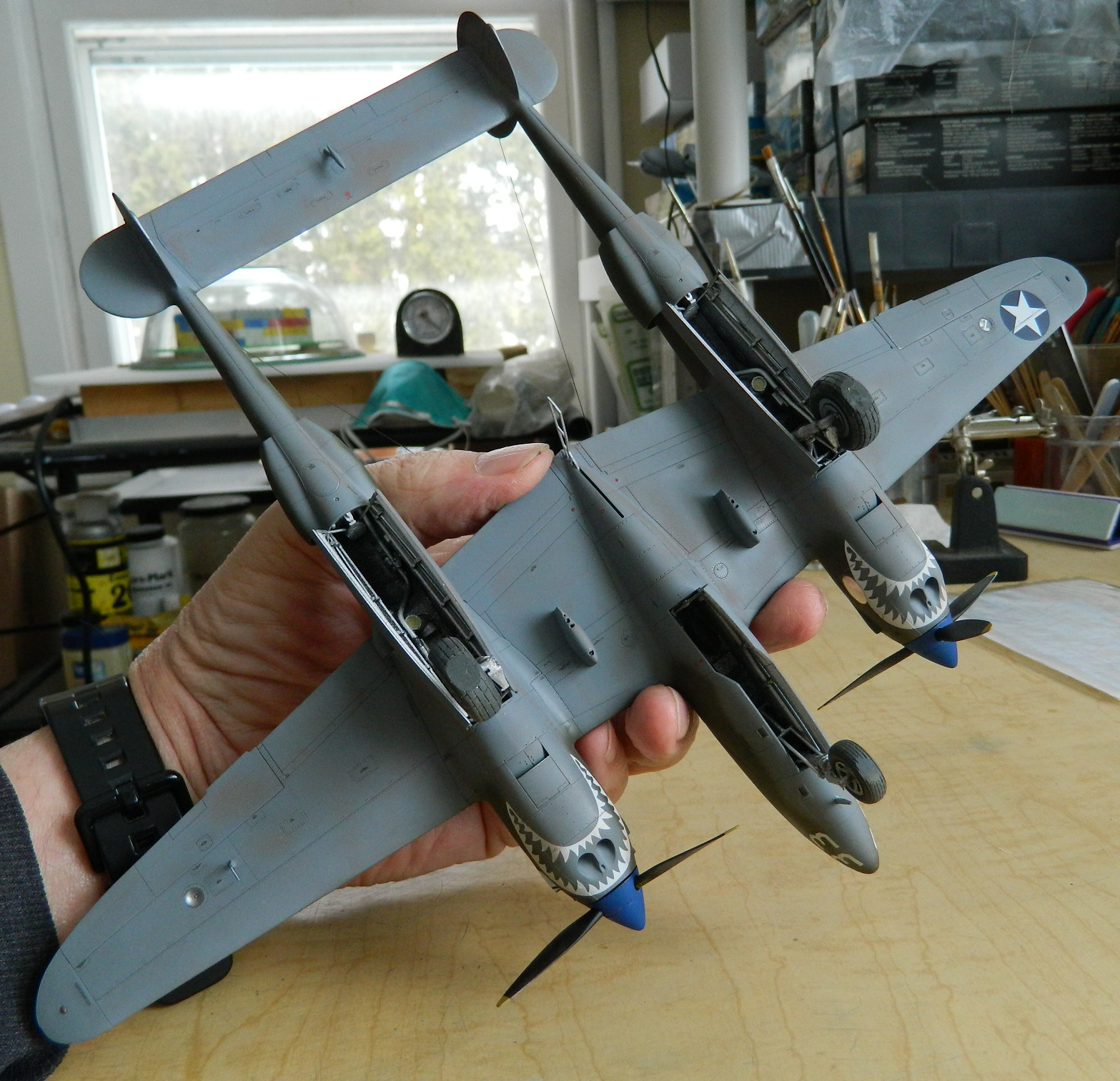
With most of the assembly done, the painting starts (generally) with light colored paint first and working darker. The underside was painted with Tamiya XF-25 Light Sea Grey and 25% Tamiya XF-2 Flat White for scale color correction. The top was done with Tamiya XF-62 Olive Drab, also with 25% Tamiya XF-2 Flat White for scale color correction. The main landing gear doors were just dry-fit in place so that I could mask the landing gear bays:


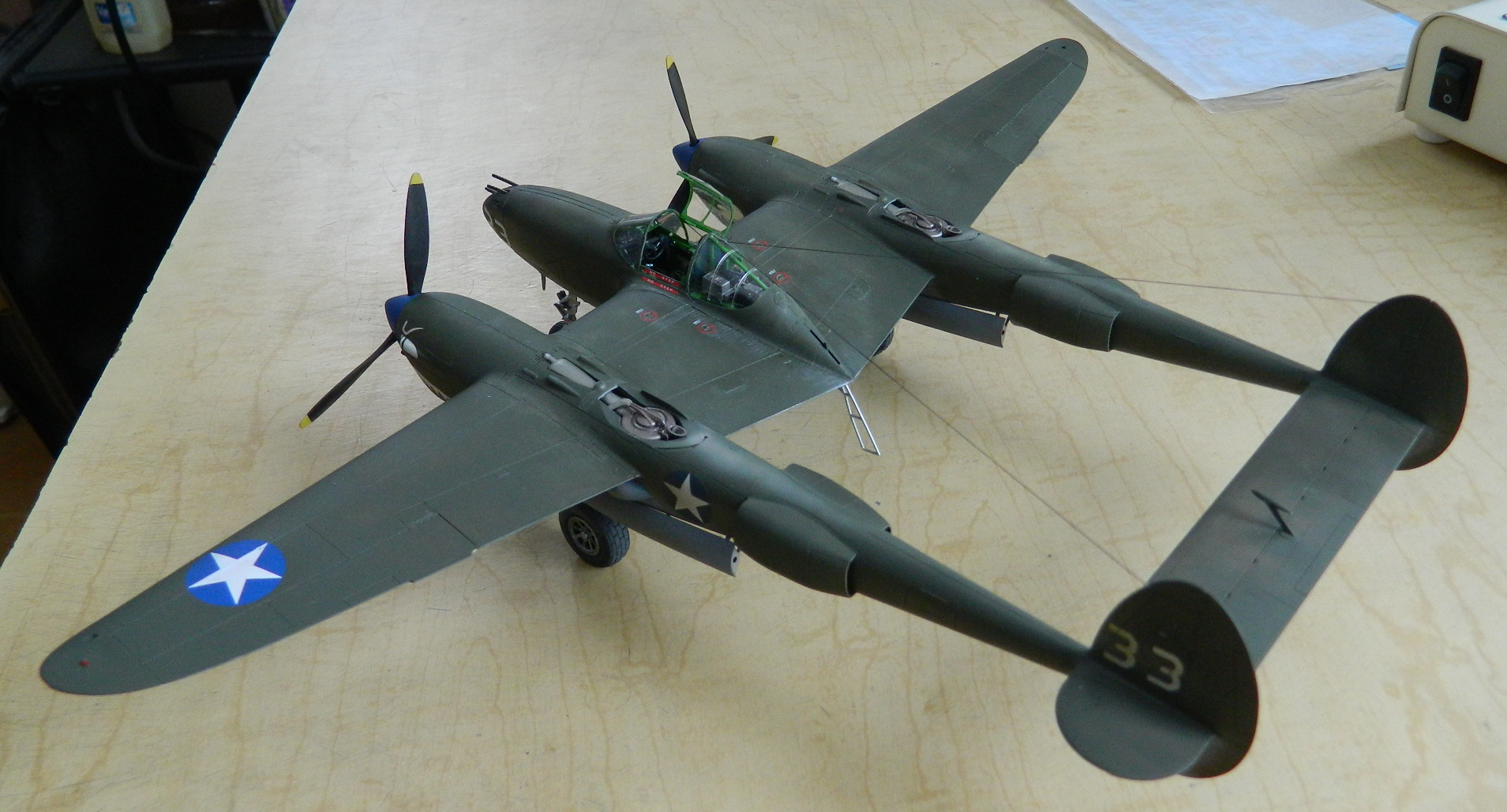
This particular aircraft, “White 33,” on December 31, 1942 collided with a Ki-43 Oscar which damaged the right wing tip (tore it mostly off) and right aileron. Here’s where imagination kicks in… White 33 was stationed at the 14 Mile Drome located at Papua, New Guinea. That’s a really long supply chain from Lockheed’s plant in California to get spare parts, things like wing tips and ailerons. However, being at war, some aircraft, though they made it back to base, had been damaged enough where they ended up being worth more as parts (White 33’s ultimate wartime fate). So my imagination decided to model this aircraft after repairs were done using parts salvaged from the boneyard. To indicate that, the right wingtip and aileron are painted slightly different shades than the rest of the aircraft.
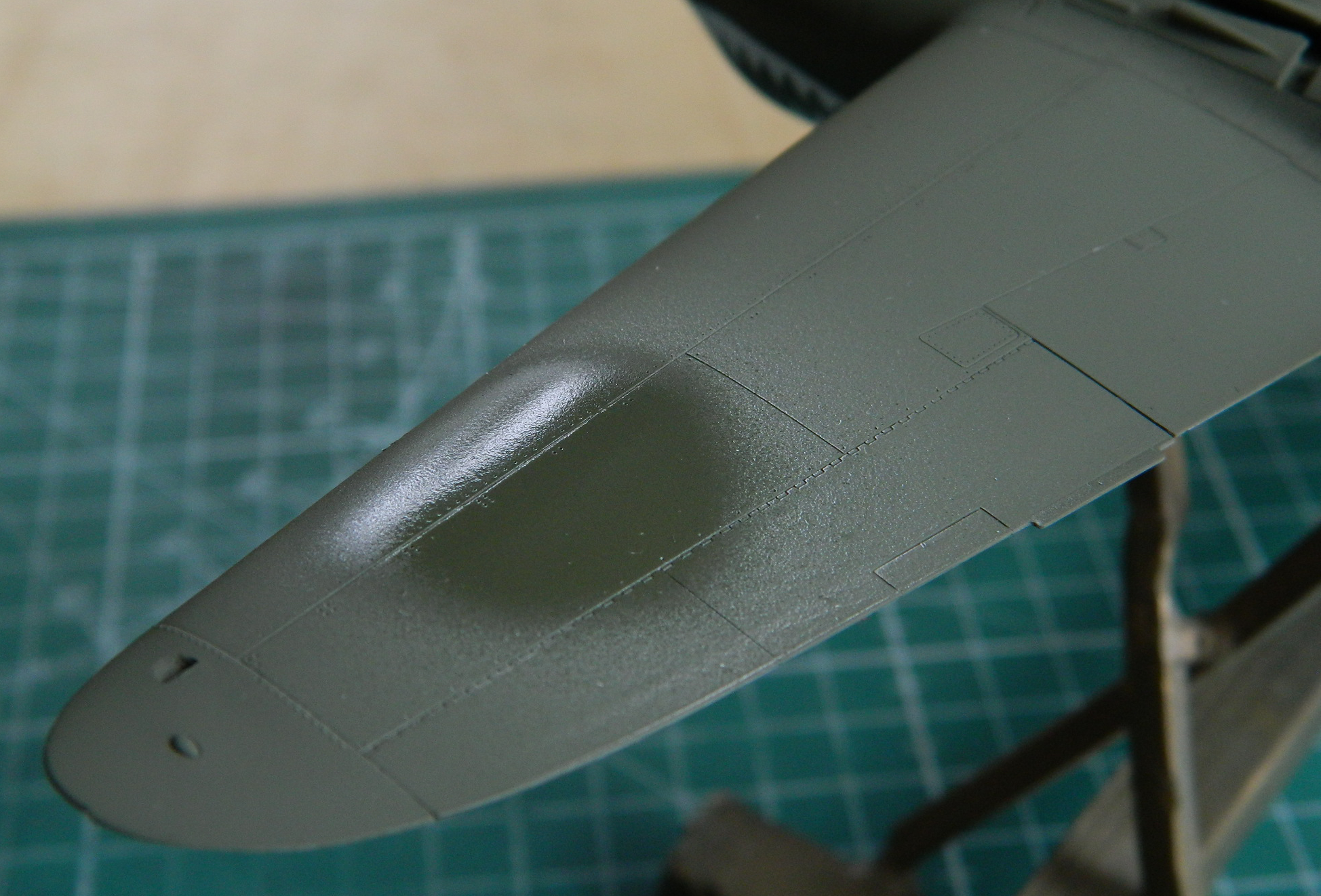
My first attempt was just wrong:
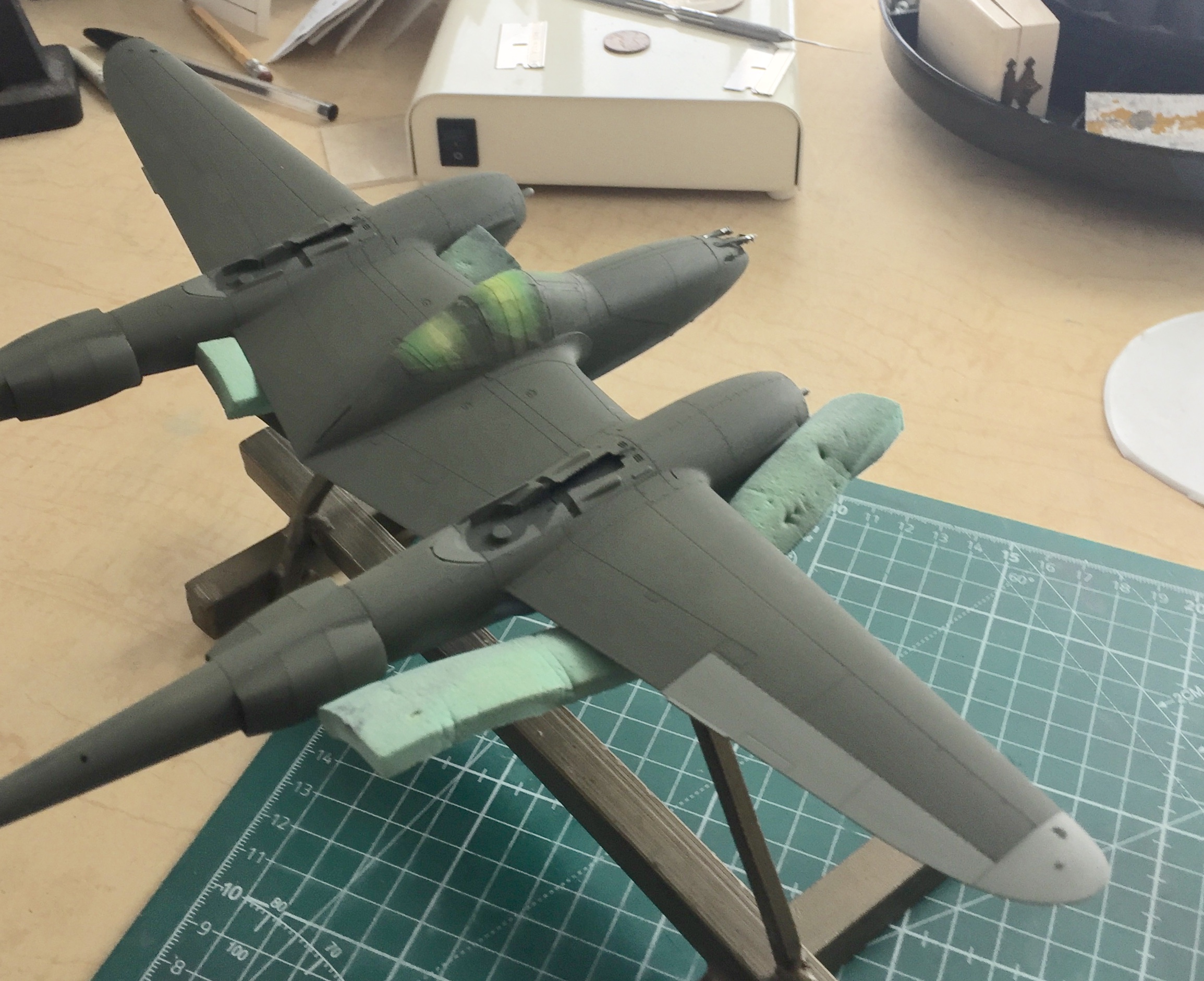
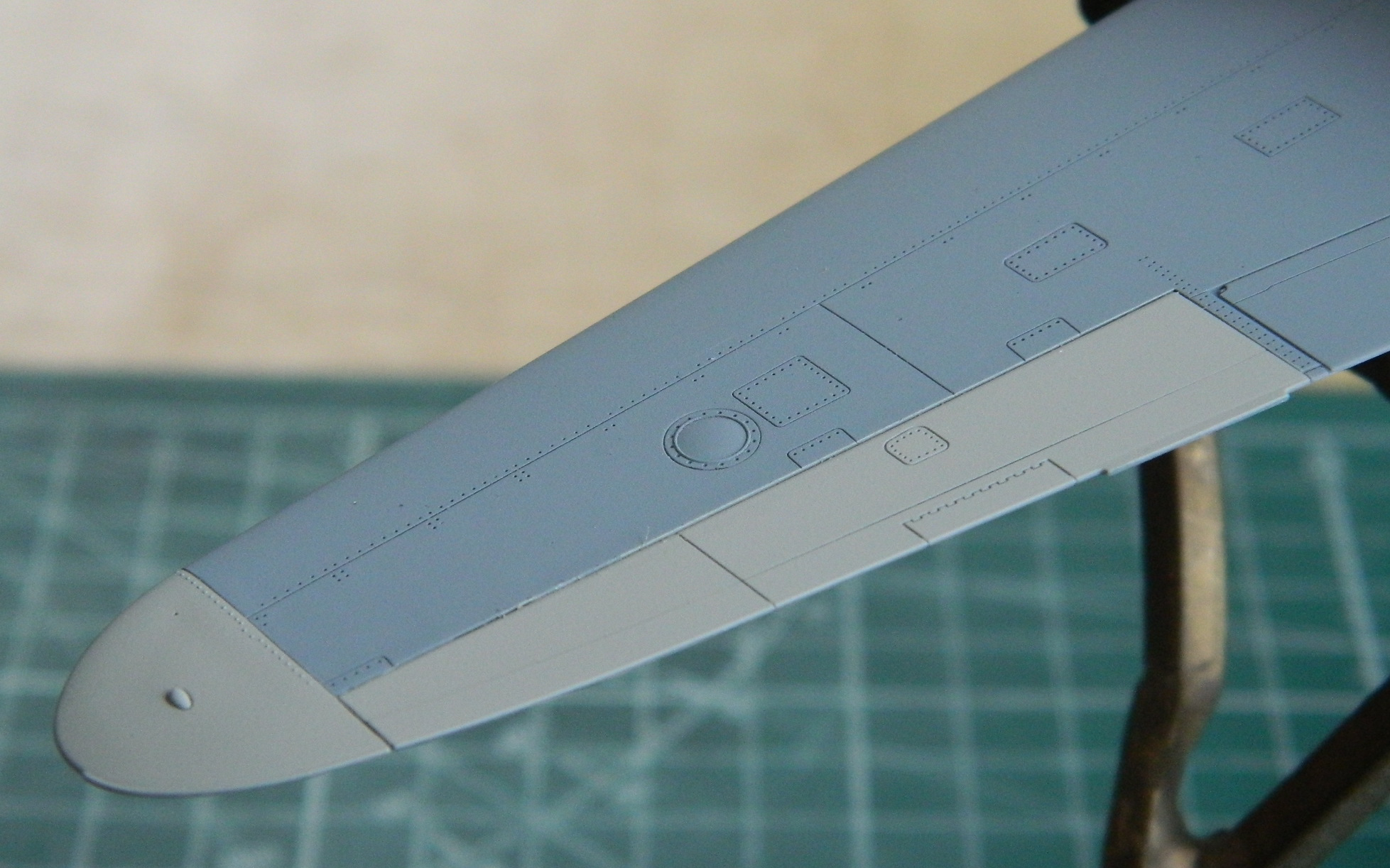
Glaringly wrong. My second attempt was a little less obvious (the splotches are where clear gloss and decals were done):
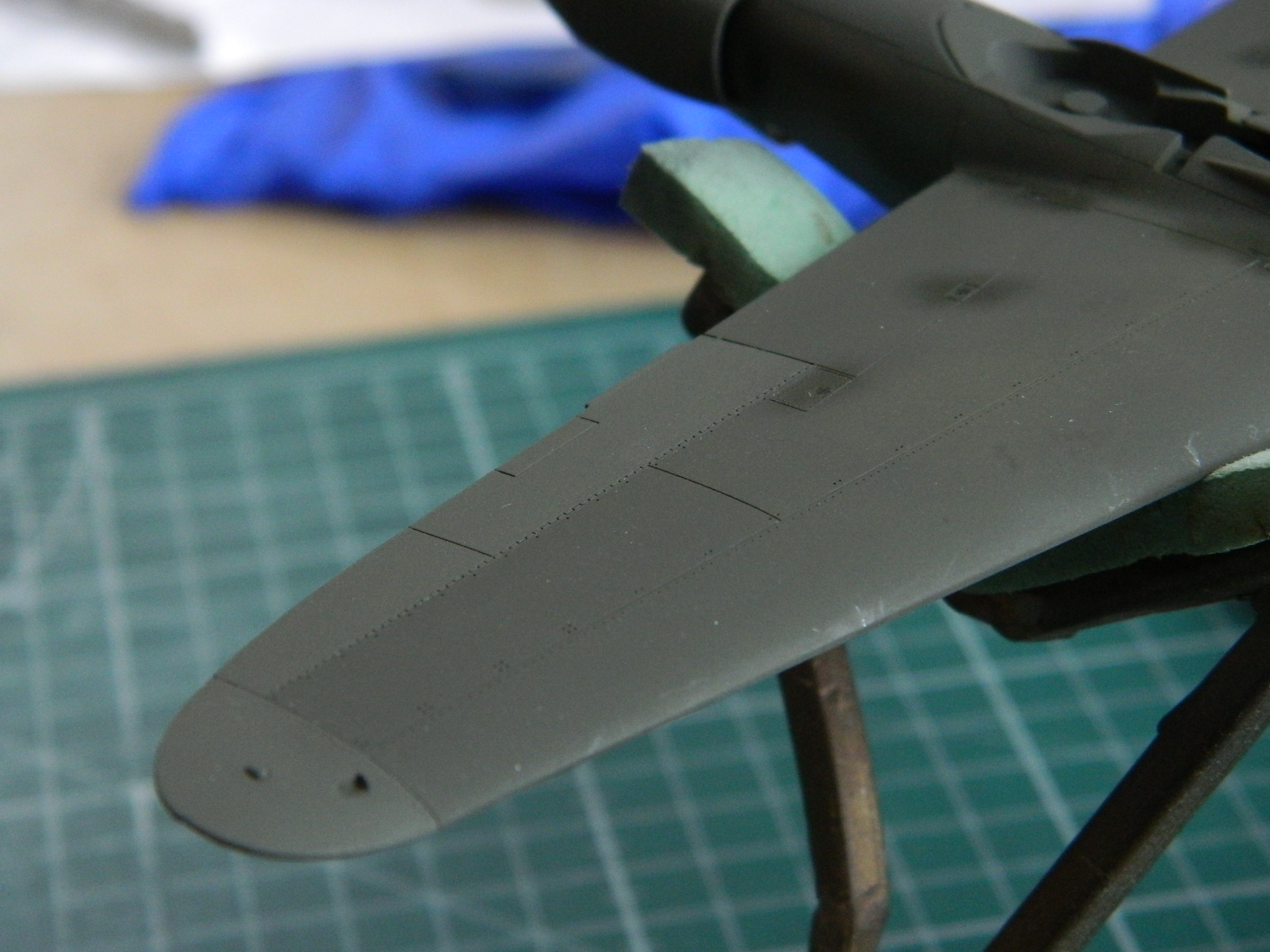
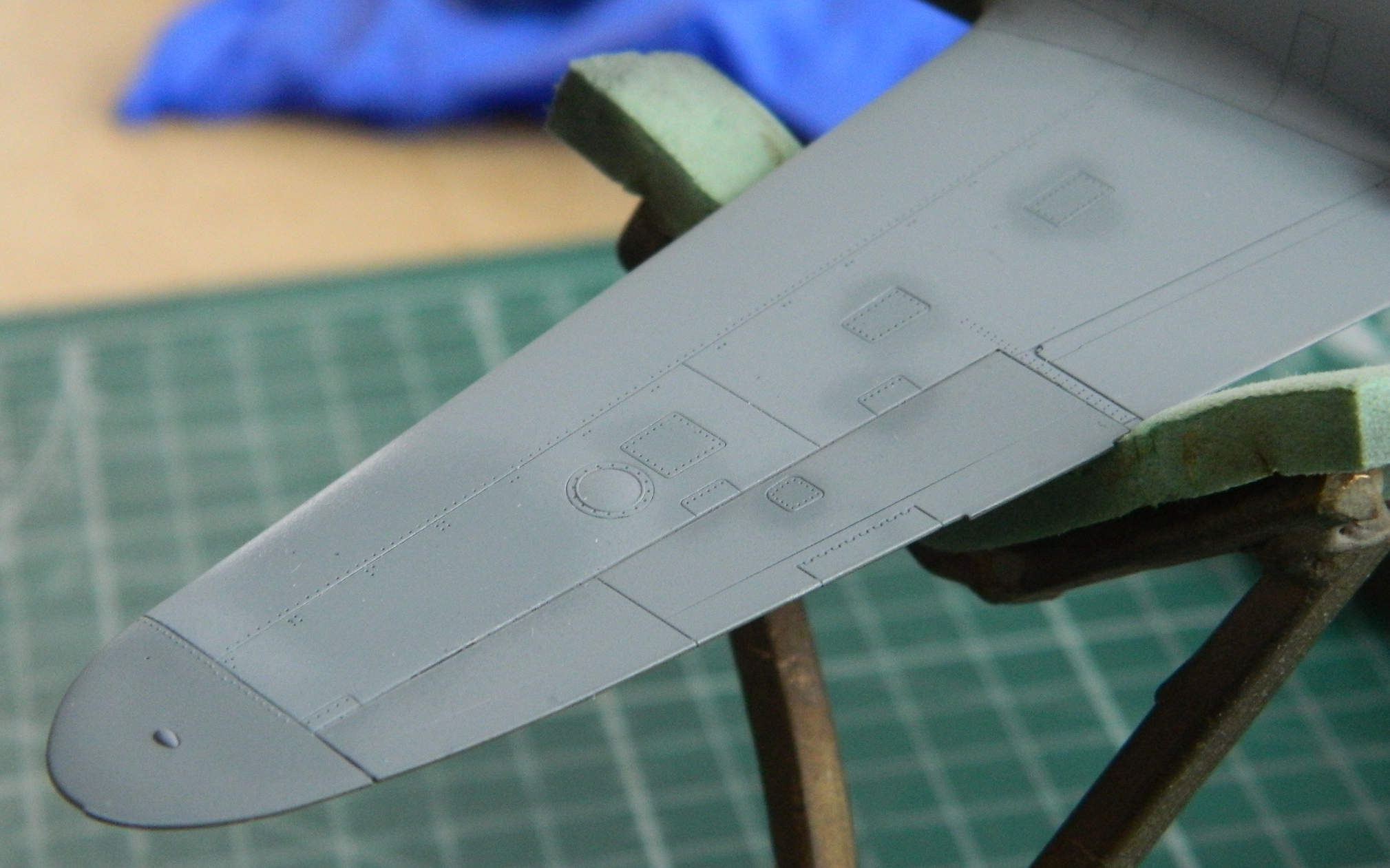
The locations for decals were all hit with Tamiya’s X-22 Clear (gloss), all 139 places. Just the application of decals took 16.5 hours over four days (small decals, diddling them into position). The decals I was most concerned with screwing up were the shark’s teeth decals. Each set of teeth were two parts, plus the eyes, plus the brow. The surfaces that the eye decals had to conform to were a more severe curve and the process of getting MicroSol decal solvent to get them to conform to the surface caused them to tear and wrinkle (and one of the lower sets of teeth also wrinkled, as evident in the upper photo below):
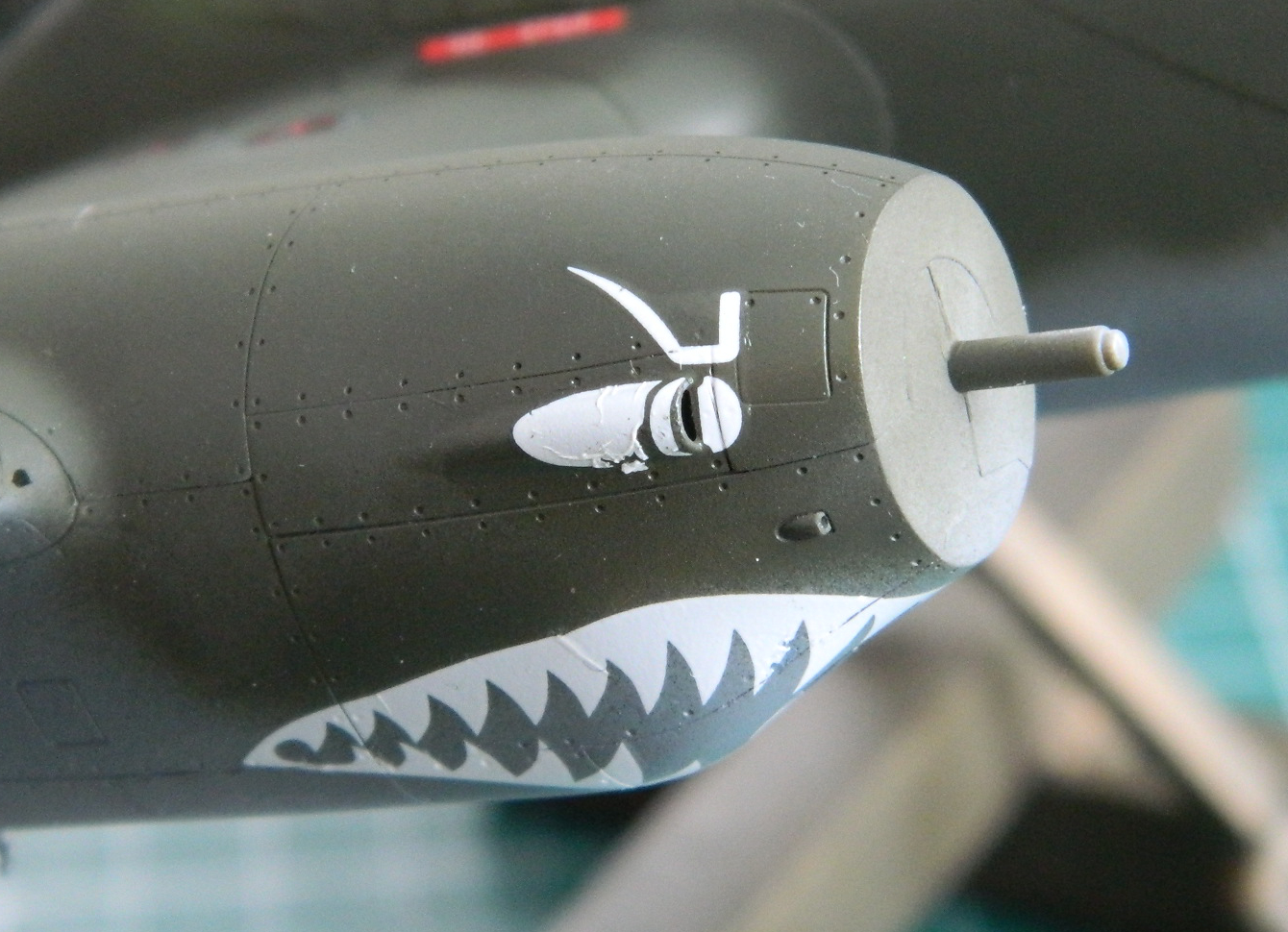

Once the decal solvent had completely evaporated and the ink of the decal was firm, the wrinkles were (mostly) dealt with using 2000 grit sandpaper to lightly sand most of the wrinkles out. Where the decals tore, an application of Tamiya XF-2 Flat White fixed those. And decals, decals, decals:
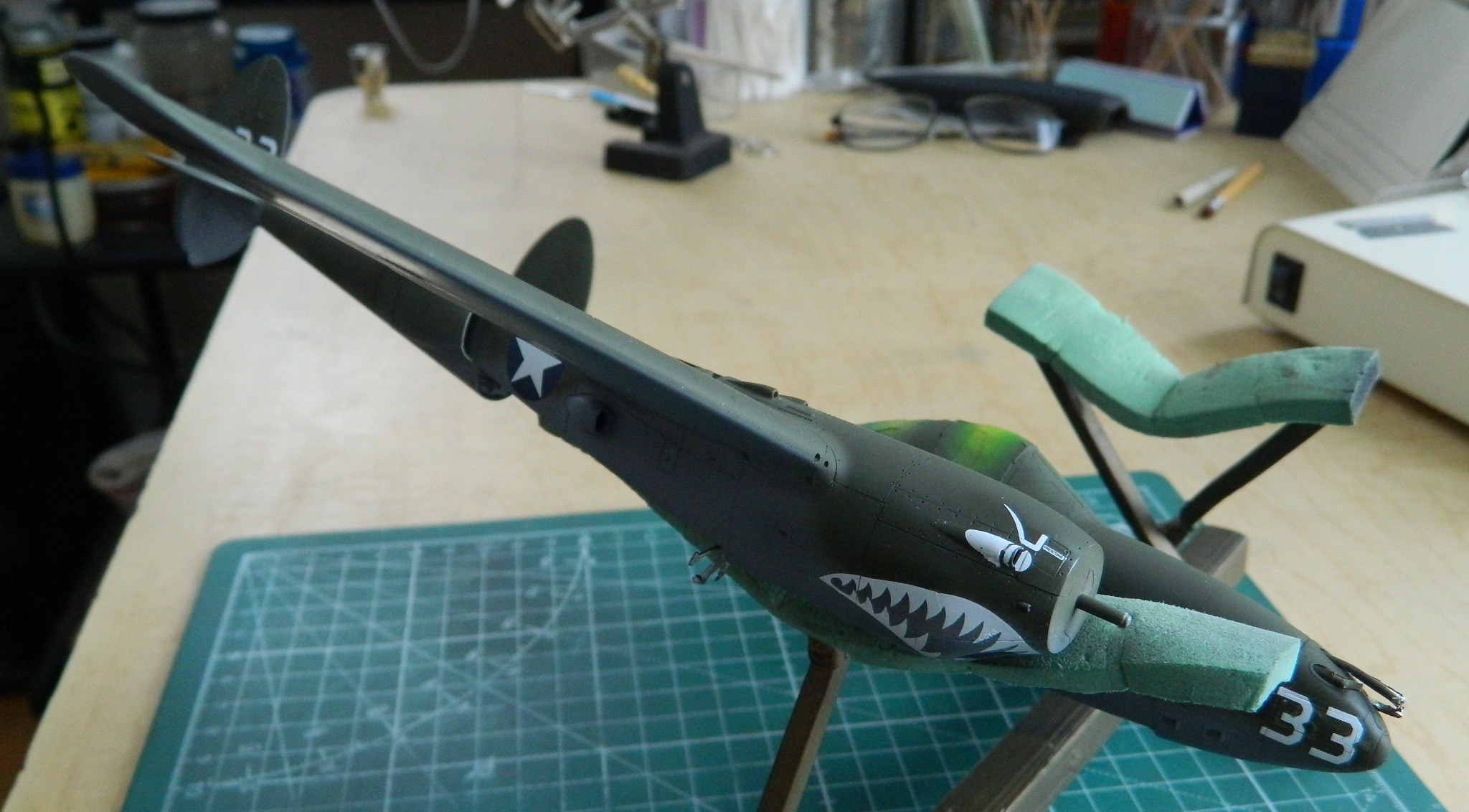

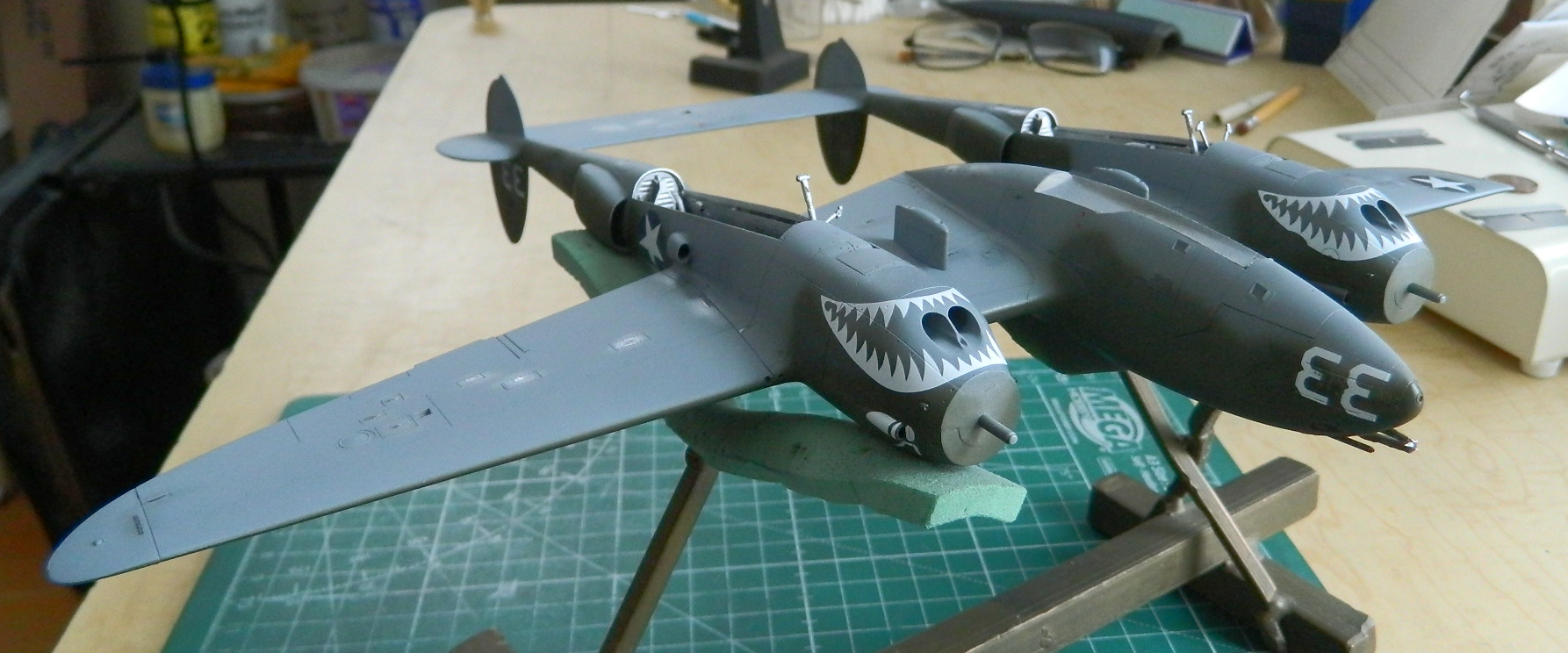
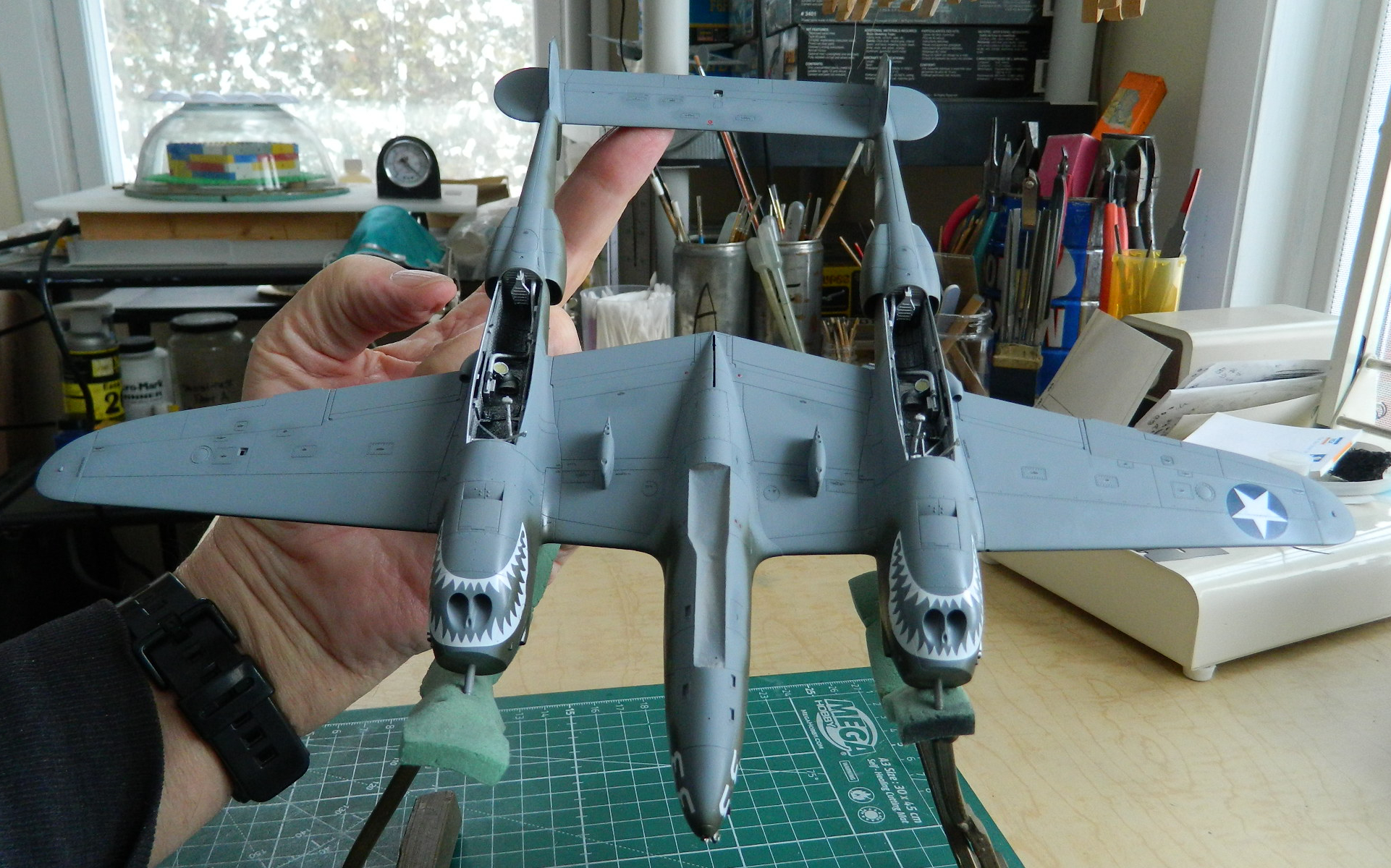
And then I screwed up. For whatever reason, the clear flat I’d been using started blowing chunks. Since the result wasn’t useful at all, I tried using a cotton swab lightly moistened with denatured alcohol, to remove them. You can see how well that didn’t work:
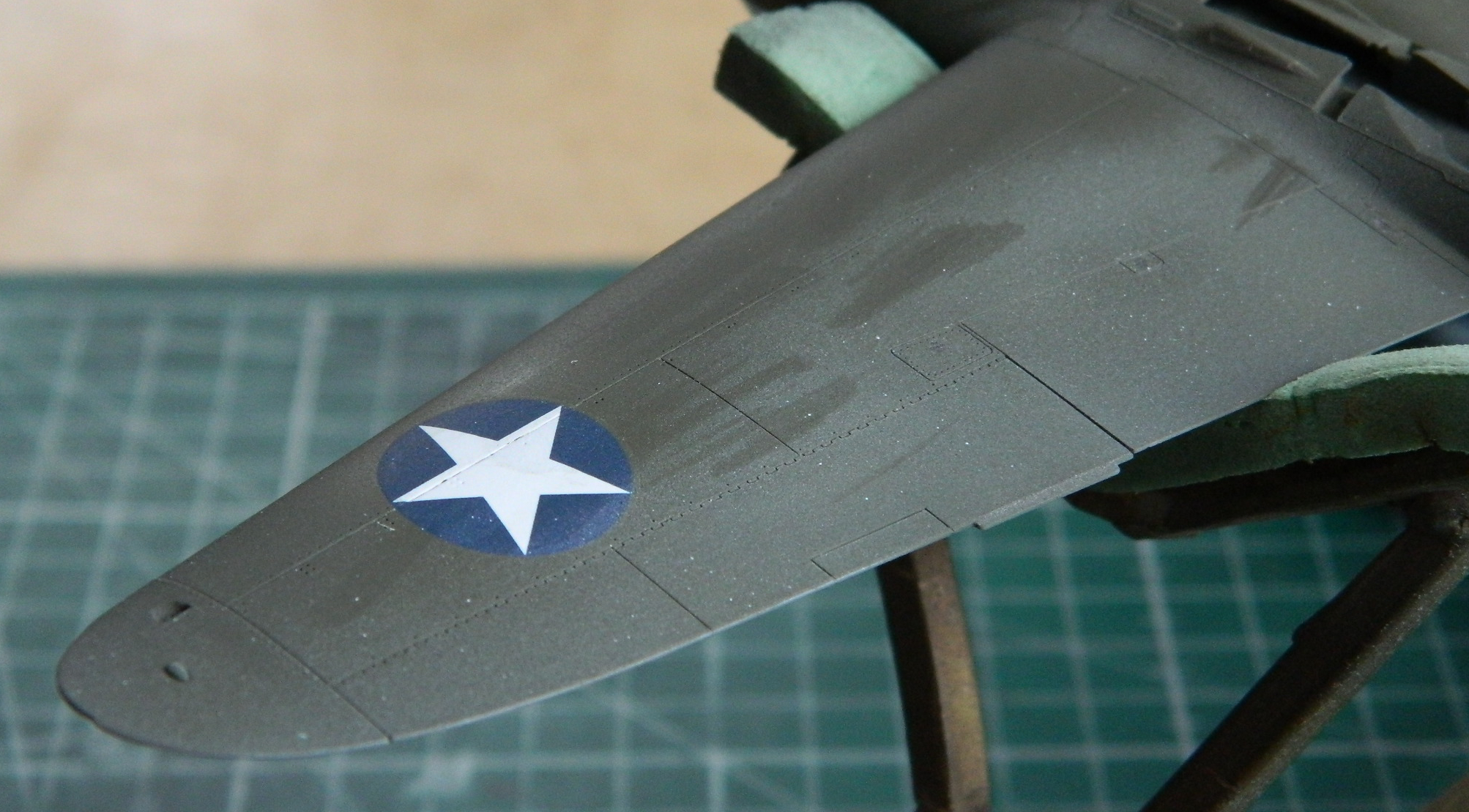
Since I had the denatured alcohol handy…:
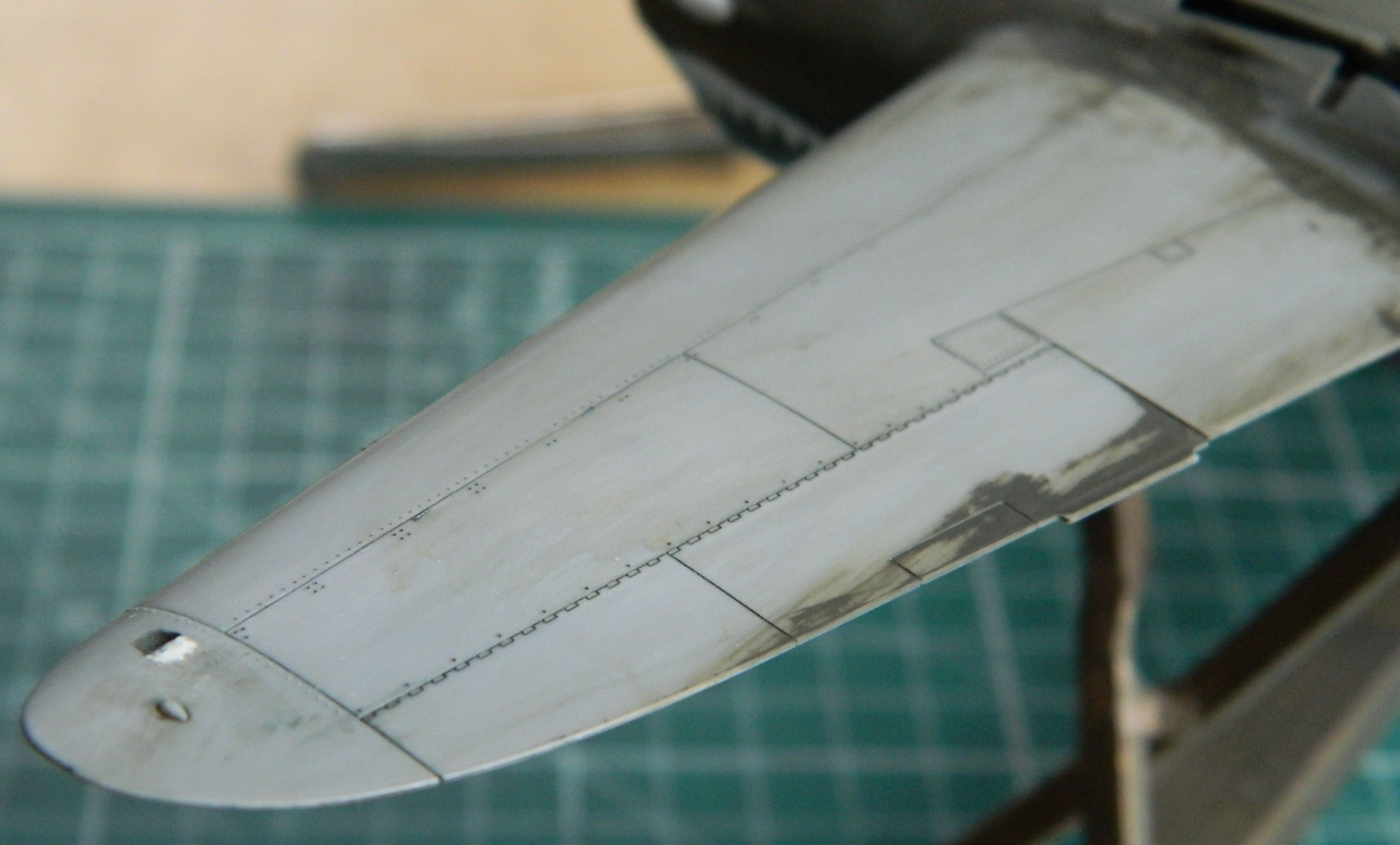
Which leads to repainting things:
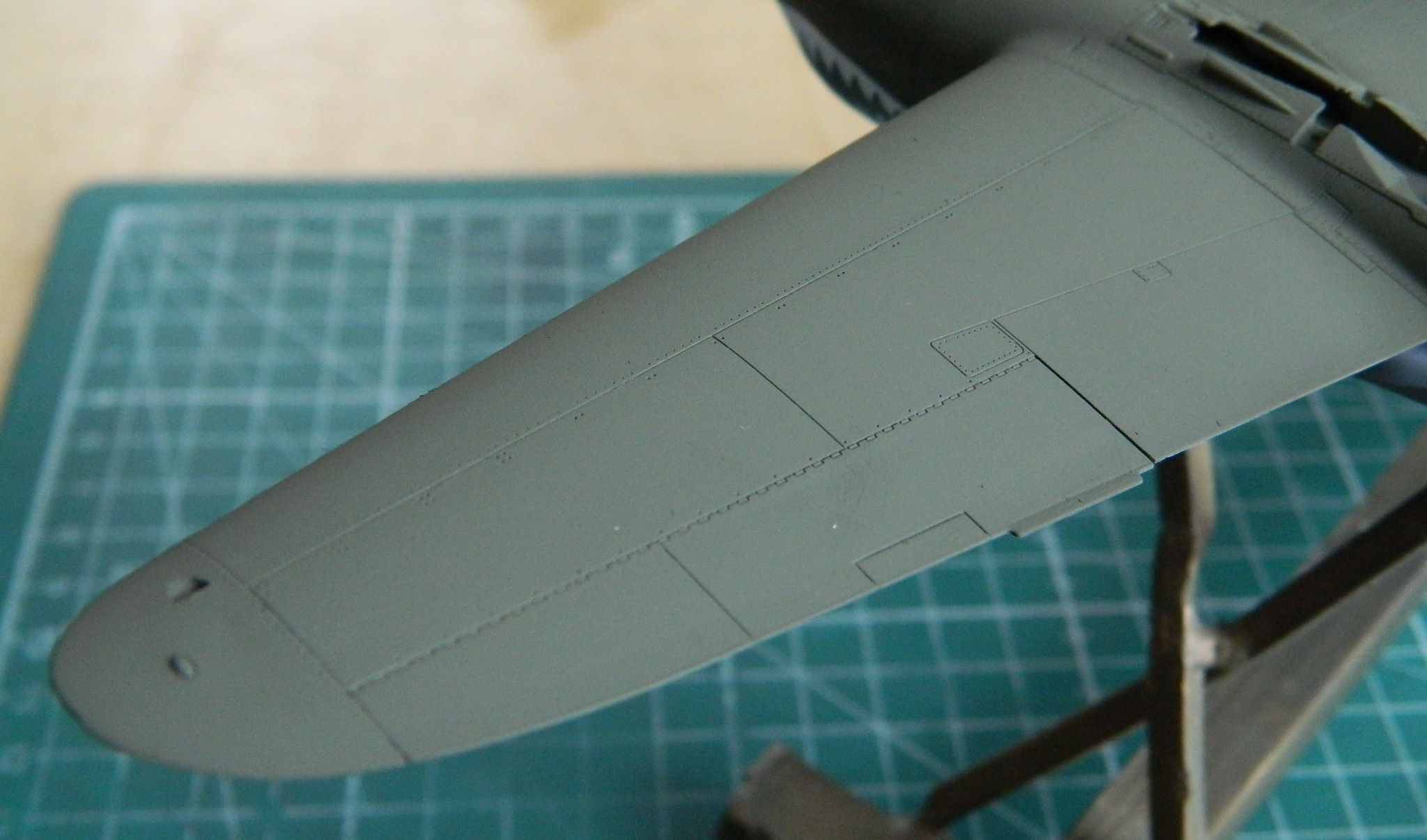
And finally, they were all on:
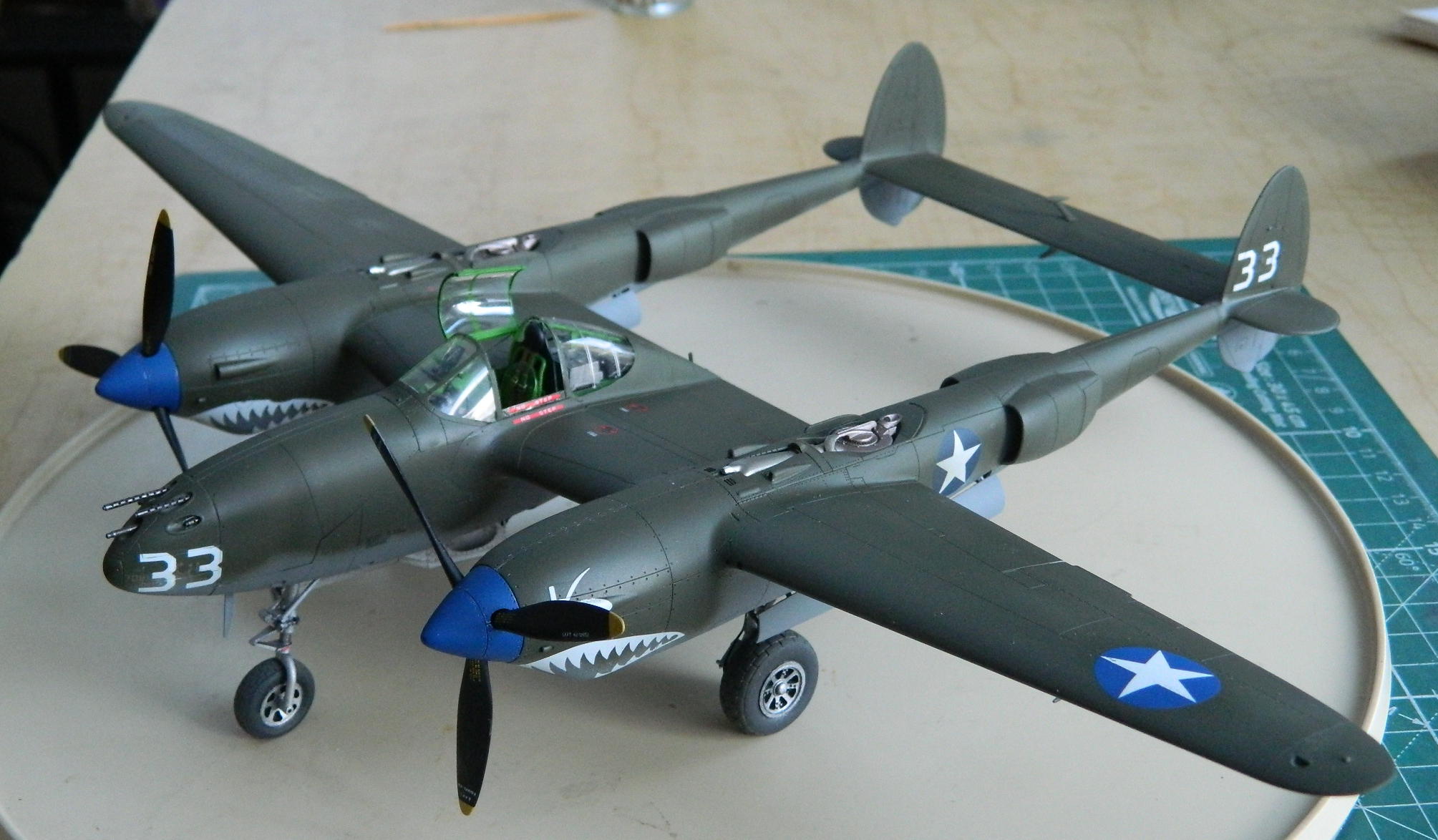
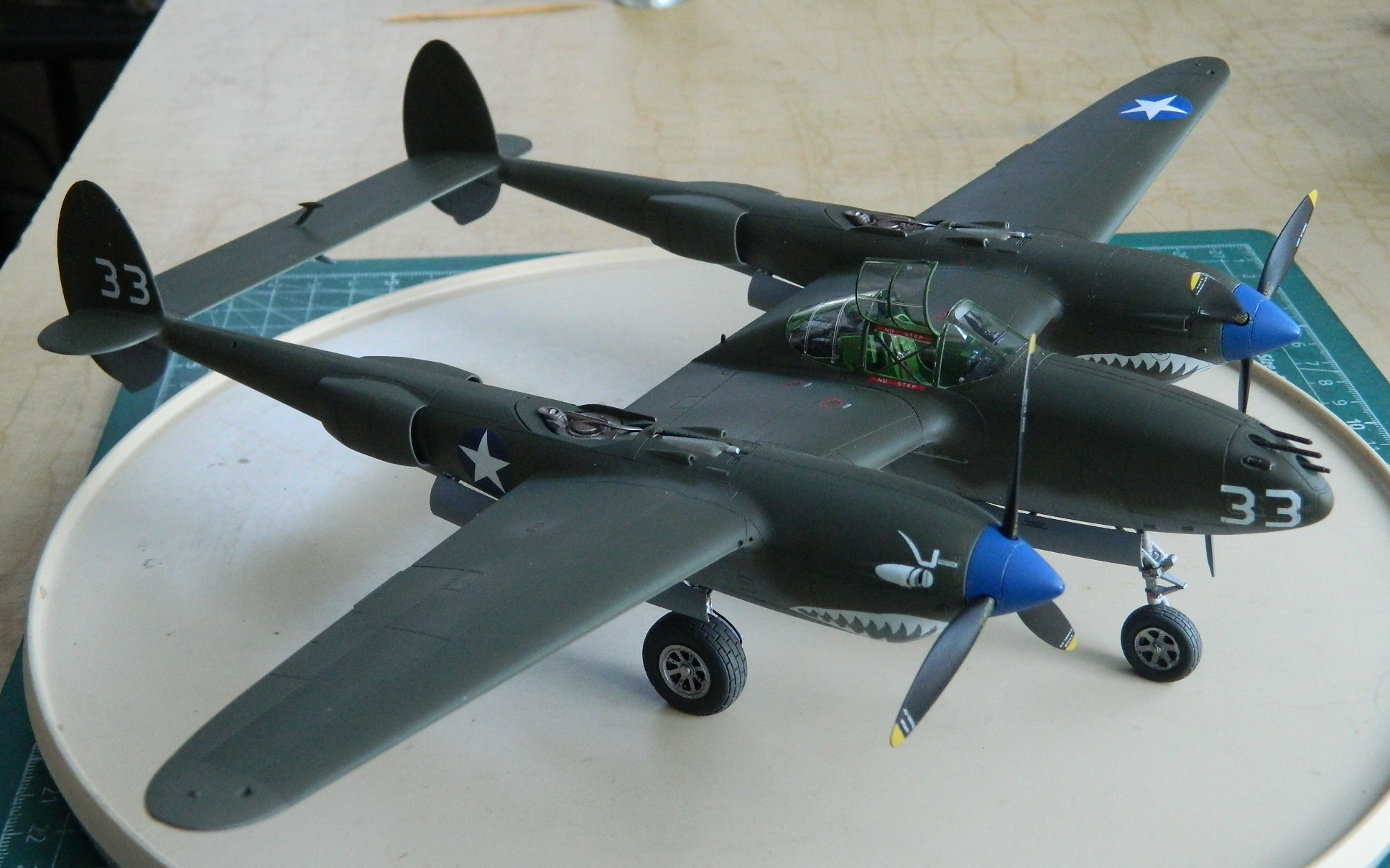
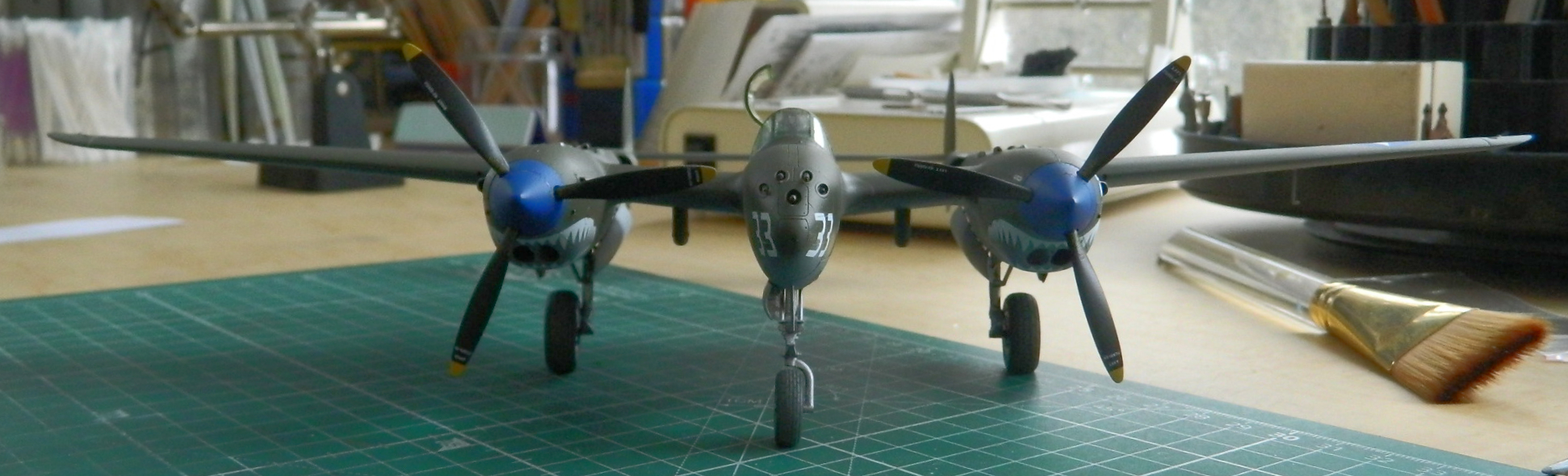
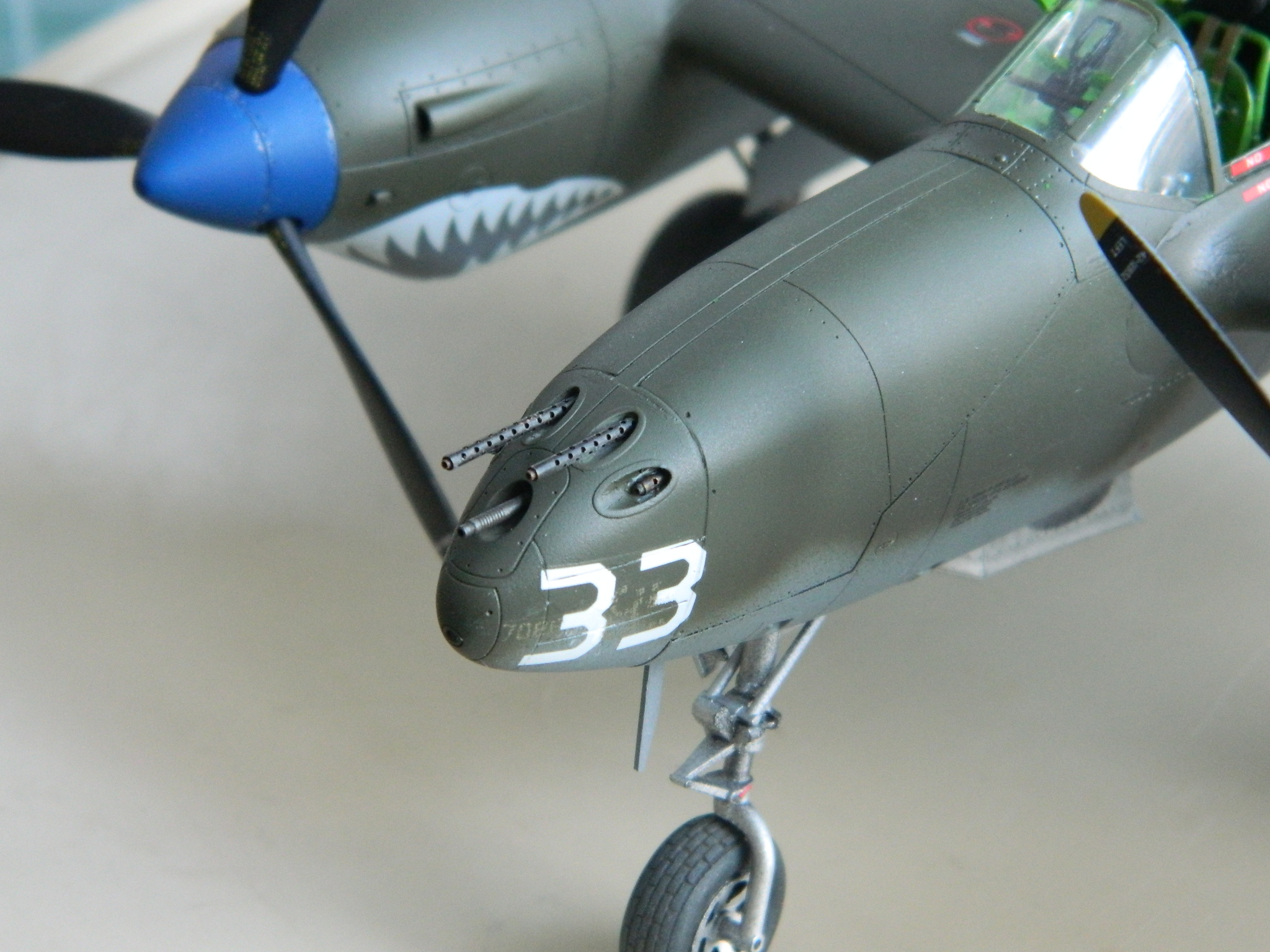
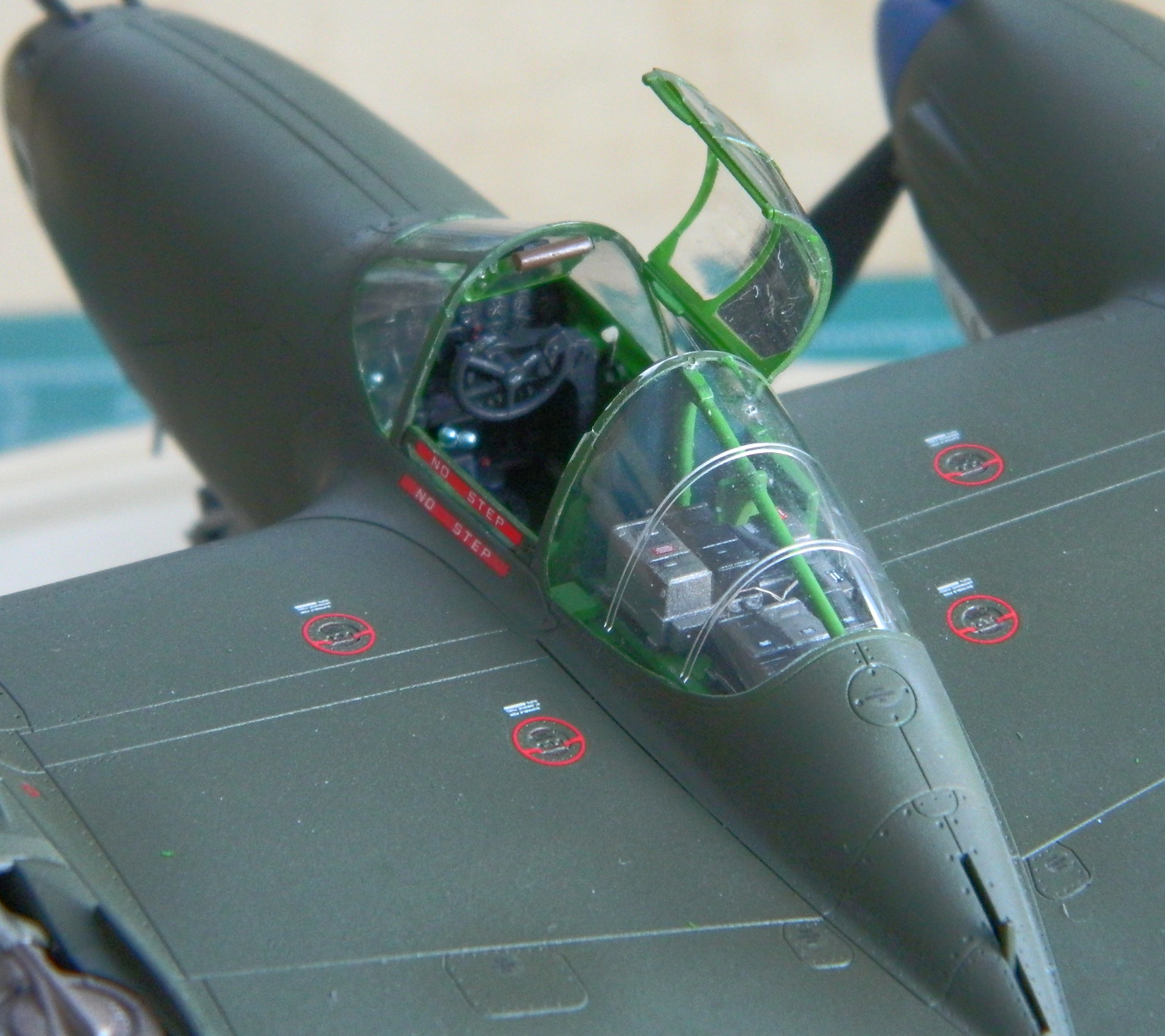
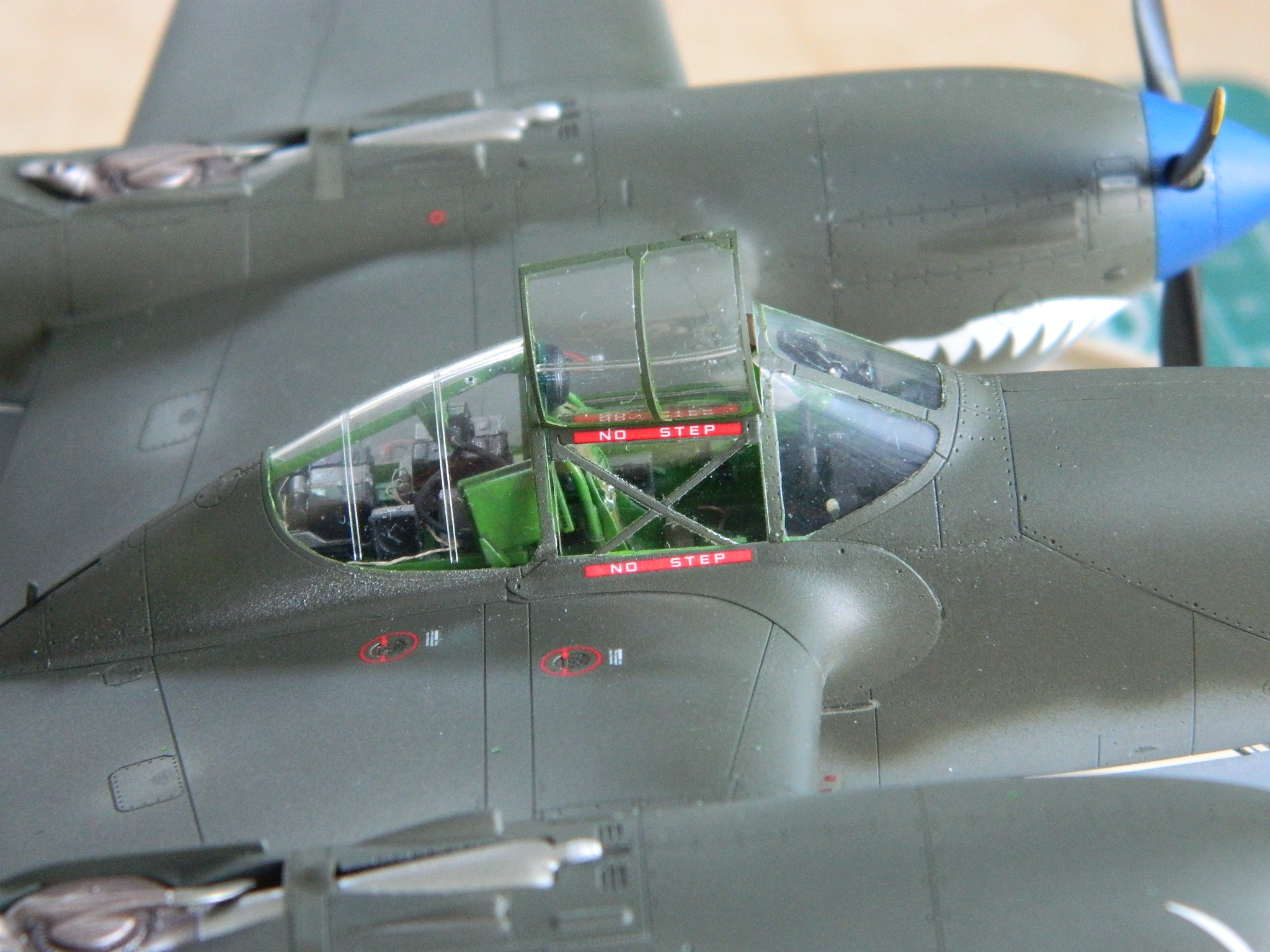
Even fresh off the assembly line, these things didn’t look that clean and the finish wasn’t that uniform. Time to add wear and staining. All of where the OD has worn away to show aluminum underneath it was done with a silver pencil (turns out the undercoat of aluminum was a waste of time and paint).
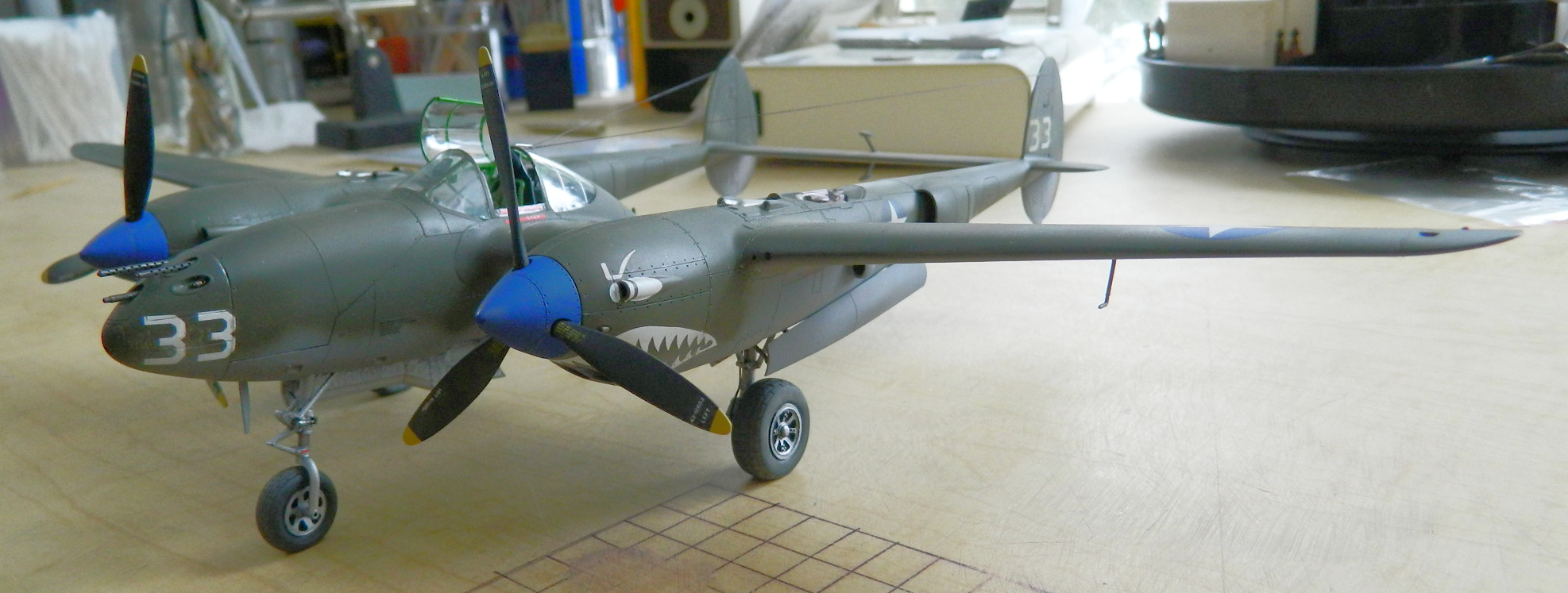
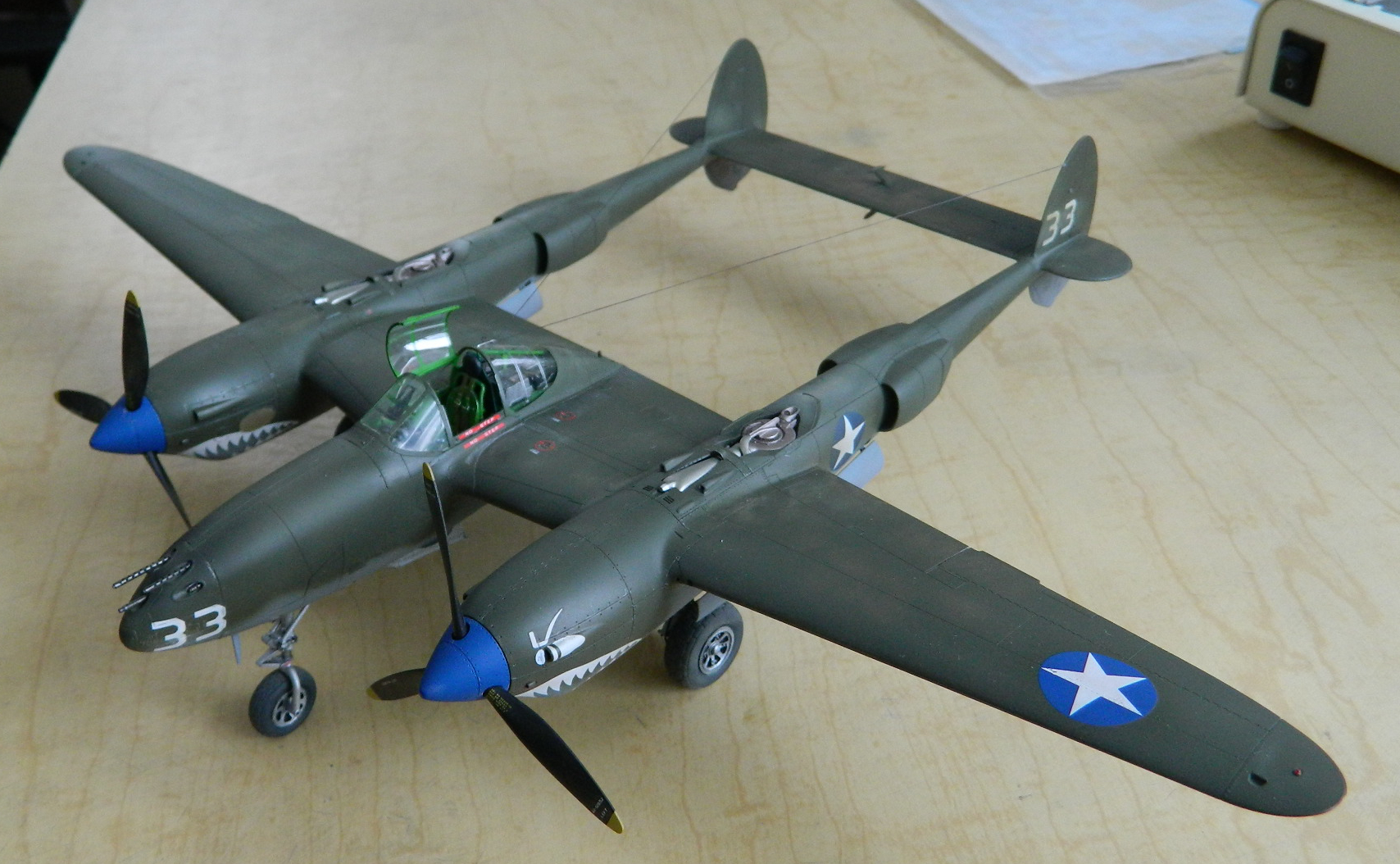
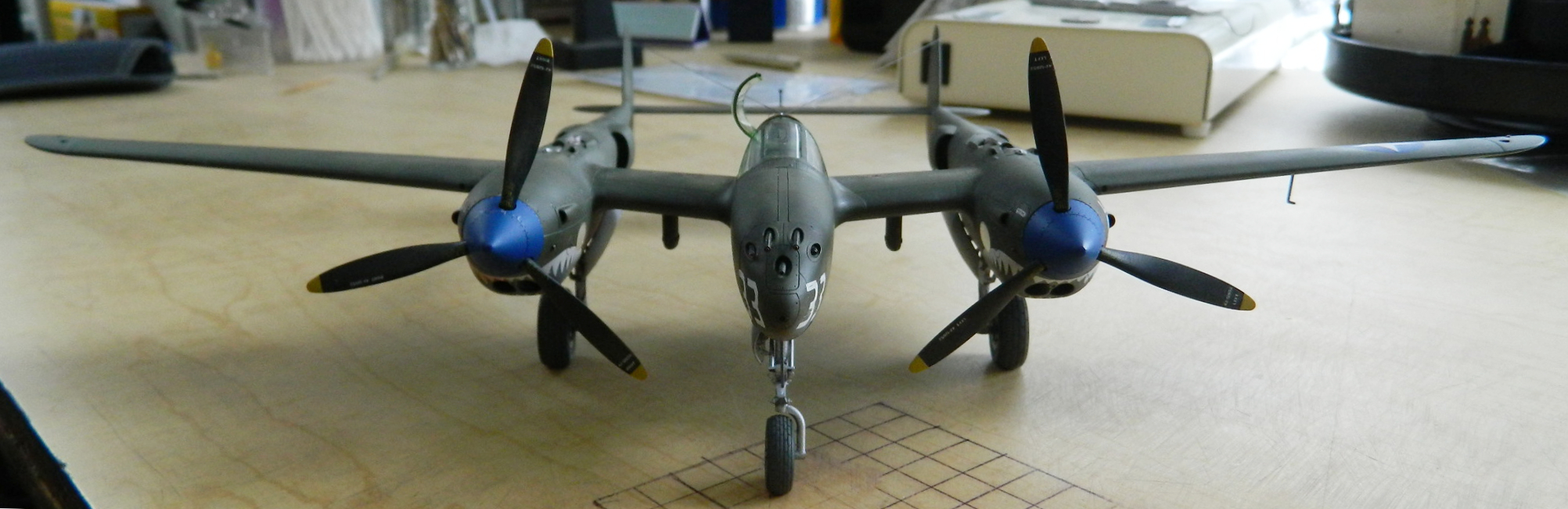
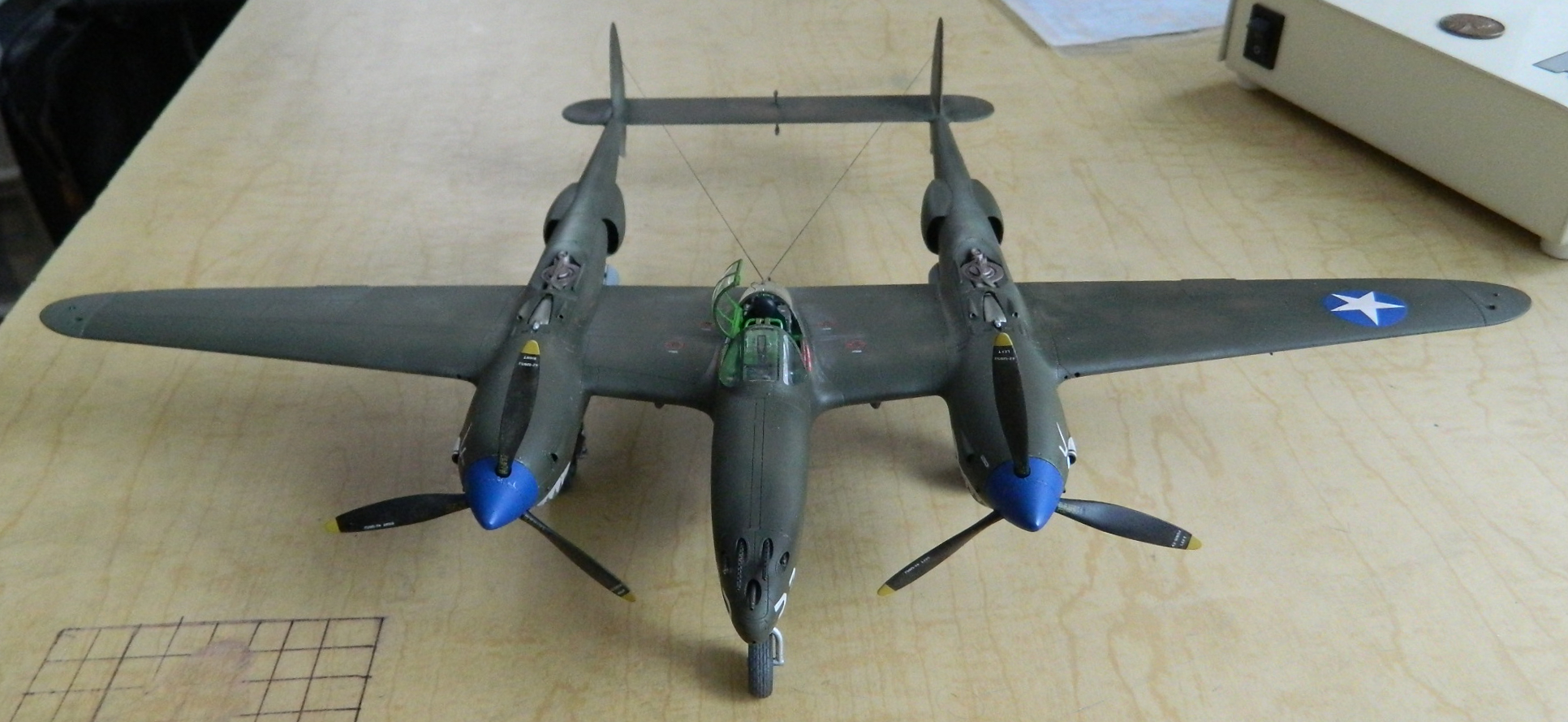
I added the antenna wires to the vertical stabilizers and ran them forward to the canopy, then added .015″ (.381mm) solder for the brake lines on the main landing gear. One section of the brake lines was painted Tamiya XF-85 Rubber Black to replicate the rubber section of the brake line. Then the landing gear and gear doors were added as well as the extended boarding ladder, and just like that, it was done:

 Scale Modeling Mania
Well done! I really like the “repaired” panels.
LikeLike
::bows deeply:: Thanks!
LikeLike
Im also doing the same model you just did the p38f do you have any suggestions to paint the camo
LikeLike
“Camo” doesn’t give me enough to work from. The only colors in touch with each other are OD and gray. Are you asking about the wear marks of silver over OD?
LikeLike
Sorry for the misunderstanding, I ment the wear marks of silver over OD.
LikeLike
Ah! Okay, that makes more sense to me.
I did that job using a silver pencil. I used the edge of the pencil’s tip to essentially shade that area…only in reverse. Instead of shading creating depth, I used it to create a high point that would wear (counter-shade?). Doing it in that manner is easy for me as I used to draw a lot (and had almost built a career in art) so shading is to drawing what a 10mm socket is to a mechanic.
There is a structure under the wing’s surface that you’ll need to replicate if you decide to use this technique (and it’s a great technique to learn, “artist” or not). If you have no experience pencil shading (doesn’t matter what the pencil’s pigment is, it’s all pretty much the same in practice), lay out a grid on a piece of paper and start practicing with a regular pencil. This IS one of those times where “less is more”. Work up to your desired coverage slowly and a little bit at a time. Once you think you have a handle on the technique, try it on the model. At the absolute worst, you repaint the surface and try again.
When adding wearing effects, you’ll need to know what type of wear you’re replicating, which comes in two basic varieties. There’s rubbing wear (which is what I used on the P-38) and impact wear. Impact wear is where something hard strikes or hits a surface (generally an edge but not exclusively so). Rubbing wear is, obviously, where something keeps rubbing the same area over time.
Don’t let this explanation intimidate you. Explaining something is much more difficult using words instead of demonstrations.
Hopefully this helps!
PS- you can use a cotton swab to soften the edges of the pigment that’s been put down and also to extend the effects. Also practice that on paper first.
LikeLike