M4A3 (Tamiya) Build #18
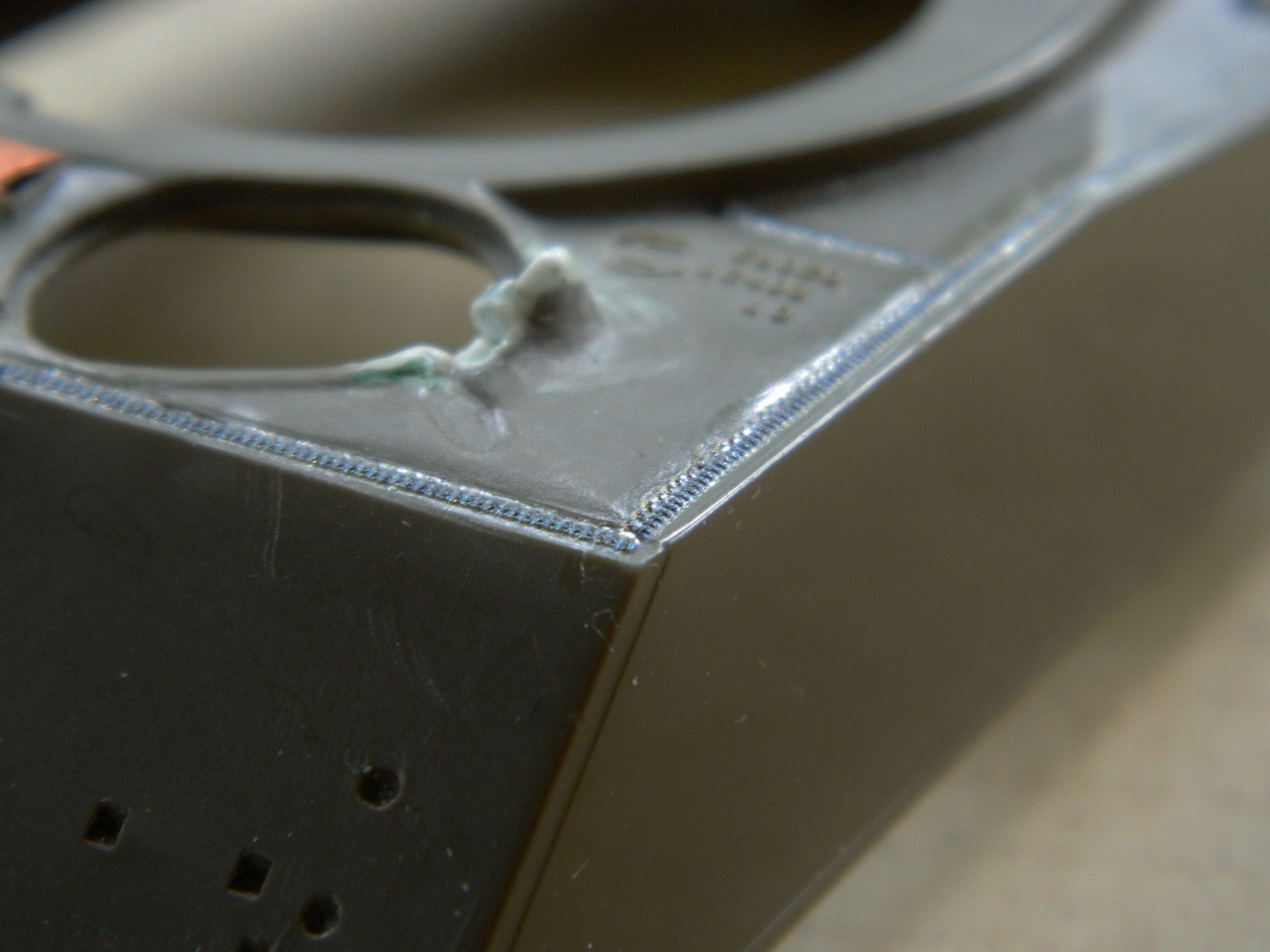
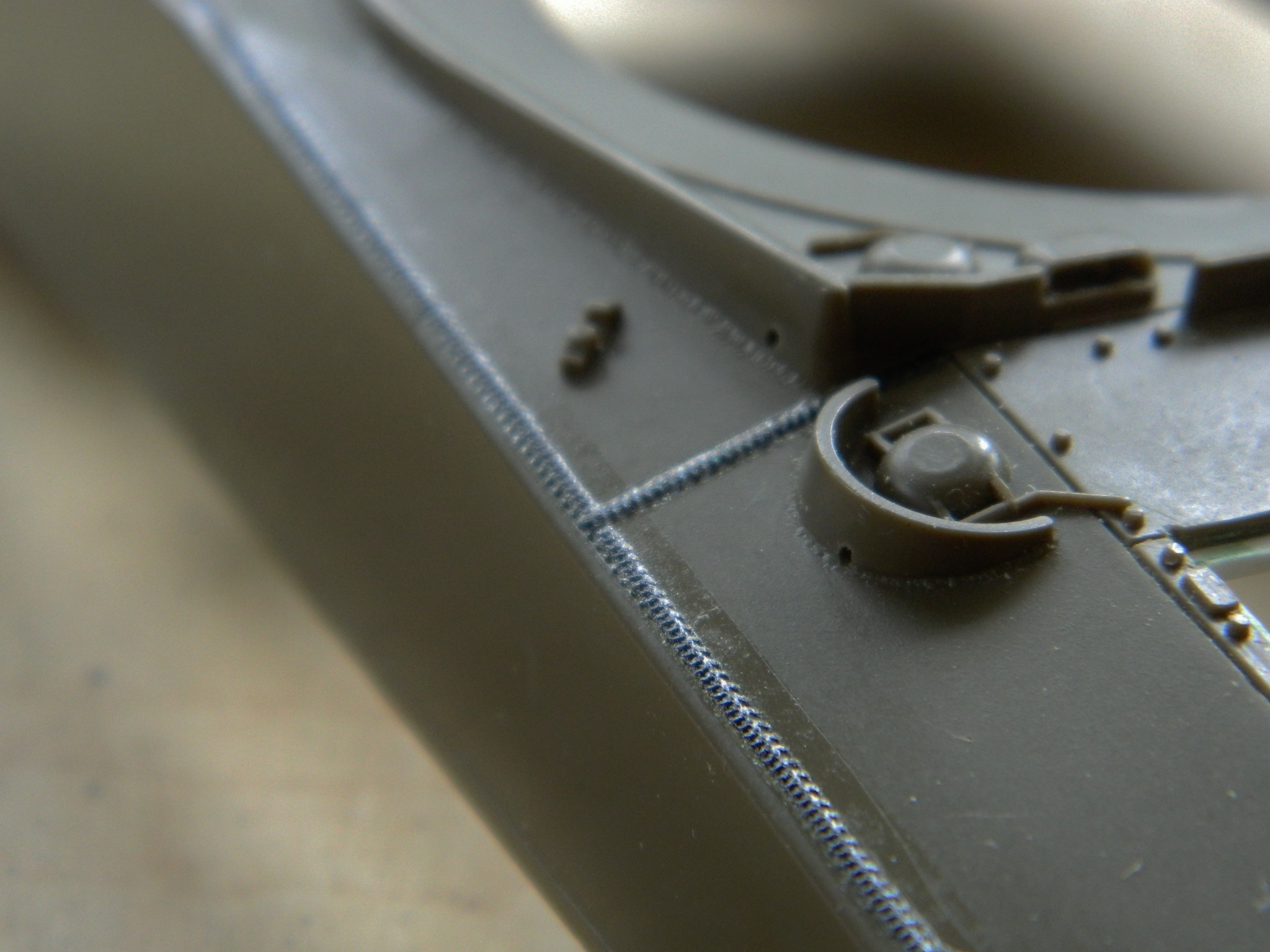
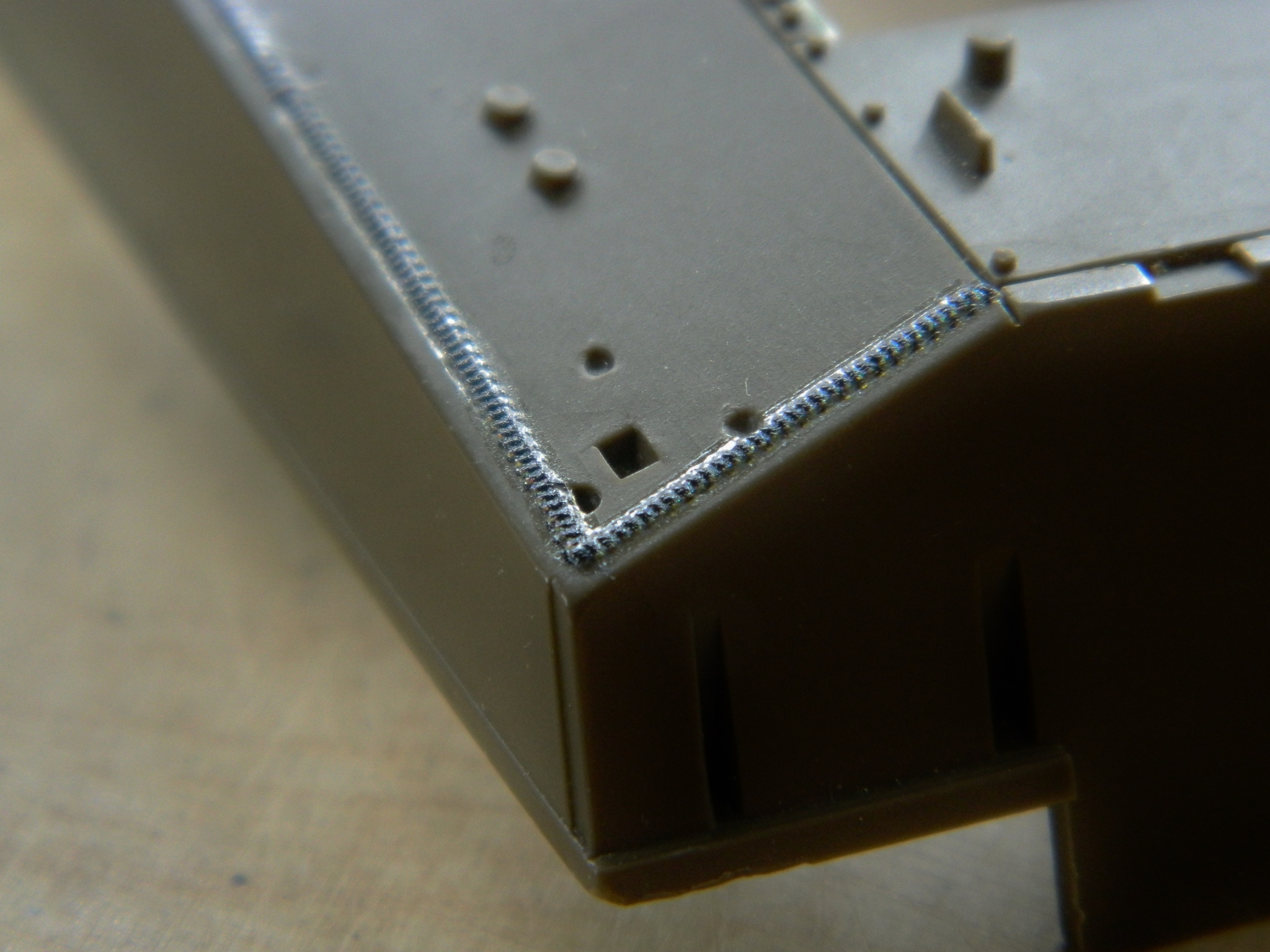
Tamiya got the weld beads wrong. On the kit they’re depressions and in reality they should sit above the surface. (This makes less than no sense to me. When cutting the dies, it would have been so much easier to cut the beads into the surface rather than to cut the surface down around the beads.) Archer Transfers makes 3D decals; resin details bonded to decal carrier film. They go on just like decals and though not perfect they’re a lot better. (As I worked around these beads, I discovered that I should have put them on later once I got to the point where I wouldn’t have to handle them much. They’re fragile and sections will easily pop off as things are added and the hull is handled). In order to more randomize the weld bead, I put down a wider bead first and then put a narrower bead on top of it:
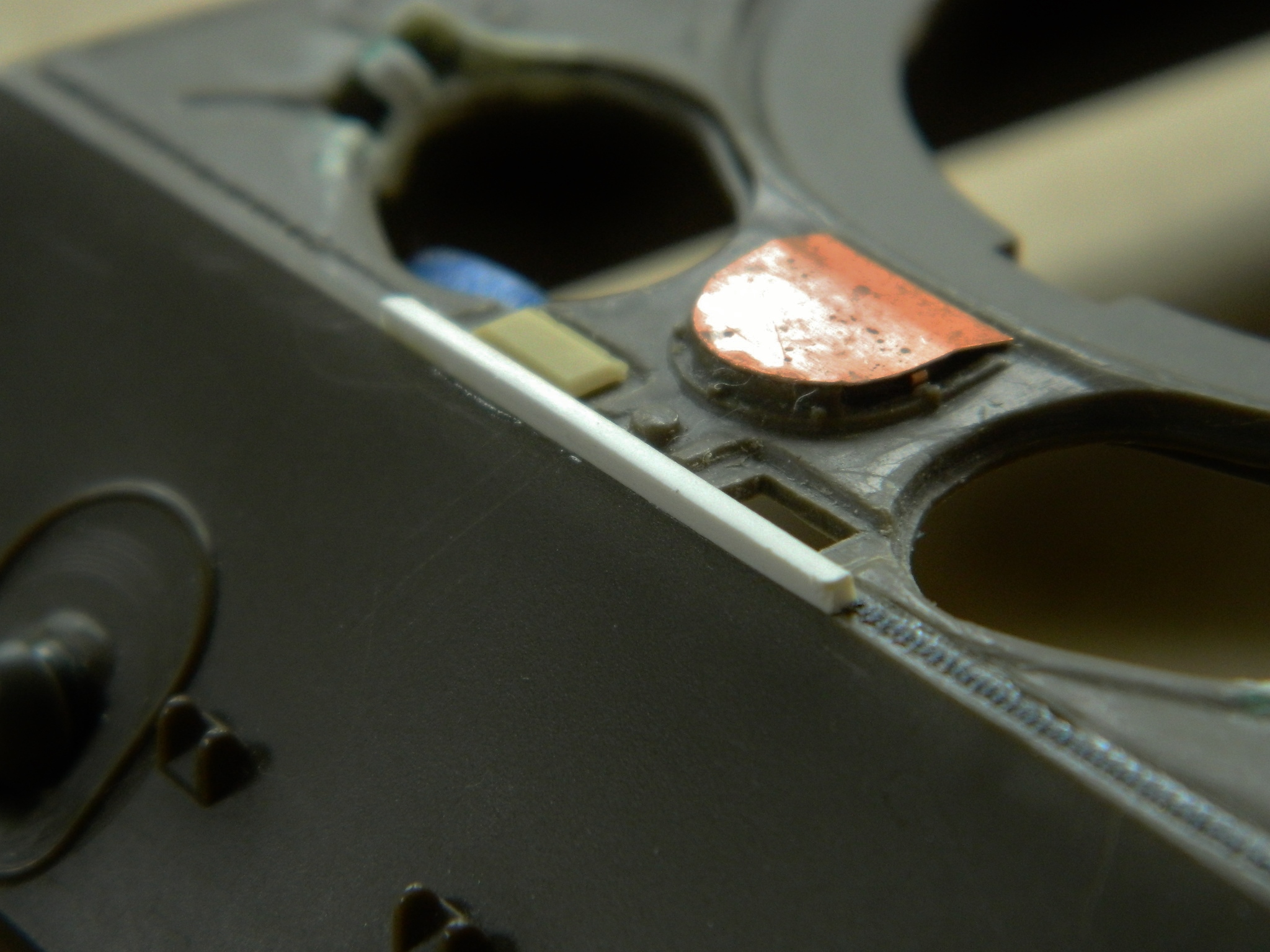
I added the splash guard in front of the periscopes and will trim it to dimension later:
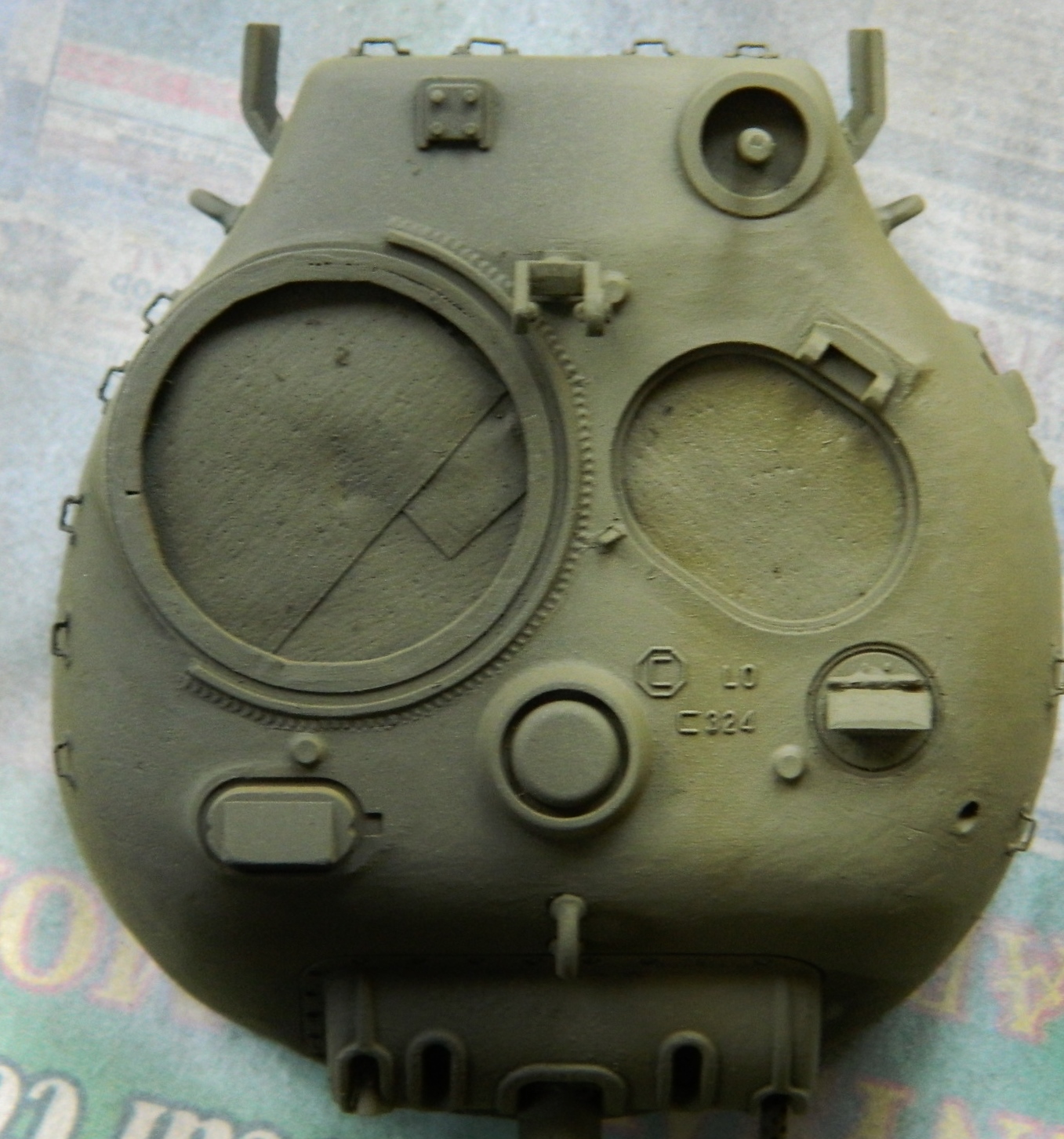
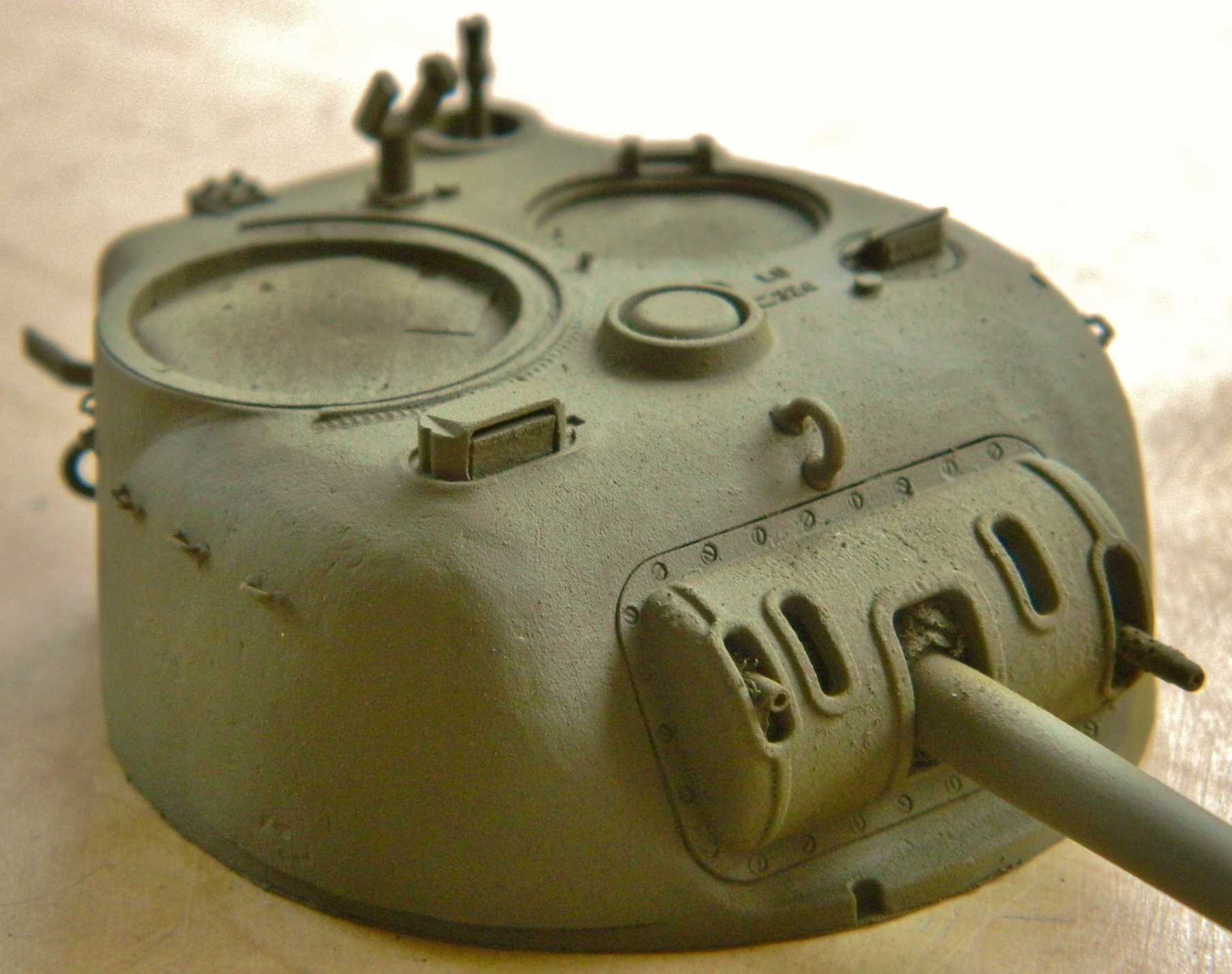
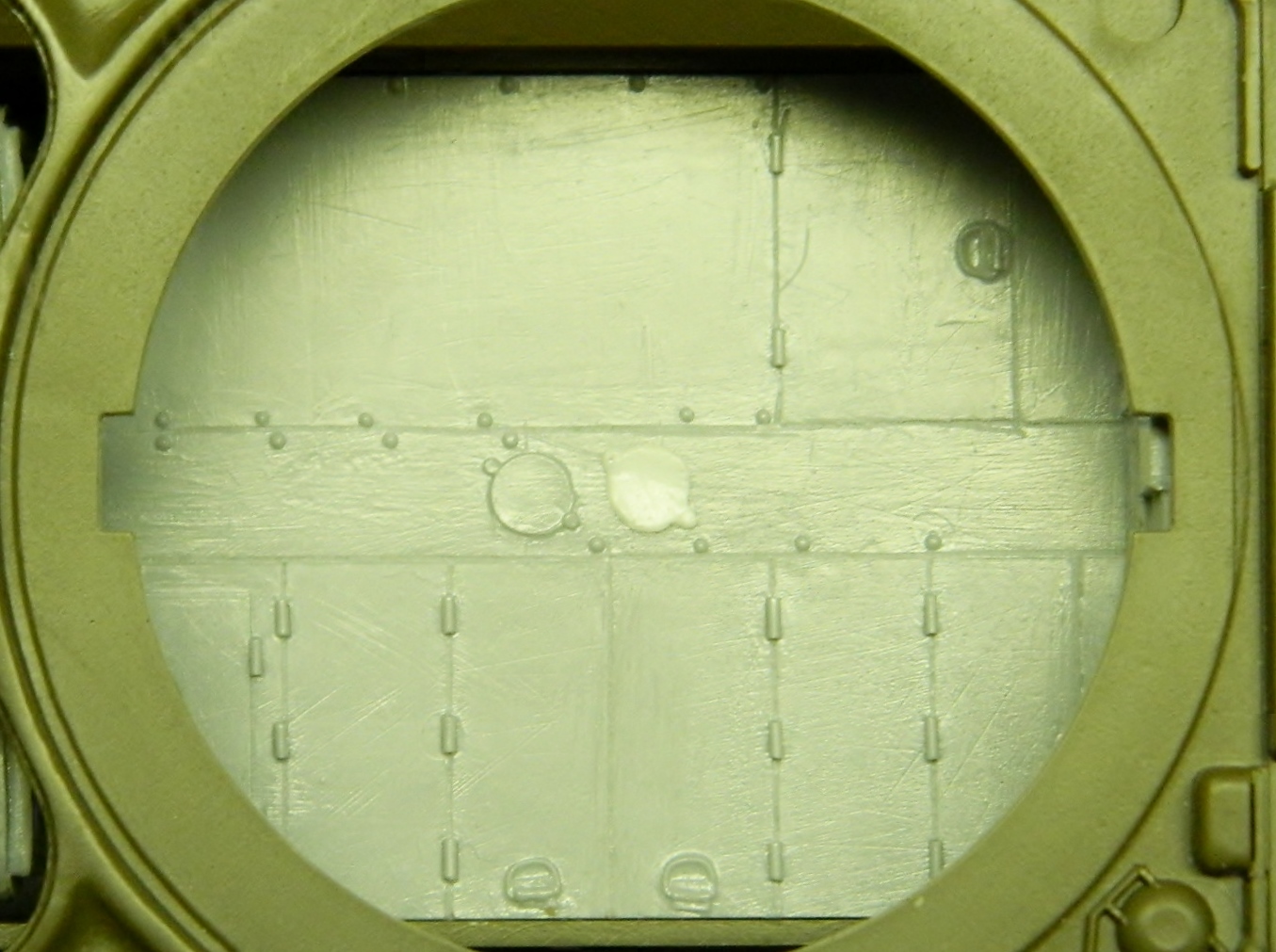
With those details taken care of, I threw a coat of paint onto the turret and other bits using Tamiya’s OD Green straight from the bottle (and if you look closely at the gun shield you’ll see I added casting texture to it using the same method I used inside the turret, though I should have waited before shooting paint; there are more details I have to add):

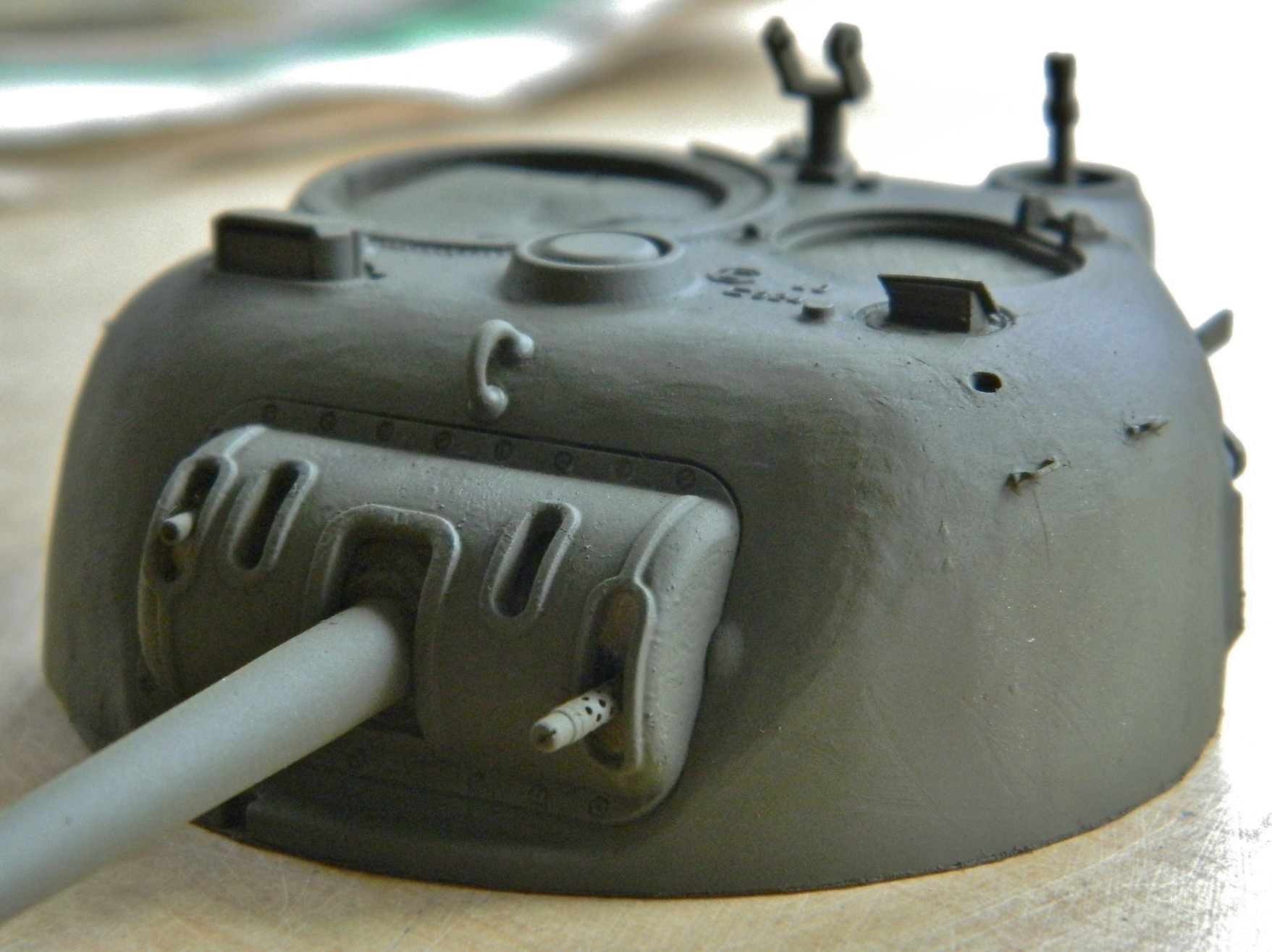

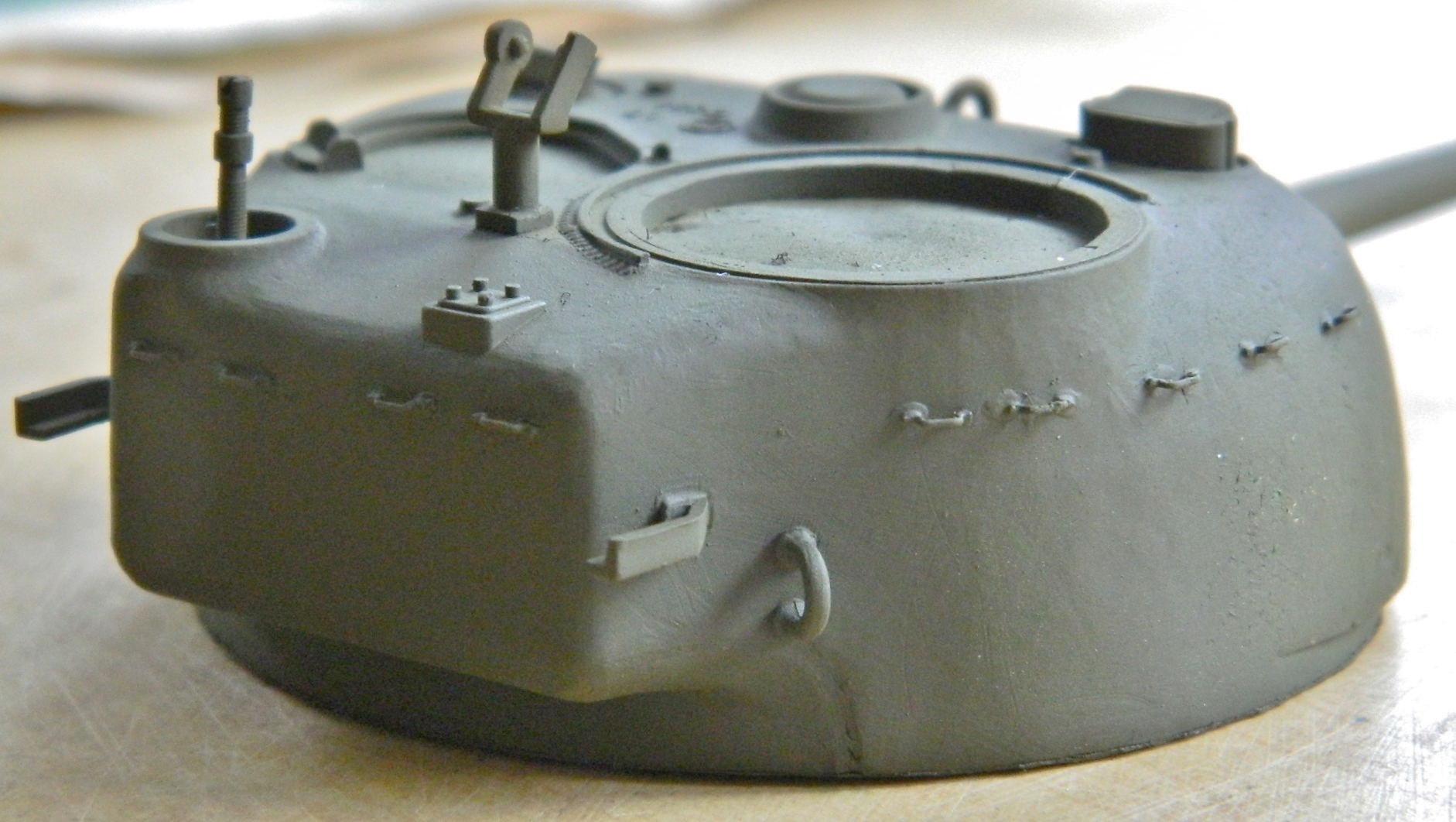
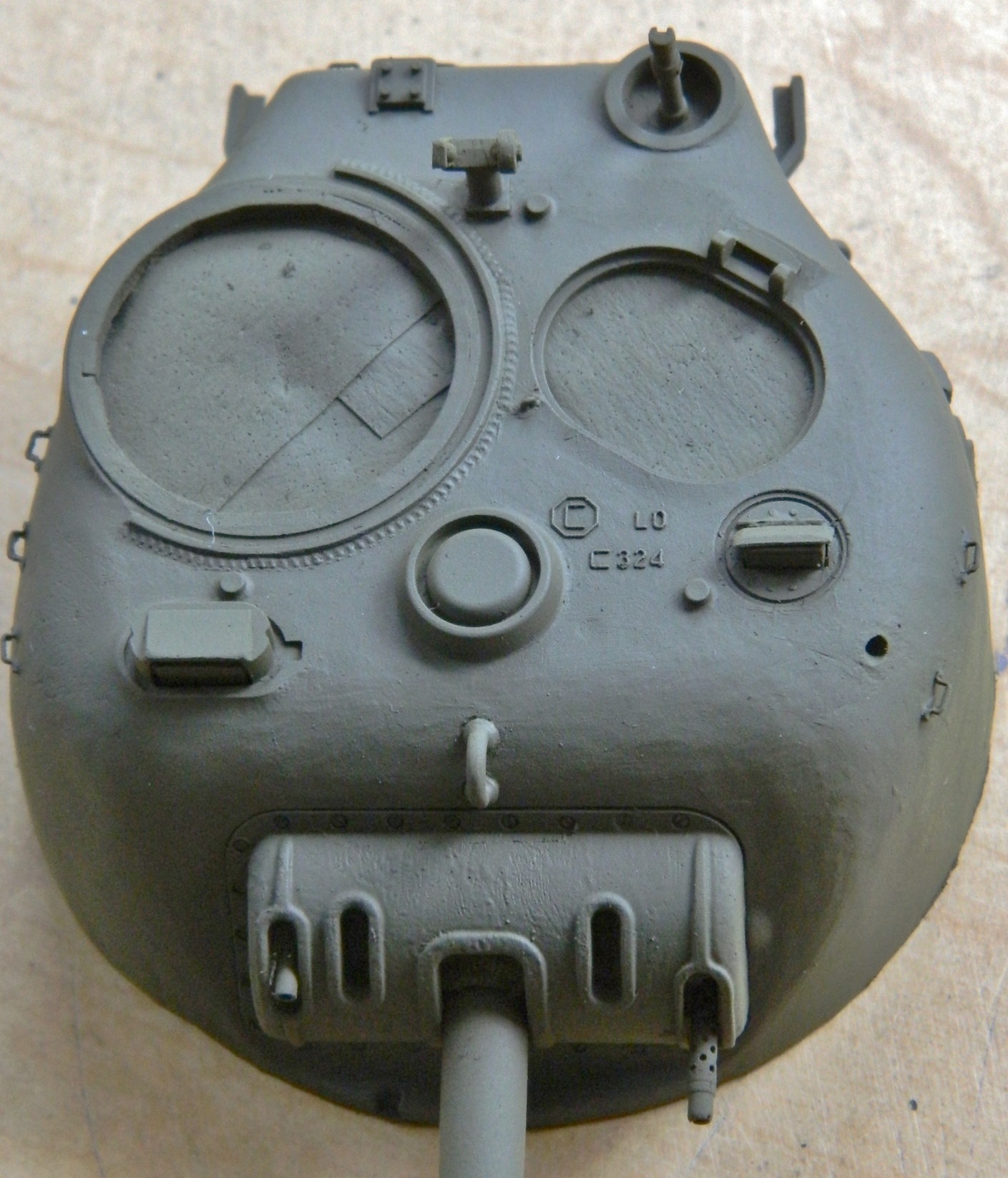


Once the paint had cured overnight, I decided that Tamiya’s OD Green wasn’t quite the WWII OD green. I did some experimenting and hit on a color I’m satisfied with. I used six parts Tamiya’s OD, one part yellow, and one part white (when mixing paints, I only mix paints of the same manufacturer together):
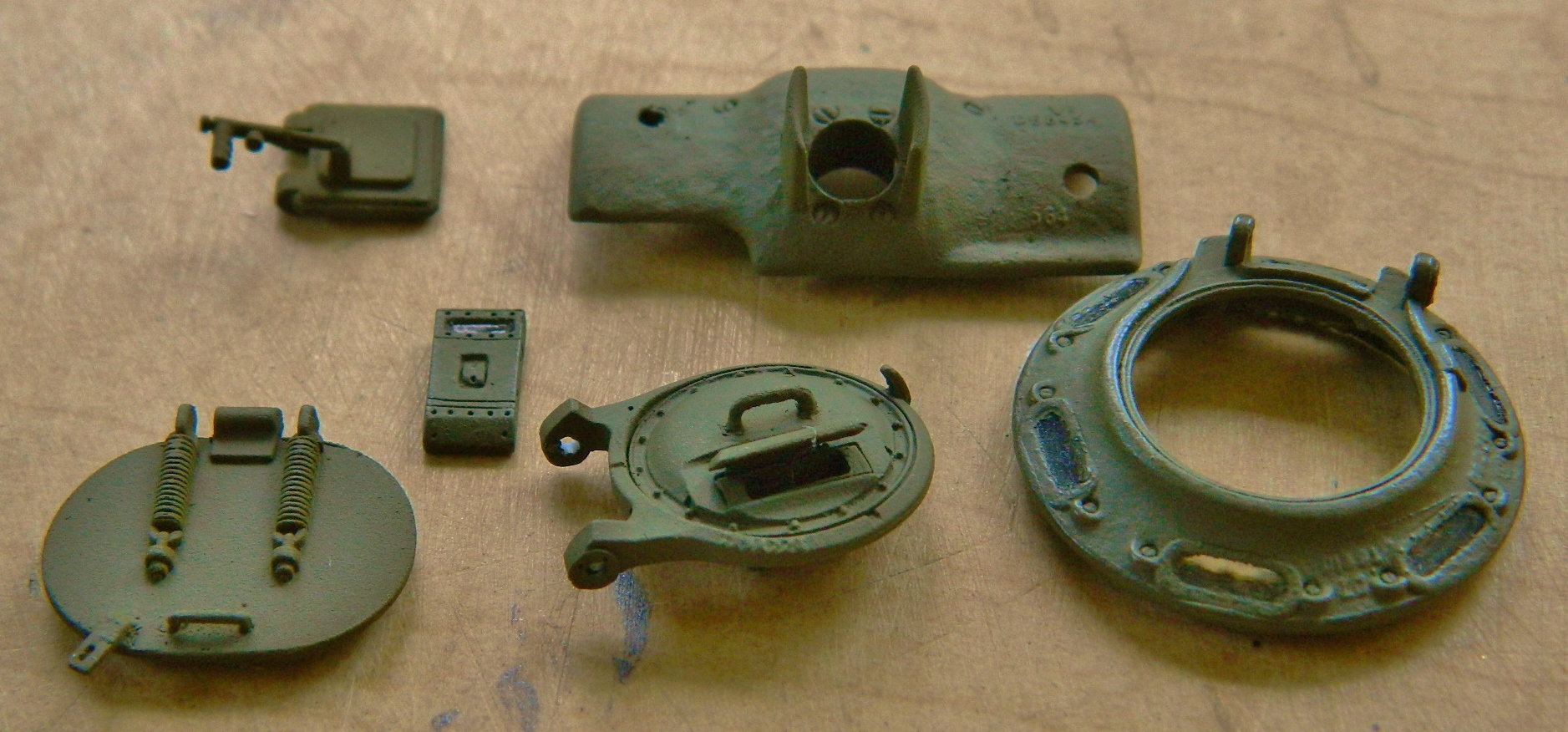
The rear deck plates of the hull are removable. But the “bolts” as cast on the model are round, not hex heads. Grandt Line bolts fixed that. If you look closely at the bottom-left photo, you’ll see that as cast, the “bolt” is actually a nut on a bolt. To get them to be bolt heads, I file off the bolt protrusion and end up with a “bolt”:
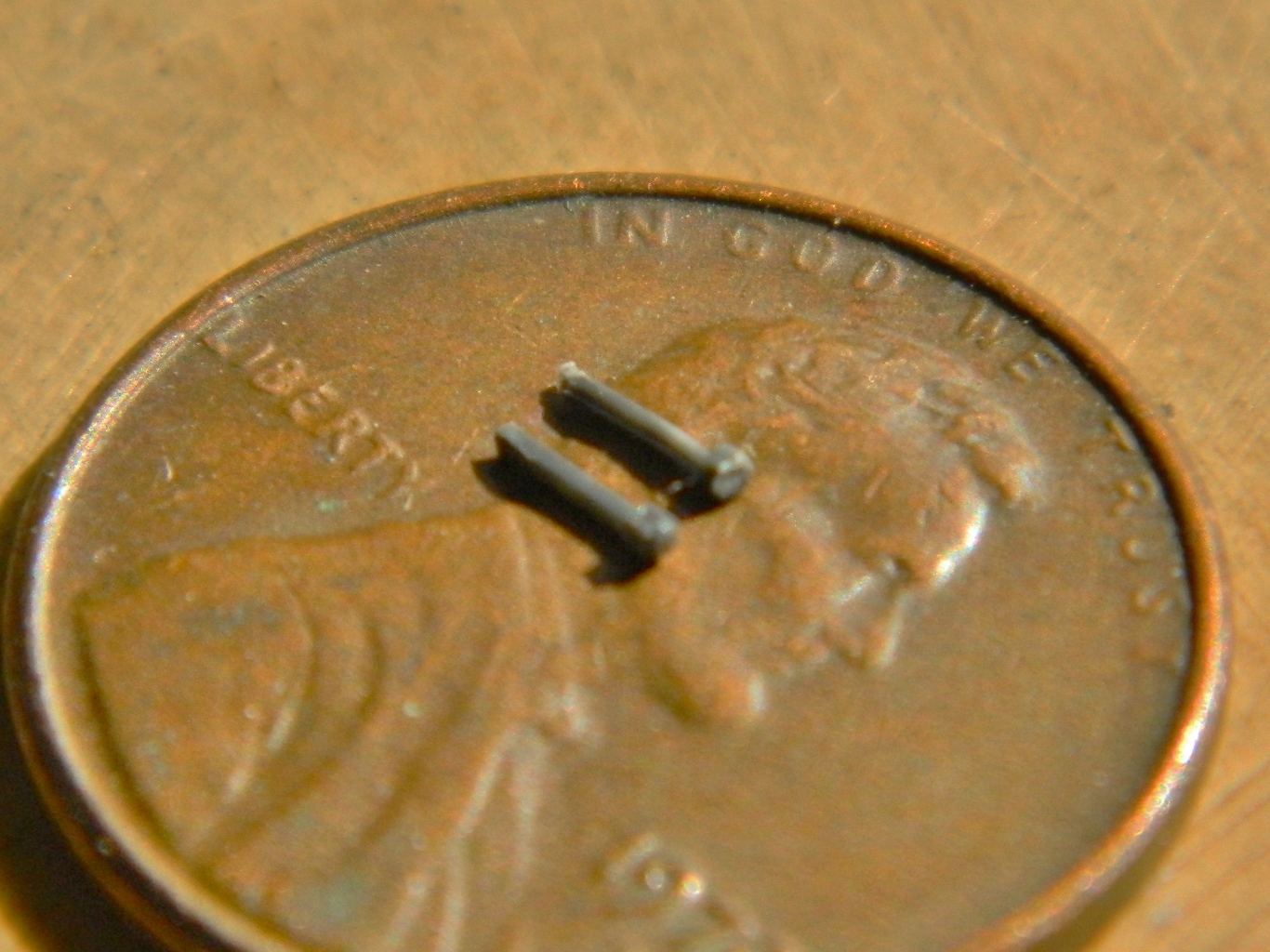

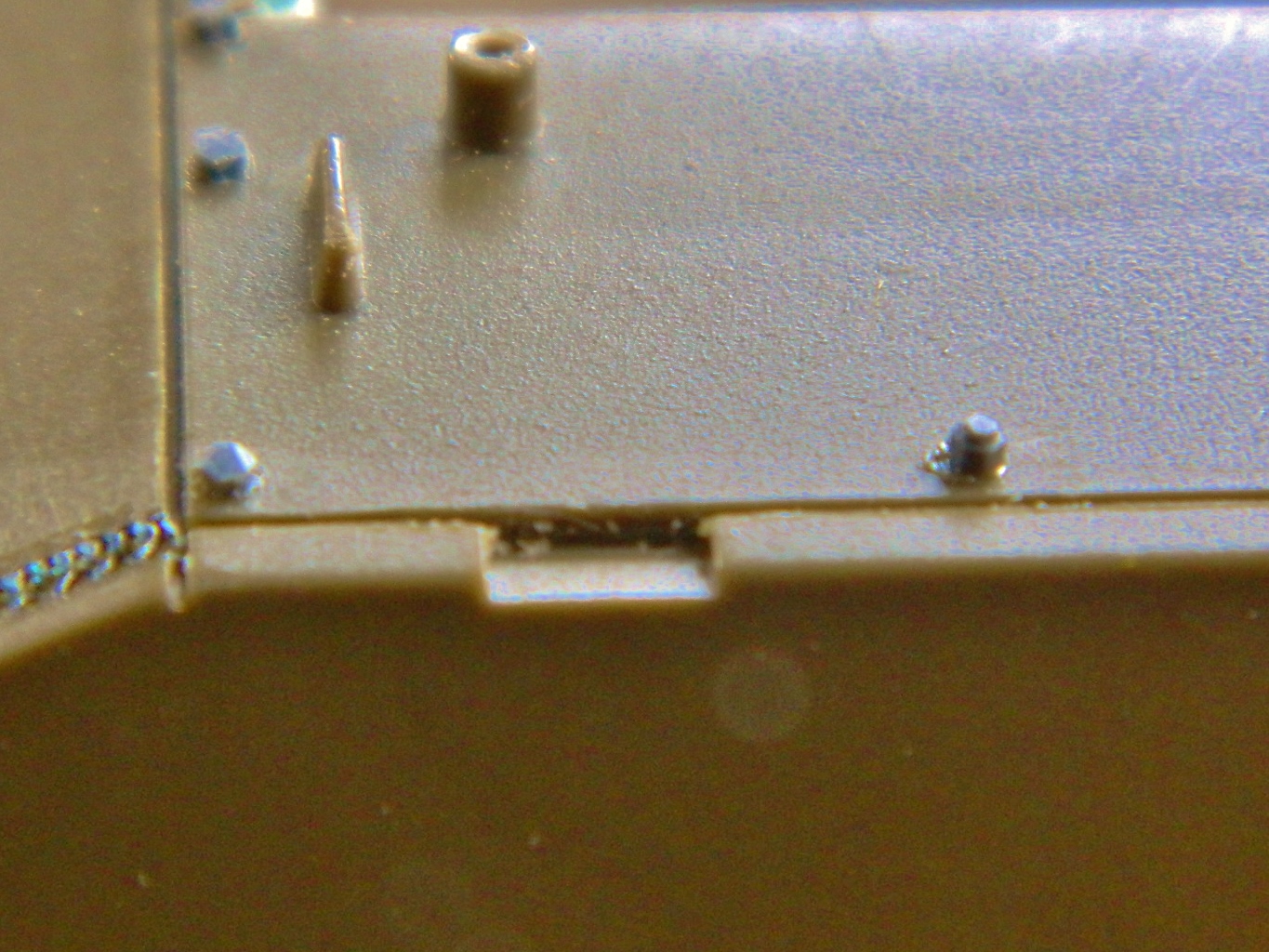
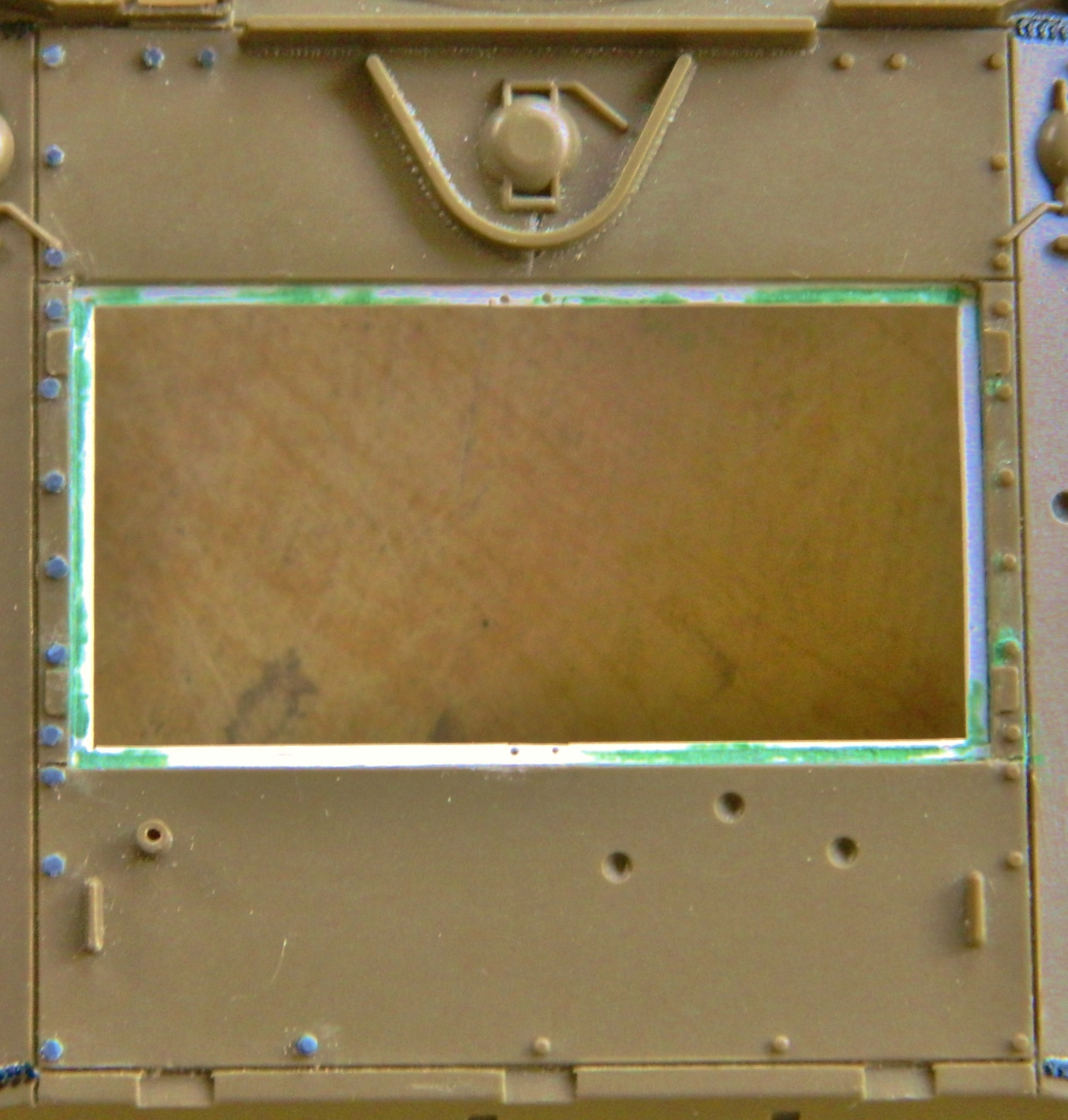
The rear ventilator cap suffered from the same problem with its bolts and got the same fix:
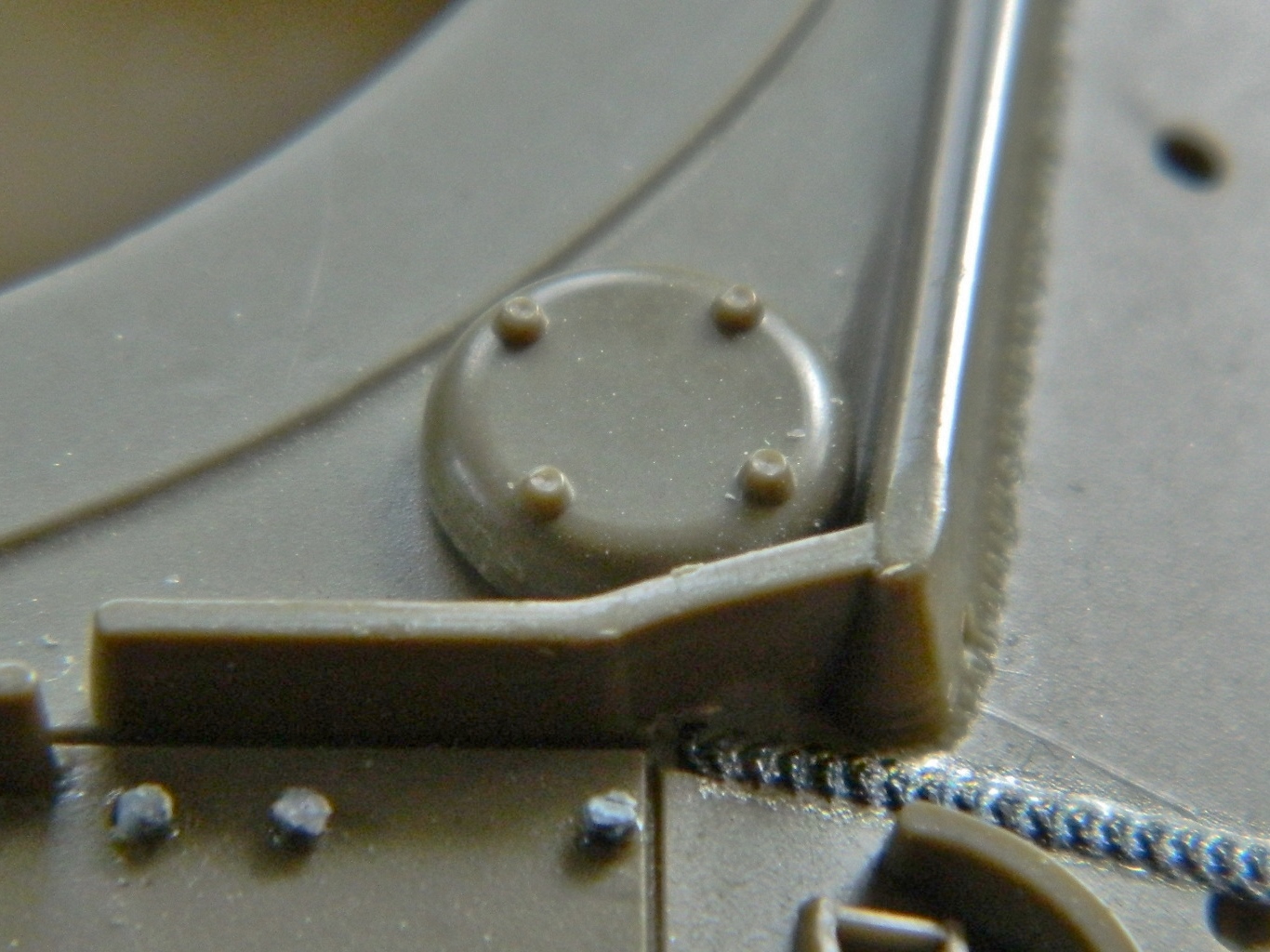

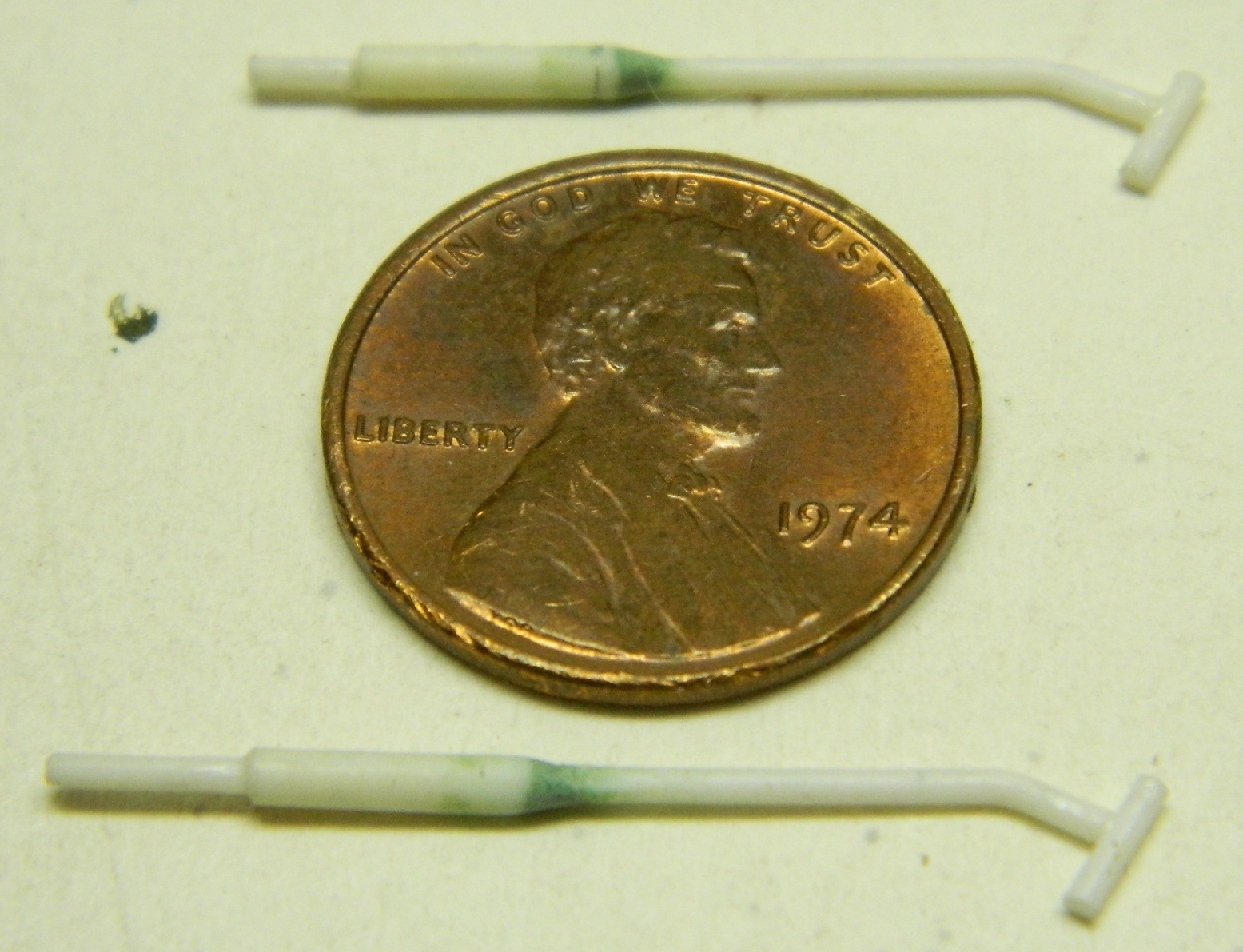
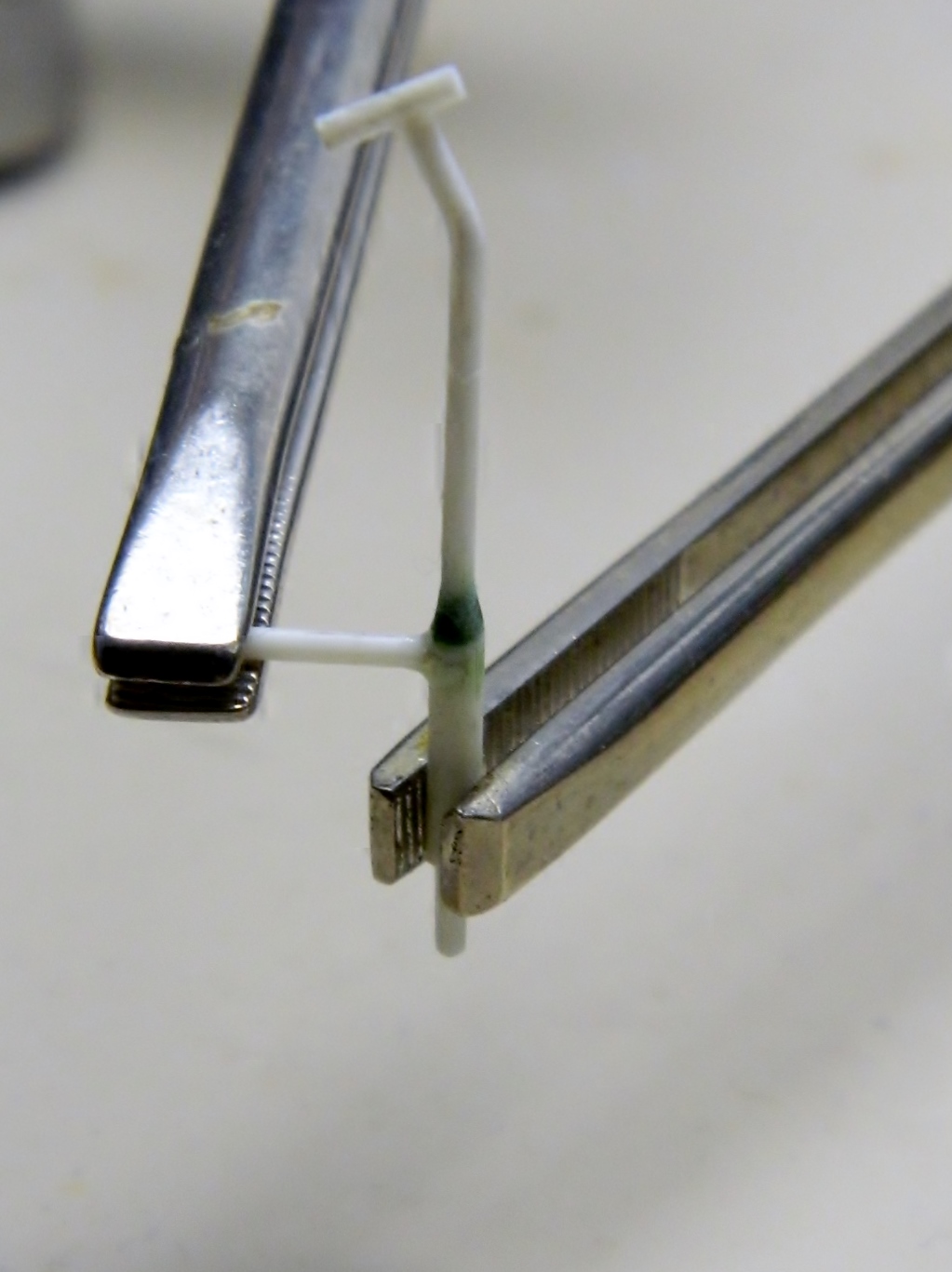
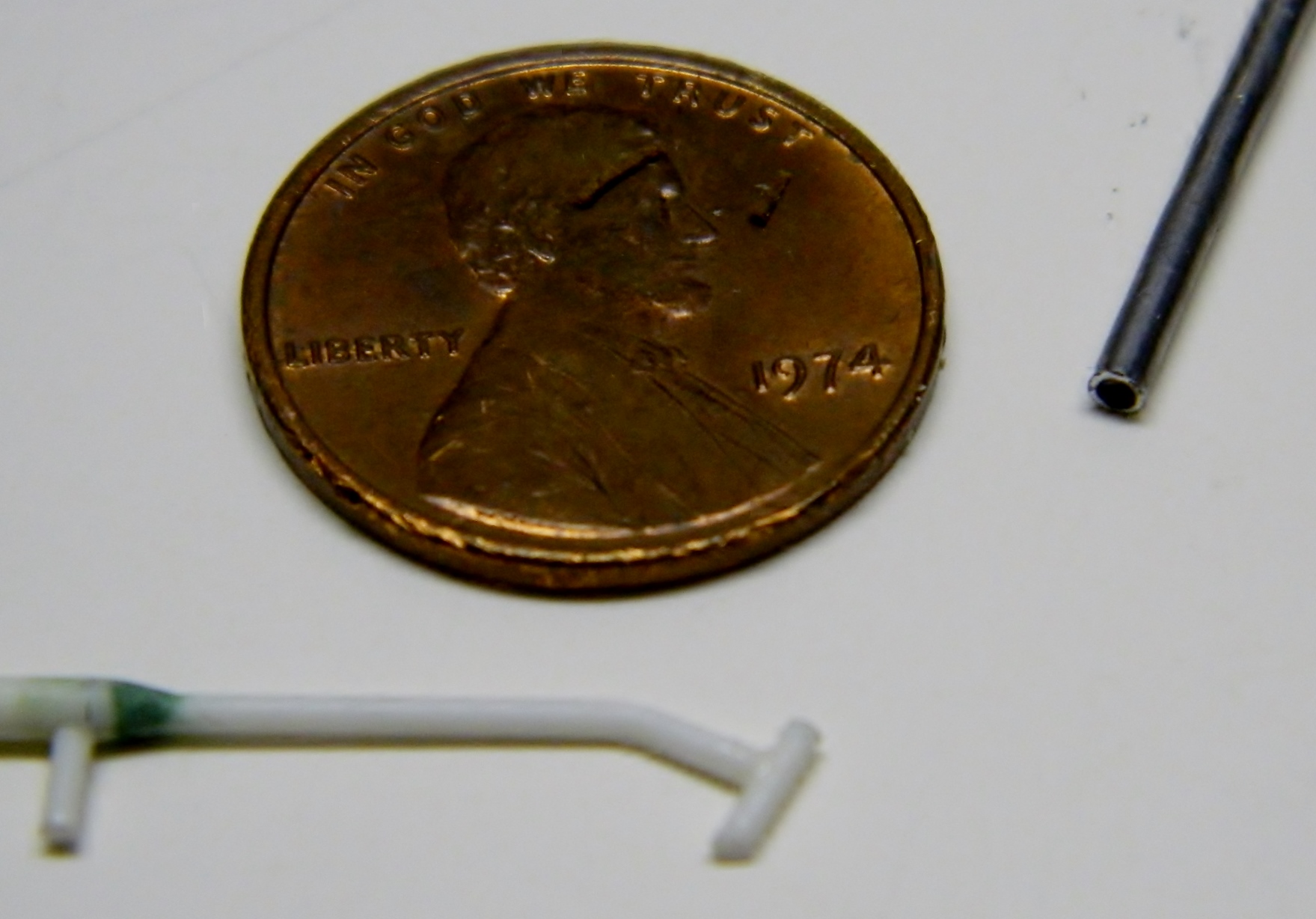
All the rear plates on top of the rear hull are removable and there are supposed to be grab handles where the kit has“fins.” Copper wire is cold-drawn which makes it hard and resistant to bending. I annealed the wire and replaced the fins with something more accurate:


I tried doing the same thing for the grab handles of the engine covers, but even annealed the copper (successfully) resisted giving me the sharp bends I wanted so I used 020 solder instead. I also added the rain baffles to the inside surface of the engine covers:
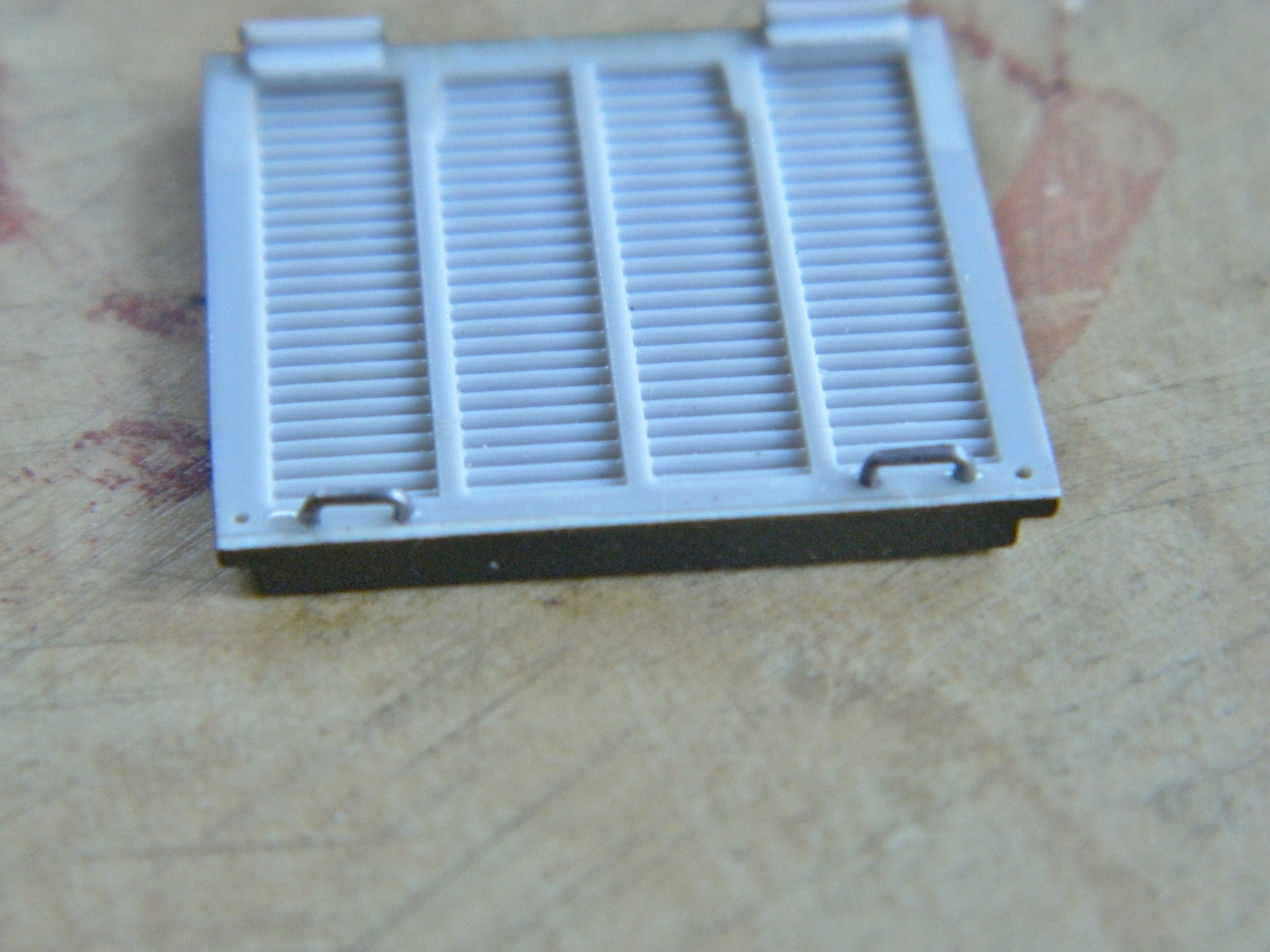
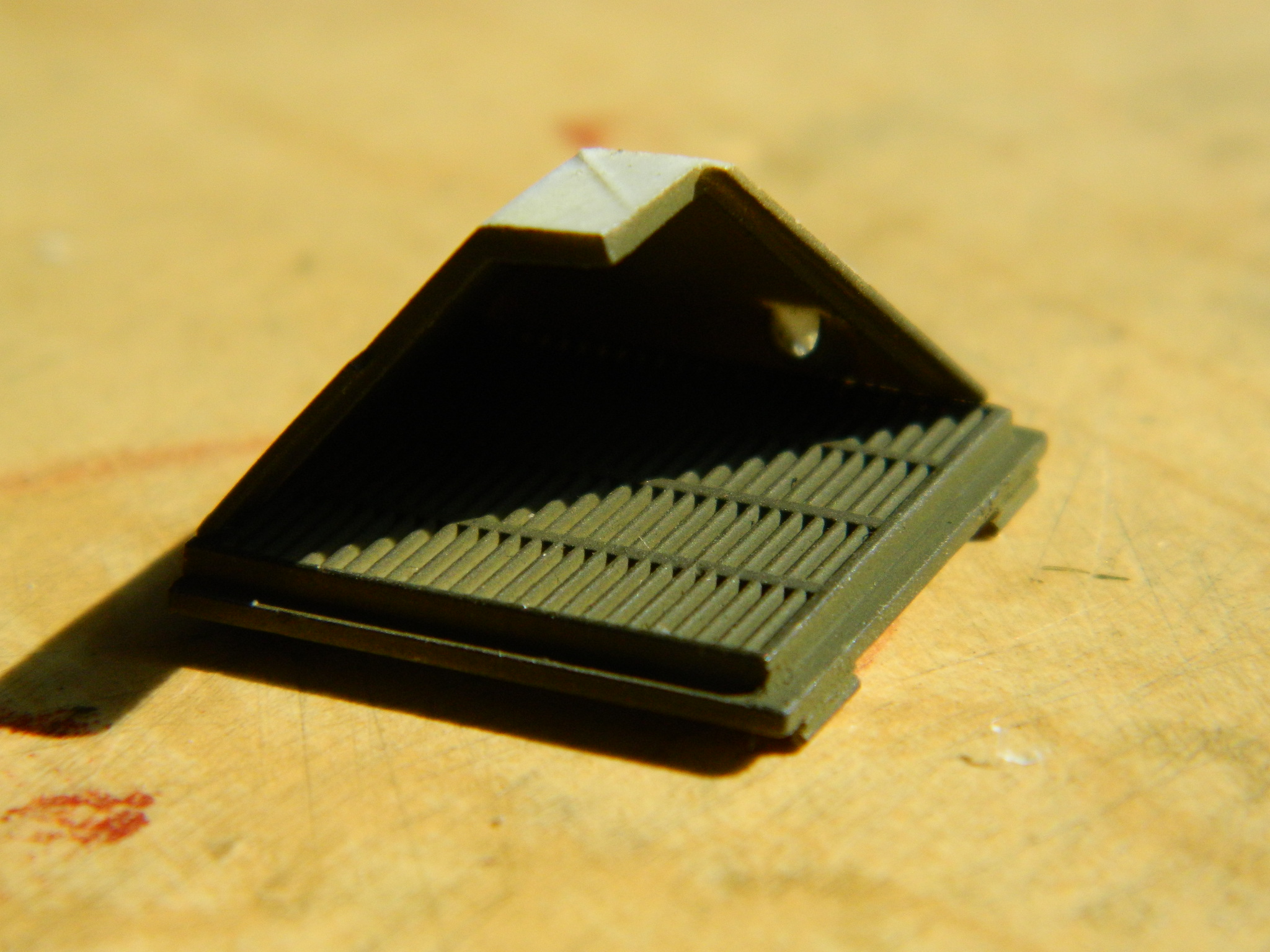
The driver and co-driver hatches were spring assisted to make opening easier. As it turned out, the similar springs for the loader’s hatch from my parts box(es) are just the size I want. I cut off the attachments for the loader’s hatch, added a Grandt Line bolt, and after cutting the inside of the hull to the appropriate angle, glued them in:
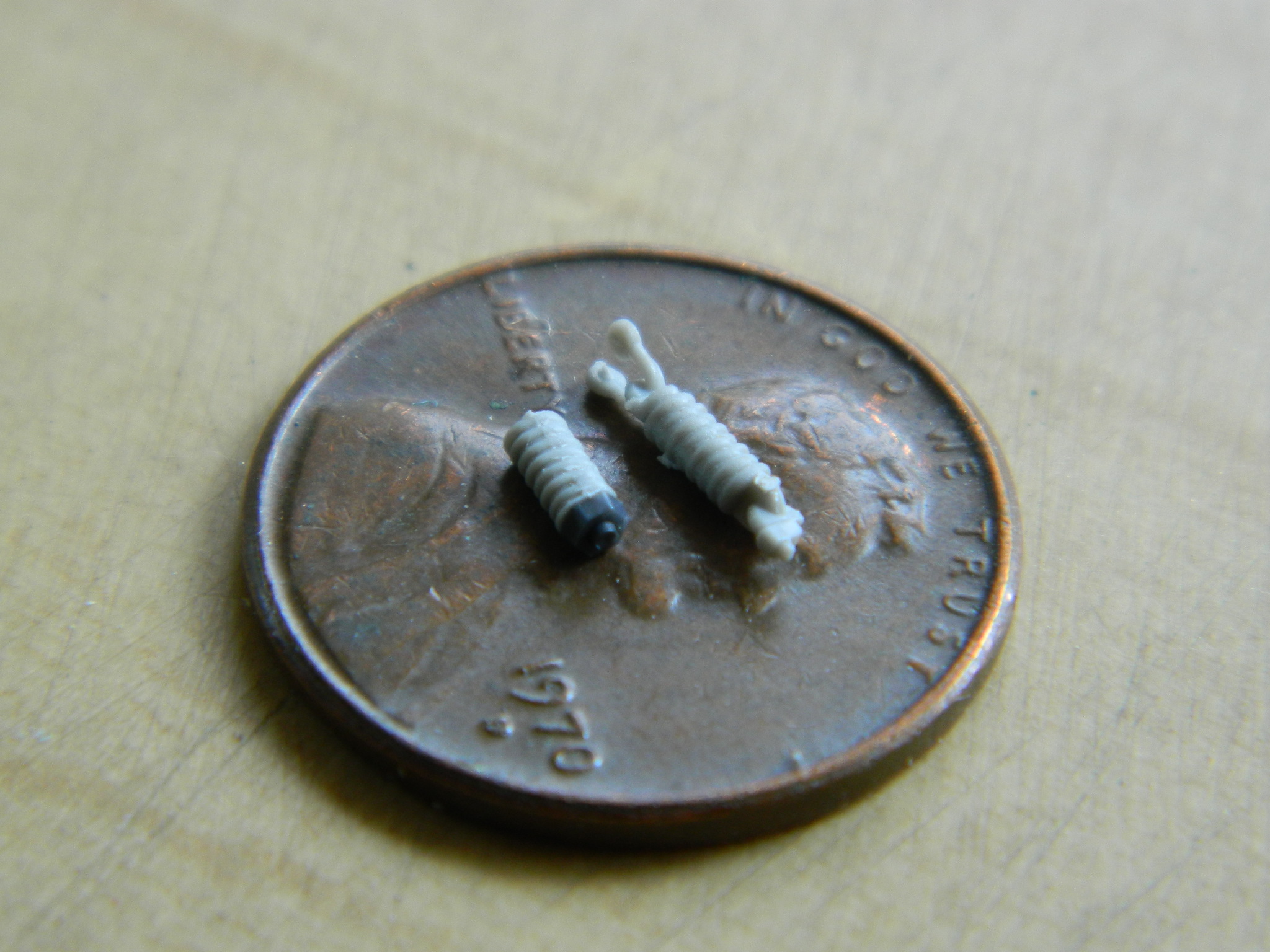

At this point I was waiting for parts and materials to arrive, so I decided to get after something tedious I wasn’t looking forward to. Assembling tracks one link at a time. This Sherman variant has 76 on each side. I timed it to take about 51 minutes per ten links assembled, so I’m looking at 16-20 hours to assemble both tracks.
Why am I doing individual link tracks? The “rubber band” tracks the kit supplies are vinyl and they don’t hold paint well. When flexed, the paint tends to flake off. The tracks I’m using are styrene and will keep the paint (not to mention look much better).
A quick note here about aftermarket tracks…
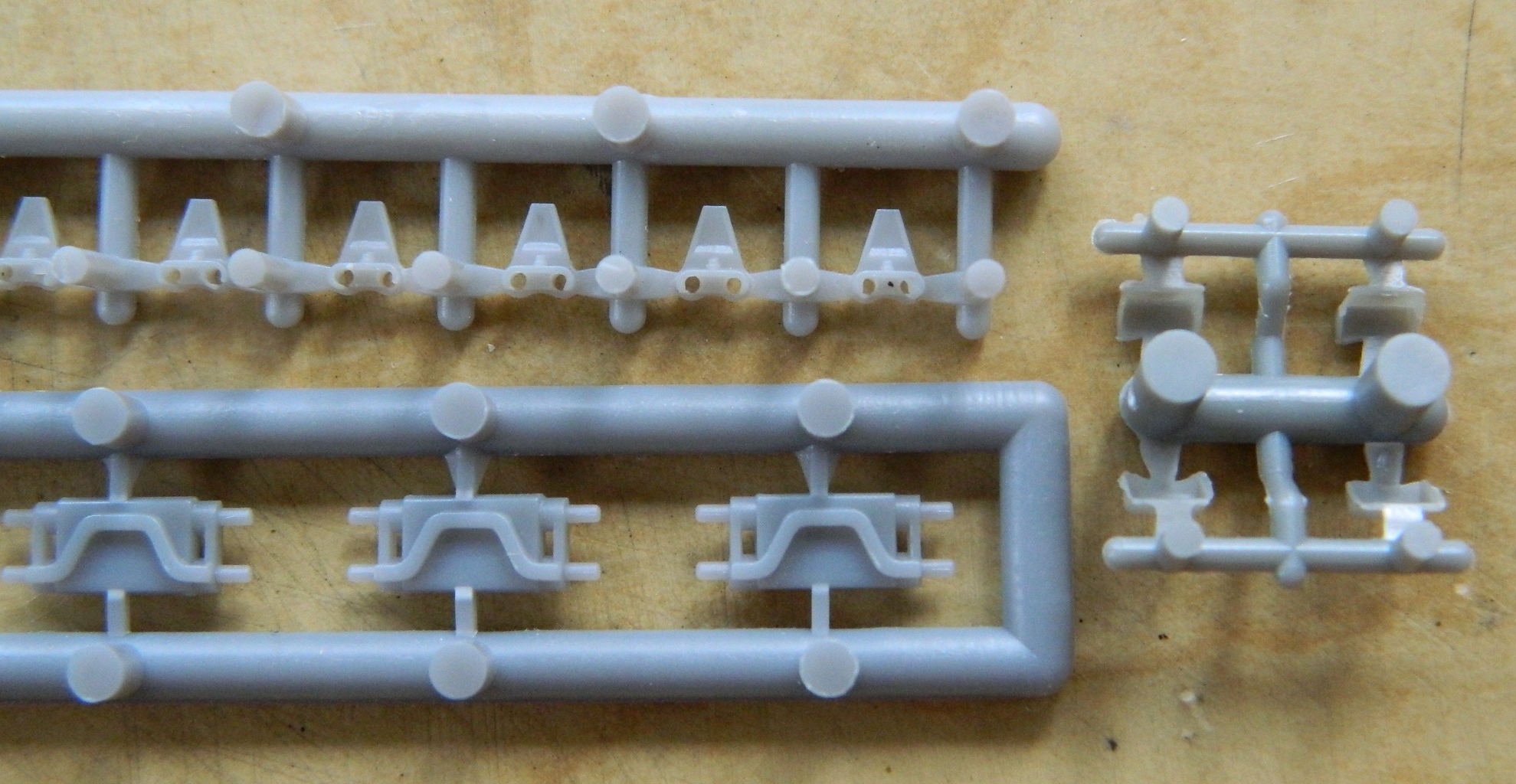
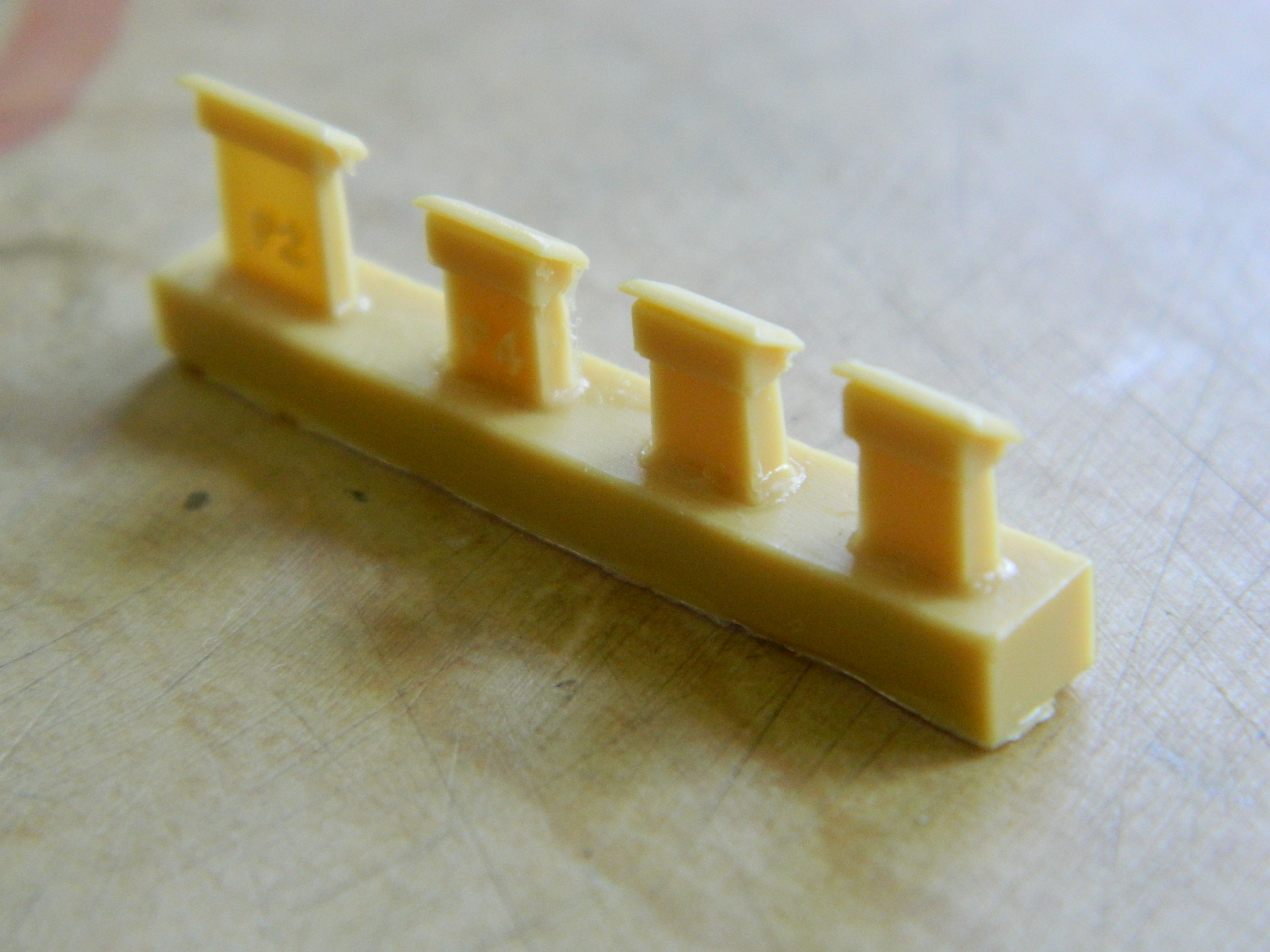
Before you buy tracks, look online for other modeling blogs and/or product reviews. Some tracks don’t fit accurately. From what I’ve been able to see, the place that tracks don’t fit seems to be the drive sprocket. Depending on which manufacturer you use, sometimes the drive sprocket wheel is too narrow for the width of the track to nestle between the sprockets. (Surprising me not at all, Tamiya seems to be more likely to have this problem, but it’s not exclusive to them.) But because of how the inner and outer Tamiya parts join together, it’s easy to widen the drive sprocket wheel by shimming the inside of the wheel. In this situation, I’m using the T51E, steel chevron tracks produced by Panda Plastics which happen to fit the Tamiya sprocket wheel perfectly. (In the first picture below, the sprue, or “tree,” on the right are “duckbill” track extenders and I tried to put them onto tracks but THAT level of tedium went beyond my patience to deal with so I’m not using them):
The good news is that I don’t have hair to pull out (anymore) over this.
I threw the suspension of the spare kit together to use as a jig for fitting the tracks:


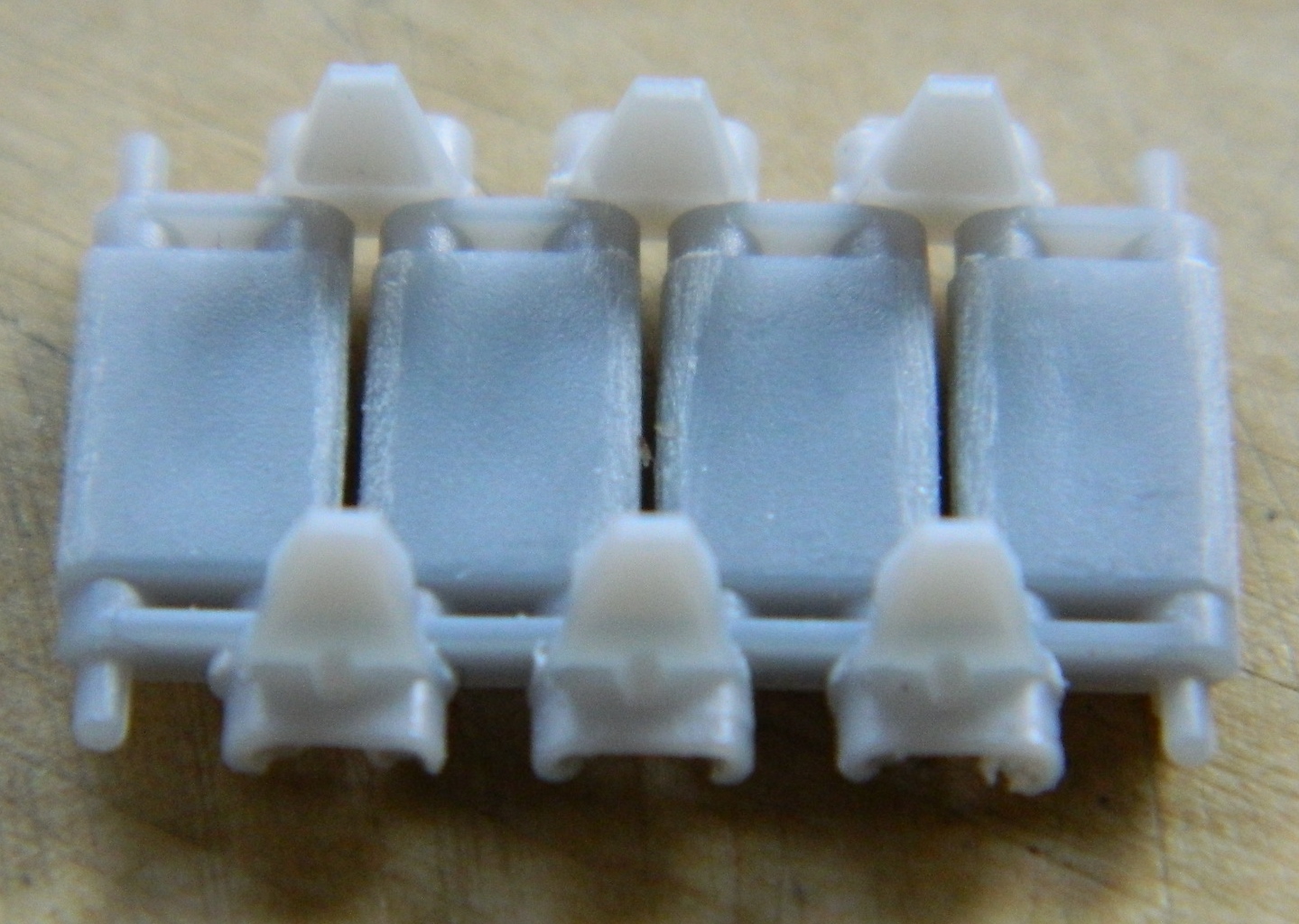
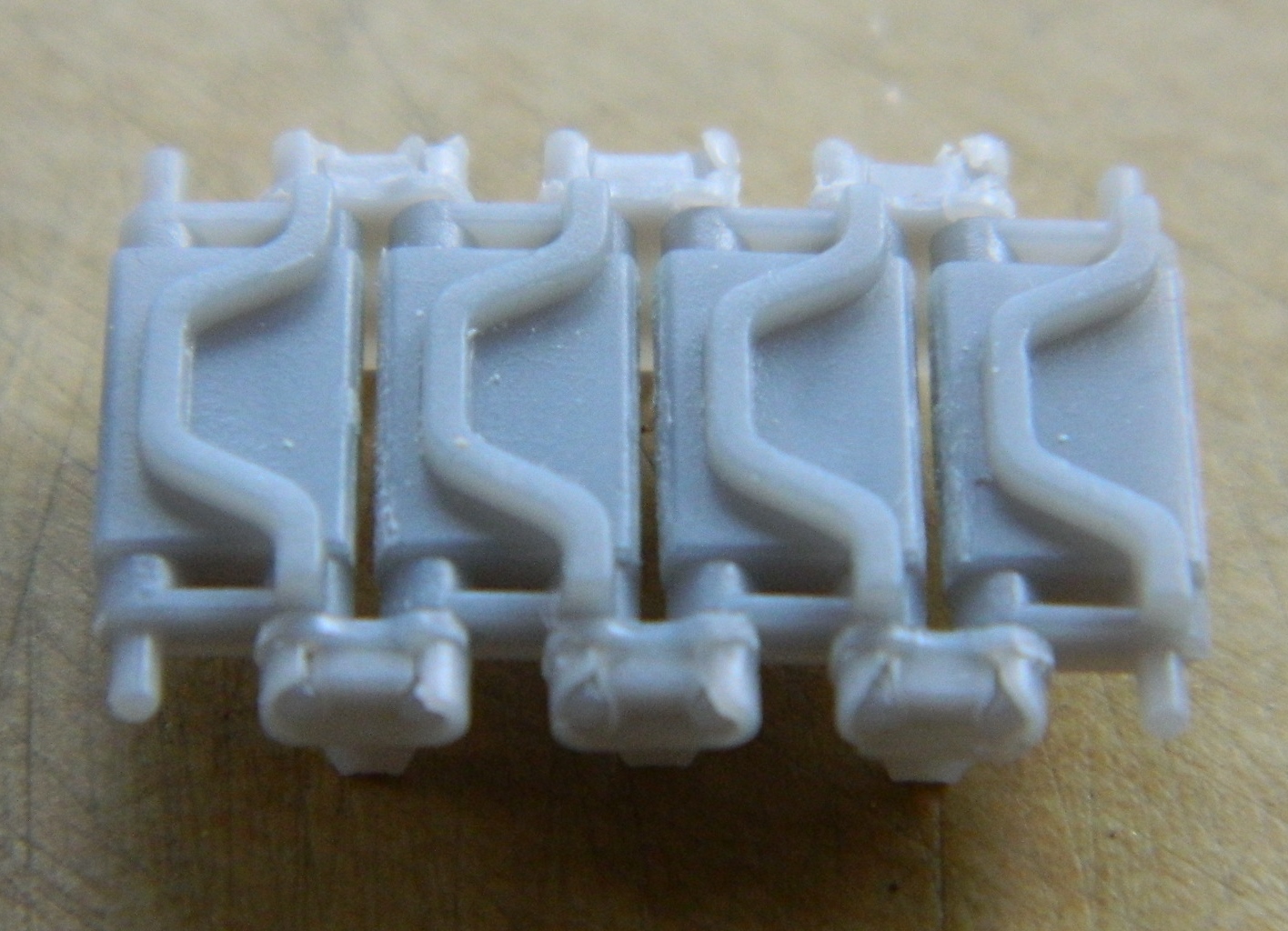
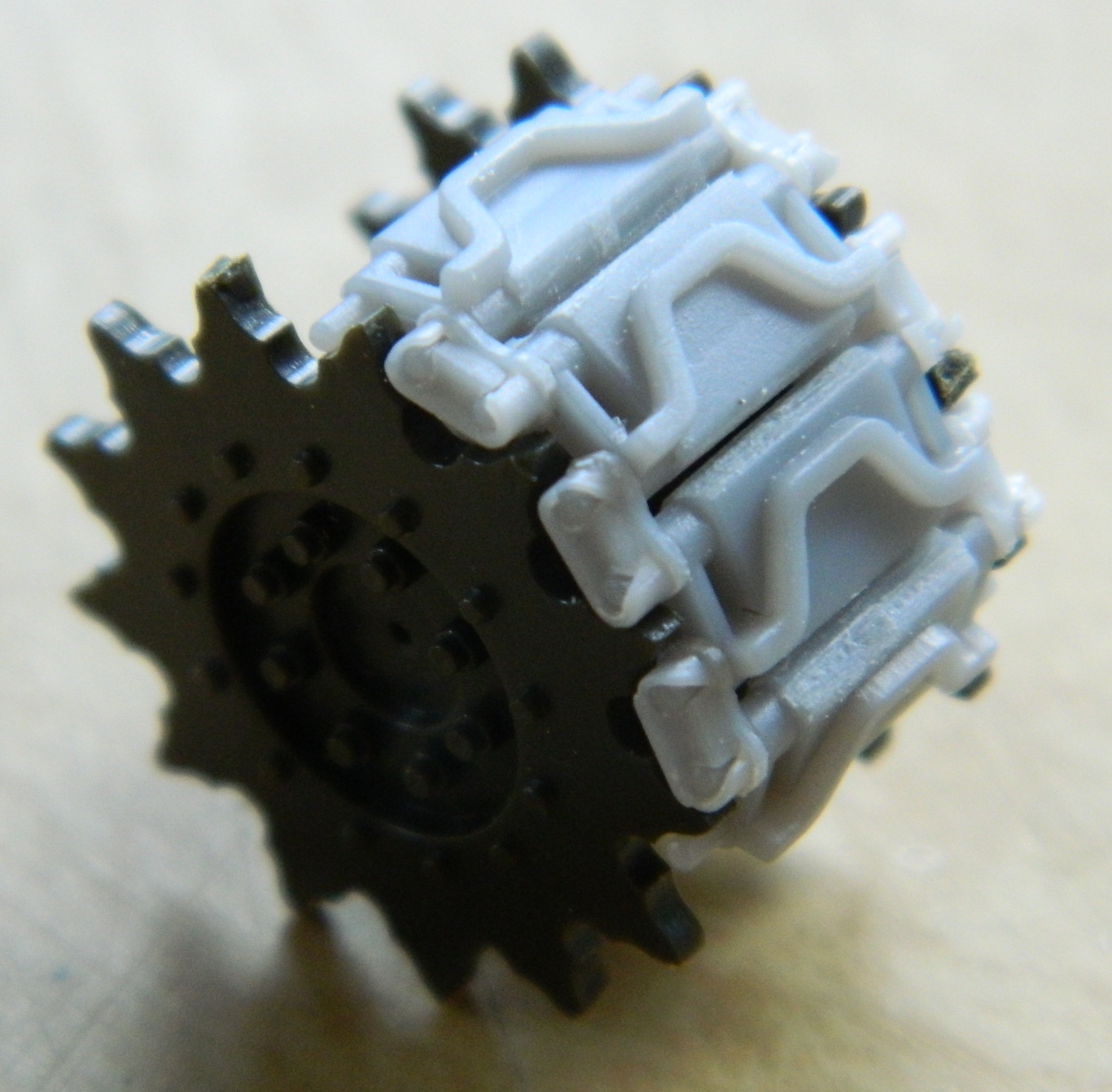
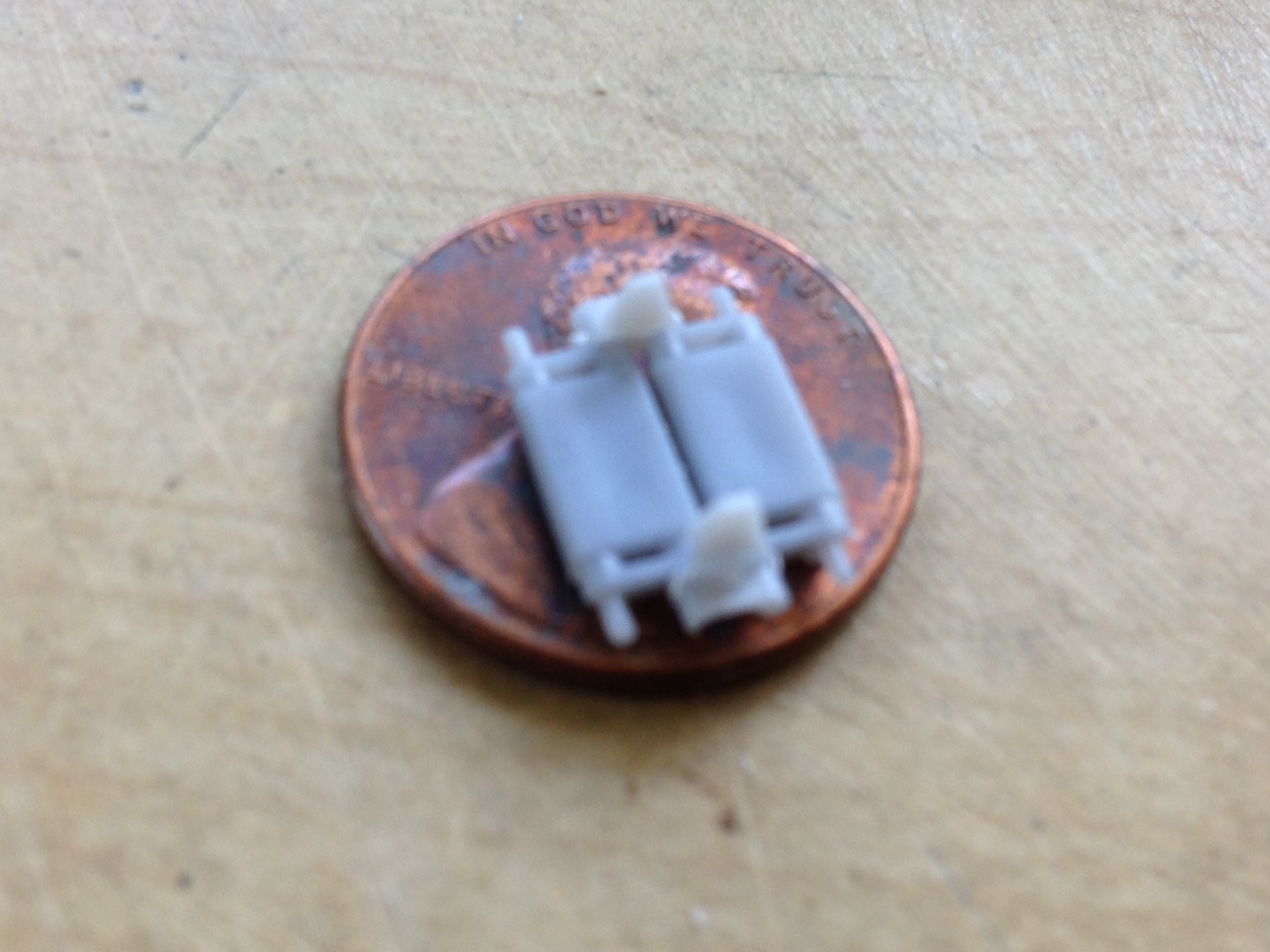
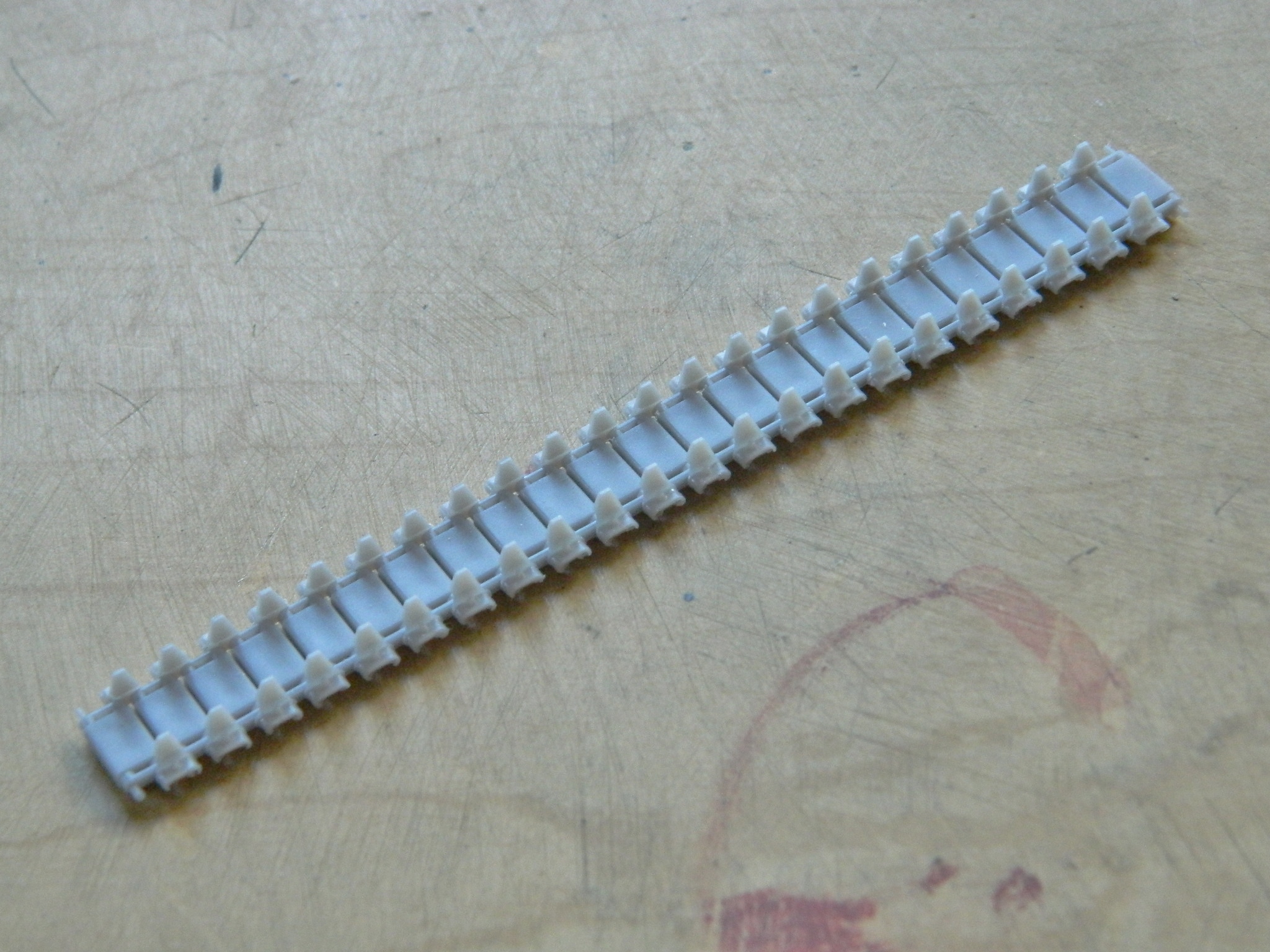
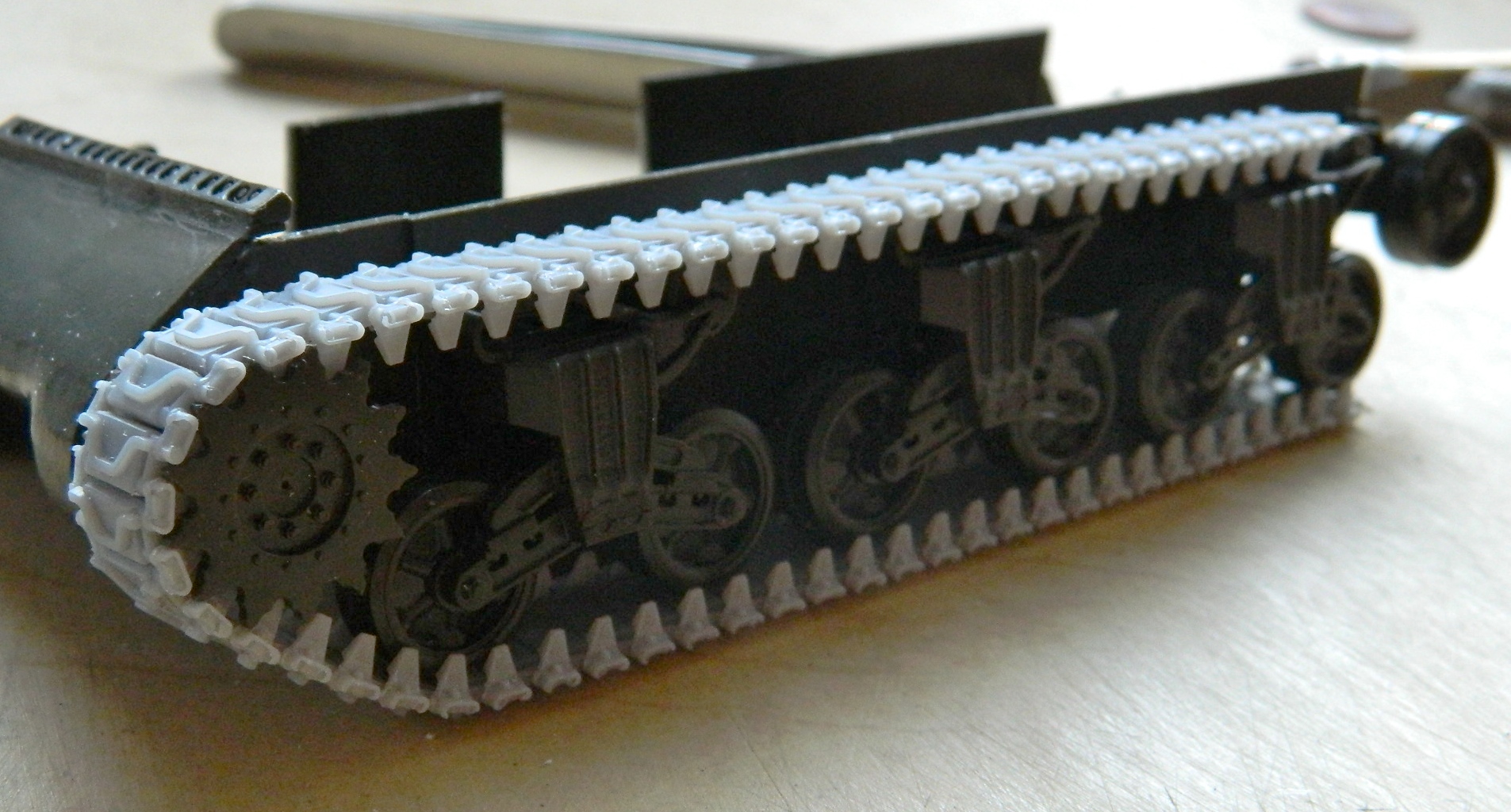
MANY hours later, I got both track runs assembled. Though Panda’s castings are clean with NO flash over the 152 separate pieces required to assemble the tracks, they are still cast pieces that have seams and each part needed those seams to be removed; it still took what seemed like forever to assemble them all. When I test-fit the tracks around the sprocket wheel, I noticed that the inner track face edges were just a little too square, so while I was removing seams, I also rounded the edges of each track so they would curve cleanly around the drive sprocket. (Hindsight has shown me that the next time I use individual track links that need edges rounded to round the edges of just the tracks that will bend around a wheel.)
Nothing is glued at this point (for reasons I hope are obvious). Test fitting shows me that I’m going to need at least three (preferably four) hands to put these things onto the suspension, but that’s a hair-puller for another time:
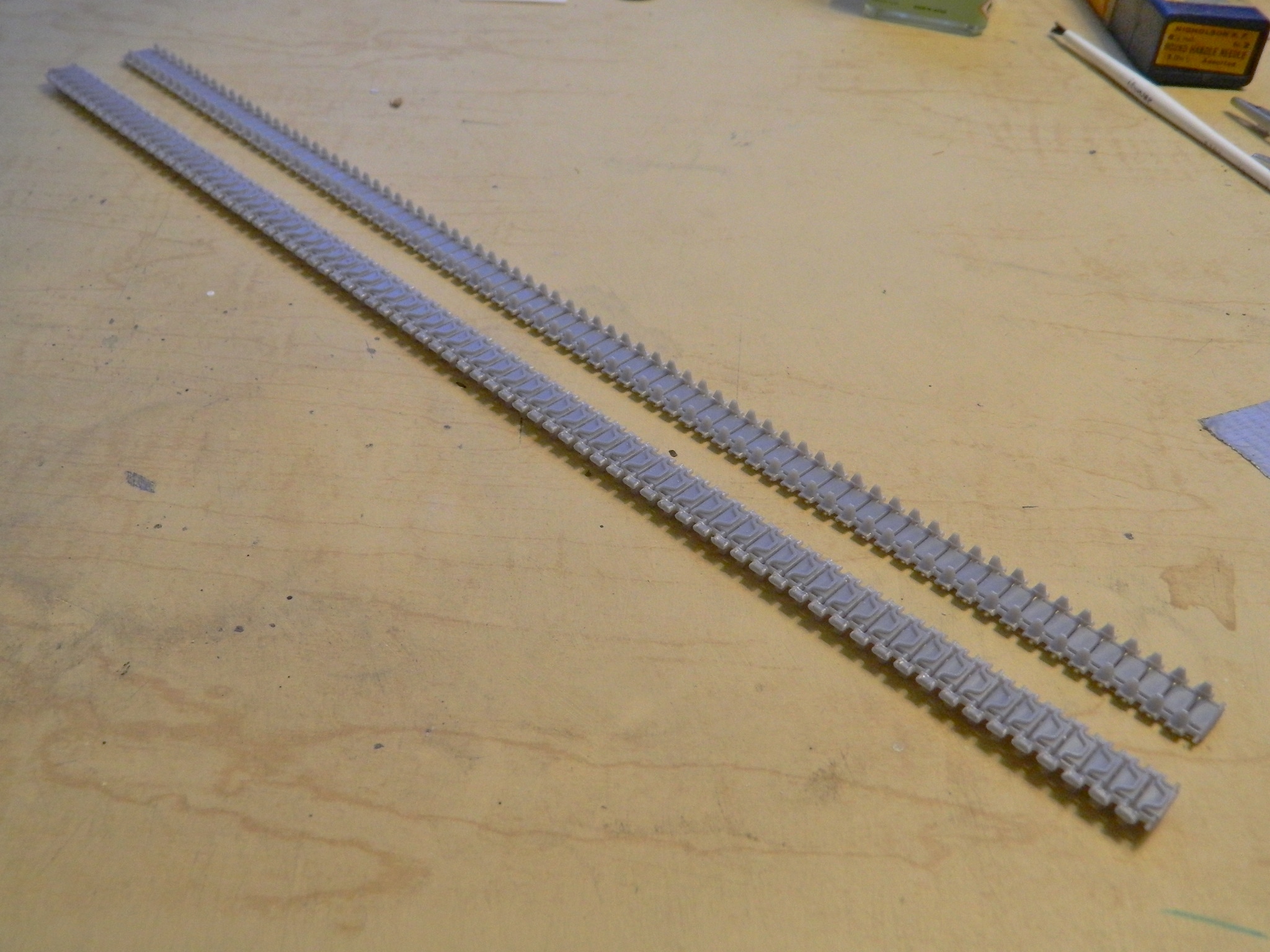
By this time I needed to do SOMETHING ELSE. During the many hours (did I mention many hours yet?) of track cleaning and assembly, I developed a case of what I call Craftsman’s Neck. That’s a lovely condition where your neck muscles PUNISH YOU for all the hours spent with your head hanging down working on something. So yeah…I needed to do something else.
I decided to work on the vent blower assembly.
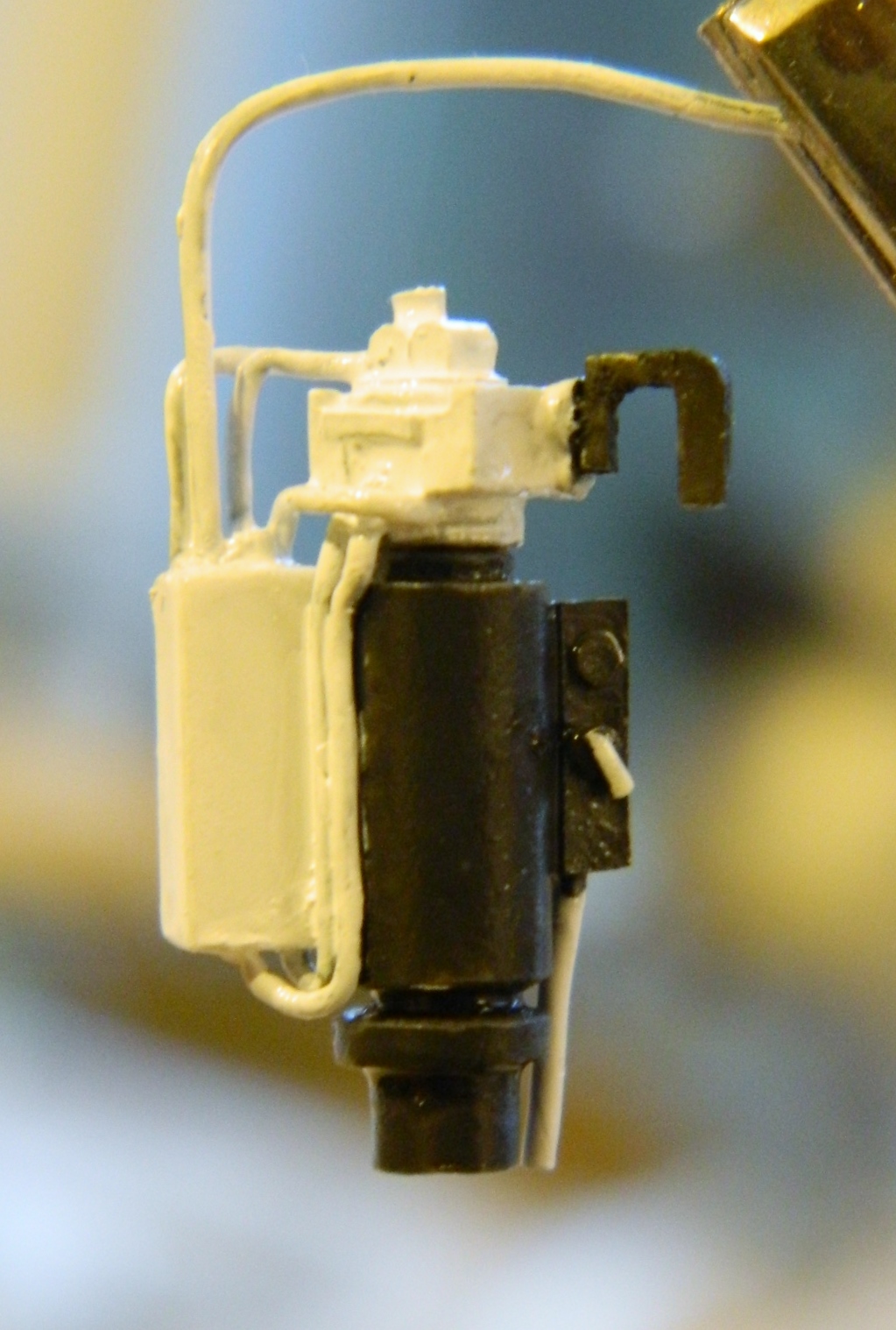
Originally I had made the master out of styrene. I guess I should have known better because I tried to take a short cut (yeah, I know…) around replicating this assembly. I ordered a reusable mold making compound from Micro-Mark. It gets heated in the microwave to turn it liquid (or close to liquid; when molten it has the consistency of cool honey). As I found out, thin styrene doesn’t like heat and the styrene master I tried to use this molding compound with caused the master to deform the styrene slightly (by melting…how odd for something heat-related). So I made the blower assembly out of sterner stuff. Brass.
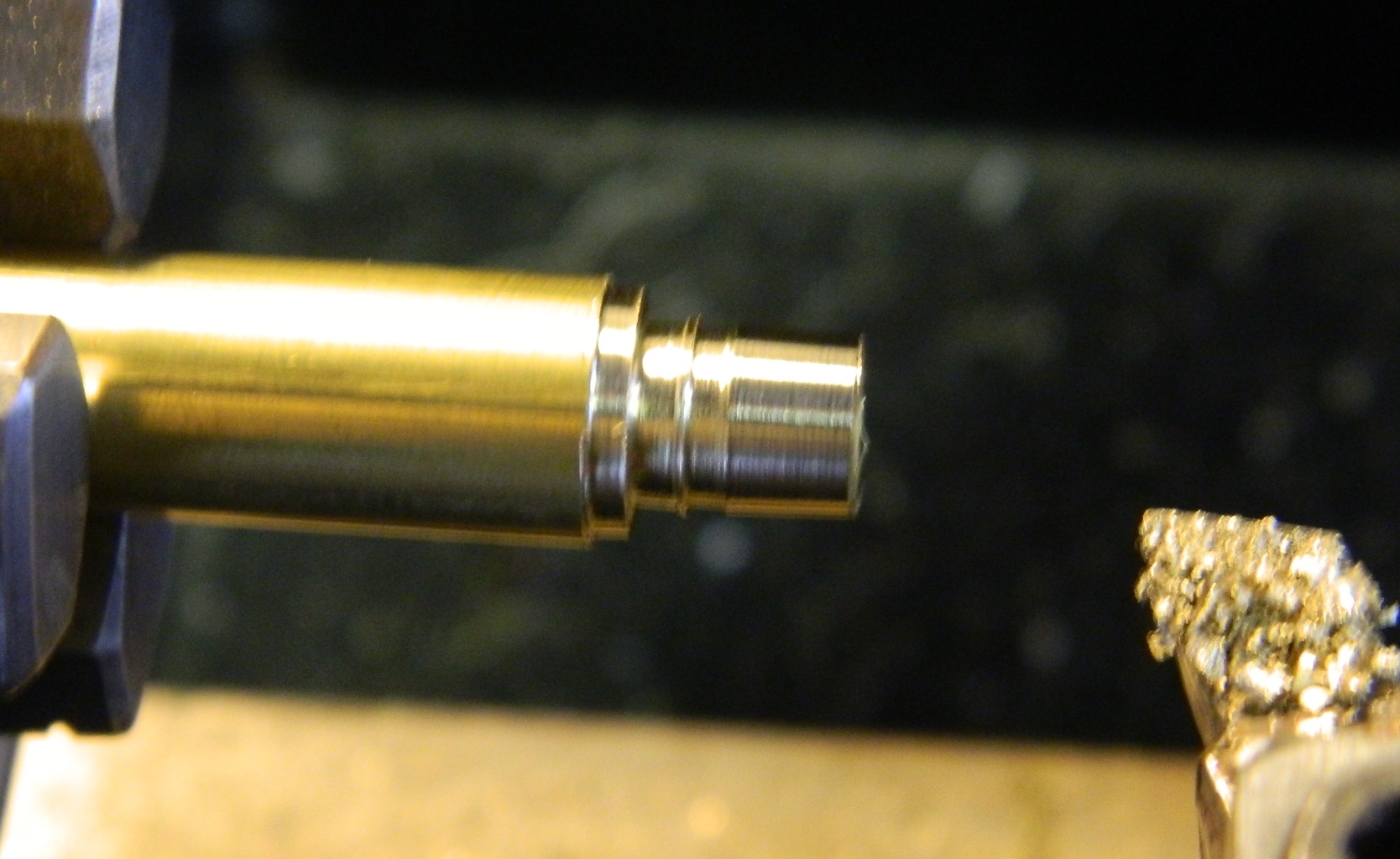
I purchased a 3/8″ brass rod from Online Metals, chucked it into my lathe, and turned the body:
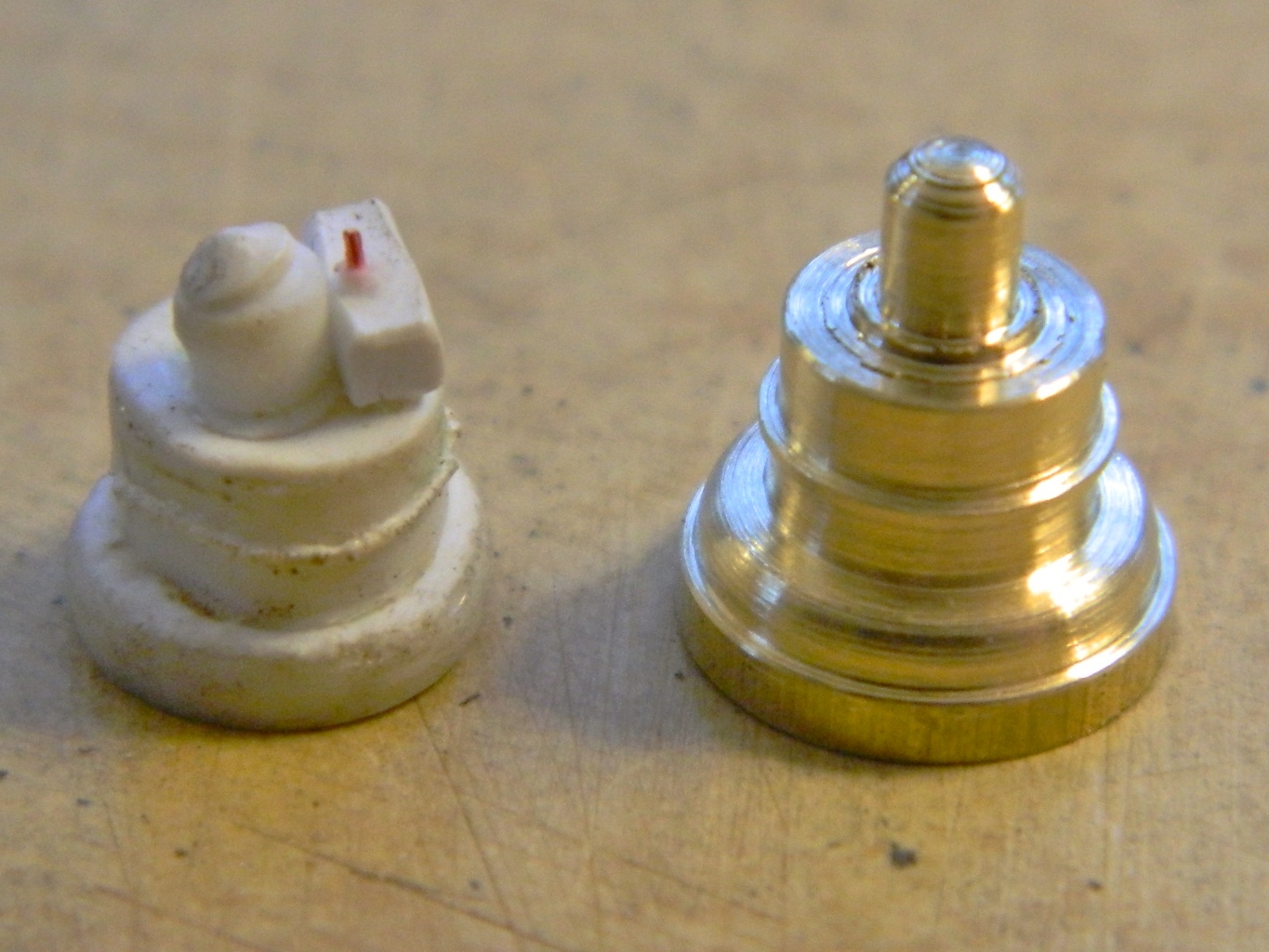
And because I’m essentially lazy, I snapped the switch box off the styrene “master” and glued it to my brass master:

So, since I’m going to be making molds, at this point I decided to go the route I should have gone to begin with and ordered two-part silicone molding rubber and to make a vacuum pump and chamber (an entirely different job and separate from this build, you can find details here Making the Pump and here Making the Vacuum Chamber). While I was waiting for materials to arrive, I decided to attend to a few other of the hull details, such as the crew hatches.
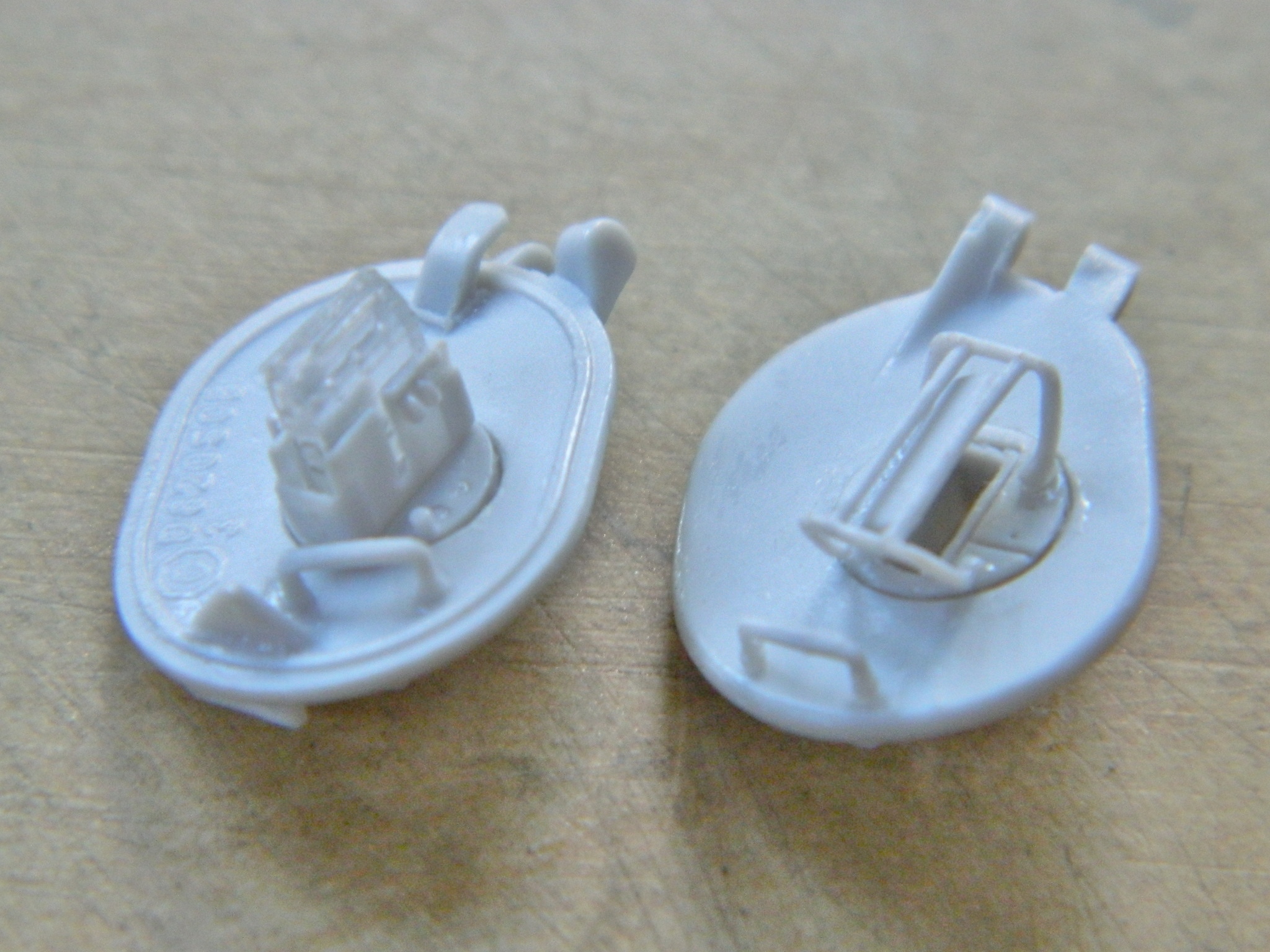
And again I turned to NTMD for these very nice parts, having resculpted the hinges again so they’d fit:

By this point in the build I have been at it for just over a year and am approaching 400 hours spent on the build.
Then I replaced the travel lock for the main gun with more NTMD parts:
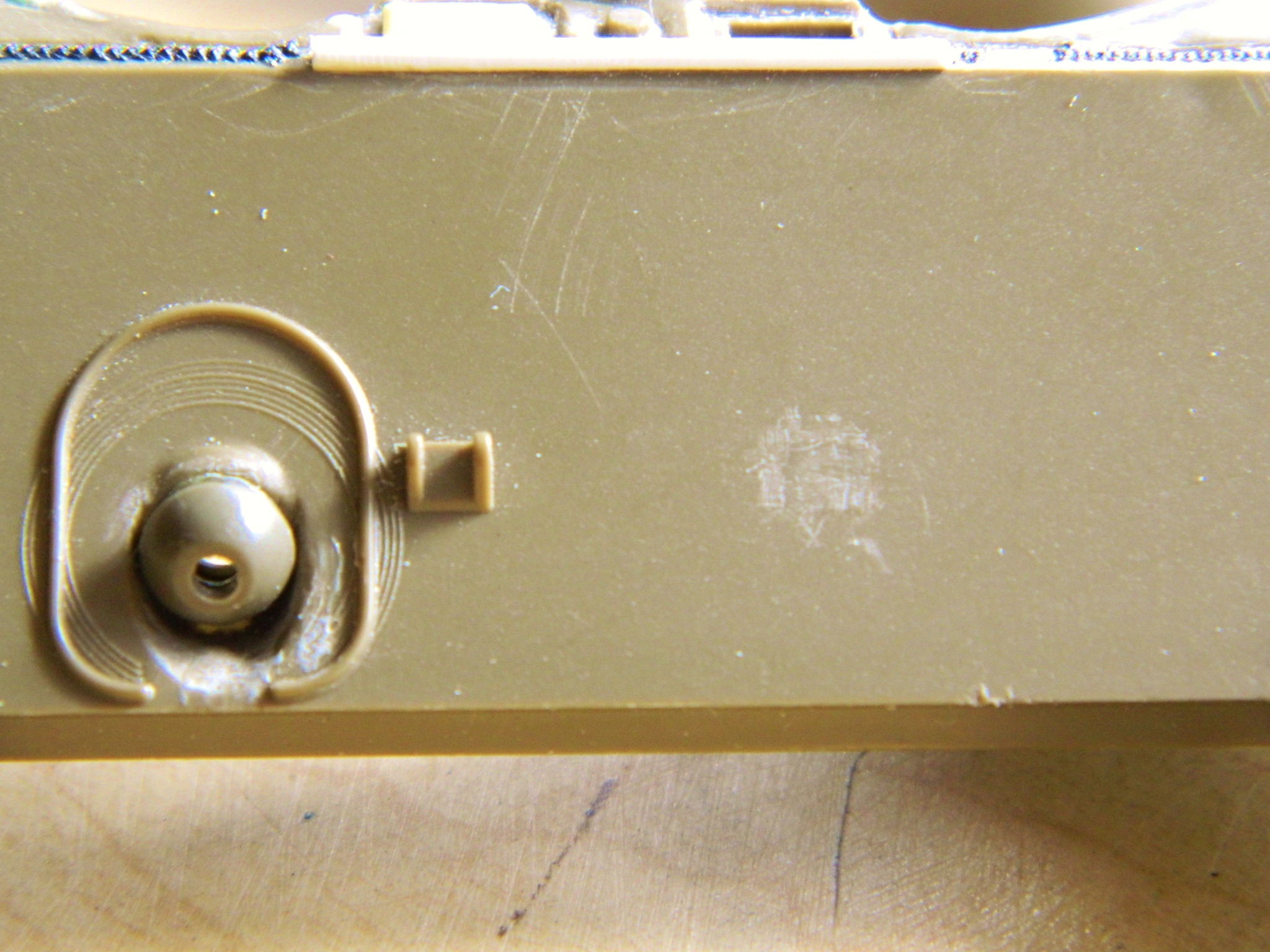

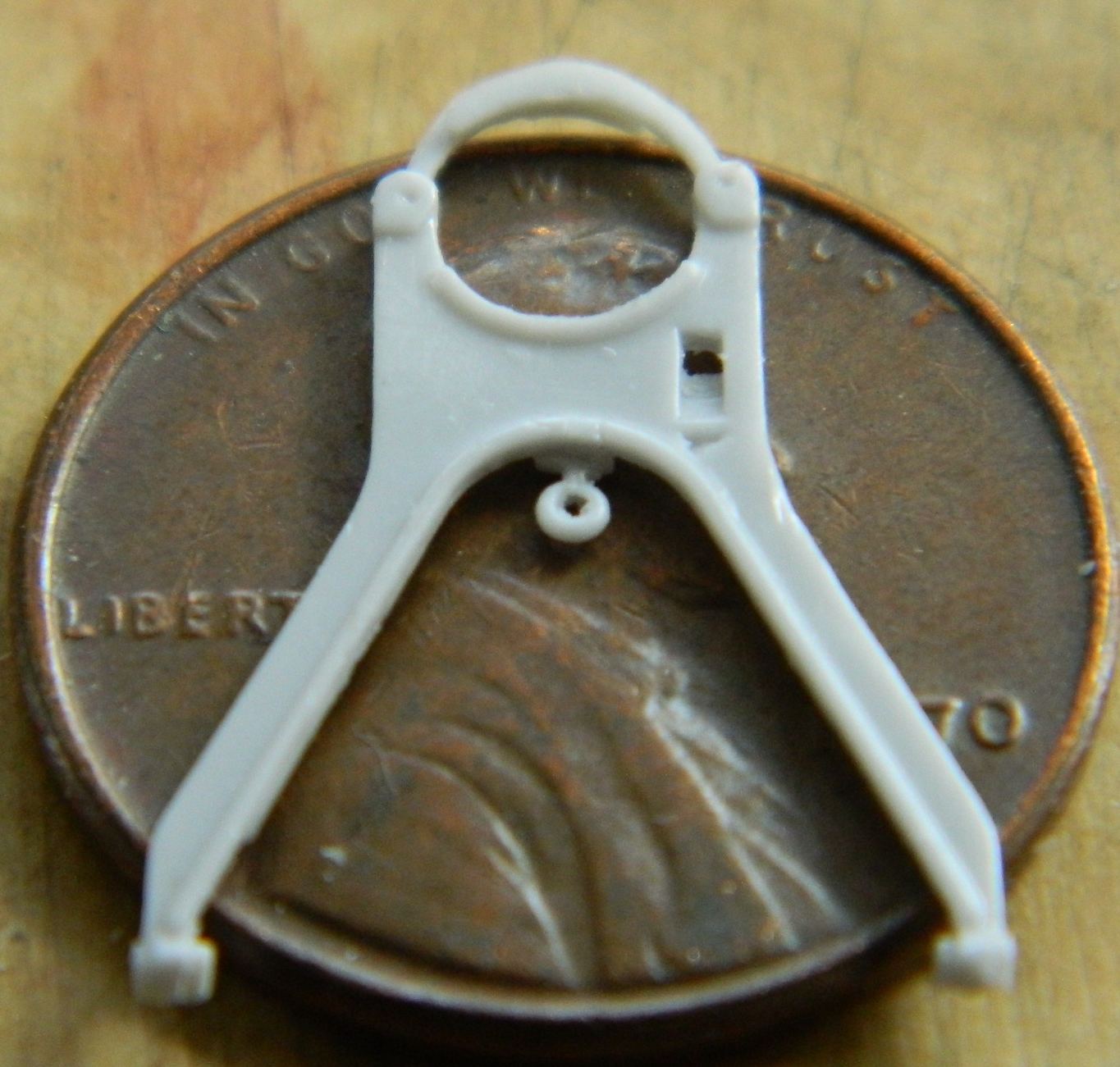
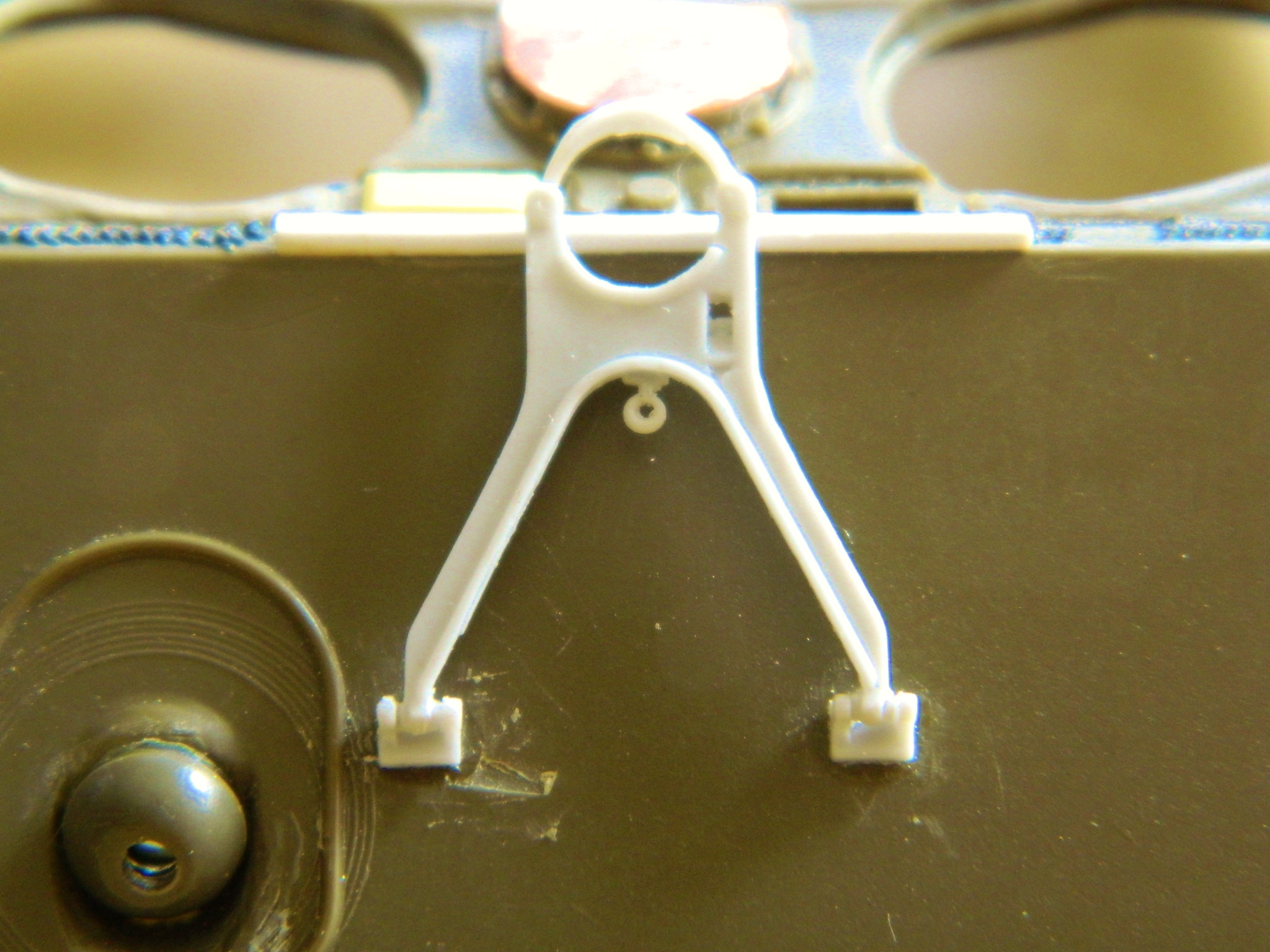
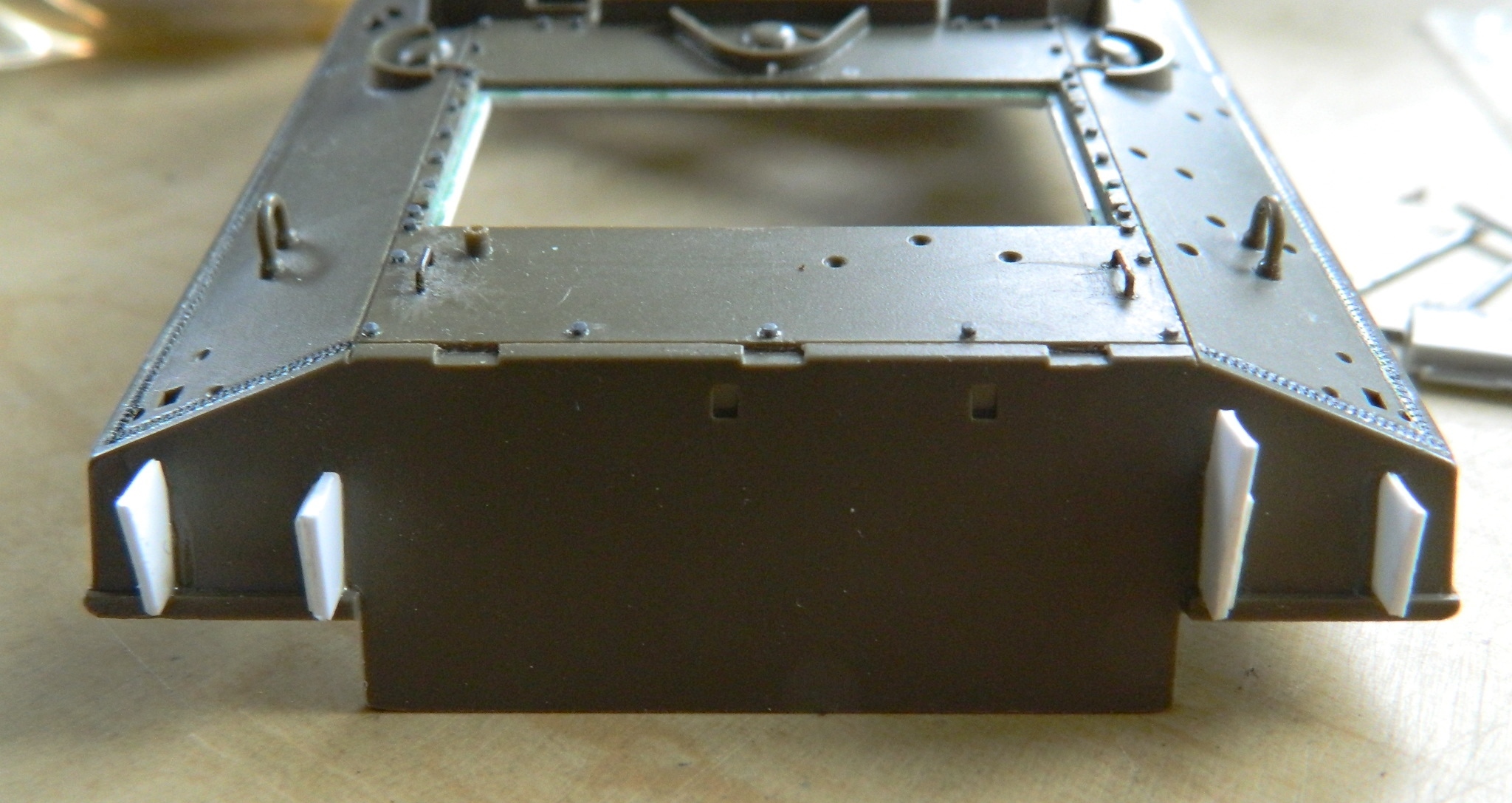
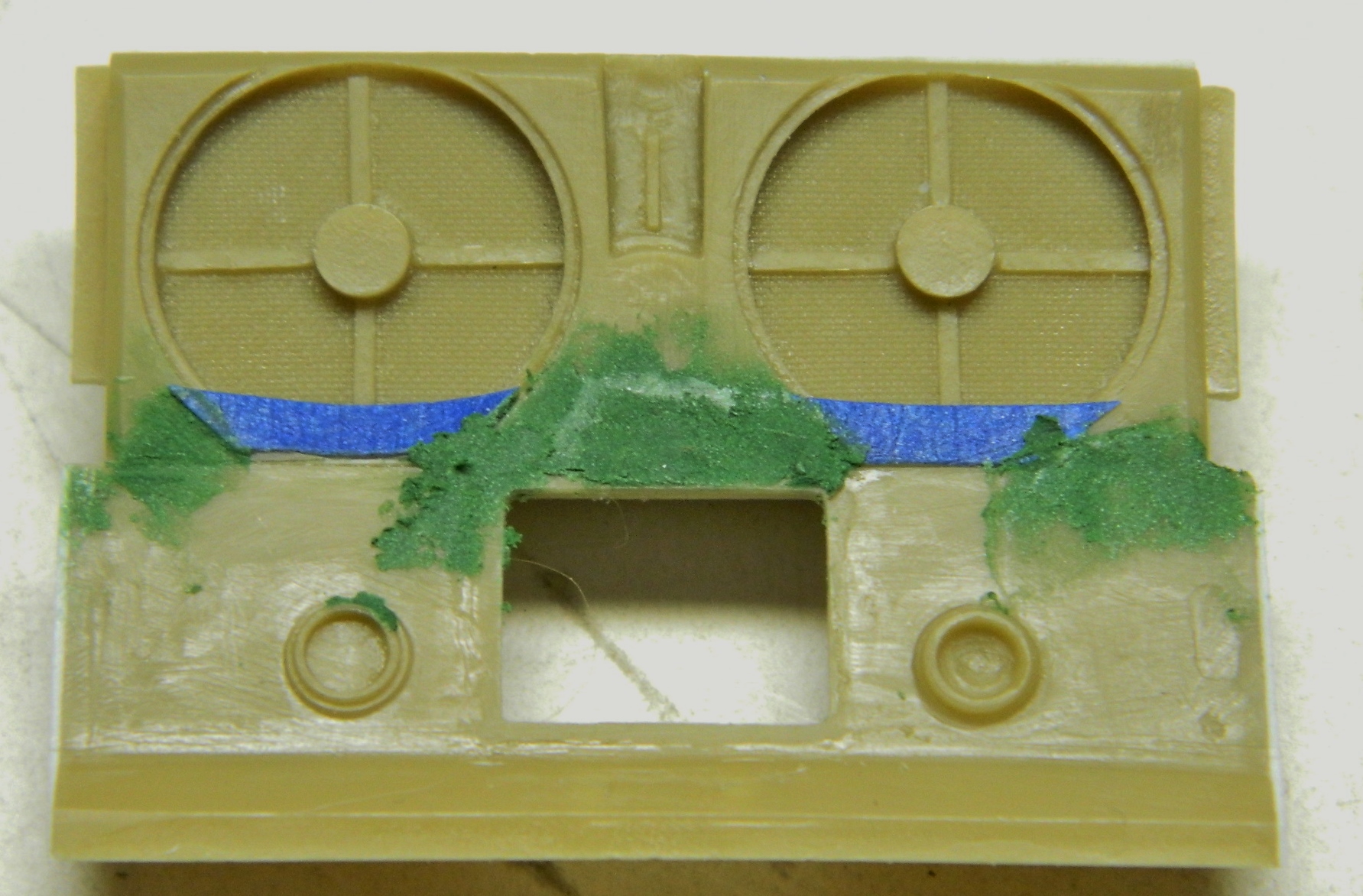
Since I will be replacing the kit’s storage brackets for extra track links with resin parts (NTMD again), the slots in the rear hull face need to be filled and smoothed, inside and out (removing the provisions for the slots on the inside of the hull is going to make fitting sponsons later SO much easier):

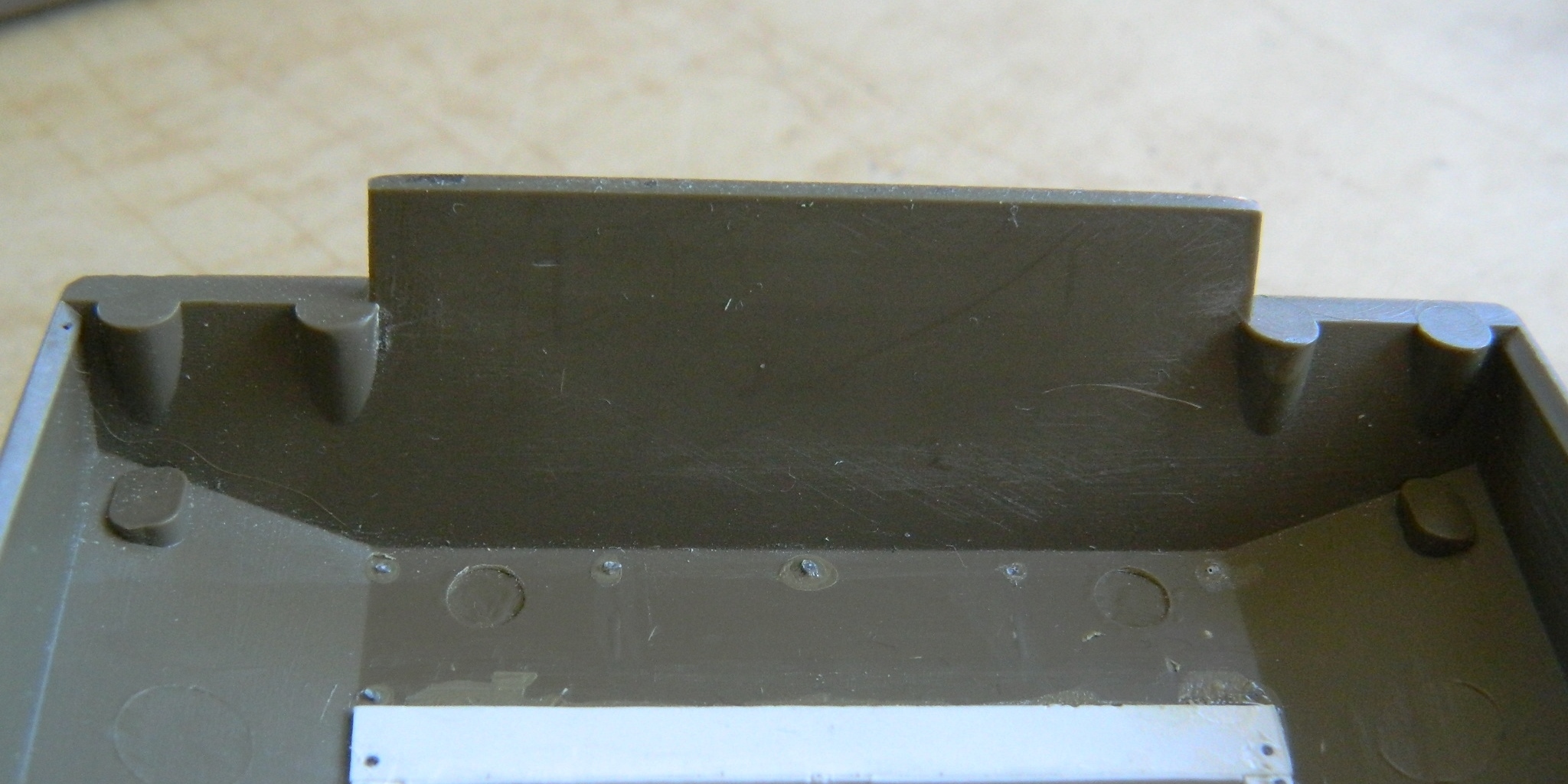

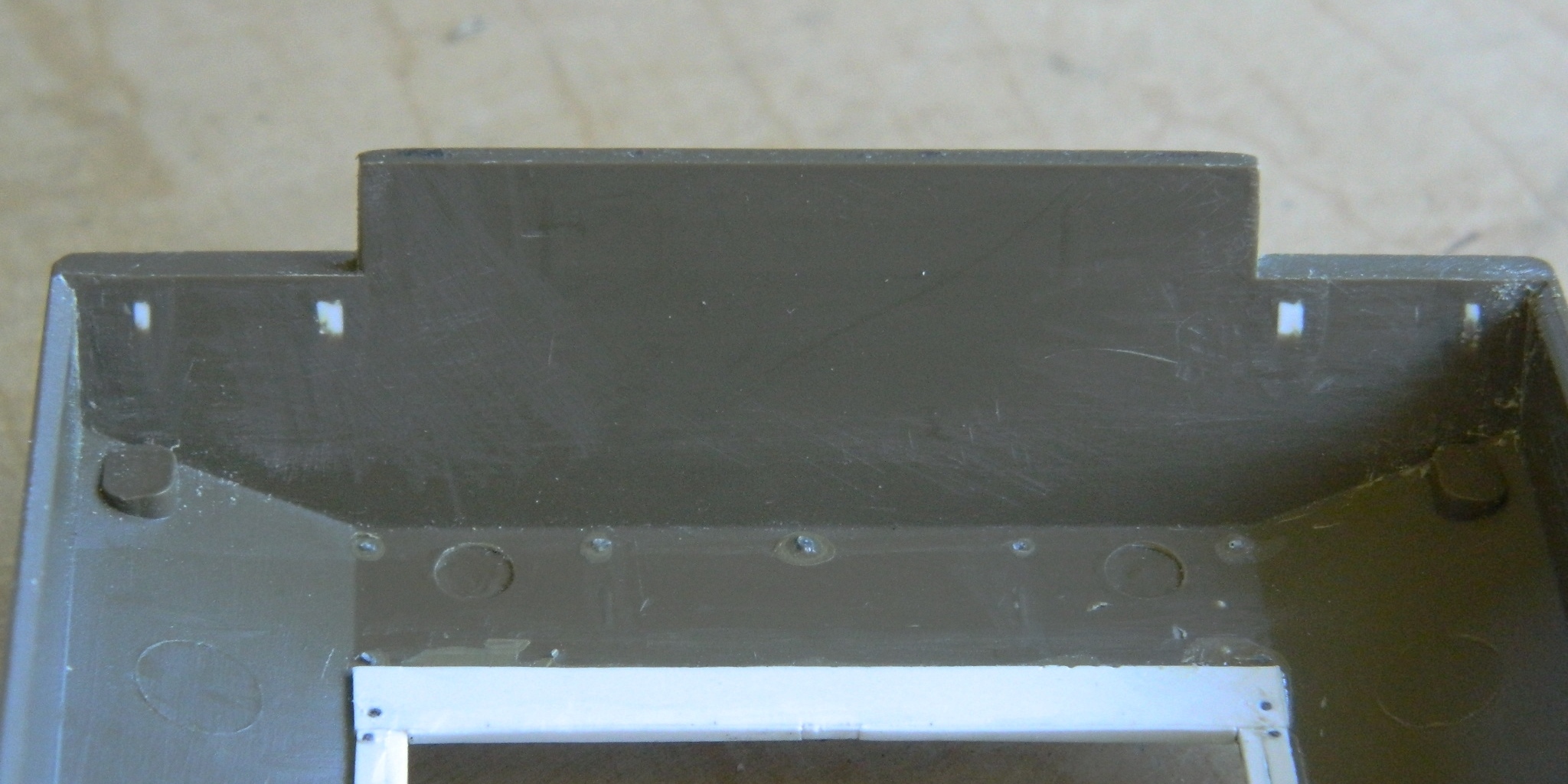
M4A3 (Tamiya) Build #16
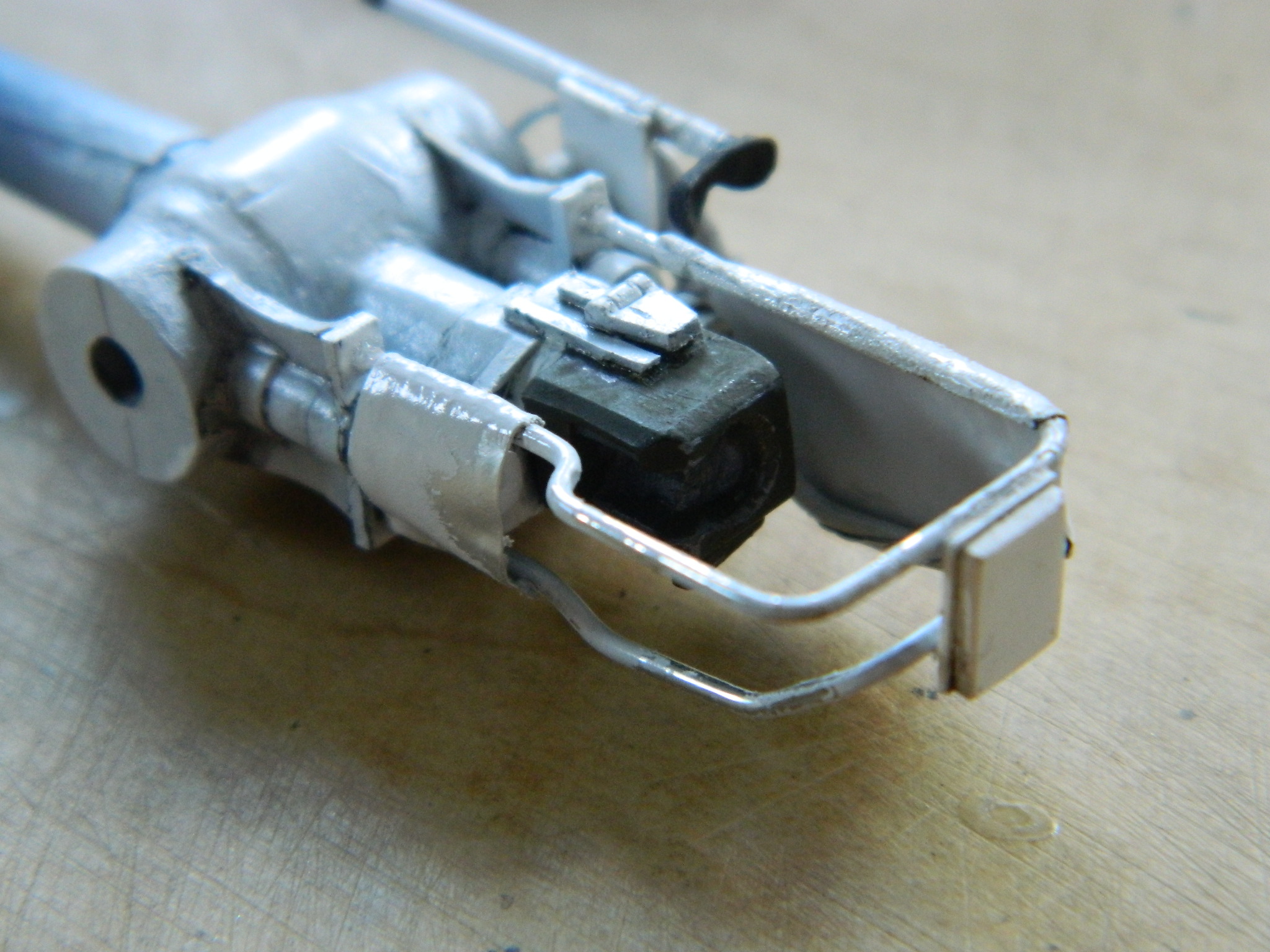
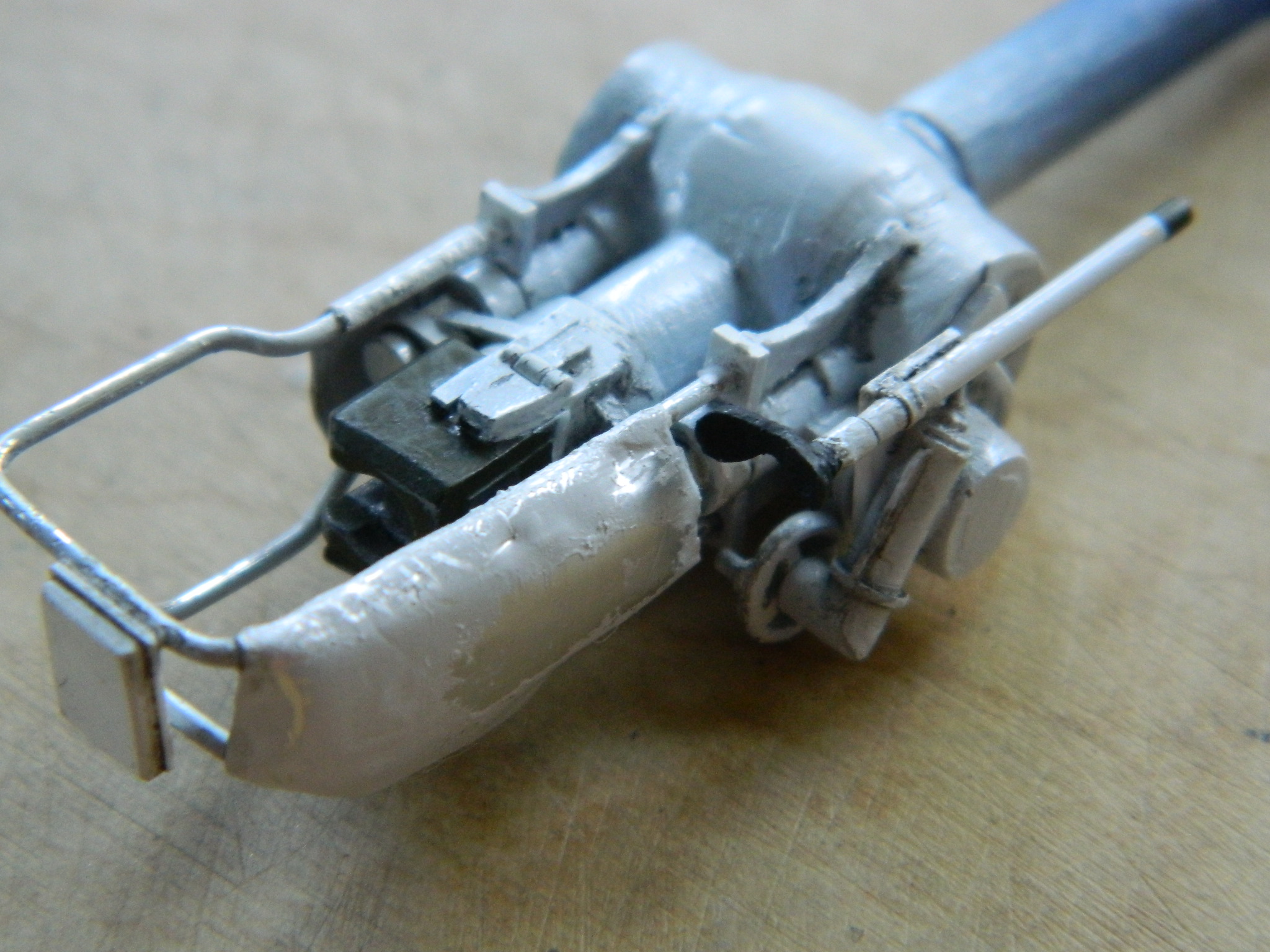
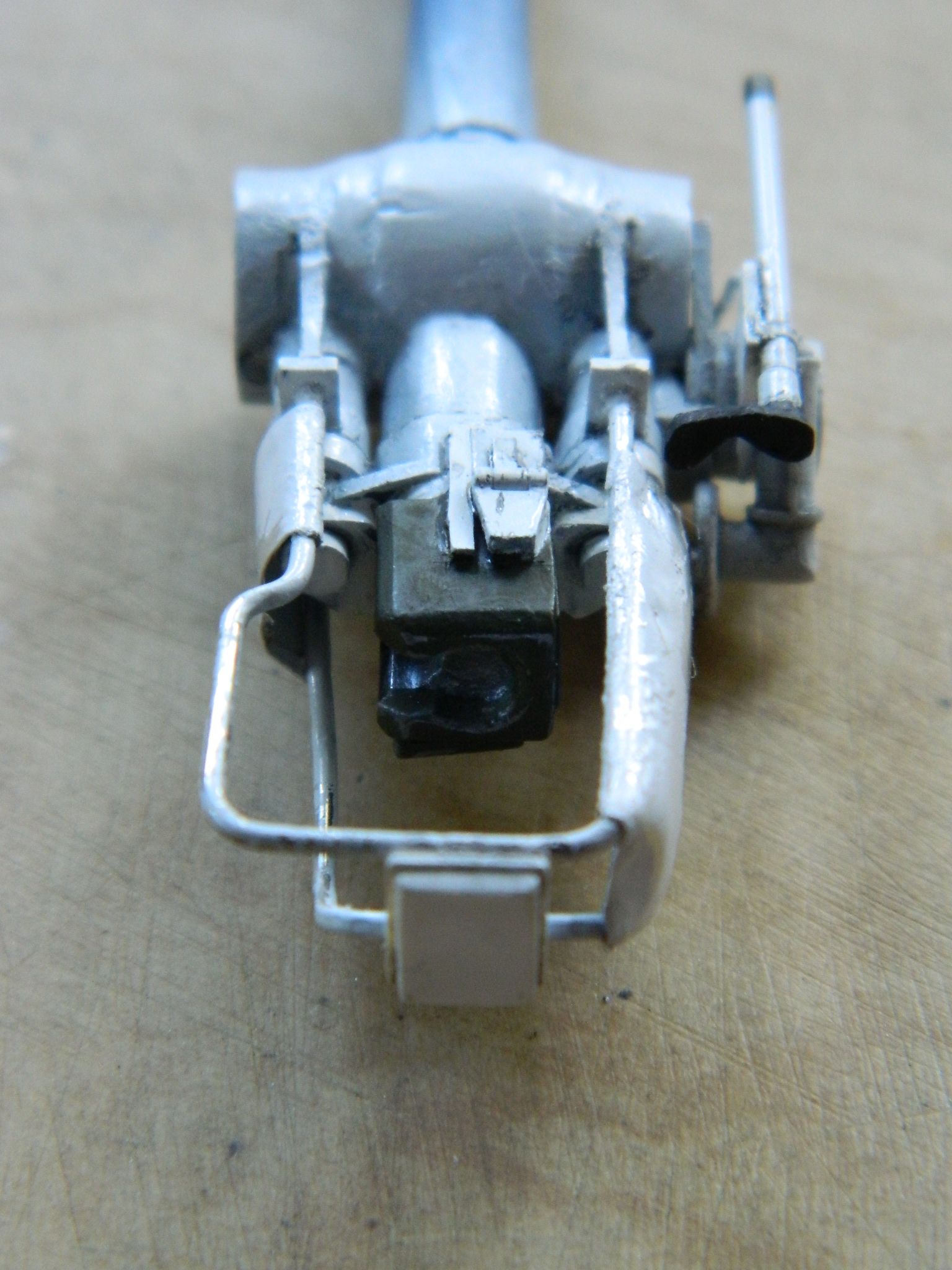
There is a guard that attaches to the breech mount to keep delicate body parts from getting crushed by the breech during the recoil from firing. The hard part to this particular assembly is that I have to make the guard detachable so that masking and painting it later doesn’t become a nightmare. The AM set provided a bending template and I used copper wire to make the frame:

There is a sheet metal barrier on the gunner’s side (the right). The AM set’s resin part is WAY too thick, so I used it as a buck and formed lead foil around it. Quite interesting in how far off it is:

So I made my own buck. I held the part as close to perfectly straight sideways as I could and traced the outline on a separate piece of 3×5 card and transferred the pattern to an old piece of plastic I had been laminating for a decades-defunct project:

I don’t know if it’s small parts and big fingers or if it’s big fingers and small parts, but sometimes just holding on to something I’m working gets “interesting.” This time I figured I’d add a handle to make forming over the buck, if not easier, at least (maybe, I hope) less difficult:

I made a copy from this buck and tried it against the guard. It’s close, but slightly off so I needed to shrink the buck slightly:

Yeah, the fit is better:
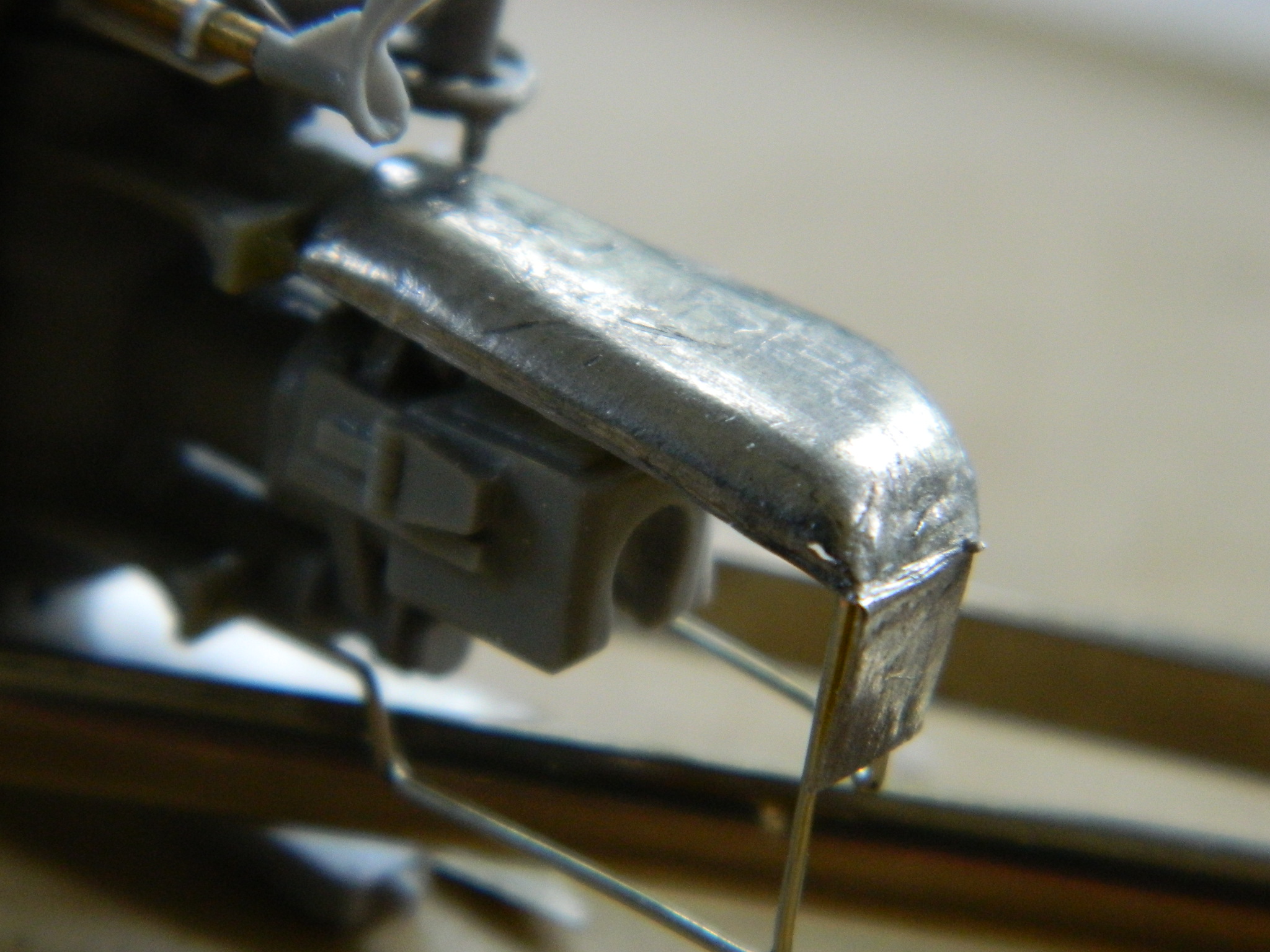
But I still wanted to tweak it a bit more. After several attempts to nail it, I did just that and glued it together and lo…it doth be removable. For the shape, size, and location, it turned out that using lead foil for these sheet metal parts was creating more problems than it was solving, so I went with heavy gauge aluminum foil instead:


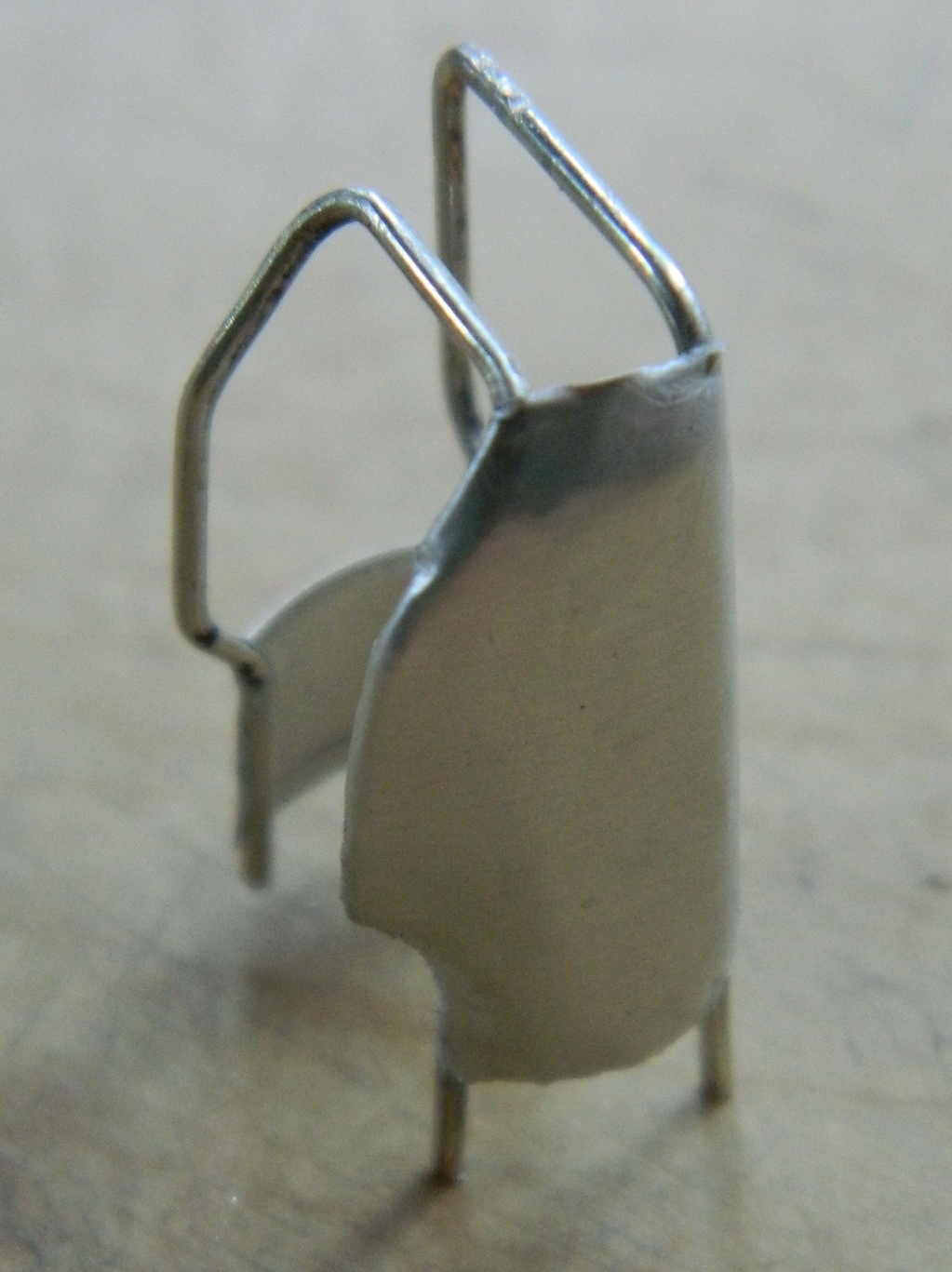

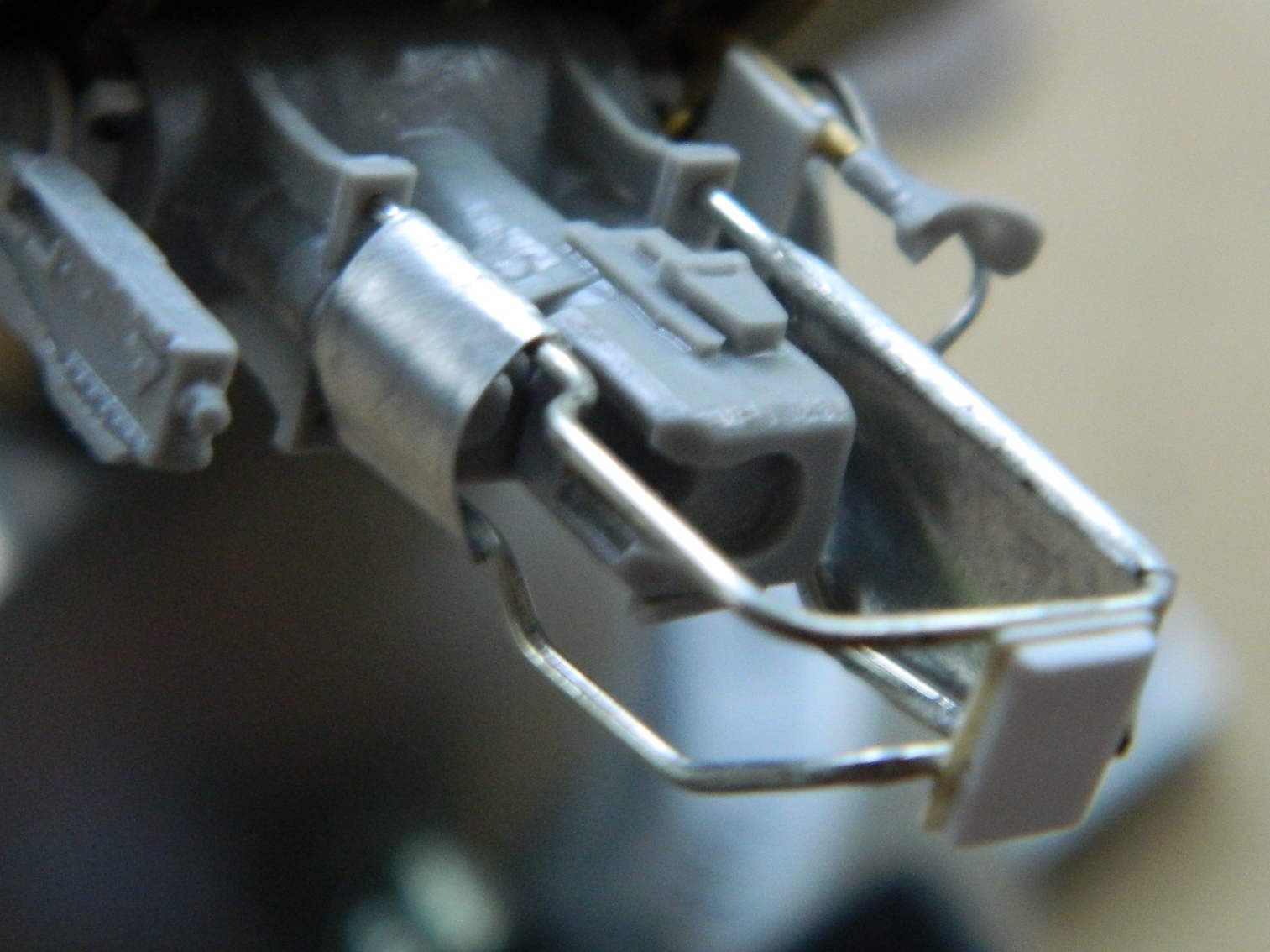
Then I dry-fit the turret basket in place to make sure things, as they do, fit:

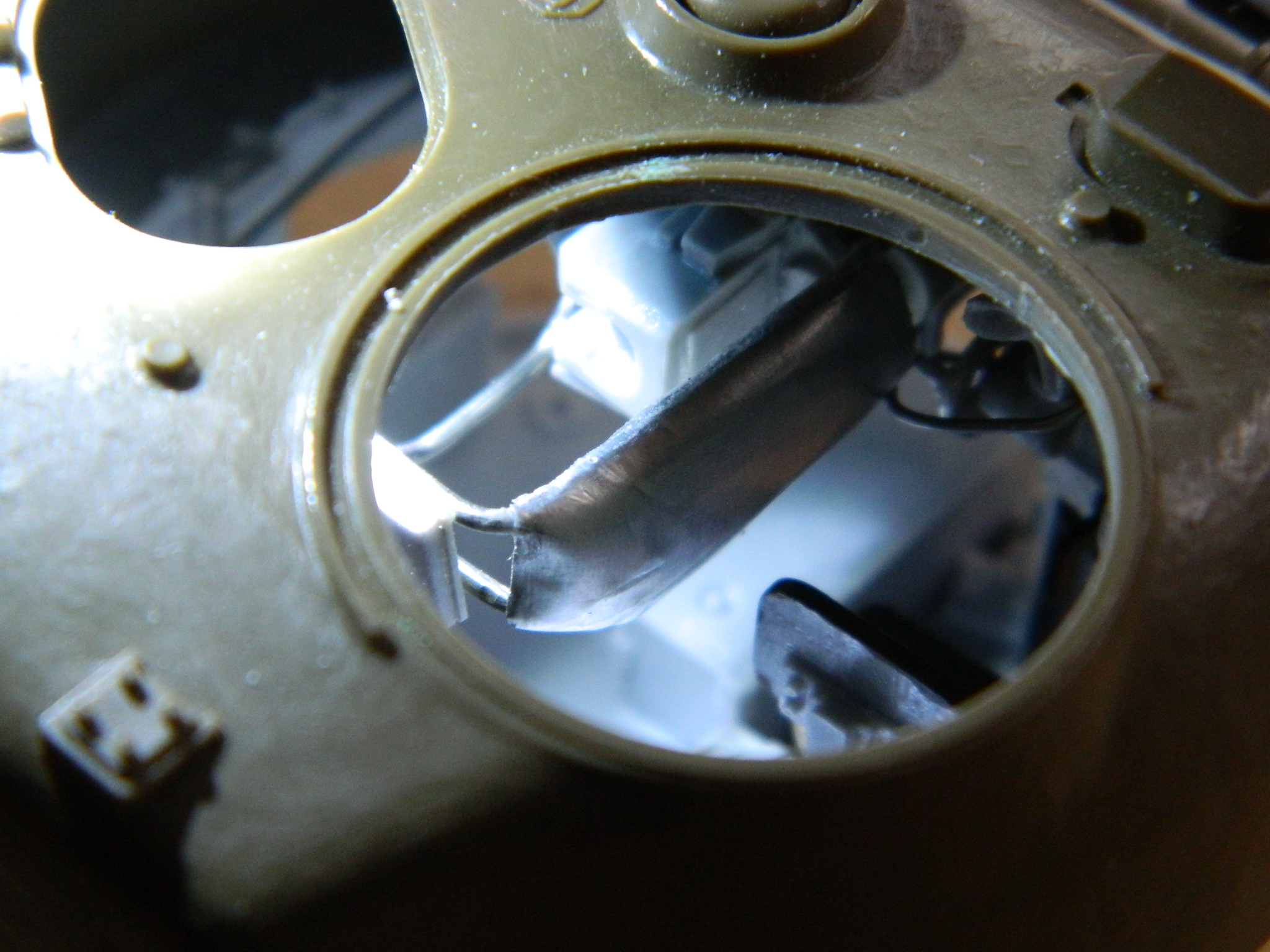
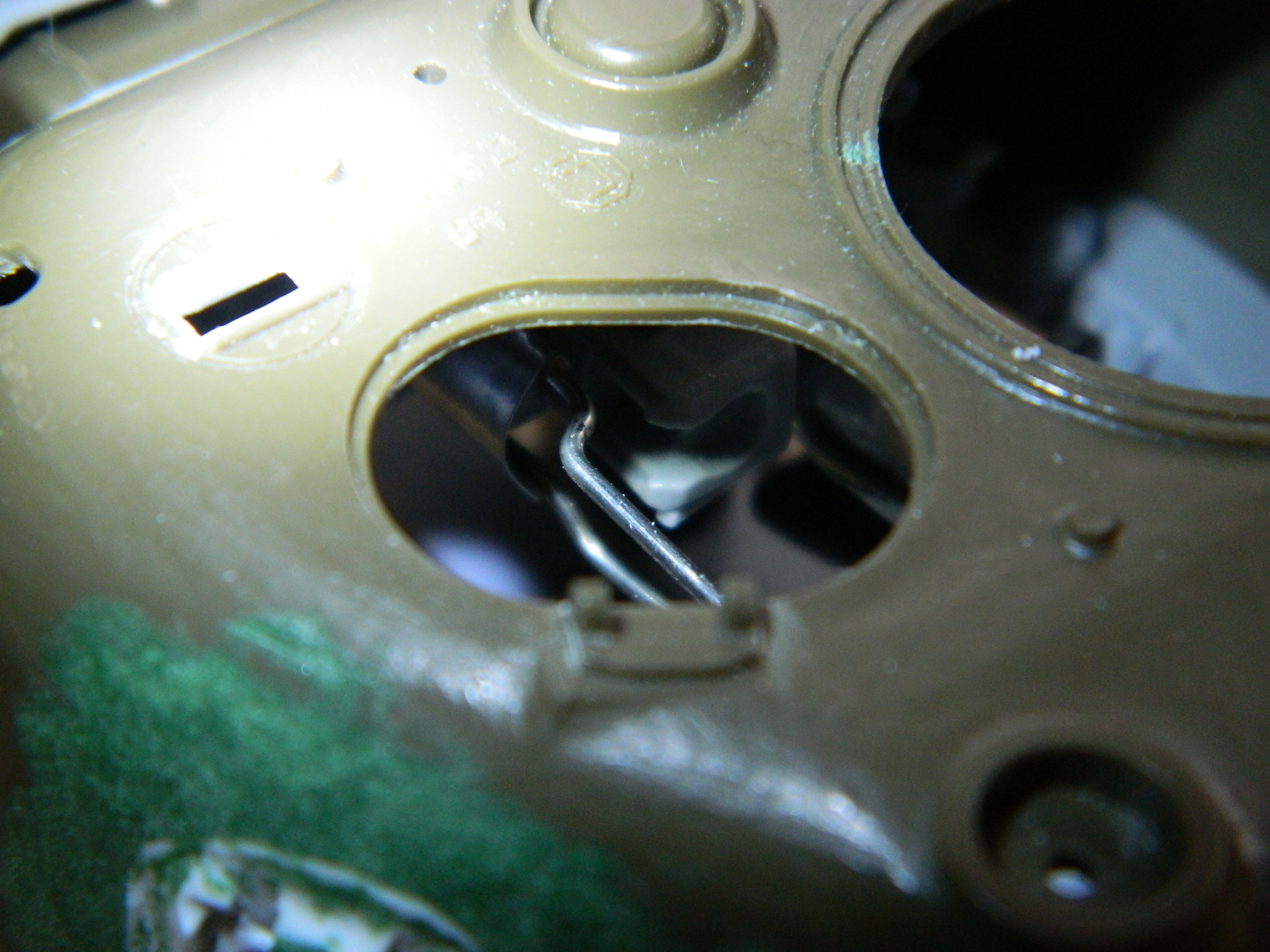
And then I checked my references again (and I really, really, should do that more often and NOT rely on whoever made any aftermarket set to have gotten it correct). This is when I noticed the eyepiece for the gun sight is incorrect. As supplied, the resin part would have the gunner using their left eye to lay the gun on target. Nope. The right eye was used to do that, so that means I have to (again) rework the sight. During the previous session reworking it, I realized that the person that mastered the mold used the goggles from Tamiya’s kit to fashion the eyepiece. Well. (That was done in my best Jack Benny voice.) (Which really isn’t very good.) I happen to have those pieces:
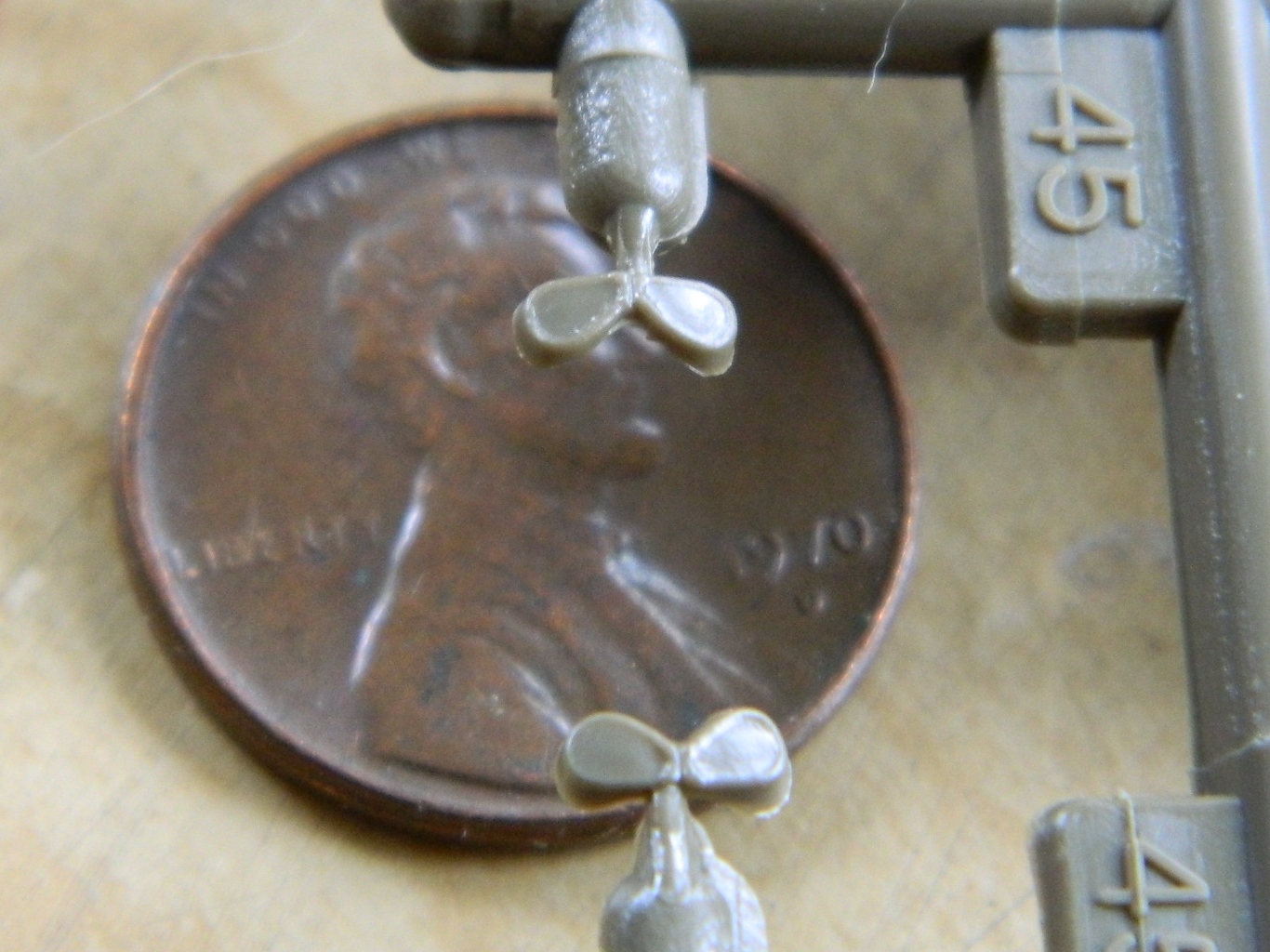
So I cut the resin eyepiece off, drilled out the Tamiya part, and attached it to the sight (and since the end of the sight’s tube protrudes slightly into the eyepiece, I was able to replicate that as well):
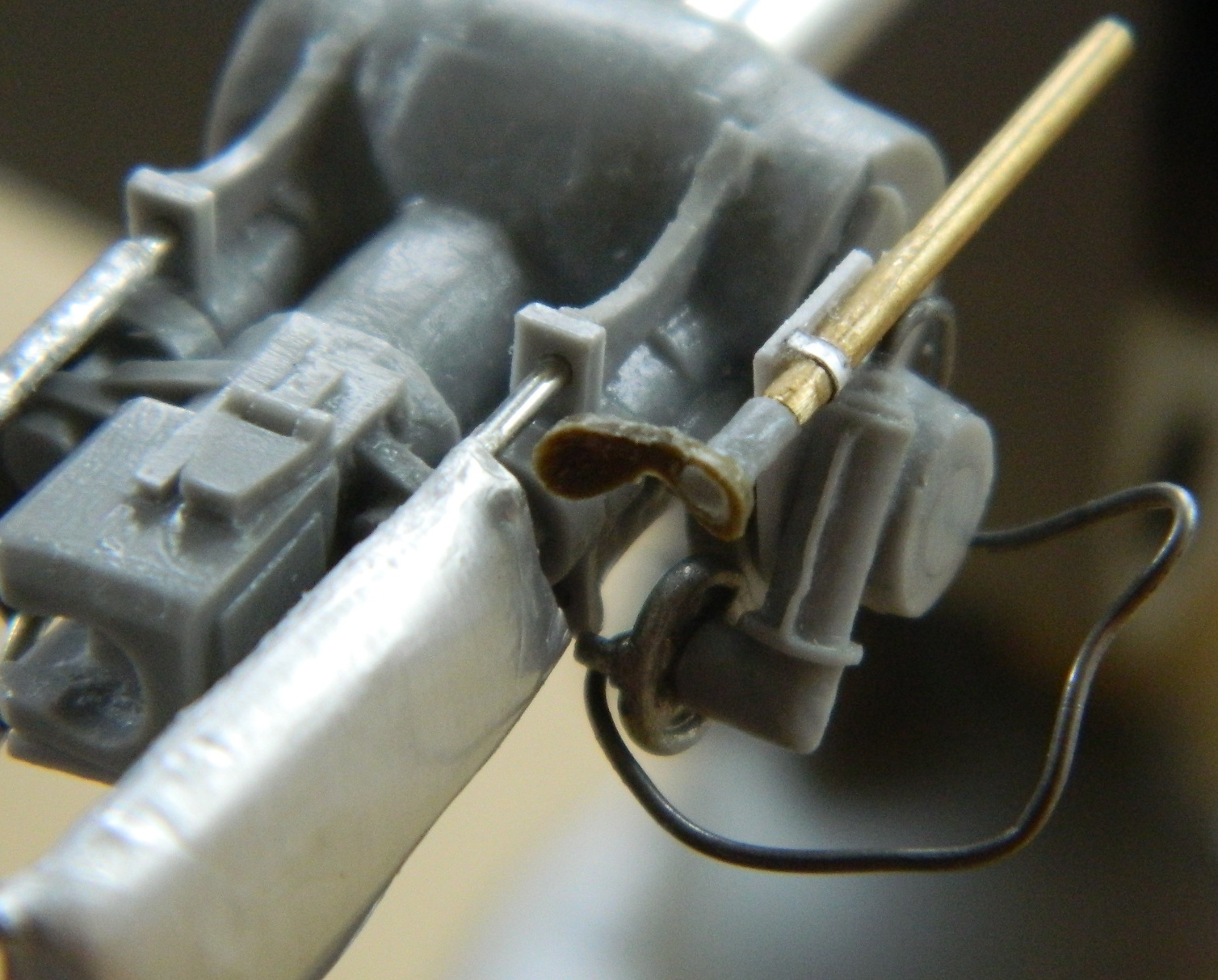
The .30 cal doesn’t have a grip or a trigger and it needs both, so now they’re there, as is the firing solenoid and the wiring for it:

While I was working in the turret, I (finally!) noticed that although the interior of an actual turret has an as-cast surface, which was pebbled as they were sand-cast, the kit’s part is smooth. I knew there was a “texturizer” out there but I was damned (he says, stating the obvious) if I could remember the name of the stuff which made finding it online not happen. Then I had an idea; liquid styrene cement works by dissolving the parts in contact and as the glue’s solvent evaporates, the dissolved styrene solidifies, bonding the parts together. Okay, basic stuff. But what I can work with is the “dissolve” aspect of all that.
I used Tamiya’s “Extra Thin” liquid cement, brushed it quickly onto the surface of the spare turret, and then used a cheap, coarse, nylon-bristled brush and tried to replicate the pebbled surface of a sand-cast casting:
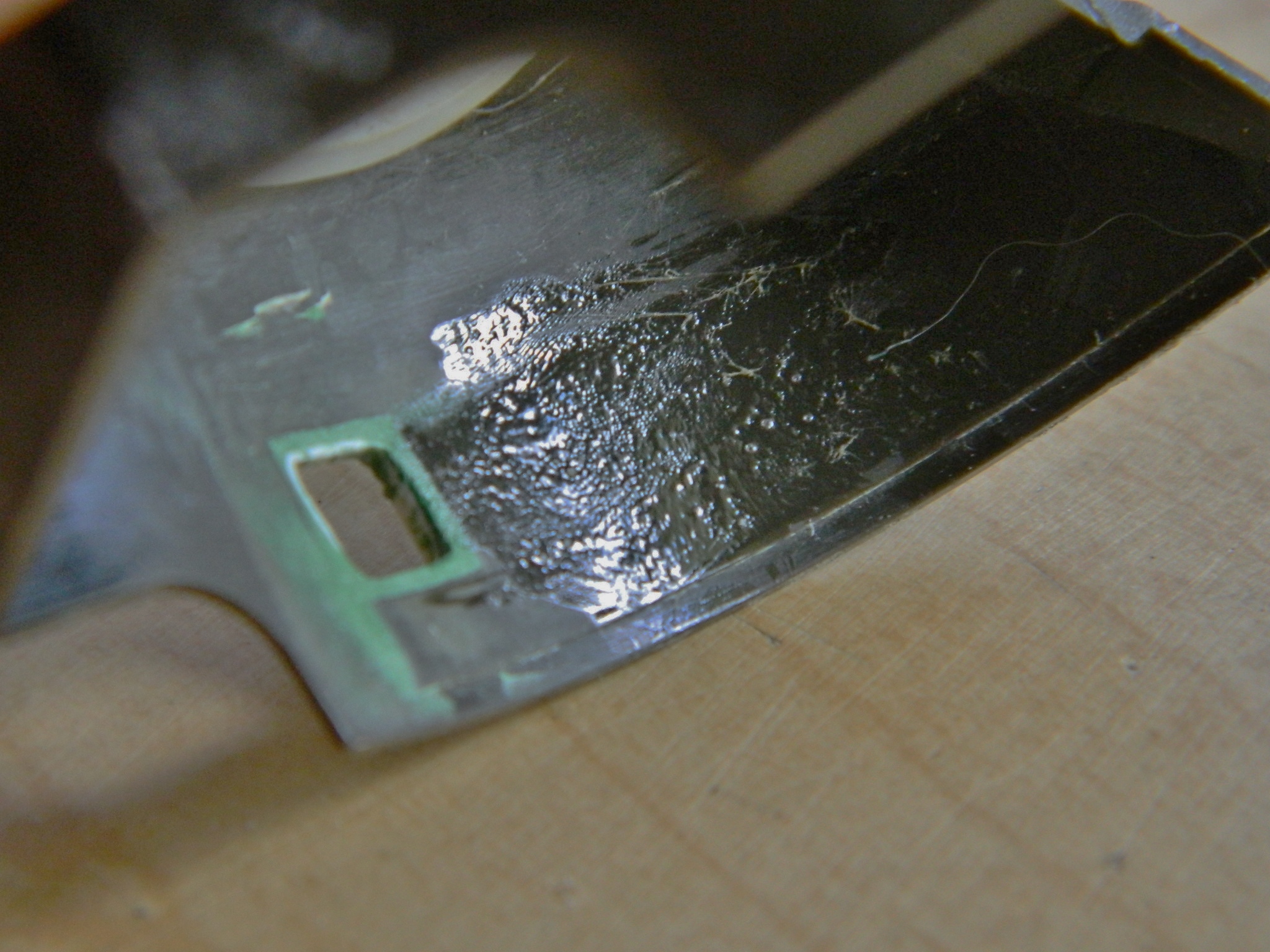
And to my eye that worked just fine, so I treated the entire inner surface of the turret that way.
The later model Shermans had a mortar attached to the roof of the turret to lob smoke bombs (used to obscure the enemy’s ability to sight on the Sherman). Since this is a late-model M4A3, that’s got to be added (note added the sand cast texture) and then puttied the gap:
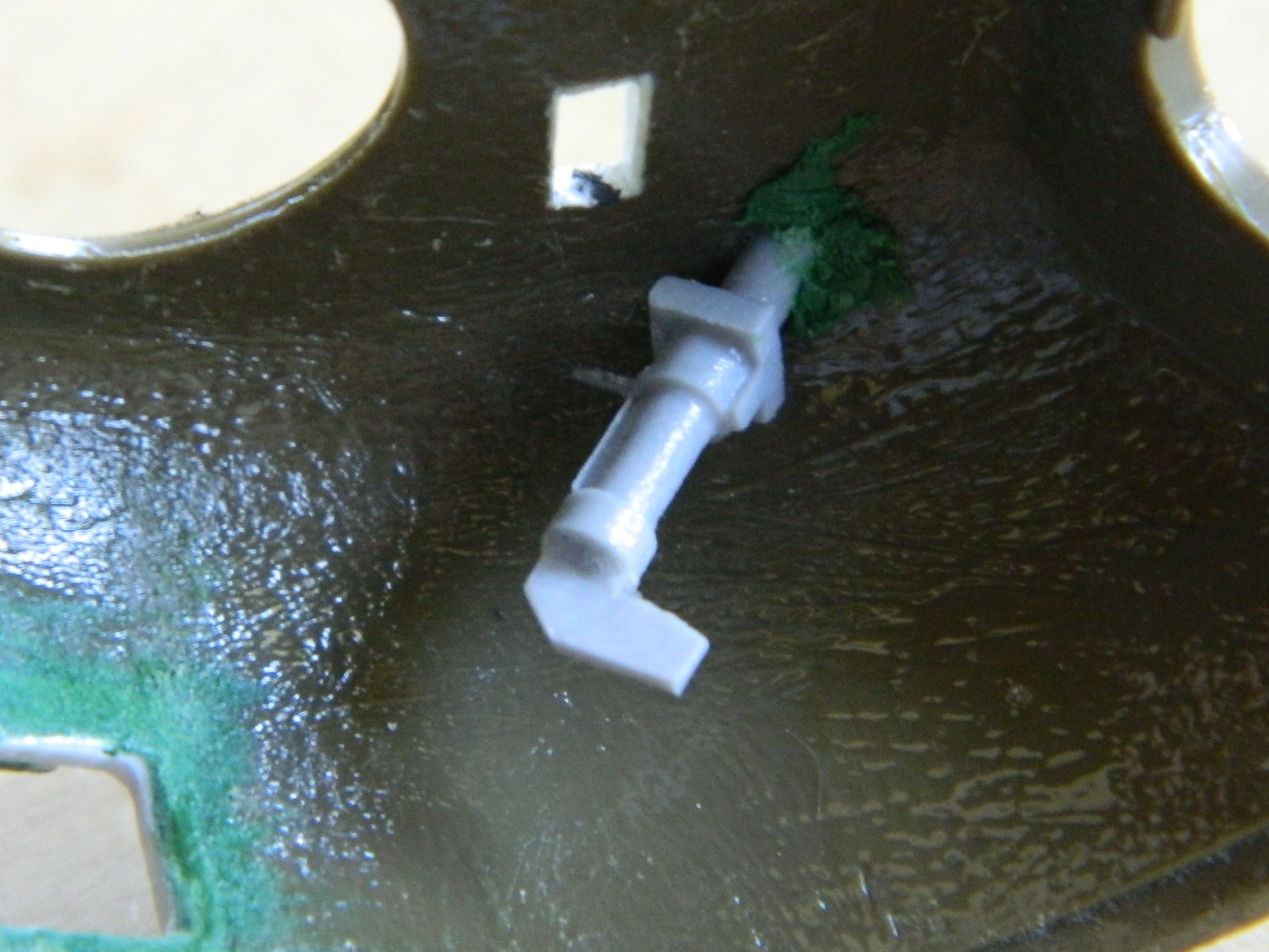
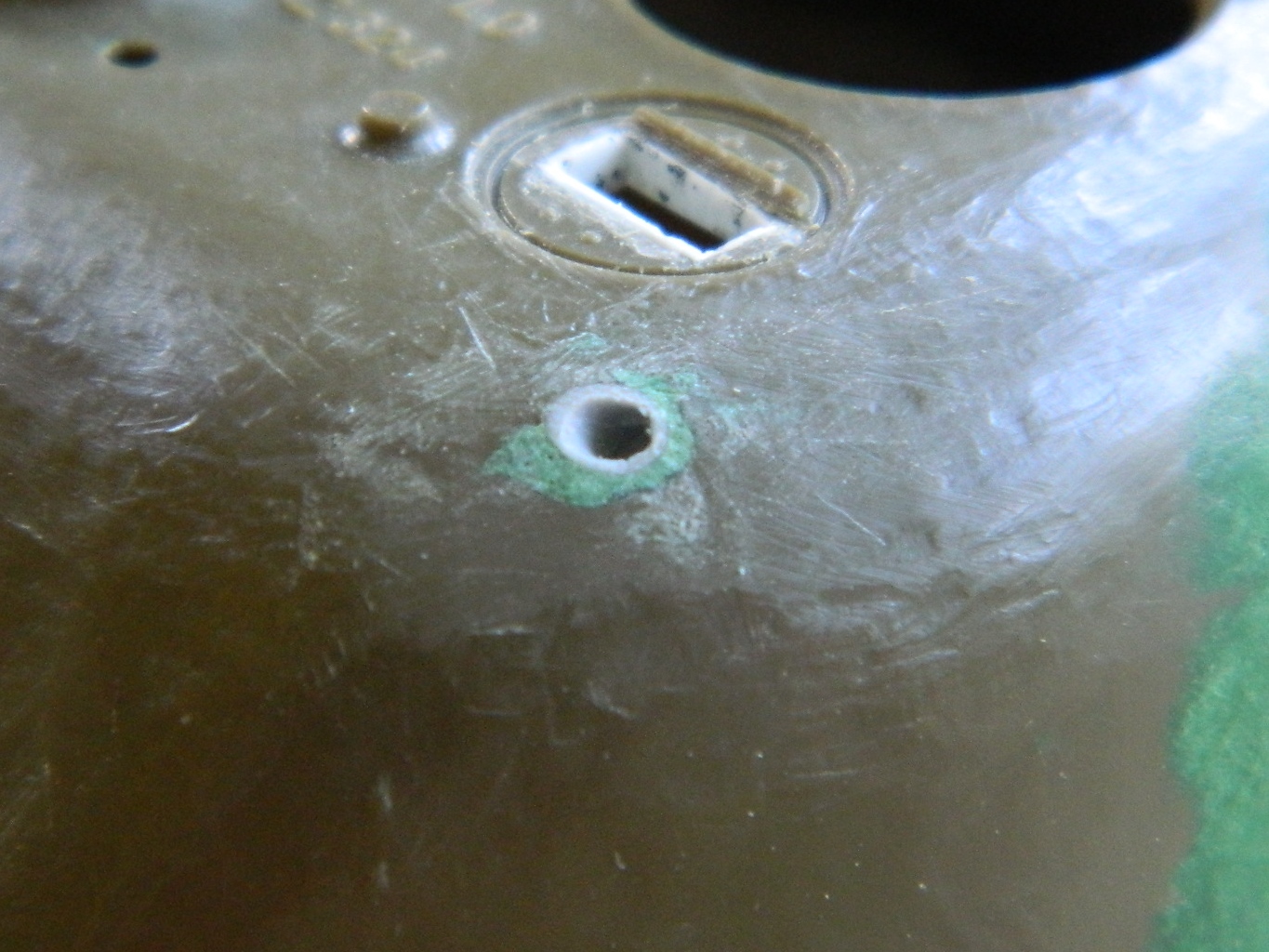
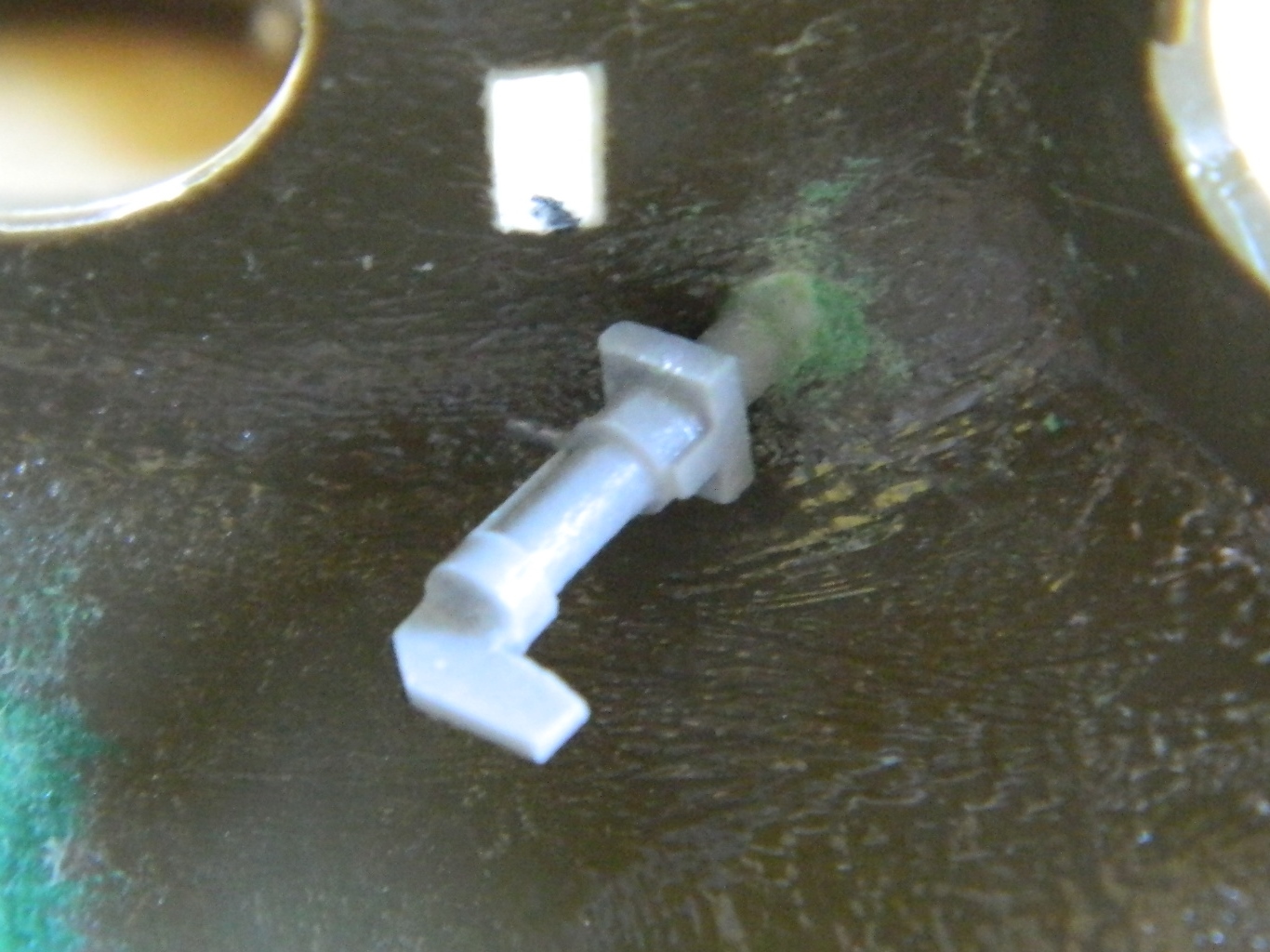
Time to throw paint! Again, the first step is to shoot a coat of “steel” paint. It sits overnight to cure and then will get buffed to the appropriate luster:

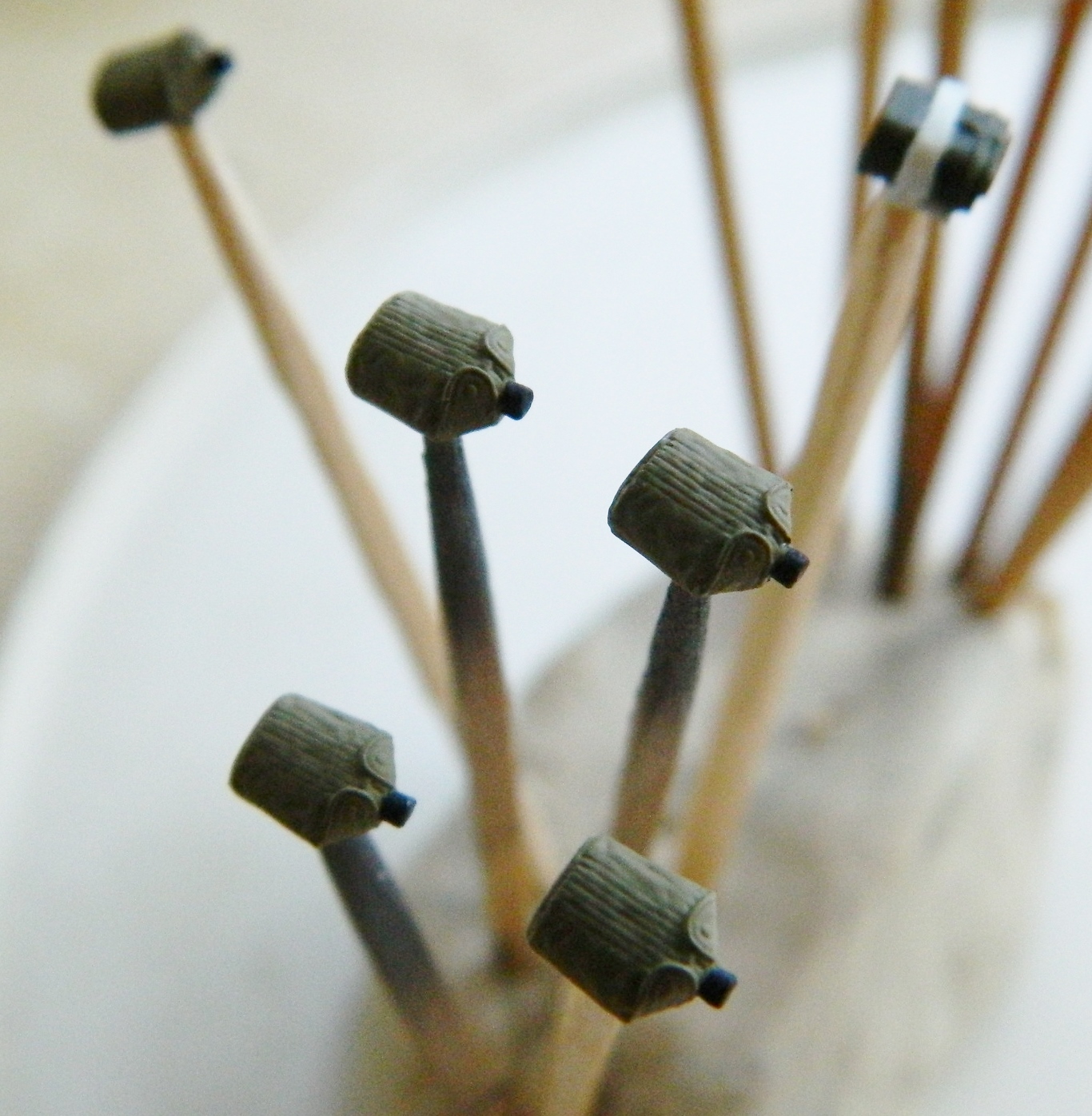
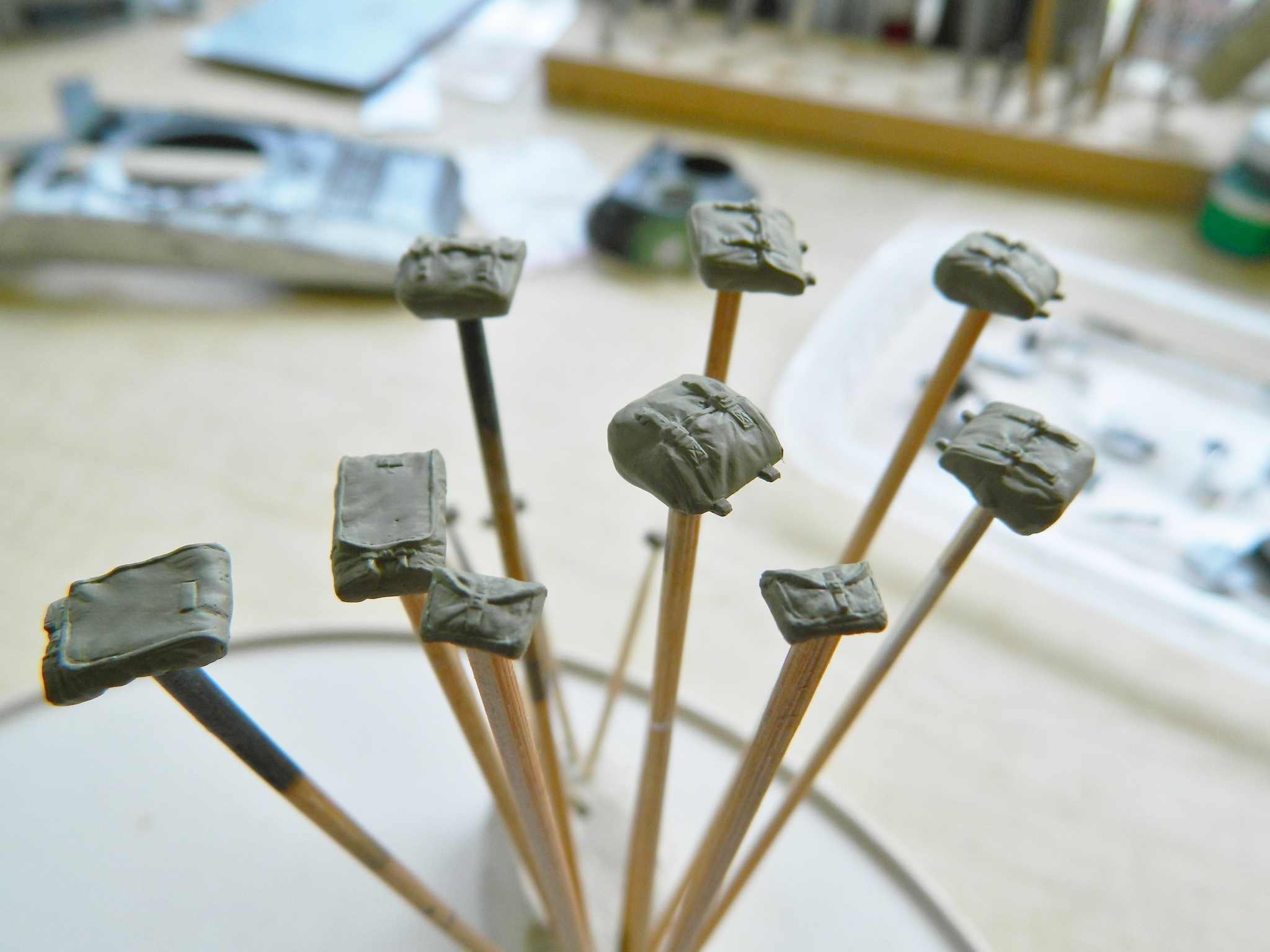
Some of the crew’s items will be added to the turret basket so while I had the airbrush out, I loaded it with khaki paint and did the items, too:

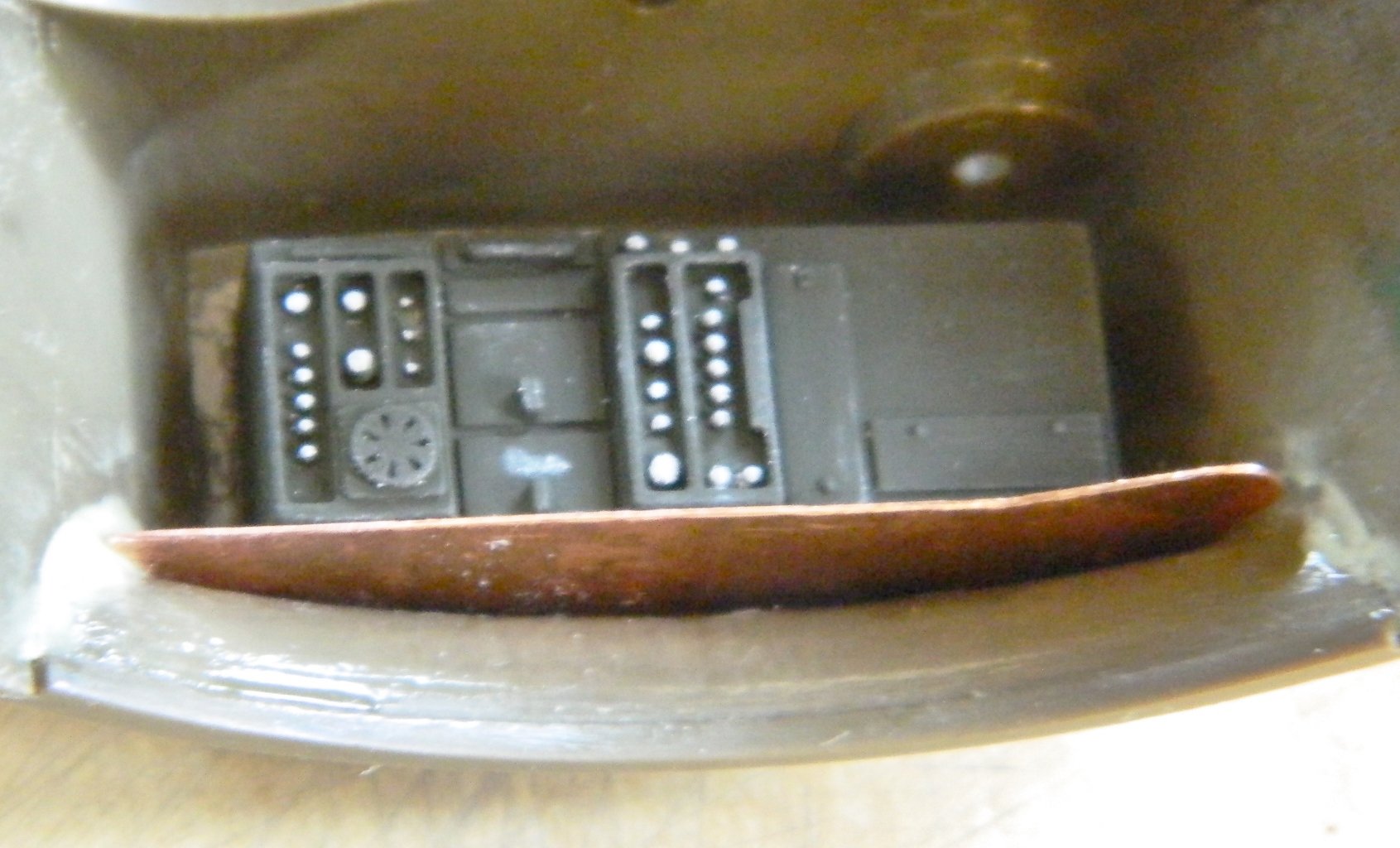
The radio sits on a shelf in the turret bustle and the AM set didn’t supply one. I used the photo-etched part from CMK’s dry-stowage interior as the template (because I liked it better than the one I’d already made), traced it onto card stock, then traced that onto 010 brass shim stock (which, unlike plastic, won’t sag over time), cut it out and filed it, and tacked it into the bustle (the radio is dry-fit for alignment):
With the matte khaki paint cured, I hit the parts with clear gloss and gave them a gray wash:
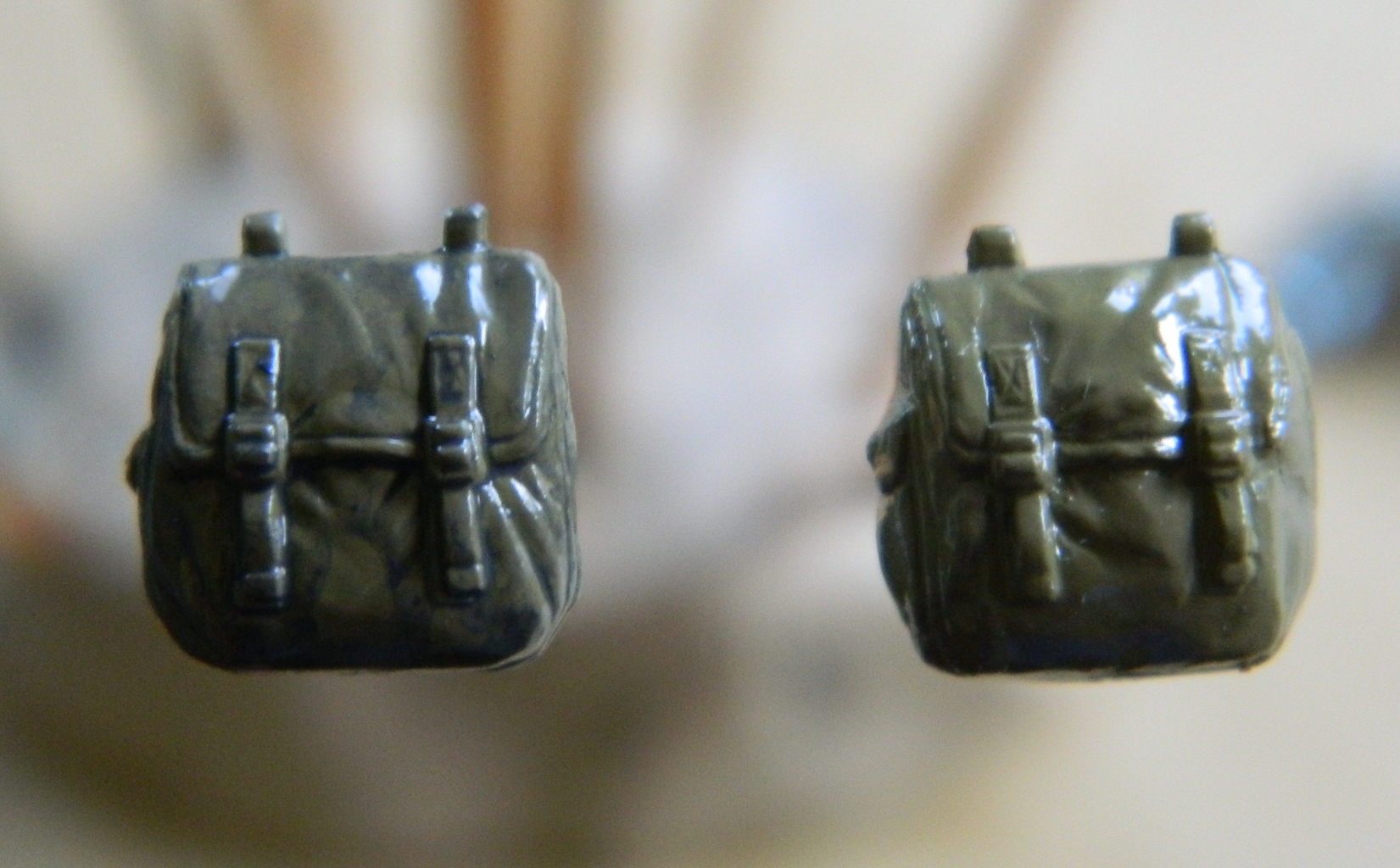
Then it all got coated with clear matte and set aside for later inclusion:


Since I’m working on turret components, I decided to work on the loader’s hatch while painted parts were drying. The loader’s hatch actually had a pad on its inner surface, one of the few padded things in the turret to keep the loader (or anyone else, for that matter) from getting bashed by hard and painful objects. The first part of that was to trace the outline of the hatch on 030” styrene, then trim and shape the piece to fit the hatch properly:


With the undercoat of steel paint well cured and selectively buffed, it was time to salt chip things. The items were treated as before and then overshot with matte white. As before, once the white had set up, I knocked off the salt crystals, rubbed the edges of the various boxes to wear the paint off, and dipped a cotton swab in acrylic thinner and applied the areas of rubbing wear:
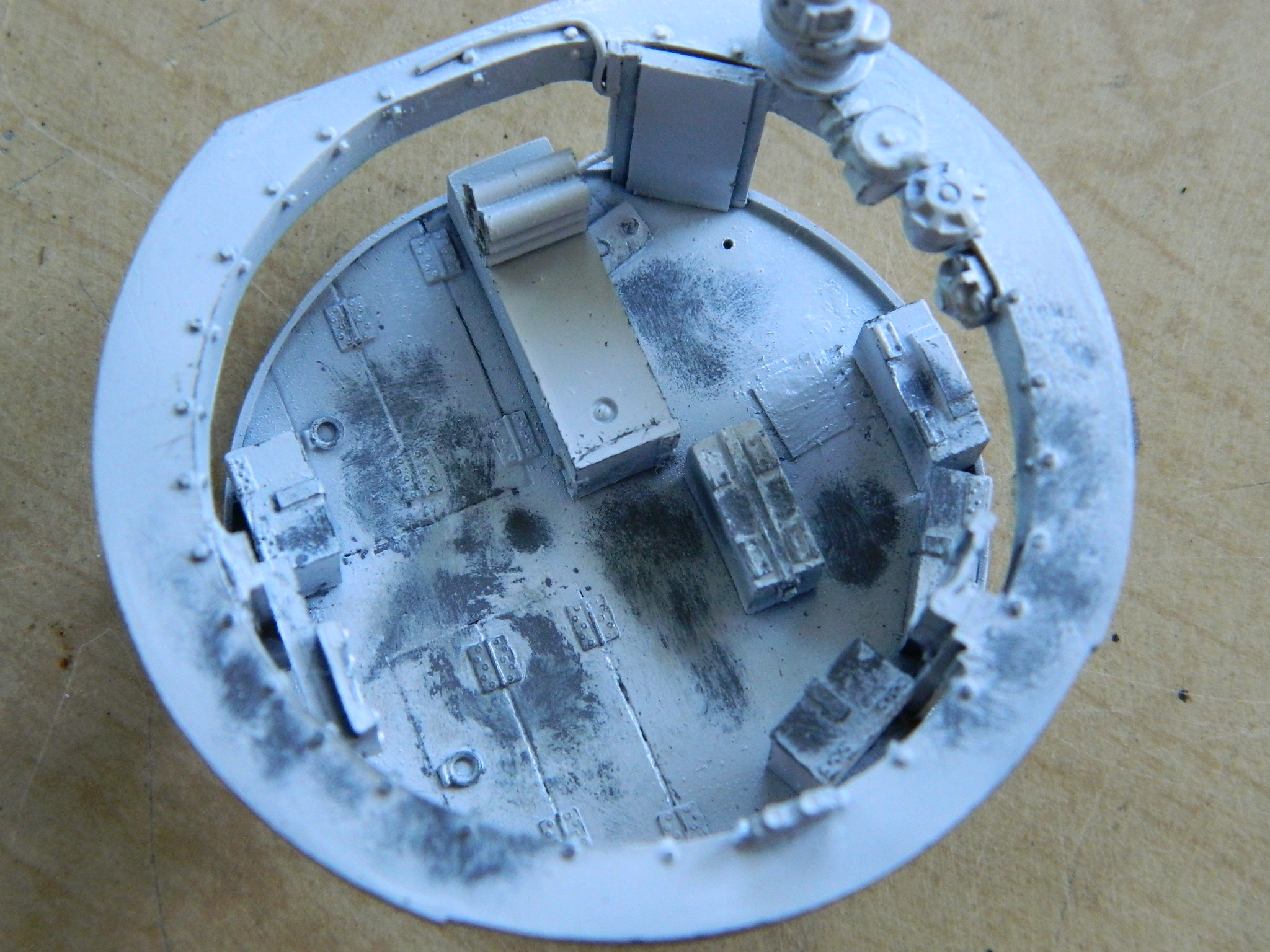


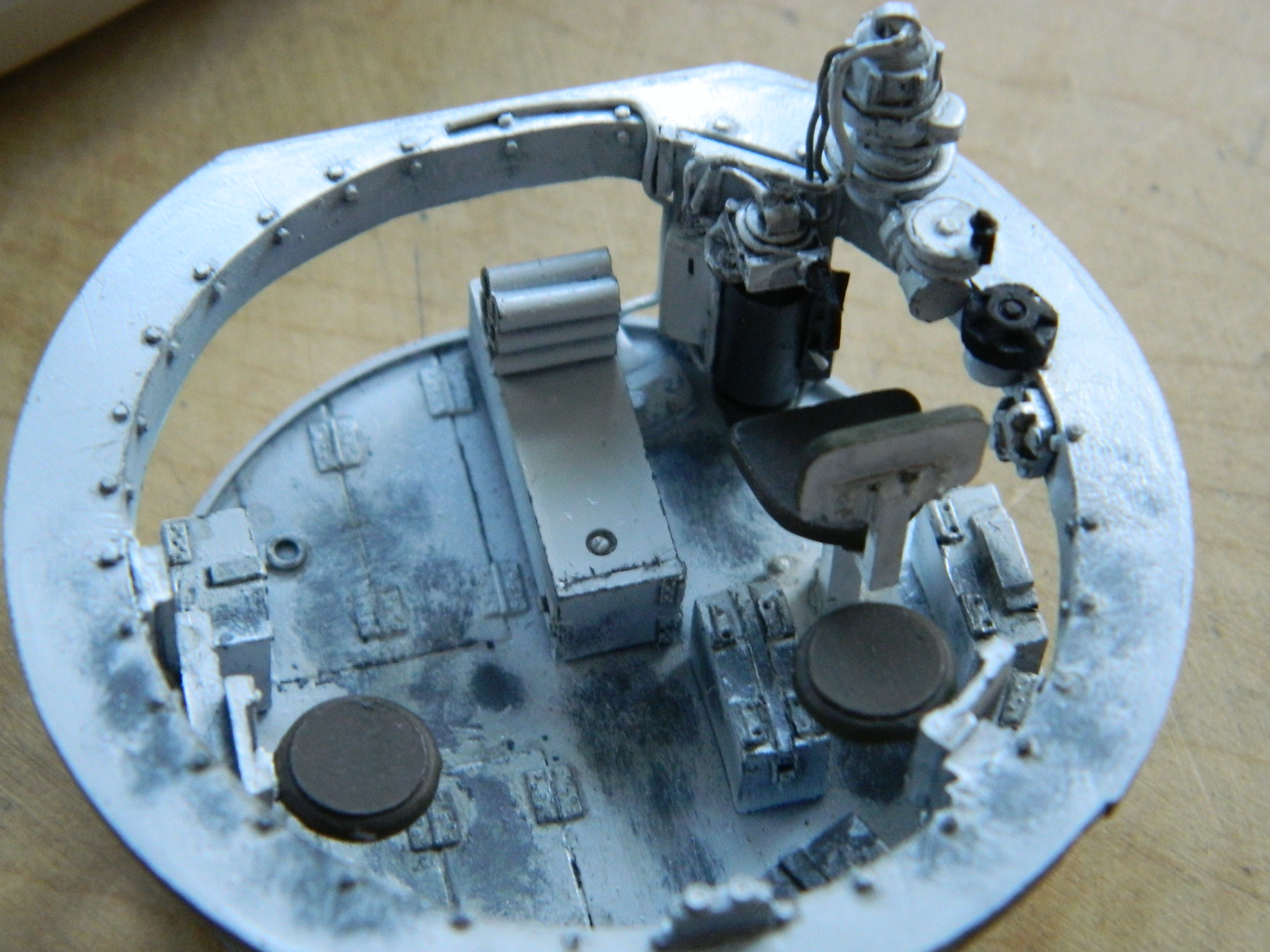
When I rubbed the paint off the sheet metal breech guard, I exposed the aluminum underneath. And surprising no one (except me at the time), it looks like aluminum and not the steel it was supposed to be, so I will go back and coat that with steel:


But I did like how the breech area looked after I removed the masking (made SO much easier by having the breech guard removable):
And while I was in there, I also treated the mortar to a black wash, too:

The next step is to add some more chipping and scraping wear to the turret basket and associated parts (and to cover that damned aluminum):

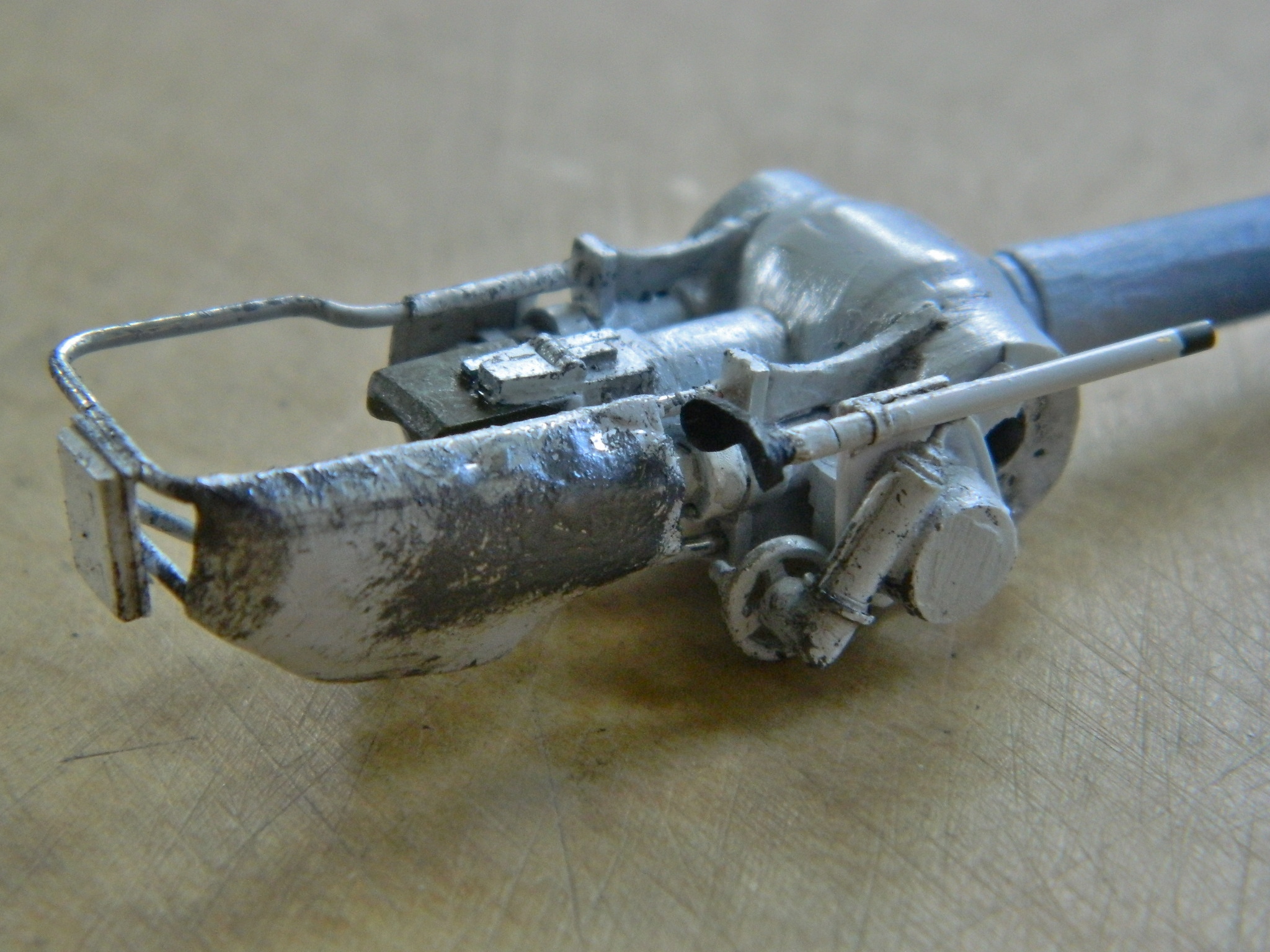
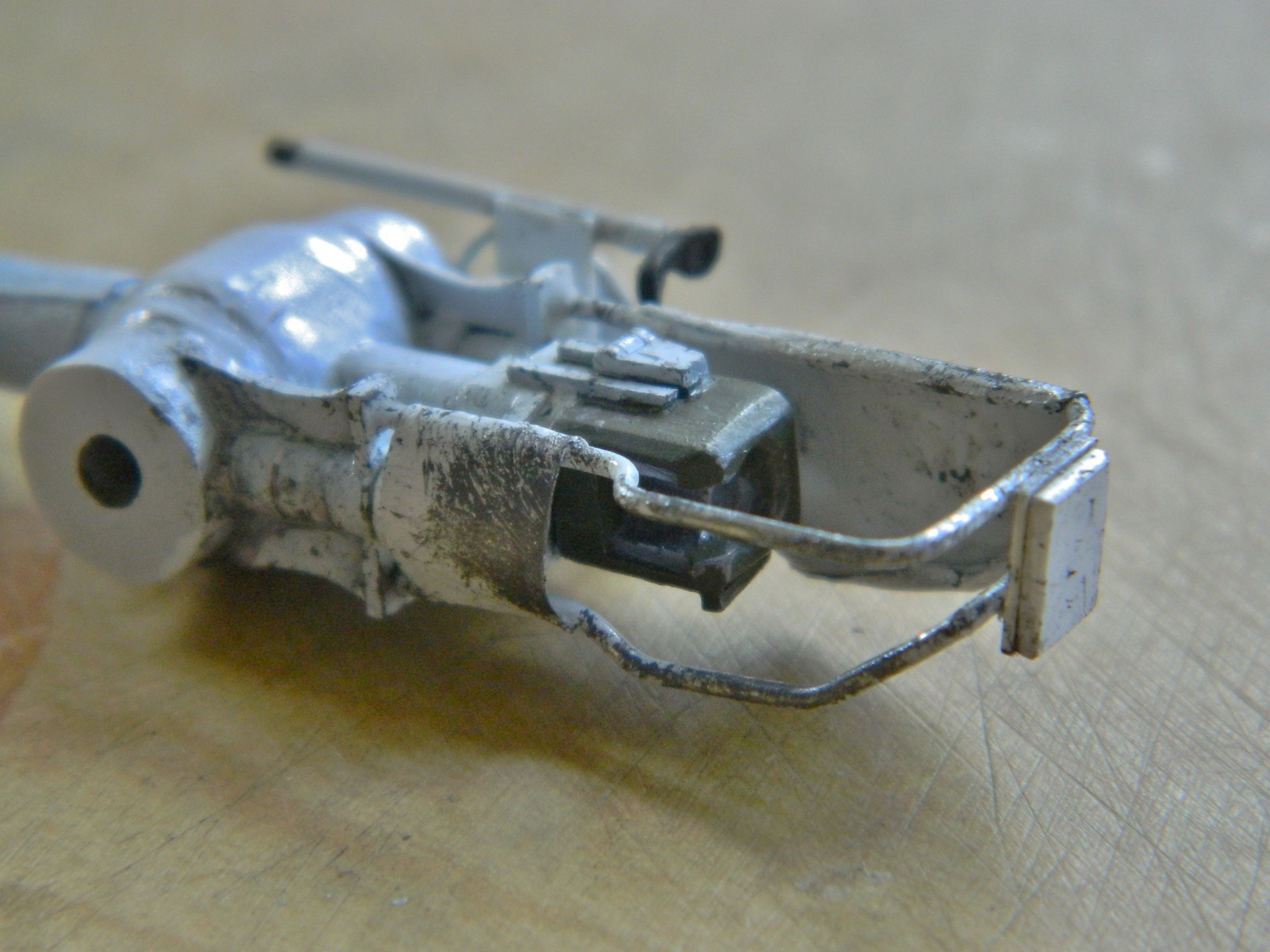
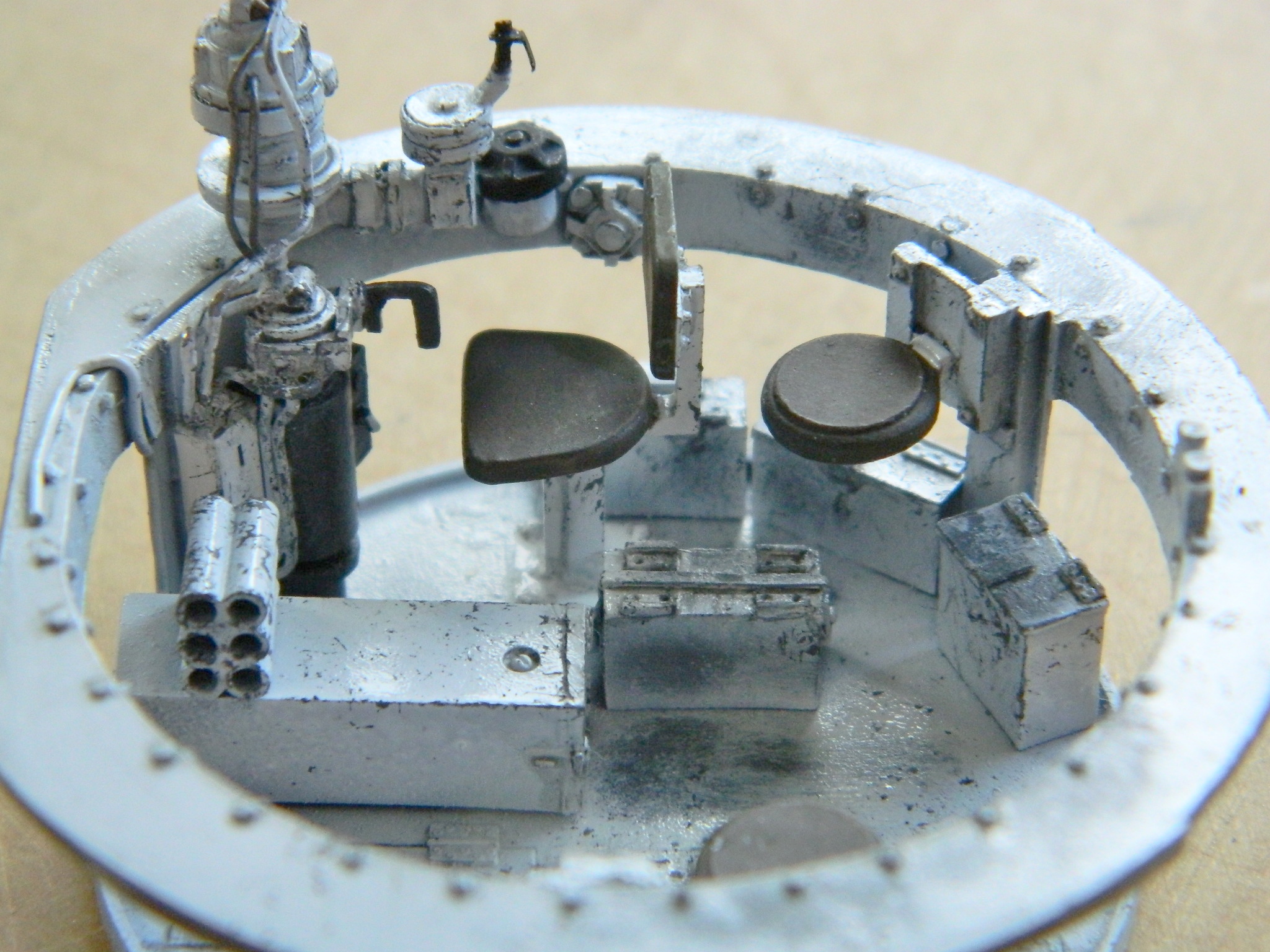
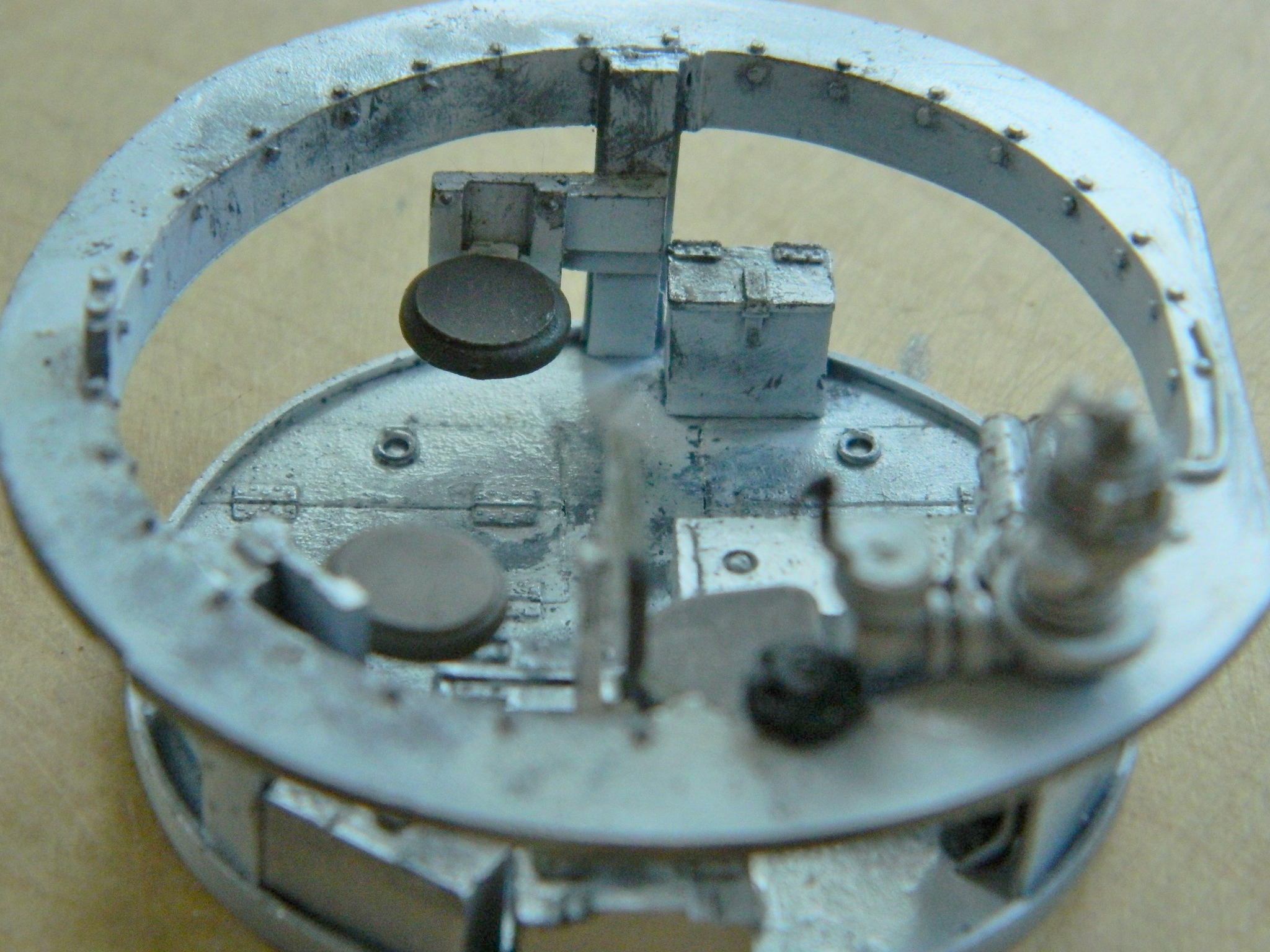
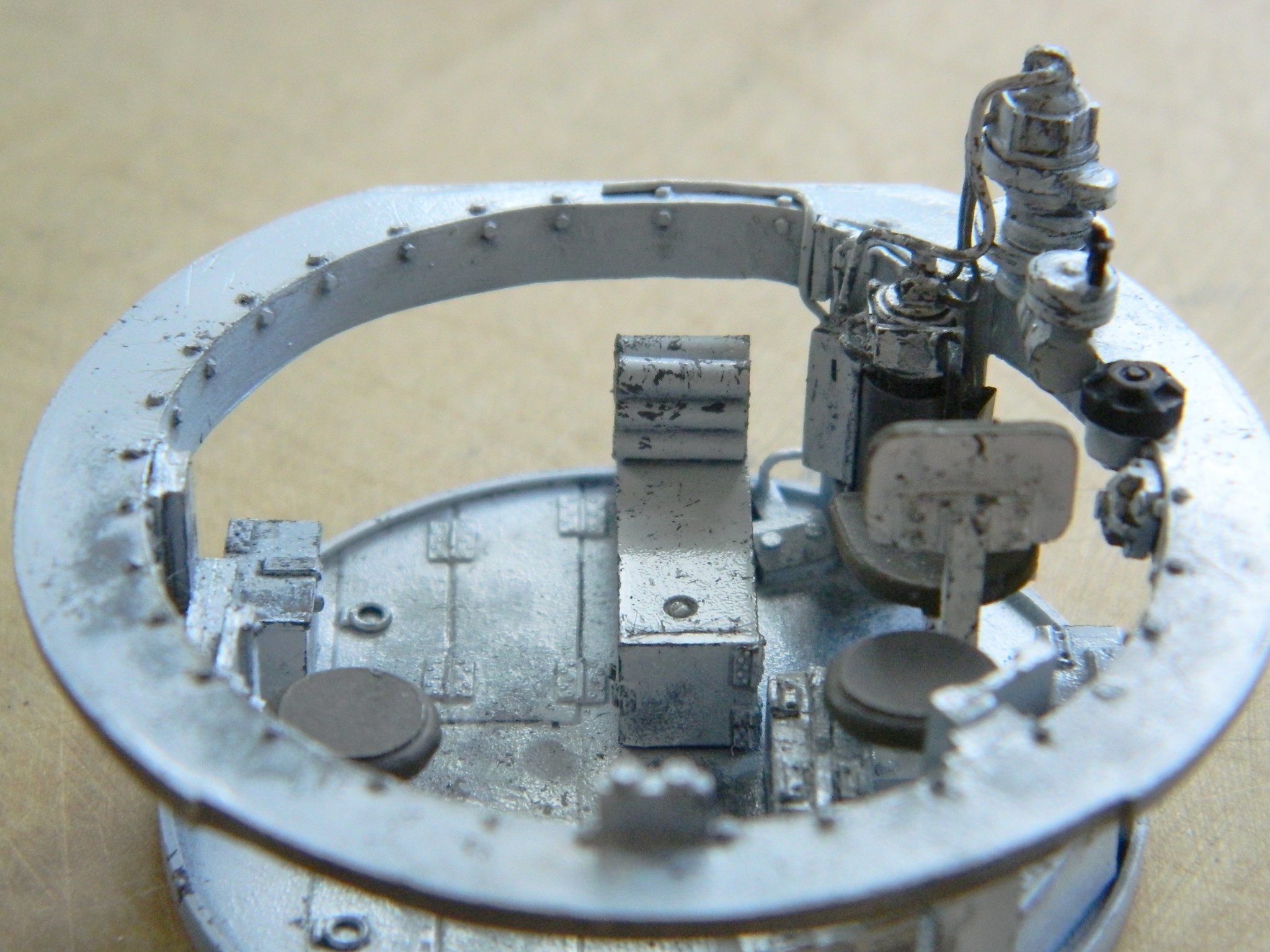

Time to start putting things into the turret itself that are supposed to be there.
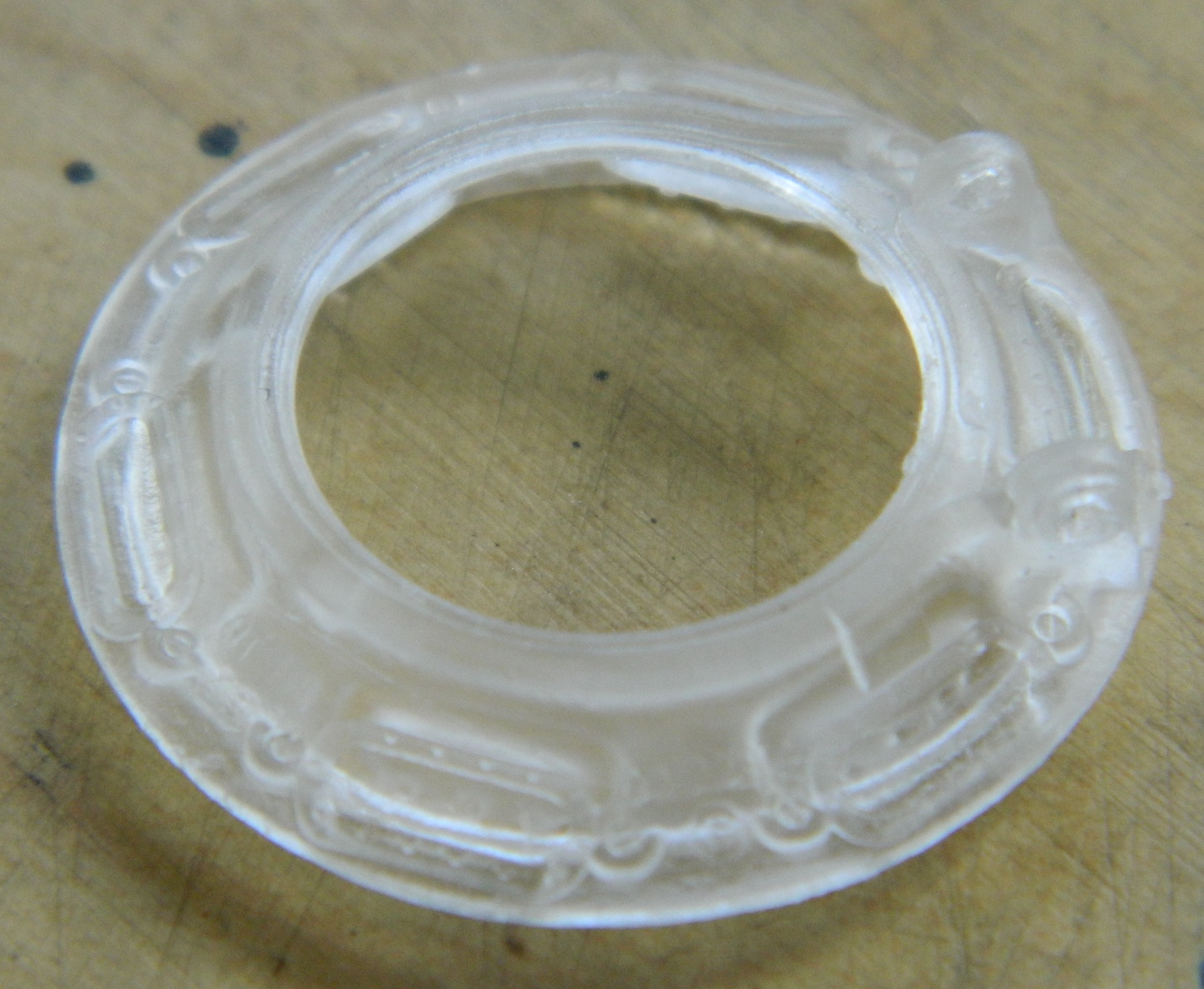
I started with the commander’s hatch, which in this case is the late-production vision block cupola. NTMD makes a nice set for this and it starts with a clear resin casting of the cupola (I was NOT looking forward to replacing those incredibly tiny vision blocks with clear plastic!):
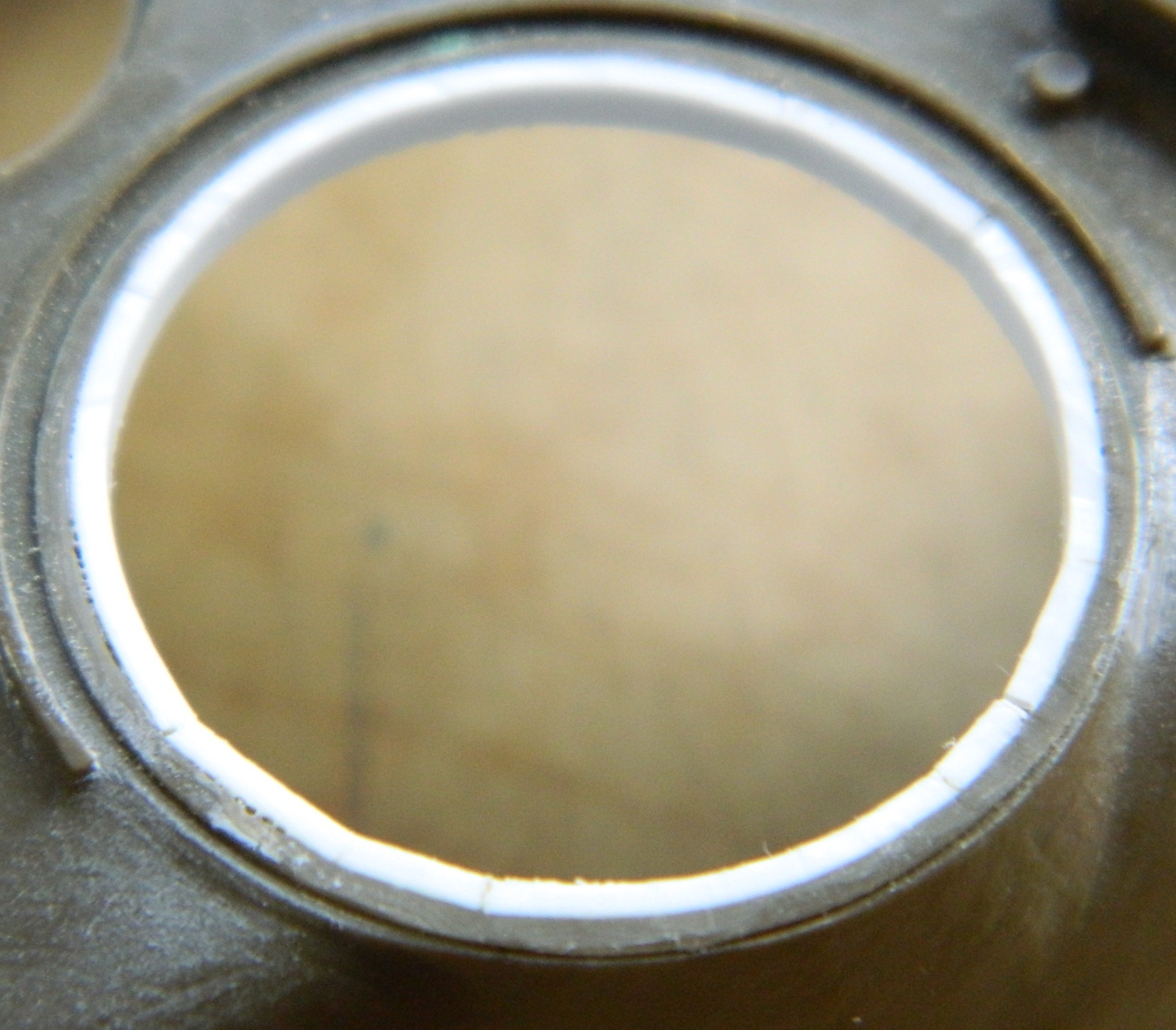
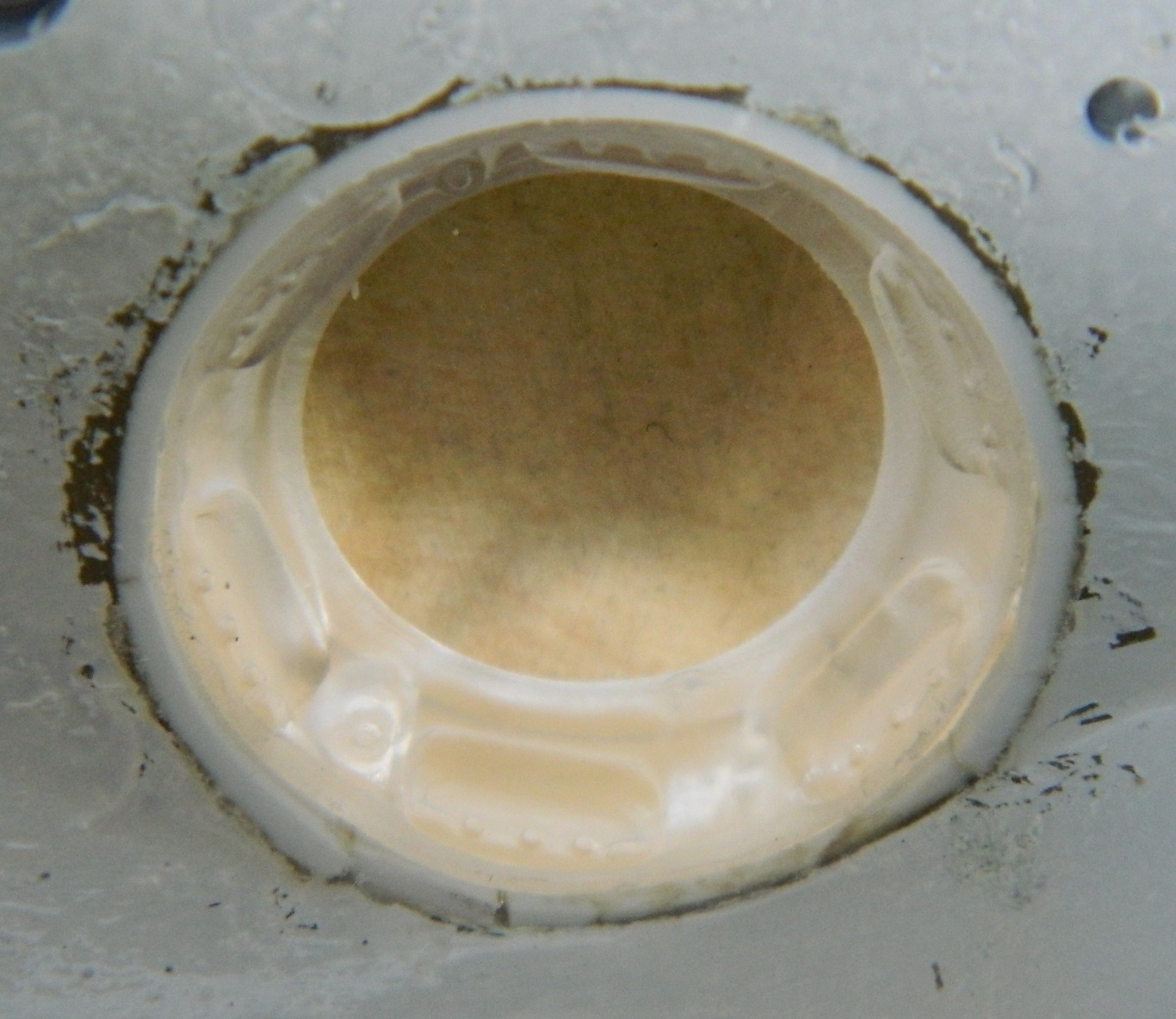
But this part wasn’t designed for the Tamiya kit and the cupola was just slightly smaller in diameter than the opening it was going into, so I took some 010 styrene and shimmed the opening and the result was a nice snug fit:
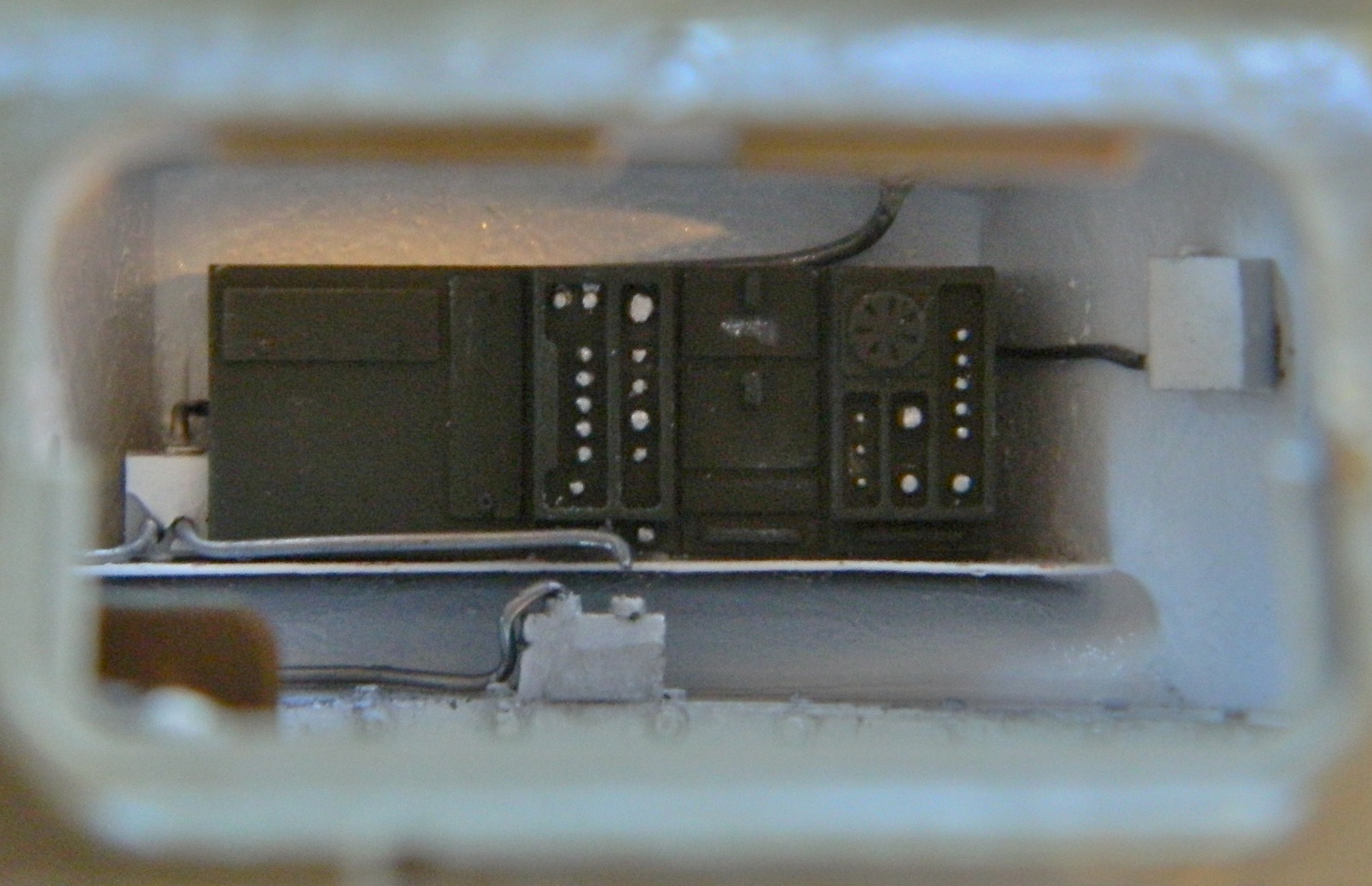
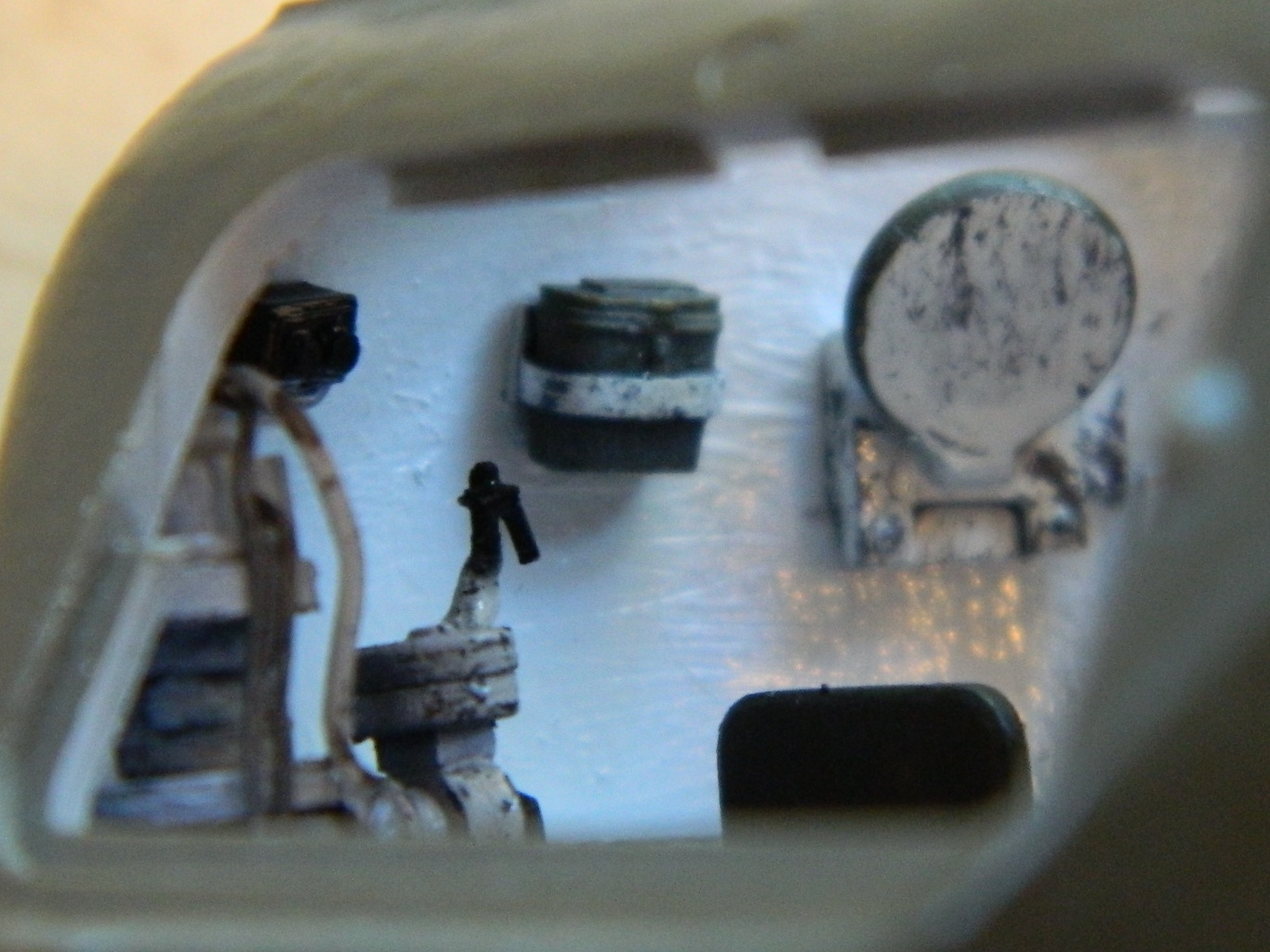
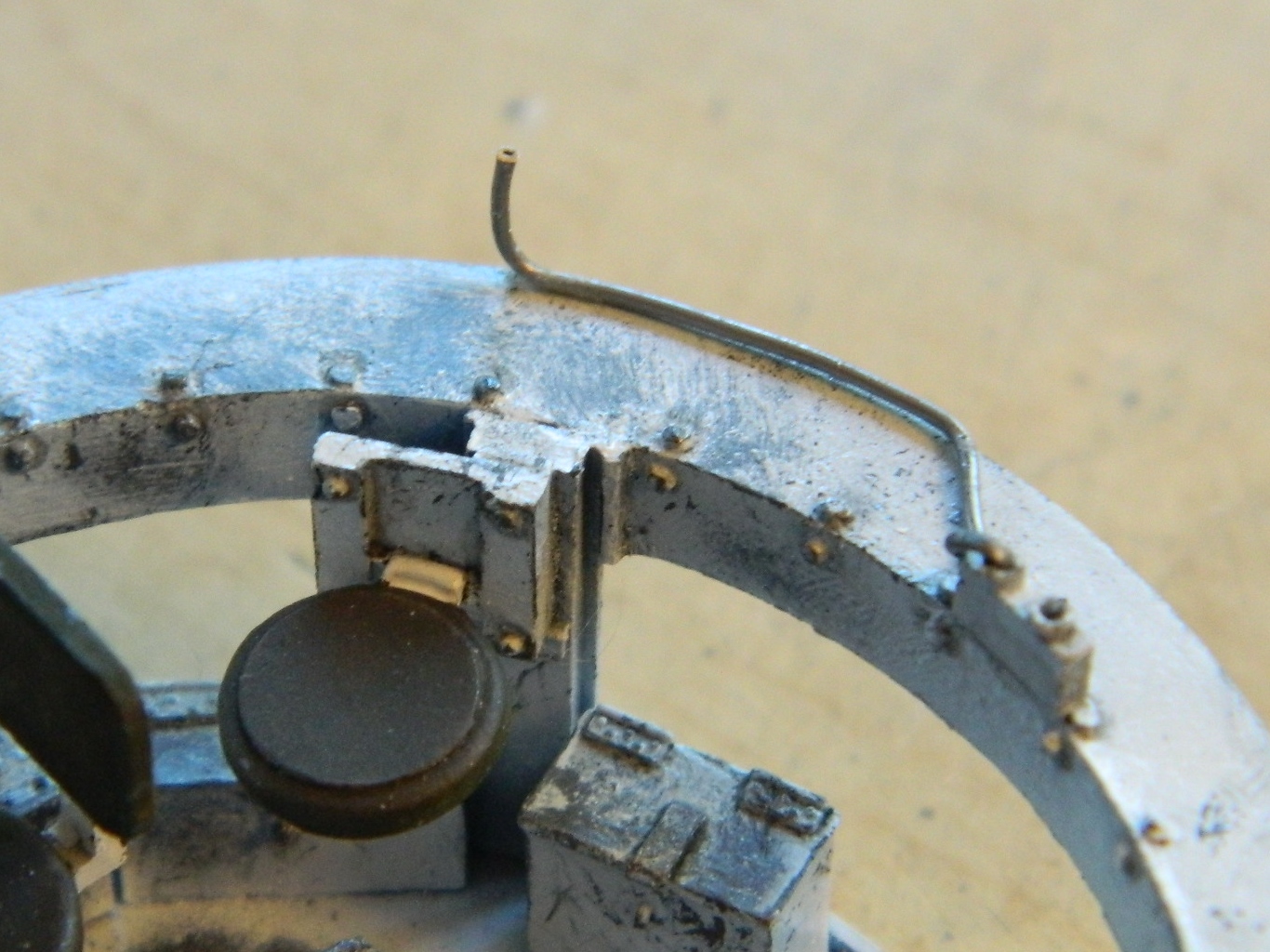
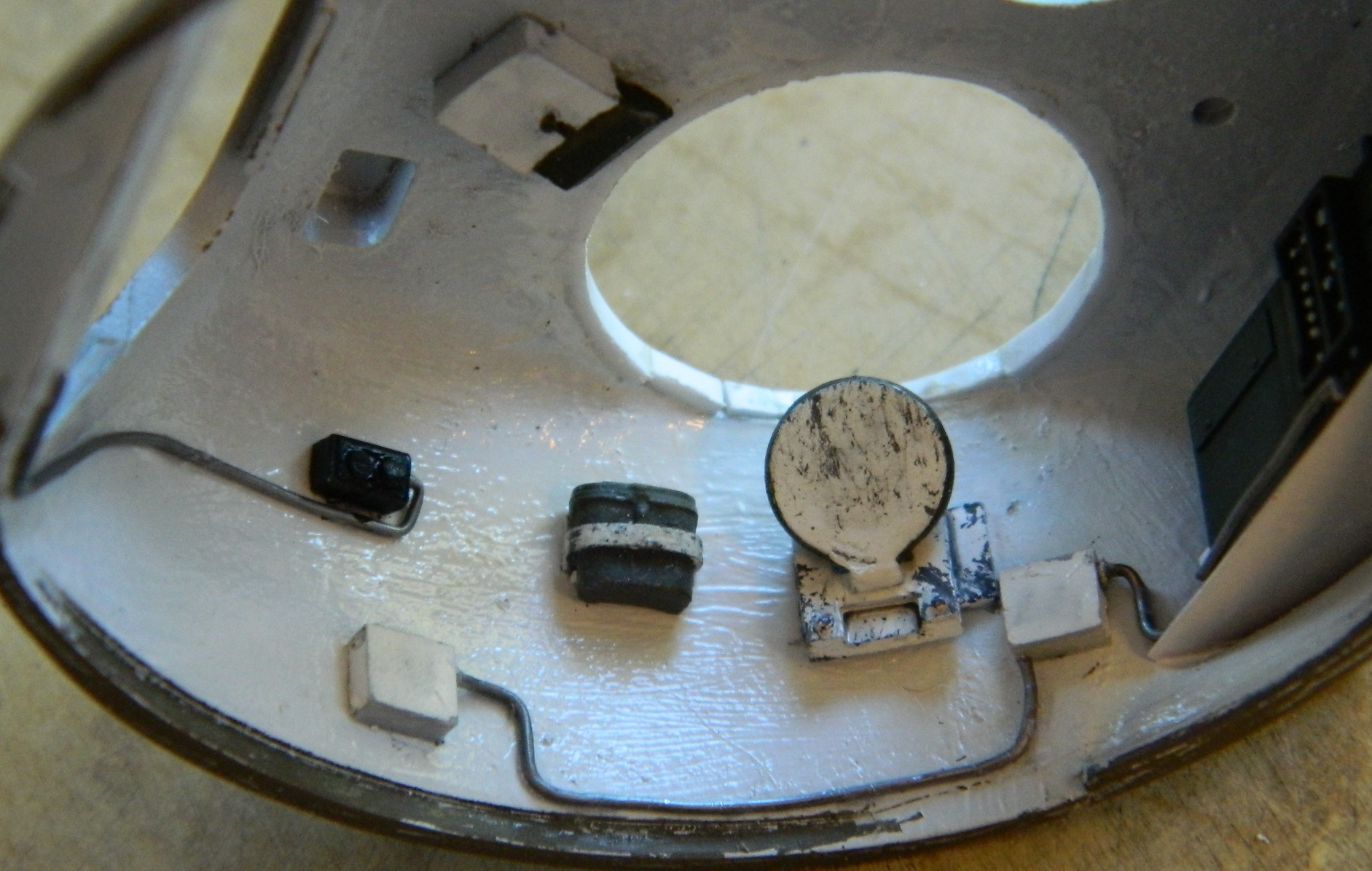
I added the various items to the turret walls, installed the radio, added the electrical conduits (solder, of course), and then painted the conduits white:


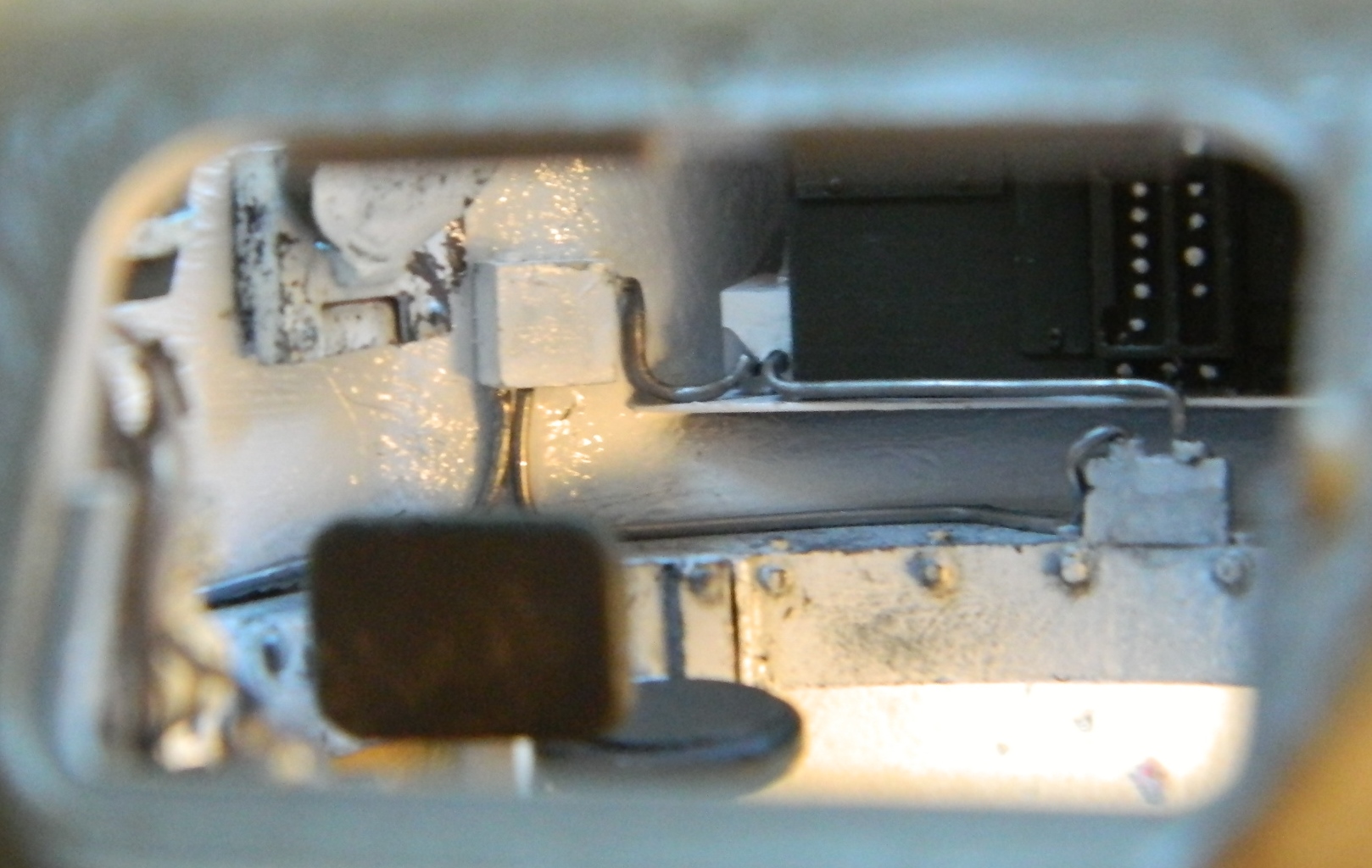

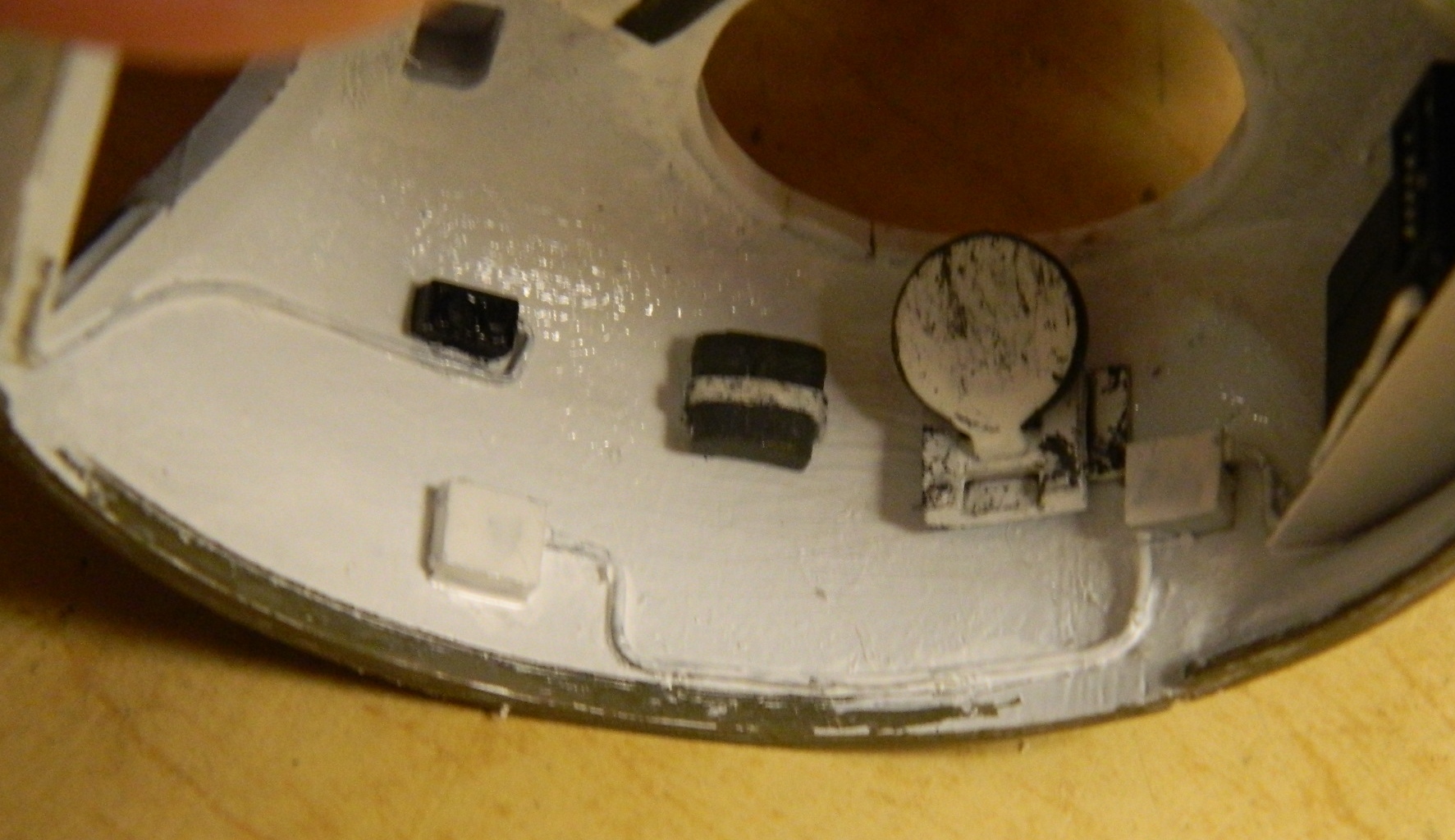
M4A3 (Tamiya) Build #15
Going back to working on the upper hull interior, it was time to start working on the .30 caliber machine gun in the bow. I found exquisitely machined brass machine gun barrels for both the .30 and .50 caliber machine guns. I painted them prior to assembly:


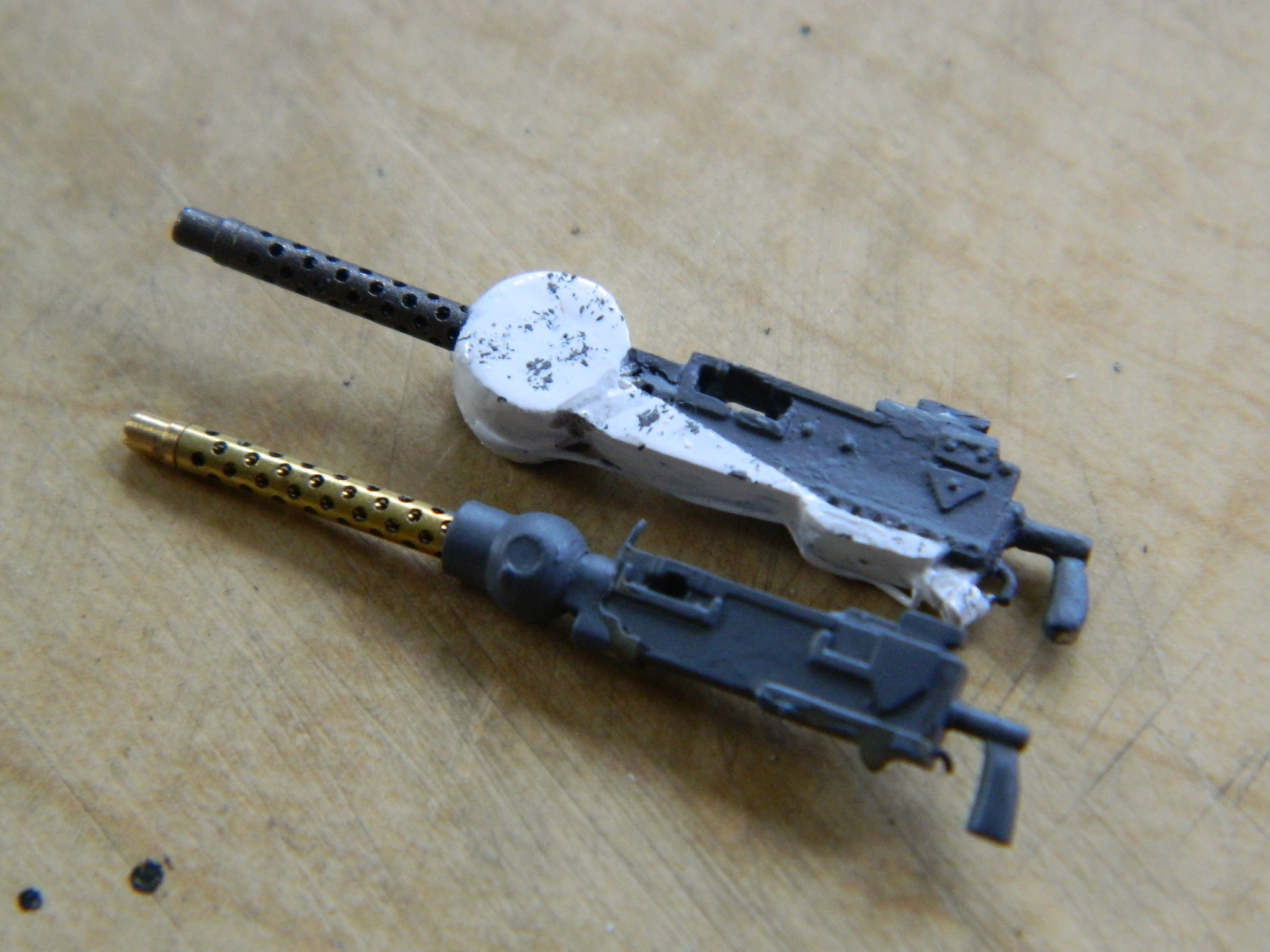
I’m going to replace the bow gun. That means the barrel and jacket get assembled:
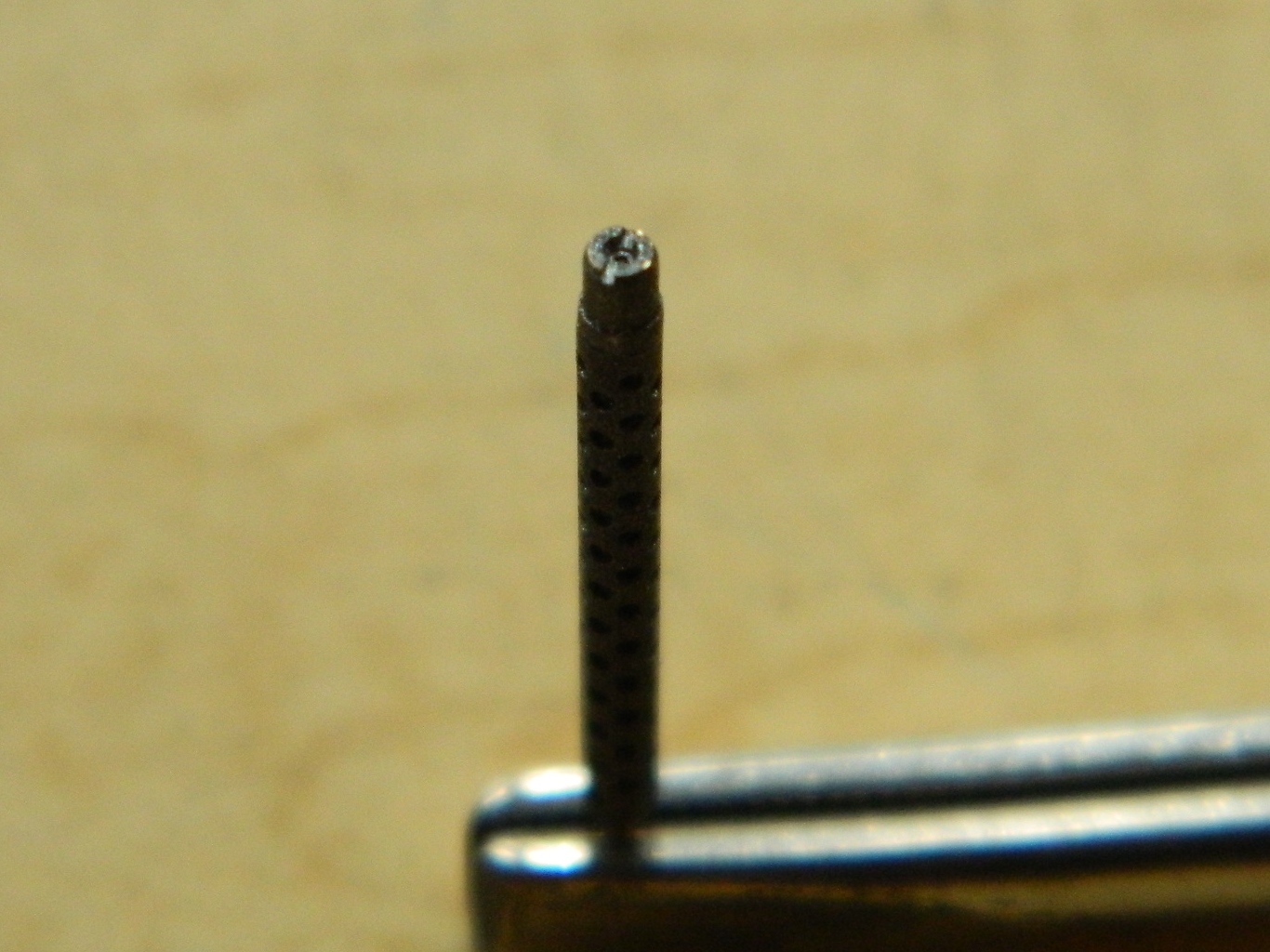
Next step is to cut off the resin barrel and drill a hole for the new barrel to seat into the receiver:
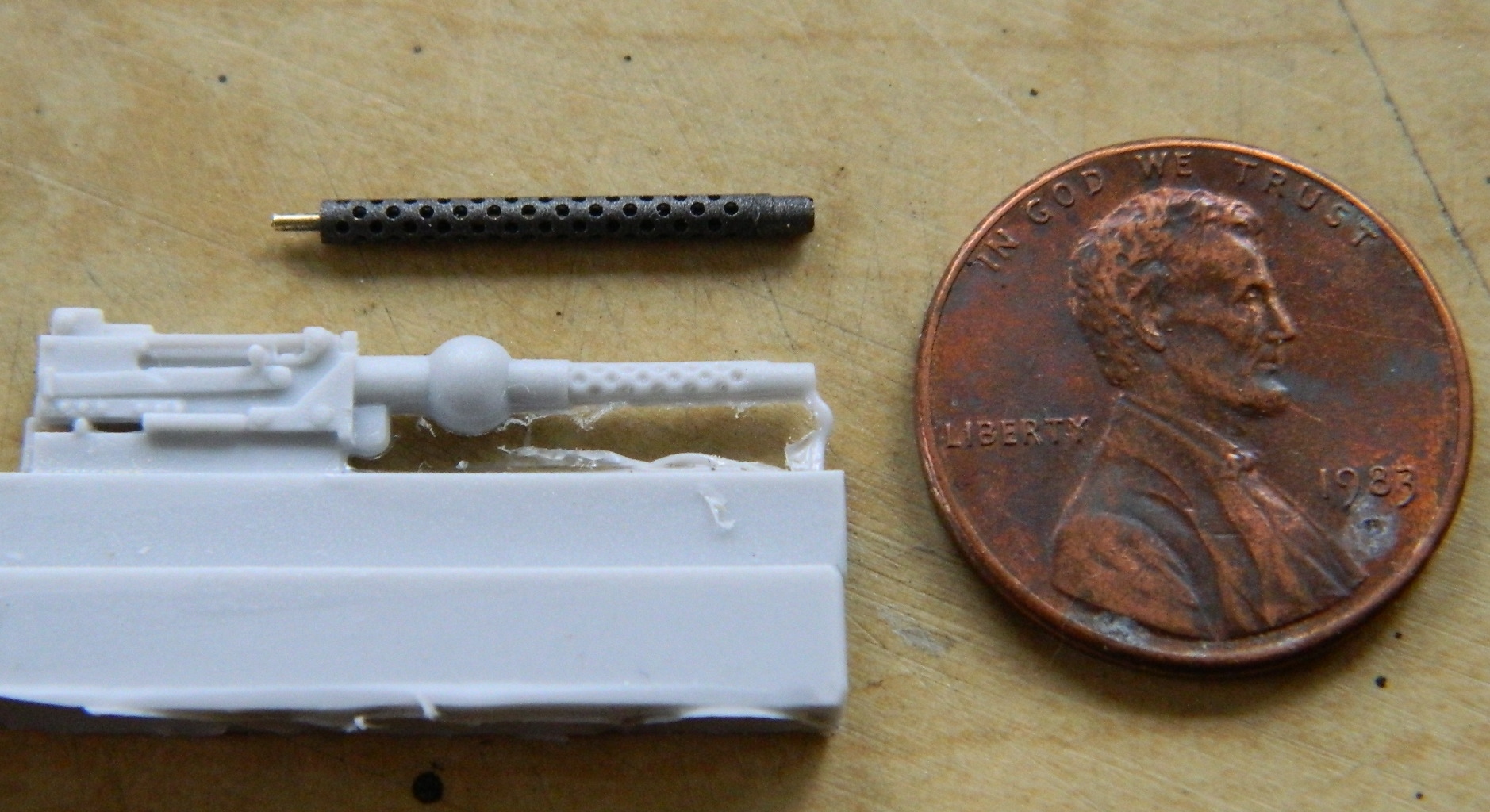

And that was another mistake. I didn’t check the overall length of the assembled gun and the barrel extends much further out than it should (much like my stomach does):
Since it’s superglued into the receiver, and since acetone softens superglue, I dropped the assembled gun/barrel into a jar of it and let it sit overnight. The next day I discovered a couple of things. First, the acetone did indeed loosen the superglue and the barrel/shroud slid right out:
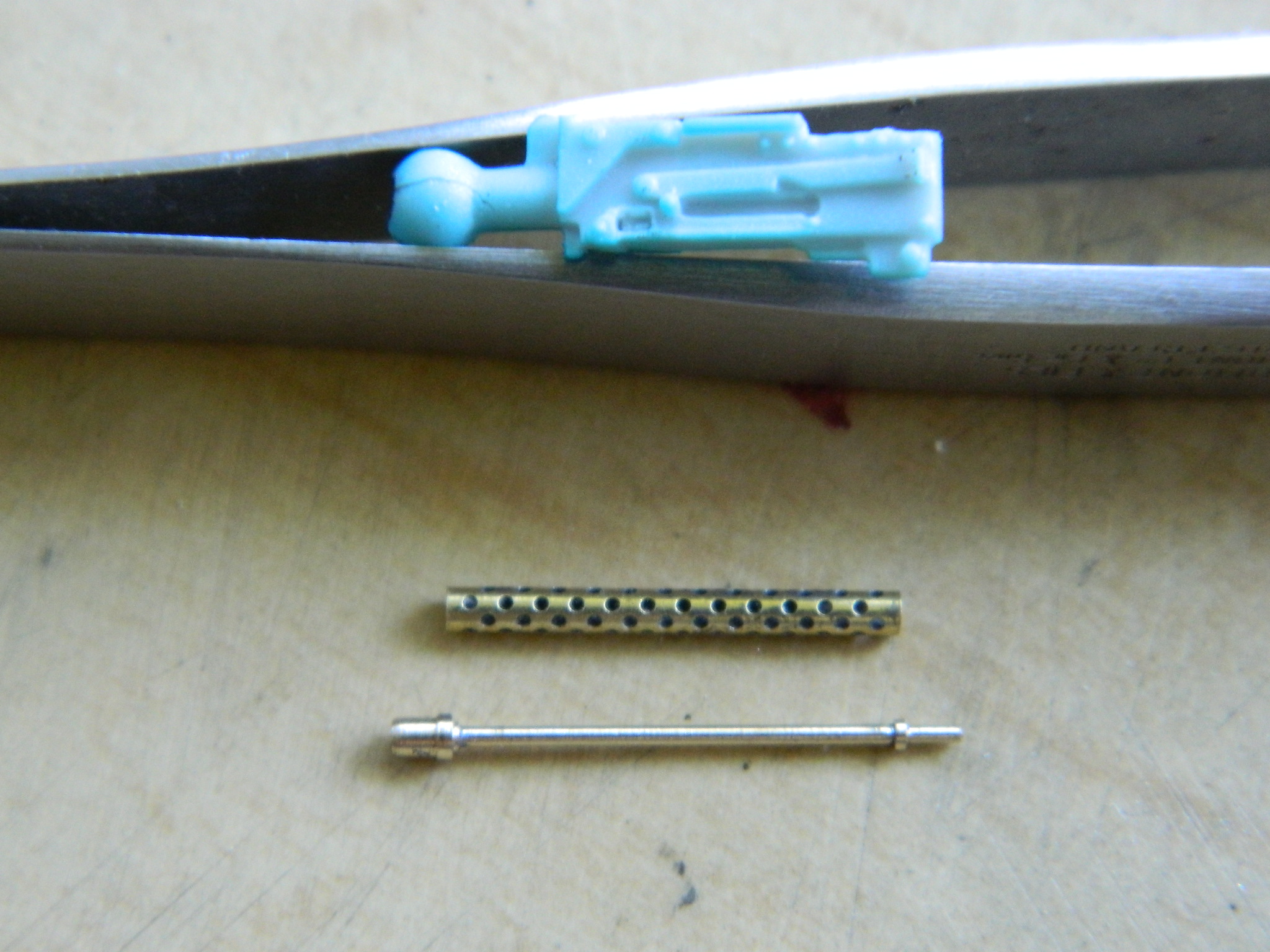
What the above photo doesn’t show is that the receiver is no longer solid. It’s rubbery. Like thin rubber. Well, bugger…
I rattled around in my spares boxes and found the bow gun from an Asuka kit (or Tasca, as they’re calling themselves now):
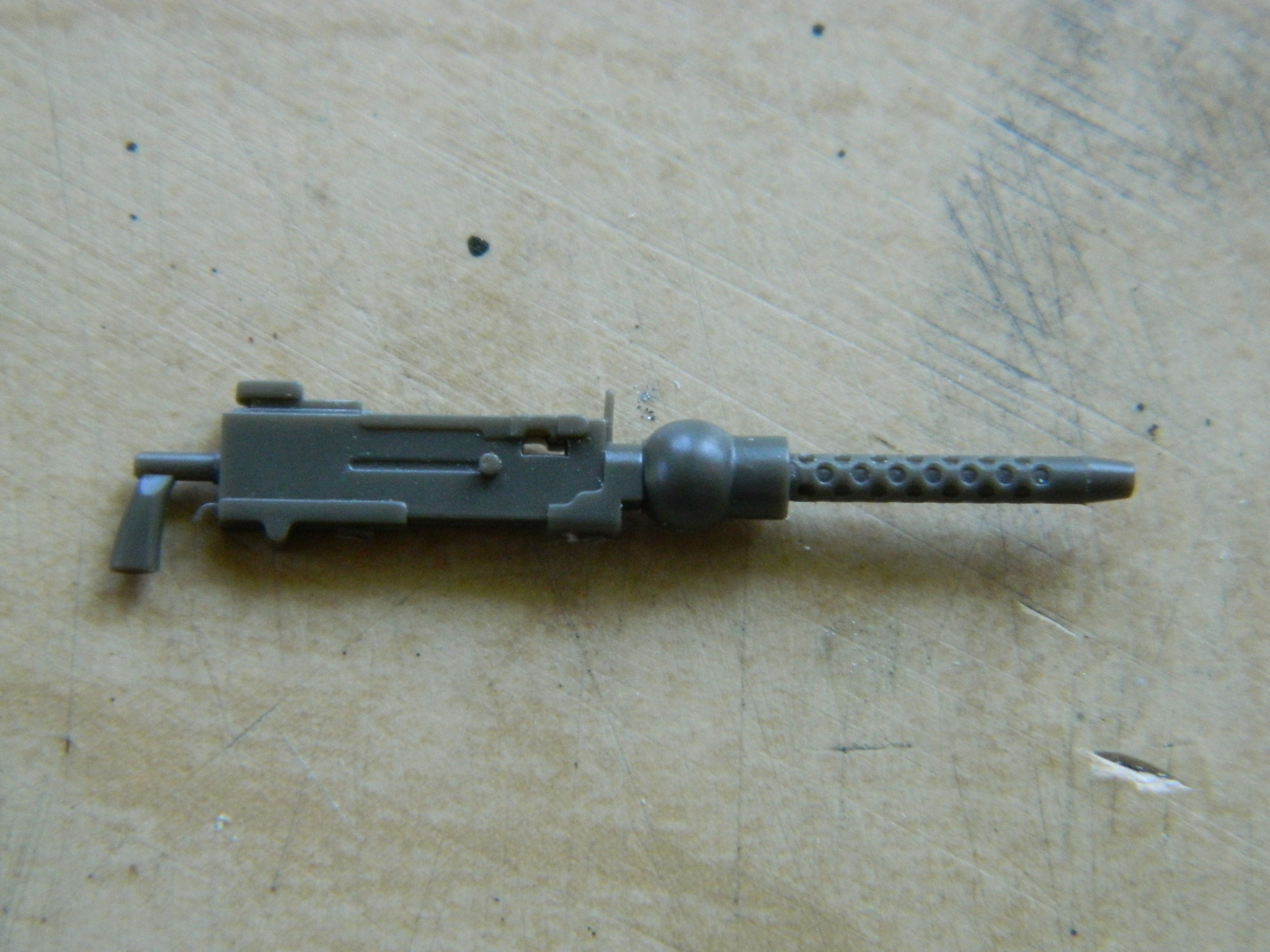
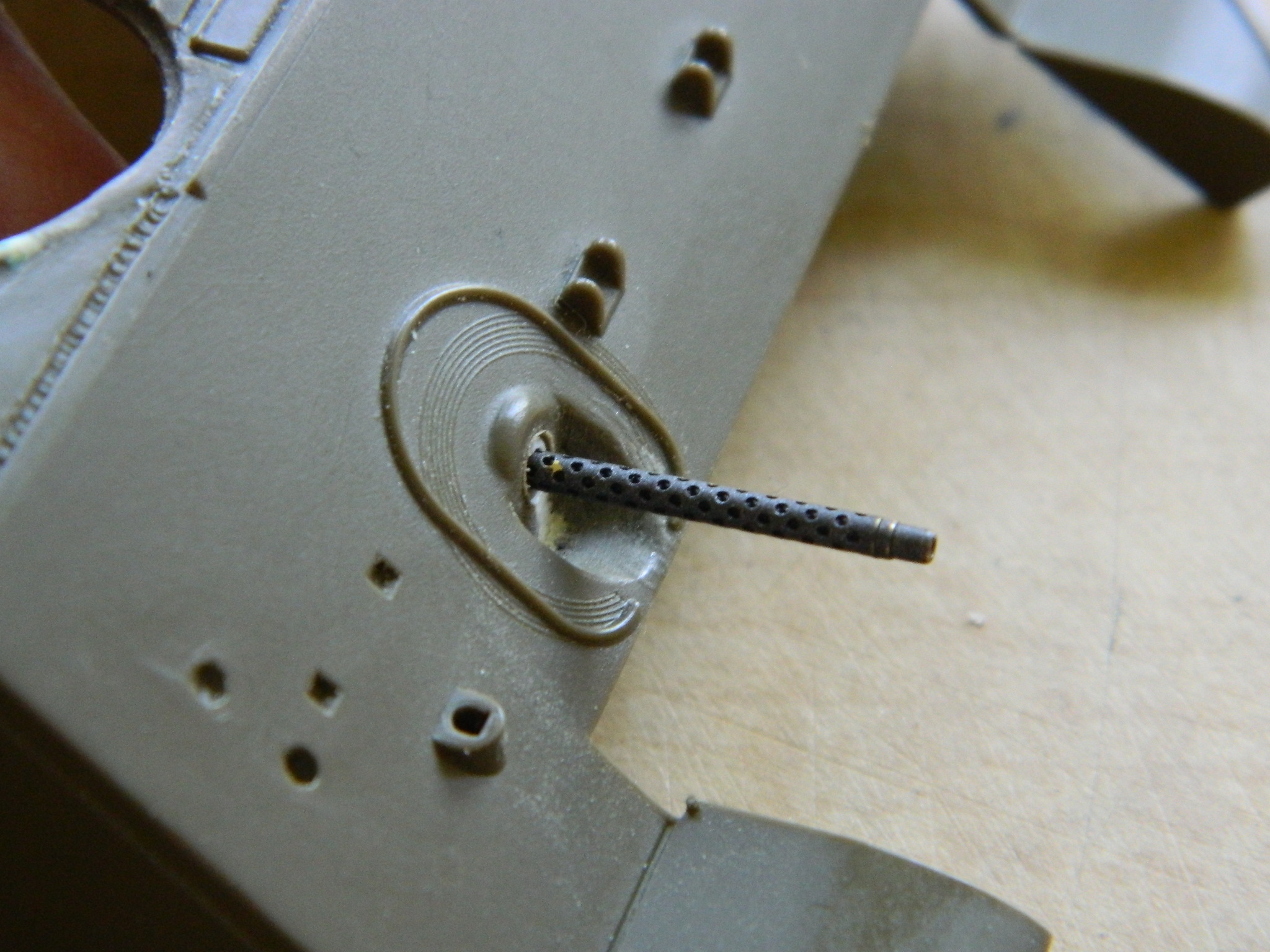
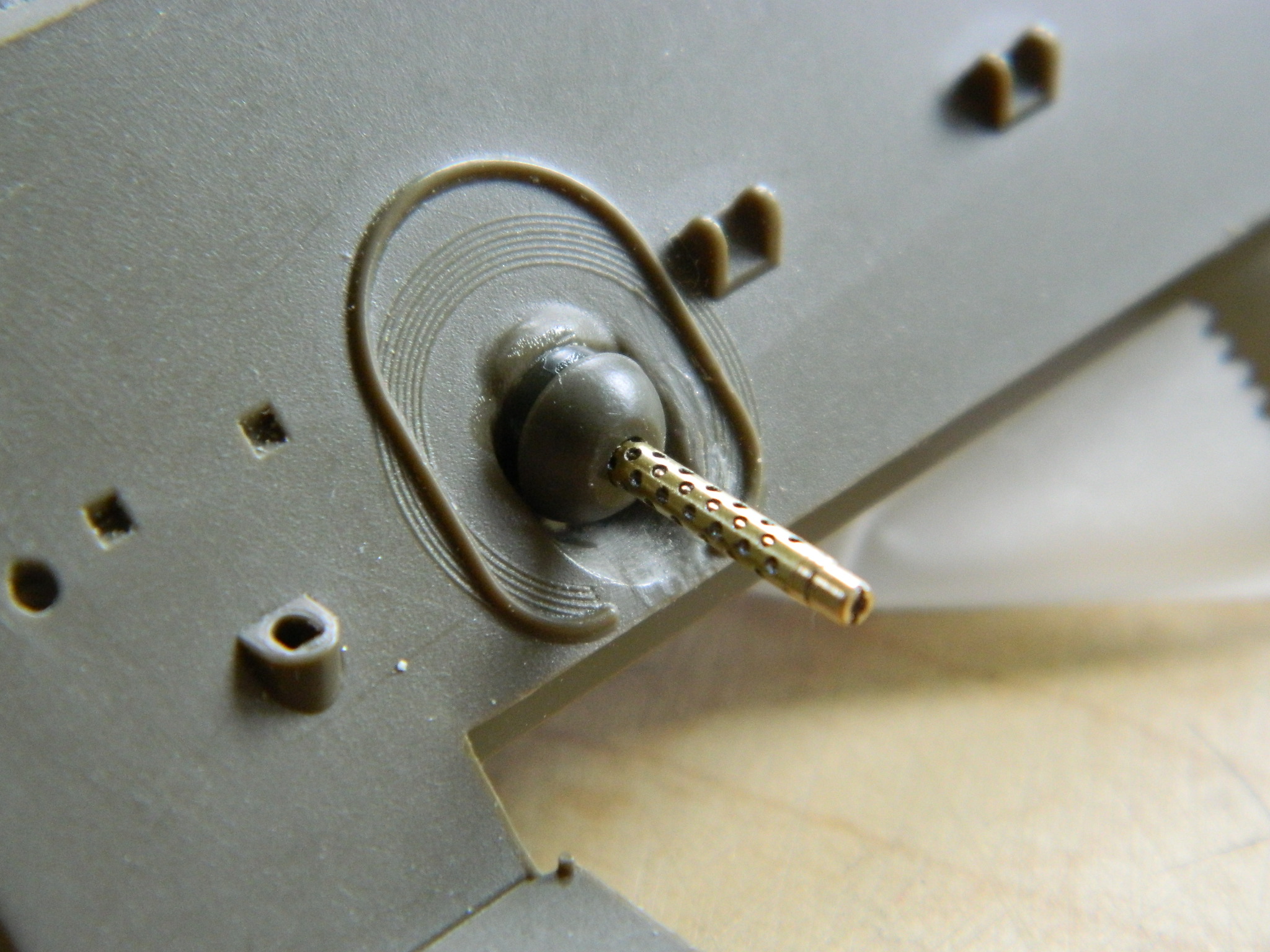
And this time I certainly drilled it deep enough. If you click on the picture below and zoom in on it, you’ll see that just in front of the shell port where the bit has deformed the plastic outward (but given where this gun will reside, that won’t ever be evident):
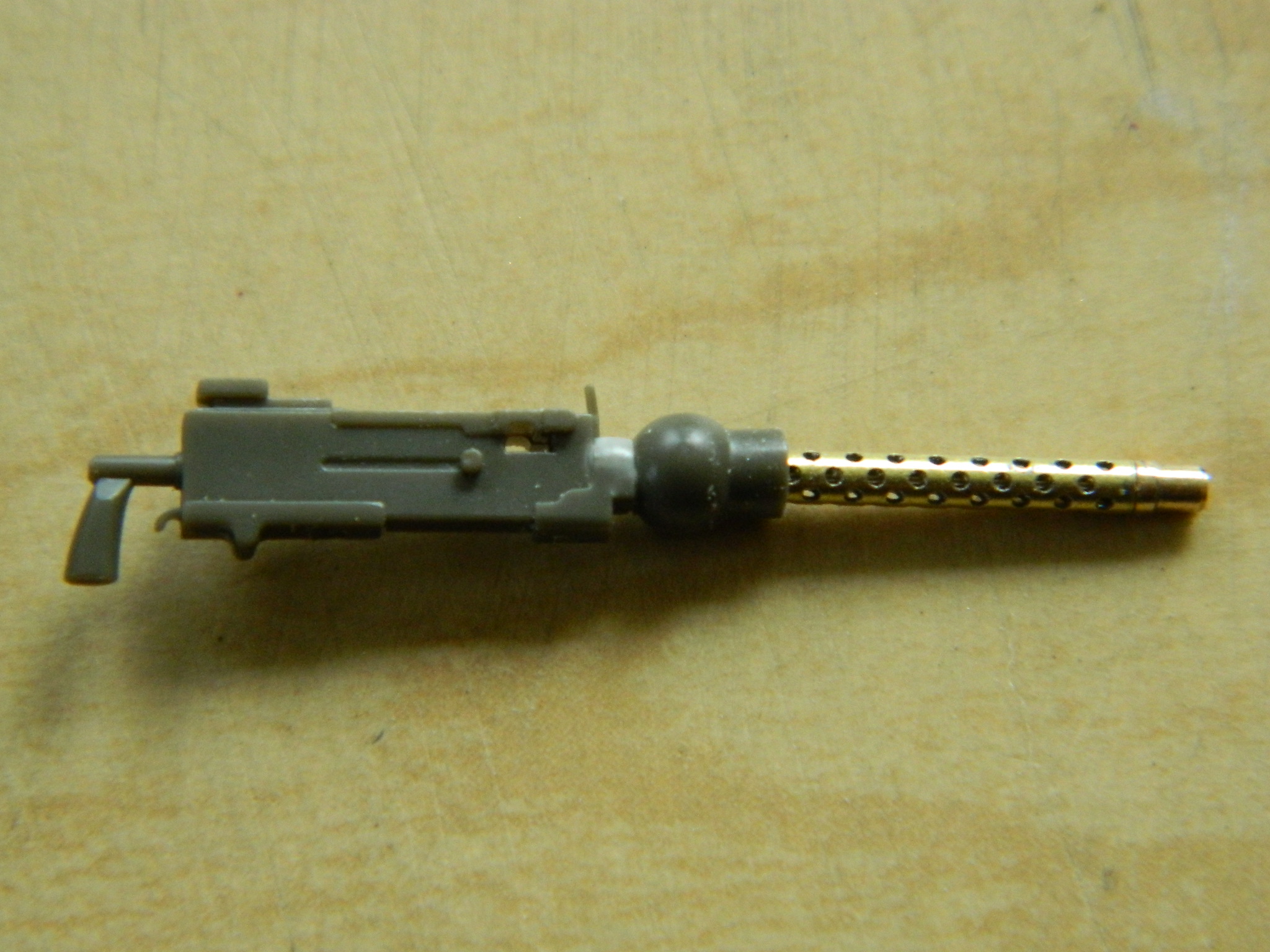
And now (unlike my stomach) the barrel doesn’t stick out too far:
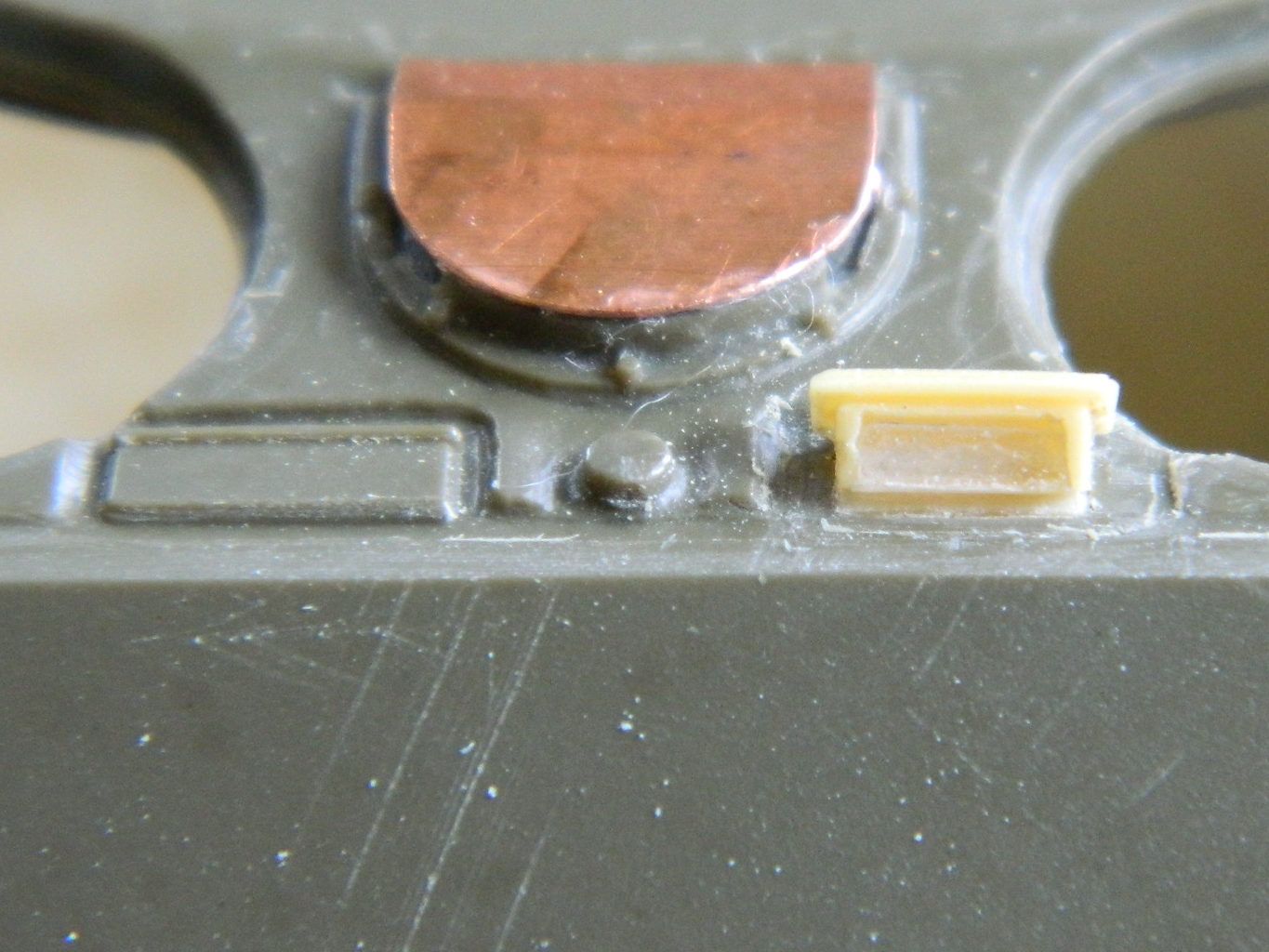
And since I’m replacing the periscopes and their flip-up covers, I had to remove the molded on cover and replace it with a resin cover of a size matching the cover of the driver’s periscope (after filing the head out from under it):

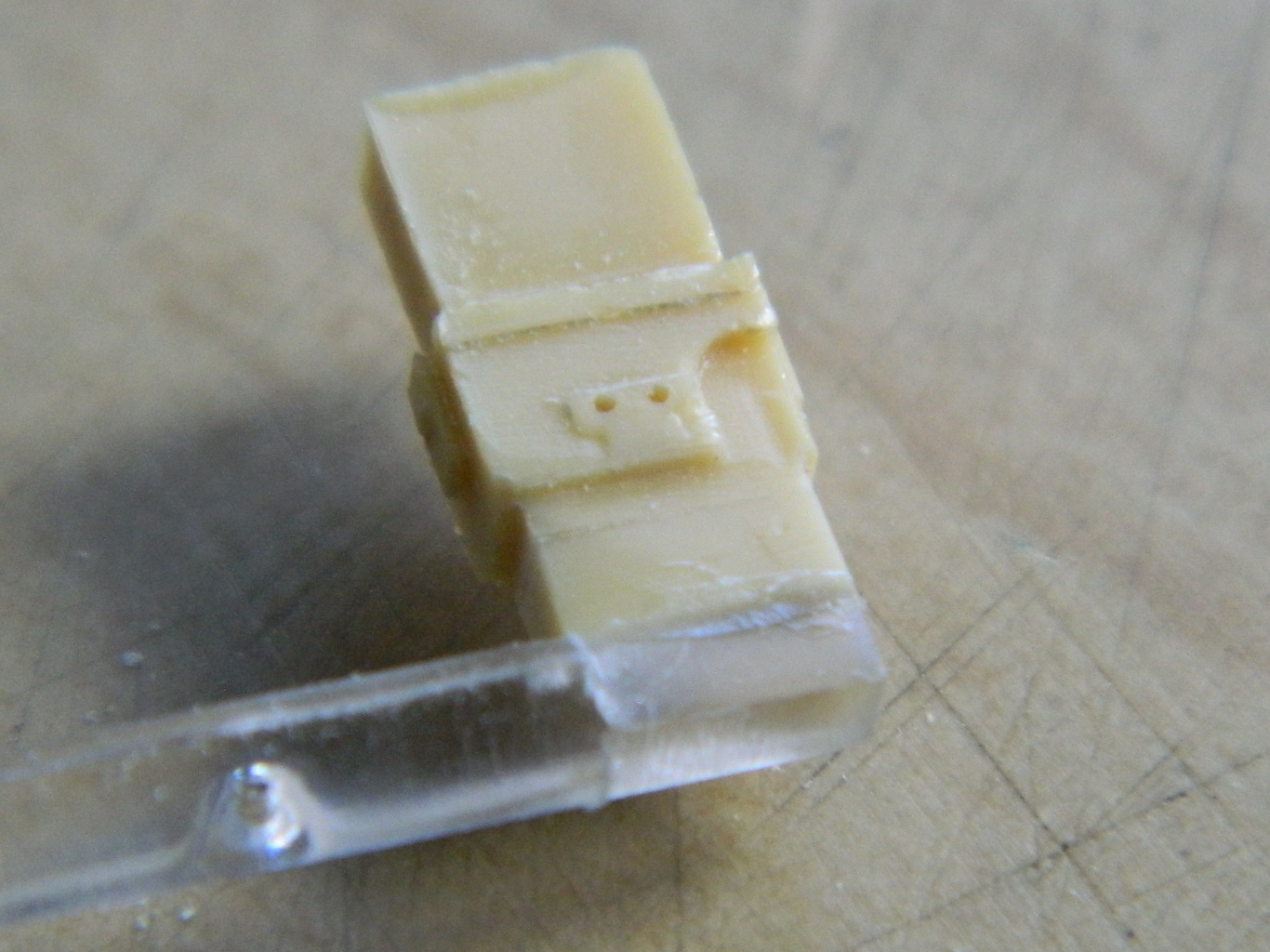
Since I realized that the vent blower is going to get in the way of the periscopes, the bow gunner’s periscope will be modeled retracted. The problem with that is that all the resin periscopes are molded open. That means I have to extend the bottom of the periscope and add clear sprue to the bottom where the view port is (and I had to add a little putty):



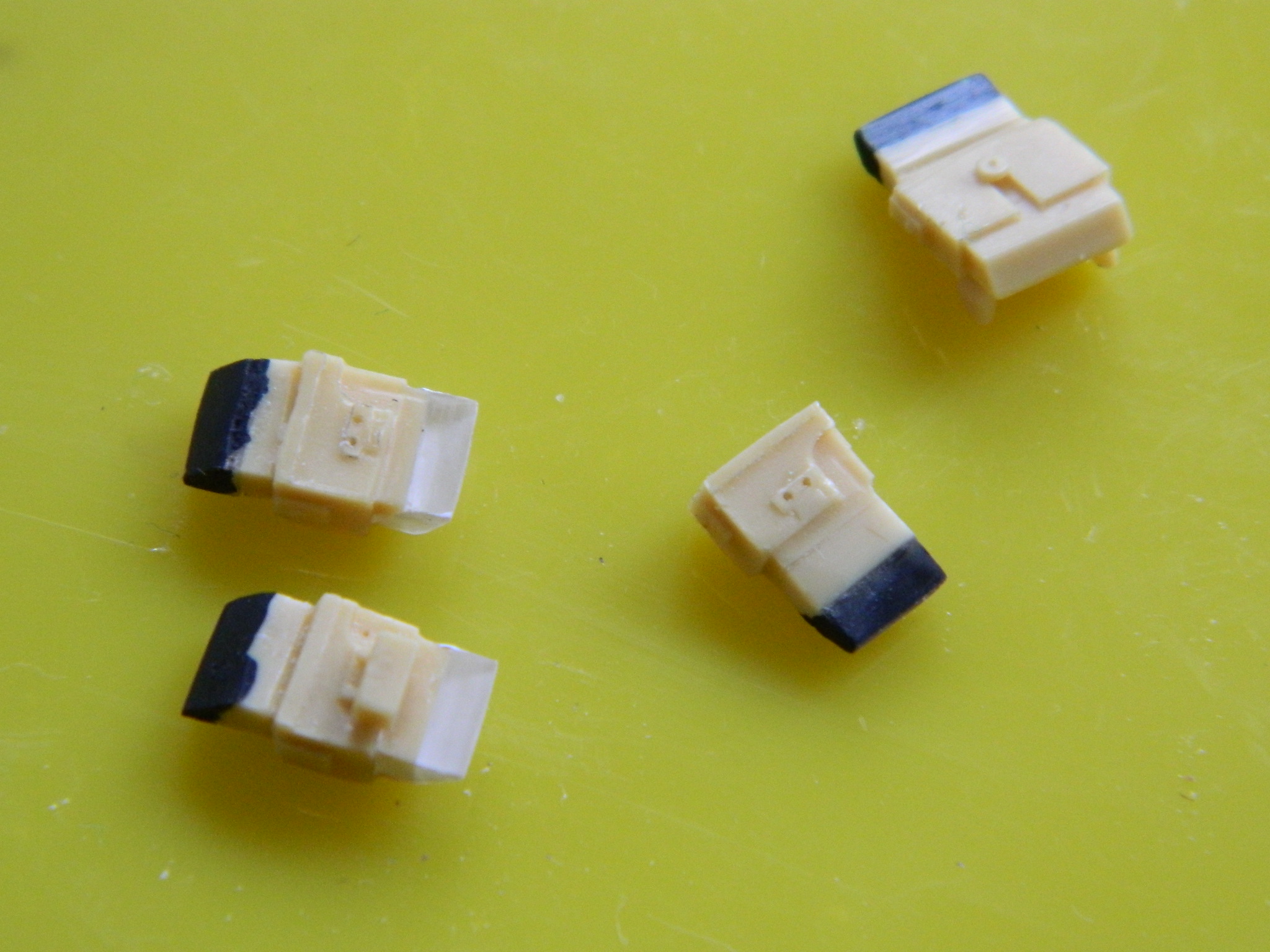
Since I was revisiting the periscopes, it seemed a good time to get some paint on them. I back painted the clear heads; internal heads that look out get back painted a light color, the external heads that look in get painted a dark color, and then they were masked off while they were still easy to get at:
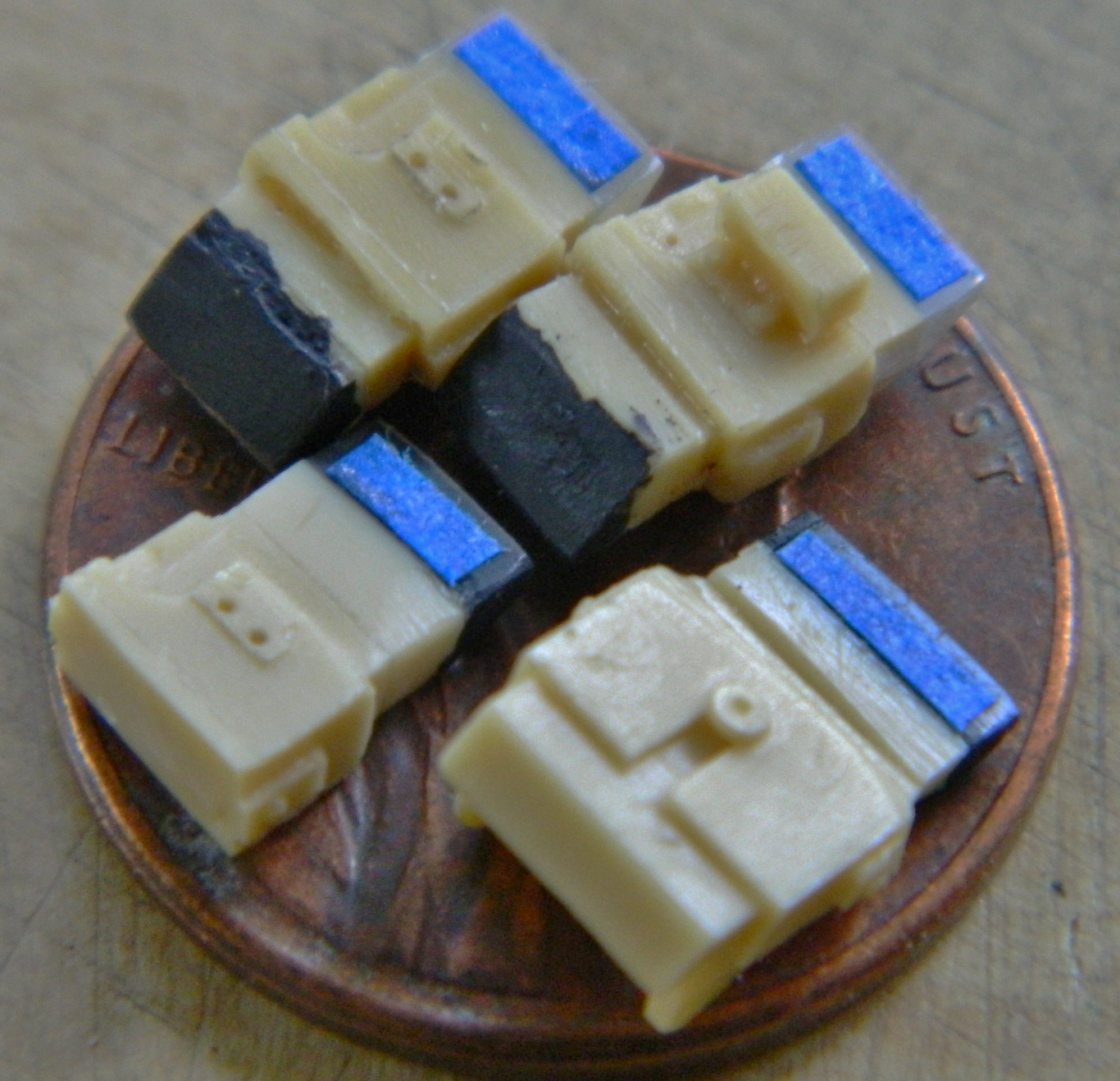
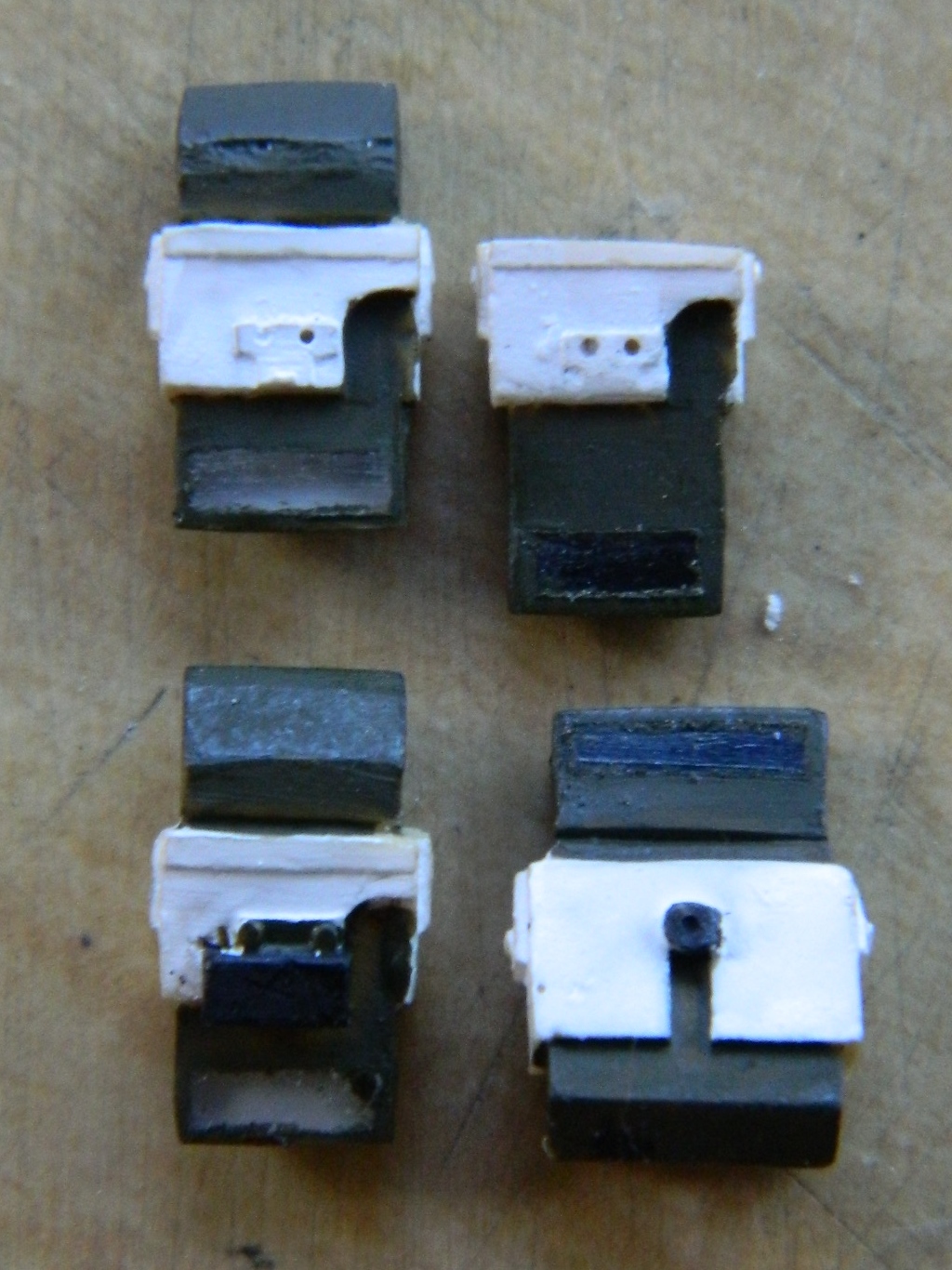
Getting back to the turret for a while, I started work on the main gun (75mm) assembly. I picked up a really nice turned aluminum barrel that even has rifling in it! Step one was to drill out the mount and socket the barrel into it:

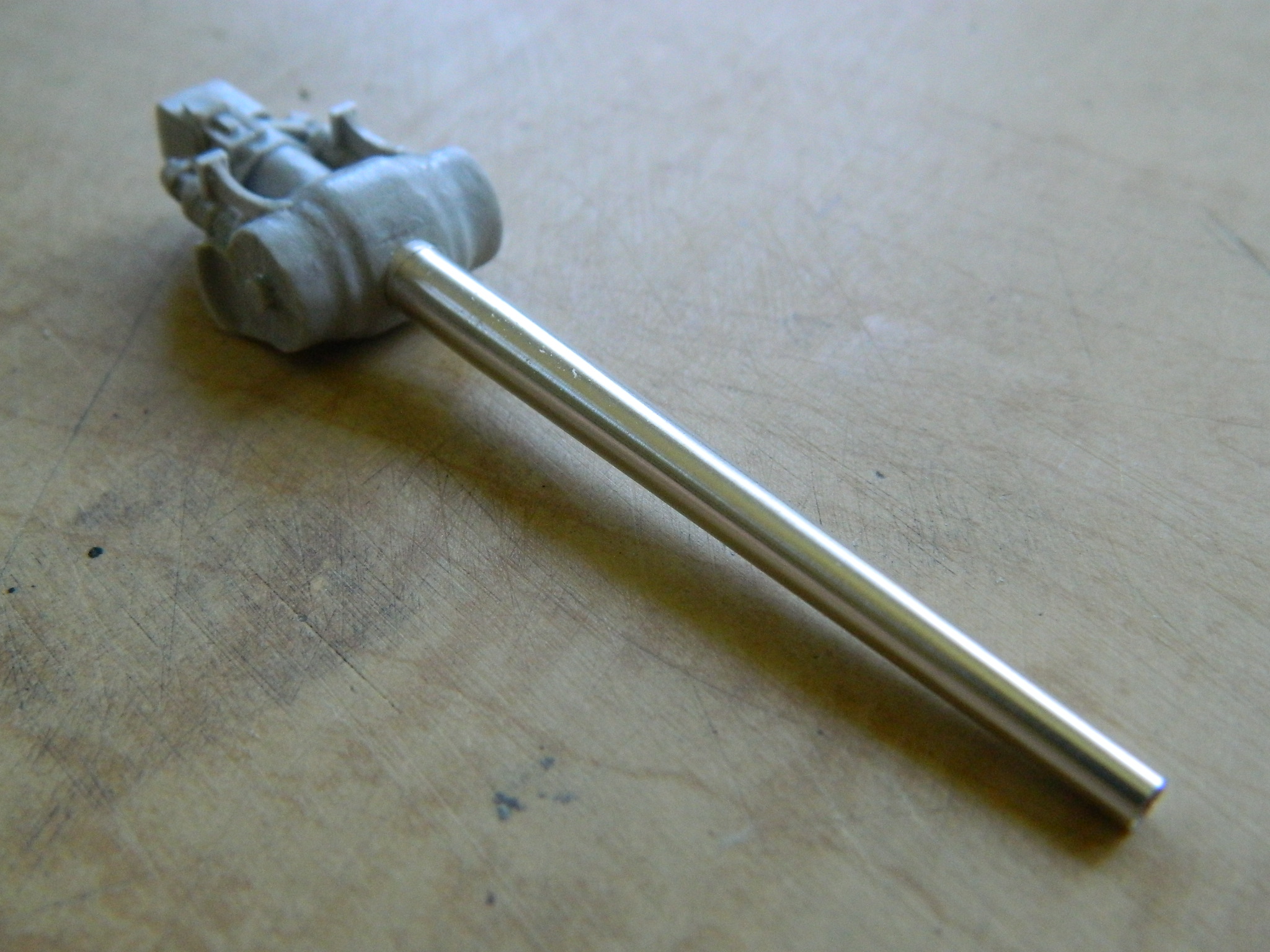
What I found interesting is that the hole is so snug that the air behind it pressurized. The barrel came out (easily, in spite of superglue), I drilled a relief hole under the gun mount, and glued the barrel back in more securely.
Totally unsurprising at this point, there are fit problems. After doing some skull-sweat, I realized I would not be able to use the cast-on resin pivot (fit and structural considerations). As so happened, I just happened to have copper tubing of the correct diameter. I drilled…carefully…in from both sides of the gun mount towards the center and dayum if I wasn’t within .005 of being spot on:
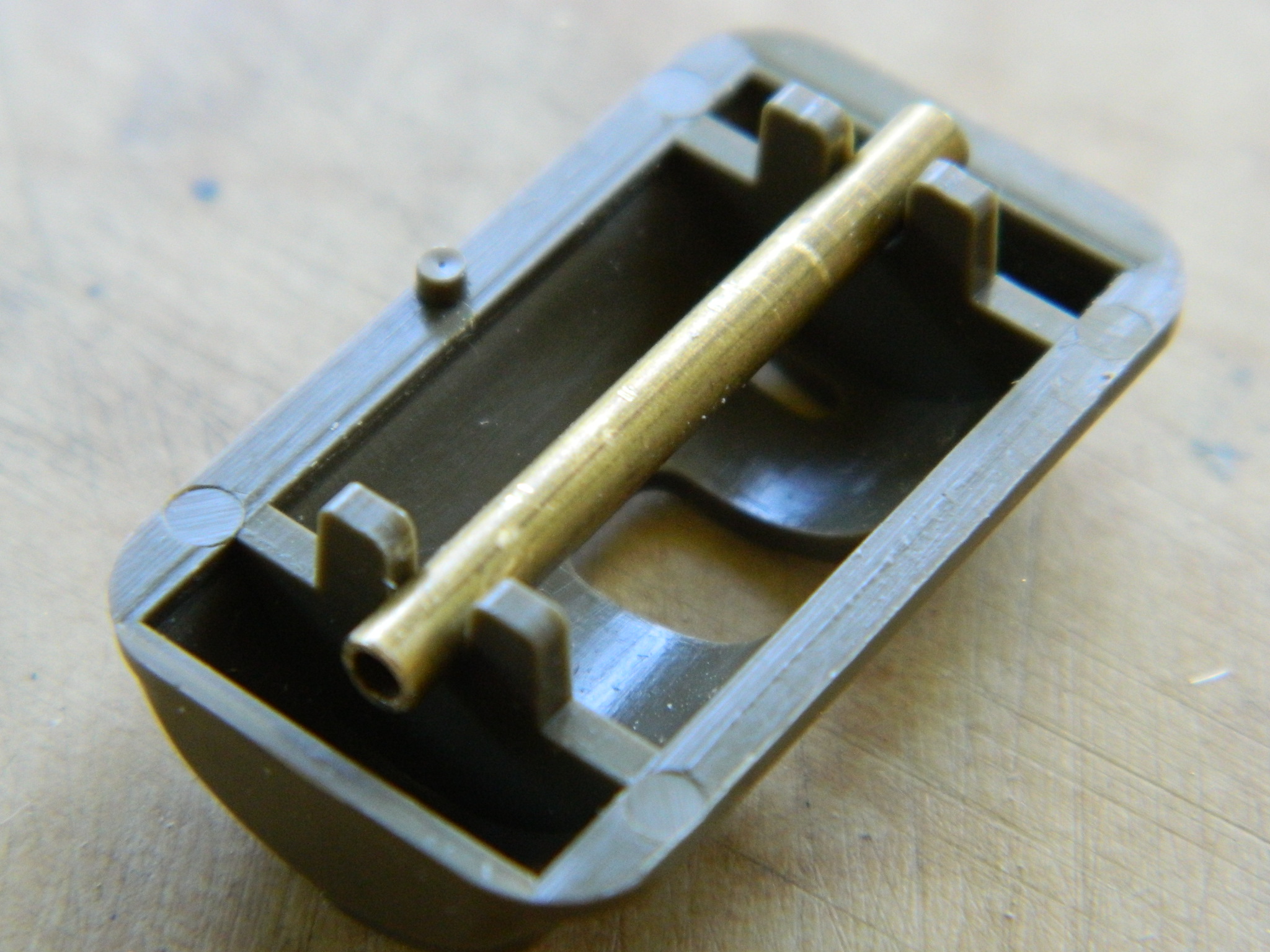

Given that fit problems abound, it was time to dry-fit this next step and see how things were fitting (or not):
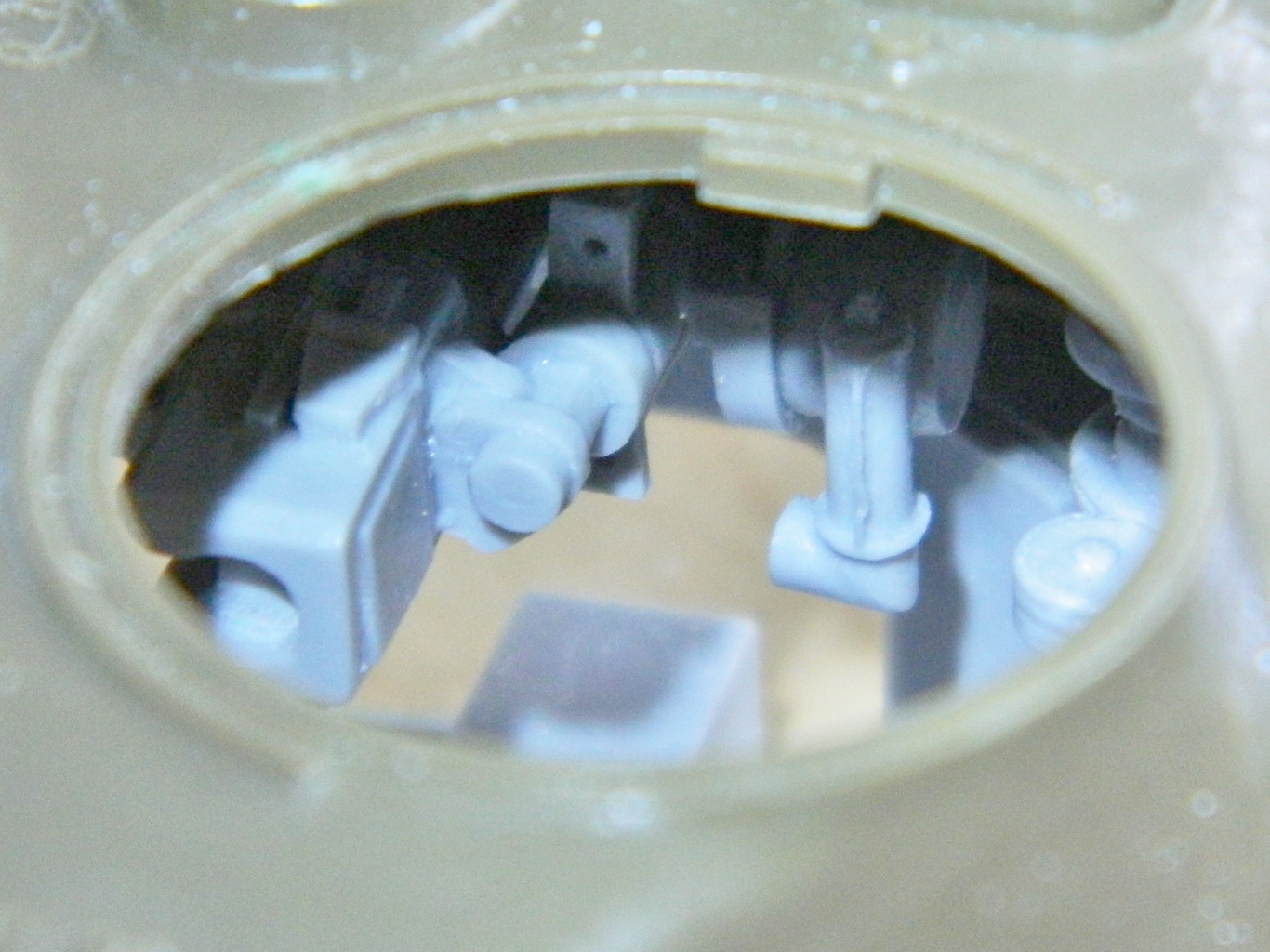

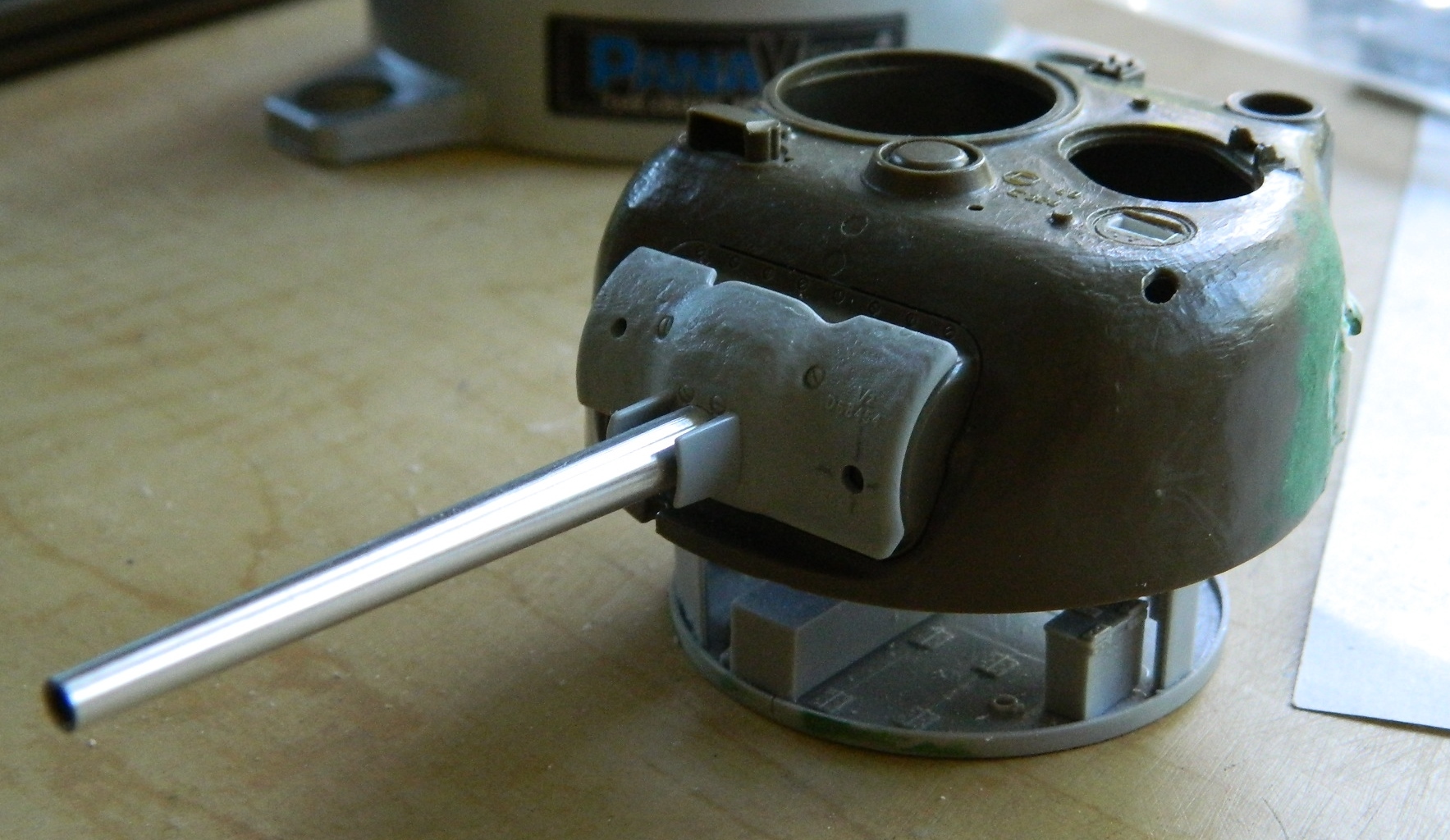
Things were fitting, mostly, but just like in an actual Sherman, “space” is only found outside.
So it turns out there’s fit problems. The mantlet I want to use is from a different kit (Dragon, because it has better surface detail) and does not quite line up with the gun shield behind it and that’s going to mean neither the coaxial .30 caliber machine gun nor the gun sight will line up properly, as they have to go through the shield and mantlet:


That means I have to widen the mantlet. It’s still not EXACTLY there, but I can work with this by widening the slots in the gun shield to pass the .30 and sight through:
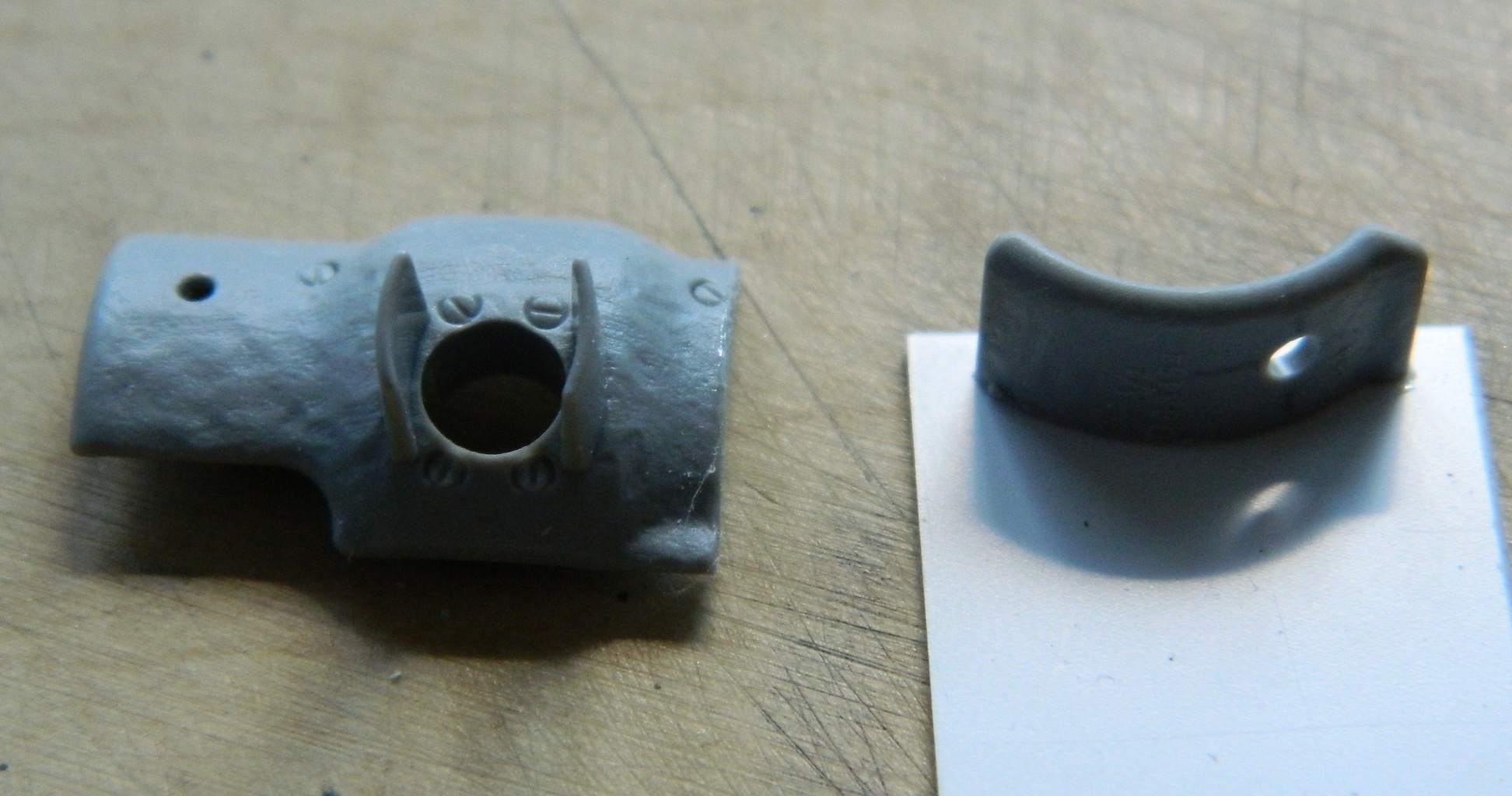

To give you an idea of what modifications are really being done, this is what the kit provided for this whole section:
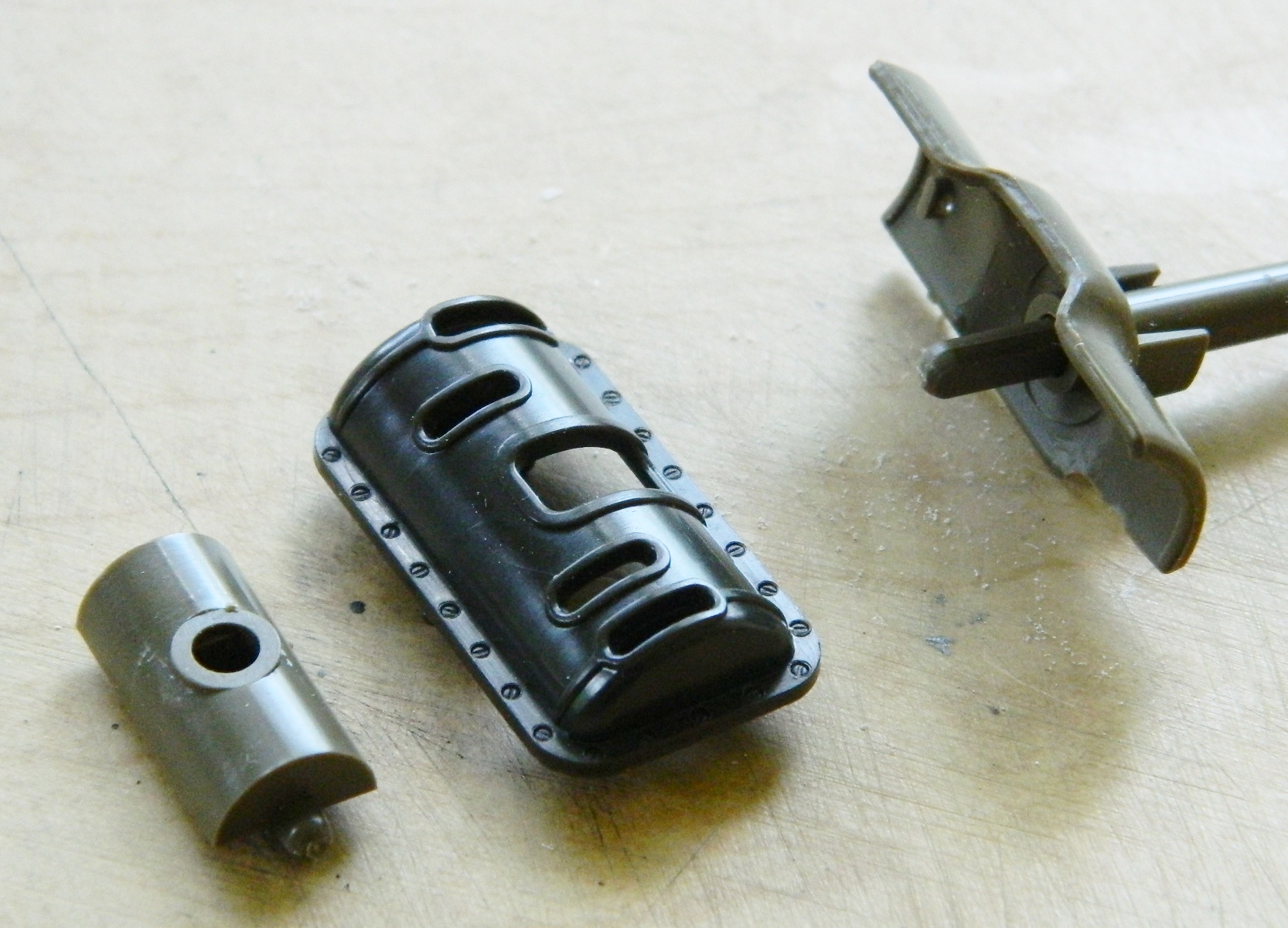
Yeah, it all lines up, but if the hatches in the turret are open…and they’re going to be…there ain’t jack to see in there.
Next step is the trunnion caps that hold the gun assembly to its mount. To do that, the molded on mounts have to be filed to about half their original length and caps fitted to the stubs:
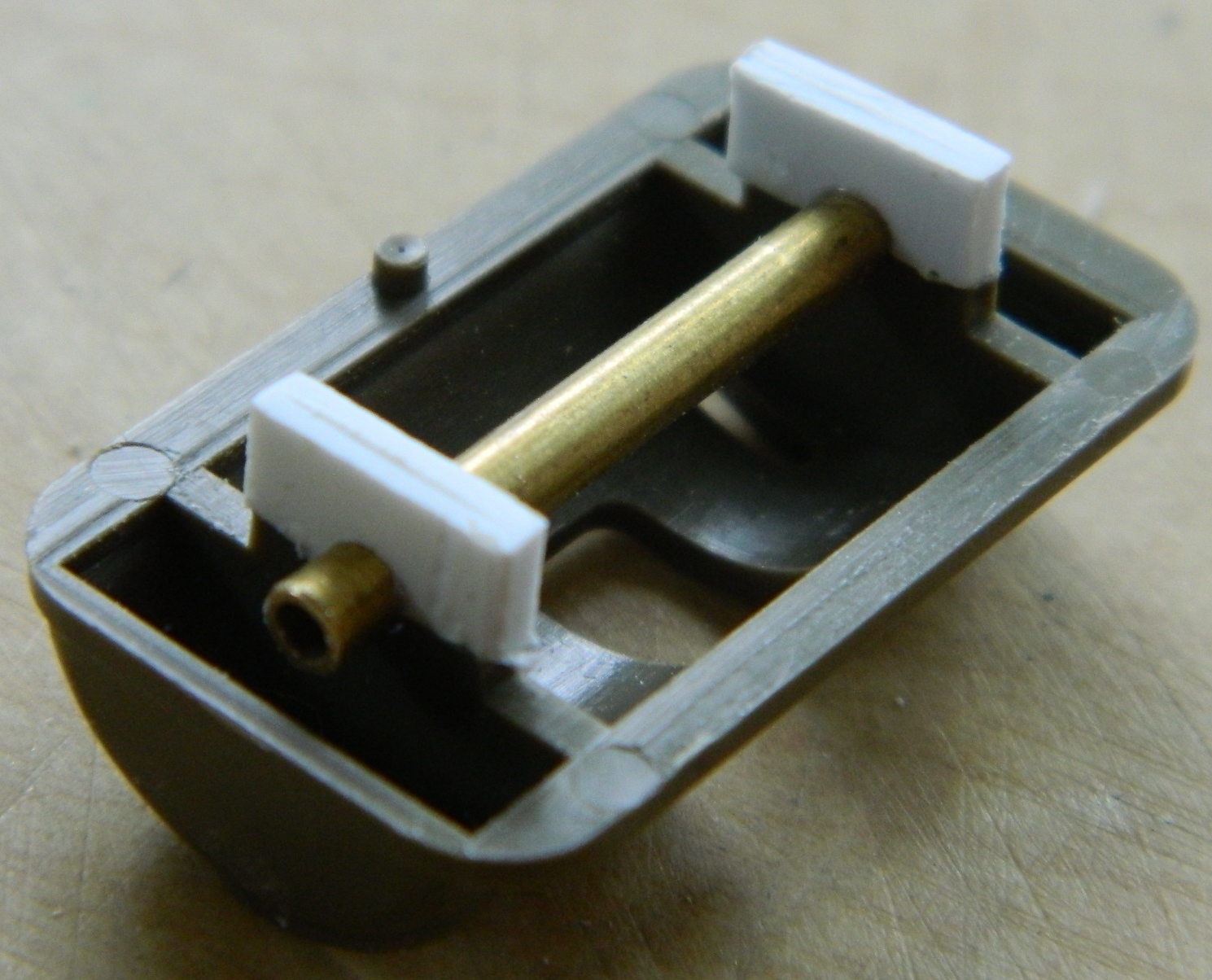
After I shaped the trunnions and added bolts, the fit is checked again:
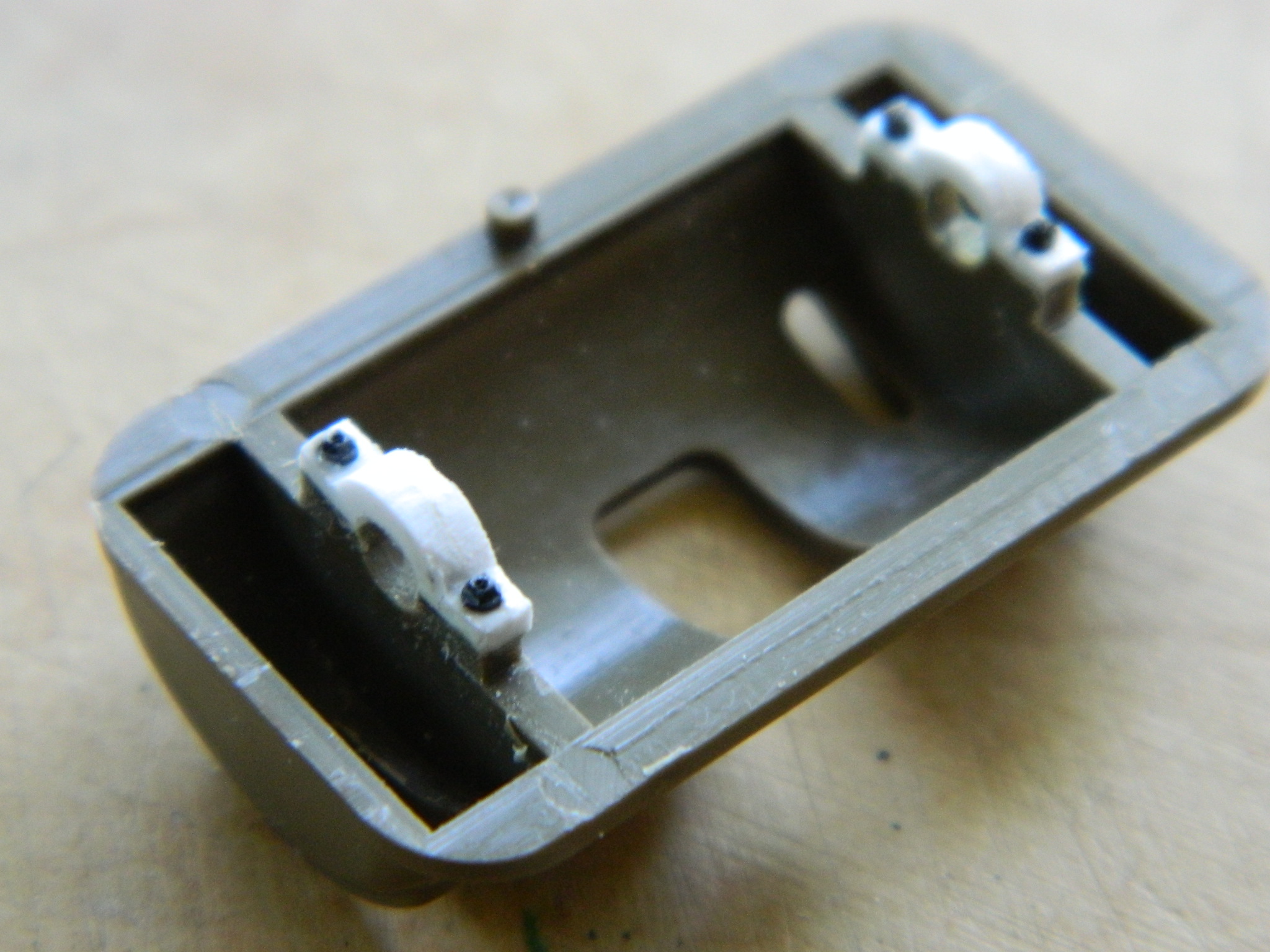
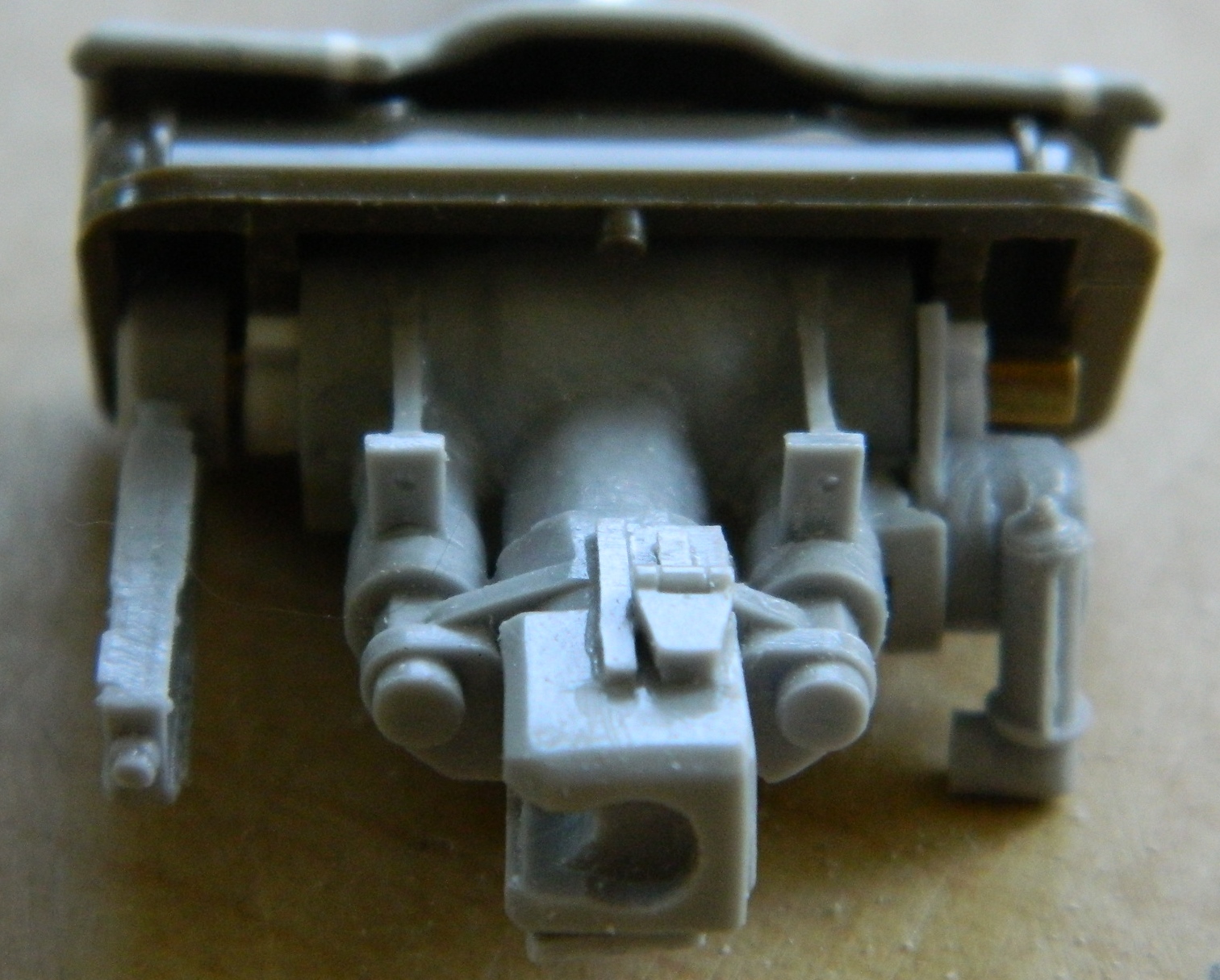
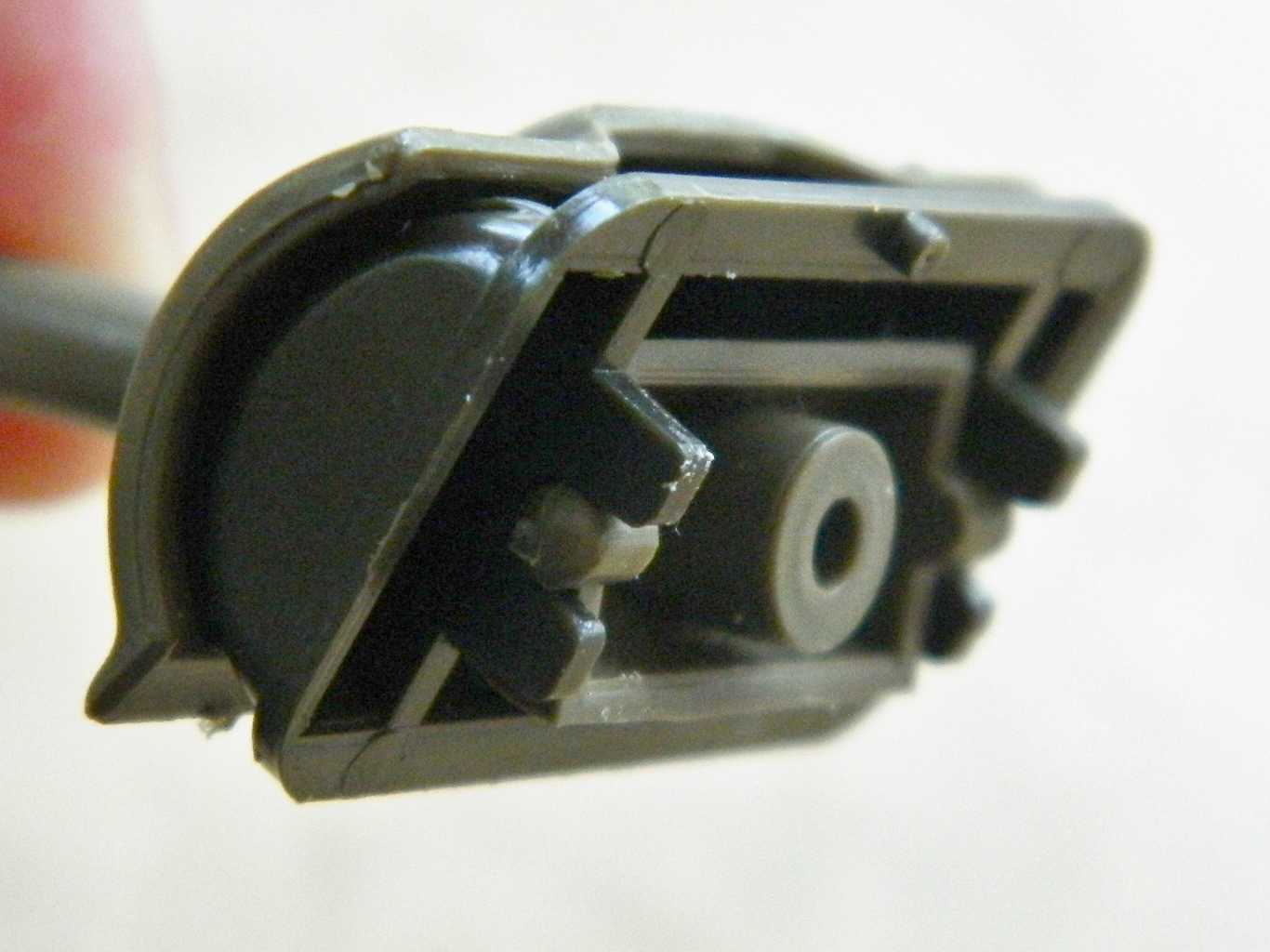
And yes…there are problems. There’s a gap between the .30 caliber mount (on the left of the above-right photo) and the rest of everything. Time to fix it. If you look closely, just to the inside of the .30 cal is a disc of plastic that takes up that now occupies that space:
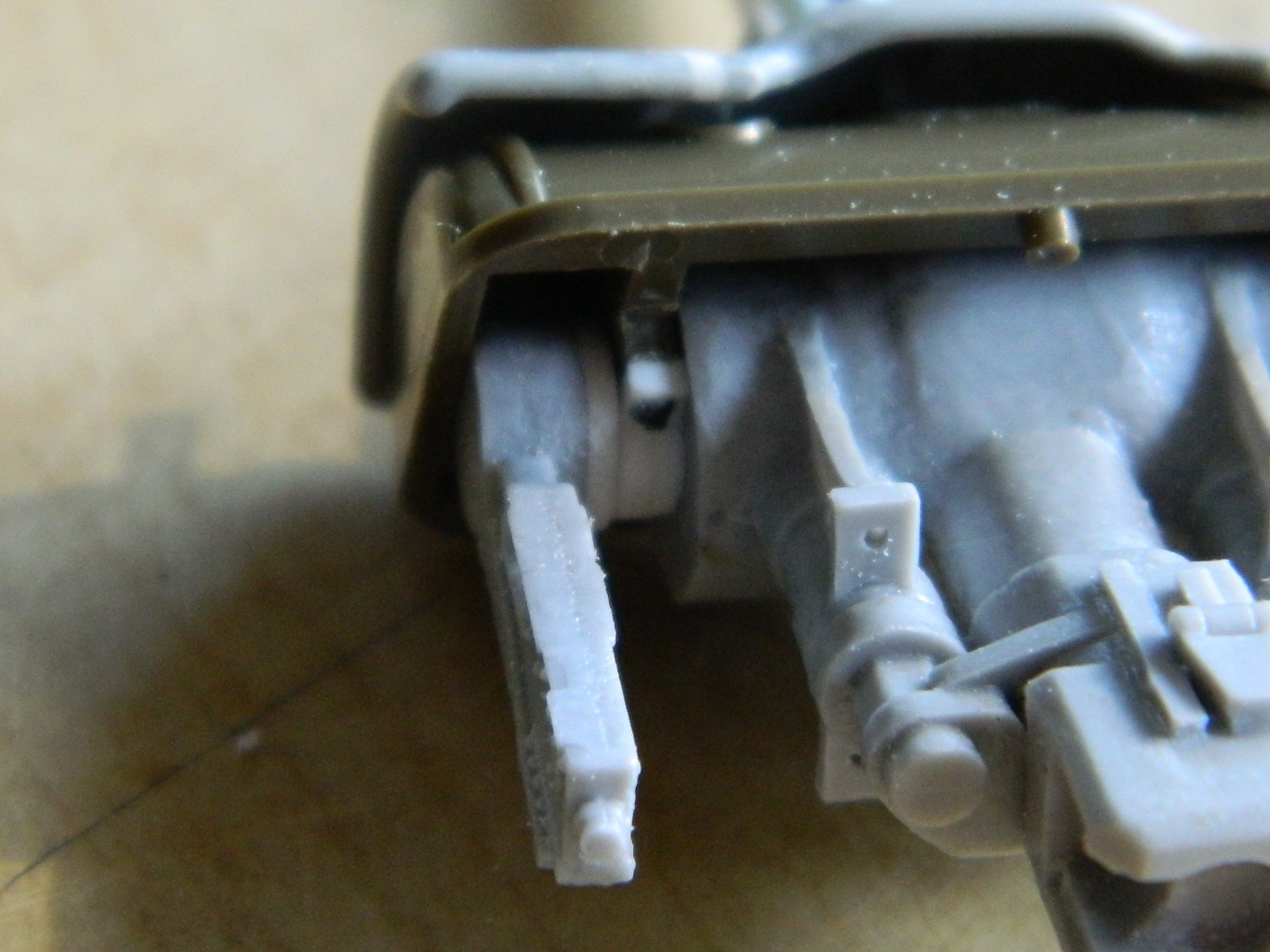
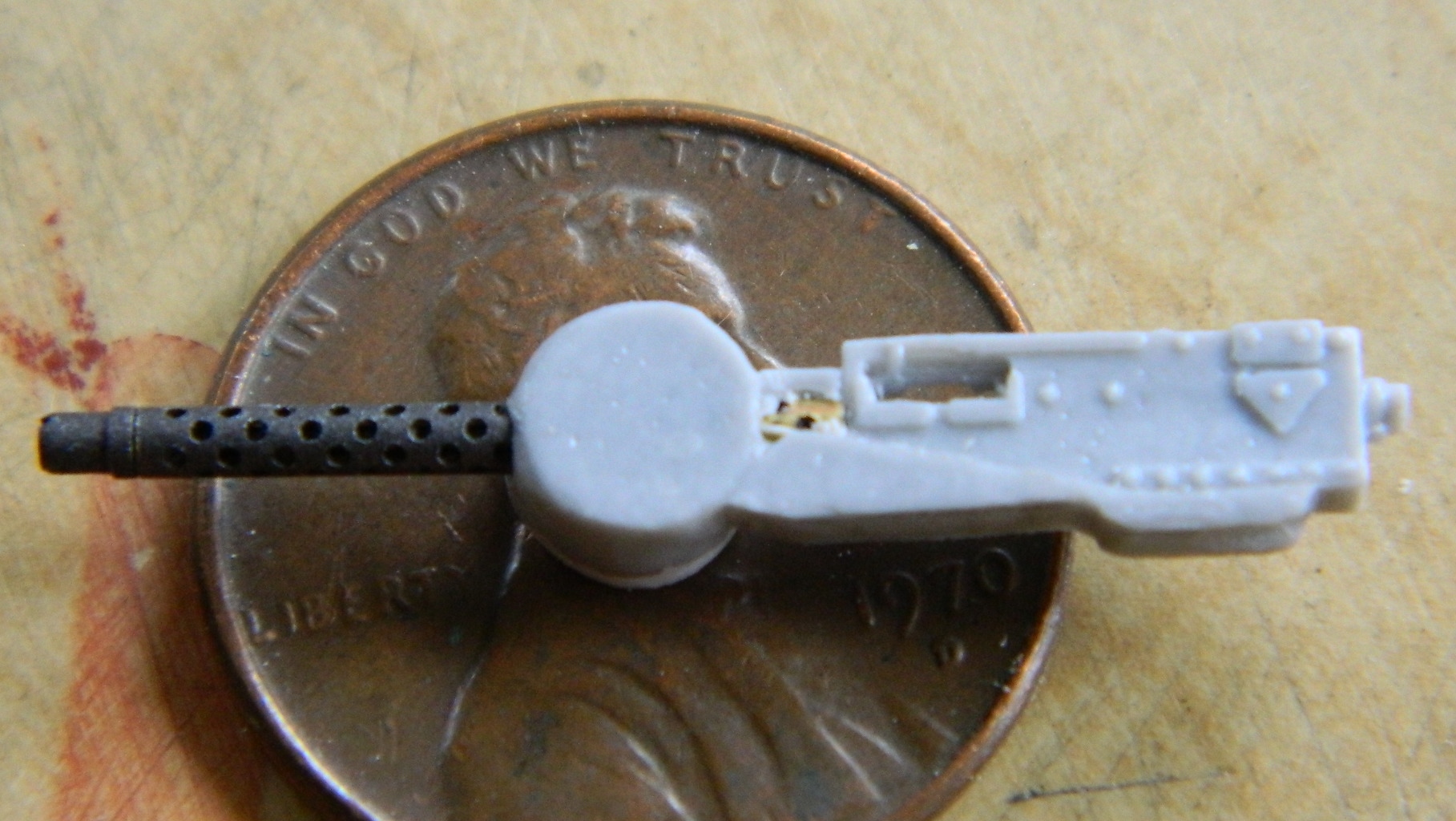
And then I cut off the resin barrel and added the really nice two-piece brass set, only THIS time I made sure I’d drilled the part out far enough. All of this drilling I’m doing is done by eye and this particular piece was nice confirmation that my old eyes still work pretty good. I got this thing centered within minuscule variation as evidenced by the barrel protruding equally on both sides of the body of the gun (which won’t be seen after it’s installed, especially once it’s been painted):

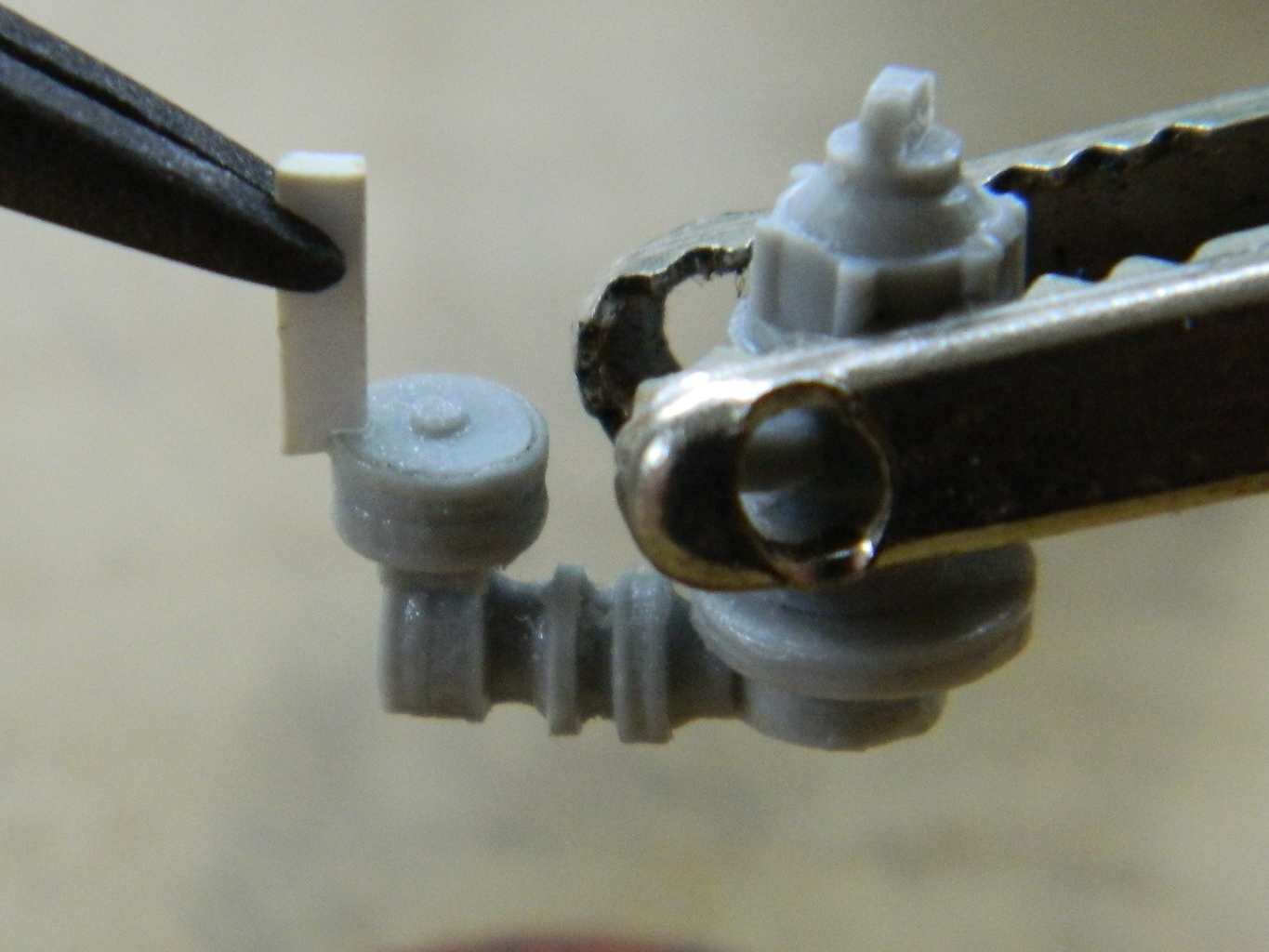
On the Shermans, the turret was rotated electo-hydraulically, but there was also a manual crank in case the hydraulics failed (or were shot out). The AM part didn’t provide the handle so I have to add that:
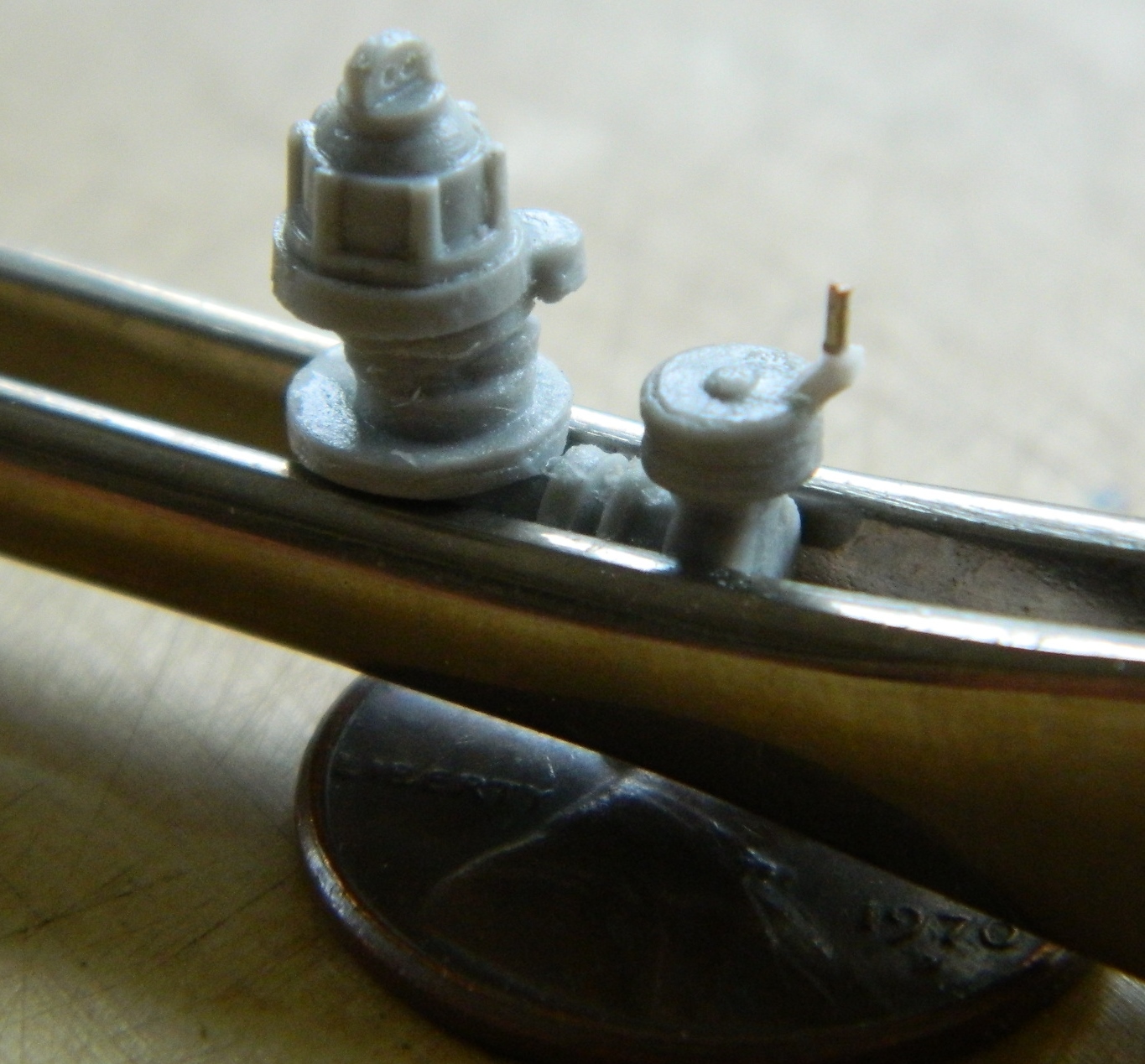
Then while checking my references about something else, I noticed that I put the gun sight assembly in at the wrong angle, so that had to come out and be reworked. The part that’s off is the piece below the sight which is the elevation control. The picture shows the angle that control is supposed to be mounted at:
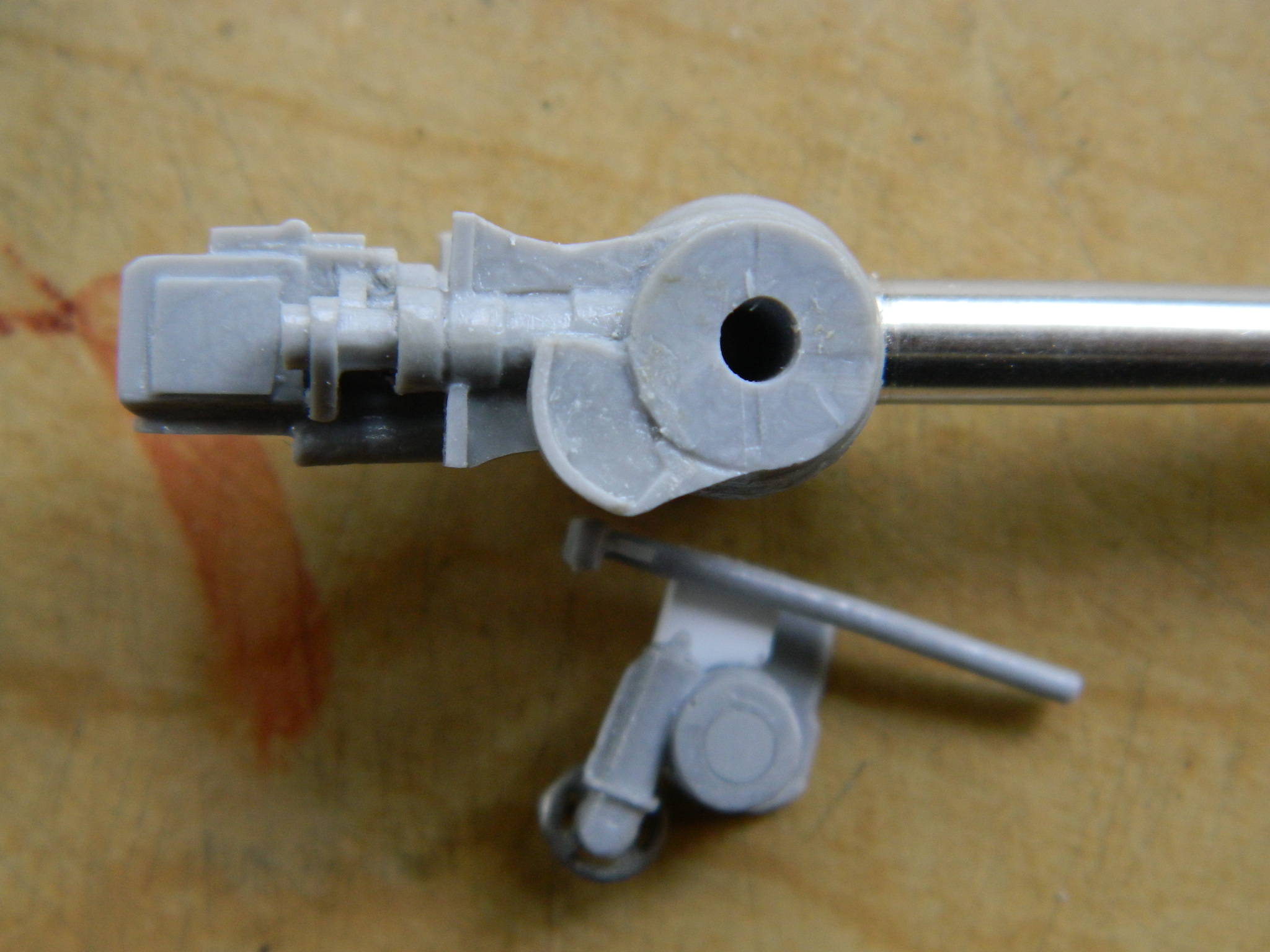
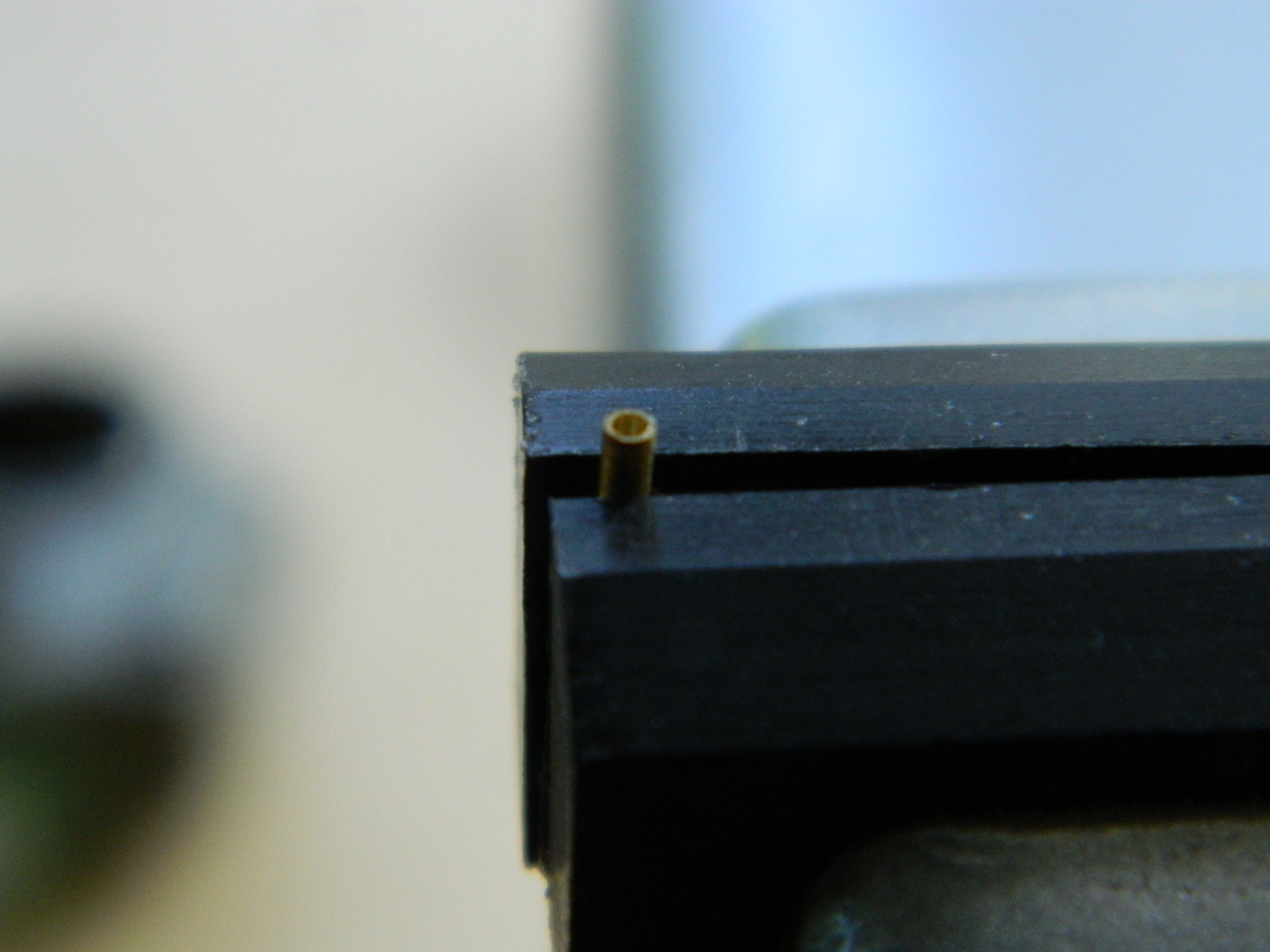
Due to the fragile nature of the resin and the very small diameter of the sight, I thought I would surely snap that bastid off…which I did not. However, while I was working the piece loose (sharp knives are OUR FRIENDS) and considering what options I might have when I did snap the resin sight, I came up with another method of making the sight that I liked a lot better. All I needed was copper tubing of the correct diameter…and it turns out I have that on hand:
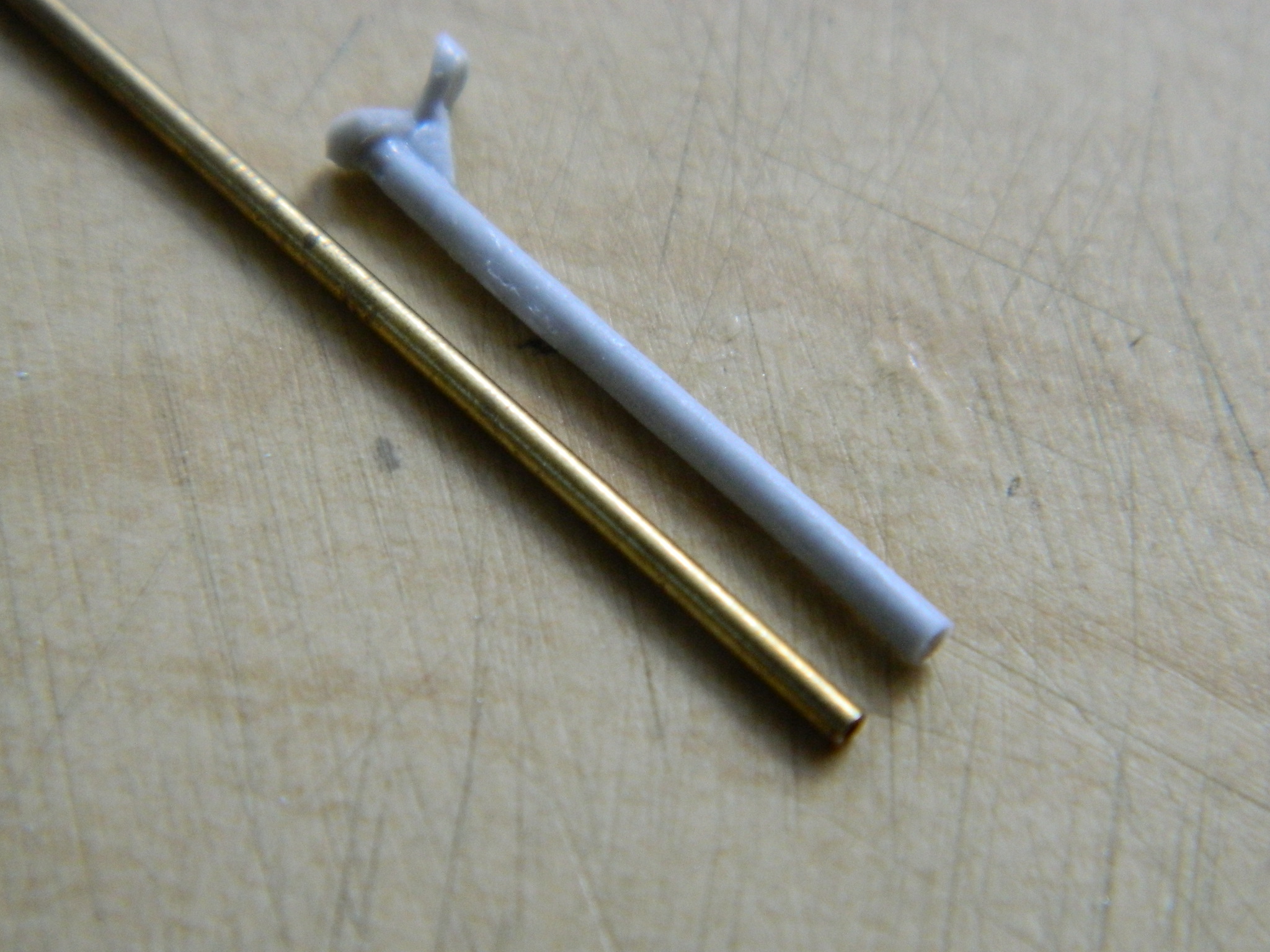
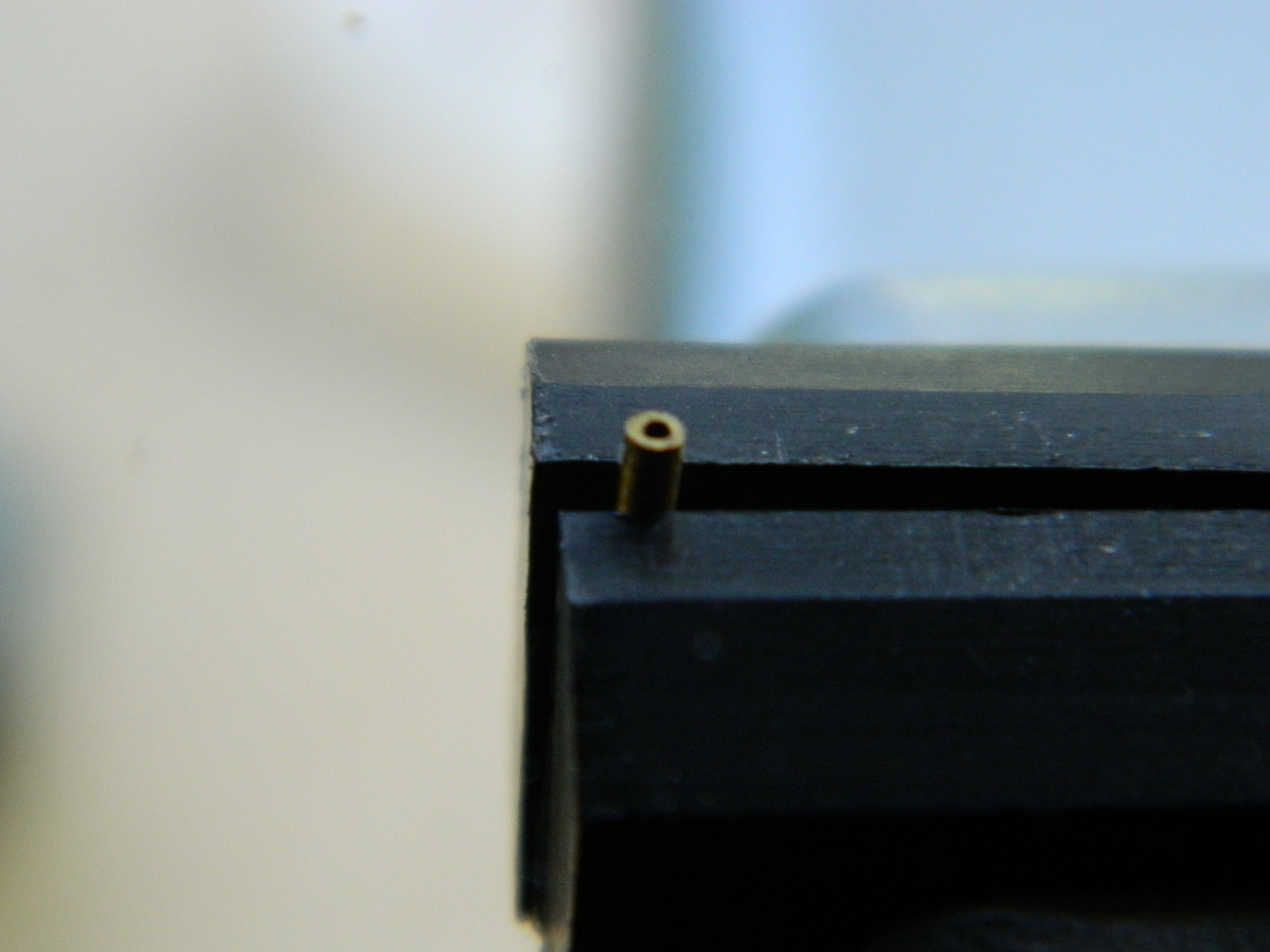
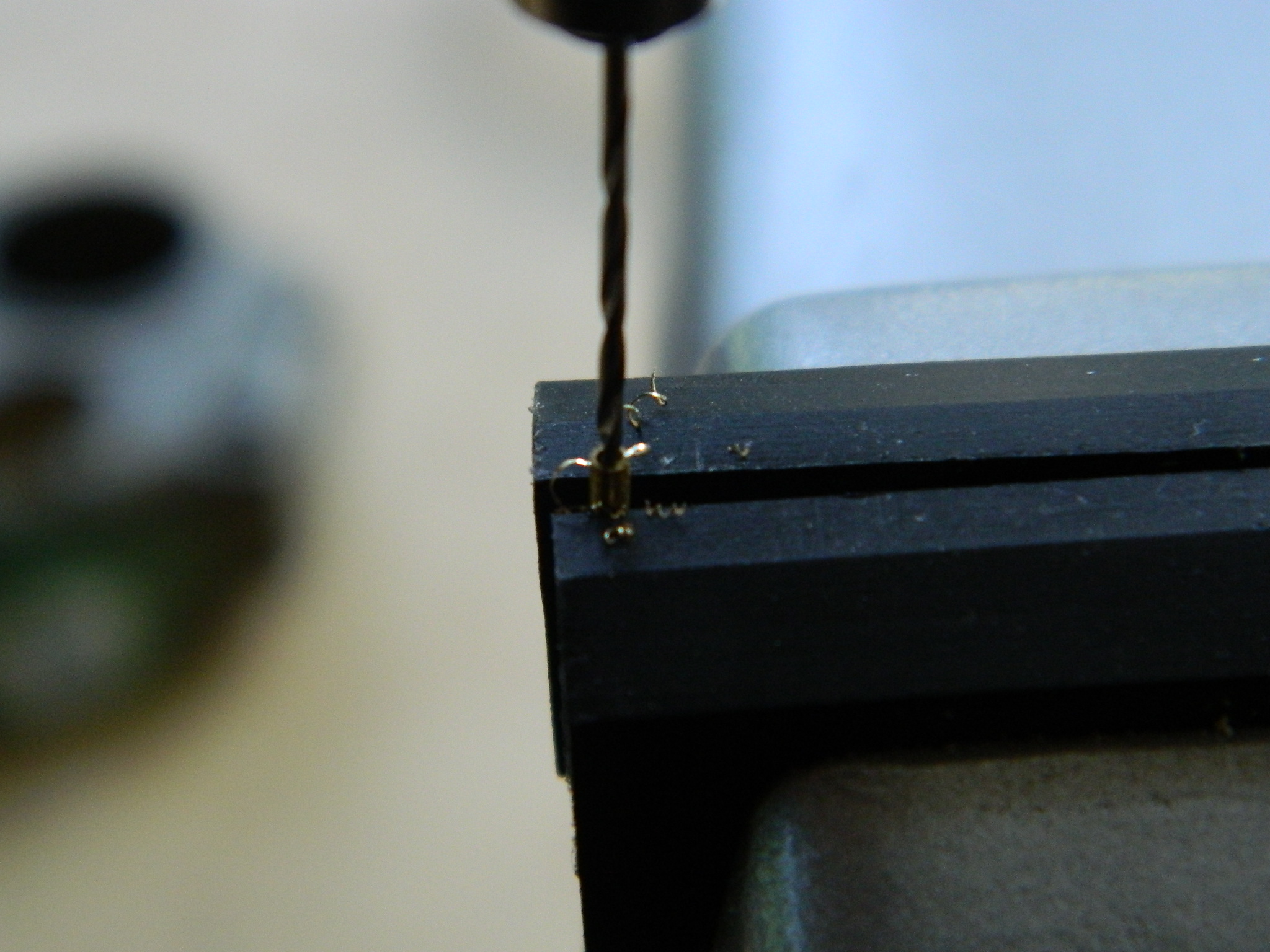
The first step in using it was to drill out the end of it so that it doesn’t appear to be out of scale:
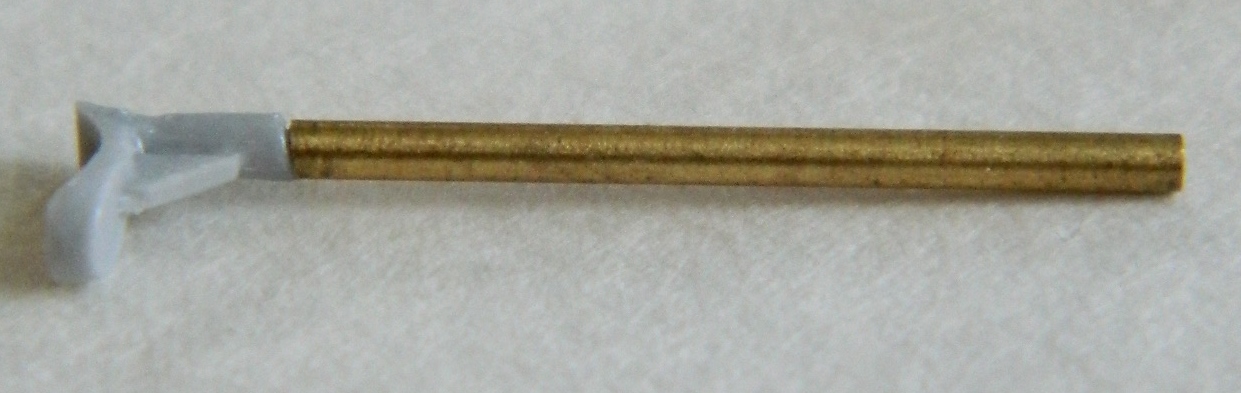
In order to mount it securely to the eyepiece, I drilled out the resin and glued a wire on, then I slid the tube over the wire and glued it securely in place:

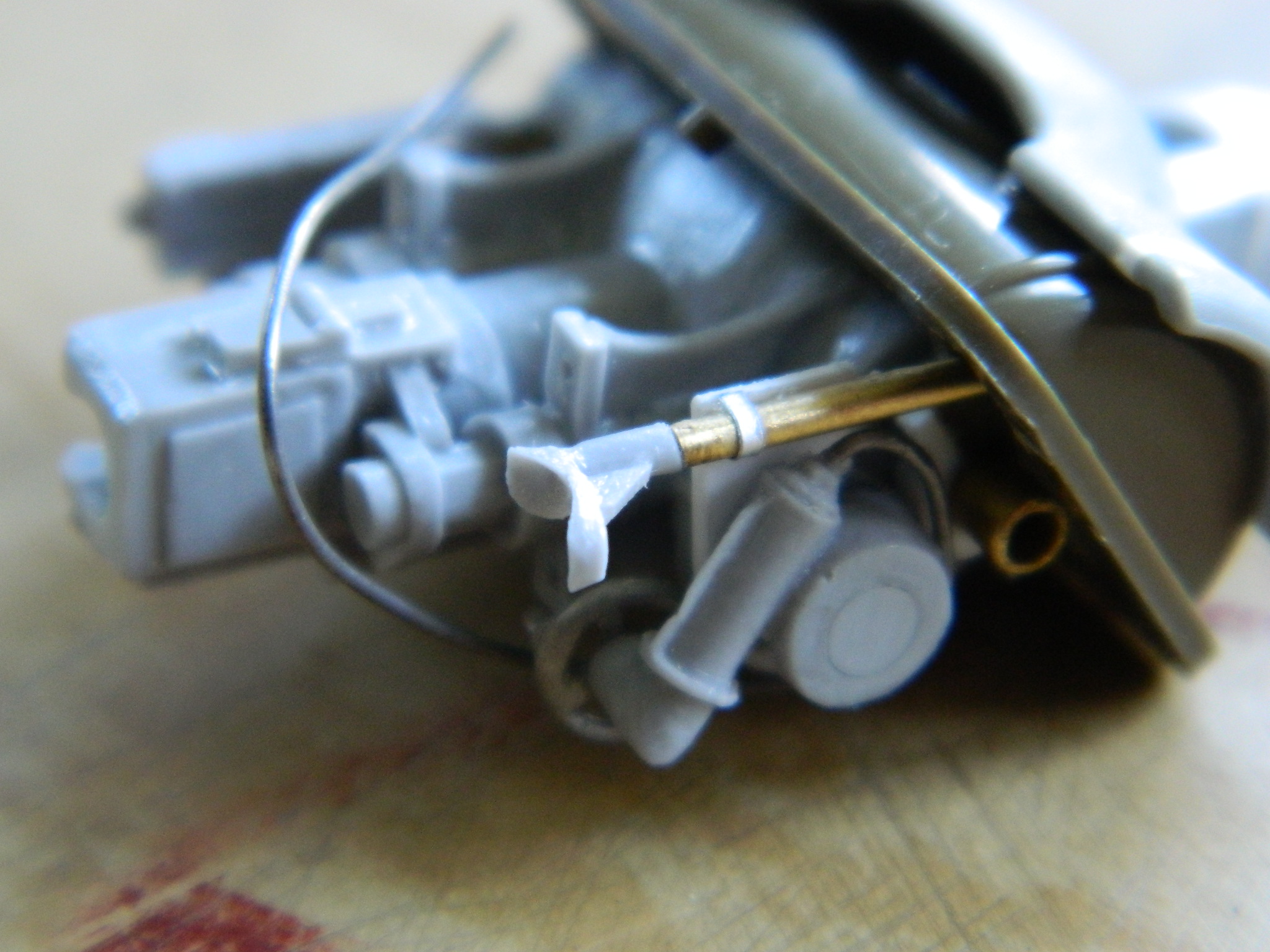
With that taken care of, the elevation/sight assembly got glued back to the gun and its fit with the mantlet checked and I like this a lot better (I also added a mounting bracket – aluminum foil – and the control cable – solder – to the elevation crank housing):

I just wish I’d noticed at this point that the eyepiece on the site was incorrect. The way it’s set up in the above photos, the gunner would use his left eye to lay the gun on target, but in reality it was set up for him to use his right eye. But I didn’t notice…
The ratchet-release for the manual turret traverse (aluminum foil again) got drilled, trimmed, and glued on (and then shortly thereafter the fragile handle snapped off; that will get added on later once I no longer have to manipulate that part):

M4A3 (Tamiya) Build #14
With the interior of the lower hull done, I’ve moved to the turret. I have to graft the turret bustle (dark plastic) to the resin turret ring (light resin):
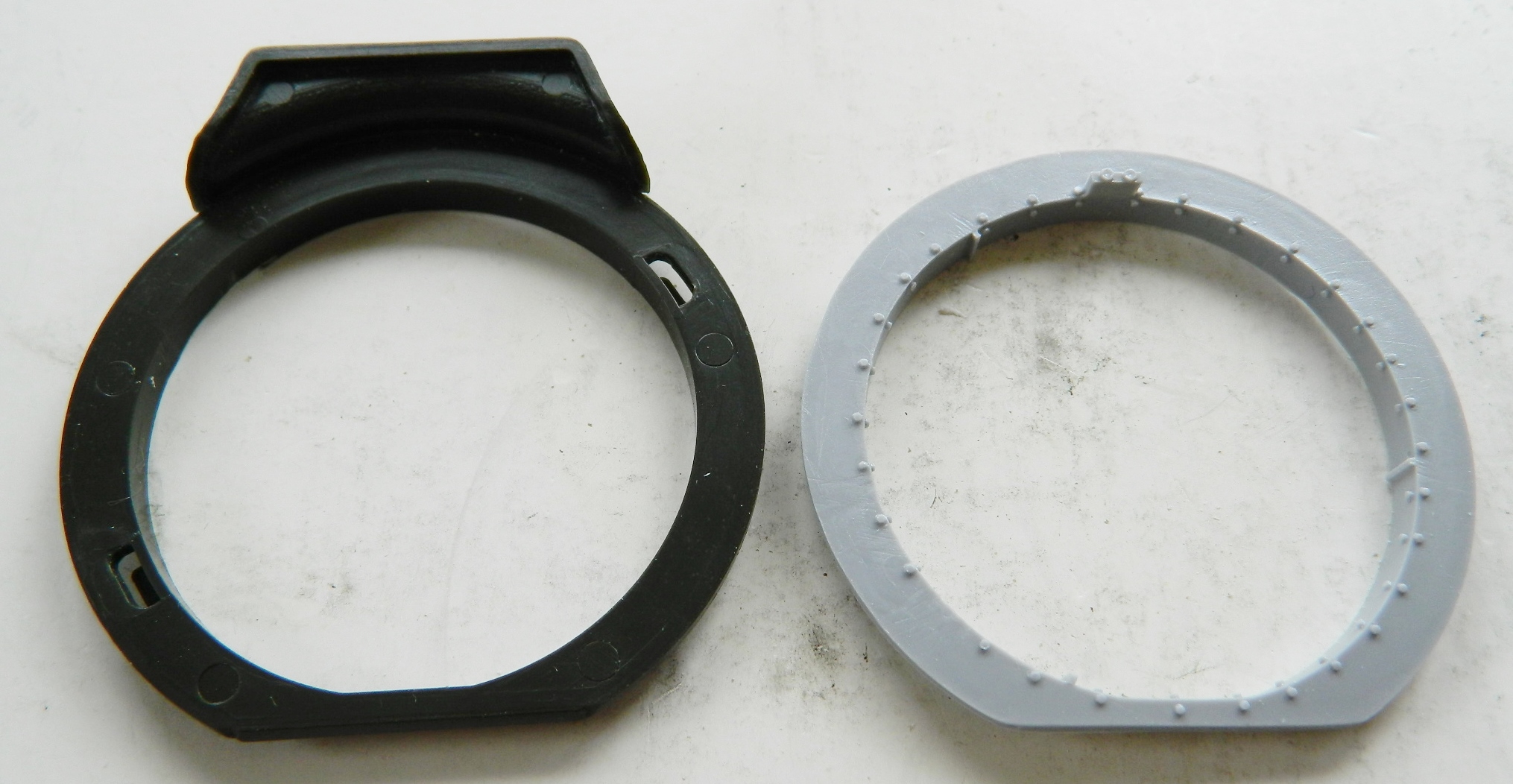

I cut the kit’s turret ring off the bustle, used the spare turret as the jig and got the parts aligned:
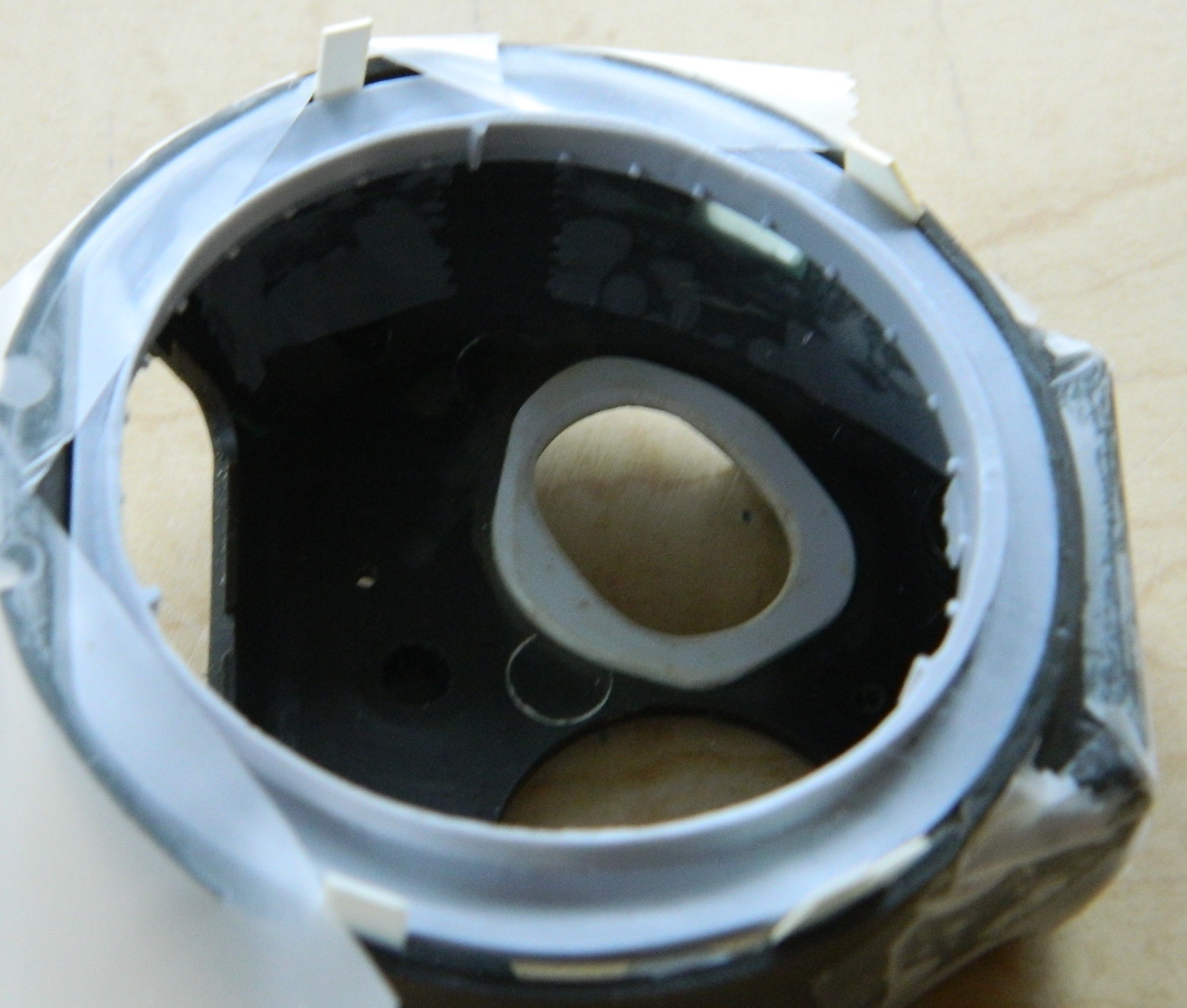
Once I was satisfied, I glued the resin ring to the plastic bustle:
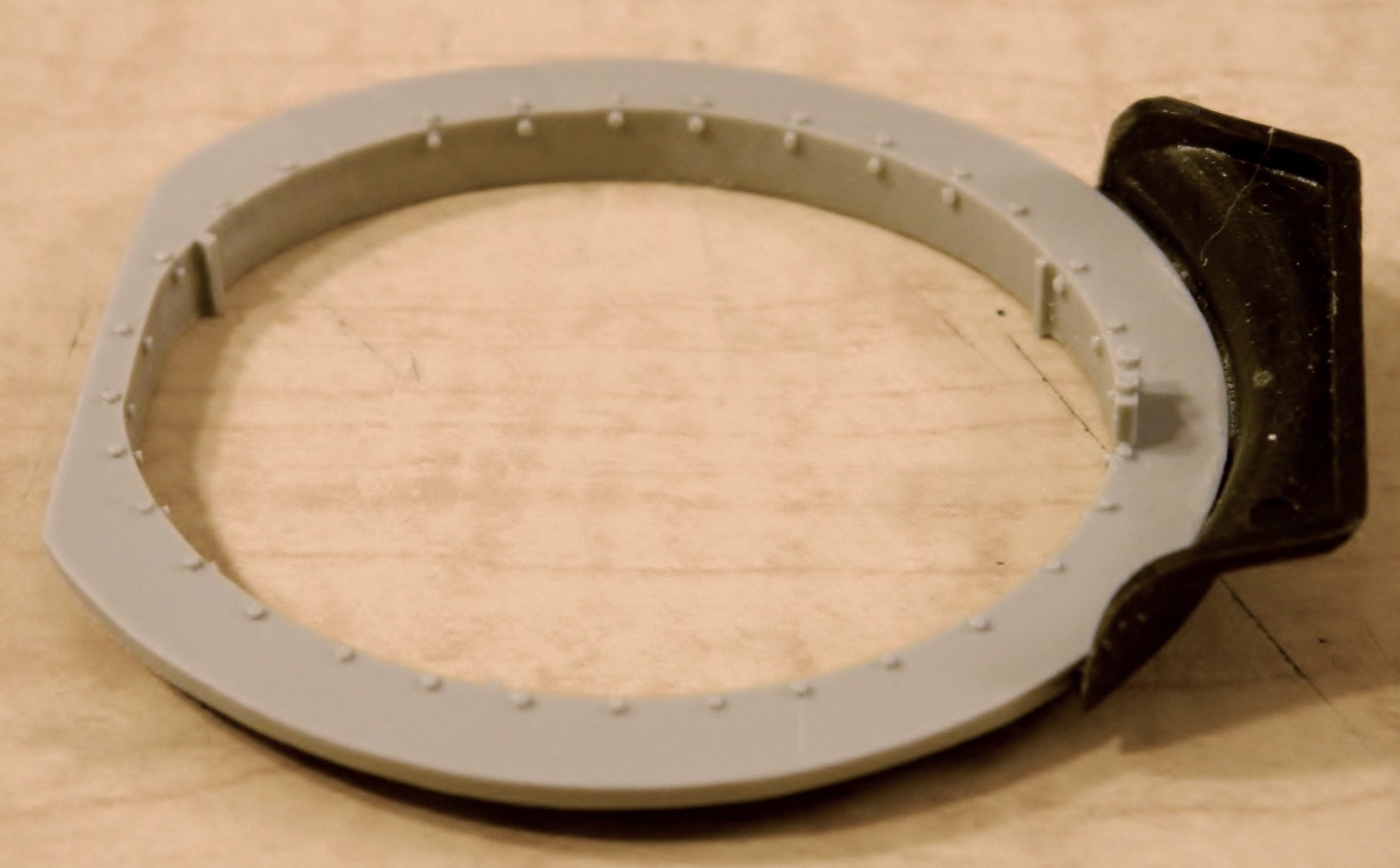
In fitting the ring to the upper hull, I see I have more work to do so that things fit better:
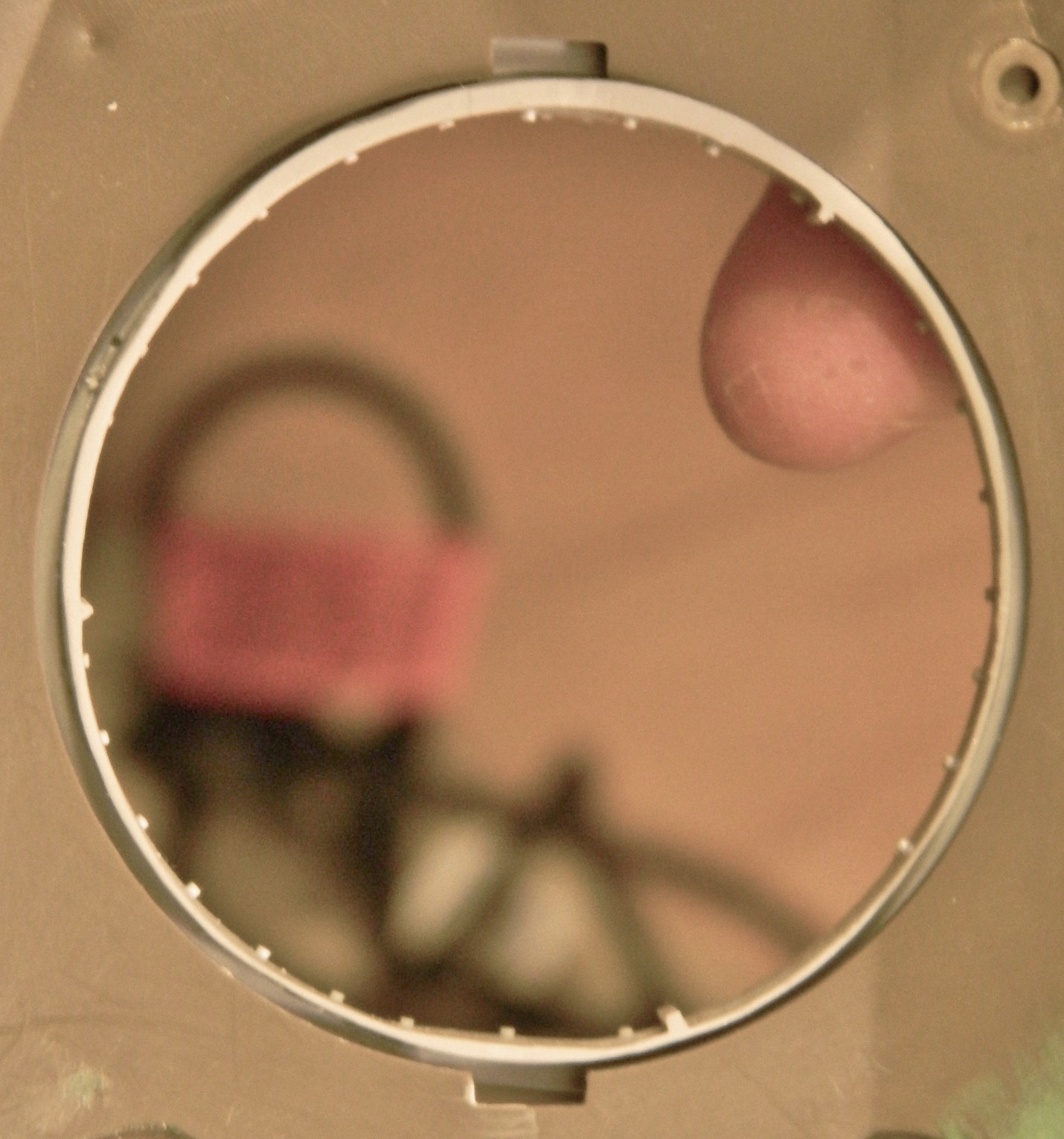
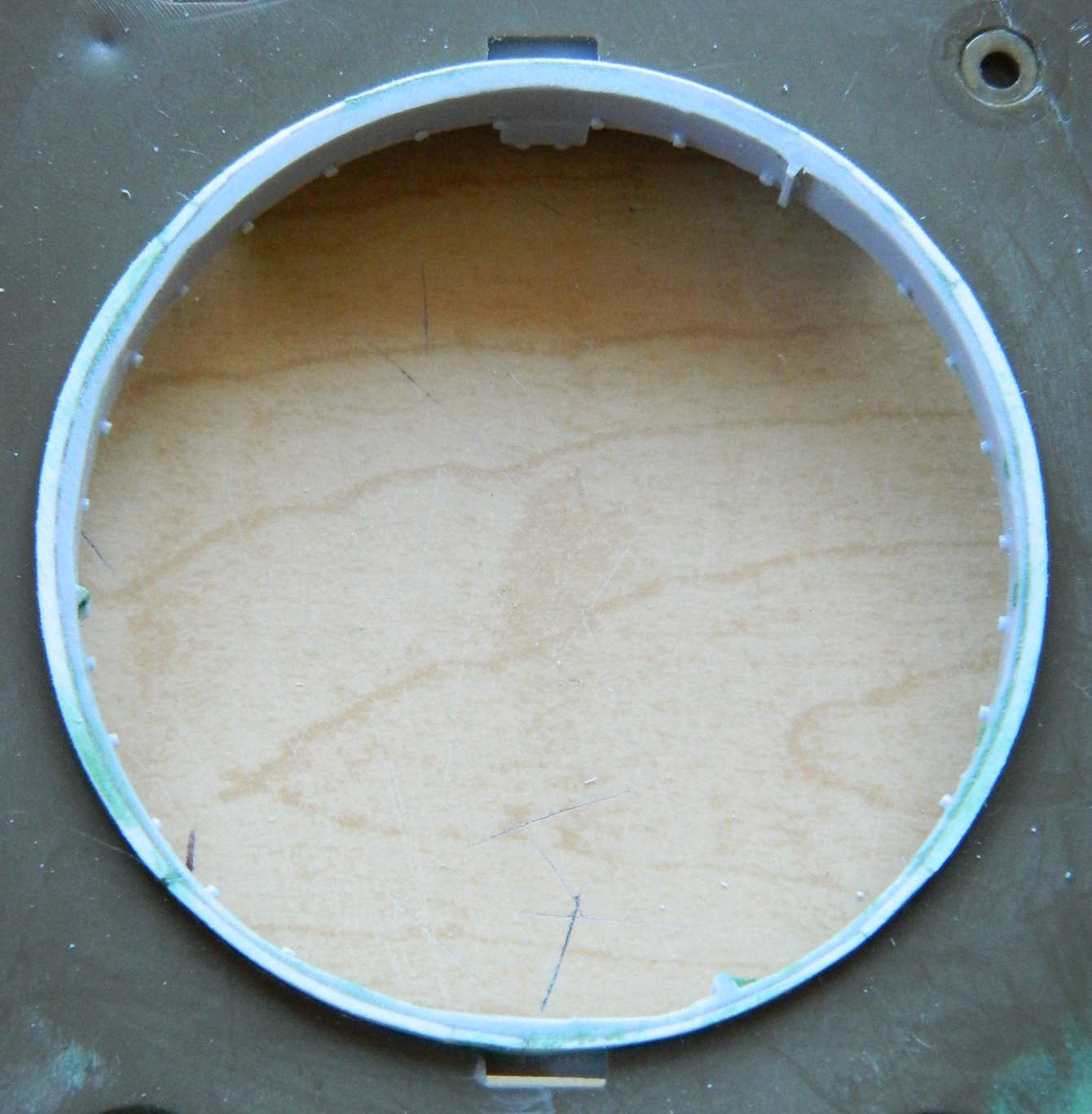
Taking the opening in the hull as my reference, I started shimming the gaps with styrene:
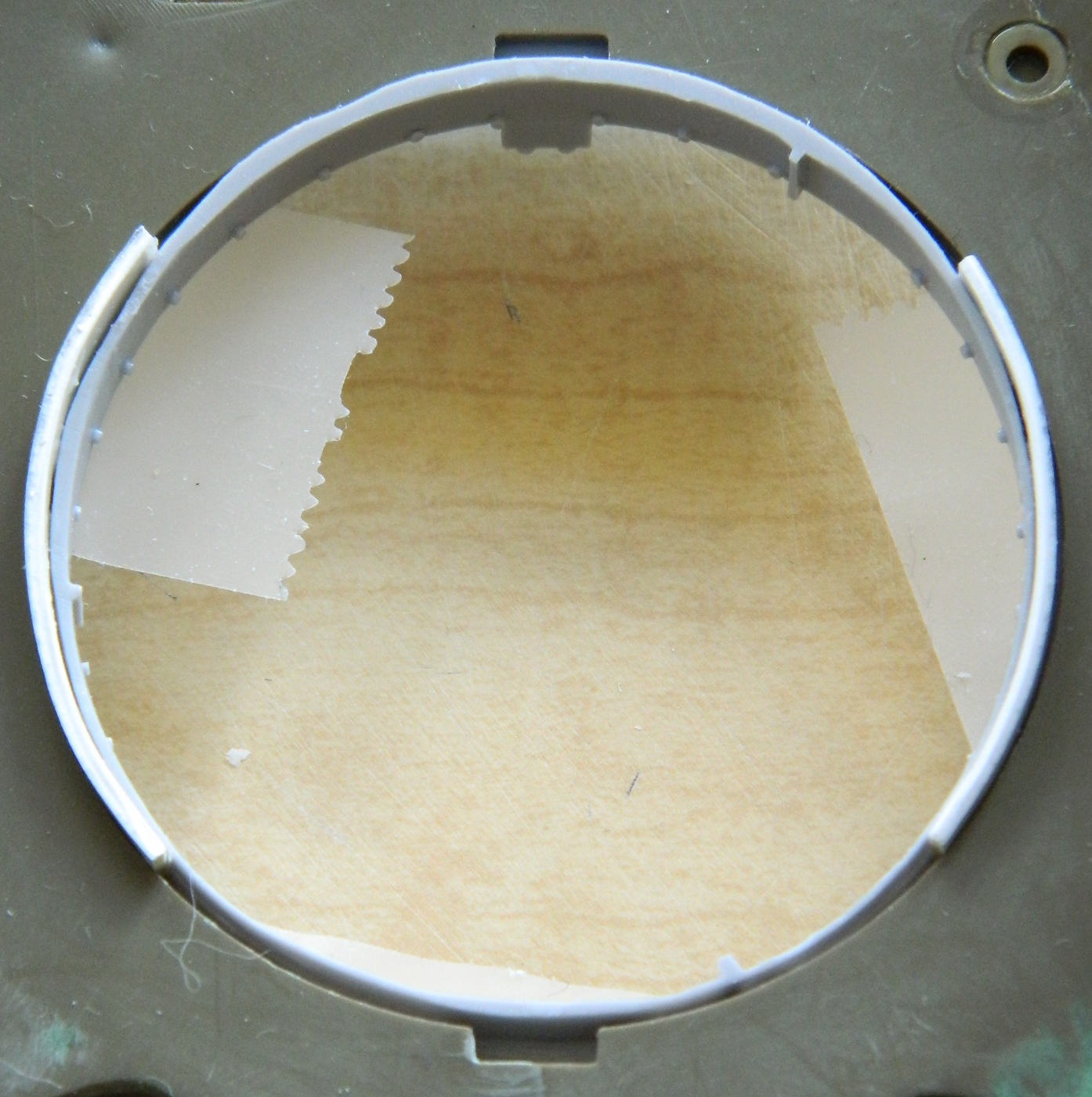
Now this gets trimmed and sanded into a rounder shape:

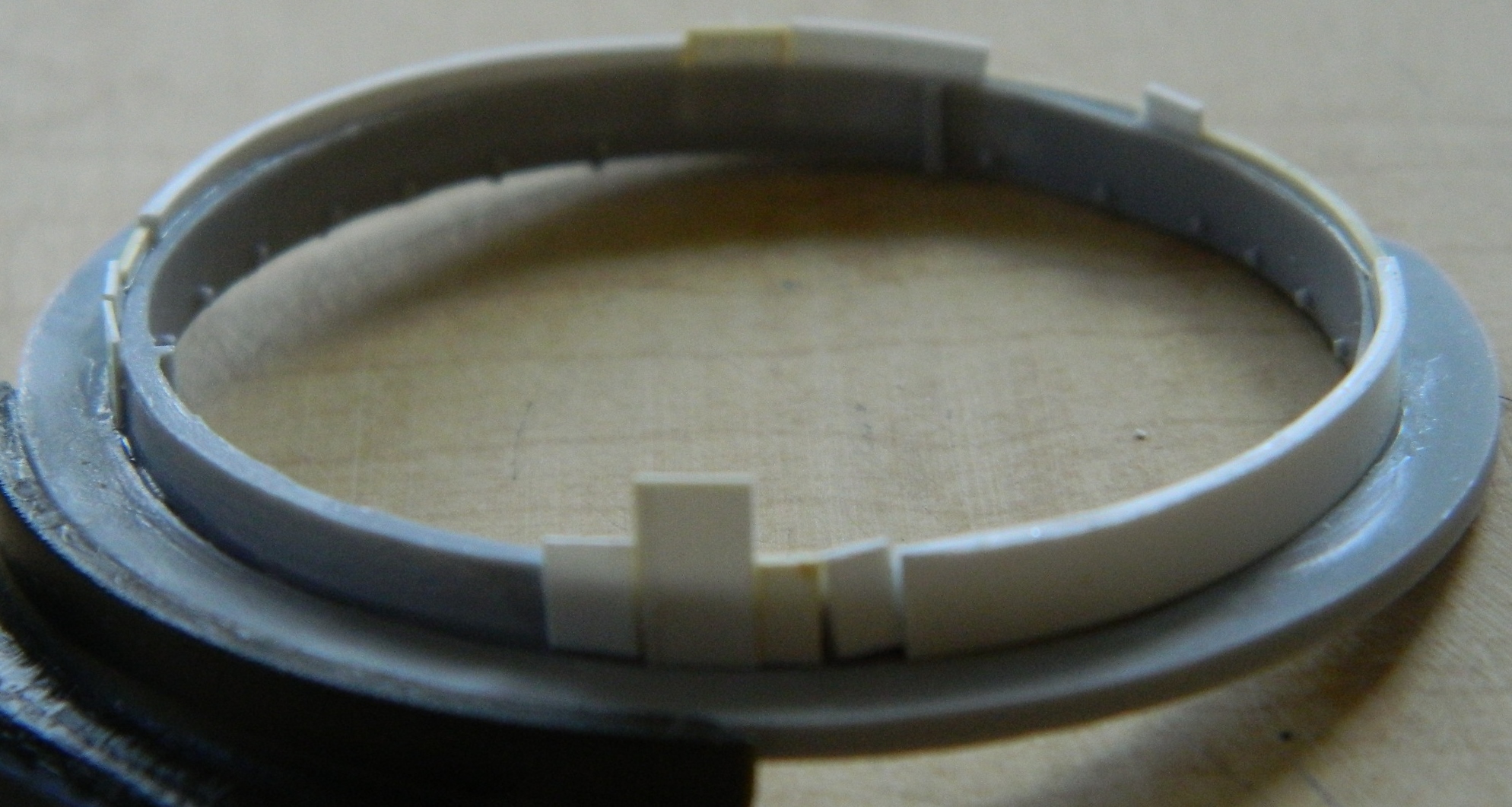
Okay…that’s better:
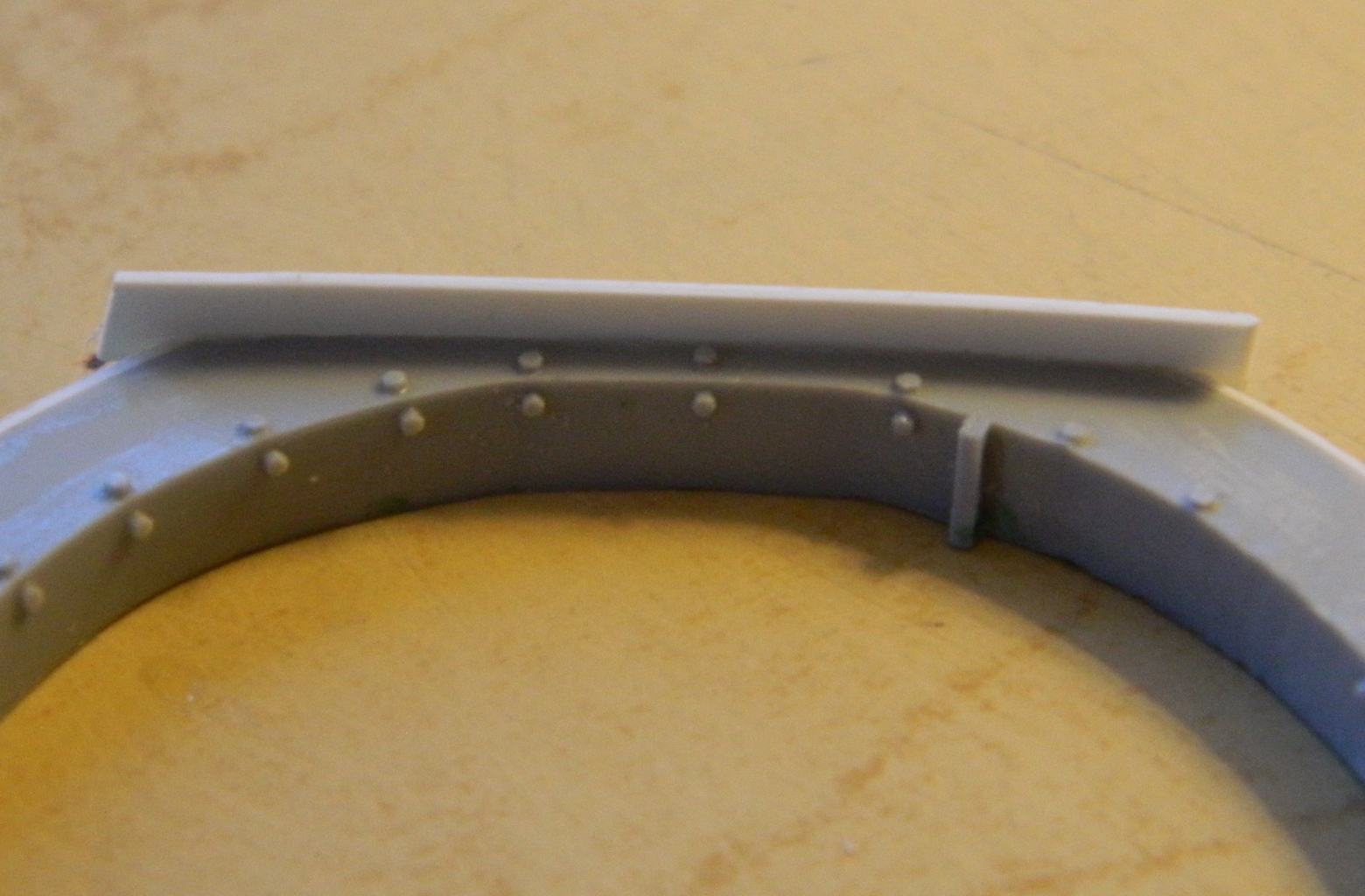
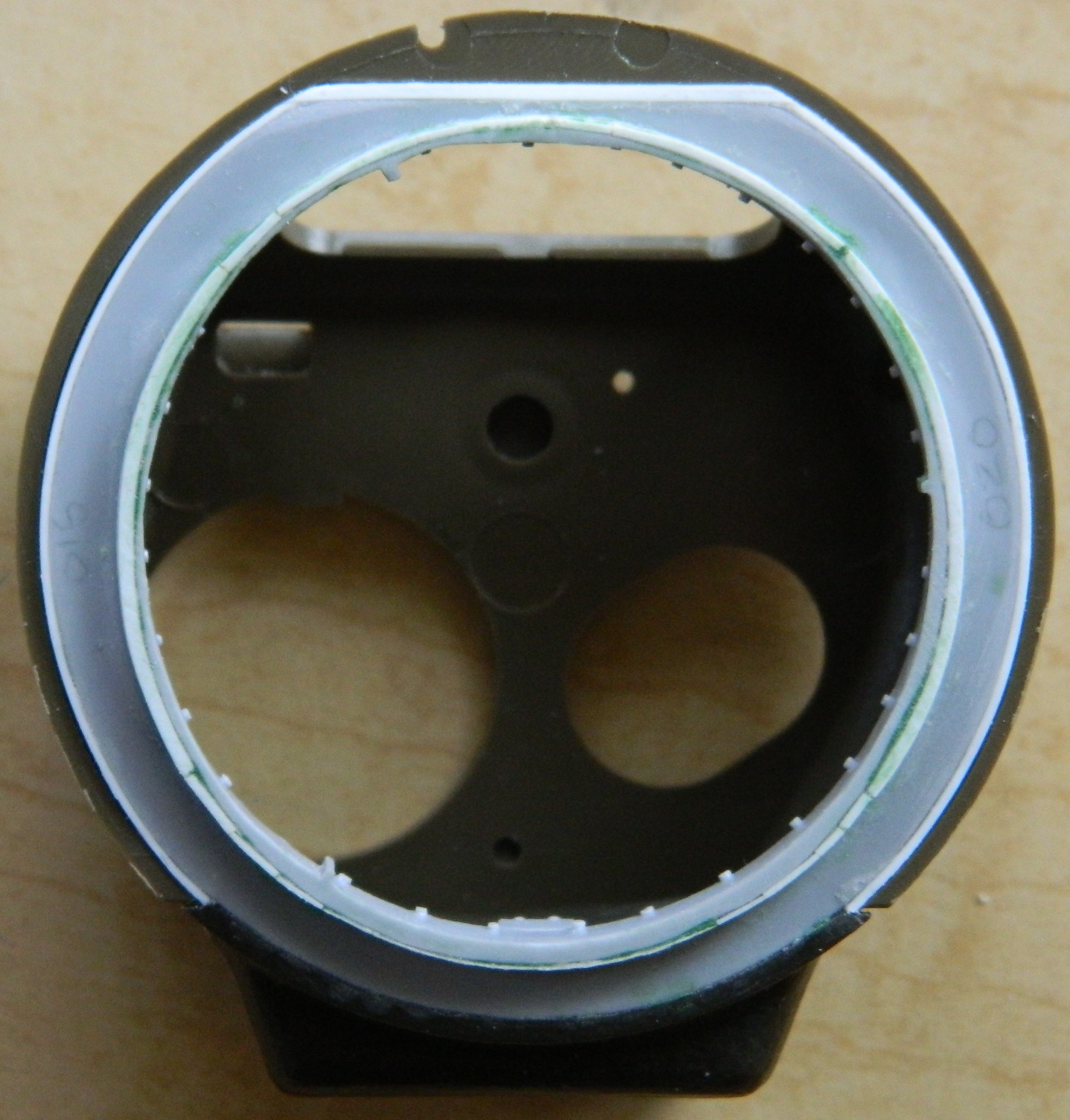
Then checking fit between the lip of the turret ring and the bottom of the turret shows there’s more shimming to do:
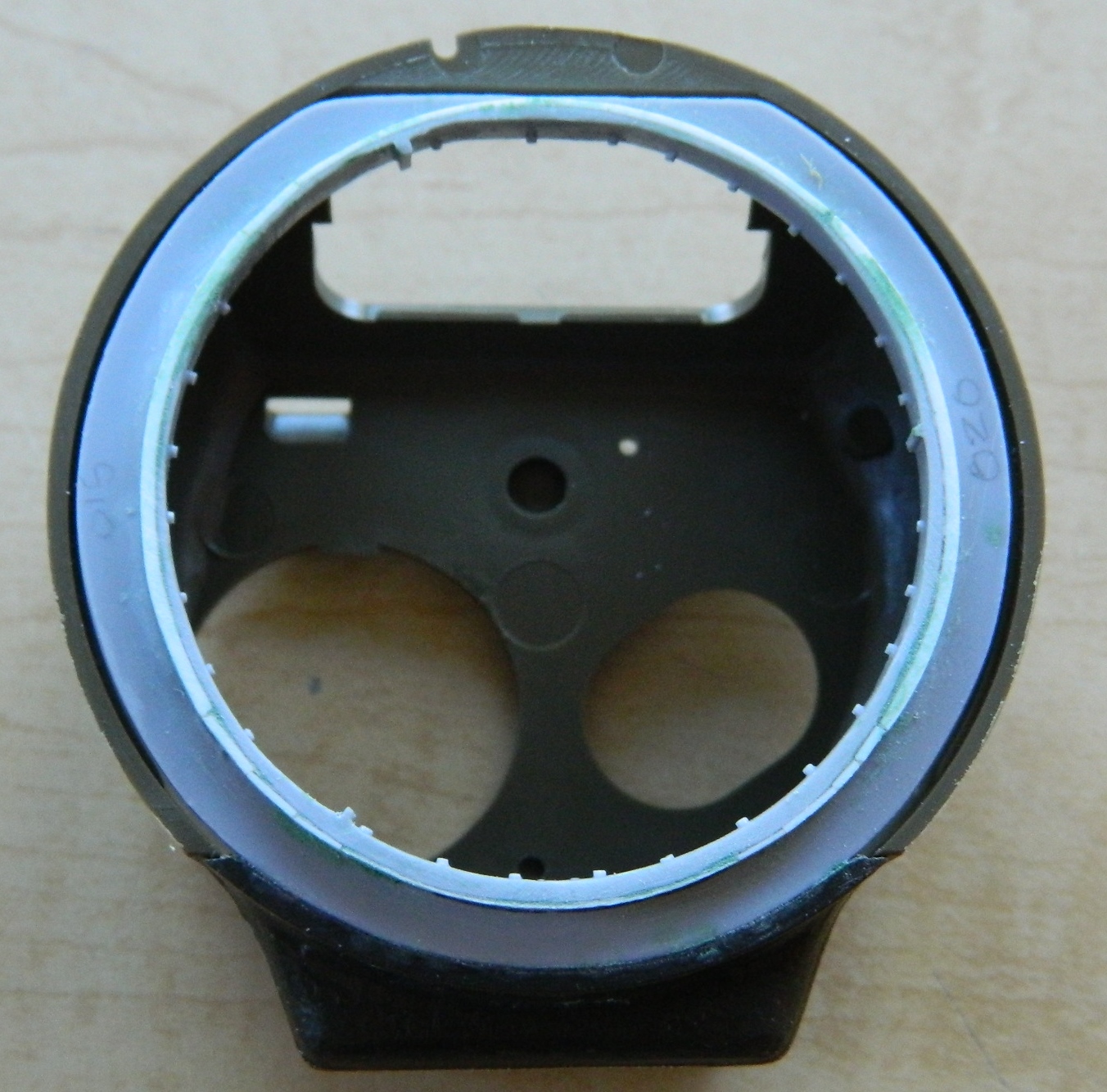
Shimmed, trimmed, and fit:
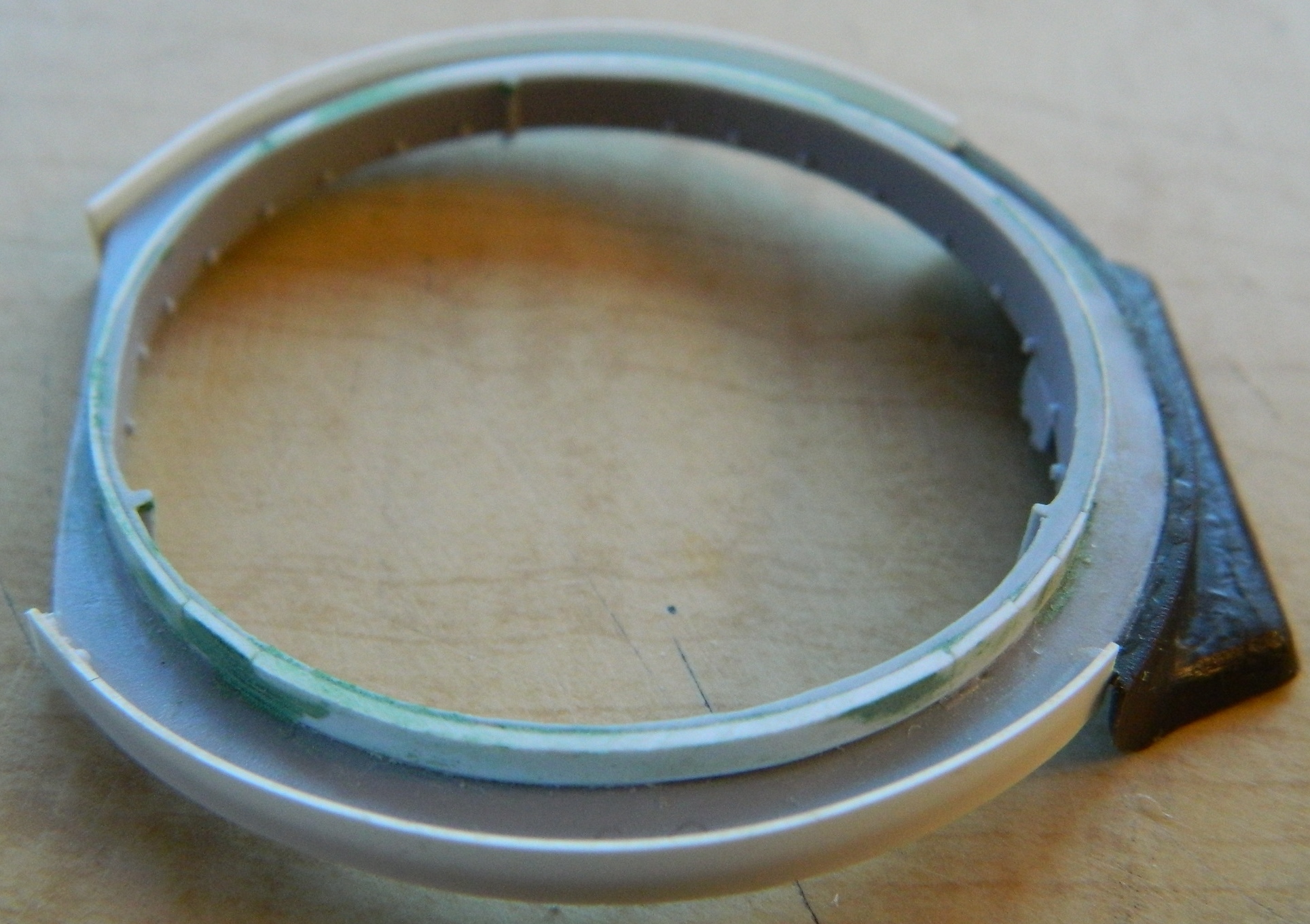

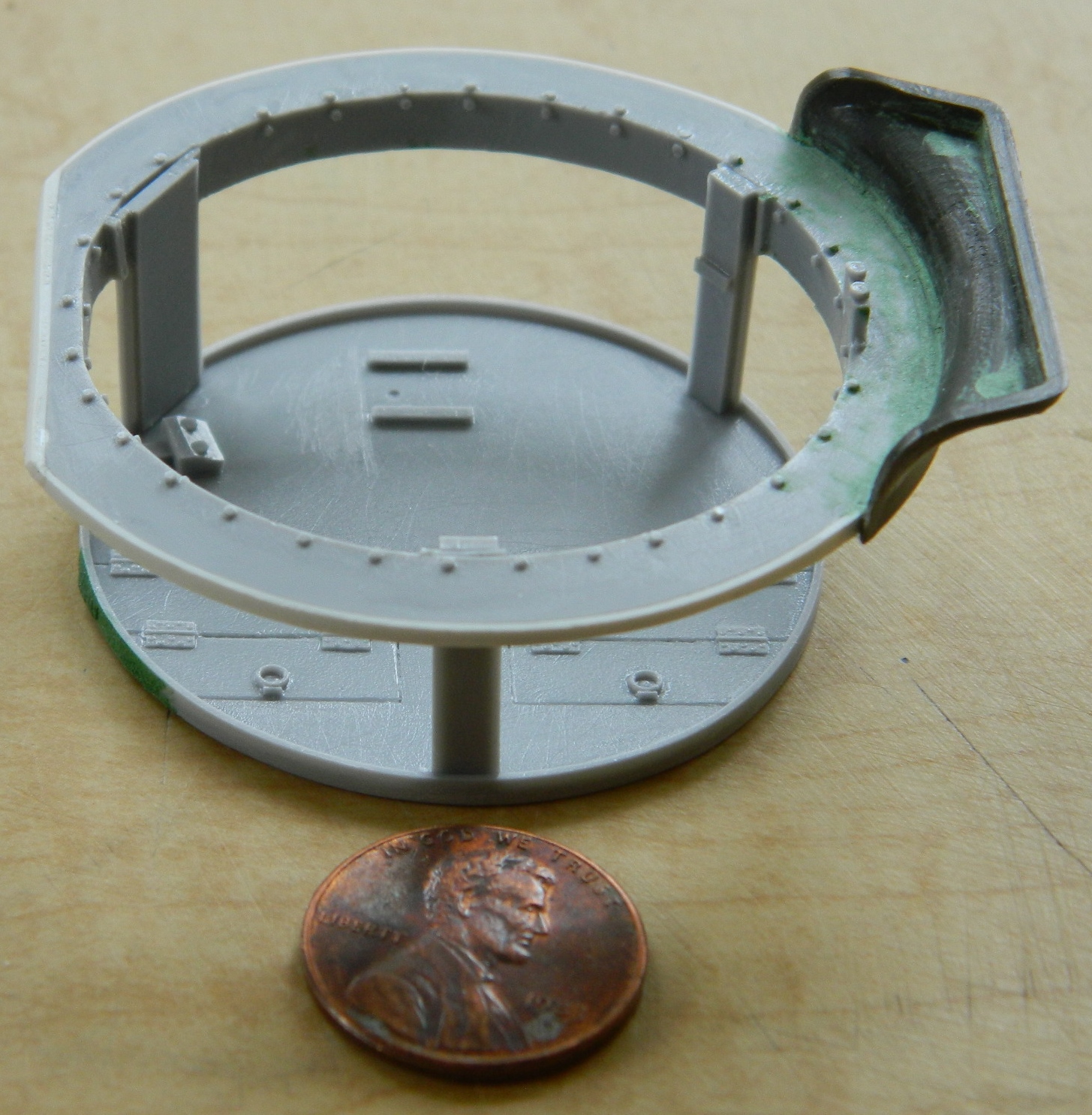
First the floor gets added to the ring:
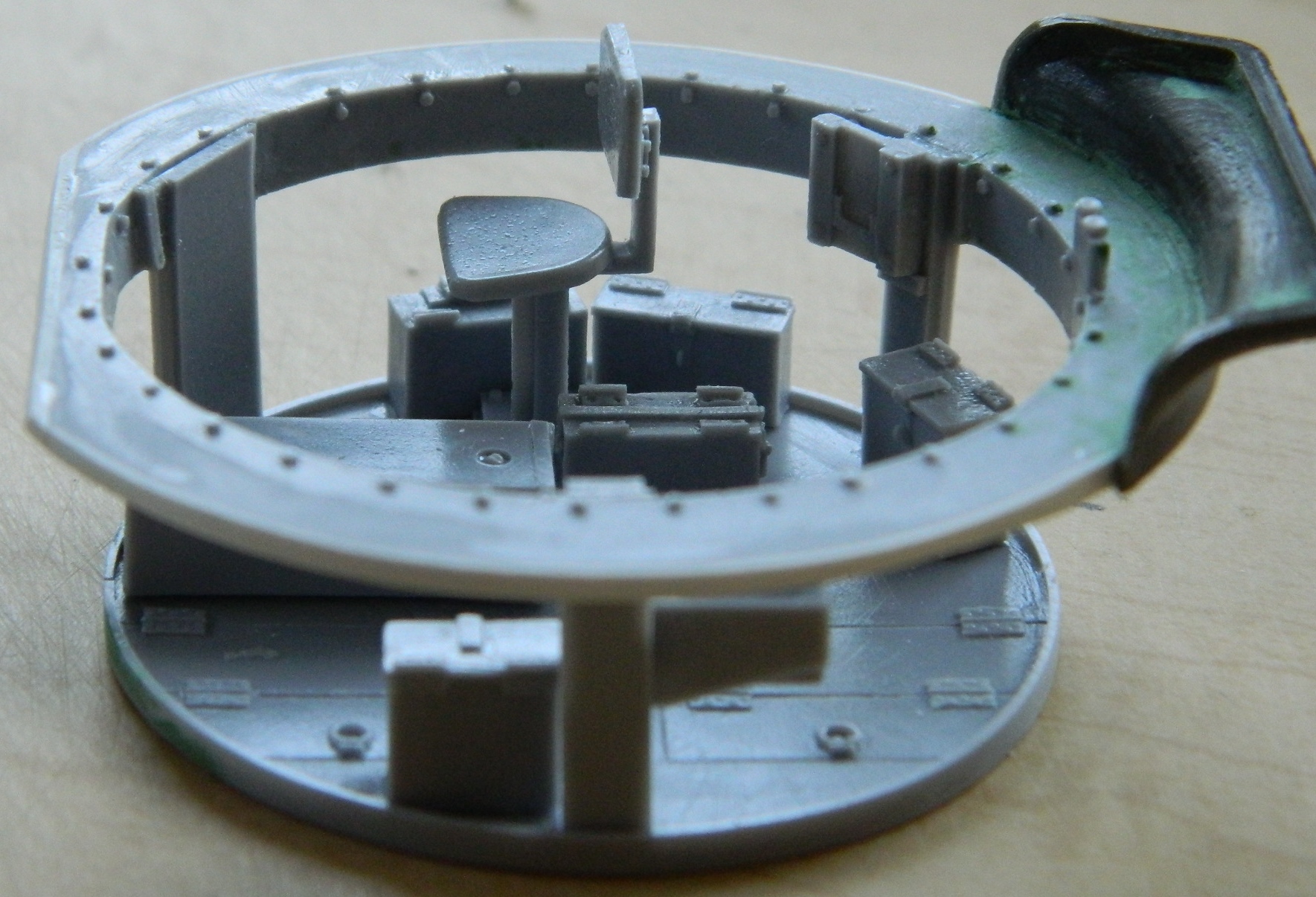
Then the various boxes are added to the floor (the gunner’s seat is has to go in a specific place, the other boxes and things aren’t as critical, using the gunner’s seat as a reference point):
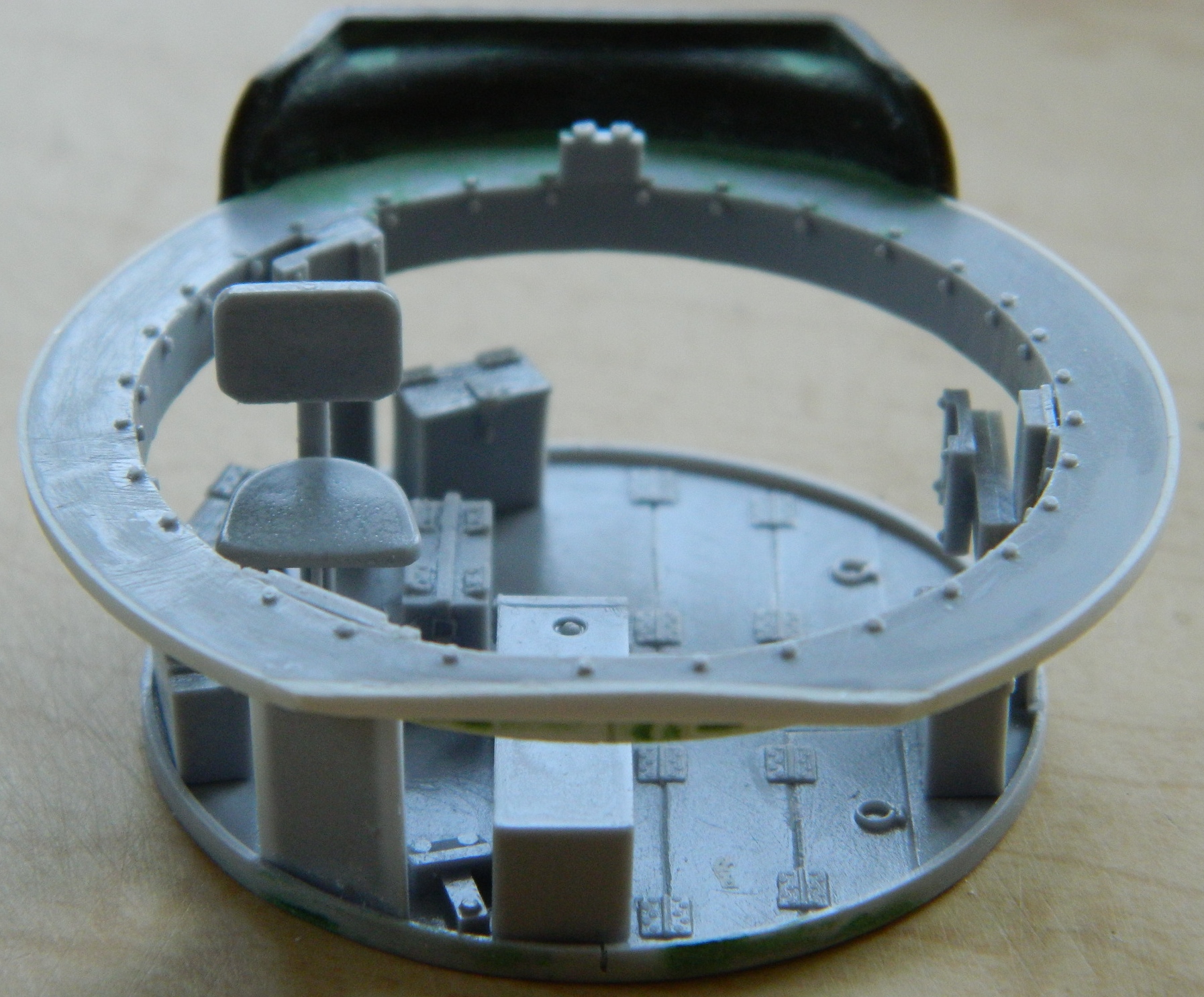
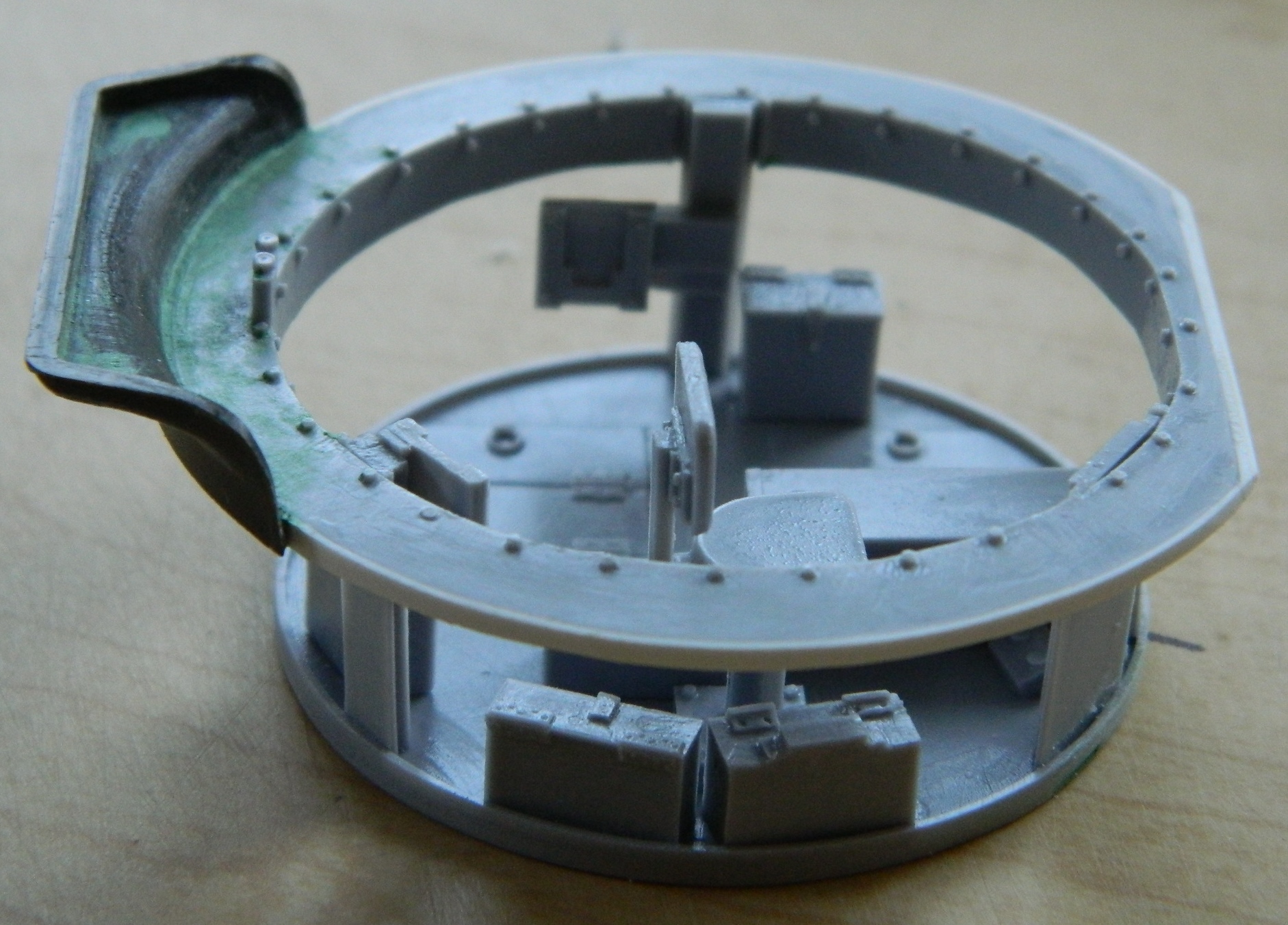
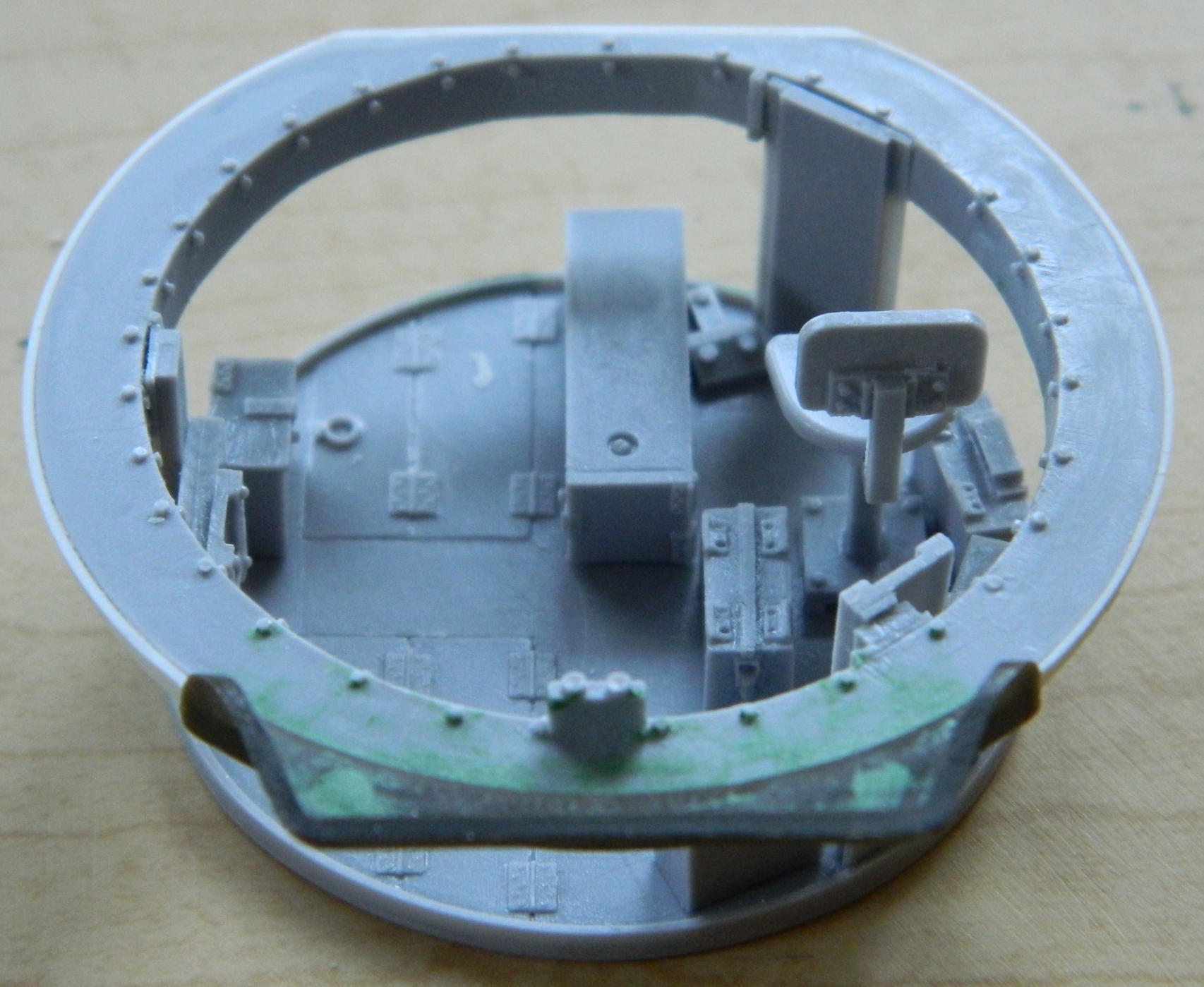
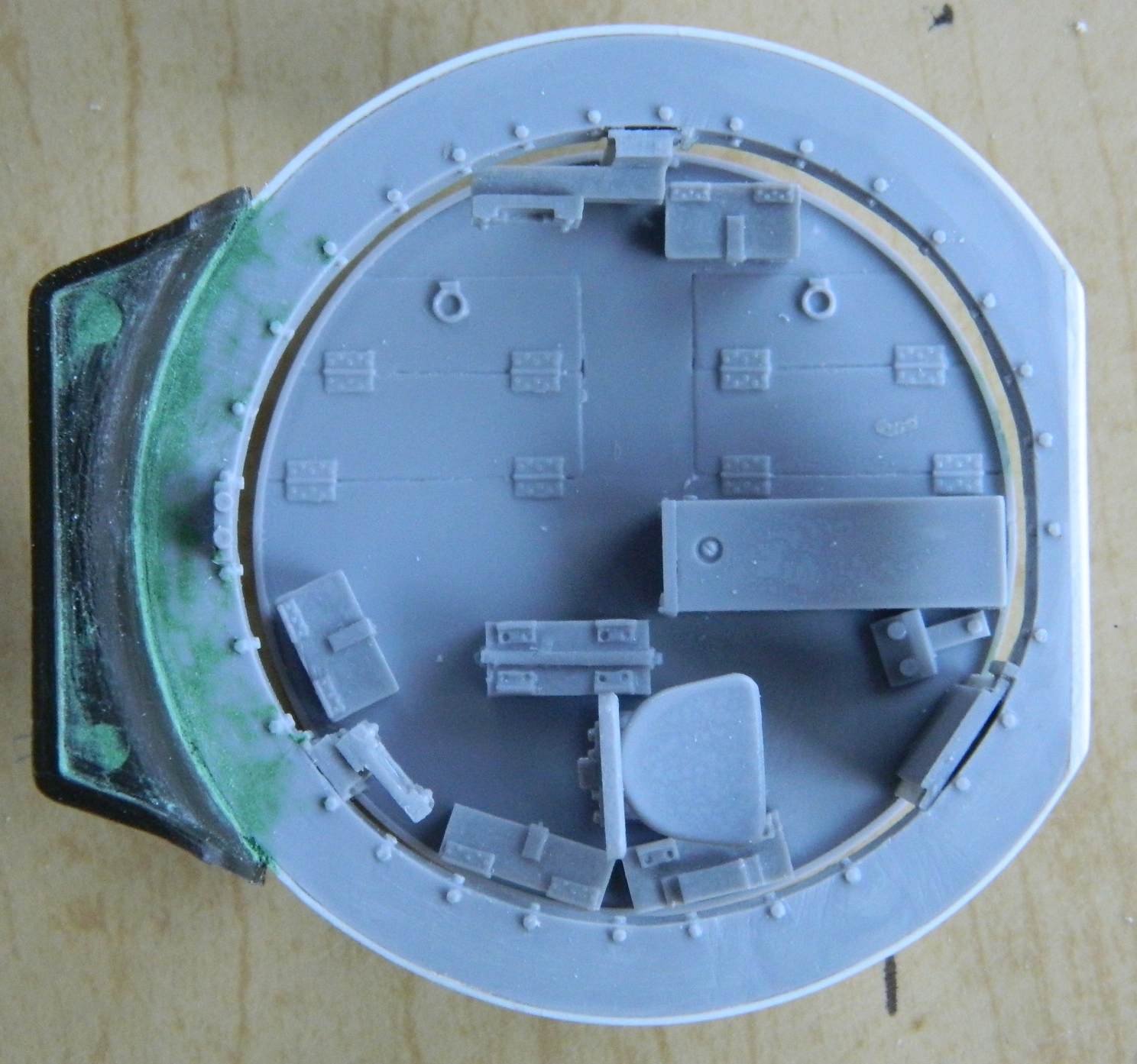
The gunner’s turret traverse controls are mounted on this panel in front of the seat:
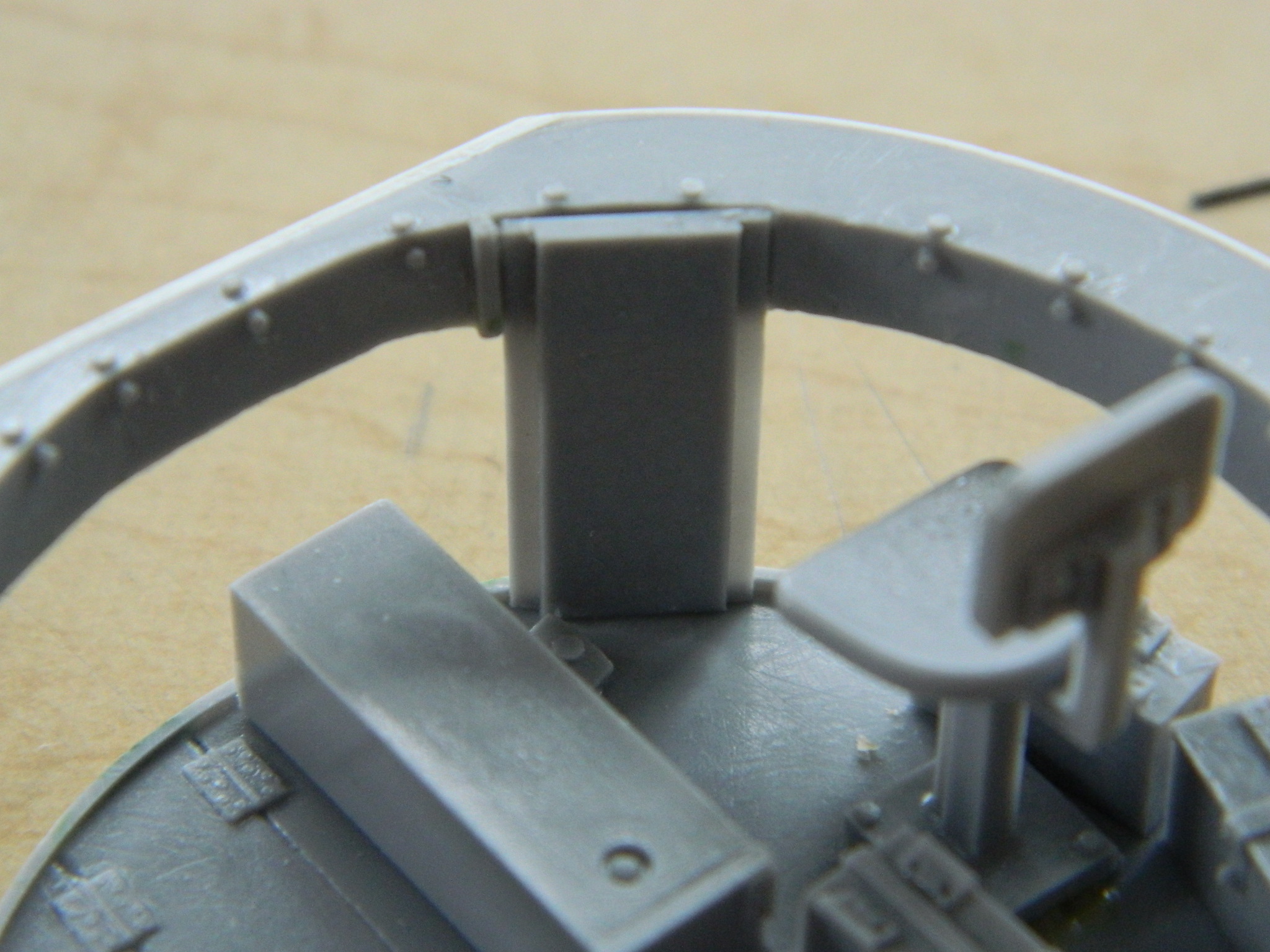
Because of the snug confines, other parts in the way, and having to paint most of this assembly white while sections of the turret controls would be different colors, I assembled the controls assembly on a sheet of .005 styrene so that I could move them as an assembly. For whatever reason (caffeine-deficient, perhaps), I couldn’t find the oil reservoir among the resin parts so I made one (the piece in white, and of course the resin part showed up months later). Once attached, I started adding the various hydraulic lines from different sized solder:
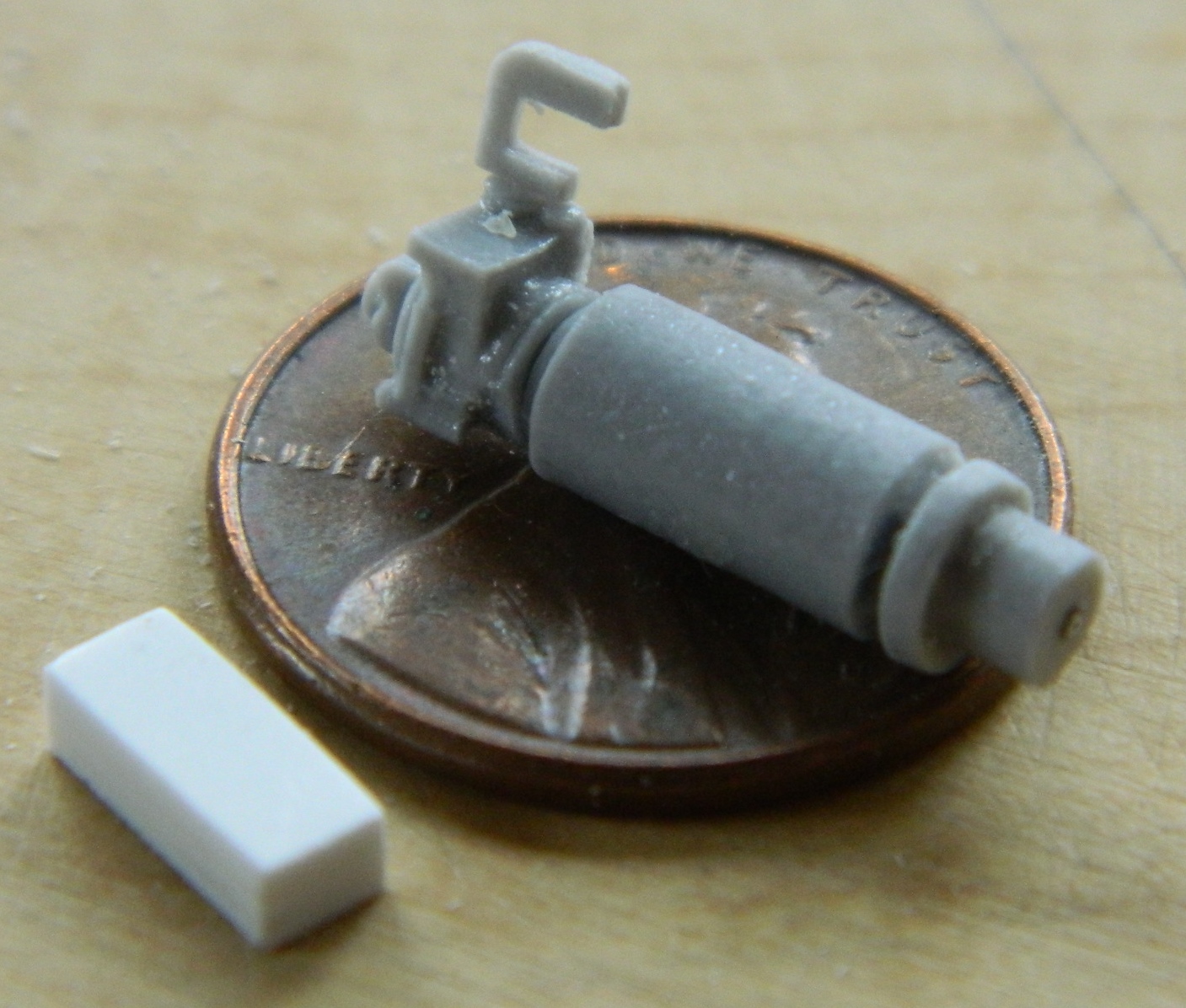
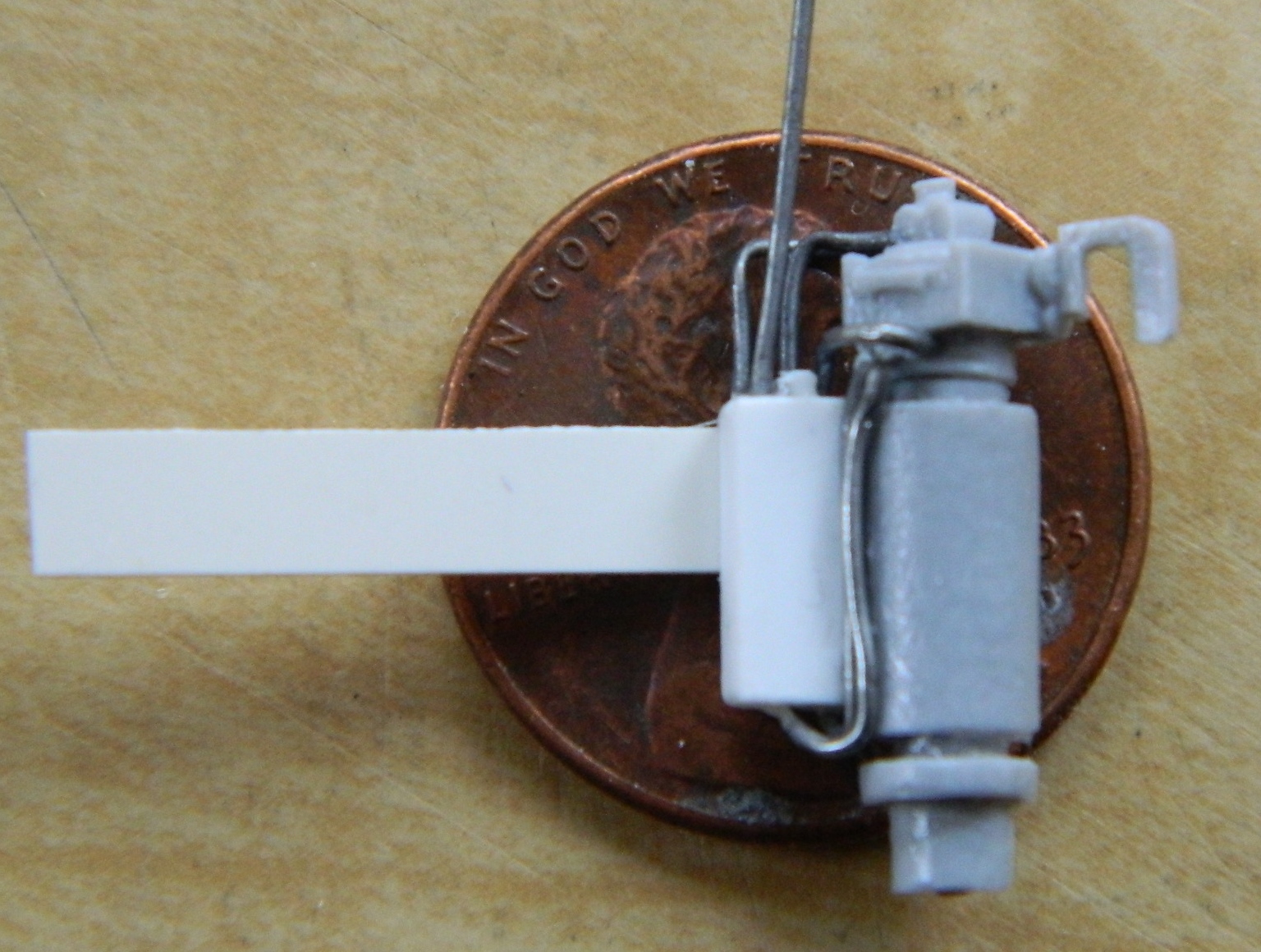
A quick dry-fit shows it should fit:
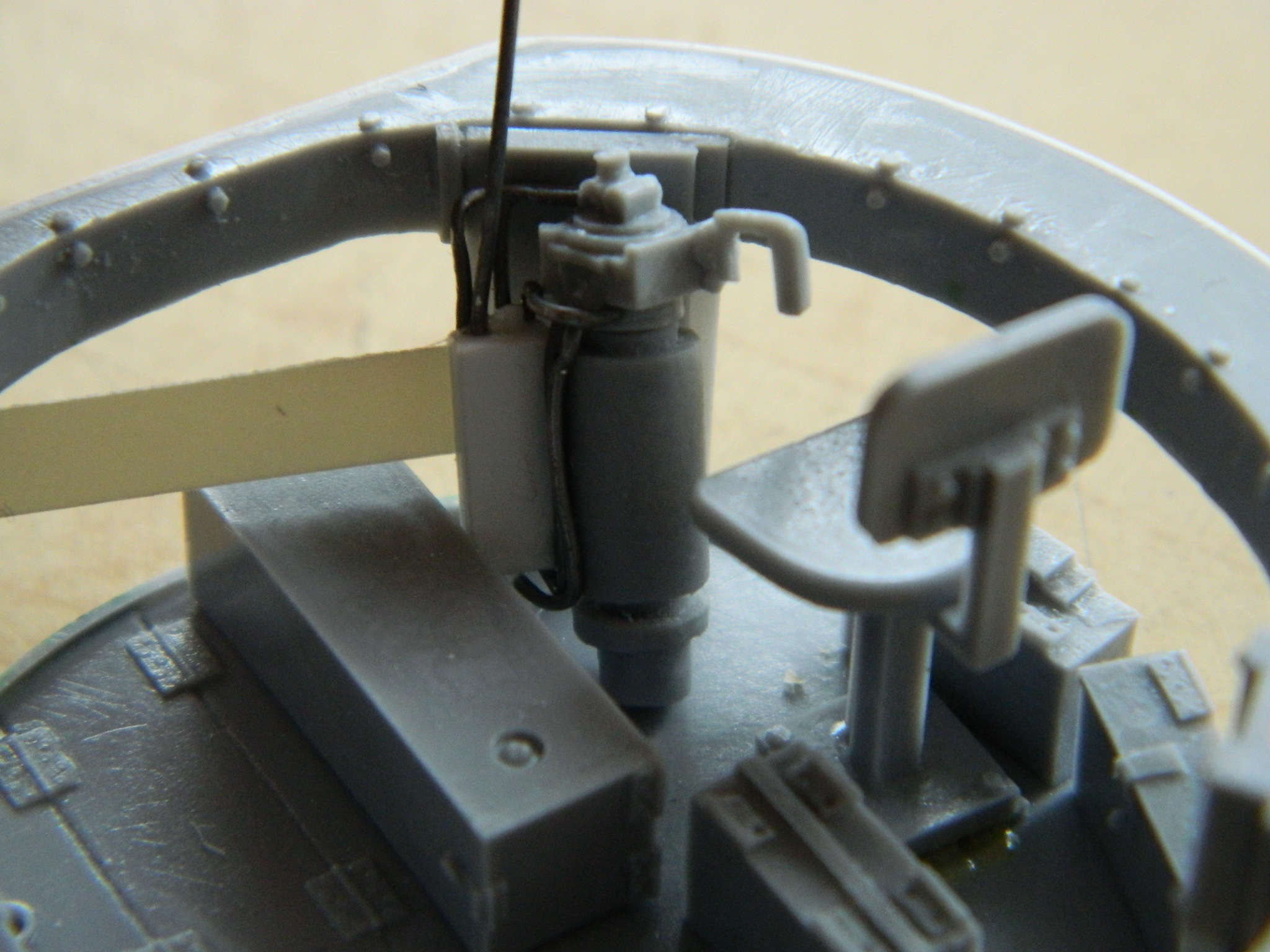
I painted the assembly, trimmed off the excess styrene, and put it aside for later inclusion:

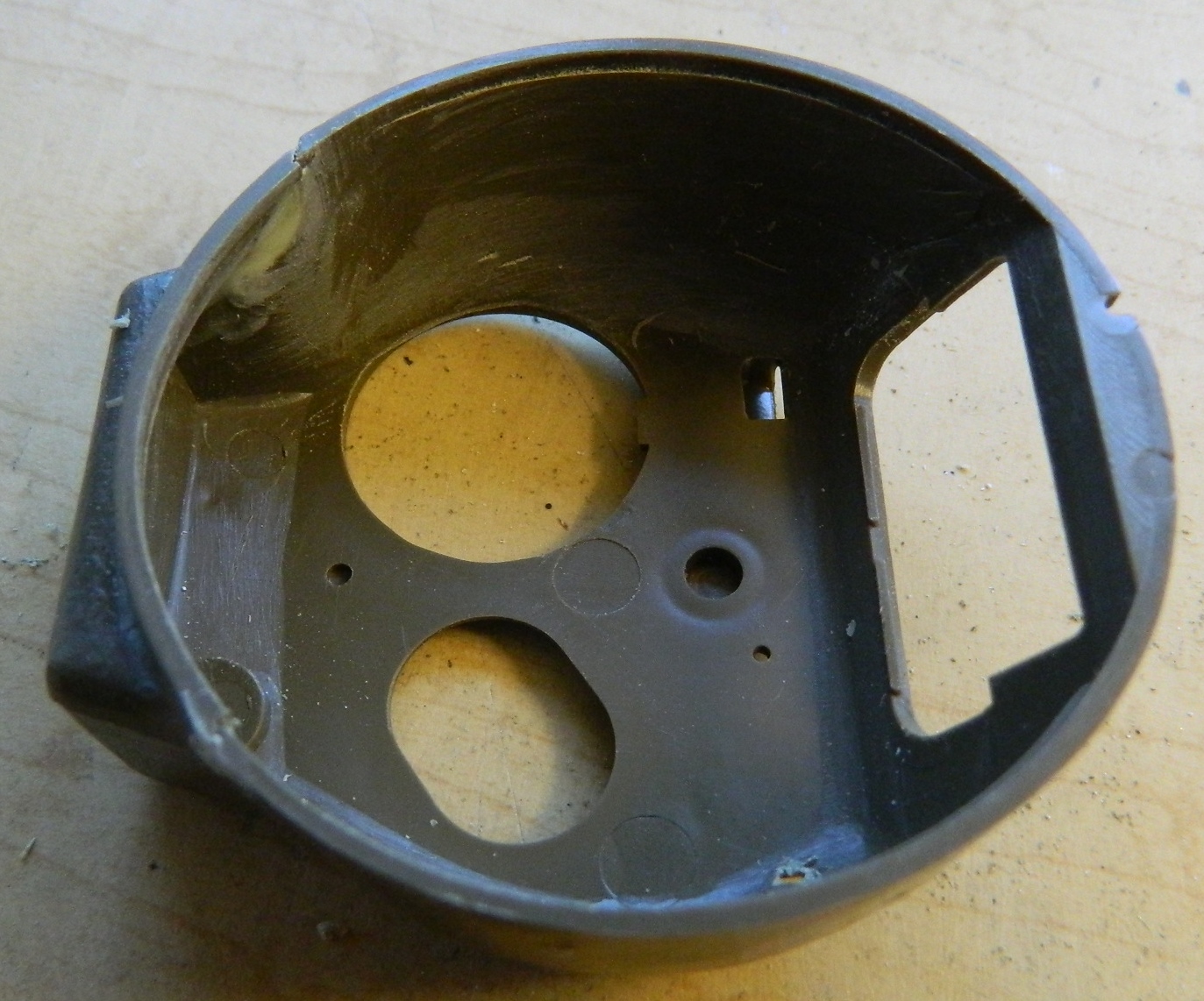
As it turned out, I’d attached the bottom of the turret bustle to the turret ring prematurely. With the turret ring in place, there is NO way possible to get inside the turret to finish the seam of the bustle. That means the bustle has to come off the ring. Since I’d used the bustle bottom from the spare kit, I still had one perfectly good bustle to attach. Alignment, obviously, is important, so I’m using the kit itself as my alignment jig. First step to that is to attach just the bustle bottom and leave the ring unattached to the turret, then cut the ring off leaving the bustle attached. The gap is substantial so I glued where the parts touched and filled the gaps where they didn’t with my structural putty::


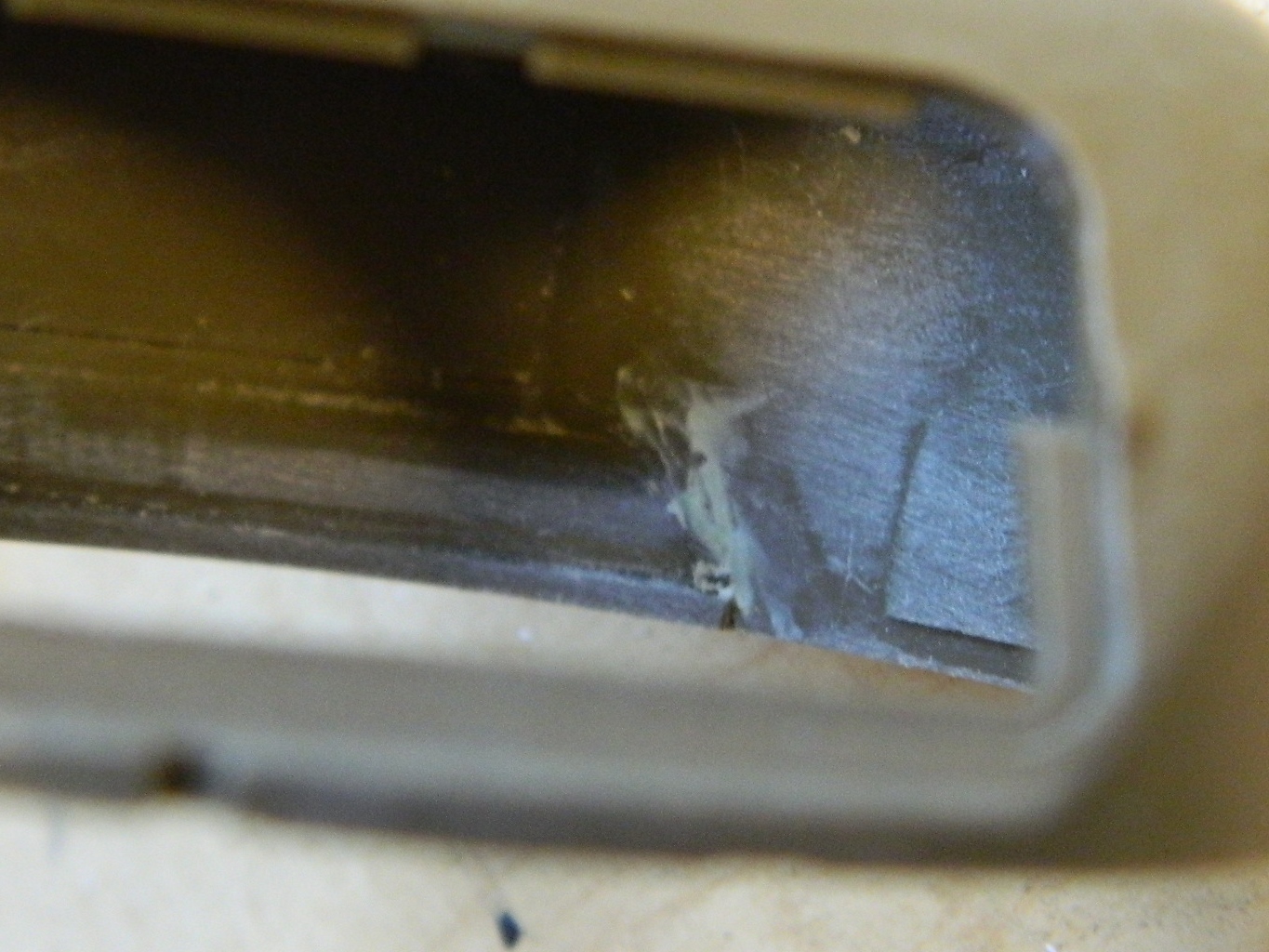
Even without the turret ring in place, getting in there to finish the seams was an “interesting” experience, but at least it was possible:

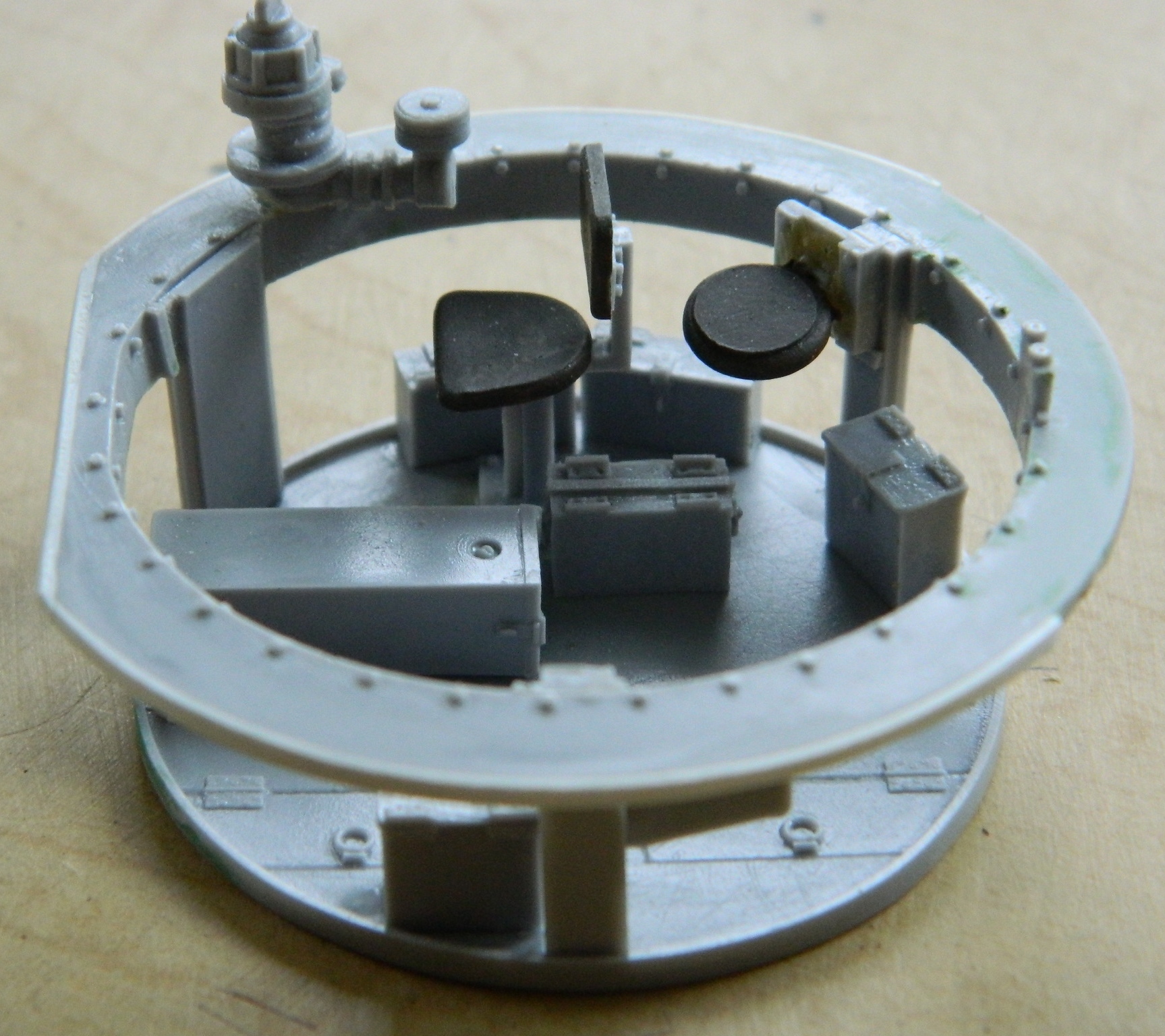
Then the bustle I’d attached to the turret ring had to be (CAREFULLY as resin can be delicate) removed:
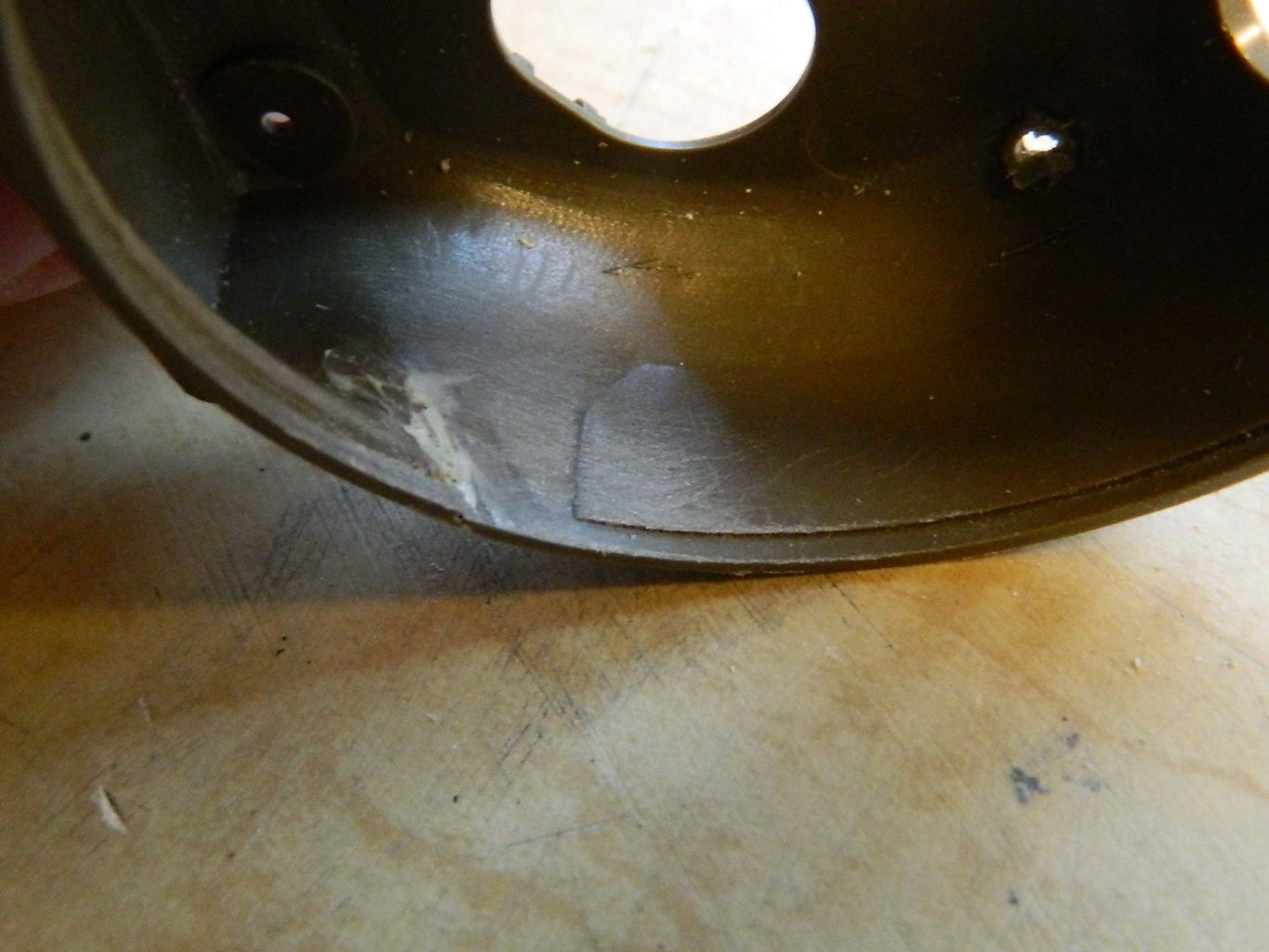
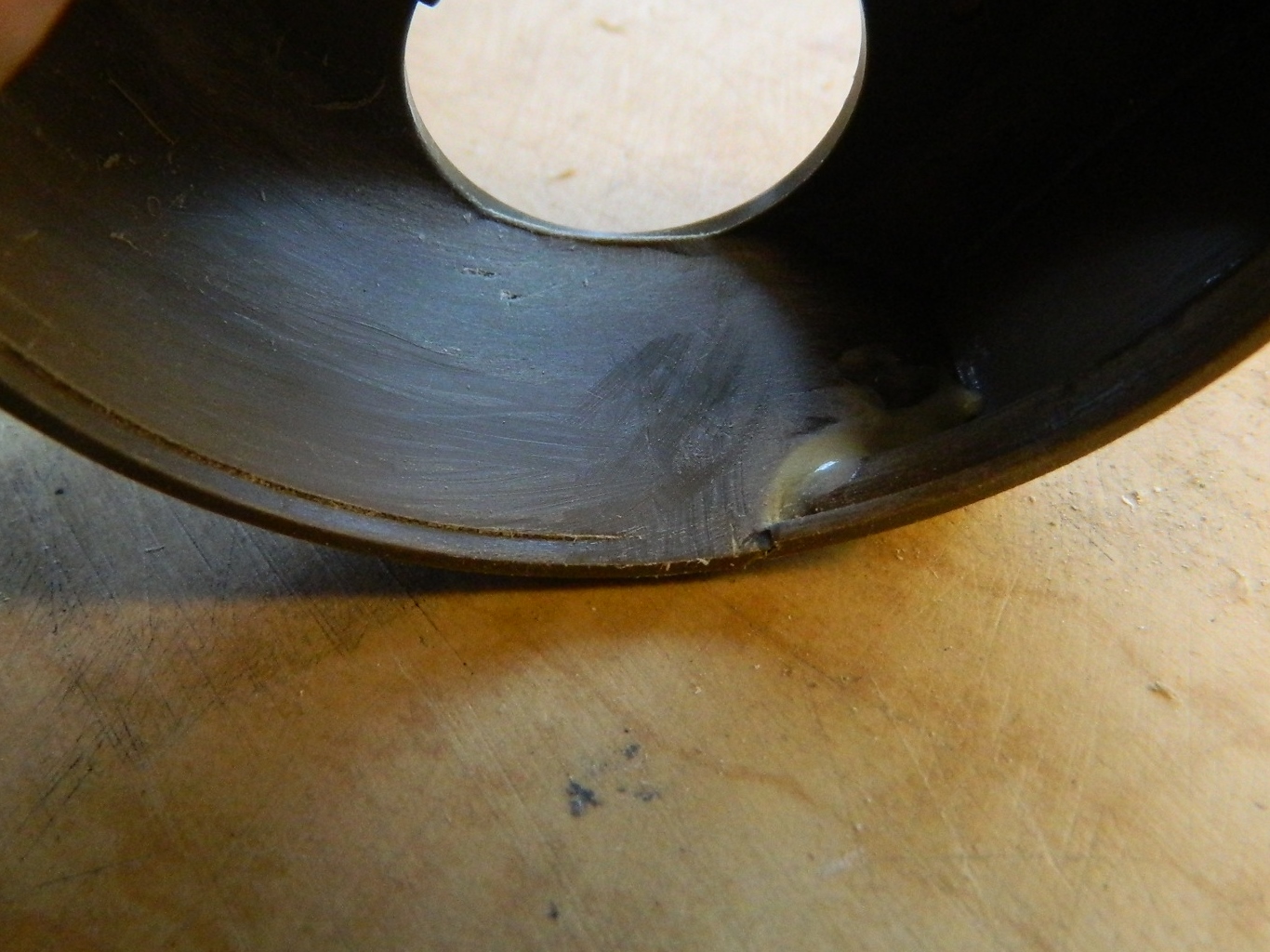
This ledge and projection is on both sides of the turret’s interior, it’s not there on the actual tank, so they both have to go:
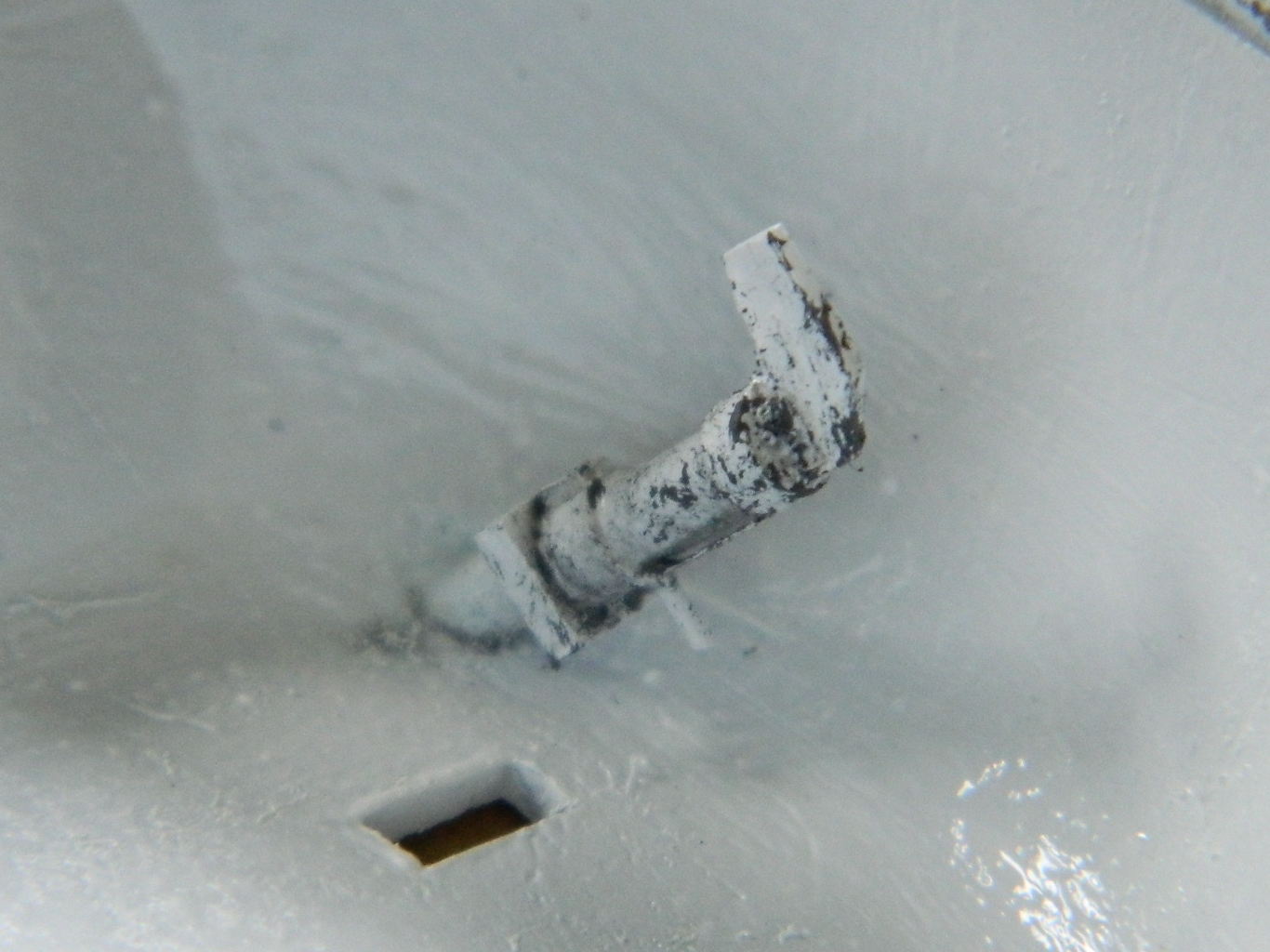
The late-production Shermans (and mostly all the British Shermans) had a 3” smoke mortar in the roof of the turret. On the spare turret, you can see the stub on the inside that keeps the hole from being just a hole (how unlike Tamiya!). That’s got to go so that I can mount the resin mortar later on:
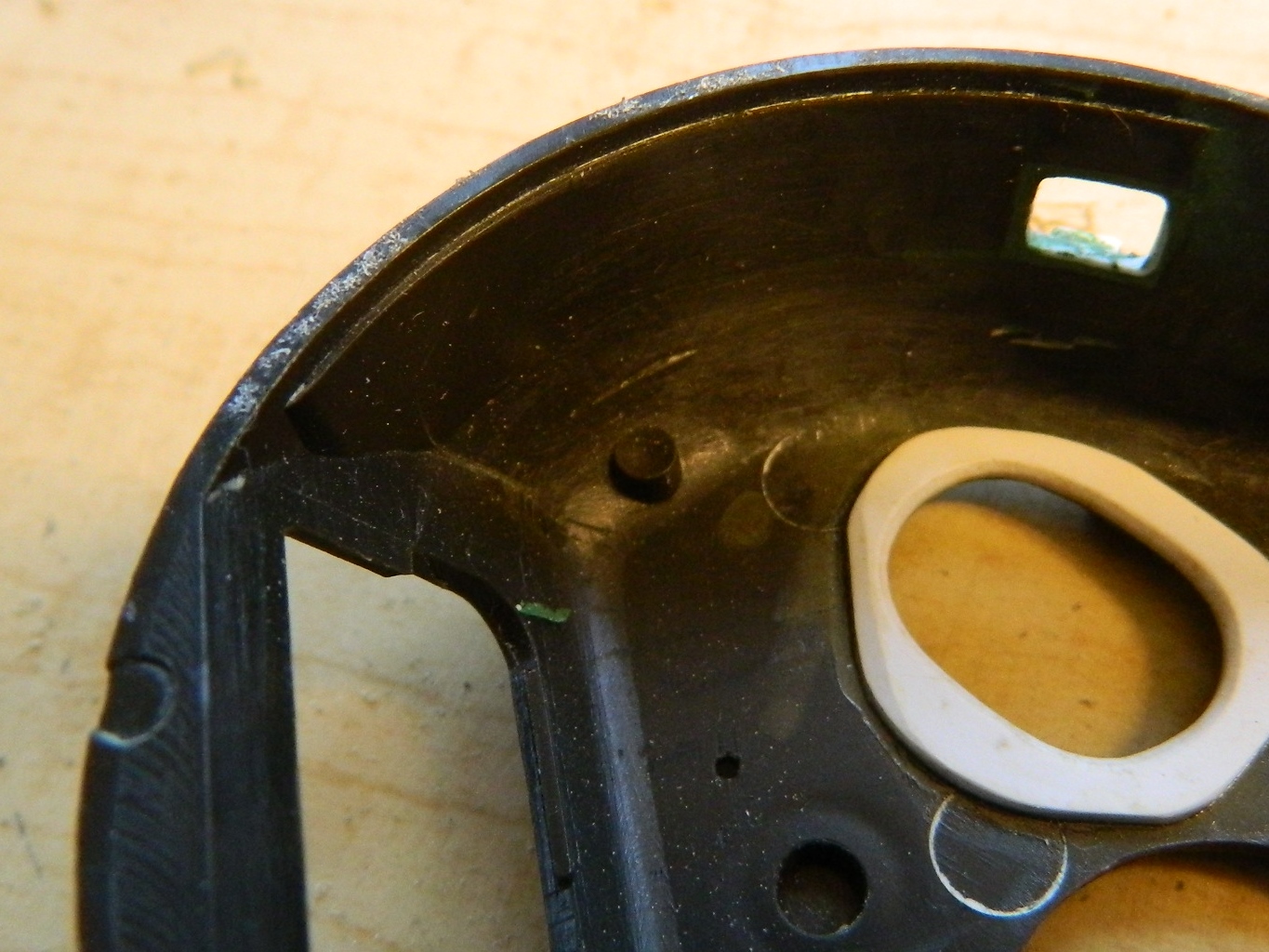
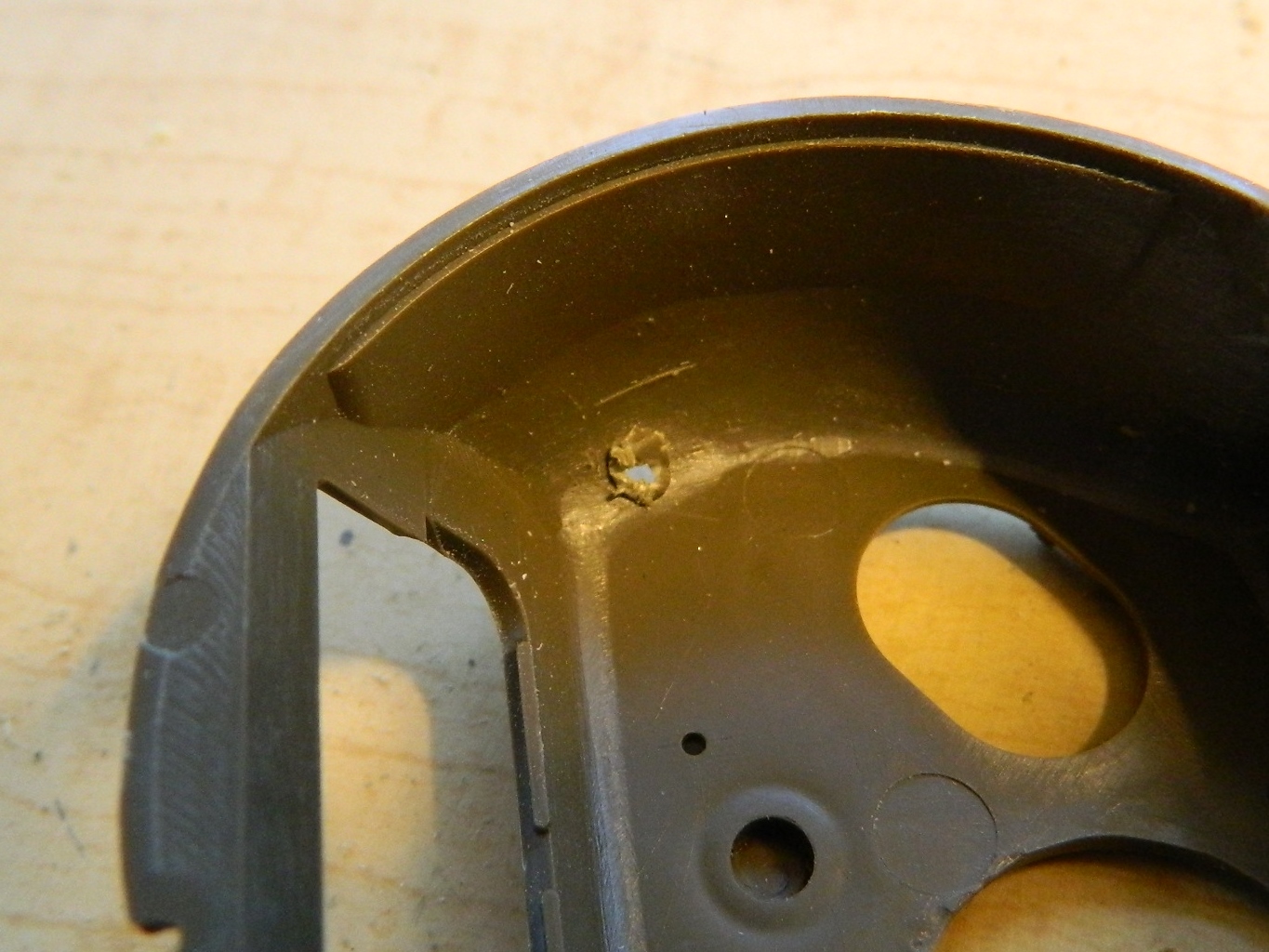
Another obvious feature inside the turret is the radio; it sits on a shelf in the bustle (and is probably the reason for the bustle). Of course, there’s no radio or shelf with the kit. The AM interior set provided the radio; it’s up to me to make the shelf. Again, I went with .010” brass shim stock. I took the bustle floor I removed from the turret basket and carved away the interior of it to use the profile of the bustle as the template for the shelf:
Periscopes. An exercise in tedium.
I started with the gunner’s periscope. It’s larger than all the other periscopes on the Sherman (all the others are the same and interchangeable with each other, with the exception of the periscope used in the commander’s hatch of the vision cupola), and often was used as the gunner’s gun sight. On later model Shermans, like the one I’m building, the gunner’s periscope had a lightly armored cover. Tamiya, for reasons only they know, modeled the armored cover but didn’t provide anything to fill the hole:
Time for the AM resin periscopes. The one on the right is the gunner’s periscope. The U-shaped part is actually a padded head rest. With the gunner’s face in close proximity to an inflexible object like that, recoil of the main gun (or maybe hitting a solid bump while peering through it) would smash his face without it:
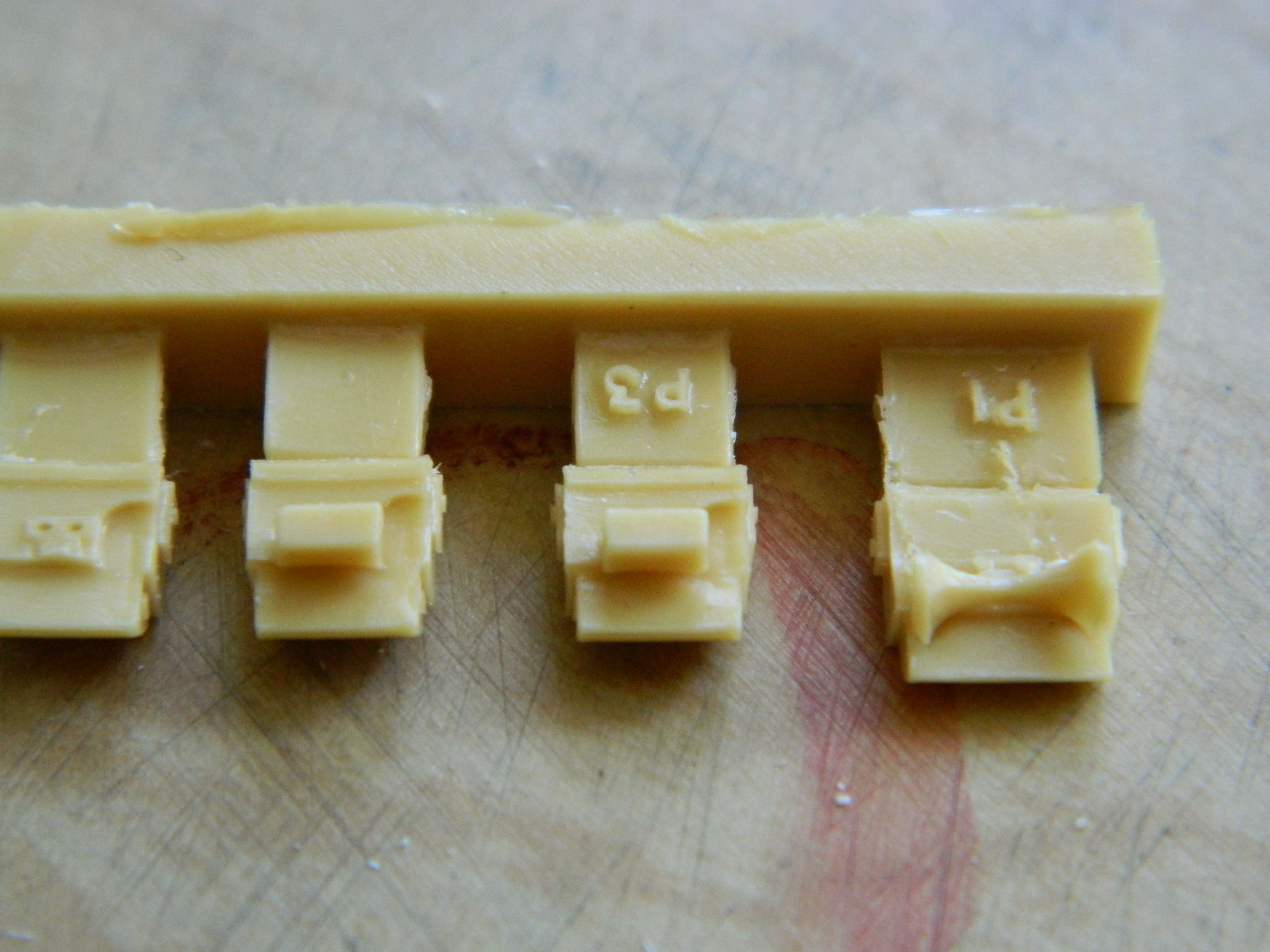
When I cut the periscope off the pouring stub, rather than finish down the pouring gate and then later on having to add the periscope head and align it, I decided I’d use the pouring gate as the head and eliminate the need for alignment by shaping it accordingly:
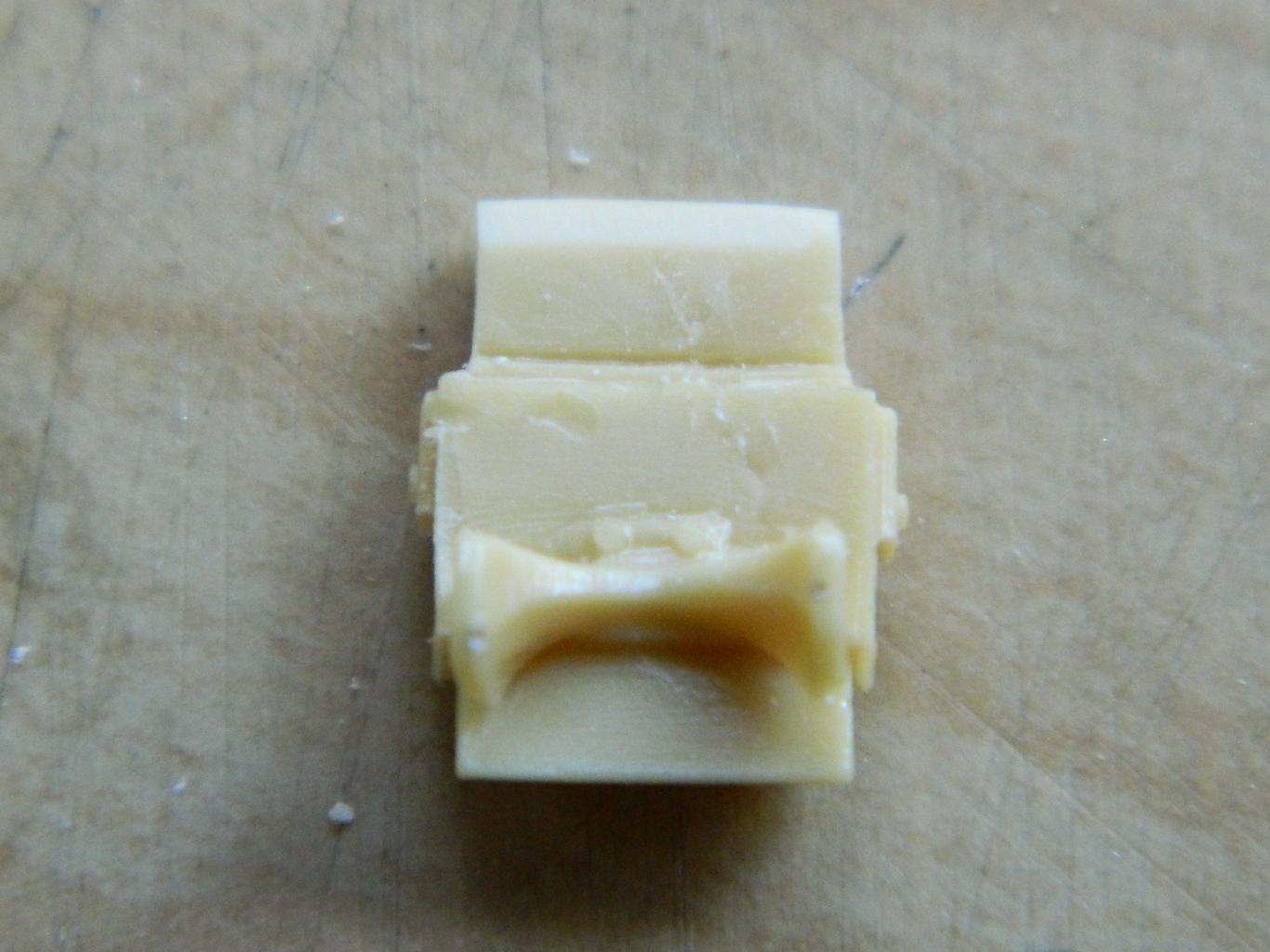
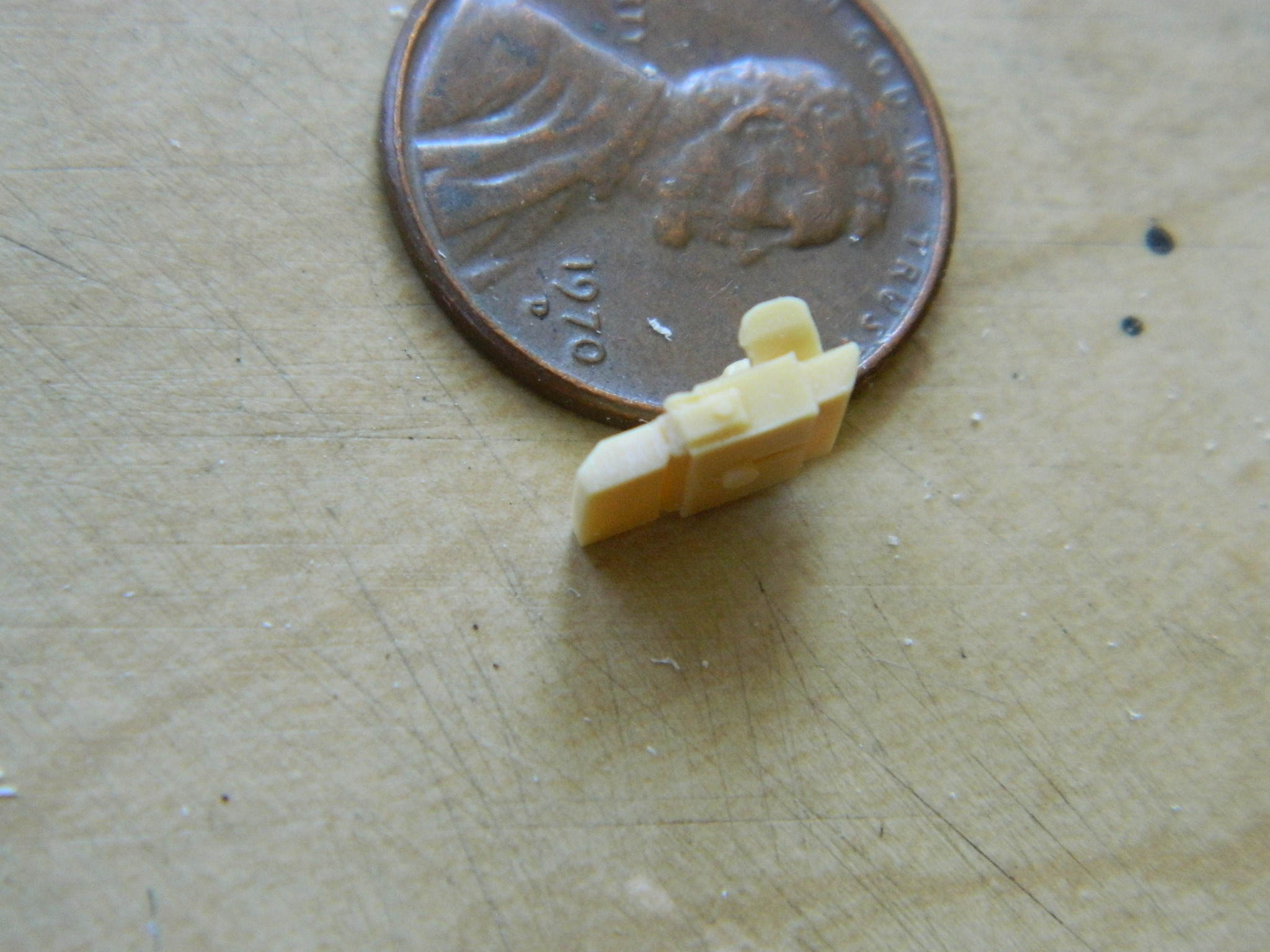
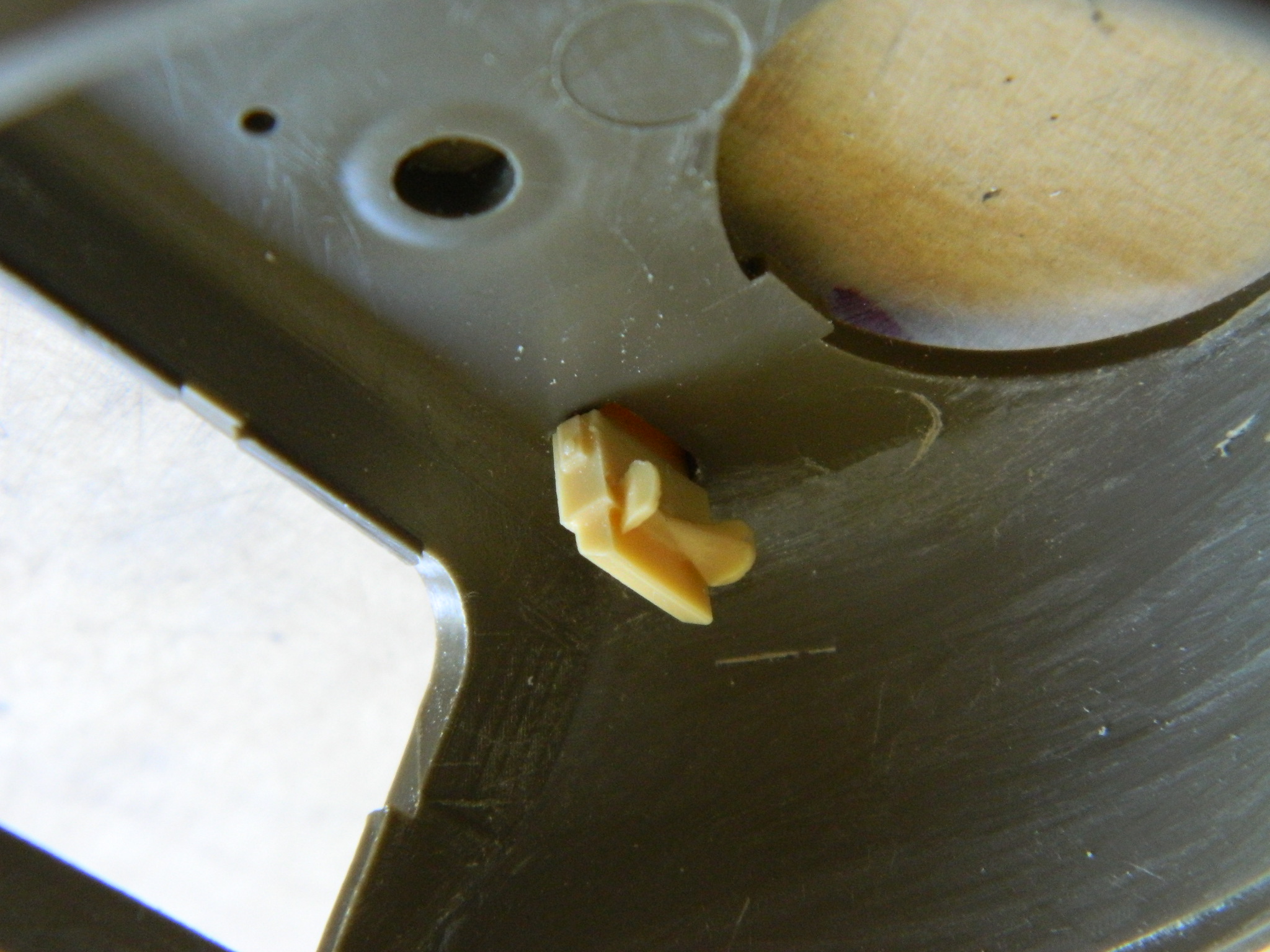
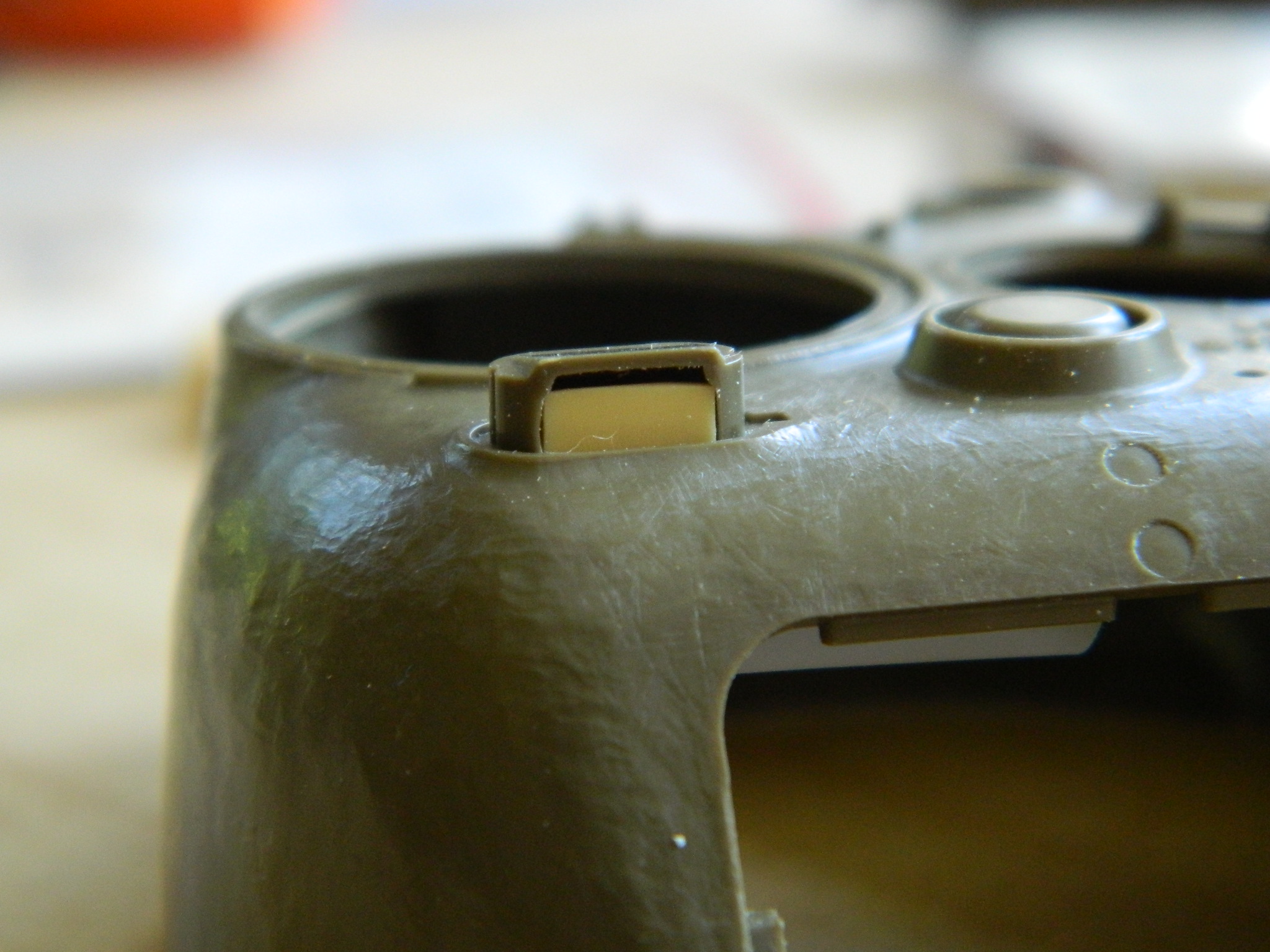
While I was diddling about with these small periscopes, I decided I’d do all the other periscopes I needed at the same time.
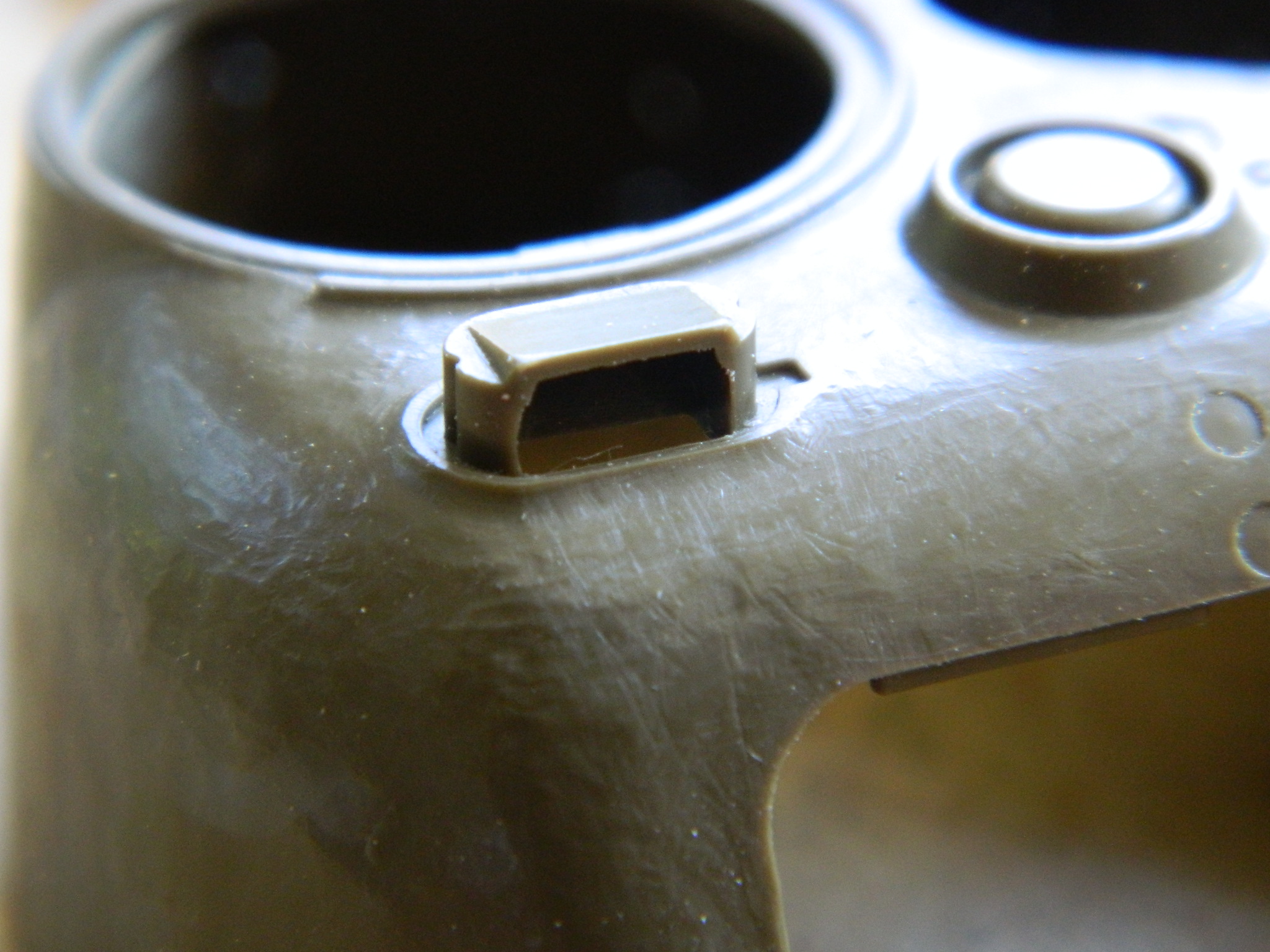
Early Shermans had direct vision slots (with covers) for both the driver and co-driver. It was learned early on that having a weak spot in the (already weak) armor directly in front of two crews’ faces was a bad idea, so they did away with the DV slots. They were replaced with another periscope in the hatch hoods directly in front of the hatches (seeing out of a buttoned up tank is LOUSY, especially WWII tanks). When the later model Shermans went with the larger hatches, redesigning the glacis plate to eliminate the old protrusions for the small hatches, those “extra” periscopes were moved inboard of the hatches, replicated in the photo below as those two rectangular protrusions (the lip in front of them is a “splash guard,” to prevent bullets that hit the glacis from ricocheting up into the periscope heads and taking them out; it’ll be replaced, too). Originally I had intend on adding both periscopes in these locations; I decided to do the driver’s side extended and the gunner’s side retracted. The molding on the model shows both as retracted and I’ll extend one:
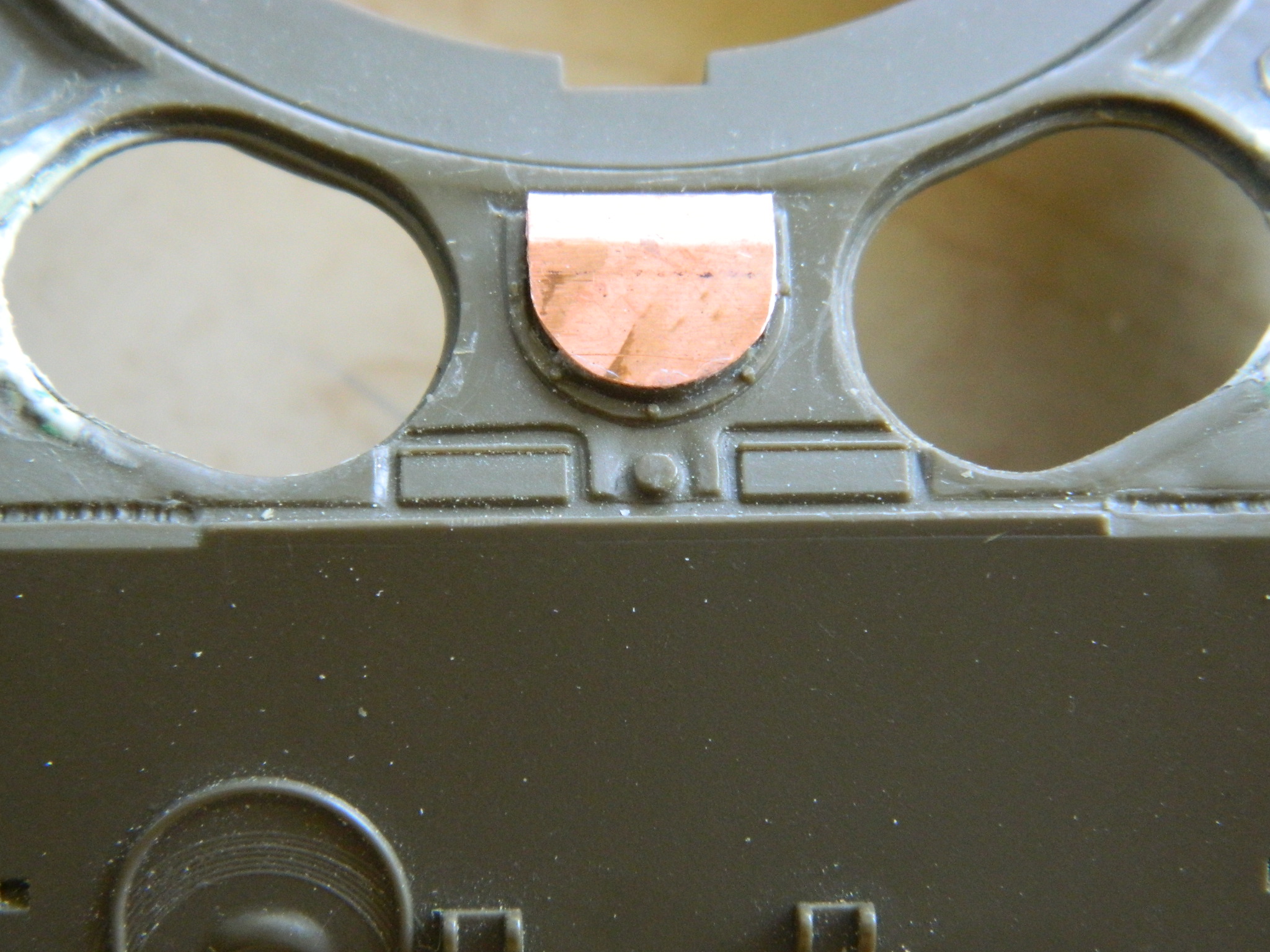
With the cover shaved off, the splash guard removed, and the hole aligned and drilled, we get this:
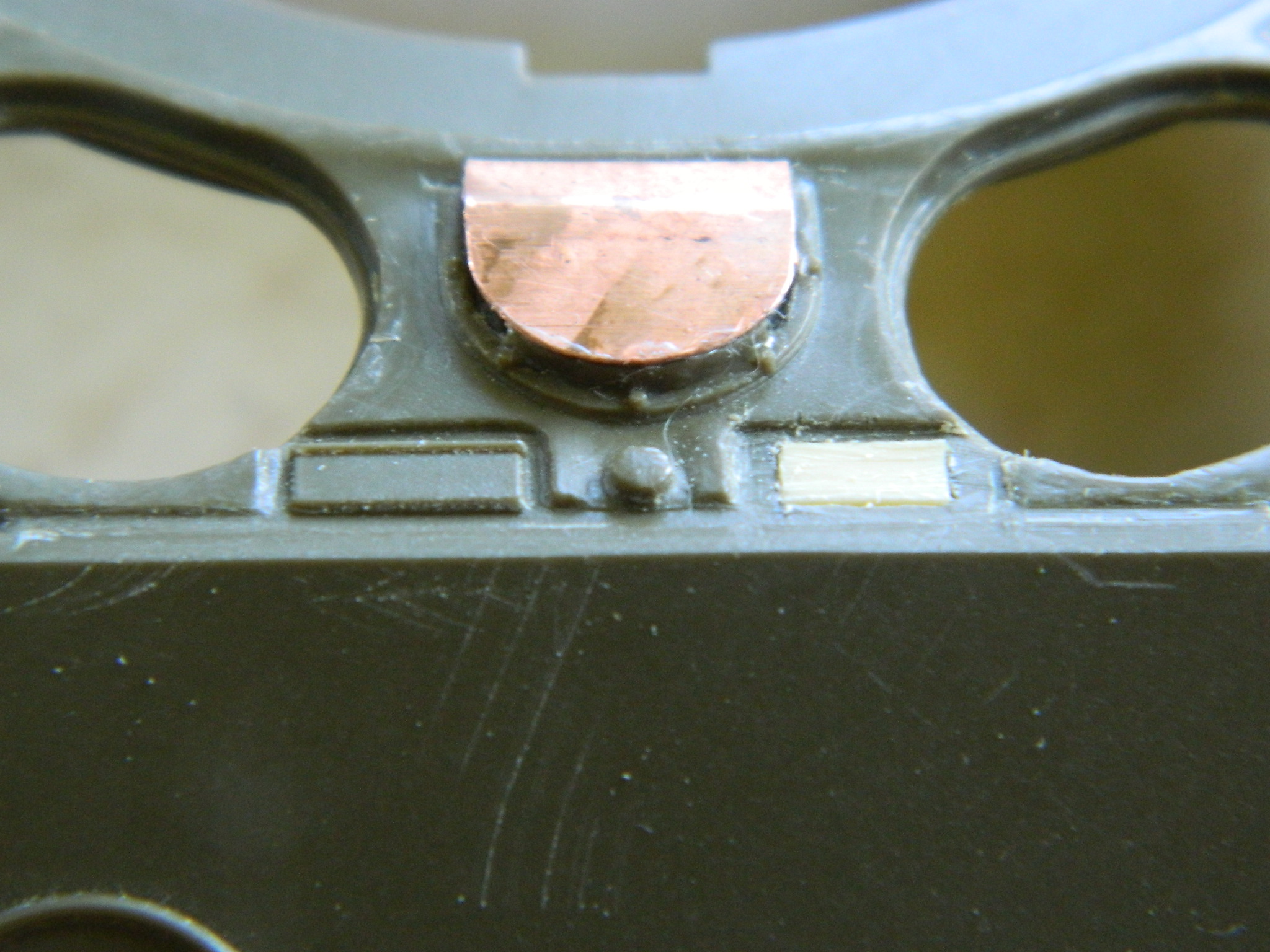
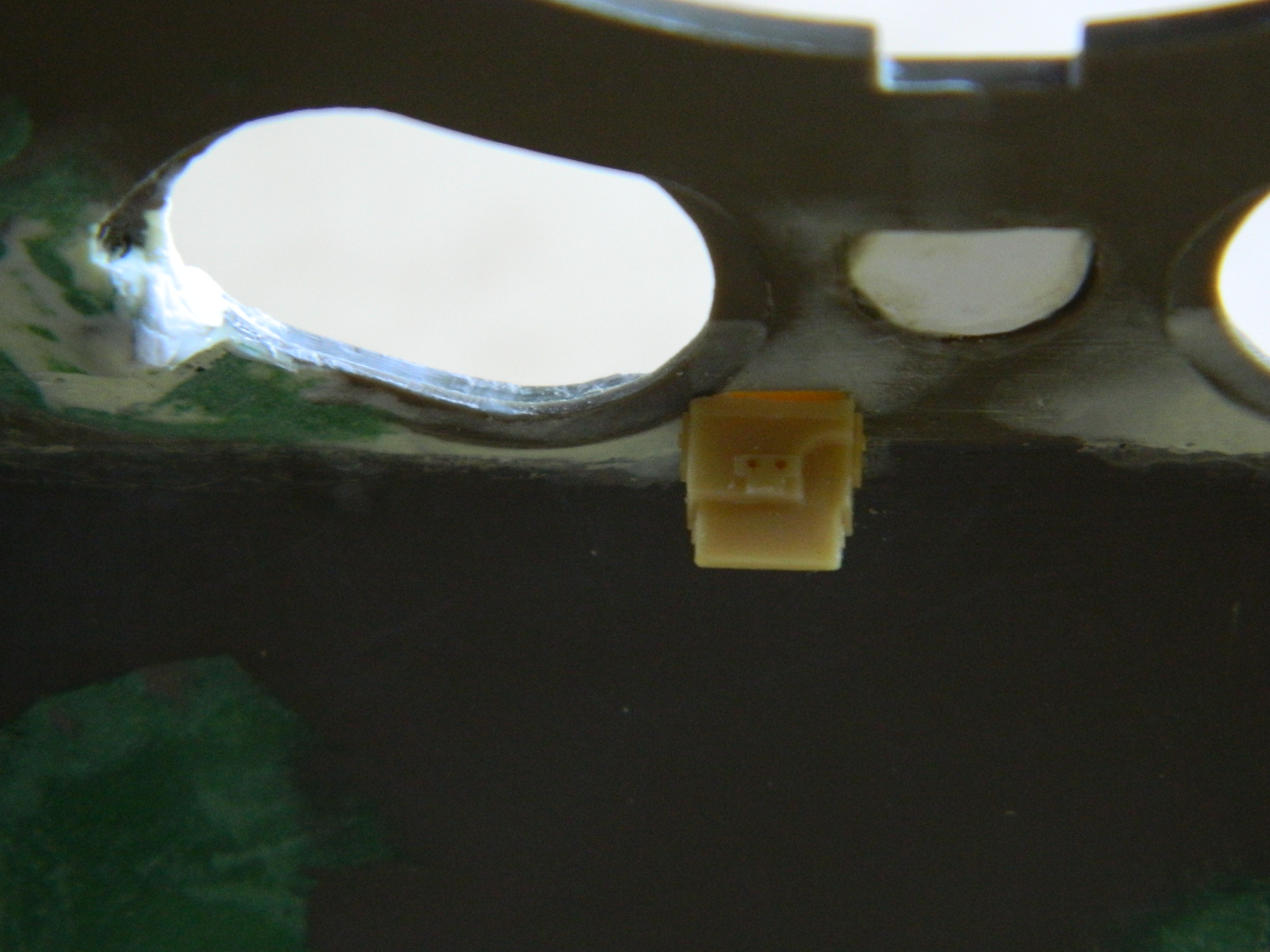
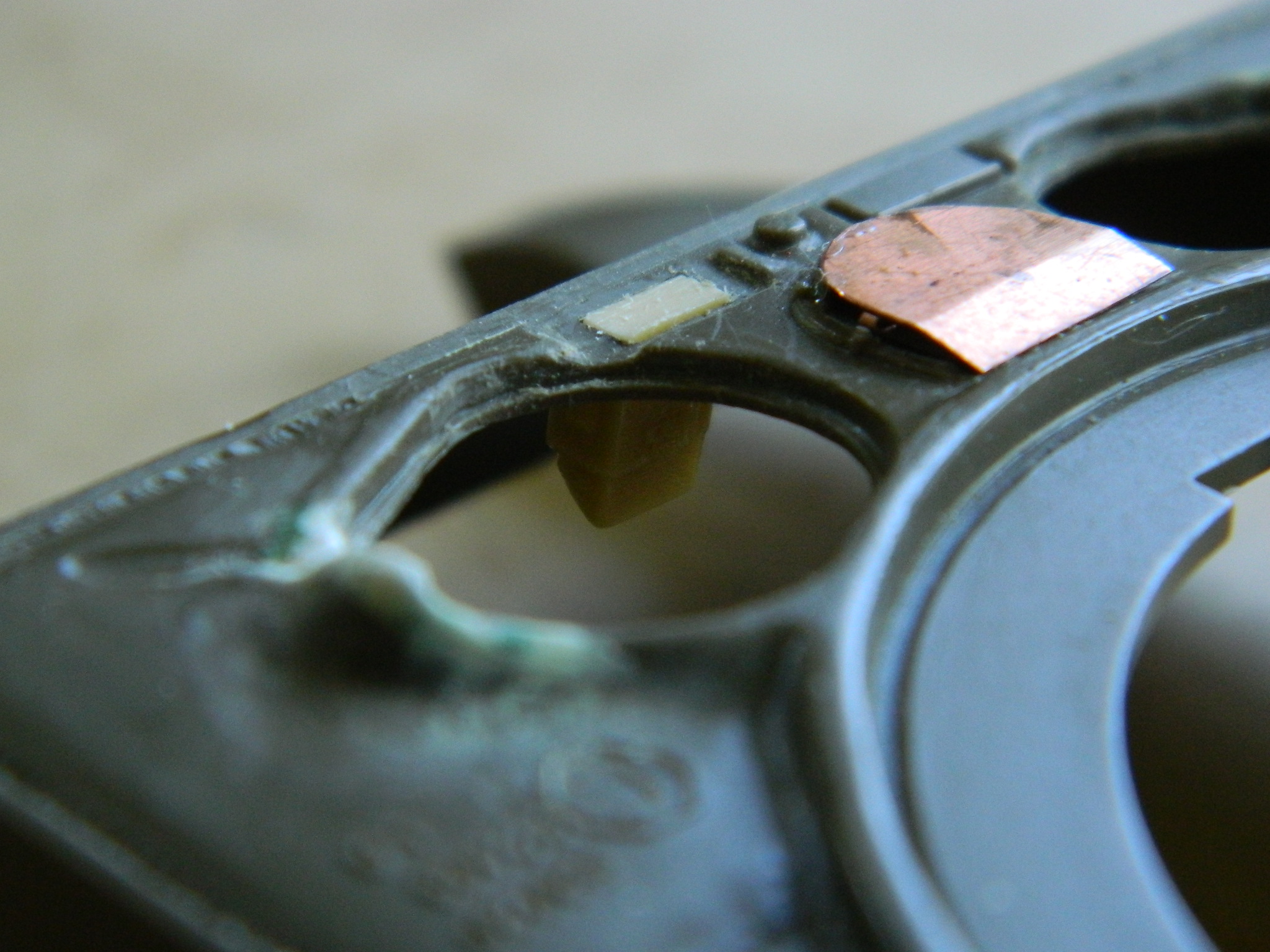
The periscope heads are molded separately and the covers are the angled plates behind the faces:
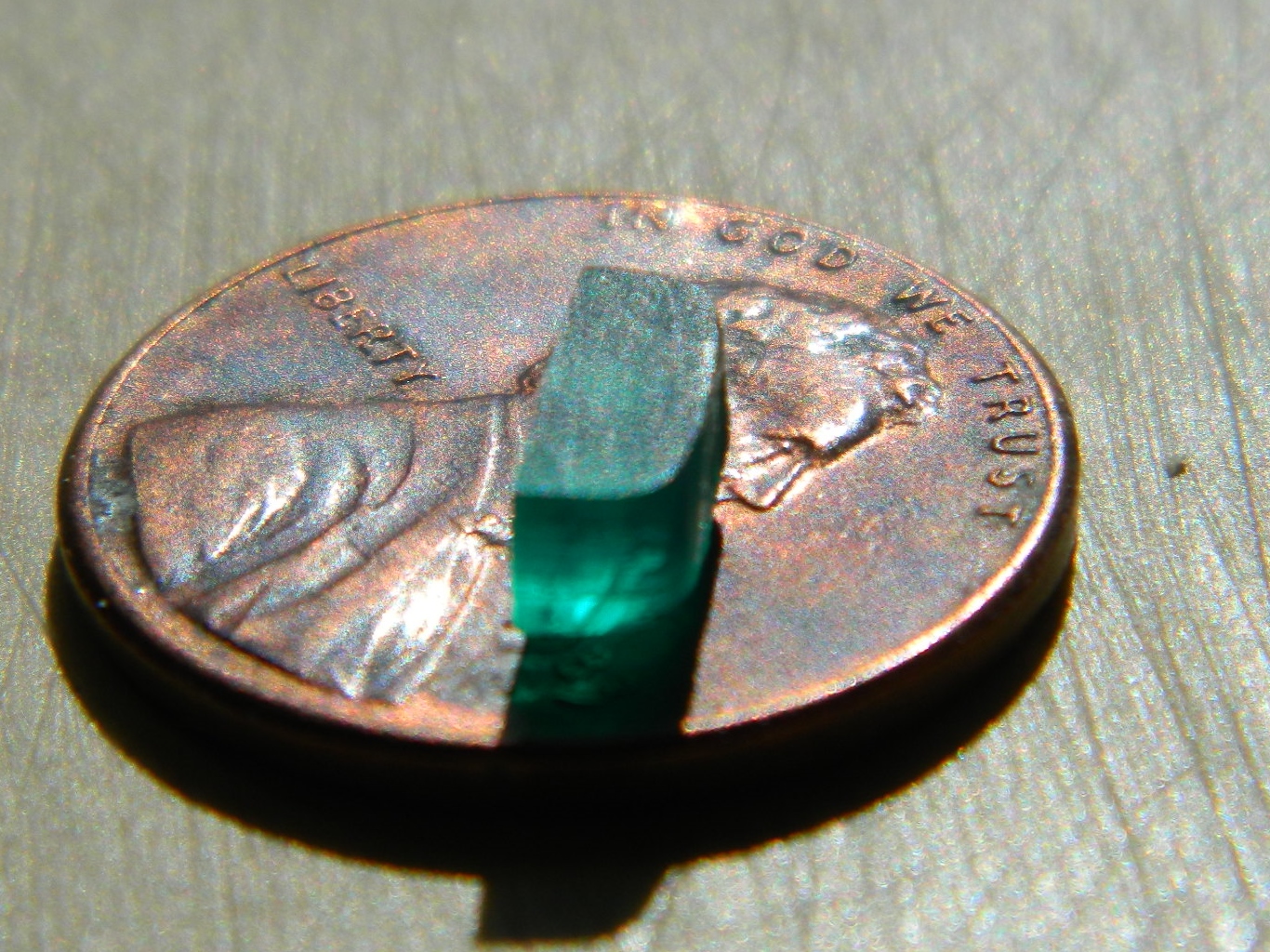
One of the things that always ruins the in-scale perspective for me is when I see something I know should be clear or translucent represented by opaque paint, so I wanted to try something else. I learned by doing aircraft position/formation lights that I could use acrylic toothbrush handles to make more representative lenses. I decided to see if that would work for periscope ports:


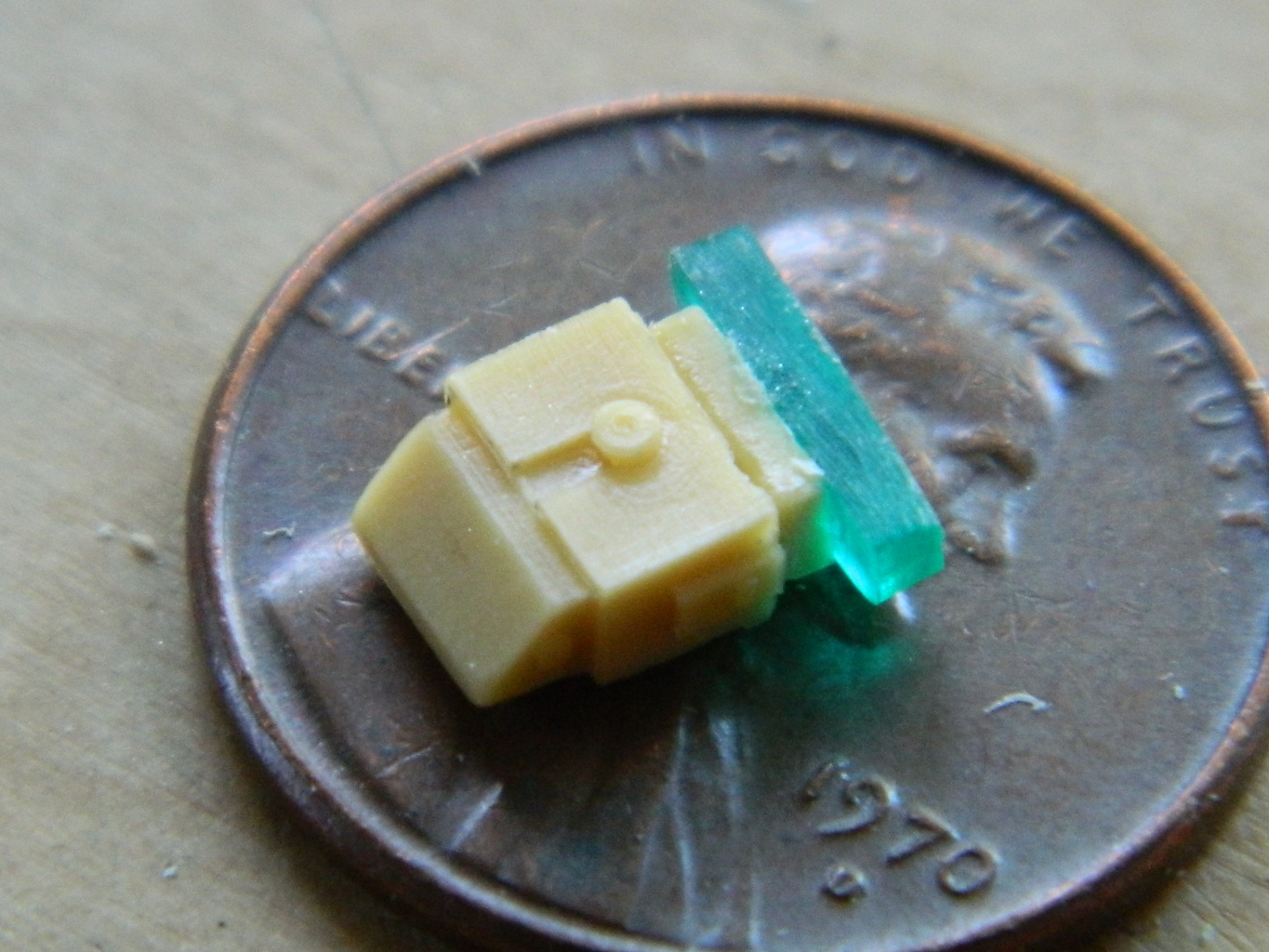
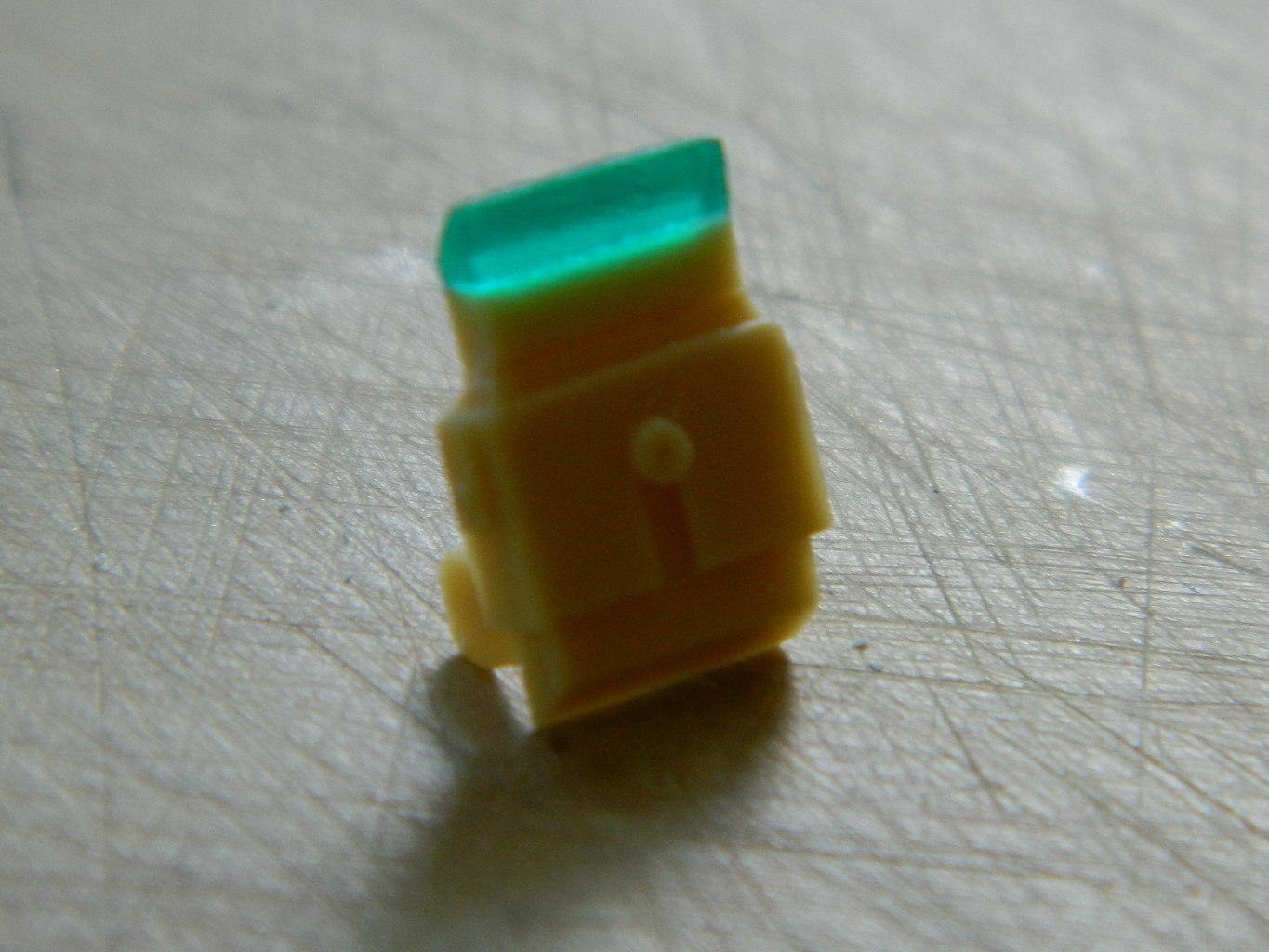
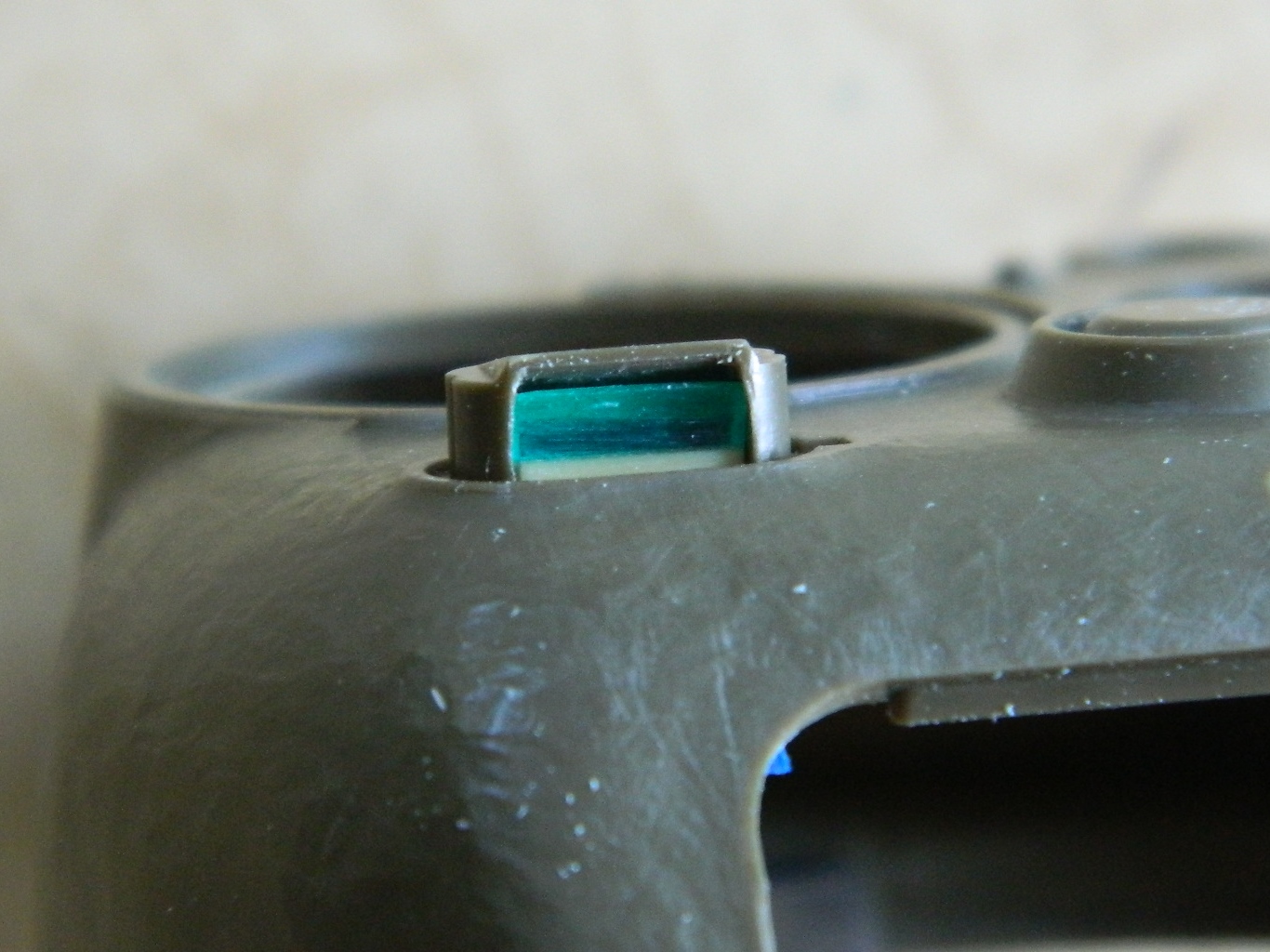
Yep…that seemed to work, so I’ll do the rest of the periscopes the same way, though I decided to use clear sprue from the spares box instead for the rest of them:

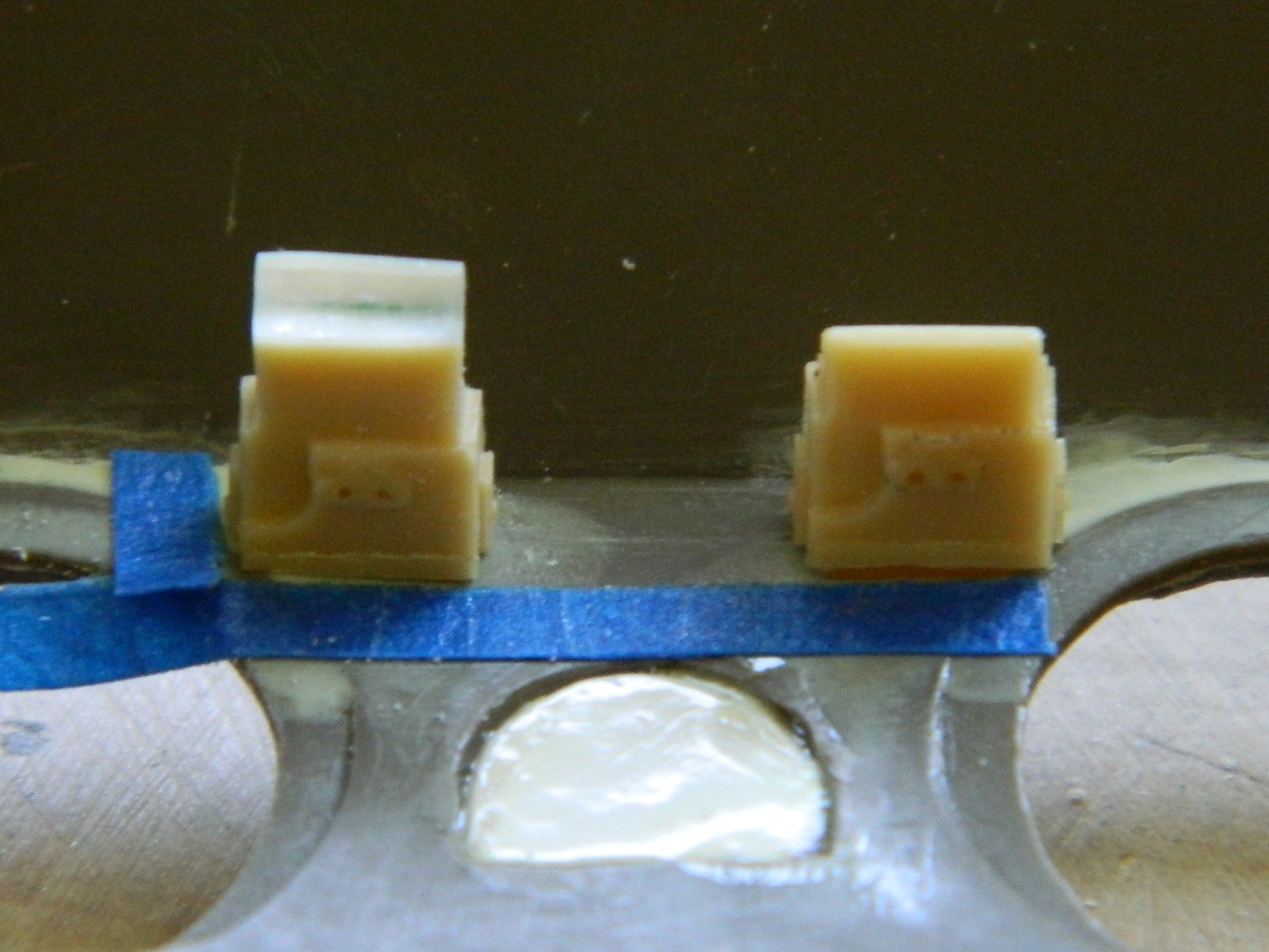

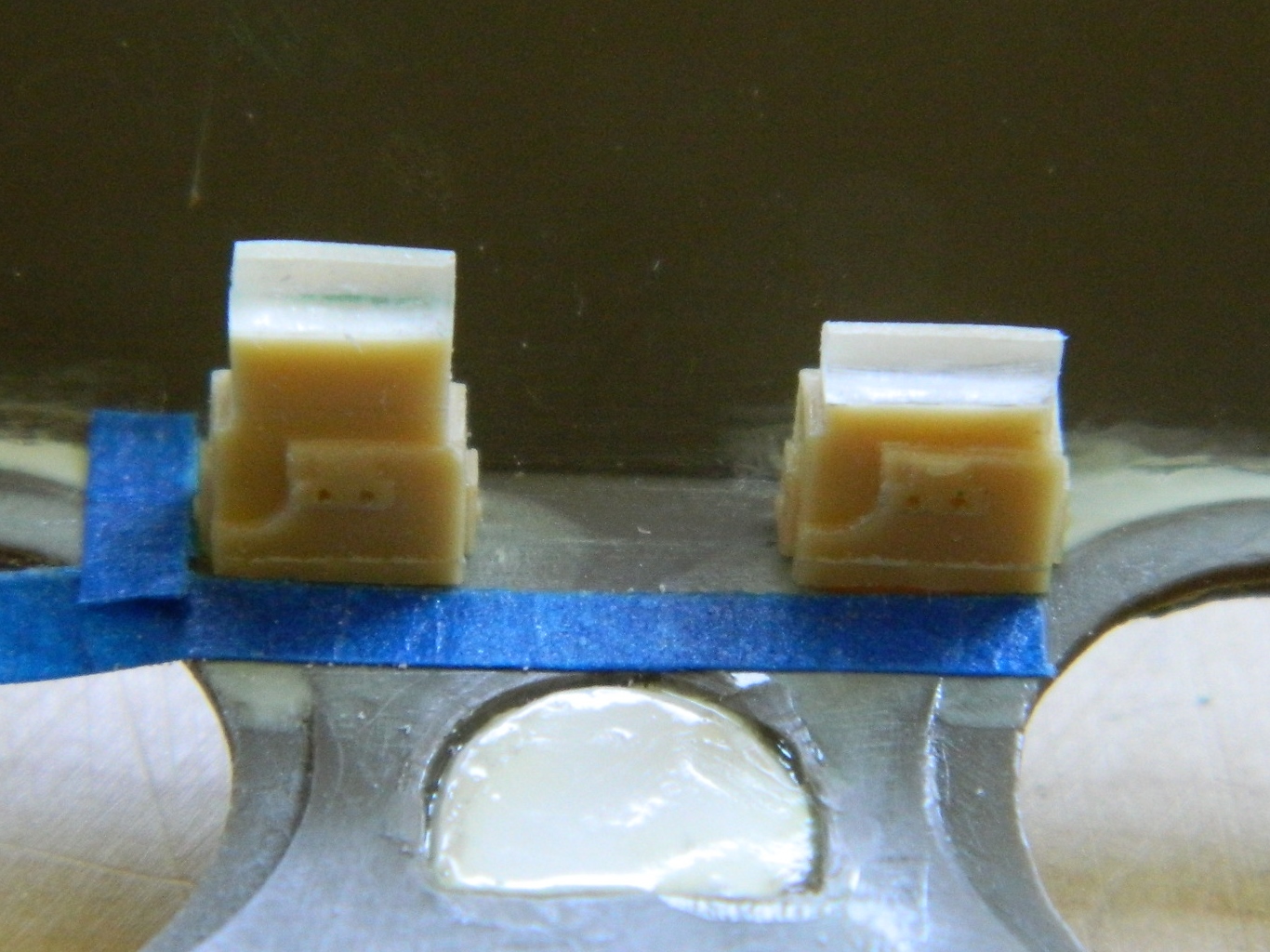

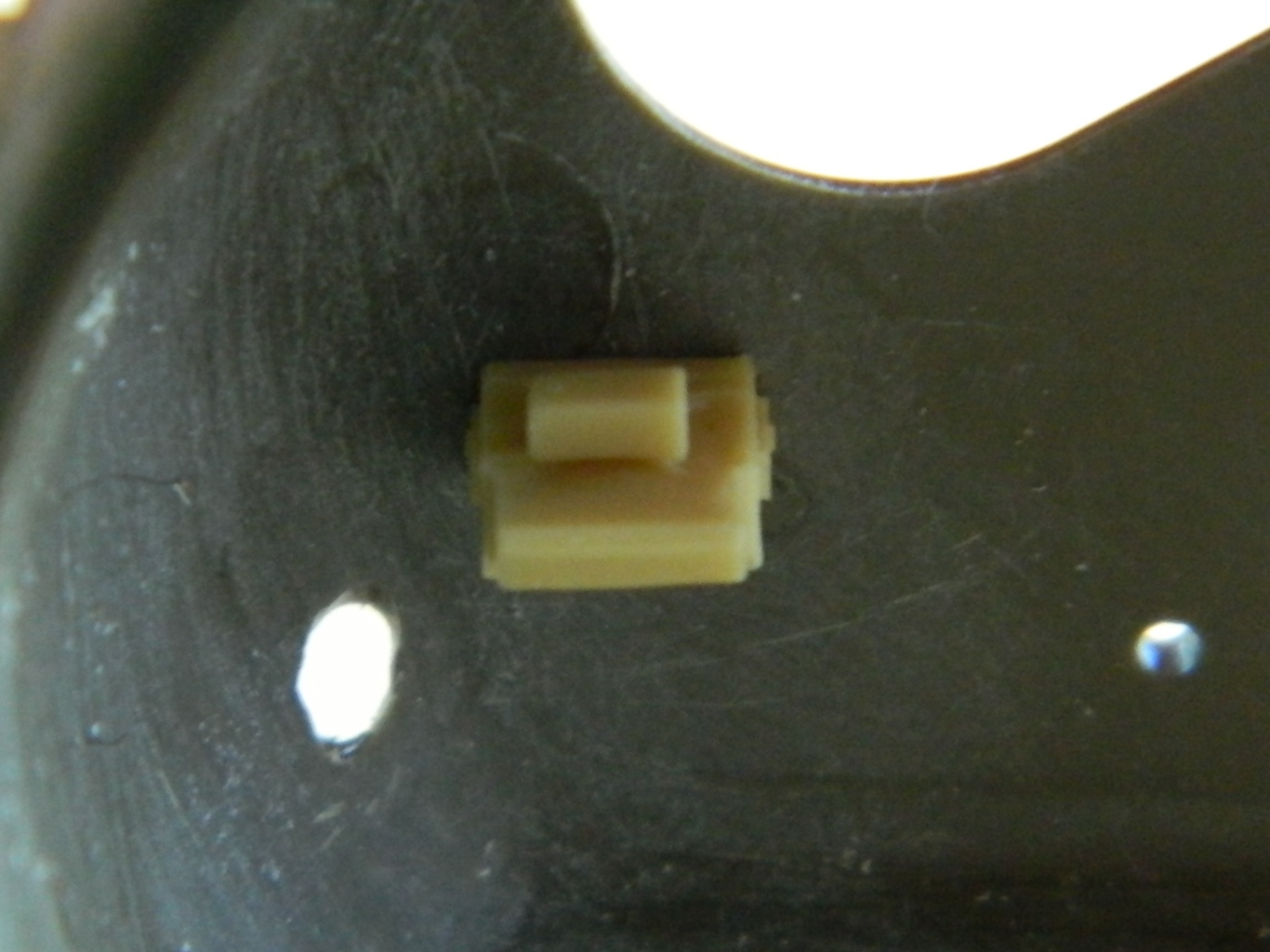
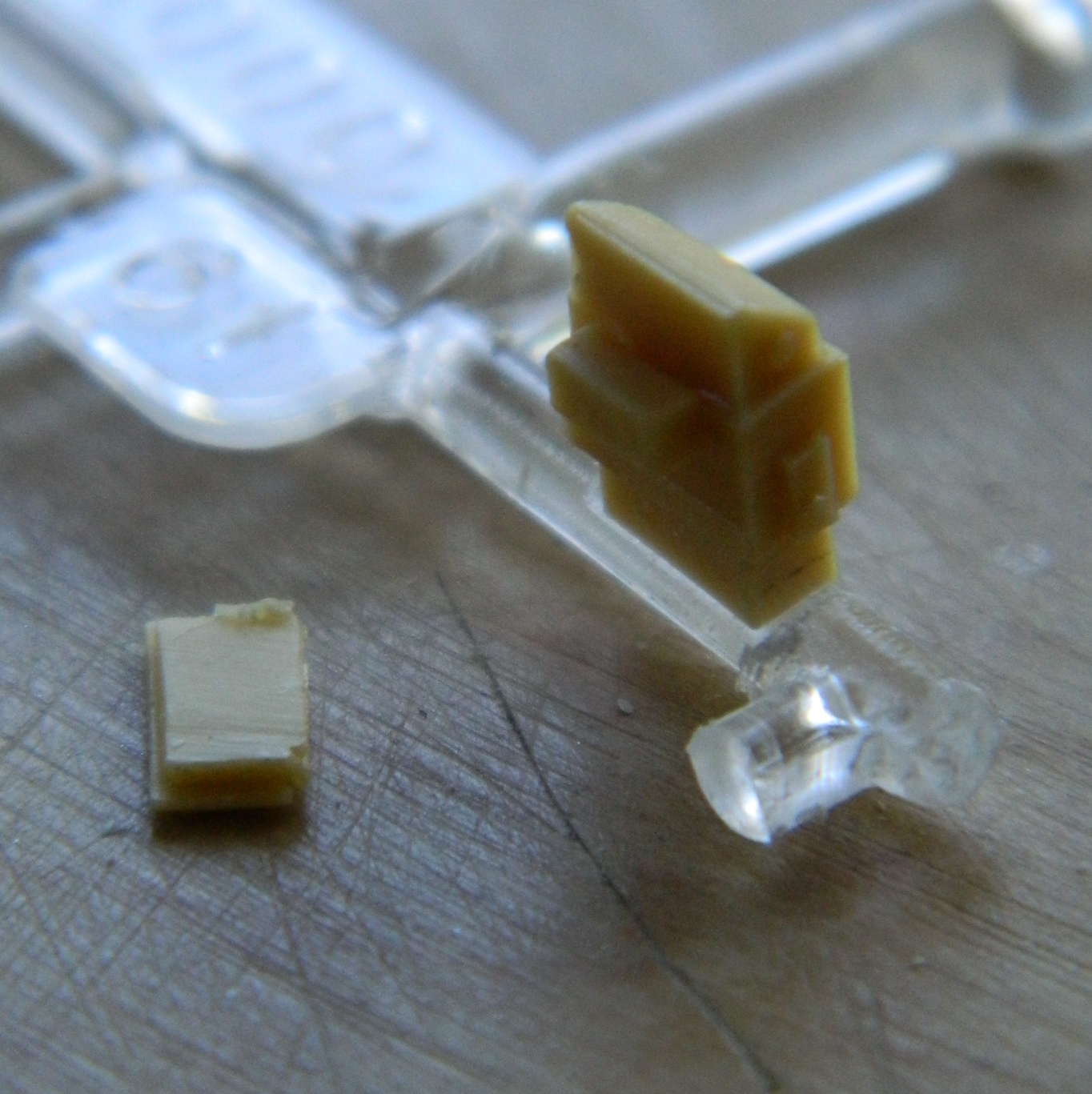

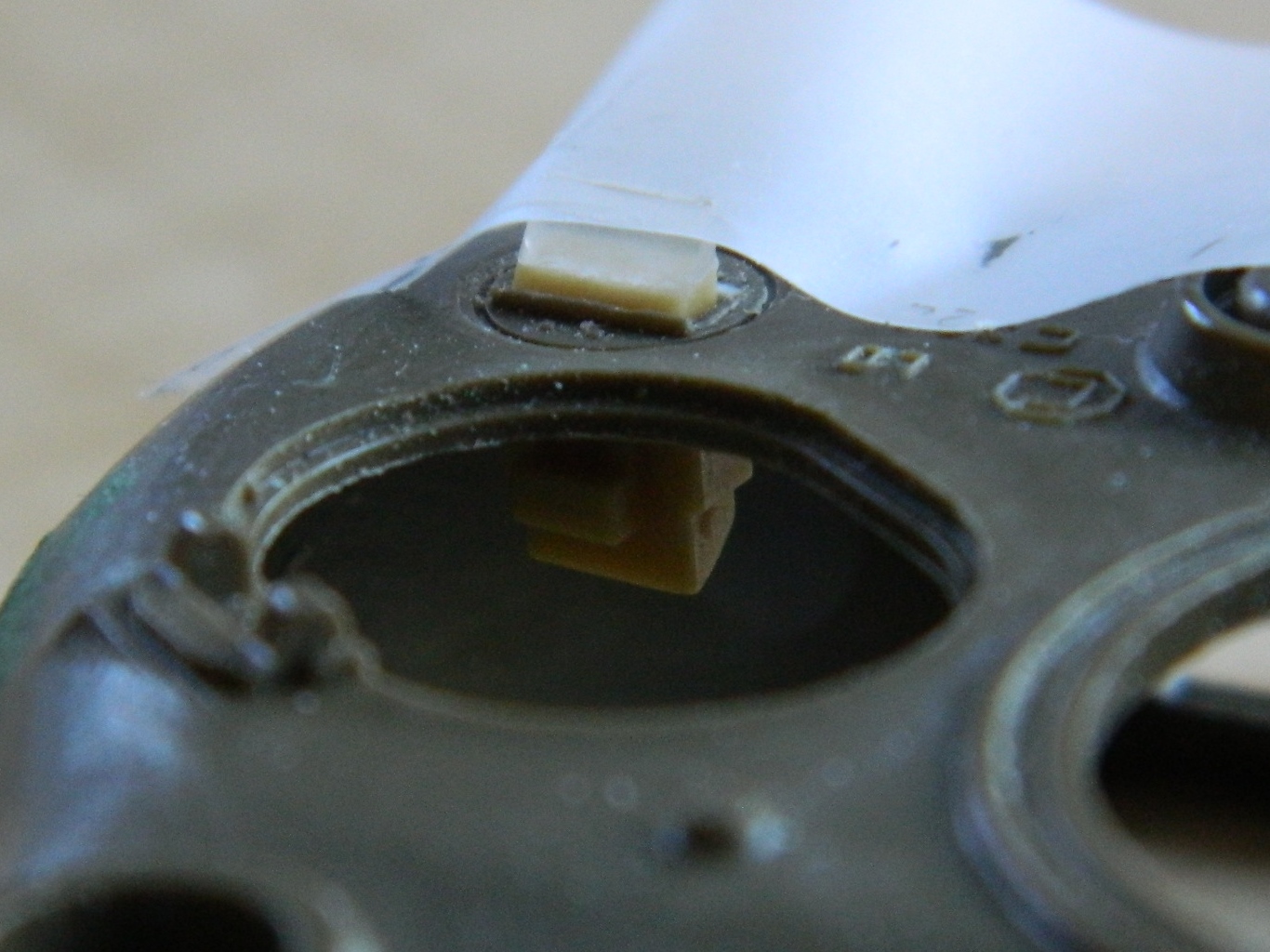
While I was working on turret-related things, I took out the pistol port I’d made, cut the hole in the turret, and grafted it on:

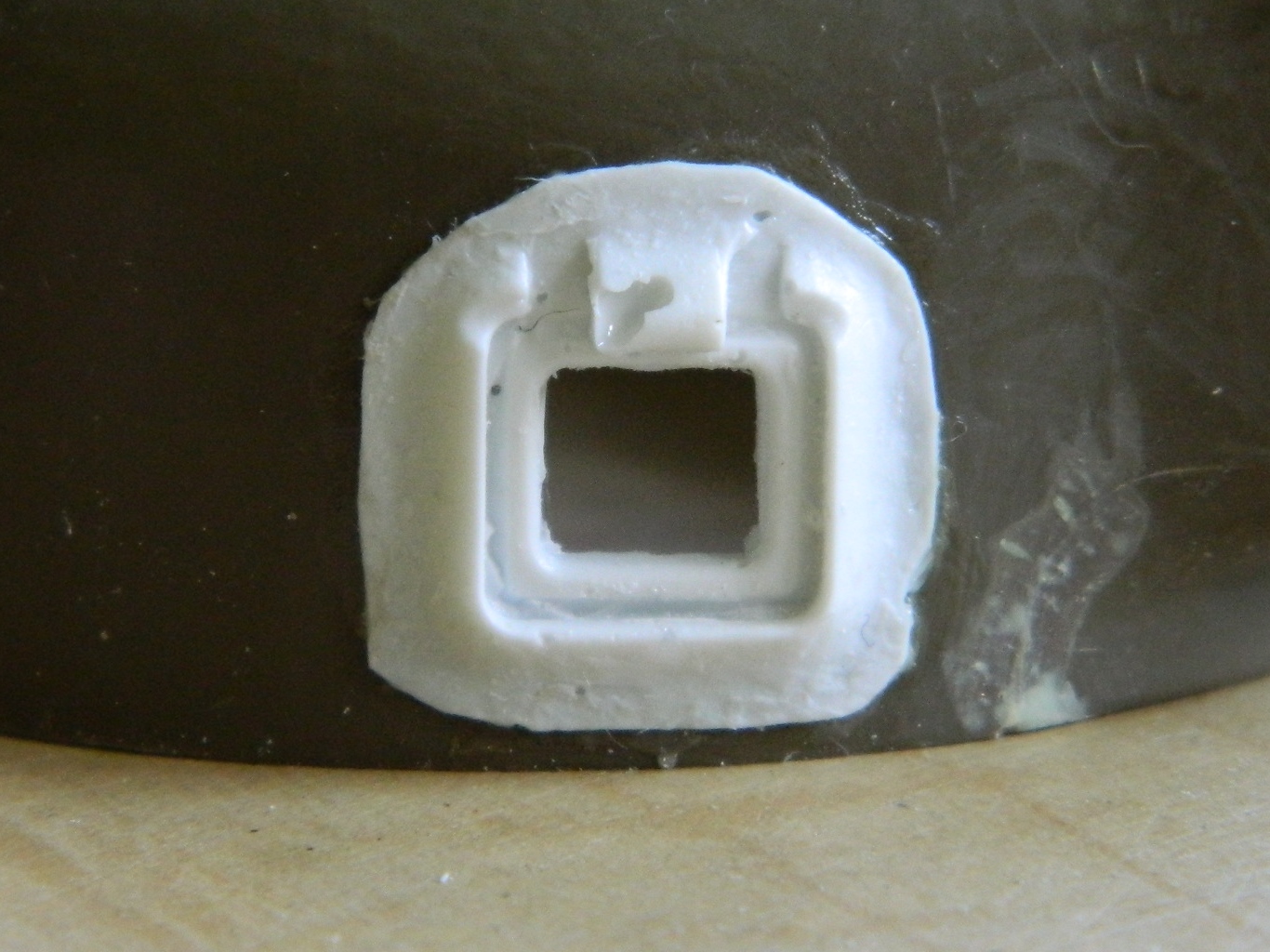
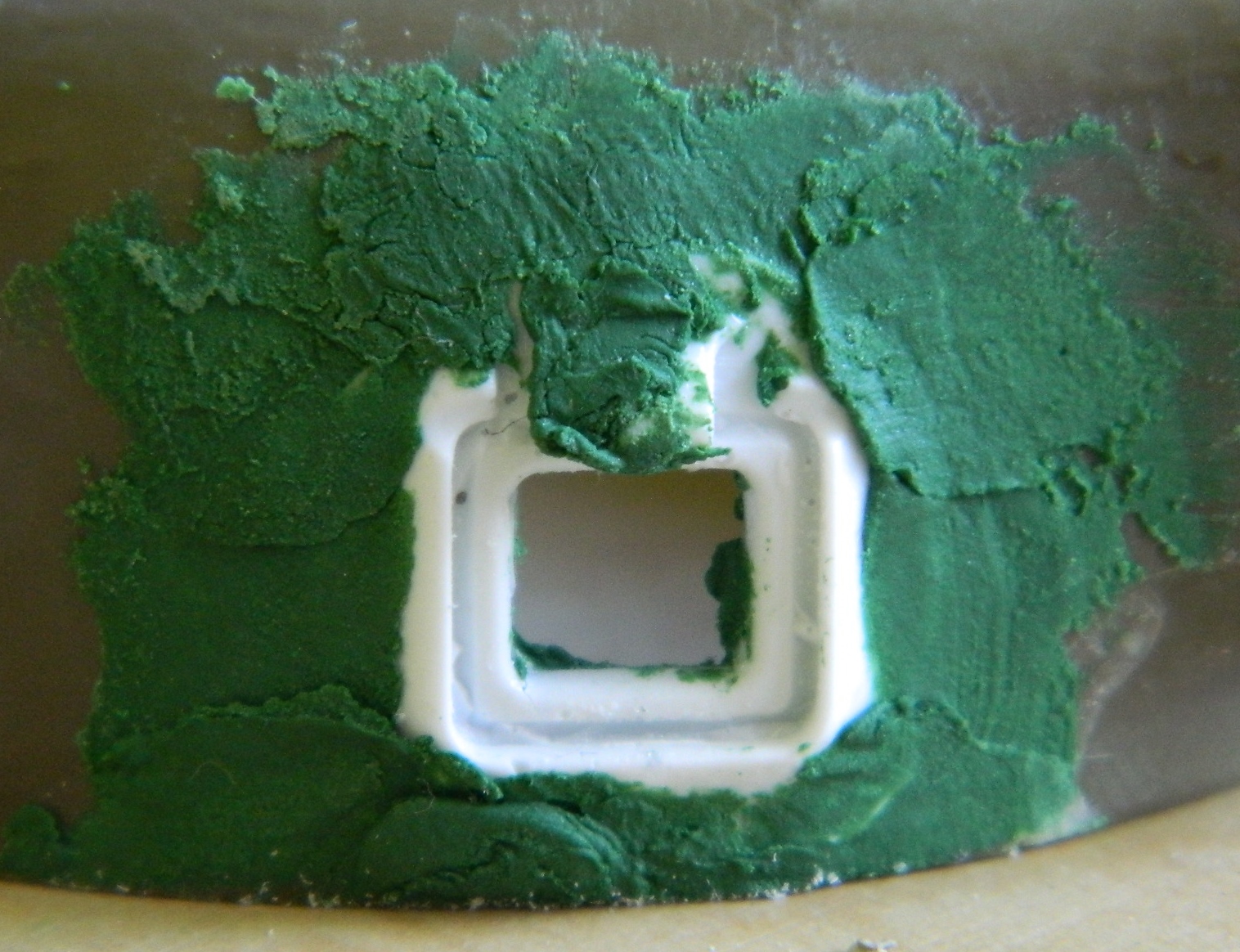
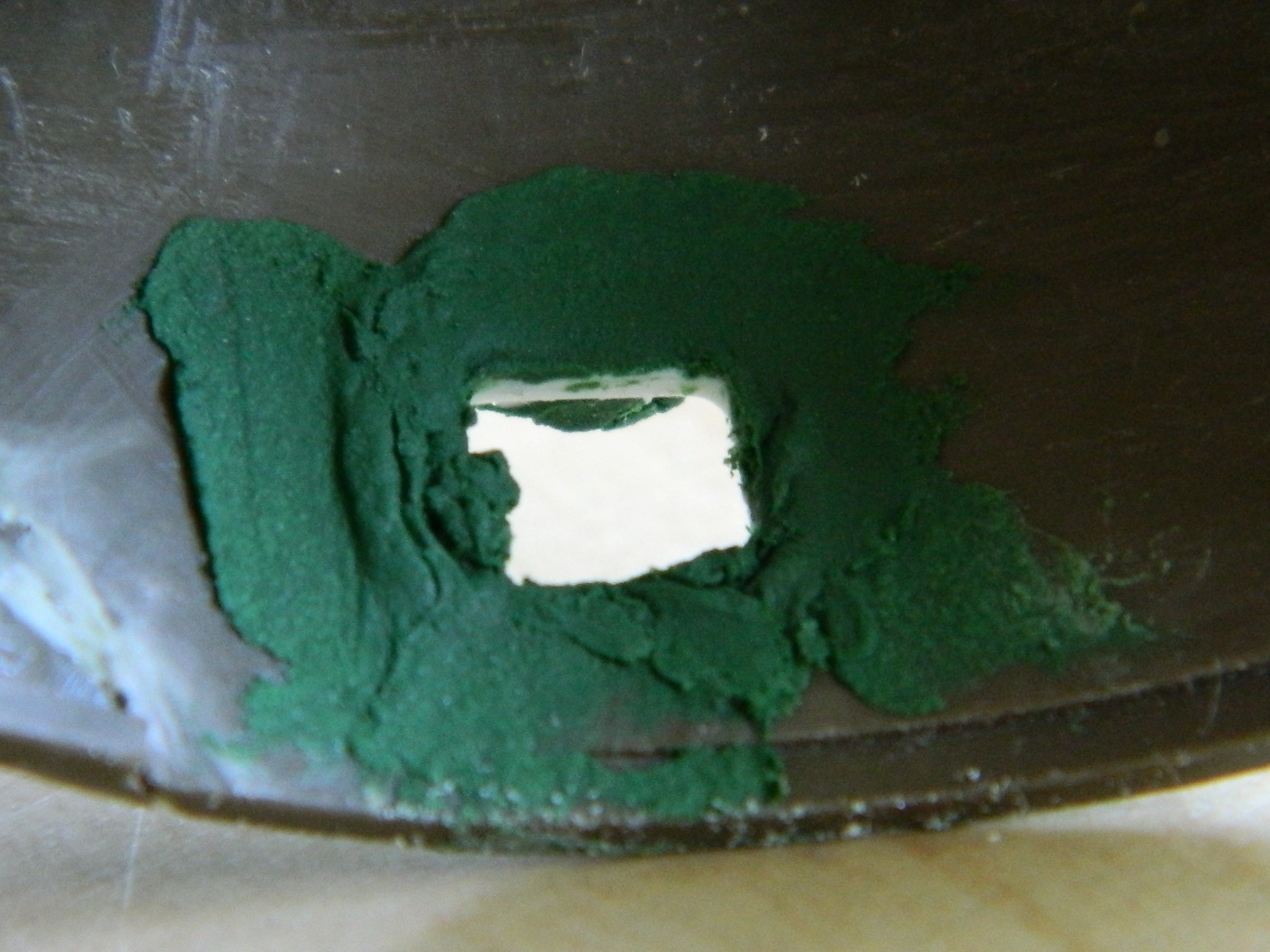
I set that aside to let the putty cure and went back to the hull.
M4A3 (Tamiya) Build #13
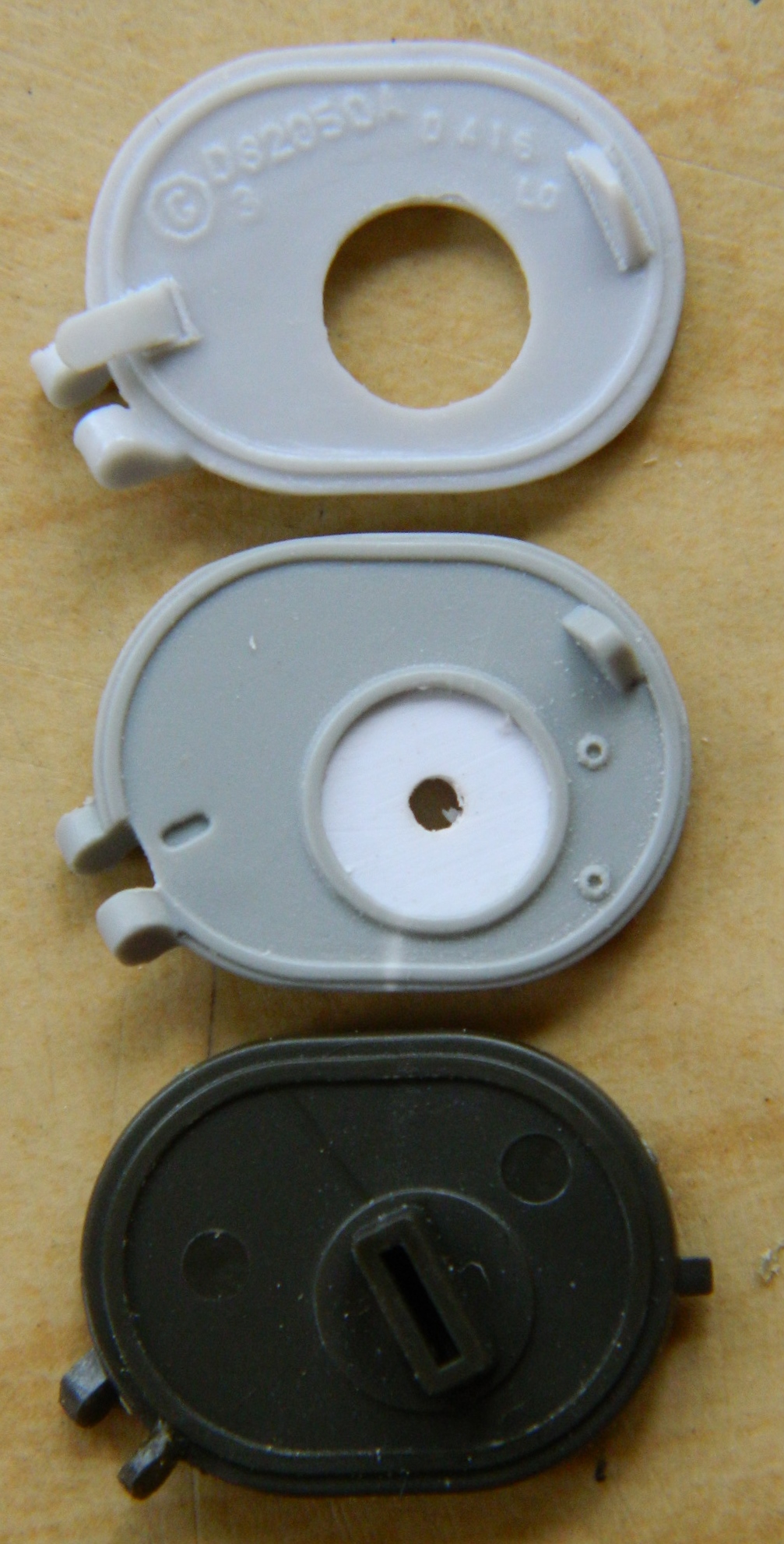
While cruising around online, one of the things I found was that New Tiger Models Direct makes nicely detailed hatches for the driver and co-driver. The bottom hatches are the kit-supplied part, the middle hatches are from another kit with better detail (and required me to resculpt the hinges on the bottom hull), and the top ones are the most accurate hatches I’ve found for the large-hatch Sherman courtesy of NTMD:

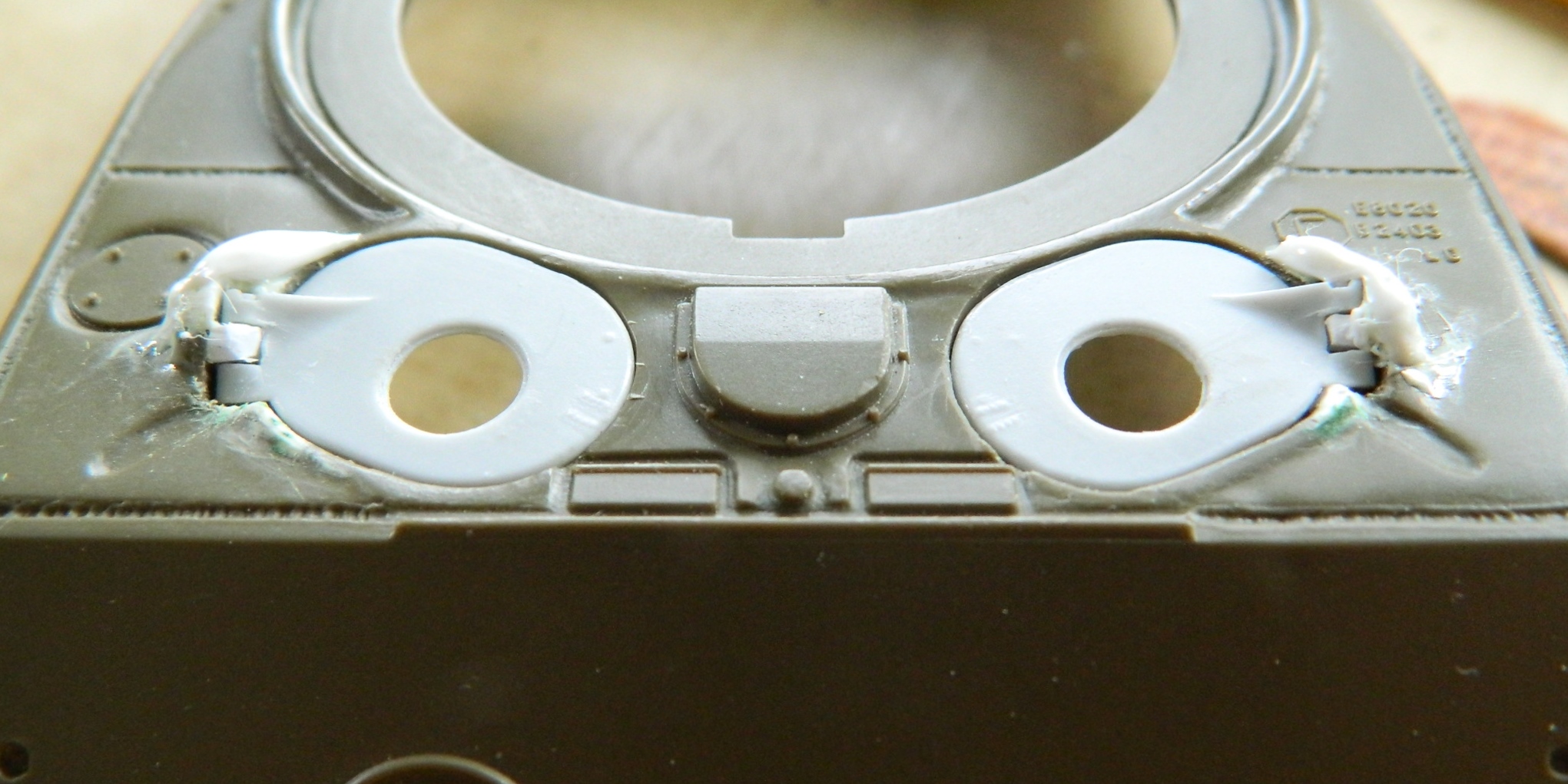
Of course, that means I had to resculpt the hinges on the hull again:
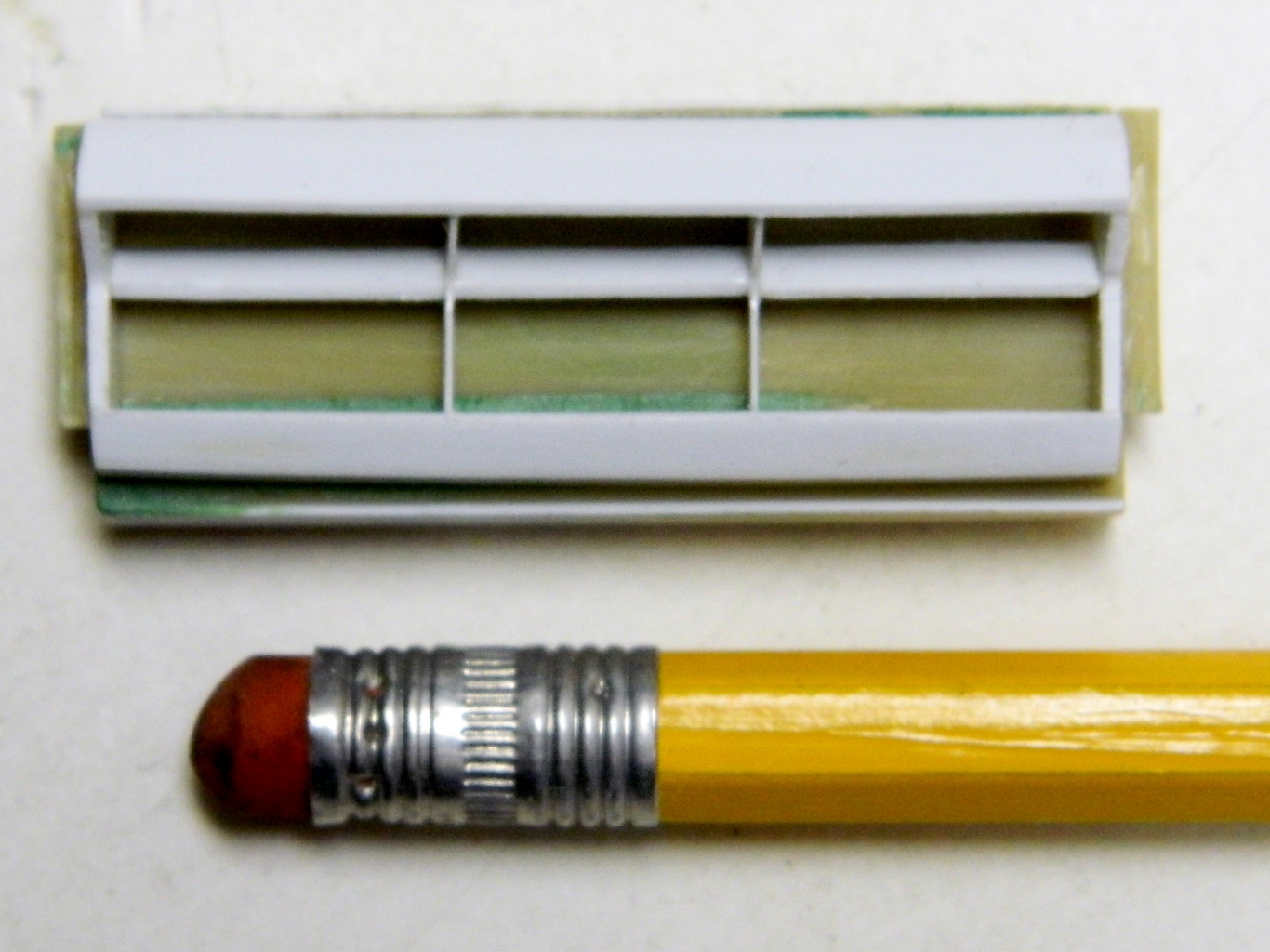
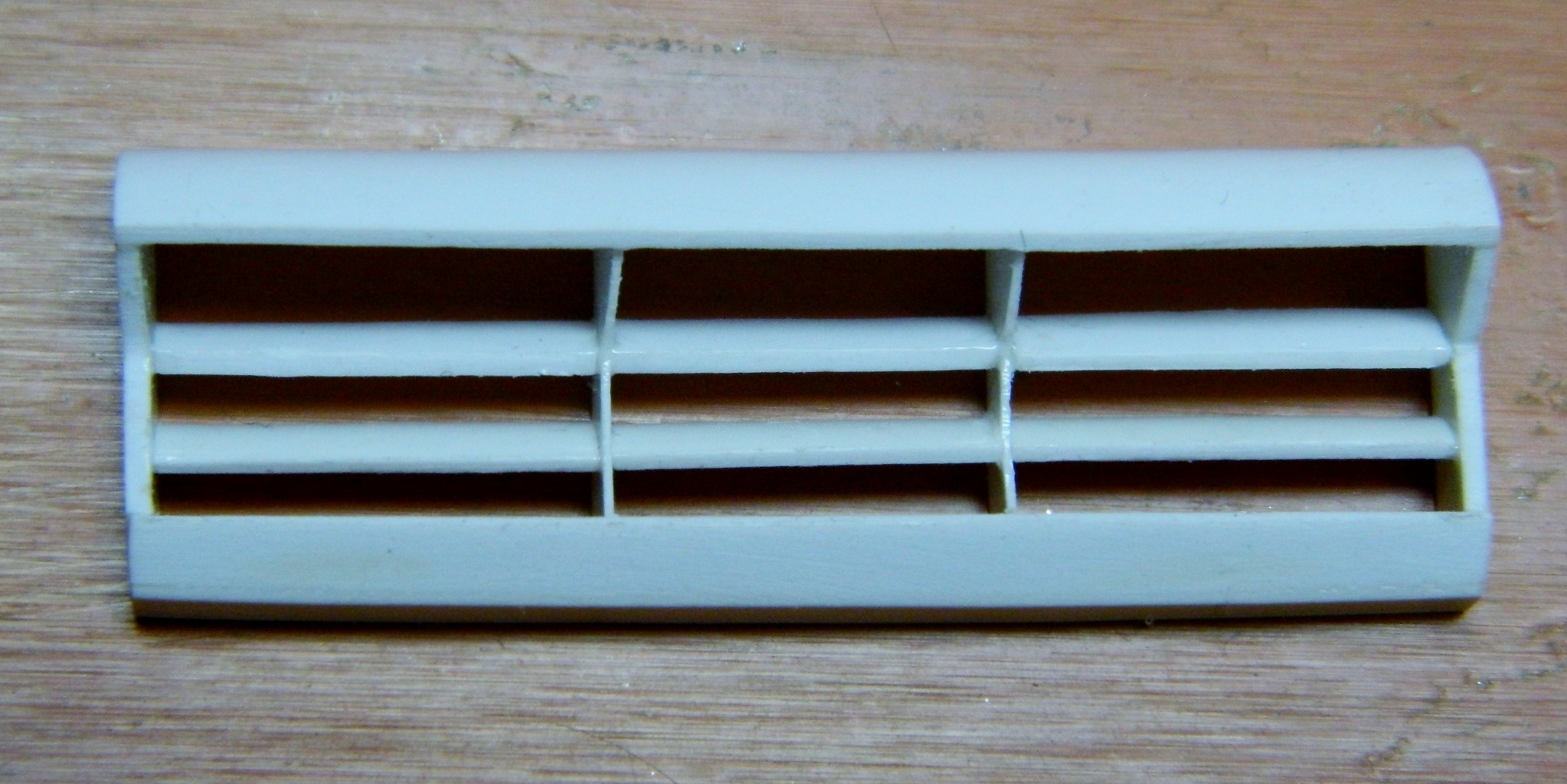
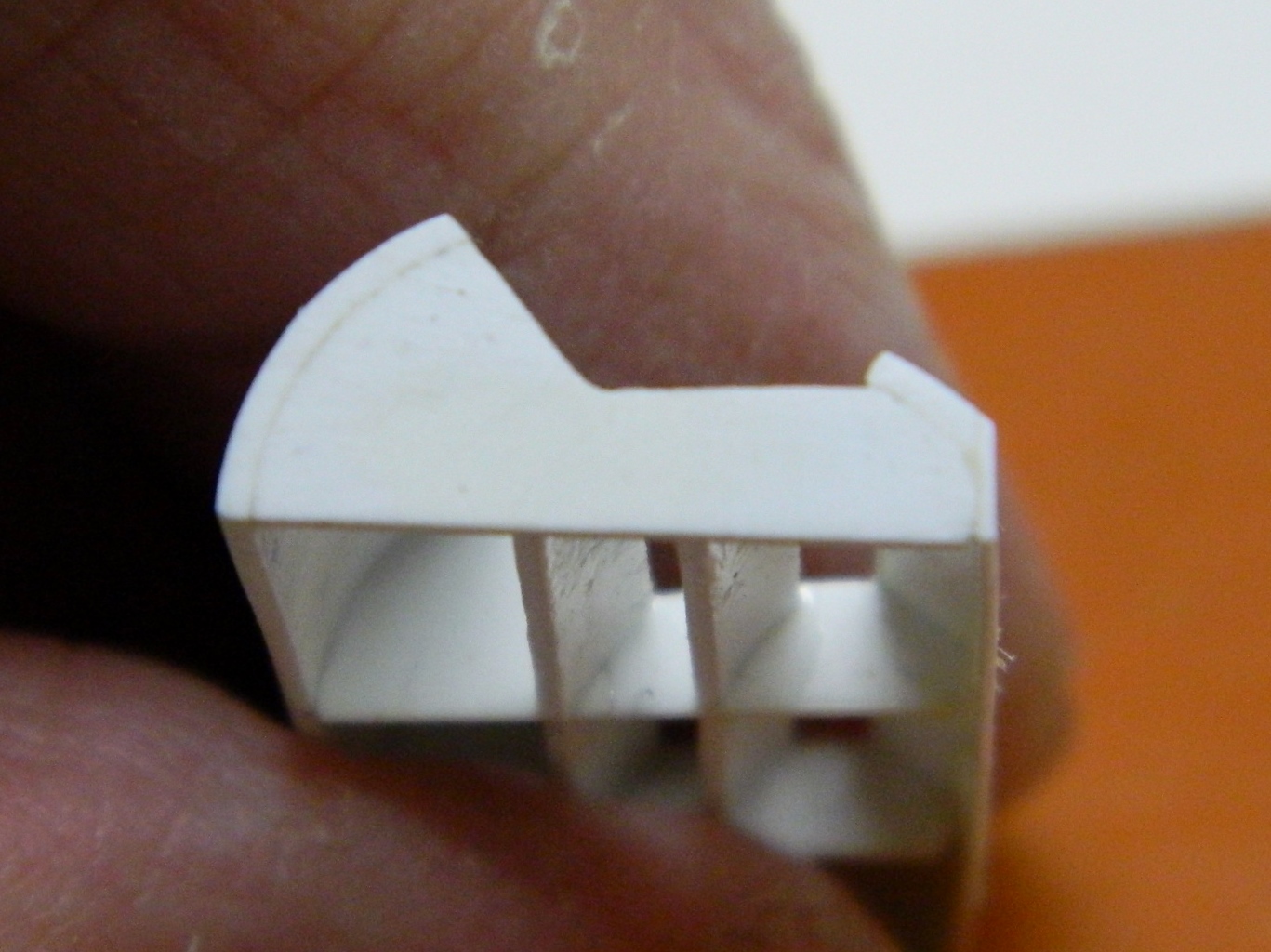
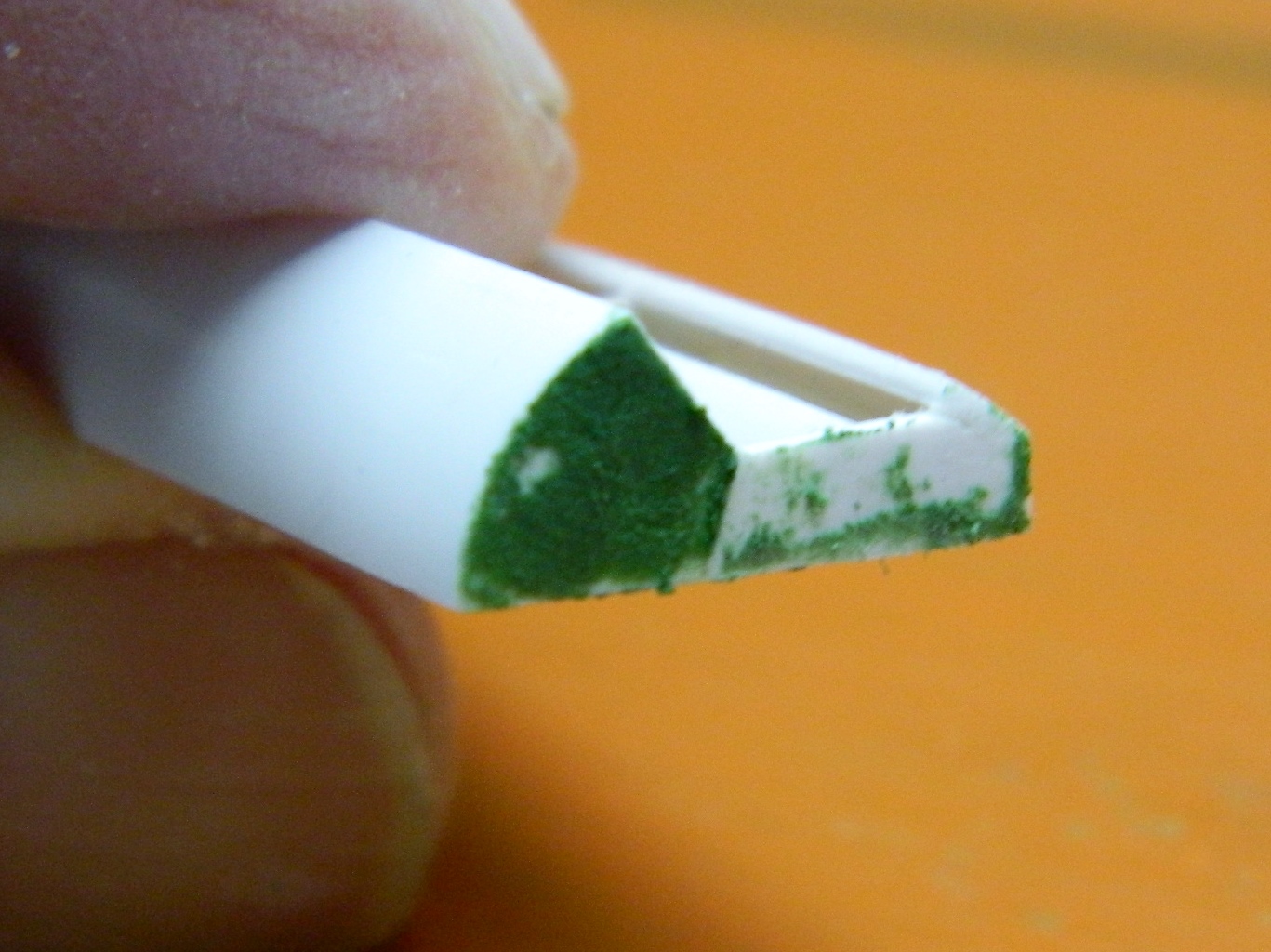
This is the external cap for the vent blower shown on an actual Sherman. It was discovered early on that the crew needed fresh air because carbon monoxide and the gases created by the 75mm’s breech opening after being fired weren’t very good for the efficiency of the crew (clearly in those days, “health” wasn’t very high on the list of Things to Fix):

This is how the kit has that modeled; solid with the bend of the top too far forward:
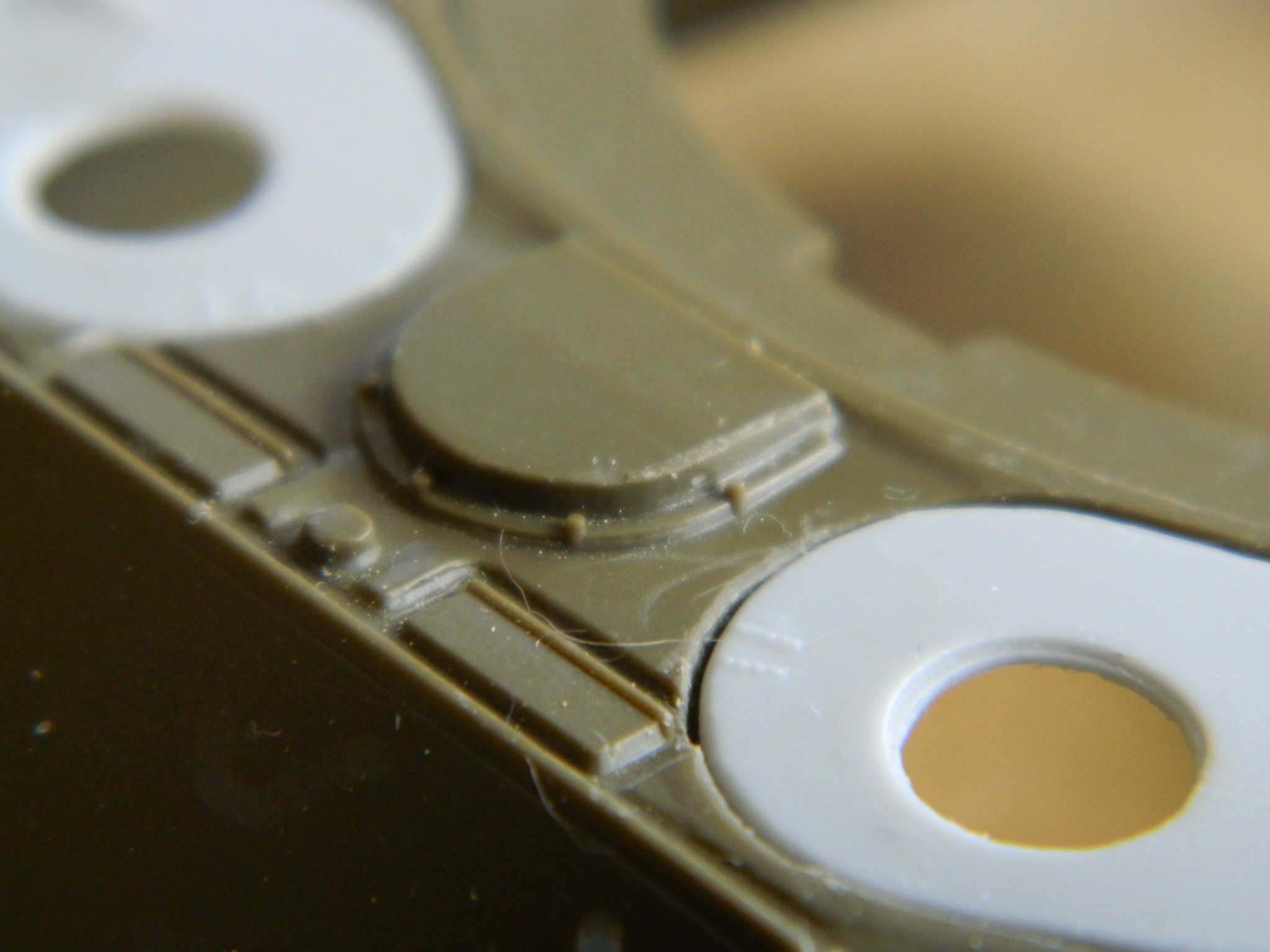
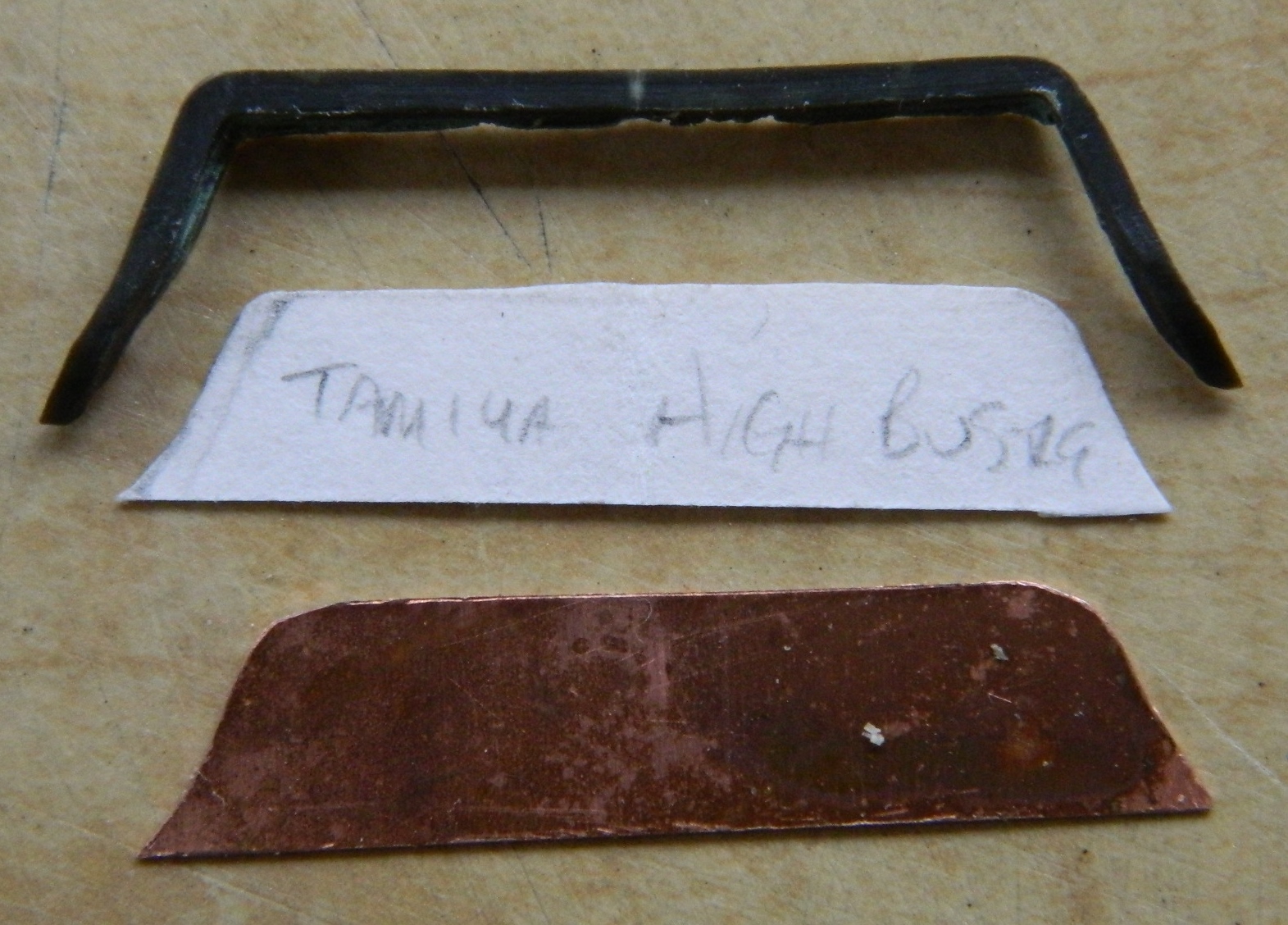
Once again I used .010 brass shim stock to make the replacement. I fumbled around trying to make a usable pattern to transfer the shape to the brass before realizing that this is one good reason I have an extra kit. I cut the section out of that kit and then trimmed it down:

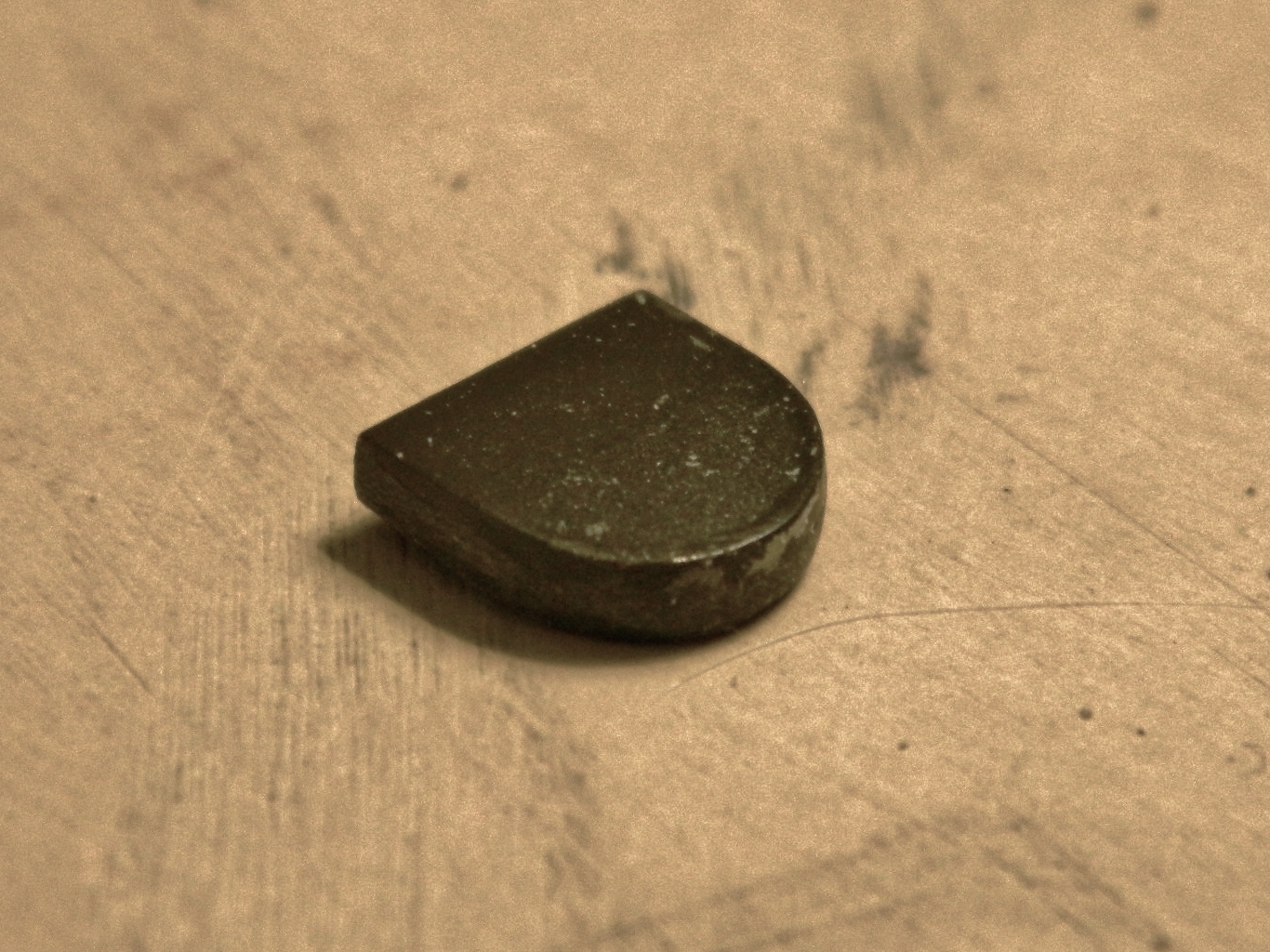
That made creating the pattern as simple as tracing:

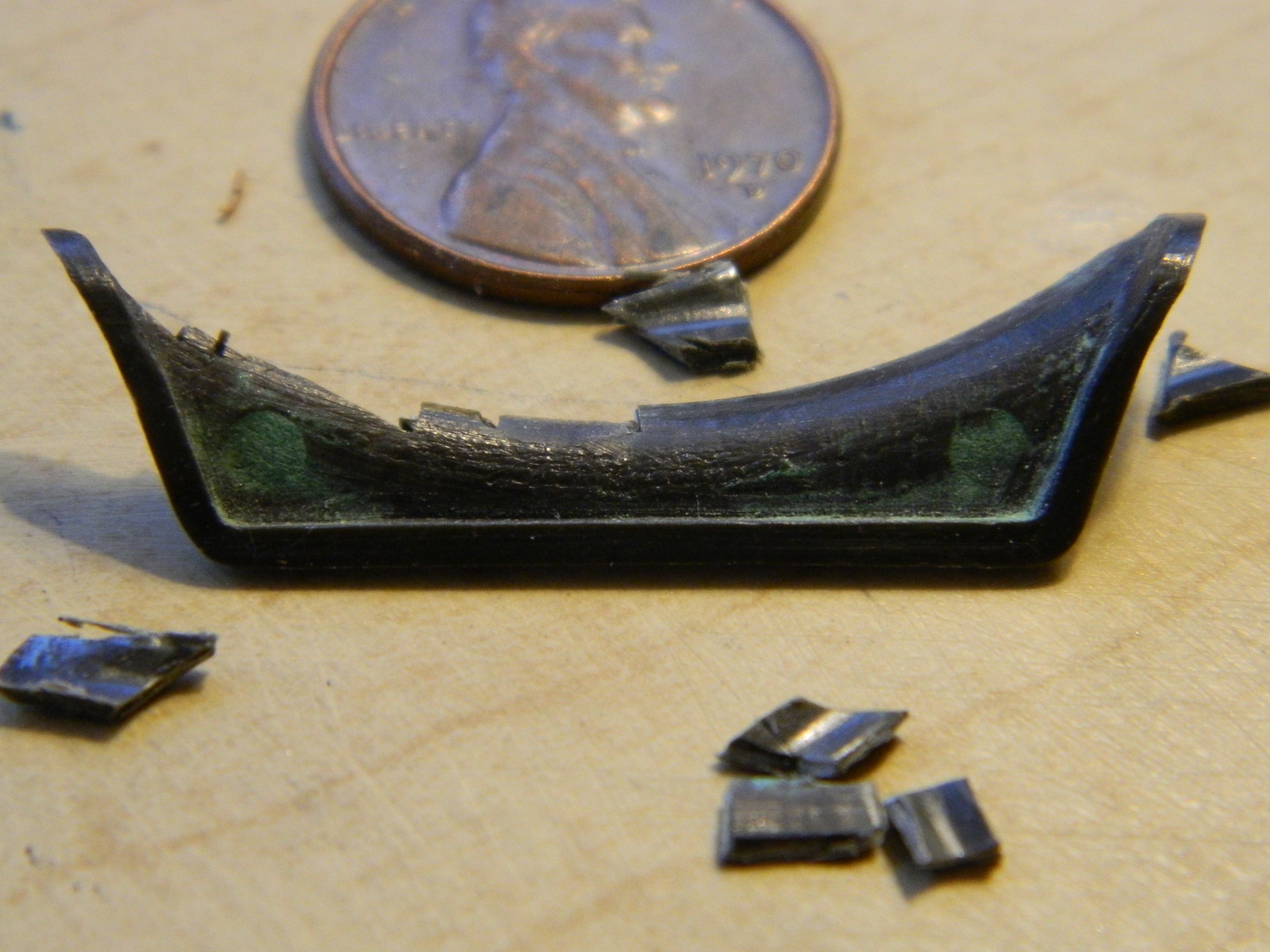
I tried a few ways of making the new part but each of them had their own problems:

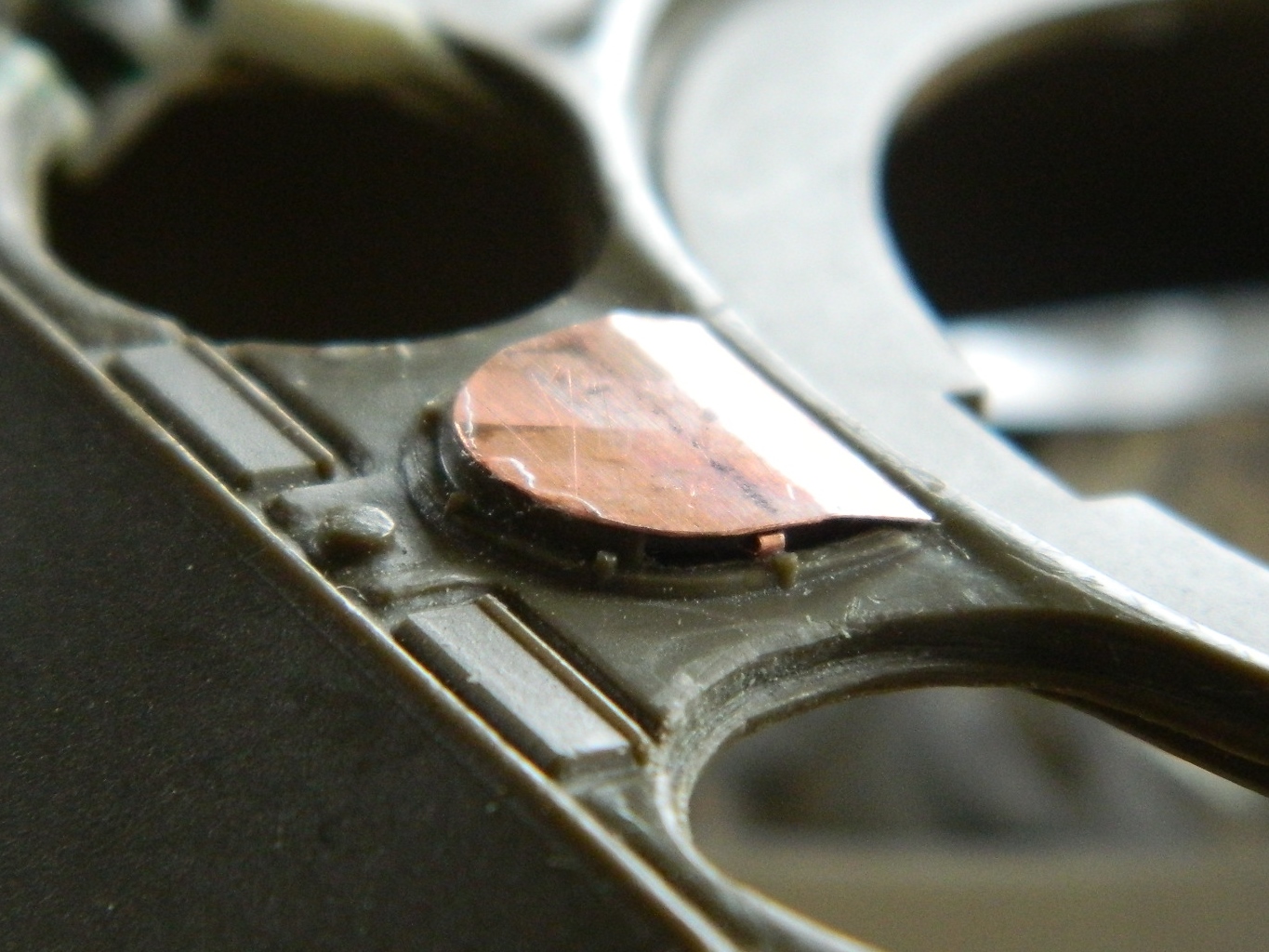
Then I looked more closely at the reference photo. The legs that hold this sheet metal cap up were actually under the cap, so okay…I’ll do it that way:

Before I could dry-fit the new part to check fit, I had to remove plastic from the hull and then I plugged the hole with sheet styrene:

Fit checked out well and I glued it into place:
Before I went further with detailing the hull, I needed to make a vent blower assembly that was fitted between the hatches and under that brass cap I just made. However, I knew I was going to be using that blower assembly again (an M4A3E8), I wanted to be able to replicate it. For that I was going to need to be able to make a mold from the original (the “master”) and be able to pour resin into that mold. That was an entirely different direction and task, so while I was researching how to go about all that (see under “What the Hell Does That Mean” the topic, “Degassing – What it is and Why Do I Need it?”), I decided I’d work on the turret.
M4A4 (Tamiya) Build #9
And now the driver’s controls are all trimmed and glued. I added copper wire to run from the floor to the linkages (on the actual Sherman, the rods near the floor attached to the steering levers):
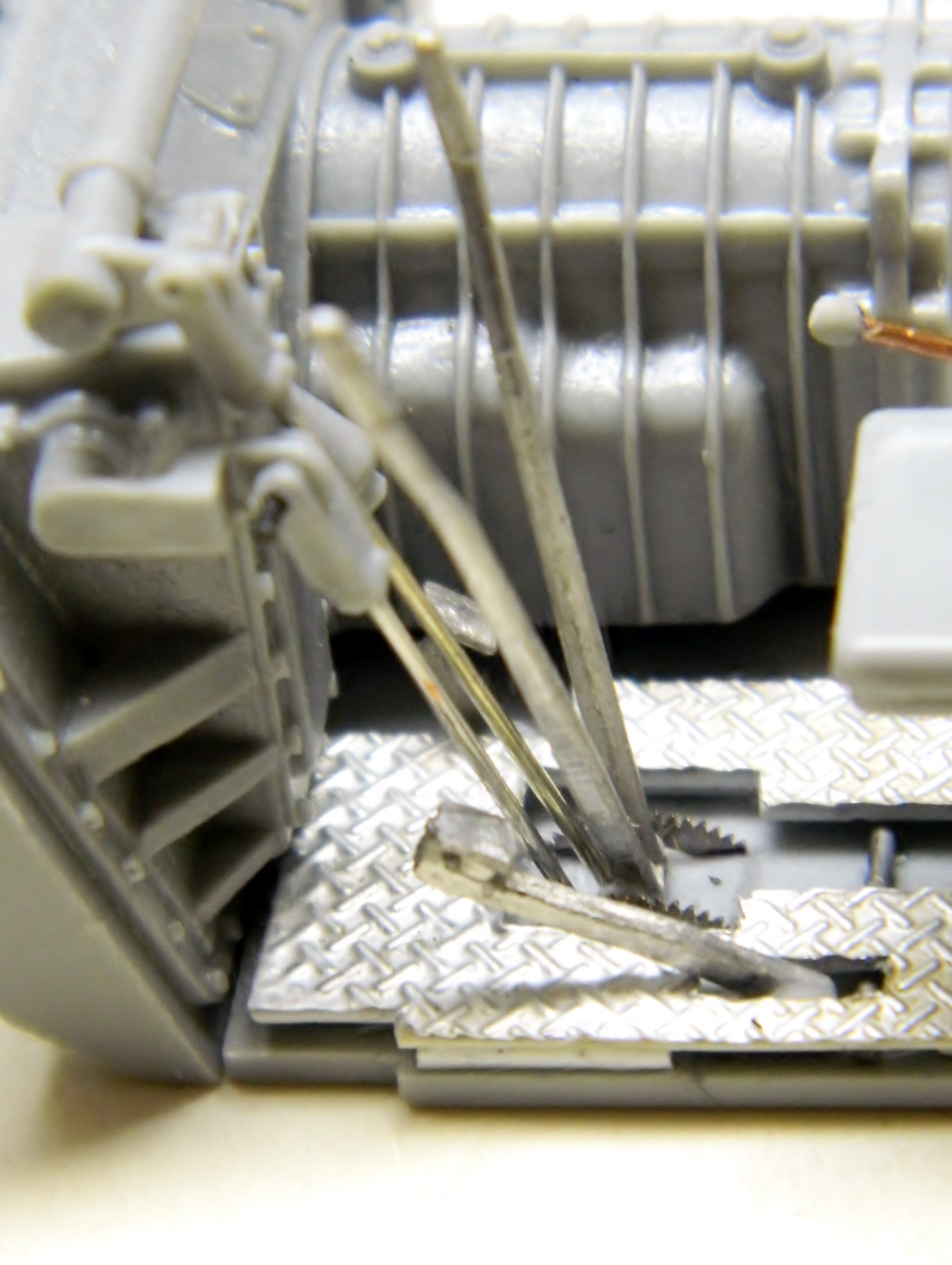
In the photo below, the kit hatch is on the left and fits, the one on the right is from a different kit. So of course I’m going to be using the hatch that doesn’t fit because it offers better details:
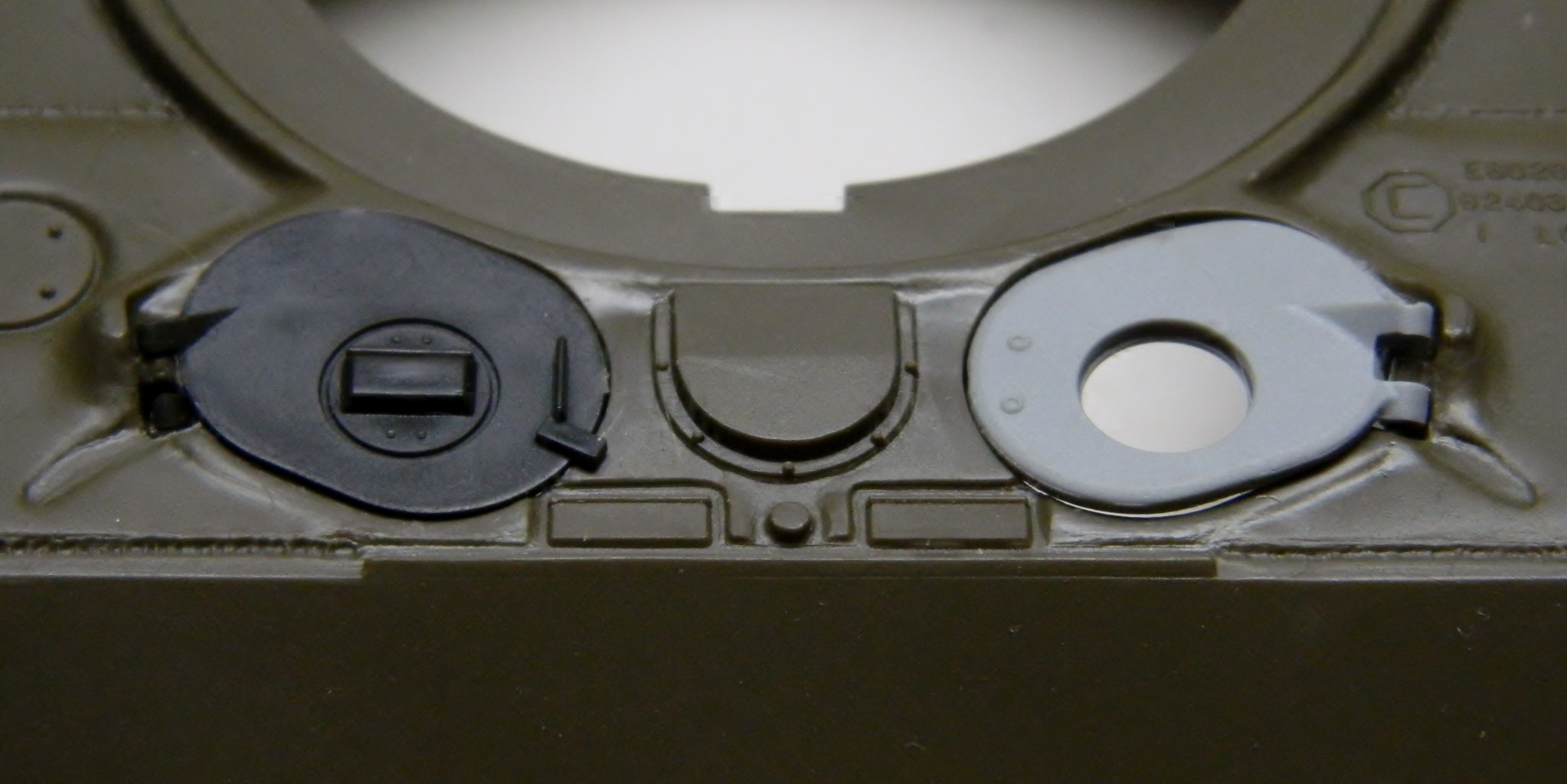
To make these hatches fit required reworking the hinges on the hull top, as you can see if you compare the hinge at left, using the kit hatch, with the hinge at right:
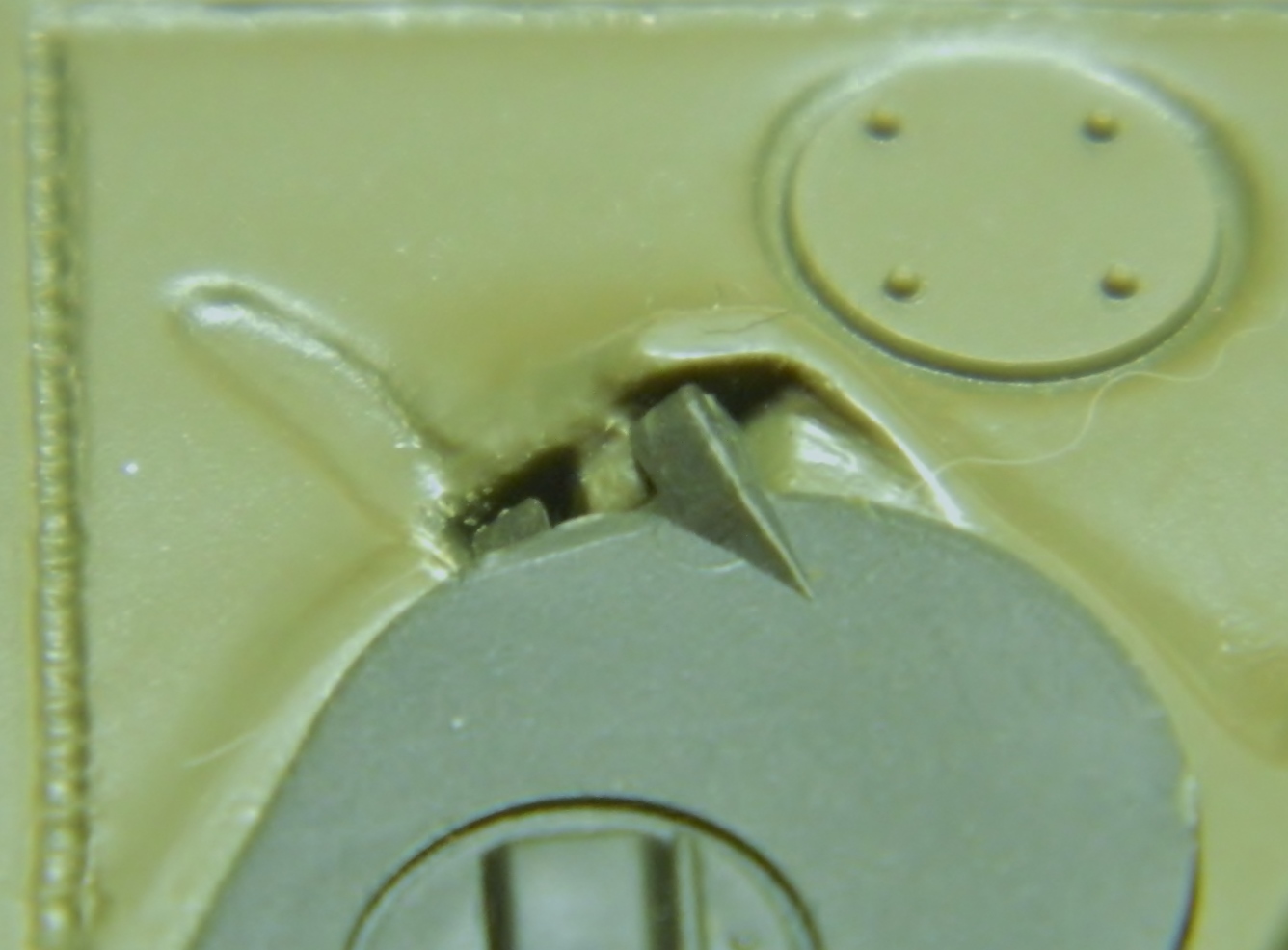
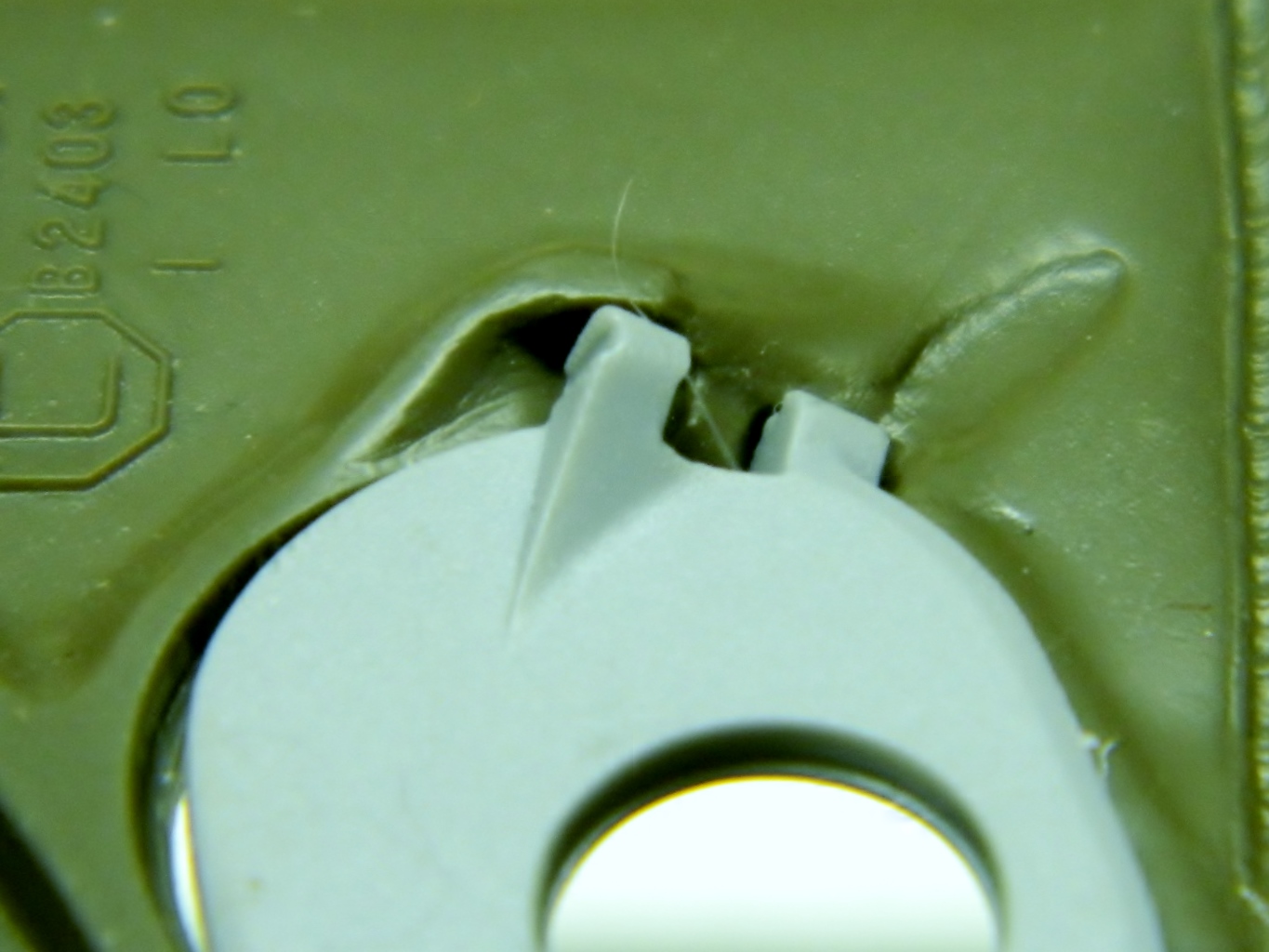
That starts by cutting away the kit’s hinges, adding styrene bits, and my structural putty:

The one on the right is done, now to finish the left:

The round holes in the hatches are where the periscopes’ mounts rotate, so I have to make those mounts. A piece of styrene chucked into my drill, turned to the proper diameter, and then filed/sanded to the correct thickness:

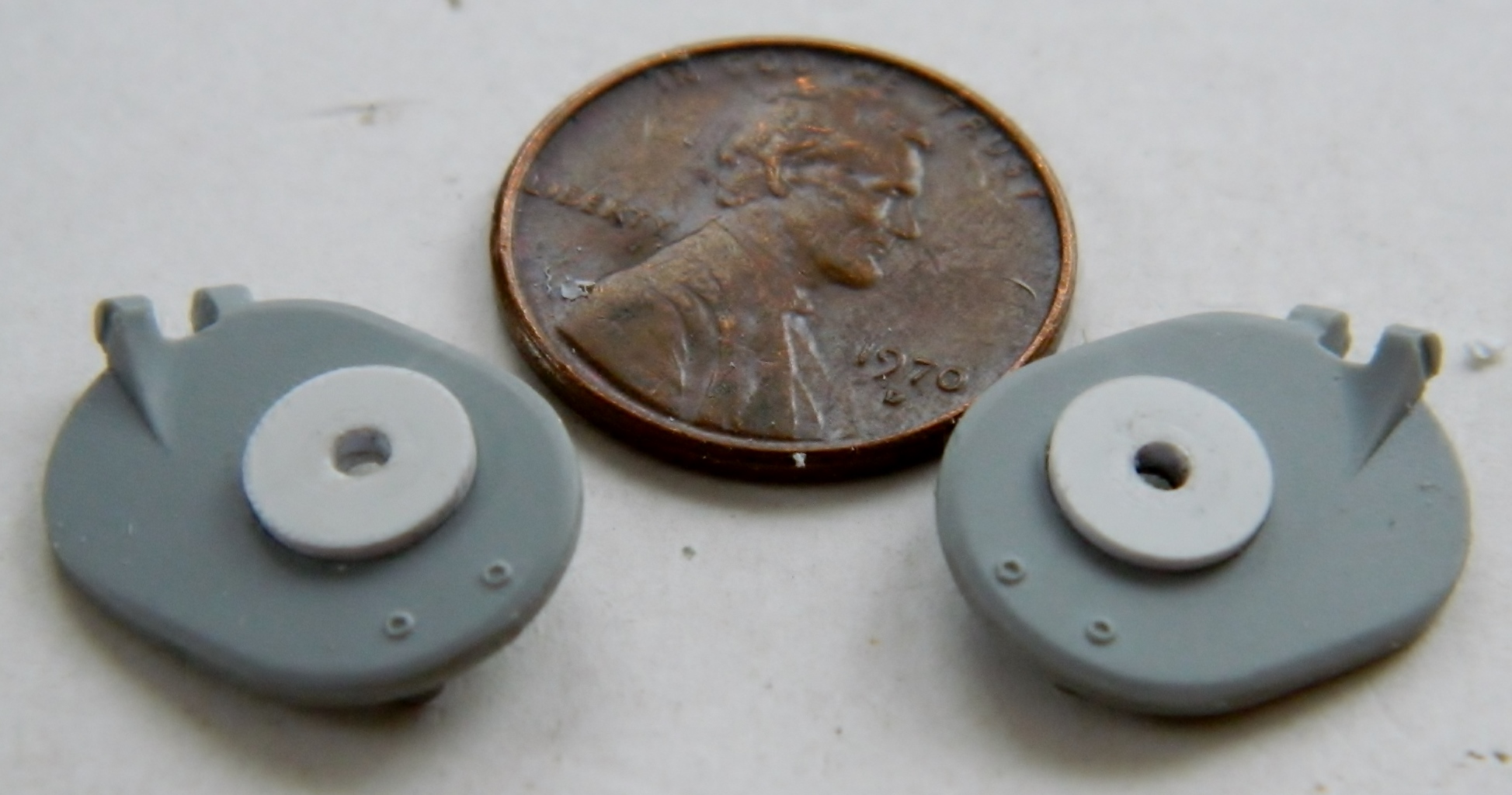

Feedback from Sherman crews in the field showed that the hatches for the driver and co-driver were too small and made un-assing the tank difficult if it got hit and/or started burning. When the hatches were redesigned to be larger, a couple of other design changes had to be made to accommodate the new hatches. One was changing the front glacis plate from a 60° angle to a 47° angle. The new glacis plate offered better protection (even though it was more vertical to incoming fire) because its design eliminated the protrusions of the hatch boxes (which had vertical faces) and was one piece, its face unbroken except for the bow machine gun. The new plate as also easier to produce because there was substantially less welding required to it.
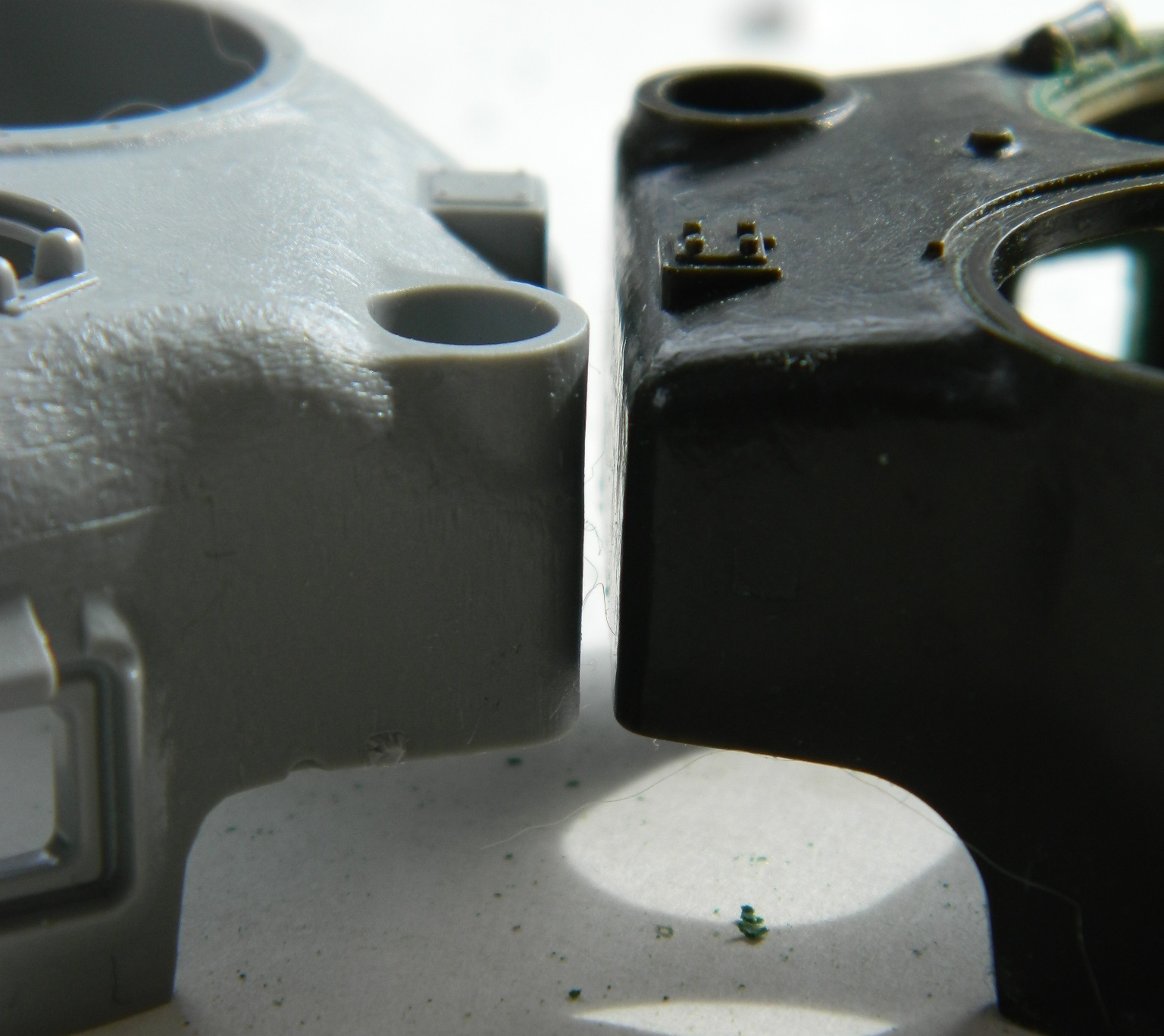
The other change necessitated by the new hatches was to the bustle (the rear extension) of the turret. The larger hatches were hinged so that they opened forward and the bustle needed to be higher for clearance to allow the hatches to open.
The low bustle on the left, and high bustle on the right. Note the angle of the top of the bustle:
The square opening on the left turret is the “pistol” port (and I have no idea why they were called that because that wasn’t the function of the port – its purpose was for the loader to toss empty brass from the 75mm out). Tamiya had no intention of this port being open and I do. If the turret on the left had been a high bustle turret I would have used that instead. So I decided to use the port. I briefly considered cutting the ports out and grafting the open port (and its detail) to the high bustle turret, but that would sacrifice a part I may want to use later on. Instead, I decided to take a mold of it and cast a copy:
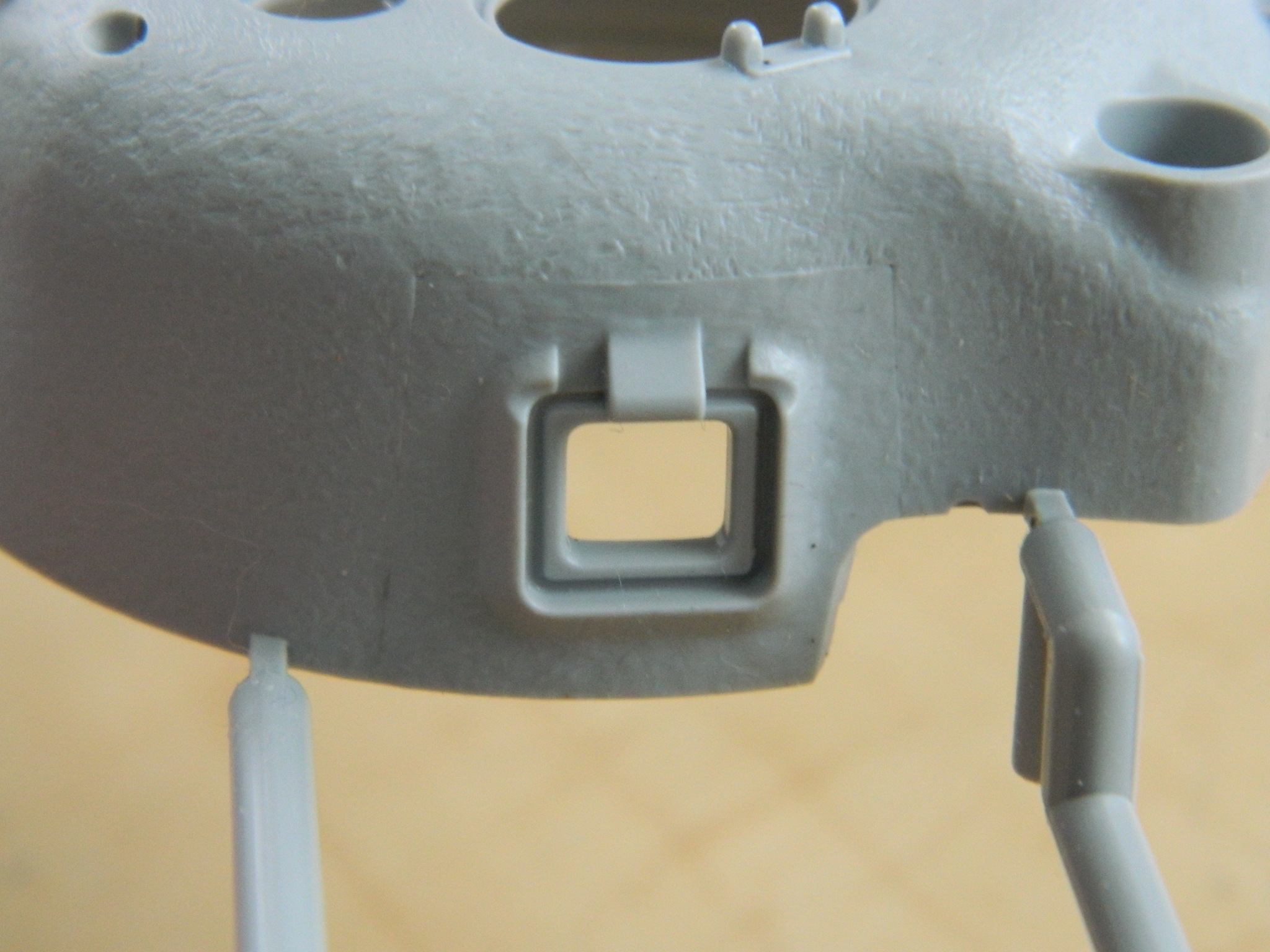
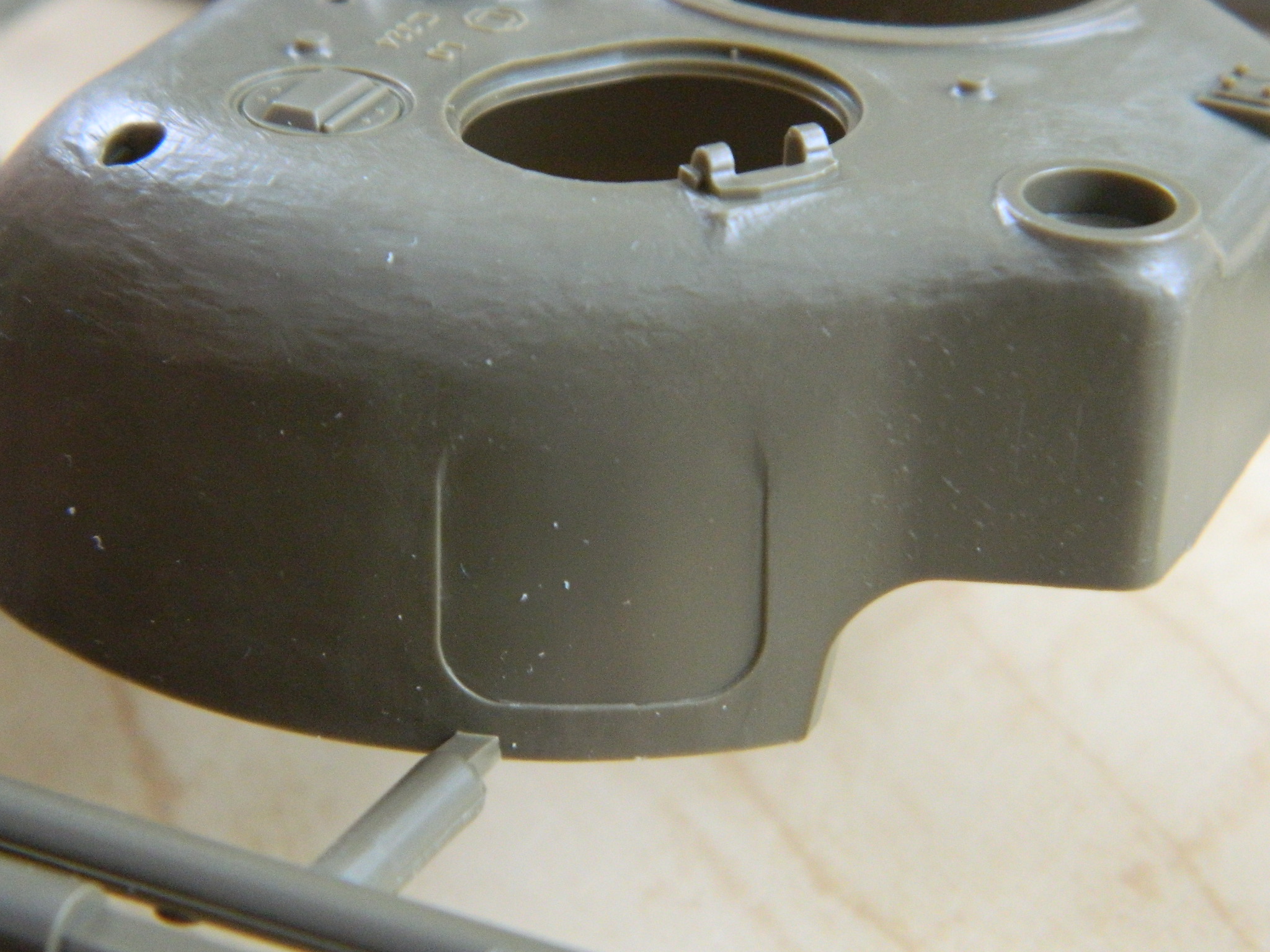
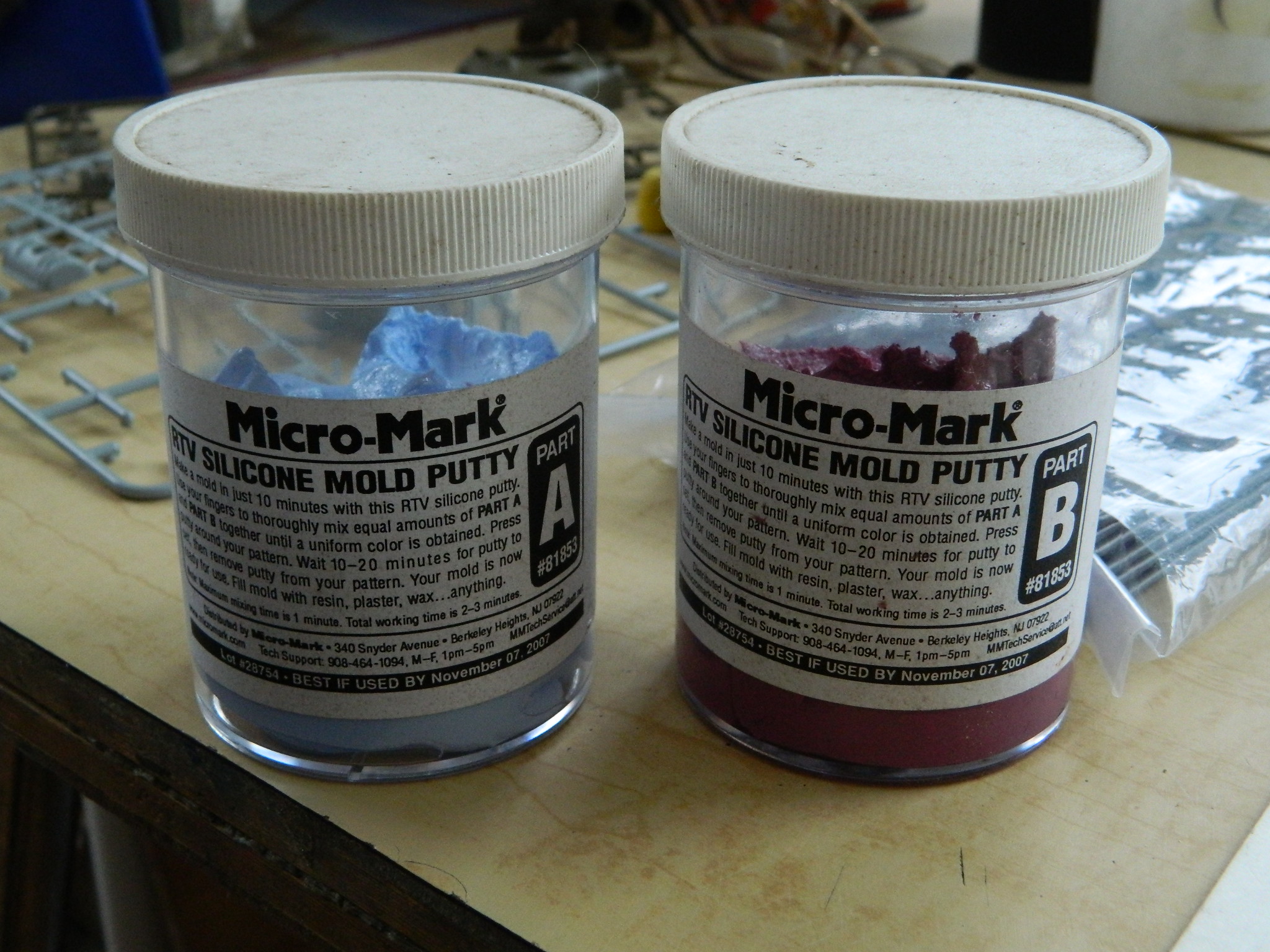
I used mold-making putty I have, combined the two parts, and took a mold of the gray turret’s port:
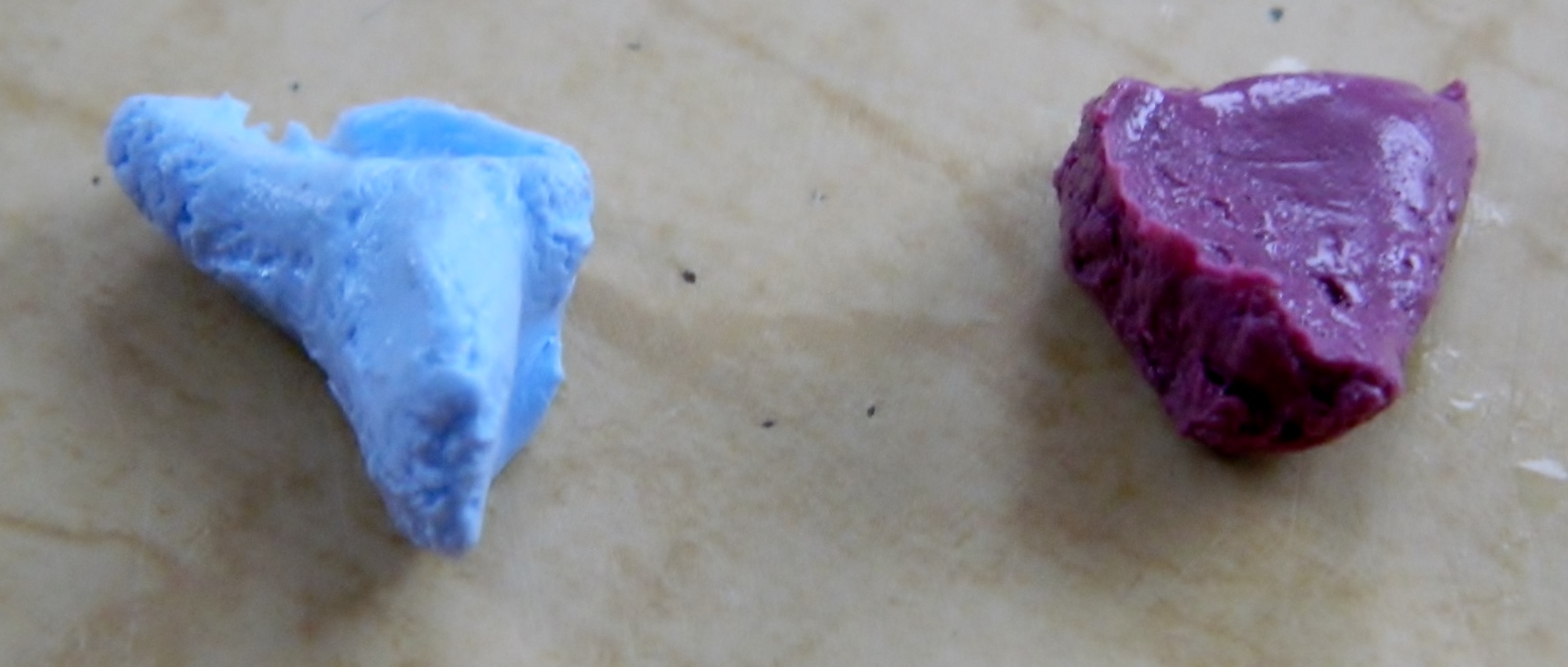
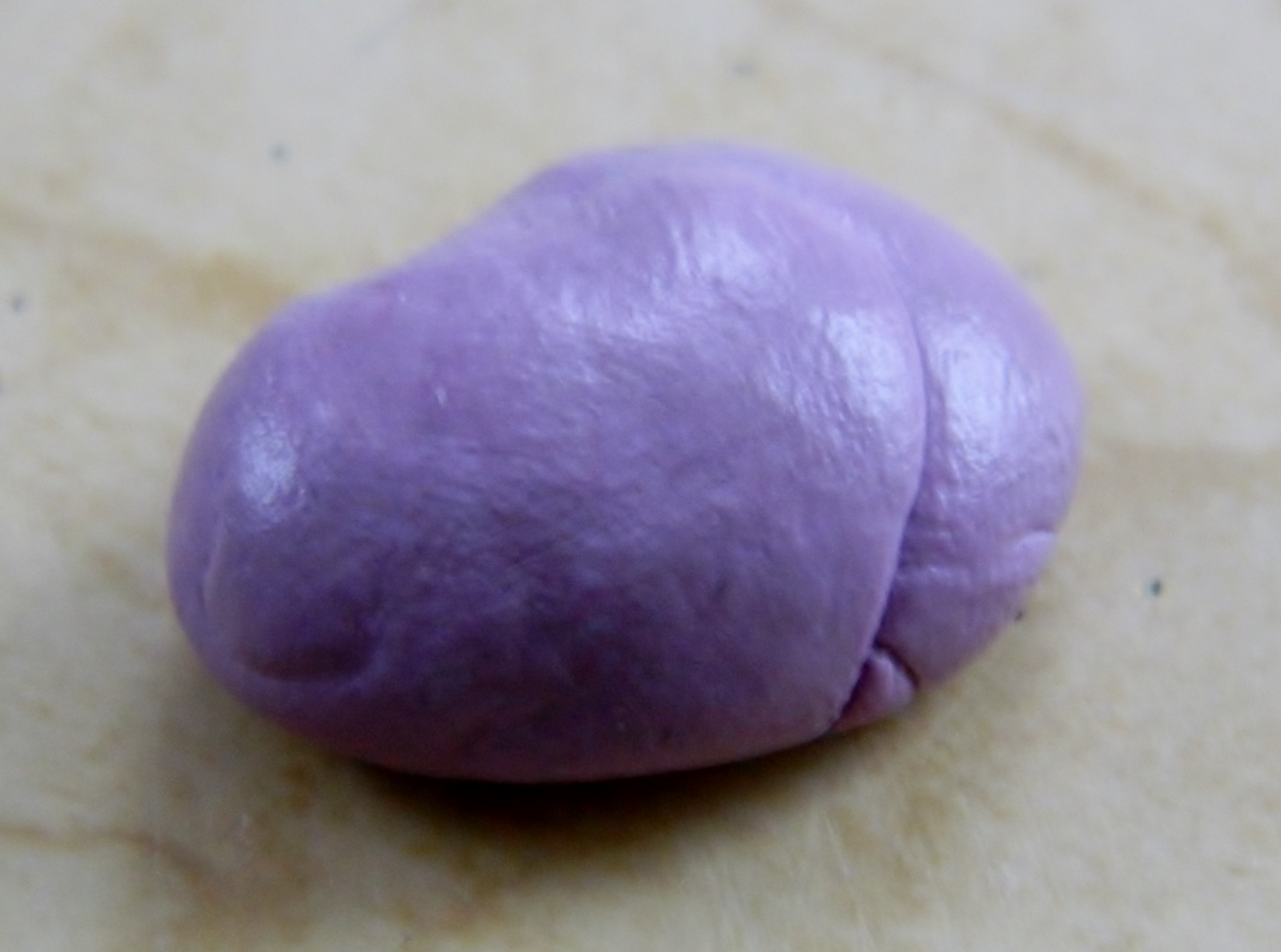
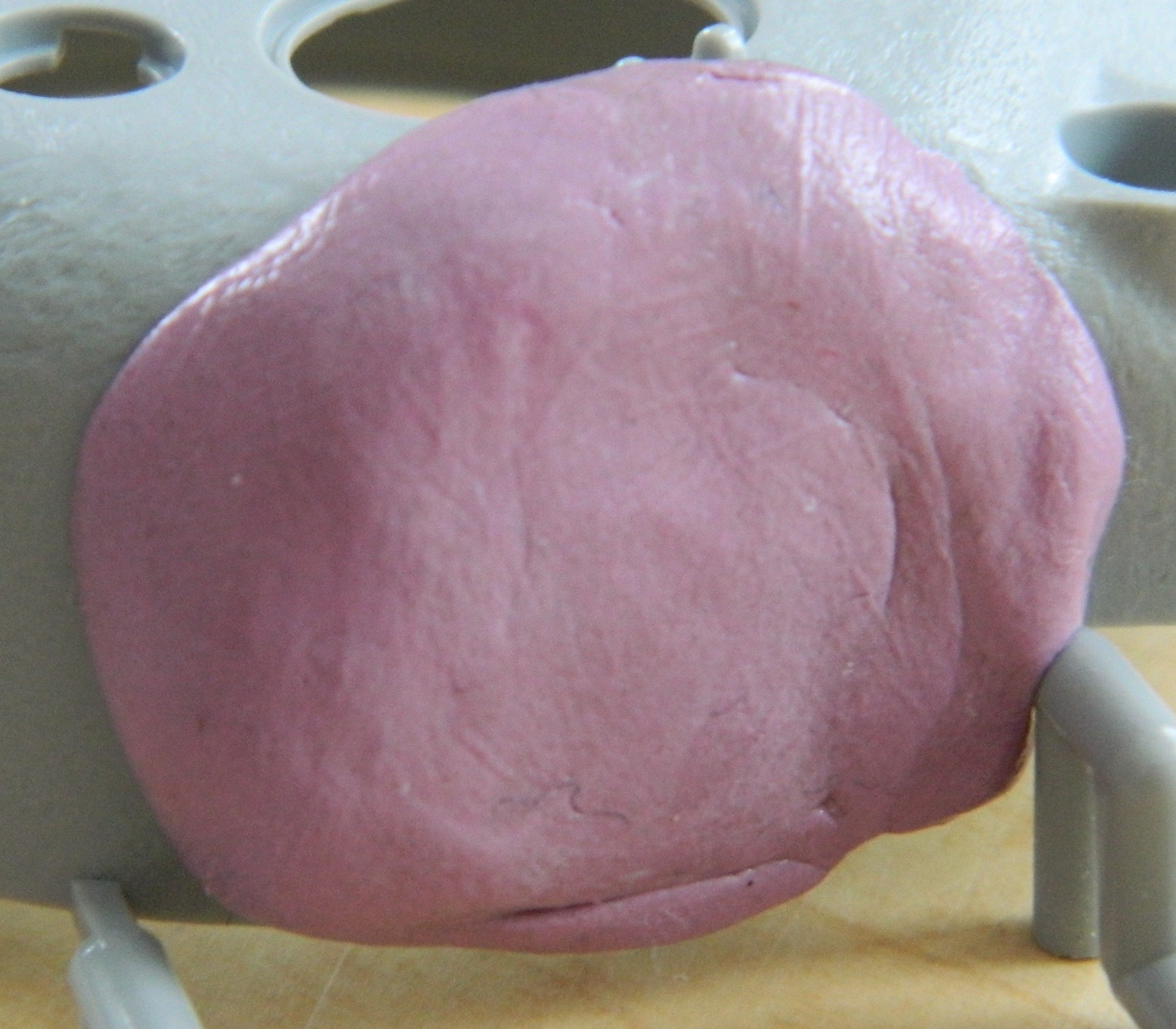
The next day after the molding putty cured, this is what I got which I then filled with my structural putty:
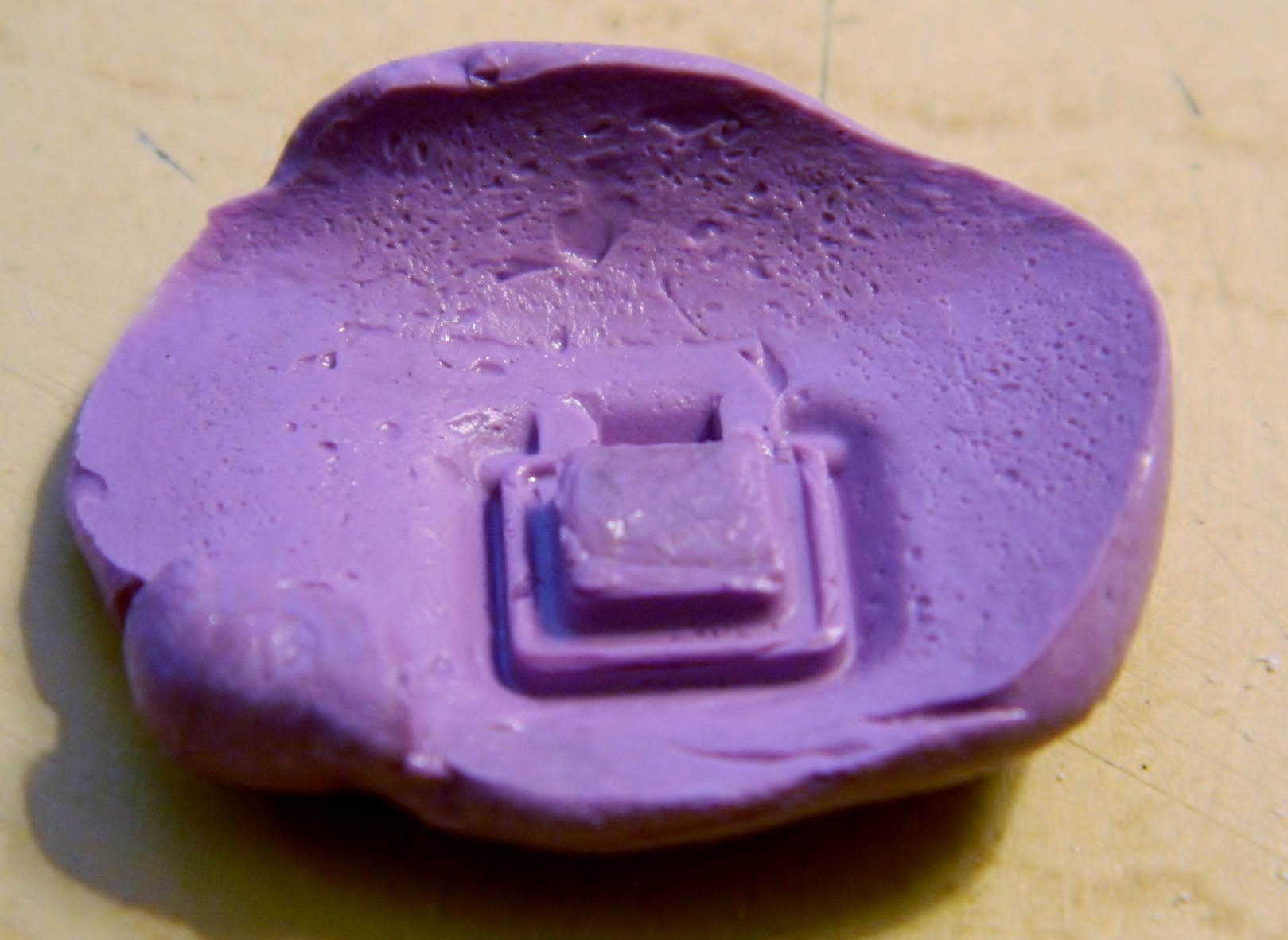

The next day I popped this out of the mold. In doing this, I discovered that if I move the putty around once it’s in place, it creates all these bubbles, but since this is a test, I didn’t much care:

Since this is an experiment, I used the spare turret from my mule and cut the hole for the port out, trimmed the back and edges of the molded piece, applied it, and puttied the edges:

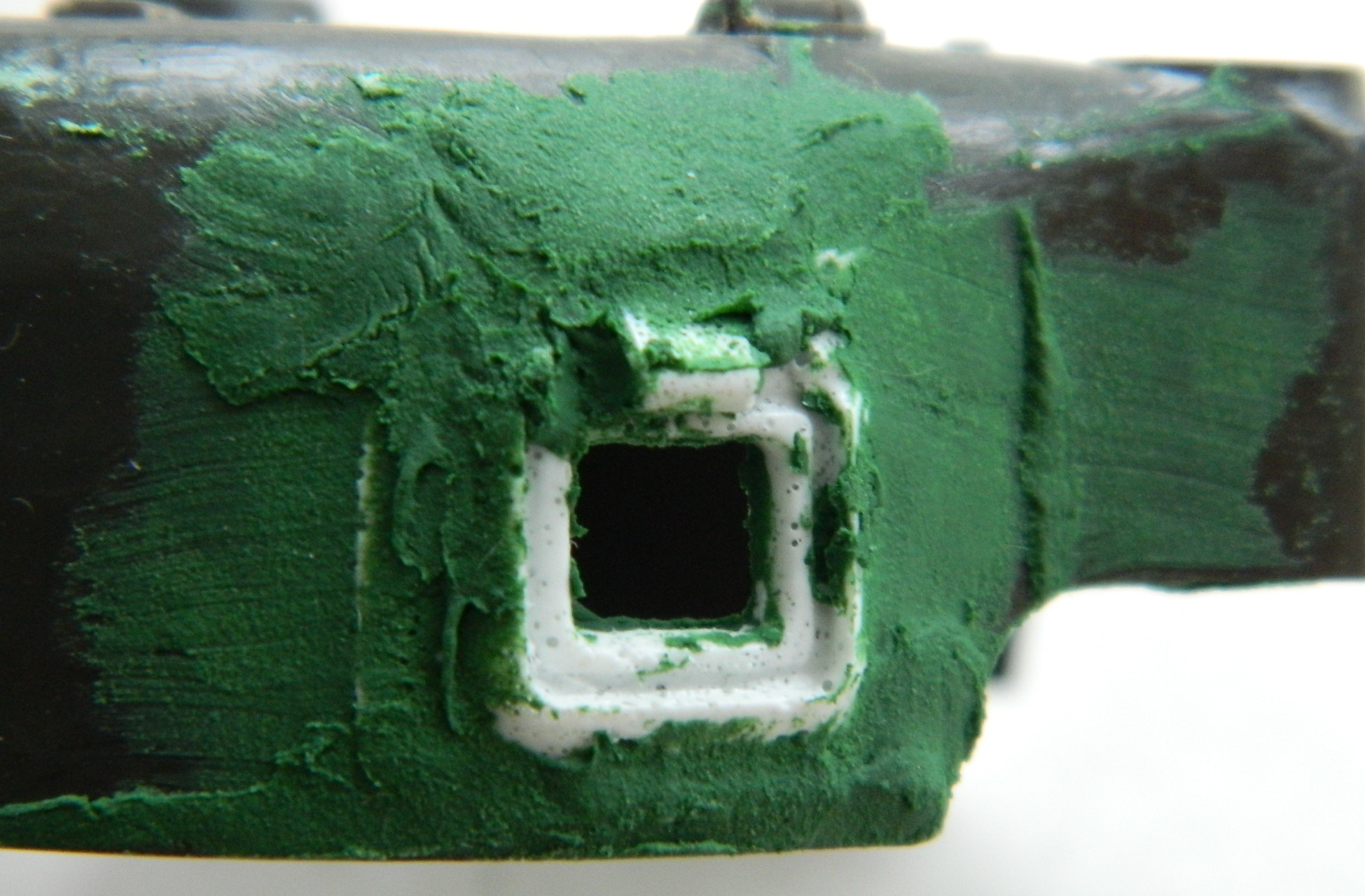

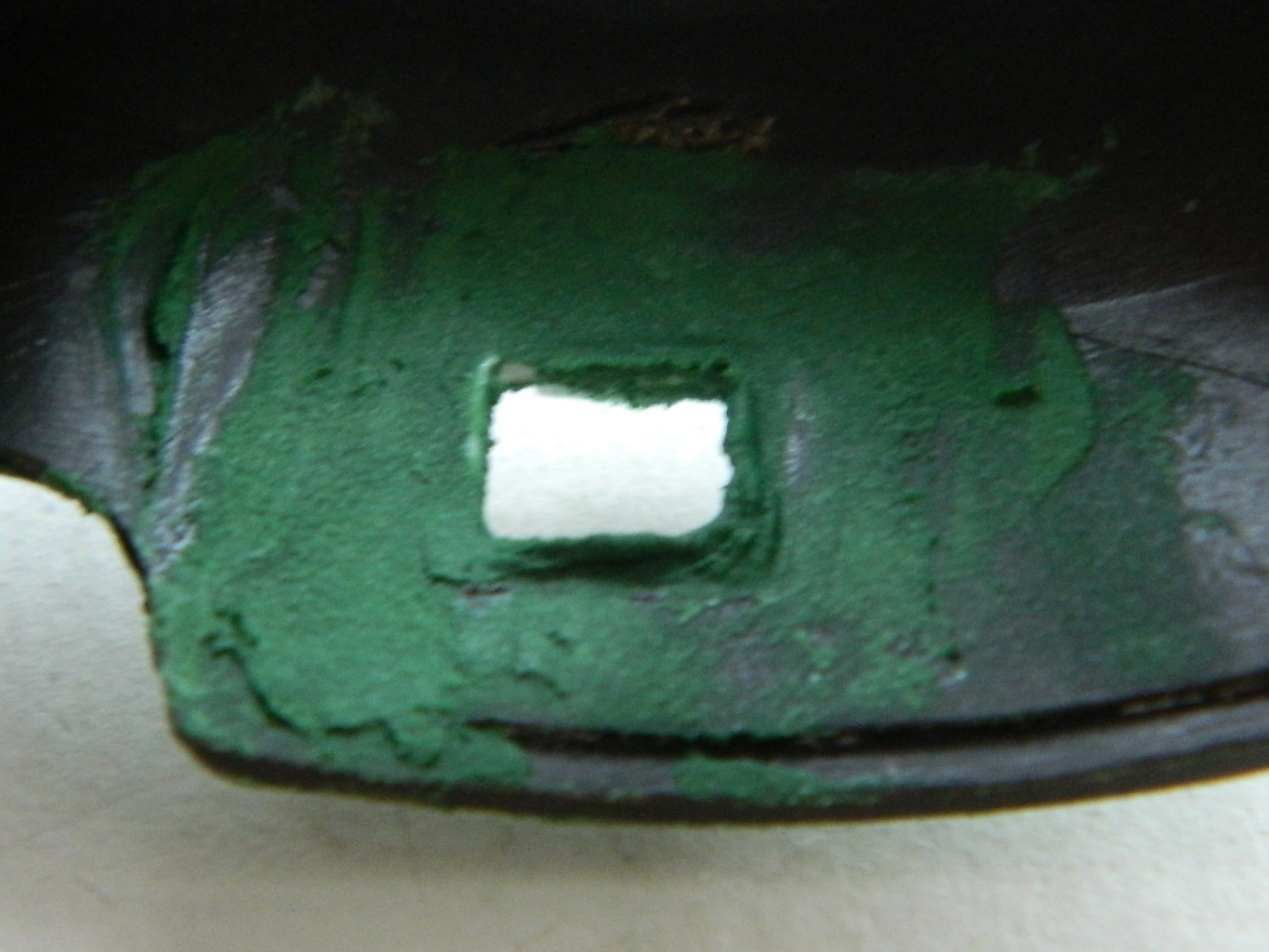
After letting the putty cure overnight, trimmed it, and was quite pleased with the results:
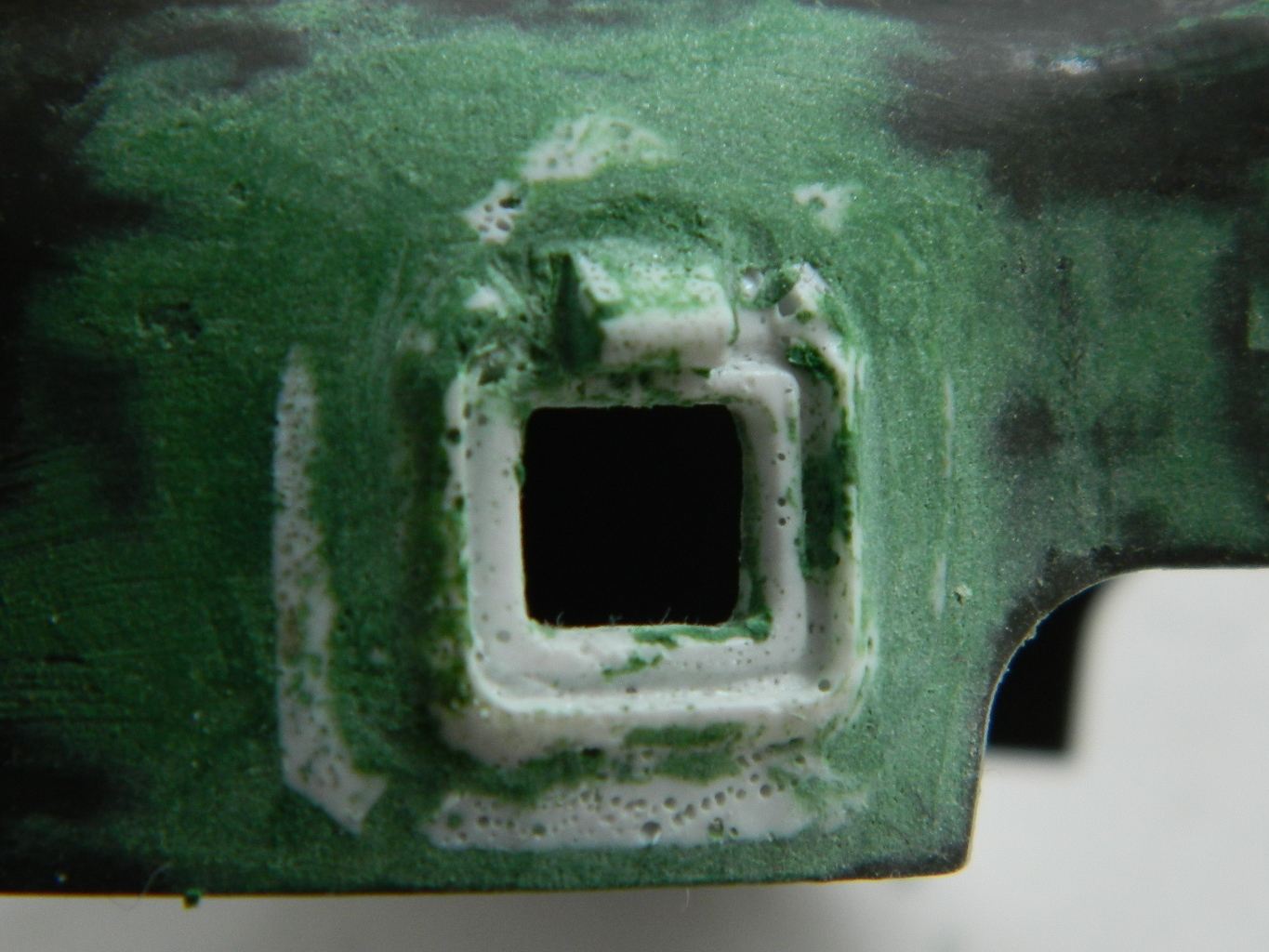
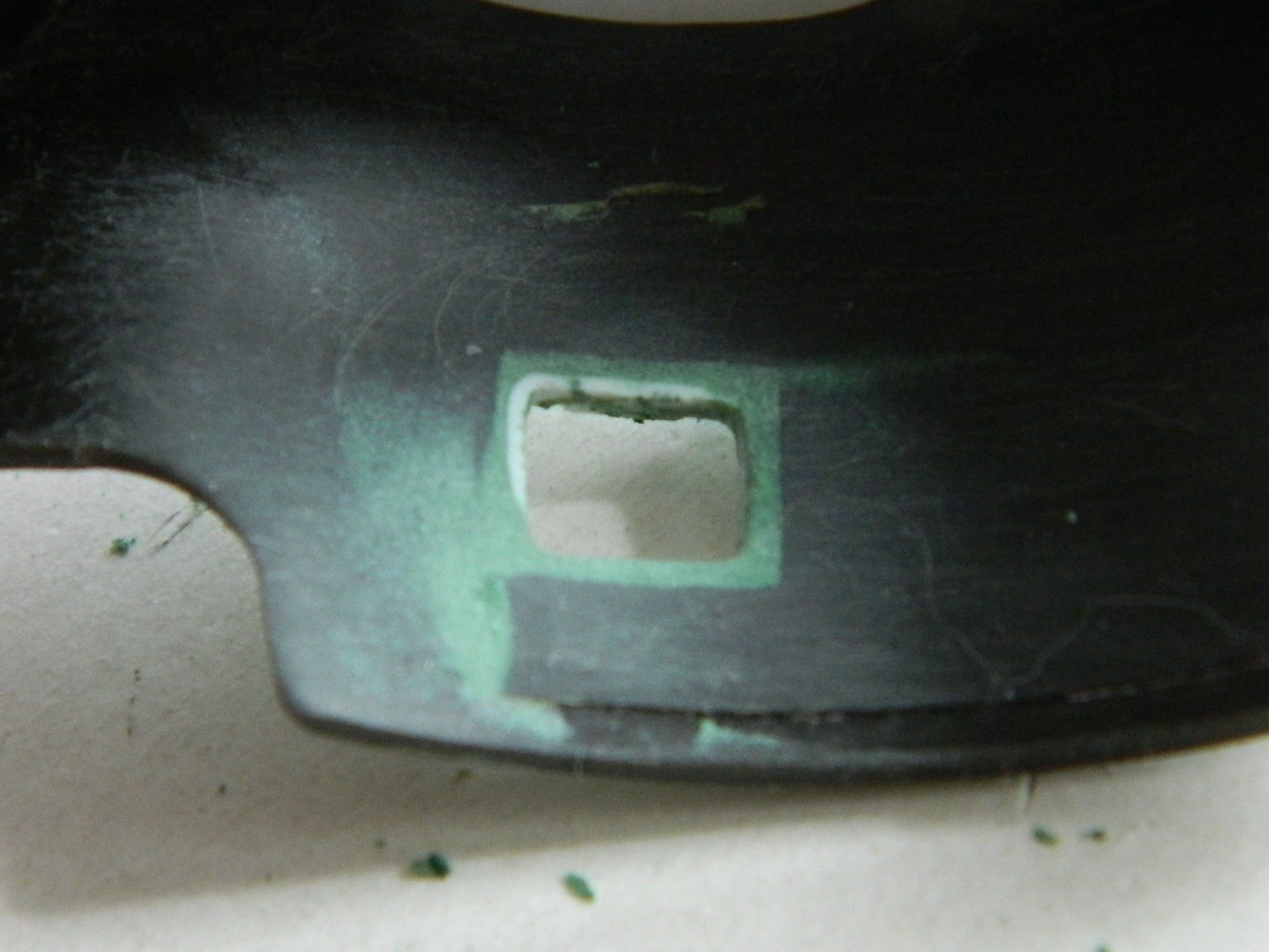
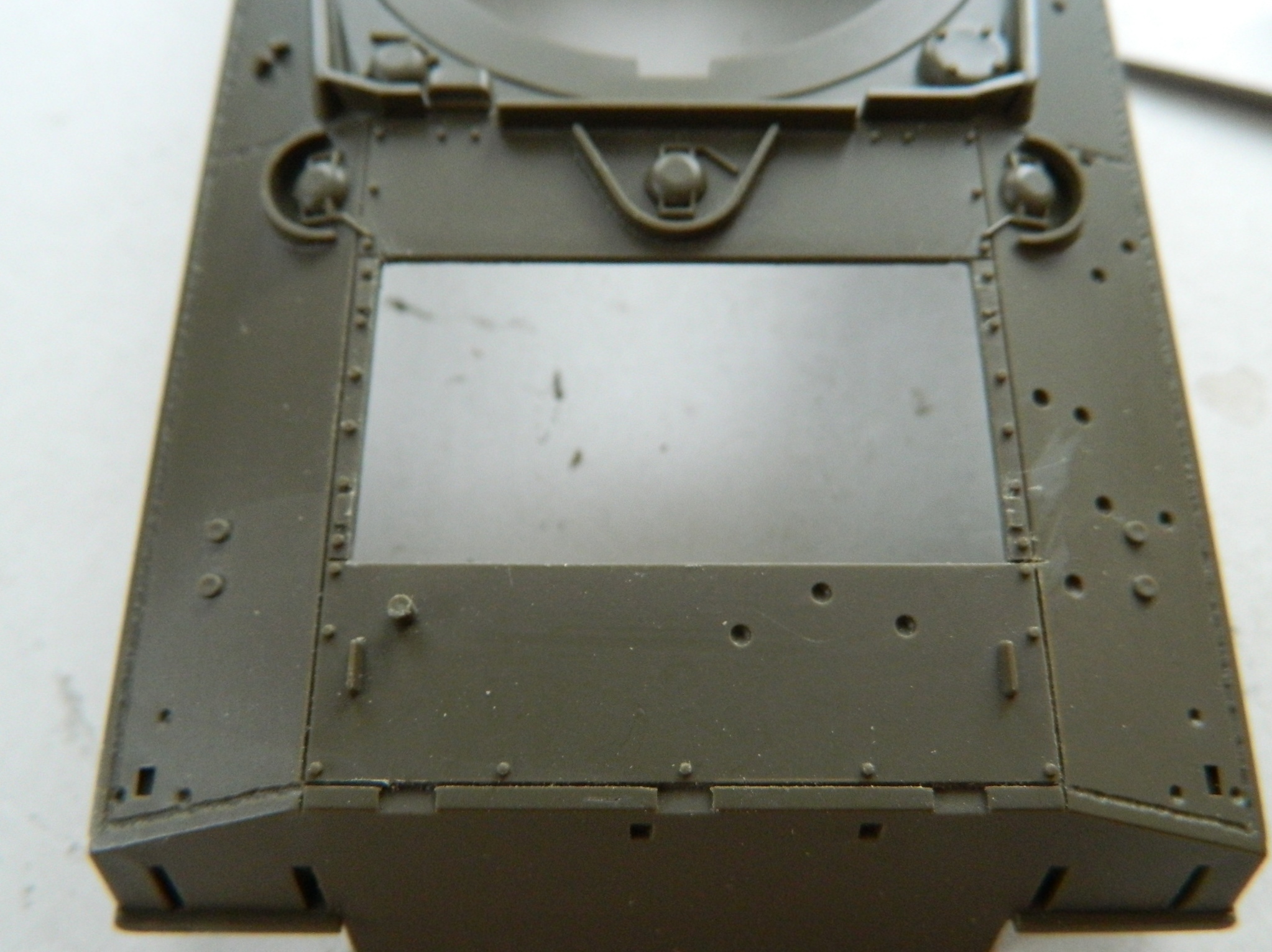
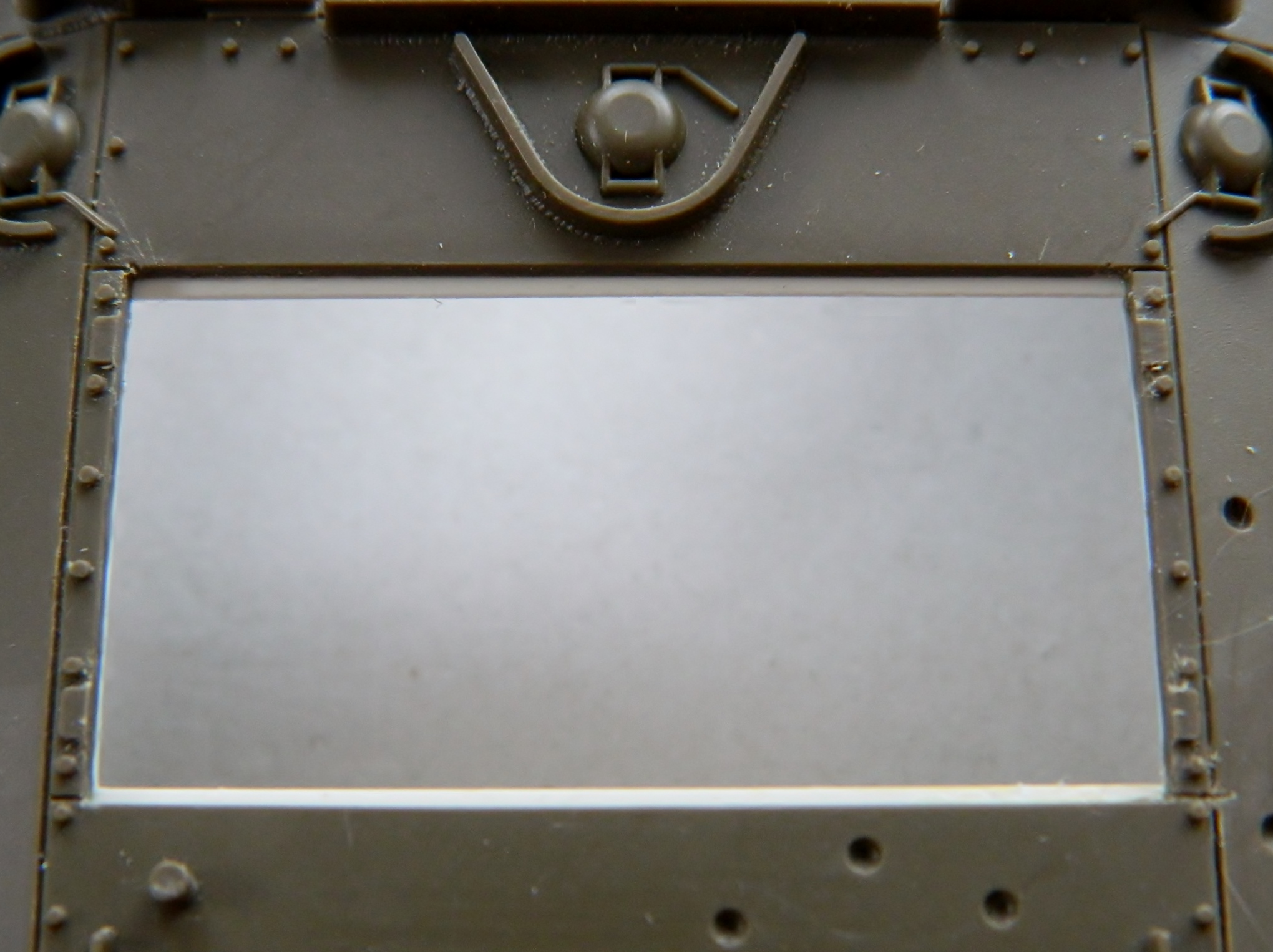
I’m putting an engine in this model and I want the engine covers to be open. The kit’s are molded in place so I have to cut out the opening. First, drill a hole, then take a small saw and cut to the inside of the opening:

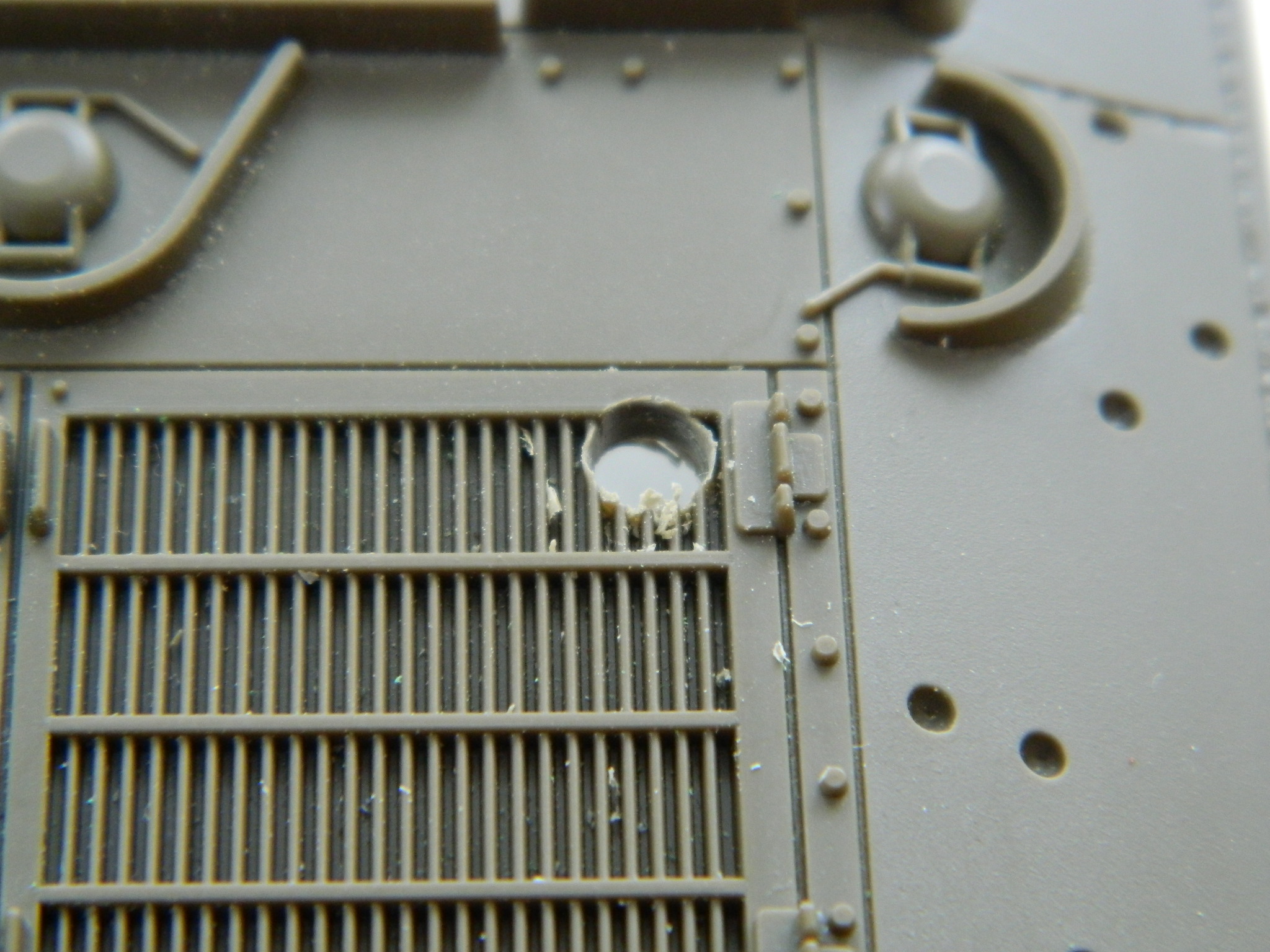

With the opening roughed in, the edges have to be cleaned up and the lip that the covers rest on (and are bolted to) has to be put in:
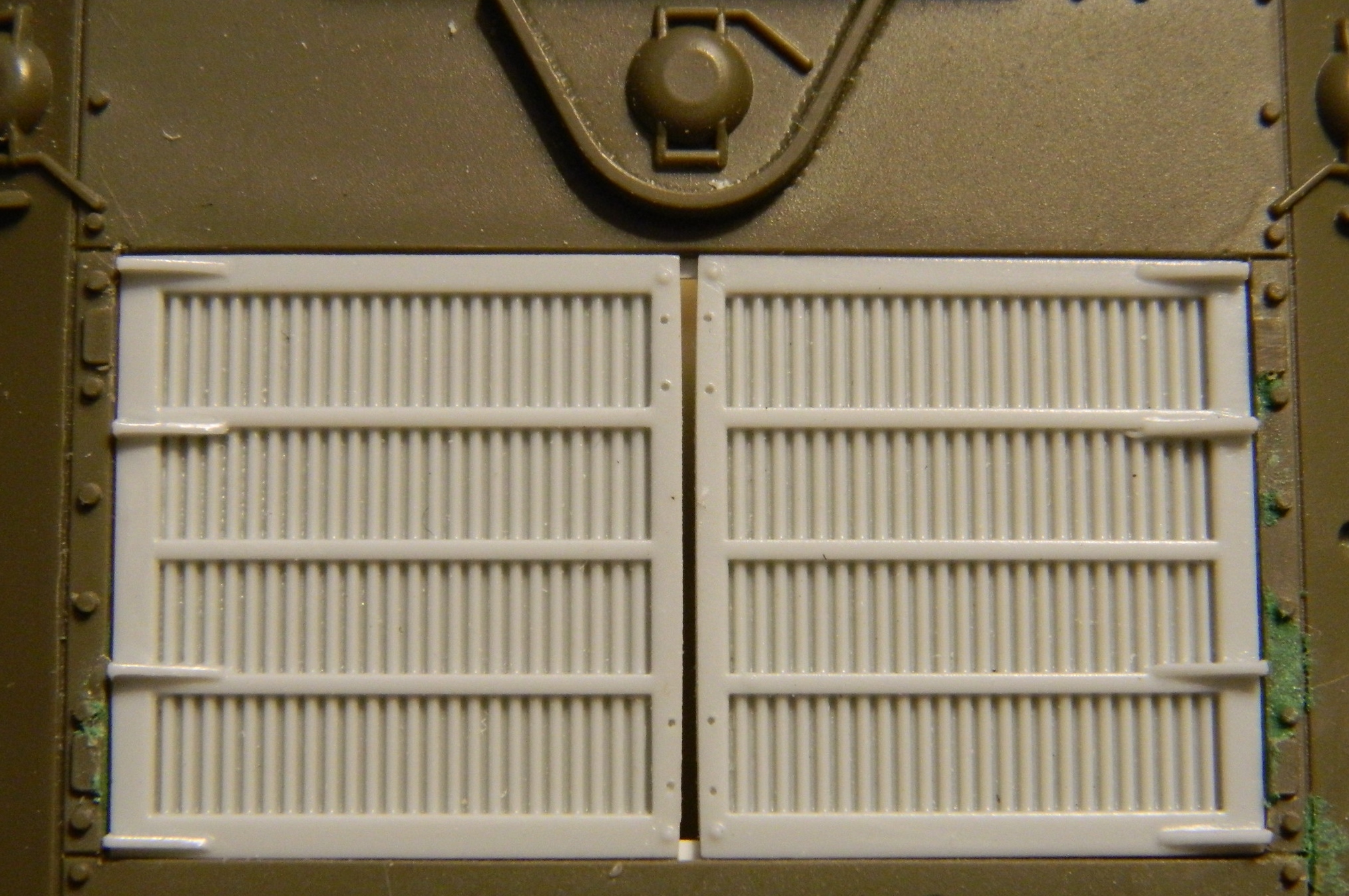
I wanted to do the engine covers next. I had initially thought to use the pair that came with the engine set but they’re inaccurate. Back to the Interwebs! I found a great manufacturer (The New Tiger Model Direct) who does beautiful resin castings for the engine covers:

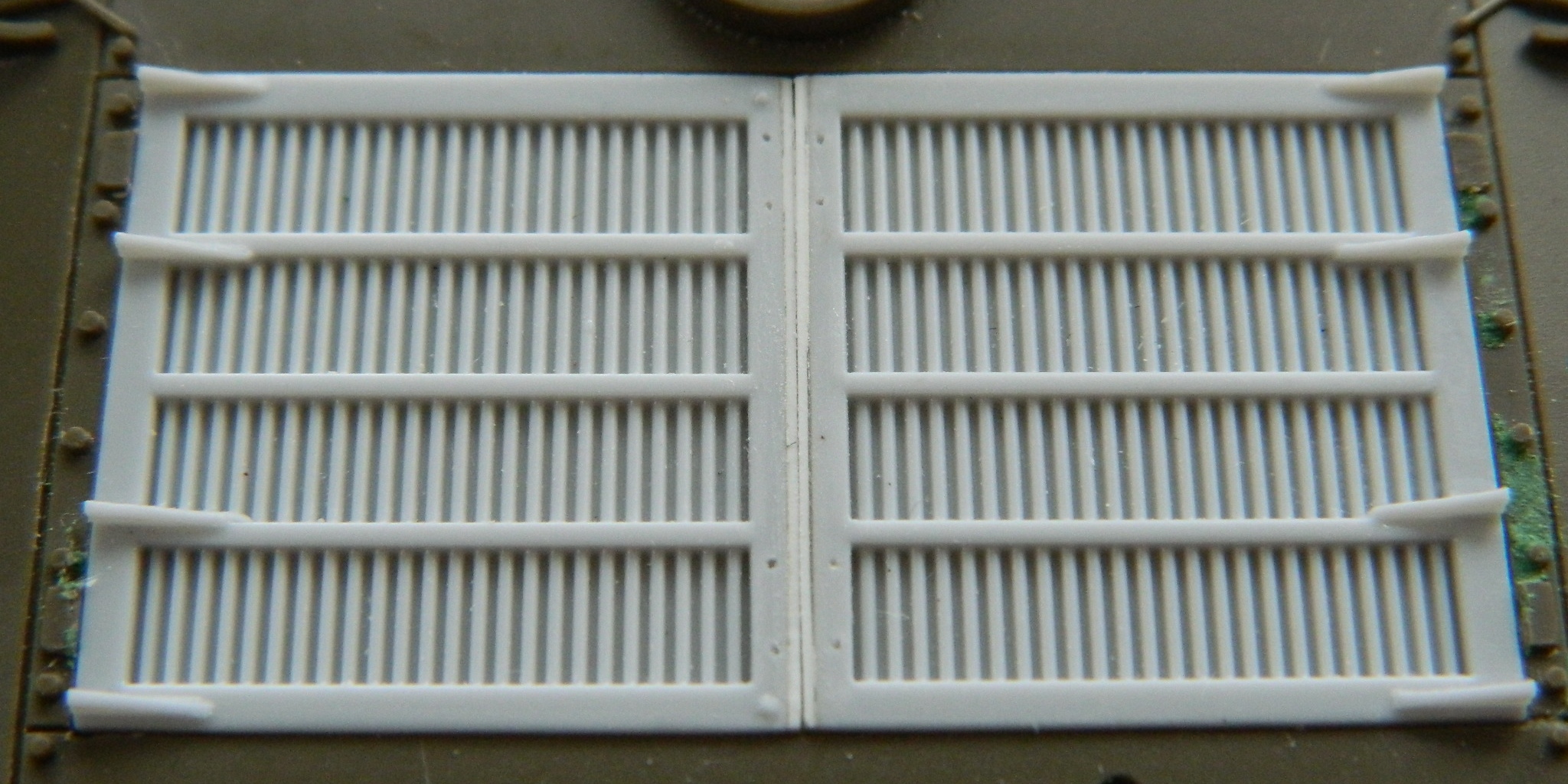
The parts need to be modified because they (accurately!) replicate a post-WWII M4A3’s covers, but that was done relatively easily. The height of the covers fits but I had to add plastic strip to the edges, as well as remove the hinge-strengthening fins and make WWII-style hinges:
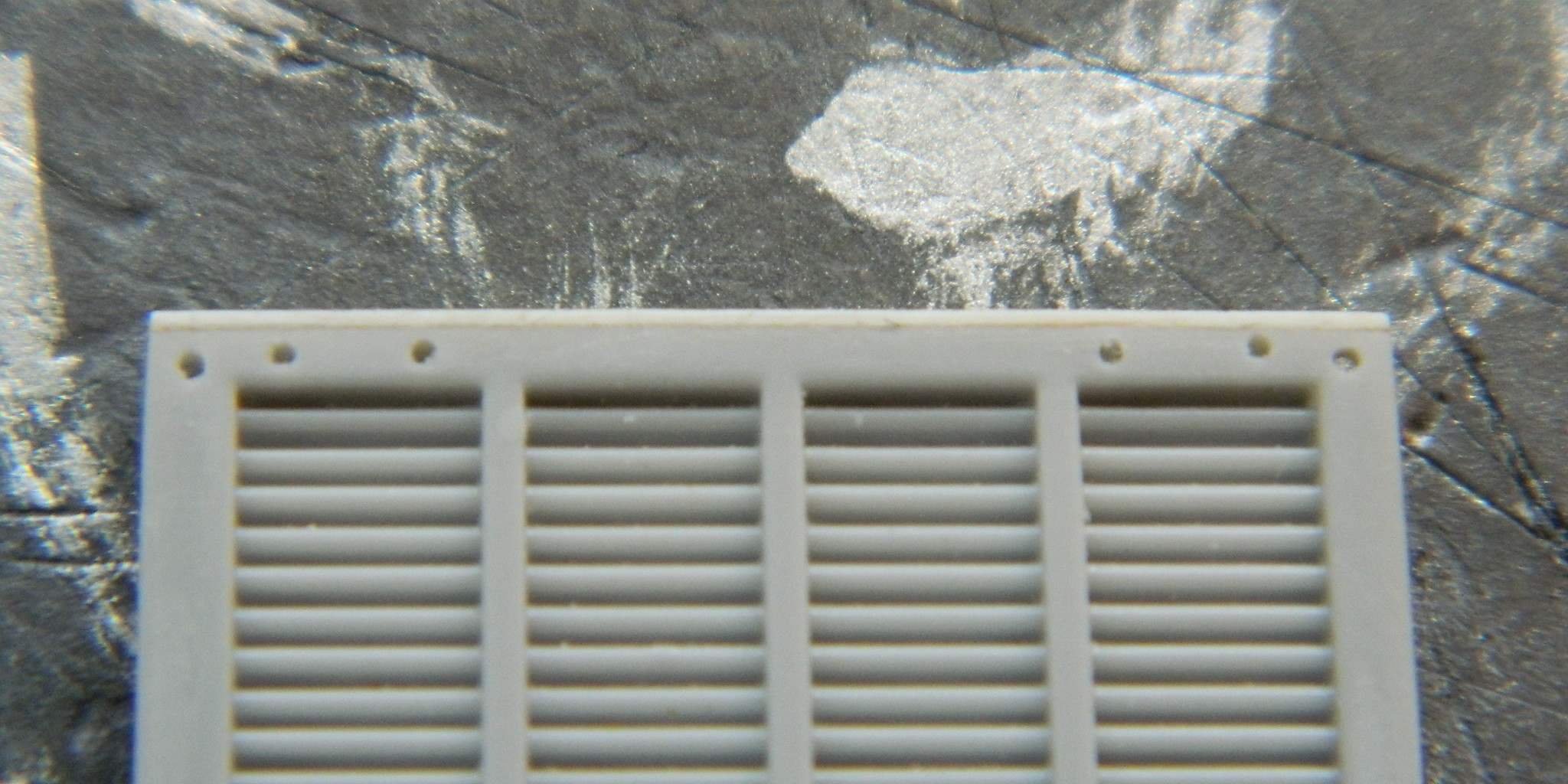


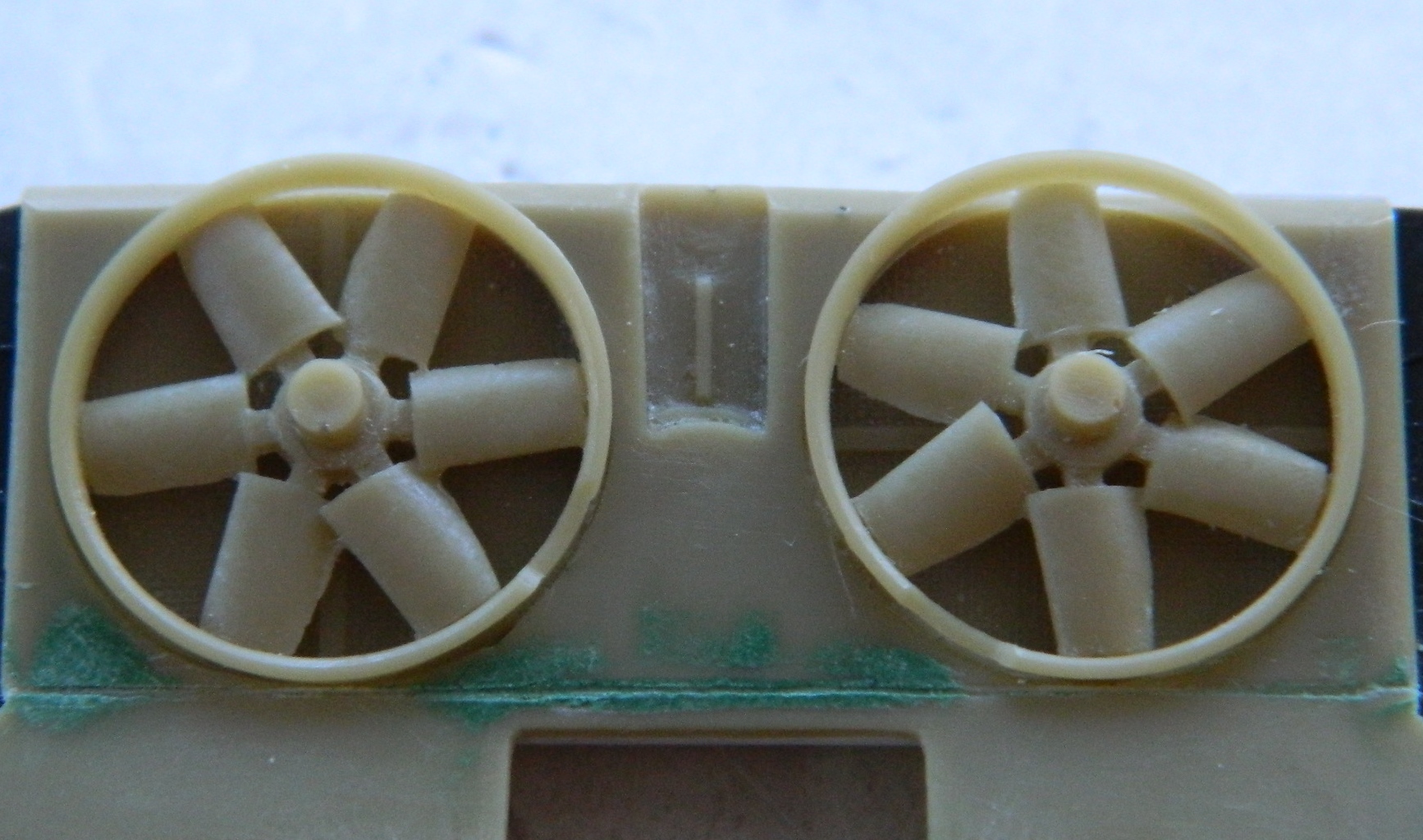
Back into the engine bay, before I put them together permanently, I needed to be able to get under the fans to paint the radiator faces as well as the fans themselves:

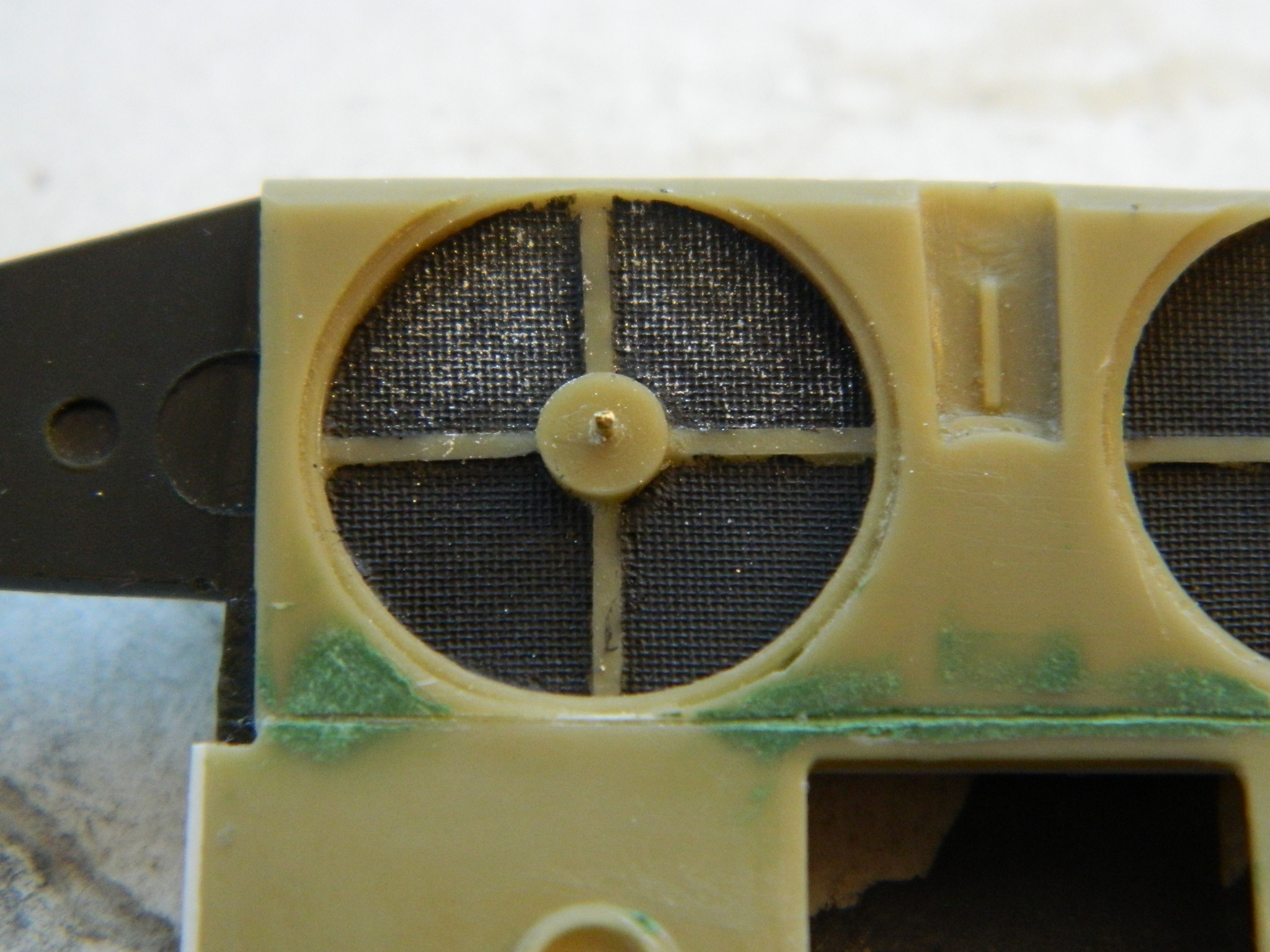
I hit the radiator faces with paint first and dry-brushed aluminum paint over the faces to bring out the detail:
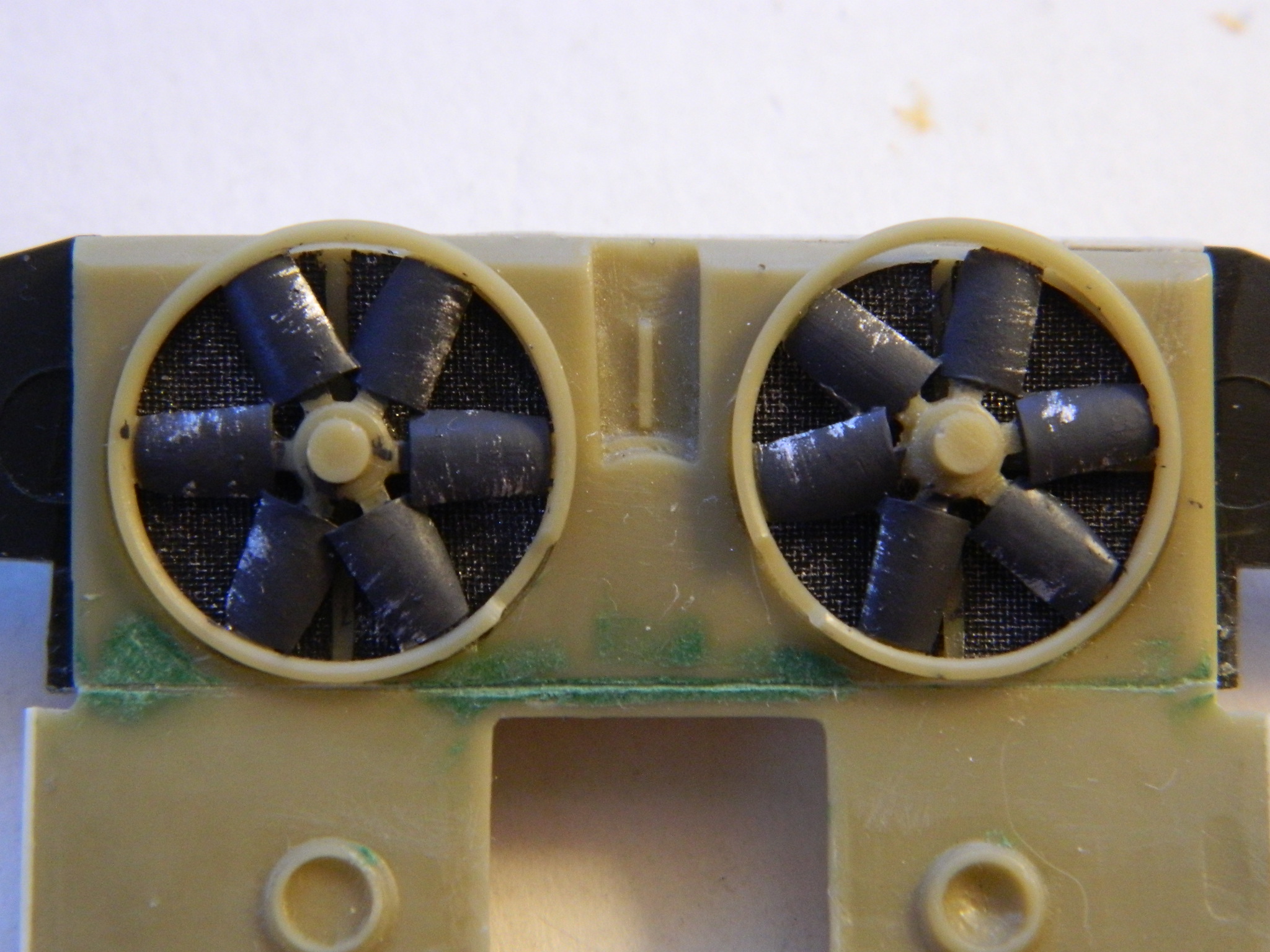
Then I painted the fan blades and added wear to the leading edges with more aluminum paint:
Since I knew I was going to be masking the radiators and fan blades, I wanted to fit the other things into the engine bay first. I didn’t know how far off the thickness of the tape would throw things so before I started masking, I had to get parts ready to dry-fit and the easiest way I knew was to drill out holes add pins, and since the fans were driven by PTO (power take off) units, I wanted to add styrene rod to make sure I had enough length to replicate that:
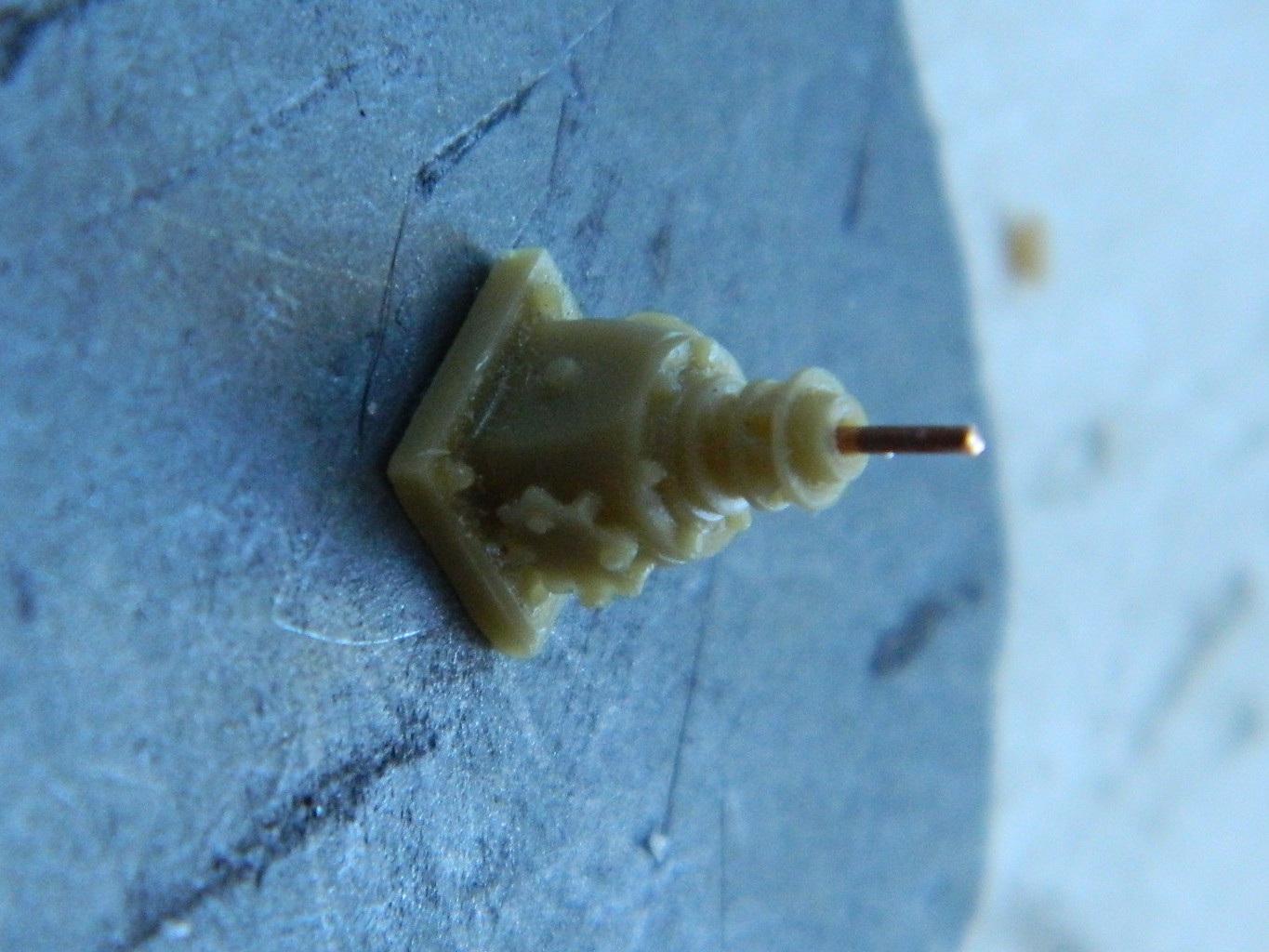


Then came the tedious process of dry-fitting (wherein once again I lamented the fact that I only have two hands; three or four would have made this so much easier). Once I had the engine placed in position, I added the ducts that route air from the air cleaners to the plenum:
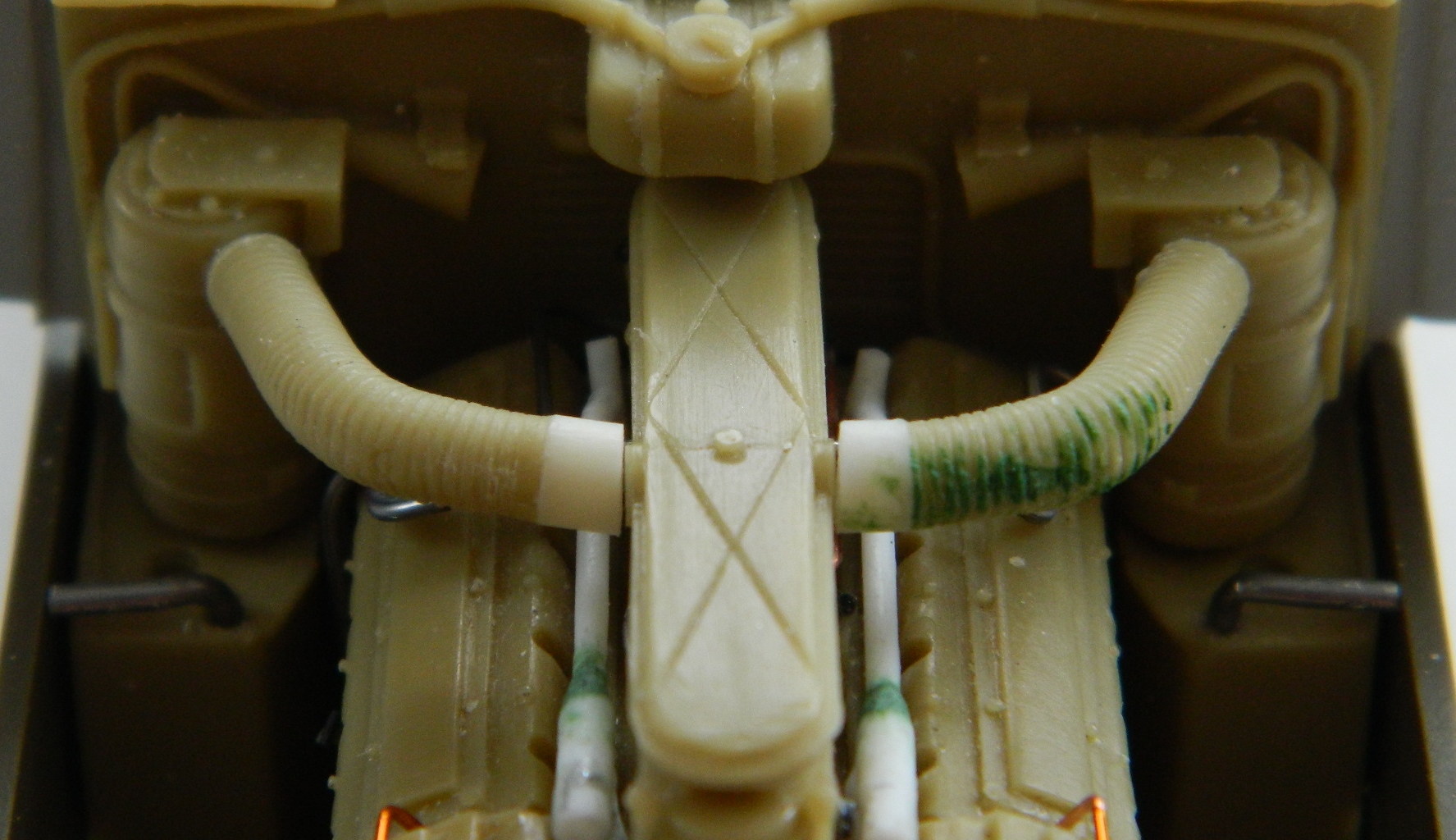
With those in place to establish the relatively exact engine location (and obviating the need for one extra hand), I dry-fit the PTO units, fan blades, and belt/pulleys into place:
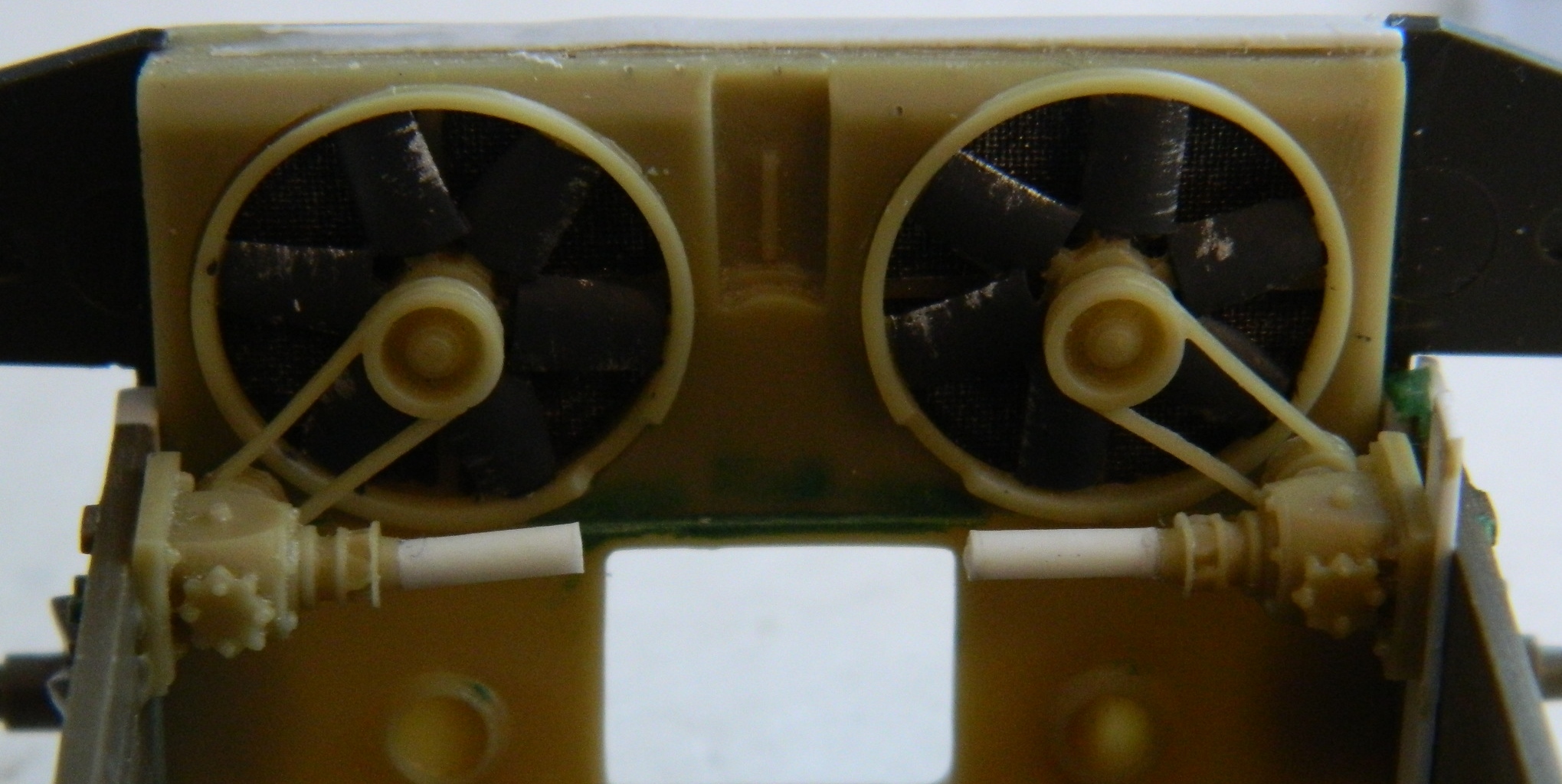
Putting the engine back in showed me that I needed very little of the styrene rod I’d added so those got trimmed and I adjusted the mounts for the PTO units so that they would align with both the fans and the engine (you can see what that needed by the thickness of the added styrene between the right PTO and the hull as opposed to what the left PTO needed):

The I put the engine in to see how it all fit:

Since that worked well enough, time to mask the fan blades and radiator faces:
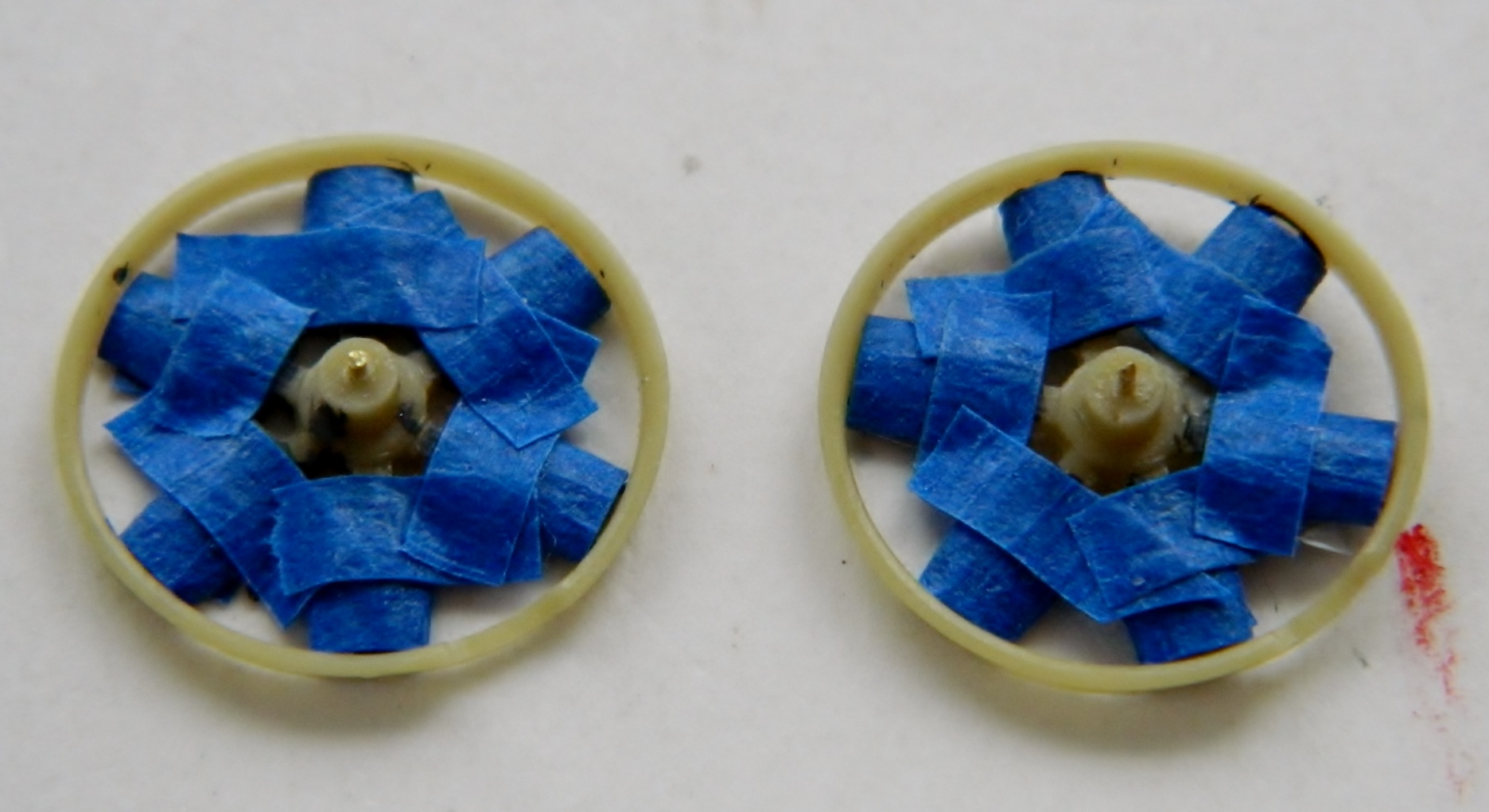

Then I attached the exhaust pipes to the rear bulkhead. I’m not 100% satisfied with the alignment but with the way things are packed into the engine bay, the gaps will not show:
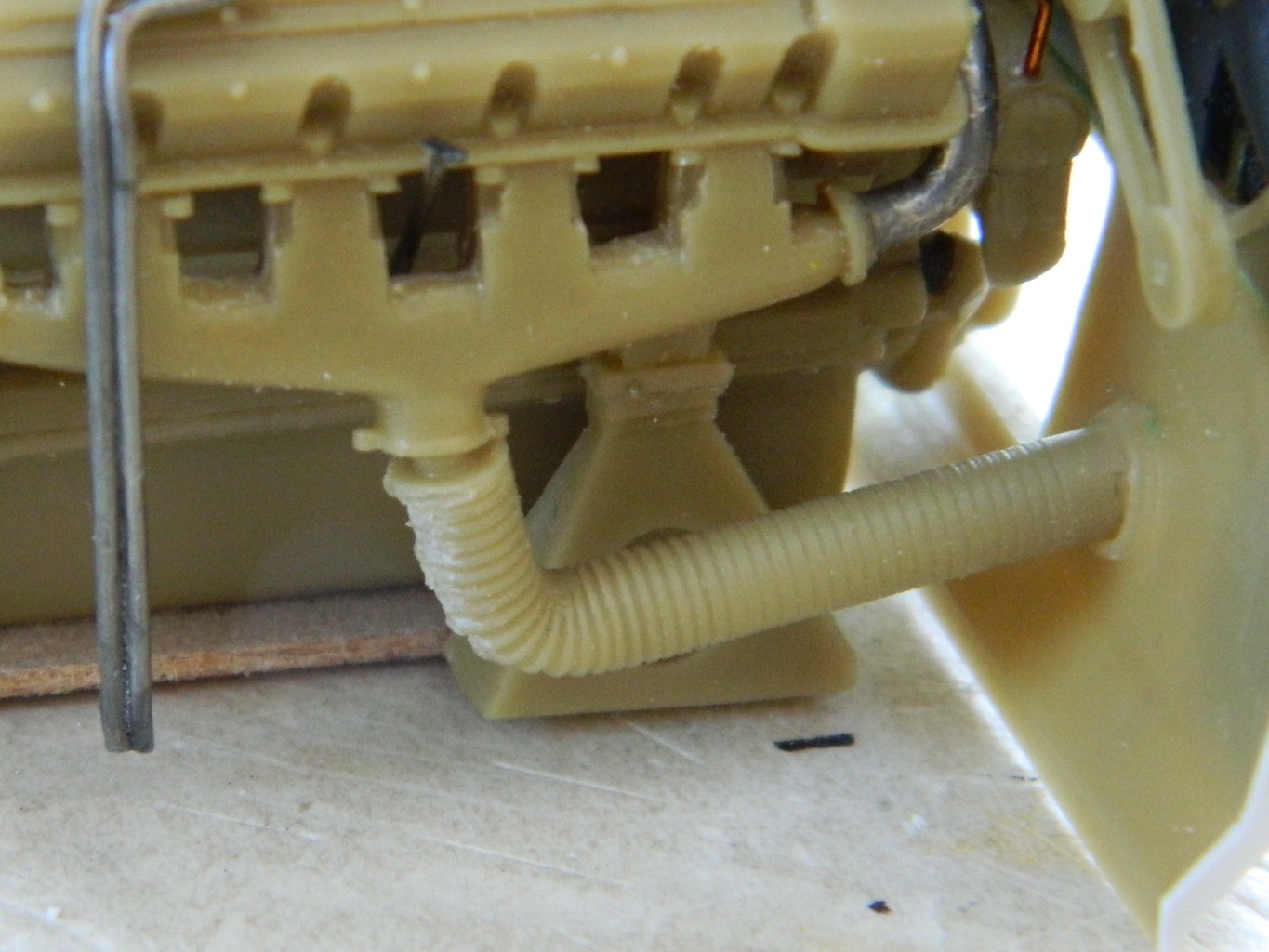
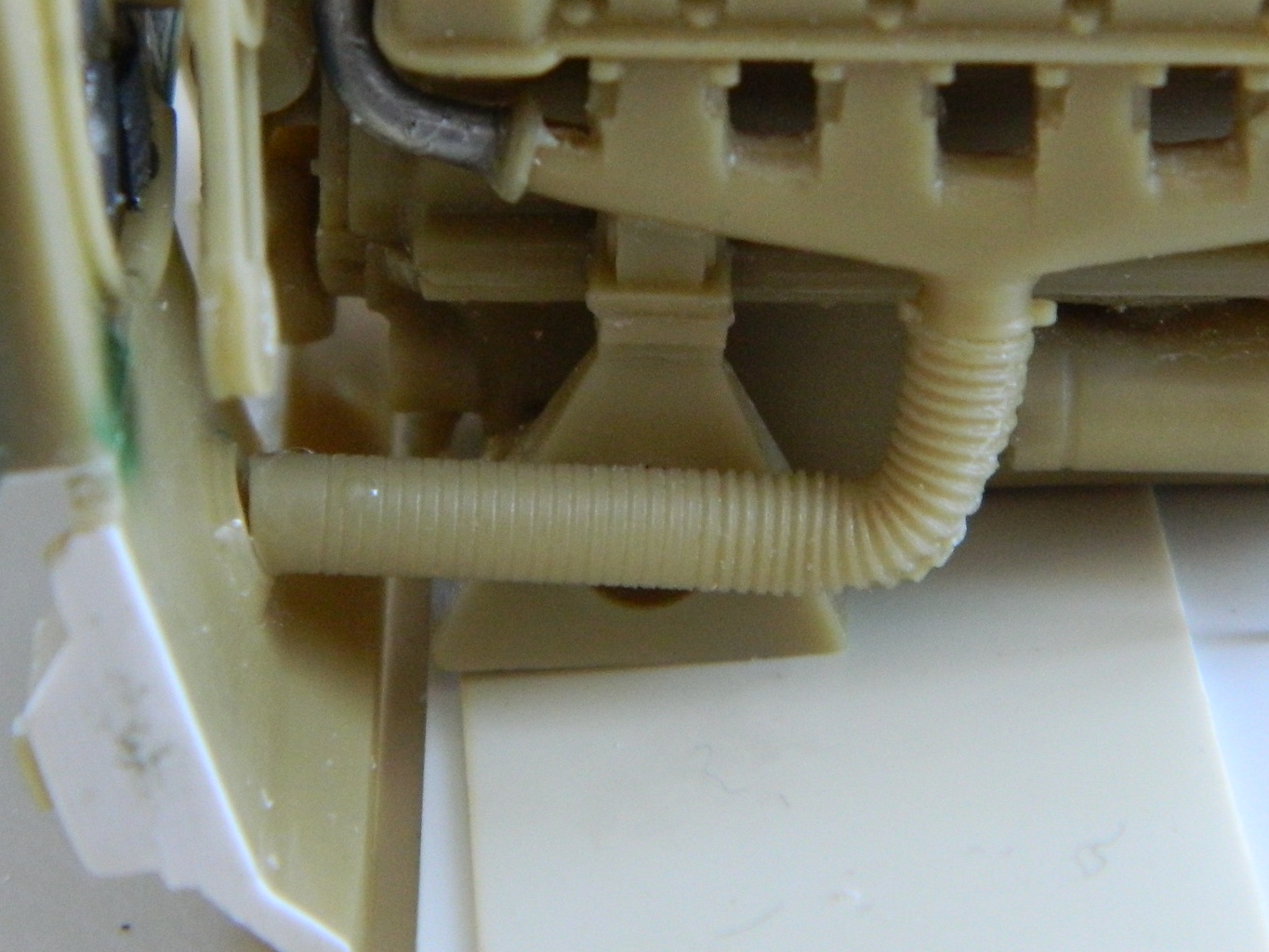
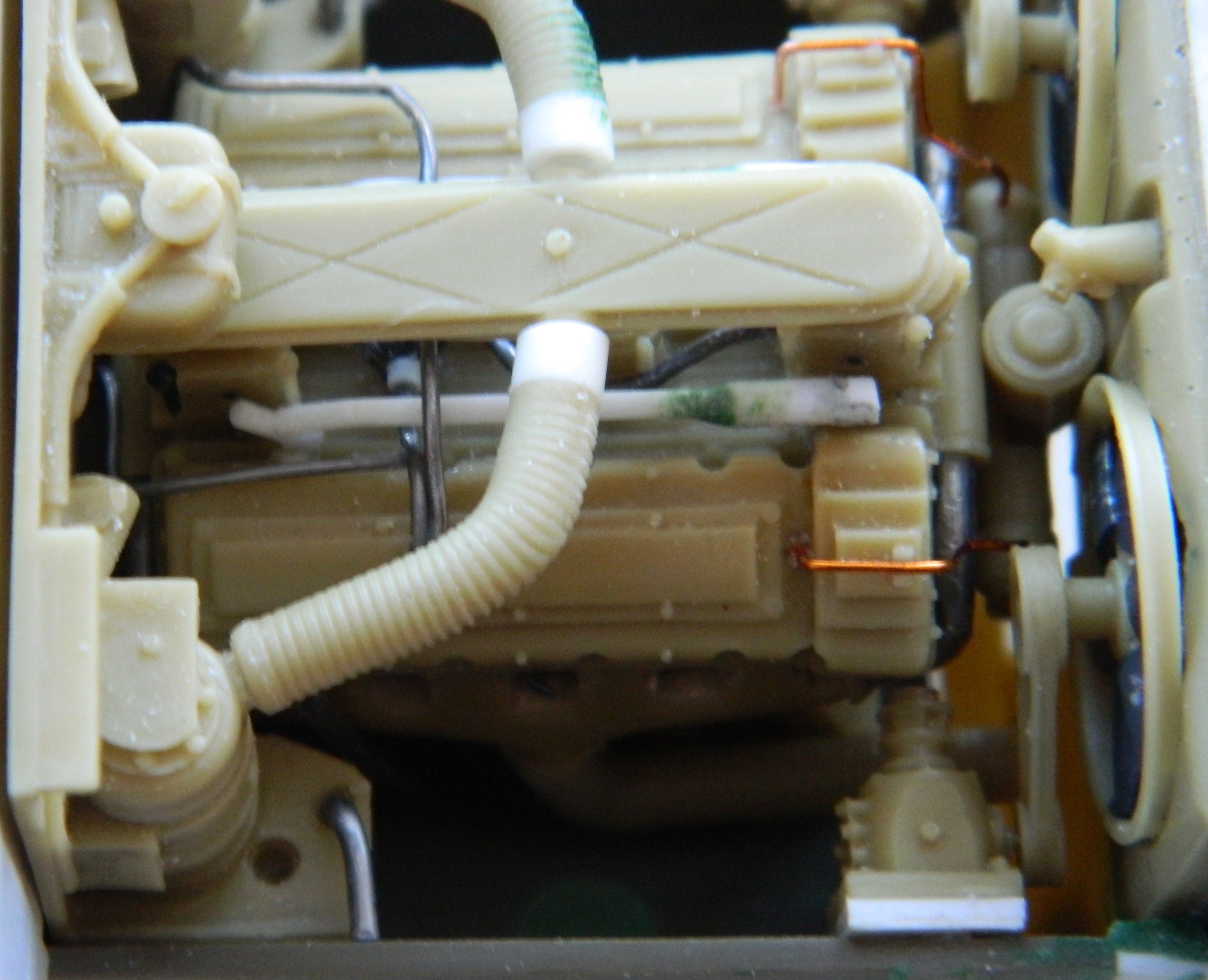
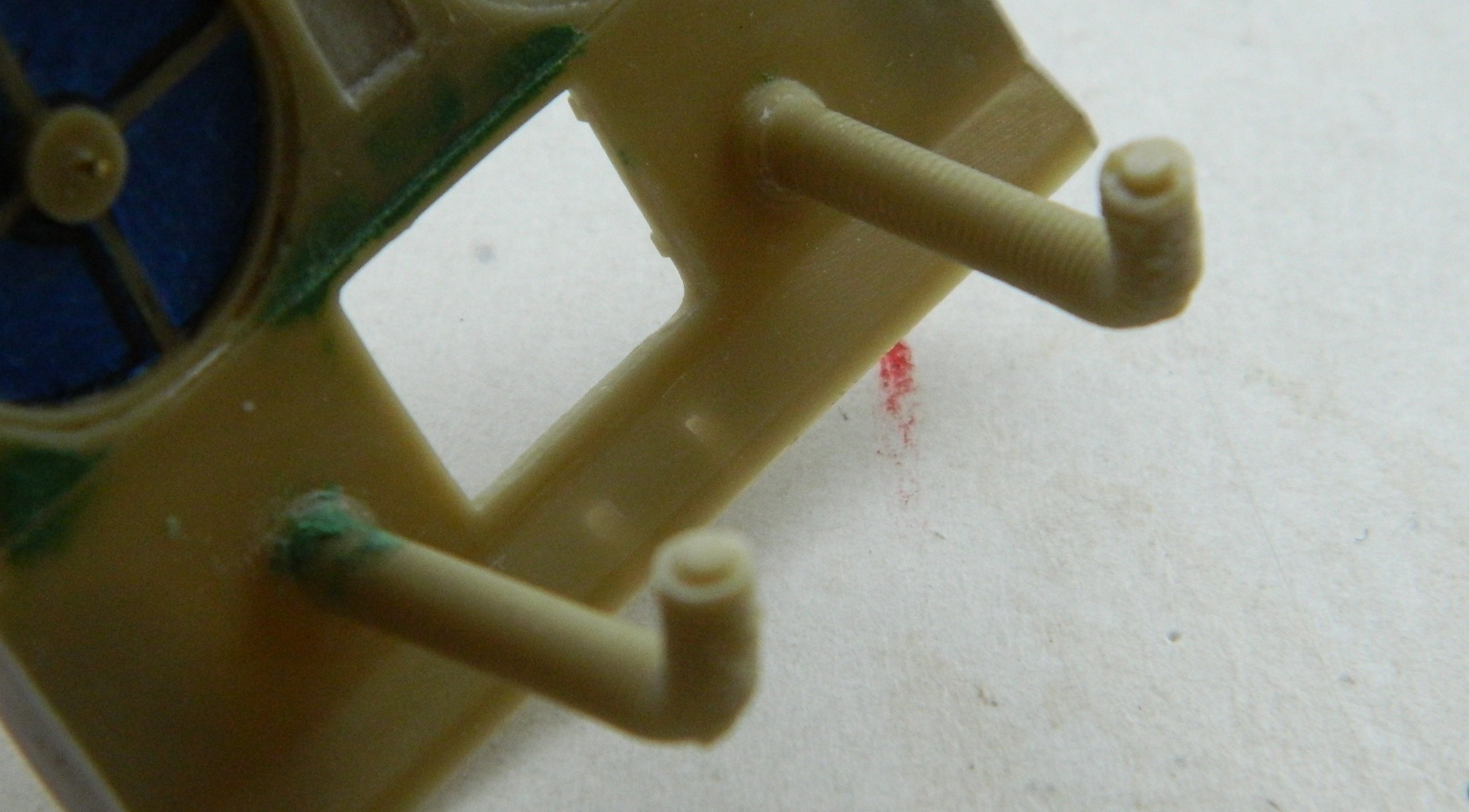
M4A3 (Tamiya) Build #8
Satisfied with the results of the salt-chipping experiment (and grateful for the break it provided), it was time to go back to work on the coolant manifolds. The putty was well set and I shaped them:
With the tapers done, I had room to add the rest of the coolant manifolds:
Because of the small size of the parts and the necessary bends them, using wire or plastic didn’t work. The wire is too stiff to bend and the plastic tends to crack and break when bent, so I went to solder again and I drilled out the end of the solder to fit over the manifold the way the rubber hose does on the actual tank (but more to avoid butt joints, really):

Also quite visible is the dipstick so I used some scrap sprue, heated and stretched it, and glued together the t-shaped dipstick:

And then I realized that having the solder “hose” attached now was just too awkward; they’d have to be added later, so I had to peel the solder off the plastic:

Time to set the engine aside for a while and start putting the “fighting compartment,” where the crew sits and works, together. Step one in that process is cutting the parts away from the pouring blocks, cleaning them up, and assembling them. I started with the driver and co-driver’s seats:

Once they were cleaned up they were put assembled and glued to the front floor-insert (the rest of the parts shown are just dry-fitted):

Test-fitting, or “dry-fitting,” as it’s called (“dry” because no glue is involved, this is done to see how or IF the parts all fit), showed another inaccuracy. On the gray, inner, part seen through the large hole (that’s where the turret will sit) there is a round part in the center and off to the left. That’s supposed to be centered under the turret so I’m going to have to move that:

To do that, I took some HEAVY aluminum foil and pressed it down around the detail I want to move:

Then I filled it with homemade structural putty that I concocted by dissolving styrene scraps in liquid model cement. The cement works by dissolving the pieces of styrene and once dissolved, the scraps made a gooey plastic that is stronger than commercial filler putty for when strength matters (the goo isn’t as dense as the styrene kit parts but is substantially denser than putty). I used that structural putty to fill the impression in the aluminum (if you’re unwilling to wait overnight for the glue in this solution to evaporate out, you can take THIN shavings of styrene, overfill the depression, and hold the plastic-filled aluminum over a candle, moving it closer until the plastic starts to melt; you’ll have to fiddle with the distance to the flame so the plastic doesn’t get hot enough to char or ignite) (don’t ask how I know this):

The next day after it had cured completely, I popped the new detail out of the foil, and then trimmed, thinned, and glued into a more correct location:


Next I started work on the various details of the control rods, levers, and linkages. Some of these parts are VERY small; all have to be removed from their casting blocks and trimmed before they can be used. I also drilled small holes and installed locating pins made from copper wire to align things and make the bond stronger when they’re glued:


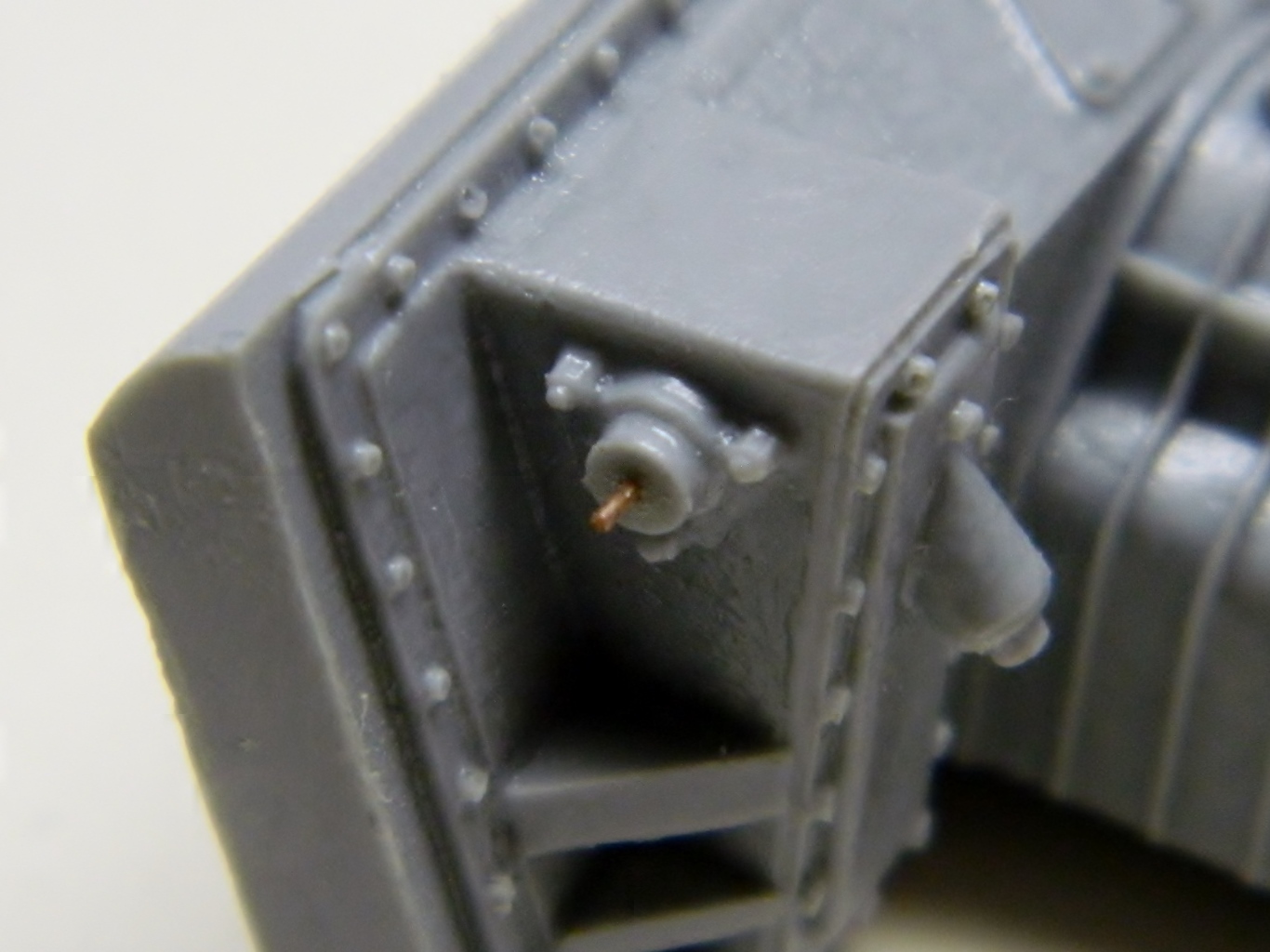

Then the parts are dry-fit to check for fit and alignment (there’s a mistake here with the transverse rod that I didn’t notice at the time; you’ll see how I fixed that later once I realized it):
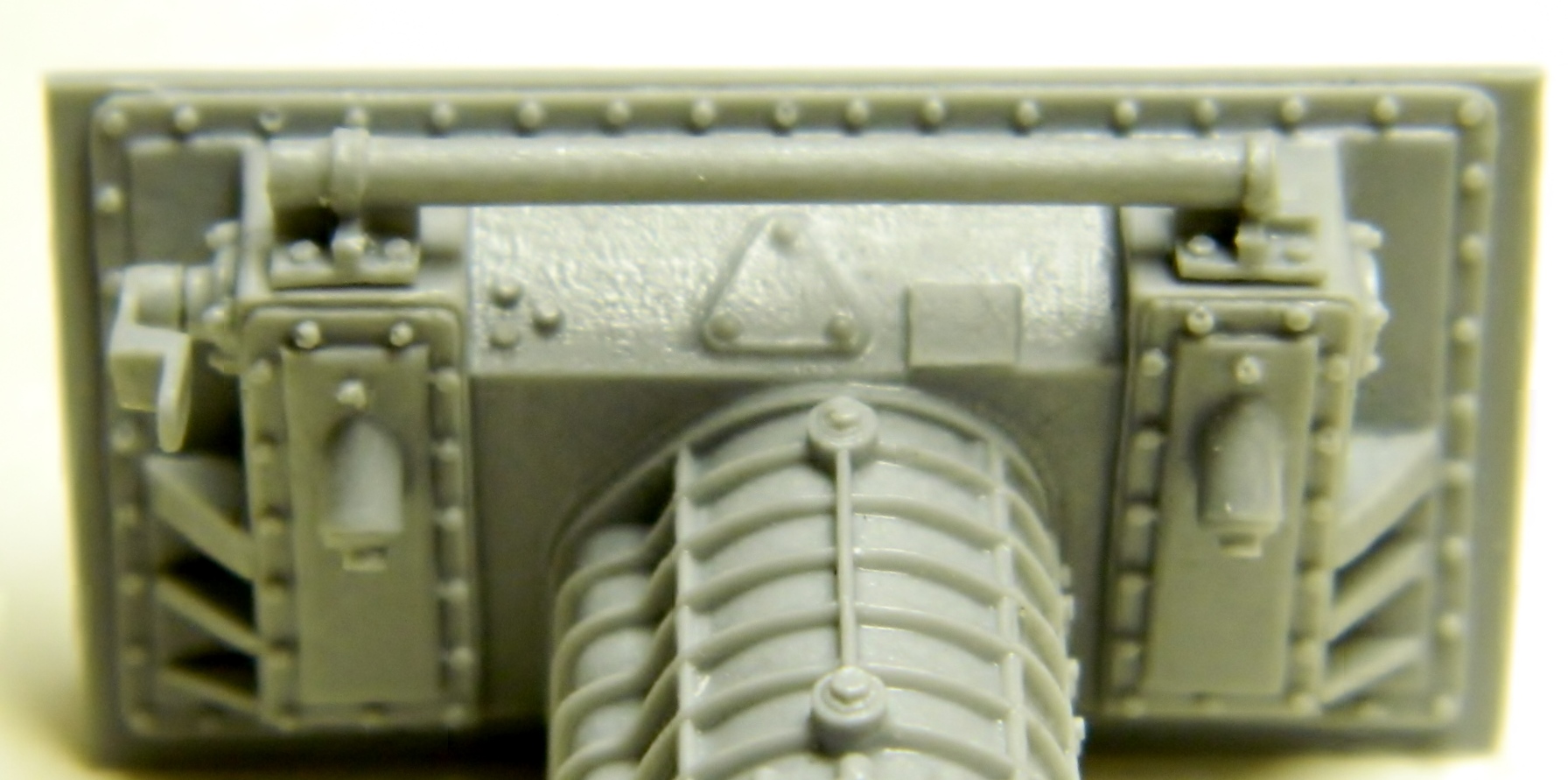
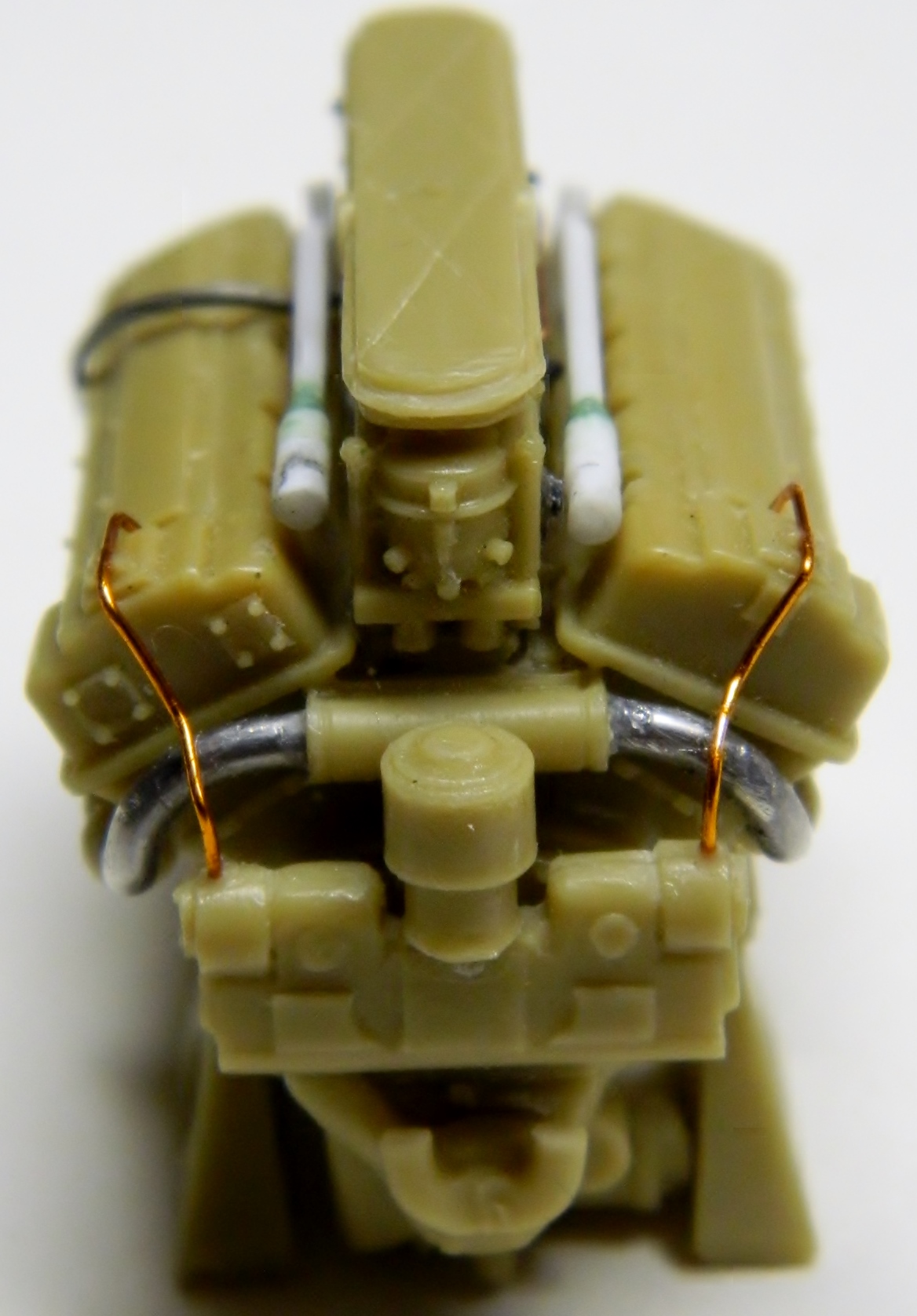
Because there’s only so much of really tiny things that these old eyes will abide at any one sitting (yeah, because those parts are ever so much larger), I went back to the engine and added the throttle linkage that goes to the driver (silver line), the ignition harnesses (copper lines) and the coolant manifolds:


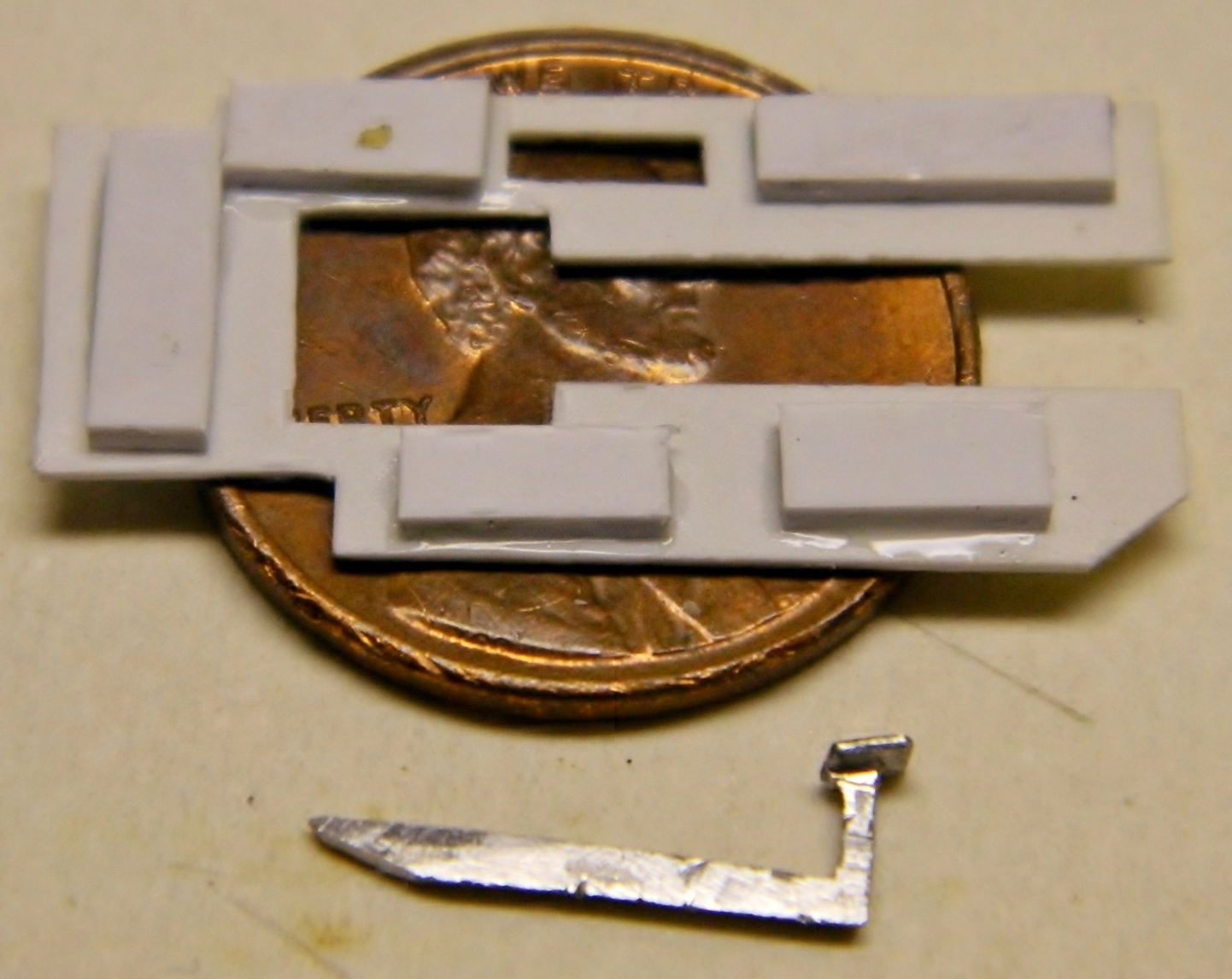
Looking at reference photos, I saw that the floor in front of the driver and co-driver had diamond-tread plate sections, not the smooth floor of the resin part. I made a template out of a 3X5 card and trimmed it until it was a correct fit and then made a piece out of .020 sheet styrene:


But the floor in the driver’s area is raised (there are linkage rods, wiring, and other stuff that run underneath it), so I used some blocks of .020 styrene to raise it:
However, that’s smooth plastic, not diamond-tread. At the time I didn’t know where I could find sheets of diamond-tread in this scale (I do now) so instead I took a floor section from an entirely different kit that does have diamond-tread in this scale (Academy’s M3 Stuart) and using that very thick aluminum foil, I pressed it down on the kit part to copy the tread (using a small hammer and a piece of a bike inner tube to get that foil ALL the way down):


I took the smooth plastic floor I made, glued it onto the patterned foil, trimmed it, and did a dry-fit to check fit and appearance:


So yes…I know I’m crazy. 23 years ago when last I modeled, I used to collect all kinds of strange things because I knew I could use them in a model one day. This is a broken watch I took apart so that I could use the small pieces in a model or two (and yes, has been carried around with me of almost a quarter century because I might need it one day…today is the day):

Where the steering levers attach to the floor are toothed quadrants where the controls can be locked in place to keep the tank from rolling. As it turns out, one of these gears is just the right diameter for what I need, so I cut one into parts, used the old Dymo label tape as guides, and scribed slots for these to fit in:

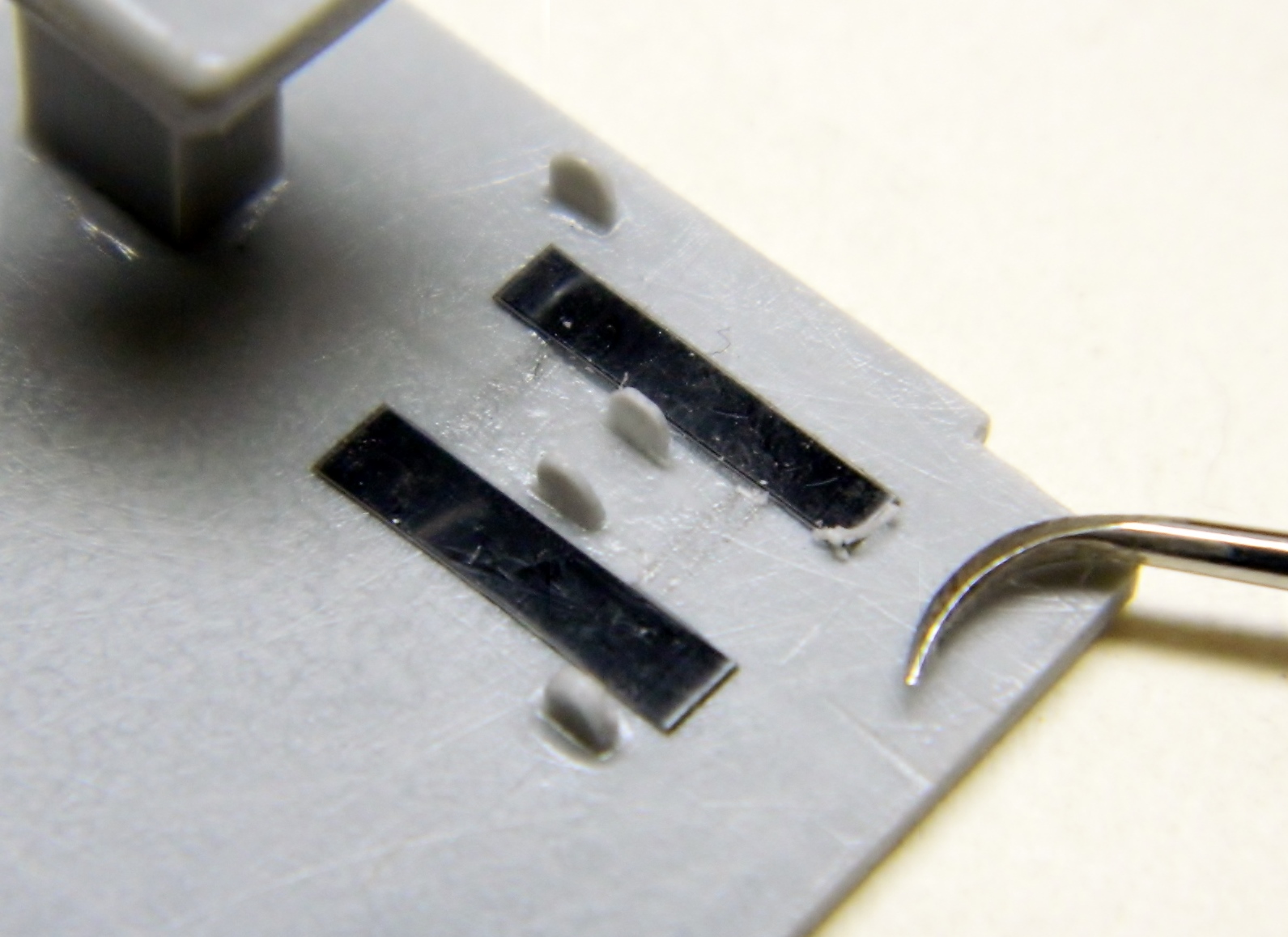

Earlier I had mentioned I was using Grandt Line bolts for details; these are GL bolts (yes, the bolts are square and should be hexagonal – I tried to get the proper ones but though GL has a website, evidently they have no one who will ship an order – I placed one, waited a few days for confirmation, and never heard back despite repeated attempts to evoke any sort of response – it took some doing to find a vendor who sells these items but that took me some time to find – instead of holding up the build I used what I have and they don’t look bad or as wrong as they actually are):
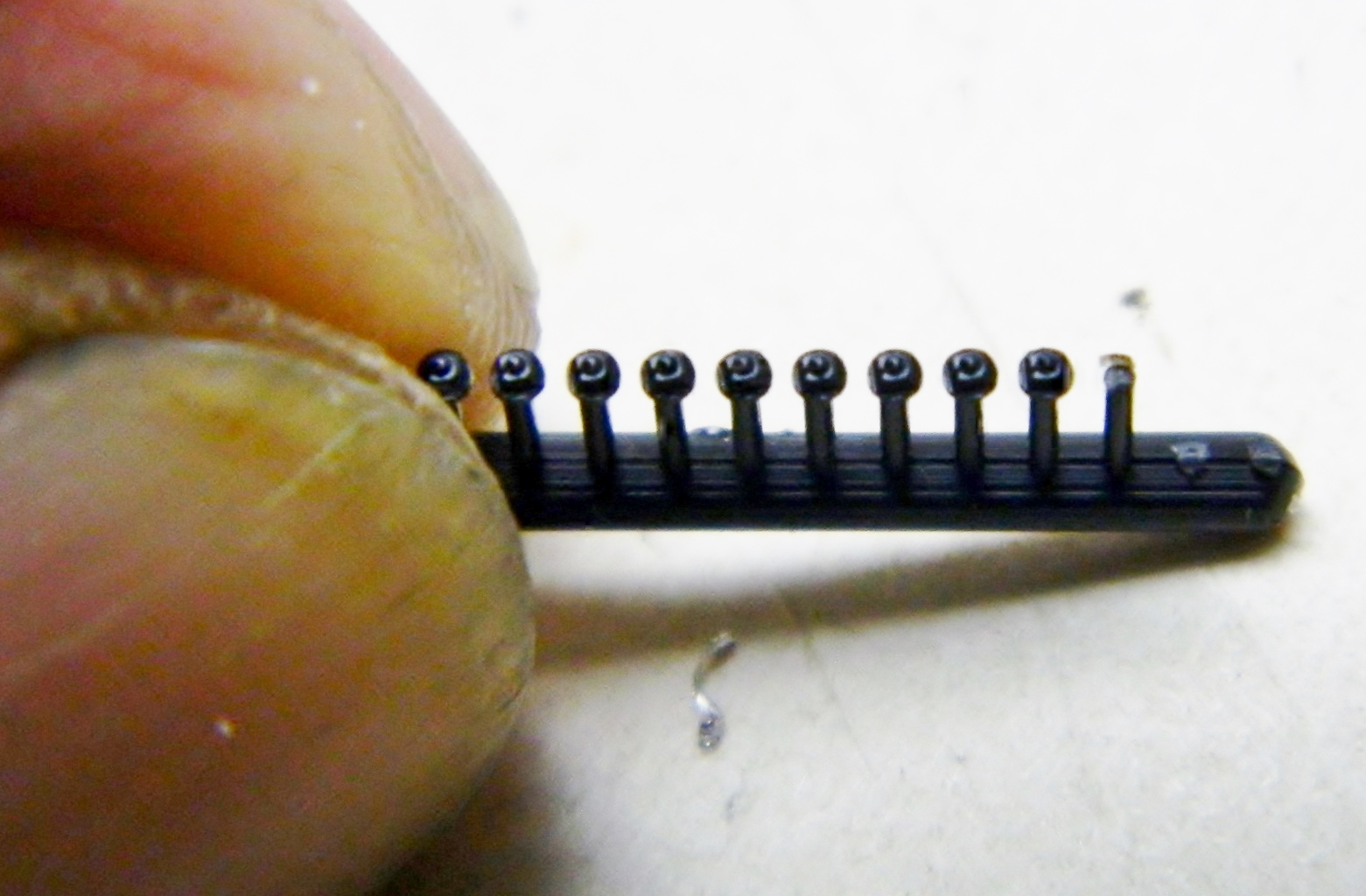
The people who engineered this kit thought that nobody would see interior details which means there are no interior details. But now the interior will show and those details have to be added. The front of the hull on the Sherman tank was its final drive housing, or differential cover (mistakenly called a “transmission cover,” and it’s not; the transmission is inside the tank between the driver and co-driver). That cover/differential/transmission assembly bolted to the hull and those bolts are clearly seen through open hatches (which is how this will be displayed). Since they aren’t there, I had to go to reference photos to see where they are, how they’re spaced, and then put them there. It’s starts with one, one leads to two, and once those were in place, I ran a piece of Dymo label tape between them as a guide and started gluing very small nuts in place, and do that again for the other side (there are a lot more bolts, you’ll see them in subsequent photos):


Also visible through open hatches are the bolts that go through the hull and hold the suspension bogies to the sides of the tank. I finally figured out a way to get the spacing correct. Since the spacing of these fasteners are the same on both sides of the hull, I could cut the exterior detail off the donor kit, glue them to the inside of the build kit, and then use putty to hide all that. It starts with cutting the bolt pattern off the donor kit:
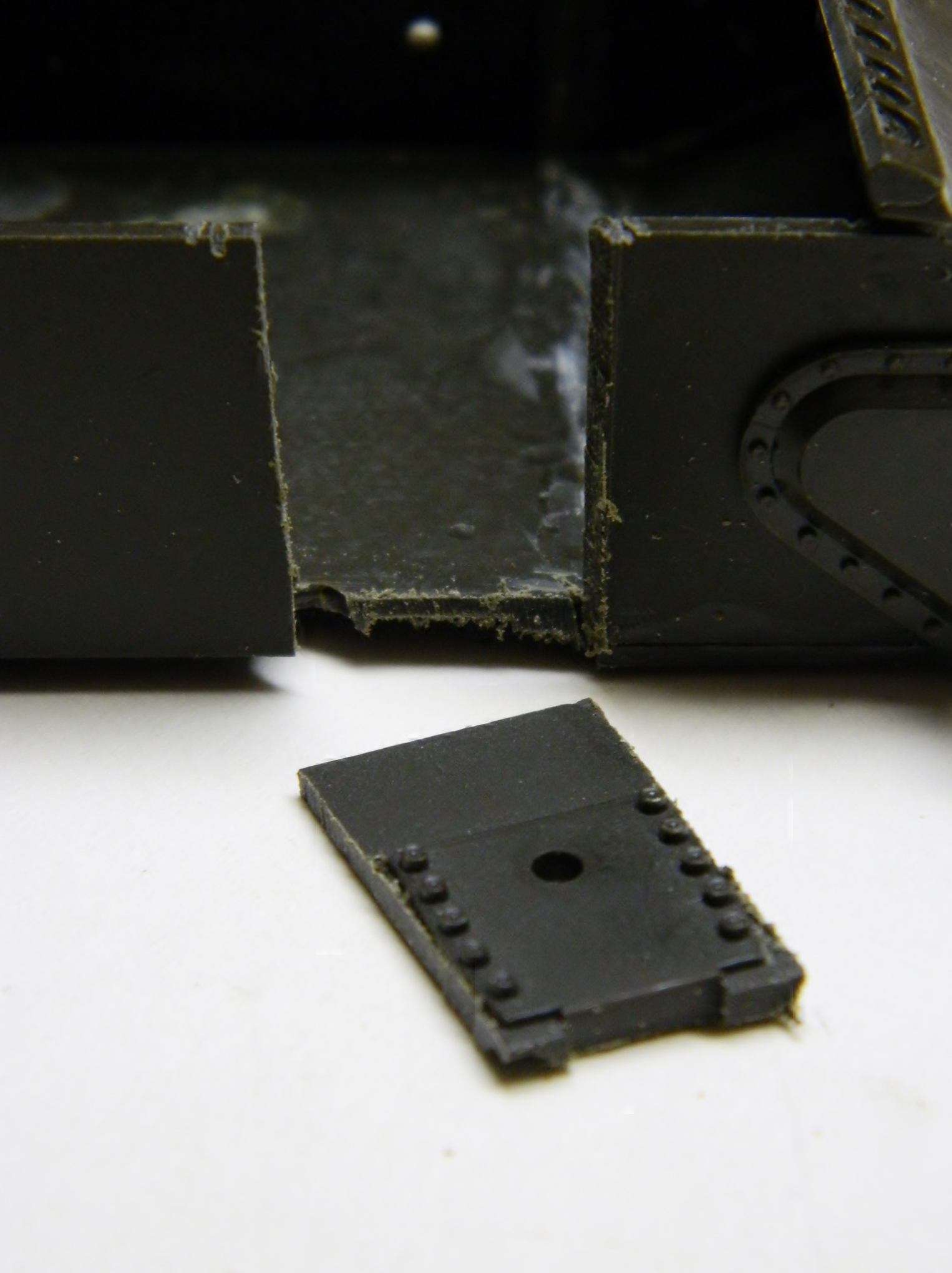
That piece was then filed until it was much thinner and then glued in place, using the hole for alignment and the edges puttied:


There was a bit of work to that, so for the other side, I tried something different. I used less of an addition and only the edges are glued. The center, which is really only there for alignment, I removed easily as it was not glued. Less putty, less putty removal, less work:


Back to work on the driver’s controls with much sawing of TINY parts, cleaning them up, and getting them to fit with each other. First the steering levers. The old tanks of WWII were steered by slowing down the track on the side you want to turn towards. Want to go left? Apply the brakes to the left track (and tanks are still steered that way, though now the controls are much different). These levers are connected through linkages and rods to brakes inside the differential housing. The AM set provided lead alloy metal parts for some parts and that’s what the steering levers, clutch pedal and arm, and accelerator pedal are (the clutch pedal needed to be reshaped):

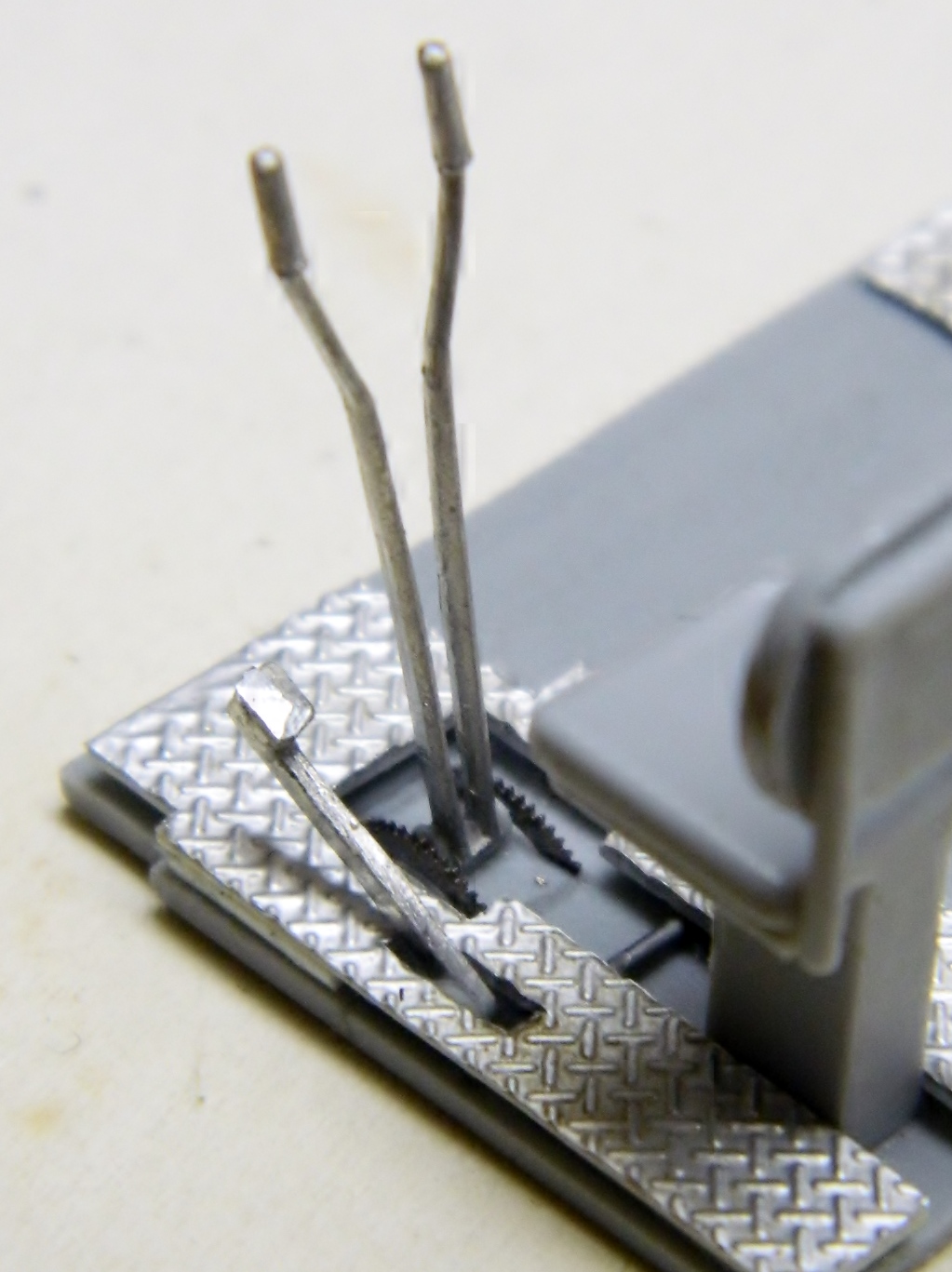
Back to cleaning up the really small parts (of which there are more than a lot).
M4A3 (Tamiya) Build #5
Now to get the ducting assembled with much dry-fitting along the way. I’ve found it easier when adding pieces that require a specific size to add the piece before trimming it. Once the glue has set, trim to fit. Much less hair-pulling that way:


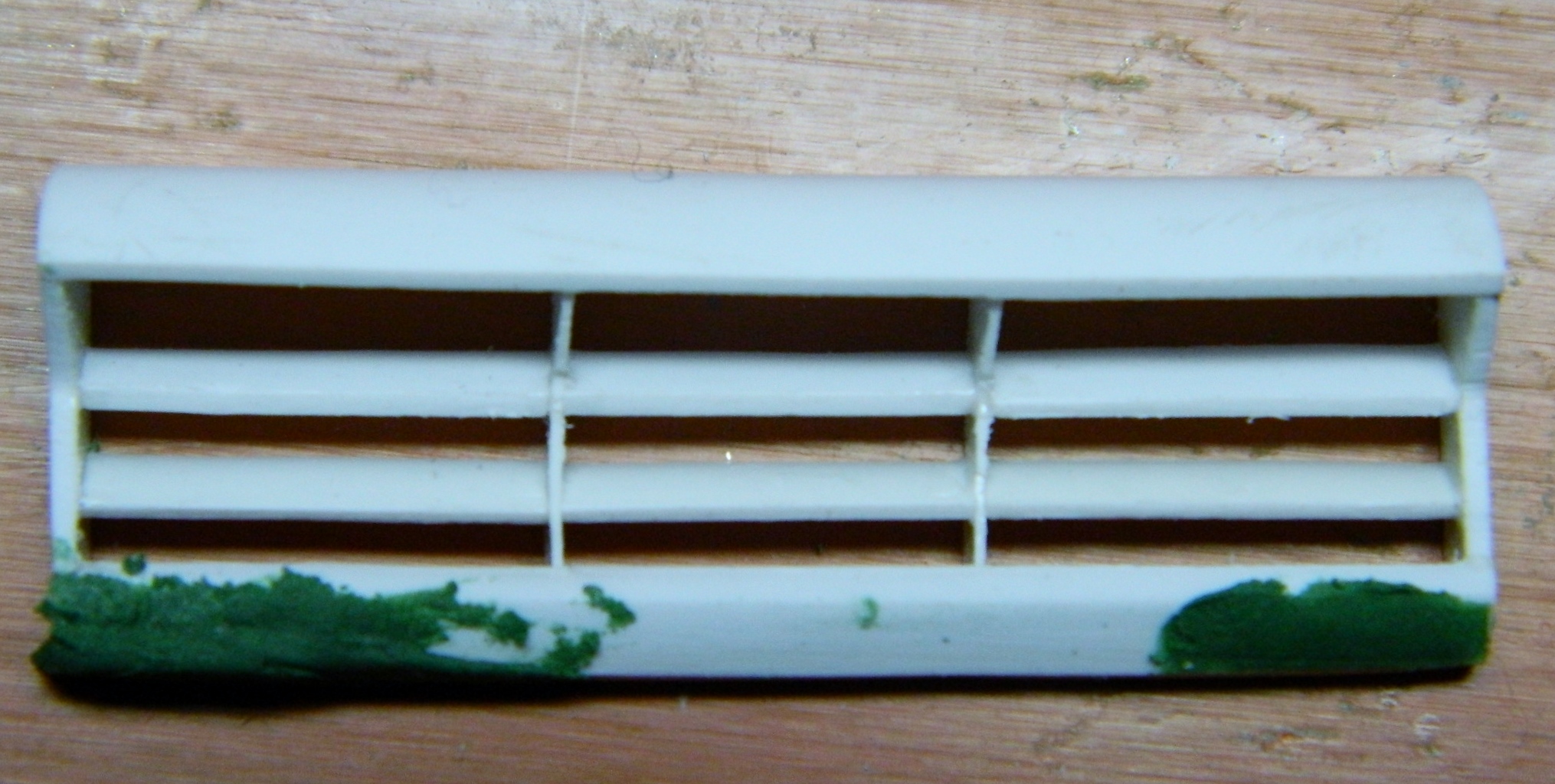
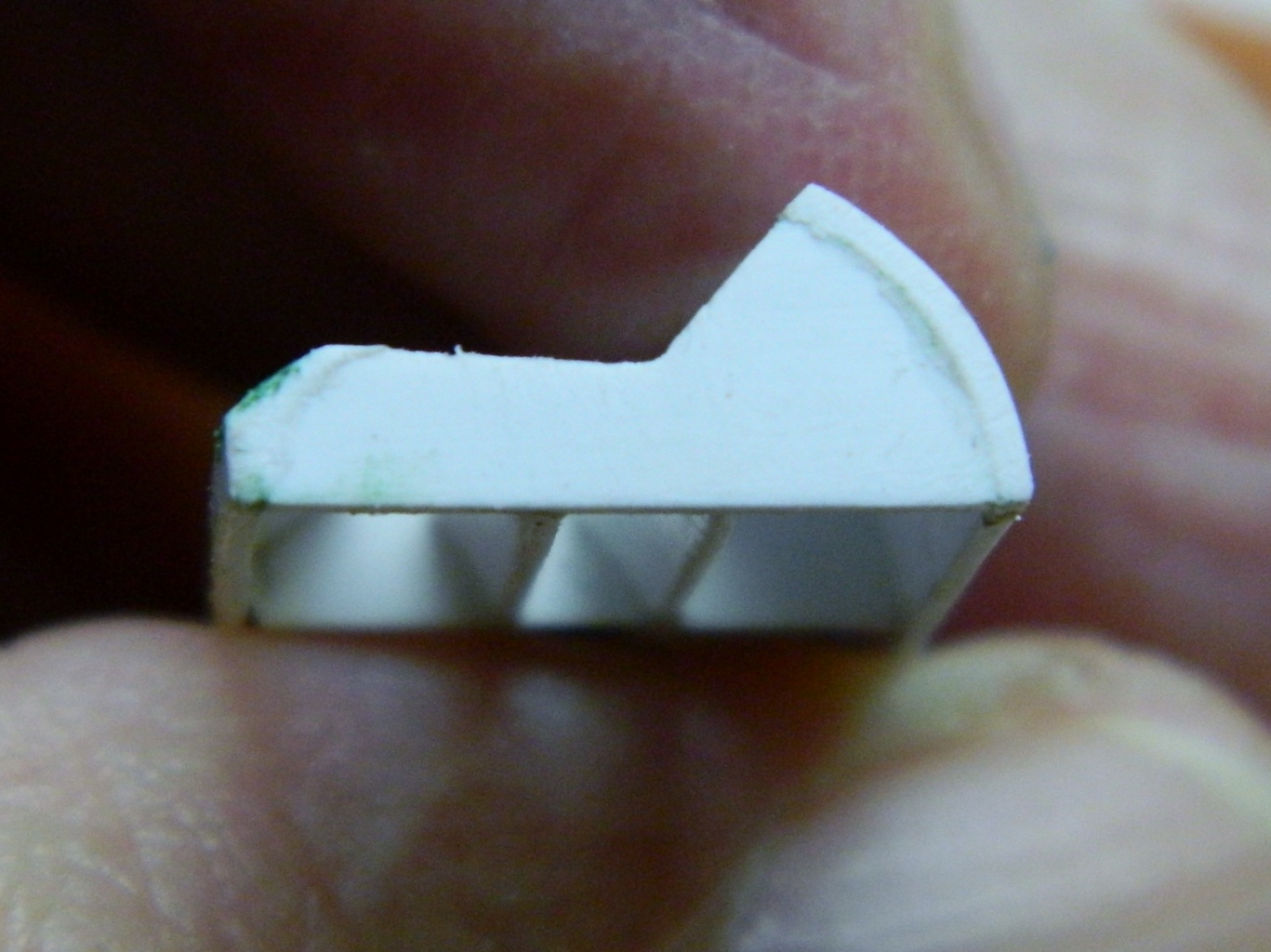
With the basic structure of the deflector (because I don’t know what else to call it) set, horizontal sections need to be added. They follow the same curve as the top of the deflector so I checked to see if the left over plastic I’d vacu-formed would work and it looks like it does:
With the structure done, things need to be tidied up and trimmed:
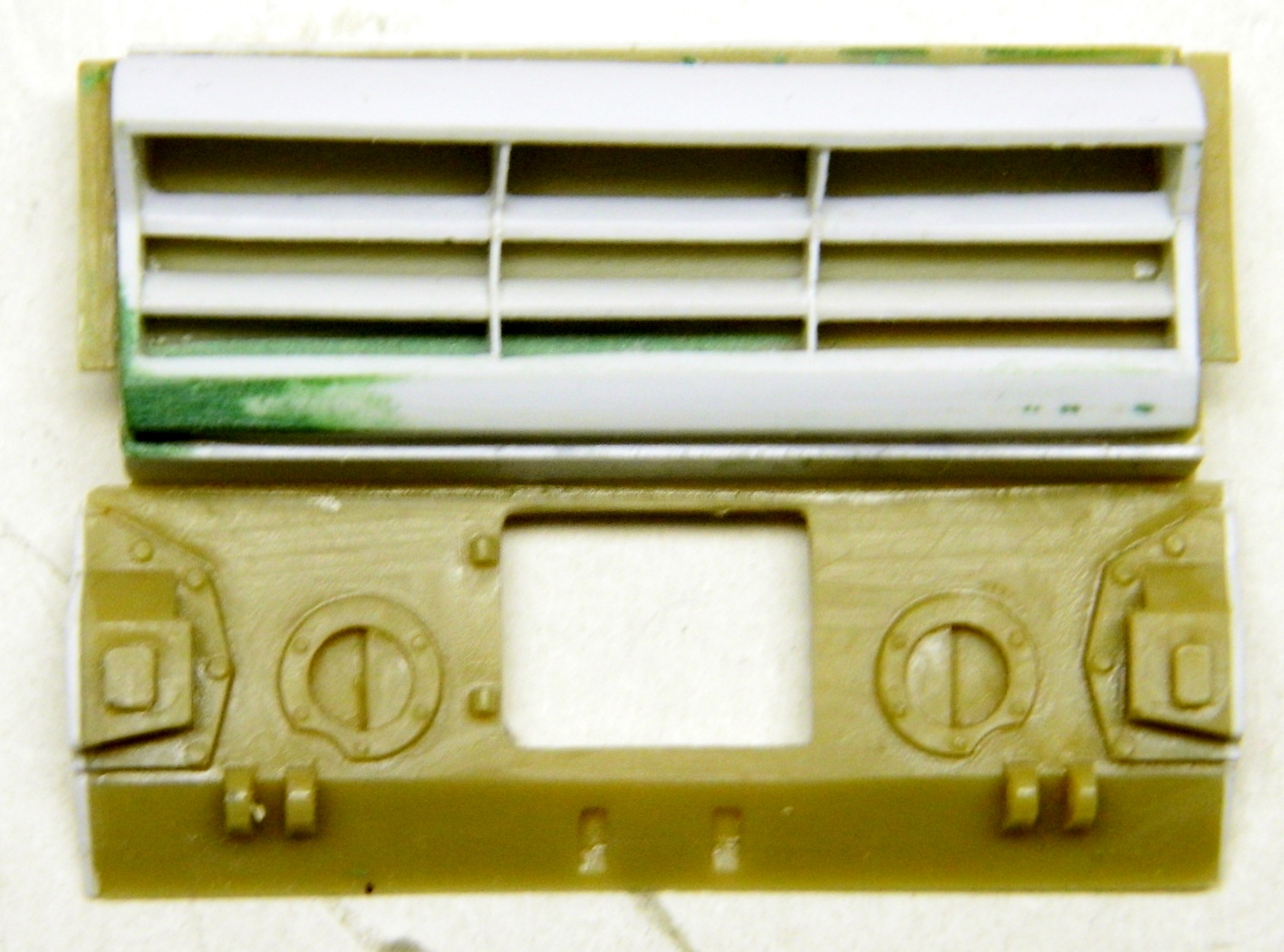
In the course of dry-fitting the deflector to the back of the radiator bulkhead I dropped the Damned Thing. That would have been okay because it’s light and no damage would have happened to it if only my reflexes hadn’t gotten involved and grabbed the Damned (and fragile) Thing. So I had to repair it and the result isn’t quite as good. As it turns out, this part will be mostly (if not completely) hidden. So lest I drop the Damned Thing again, it gets glued to the radiator bulkhead:

With that done, it’s time to attach it to the lower rear piece, correcting the inaccuracy of its angle:
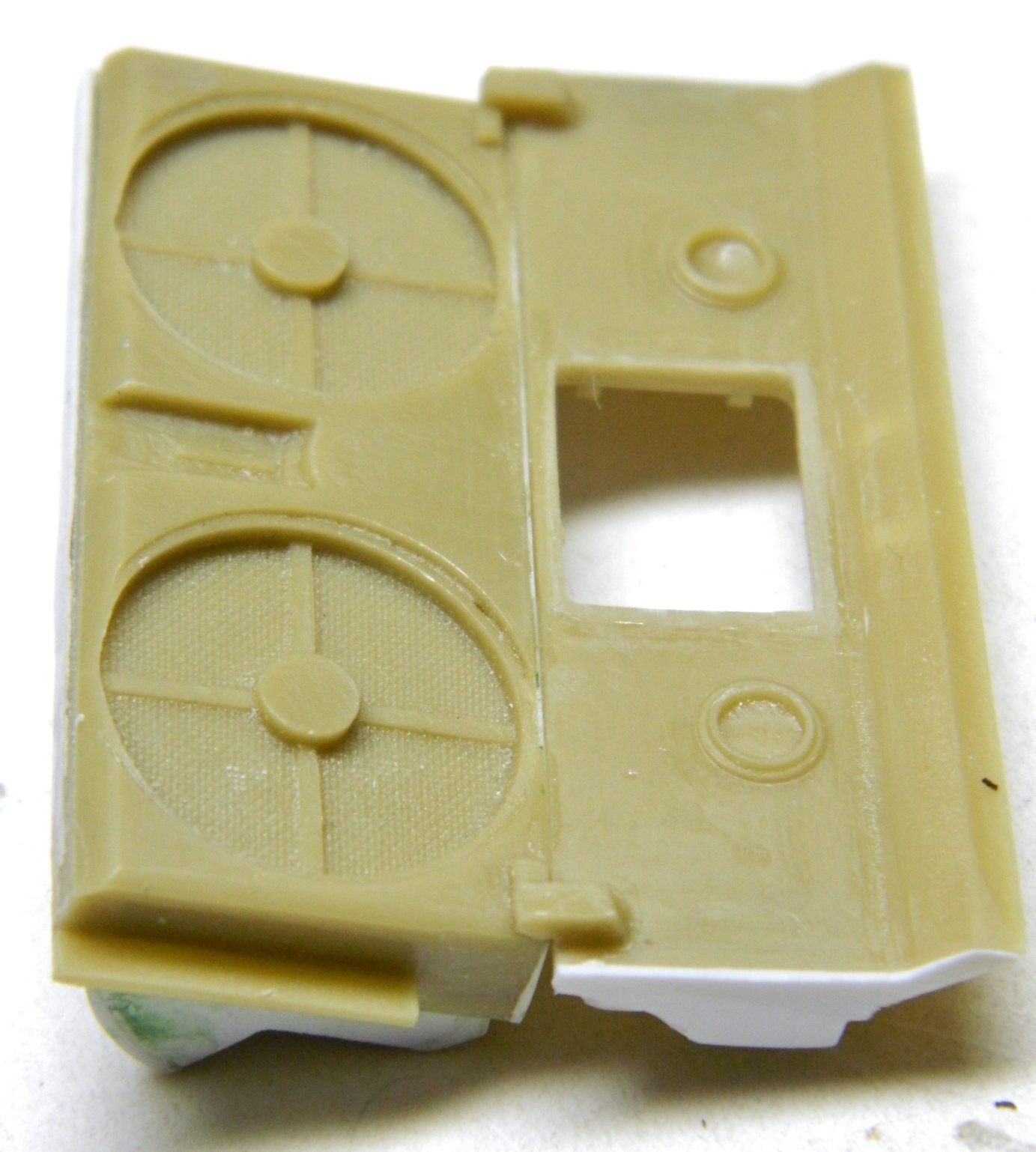
There were alignment tabs cast into the resin parts that had to go. I still wasn’t entirely satisfied by the line created where the radiators meet the lower plate so I masked off the radiator openings and applied putty to the seam. Later on I will scribe the line back in:
The kit part is in dark green at the bottom. There are “wings” on either side that I need to replicate on the replacement parts. Originally I thought I’d make them out of styrene but then realized that I already had the properly formed parts. Kit parts! So I’m going to measure, cut, and attach them to the replacement parts:
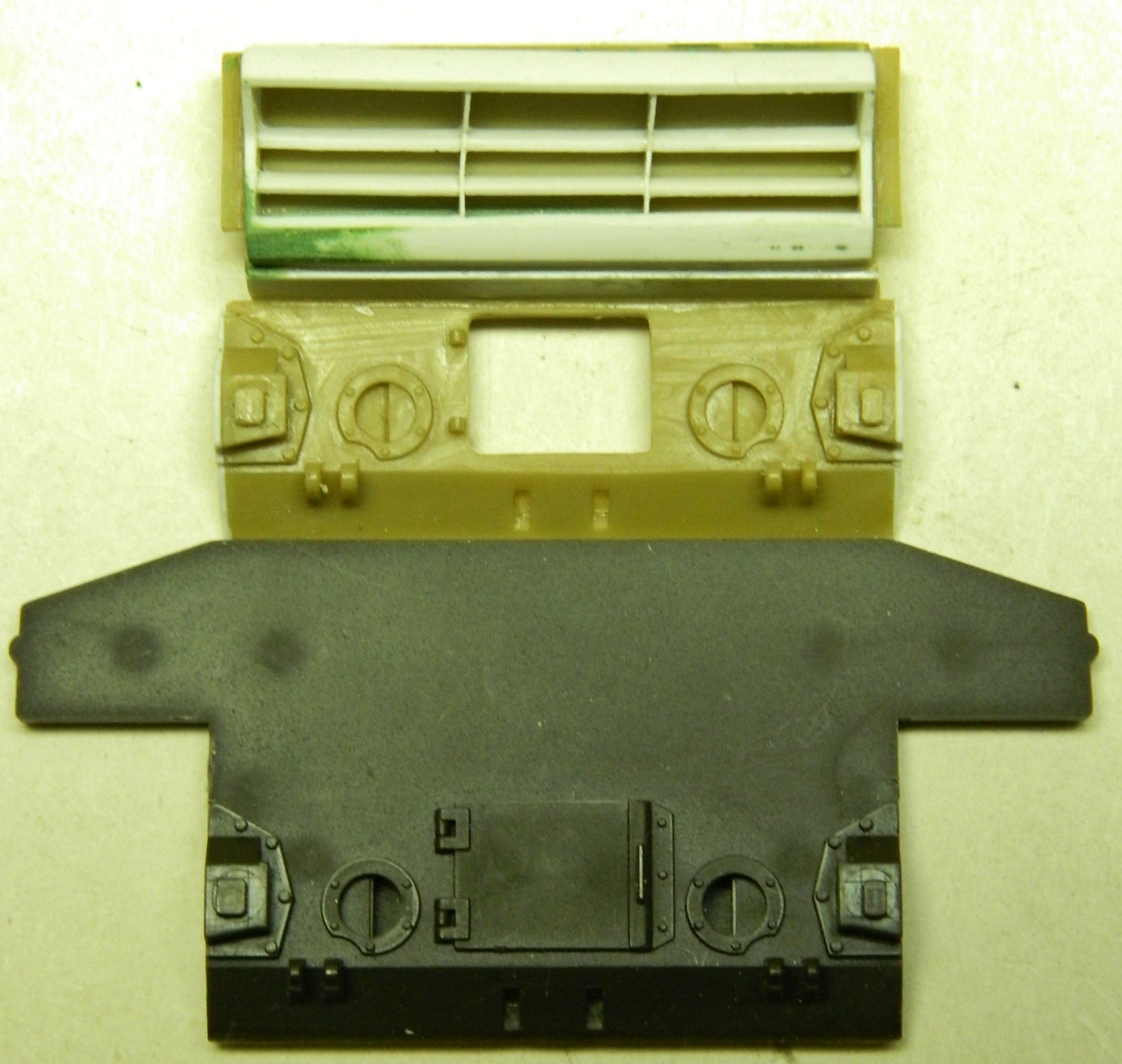
I aligned the bottom of the kit part to the bottom of the resin part and used a white colored pencil to trace the cut lines onto the kit part and made my cuts:

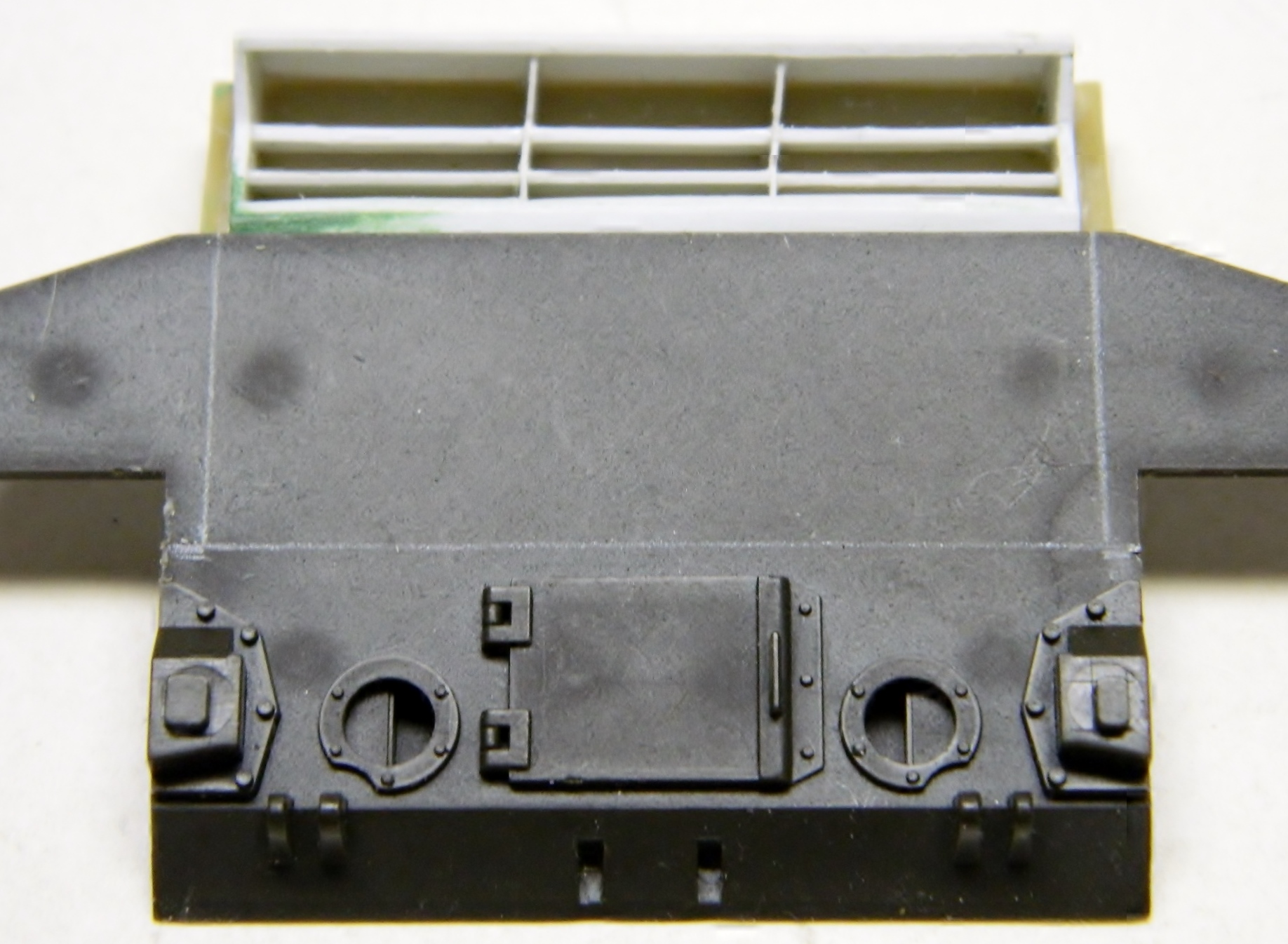
I don’t like butt joints; I find them to be too weak. When there isn’t any other attachment option, I prefer to add pins to not only locate the parts to where I want them but to also strengthen the joint. First I cut slots to “socket” the addition, then I added the pins (22 gauge wire):

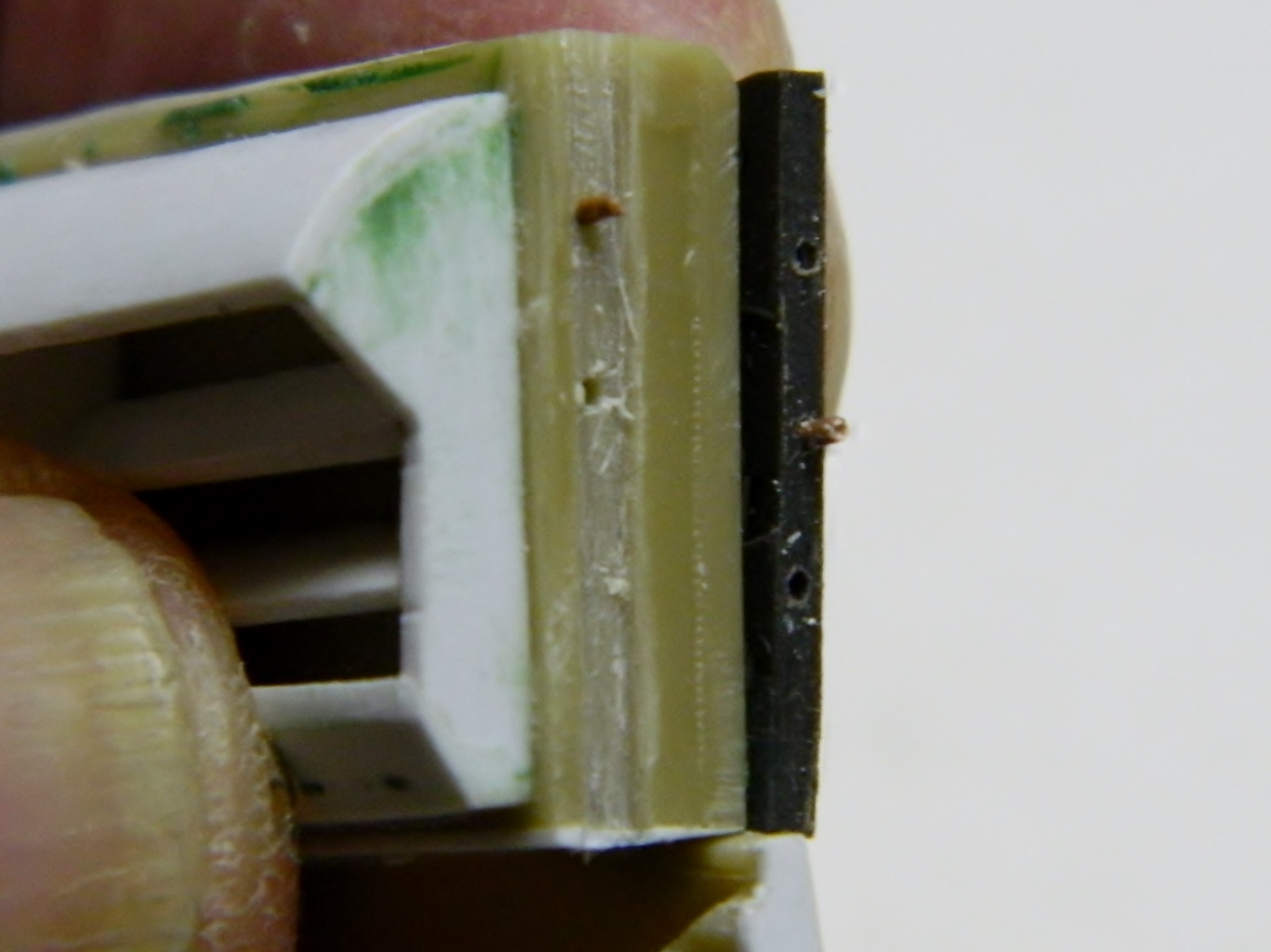
Dry-fitting is also easier with pins, and dry-fitting, in case you haven’t noticed yet, is important to do, especially when doing modifications to parts or adding after-market parts. It’s SO much easier to fix fitment problems that way:

Yep…they sit right where I want them so they were glued in place.
Dry-fitting the assembled rear to the lower hull I saw that I had to add styrene to fill gaps between the hull and rear. I’m sure this will require tweaking later on but it works for now:

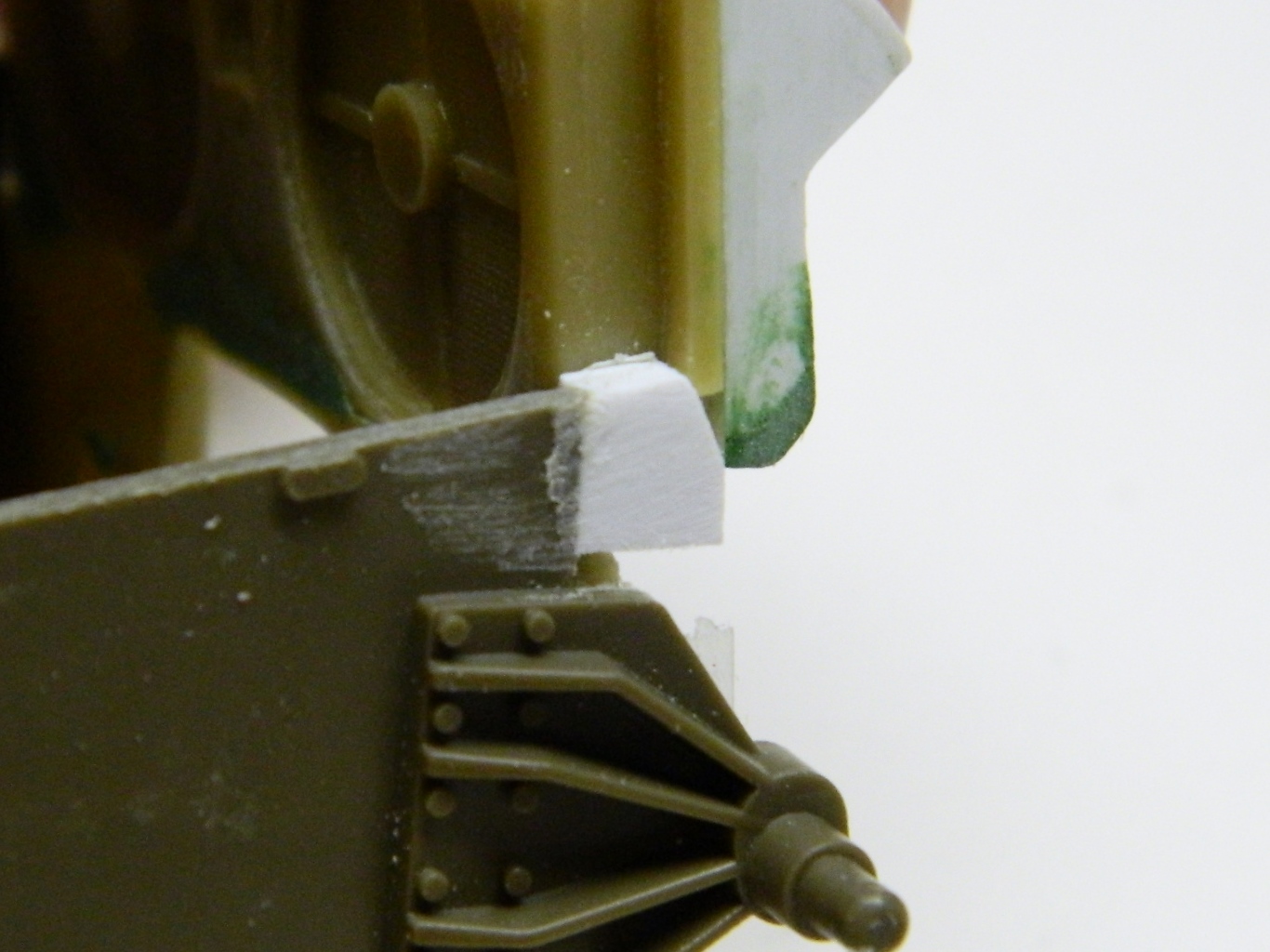
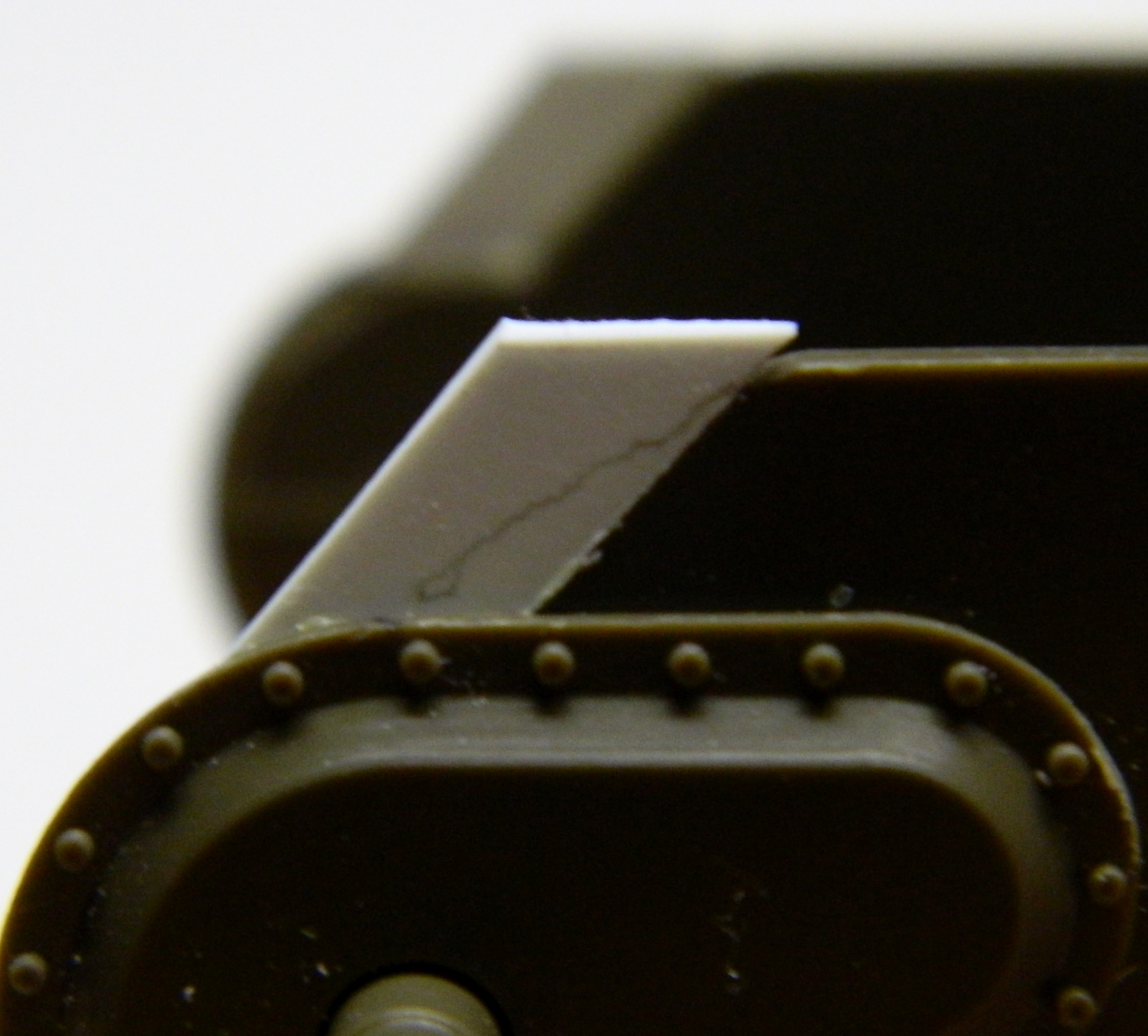
At this point I moved to the other end of the lower hull to address more fit problems. I have no idea what Tamiya’s engineers were thinking when they engineered this kit (I get into that in more detail in “Opinions, Reviews, and Tips” later on). My thought concerning the fit problem below is that the lower hull was an attempt at a one-size-fits-all part for their M4 kit. (That whole “economics” thing. ::spits::) Whatever their reasoning was, it left me having to fix gaps on either side of the lower hull where the differential housing attaches to the lower hull. I used styrene to fill those gaps:

Making the Vacuum Chamber
Now that I can generate vacuum, I need a place to generate a vacuum in and that’s a vacuum chamber.
Commercial/scientific vacuum chambers are expensive…like sometimes into the thousands of dollars expensive. Though one would be nice to have, I have neither the money nor the necessity for that level of chamber. What I need is something vacuum tight that can hold that vacuum long enough to provide utility.
I’ll be using an 8 1/2″ diameter Pyrex bowl, an acrylic chopping board, and some other bits to hang it all together. The bowl will need to seal against the acrylic board and to do that it will need a gasket. I have an old backpacker’s sleeping pad that I use whenever I need closed-cell foam and that’s what will make my gasket. The bowl itself has a 3/8″ lip around the edge which will make attaching the gasket easier.
I used Contact Cement on the lip, turned the bowl over and placed it on the foam, then I added a few pounds of weight to the bowl to ensure a good seal and bond:
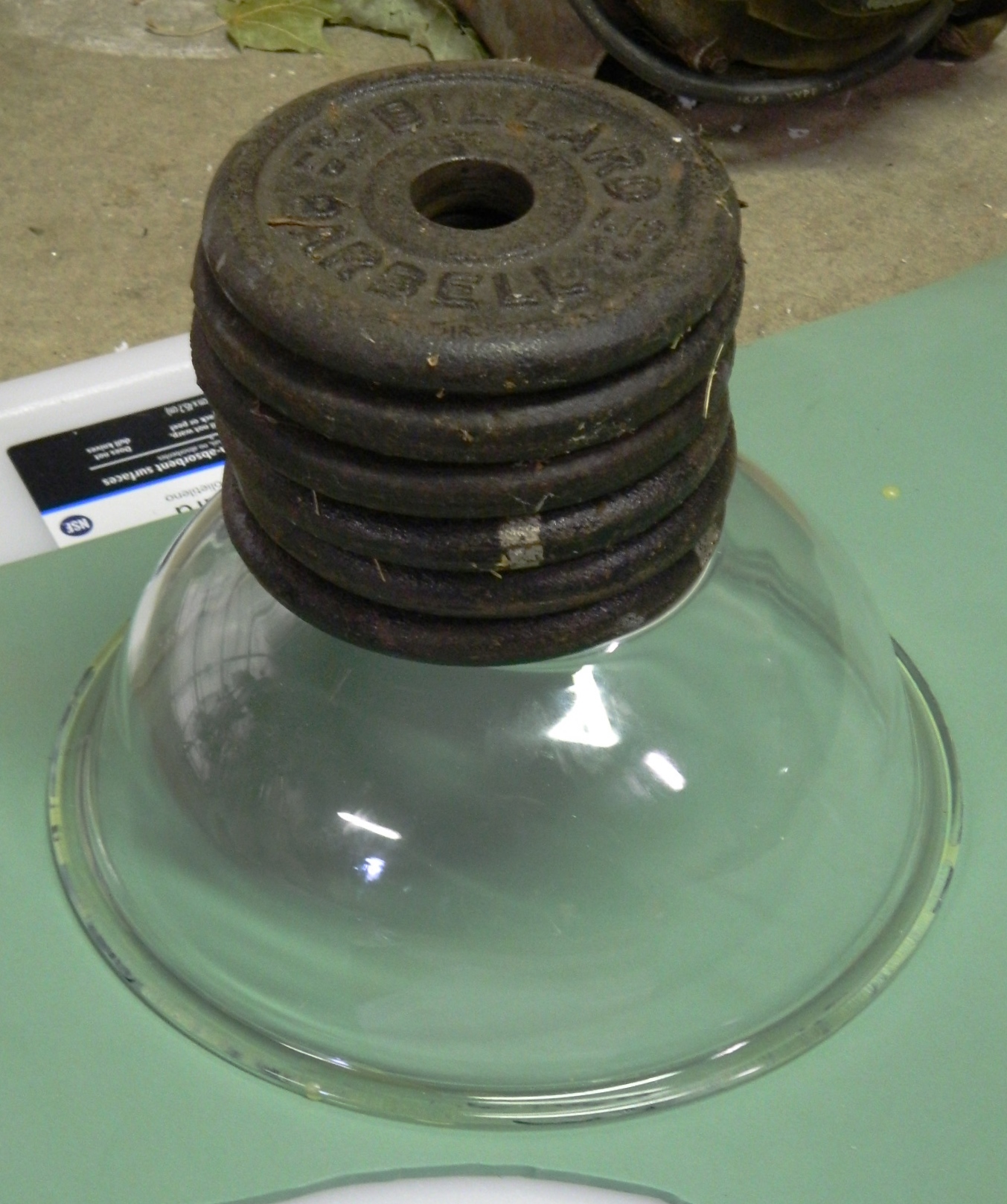
I let it set up overnight, then cut the foam away, leaving a gasket around the edge of the bowl:
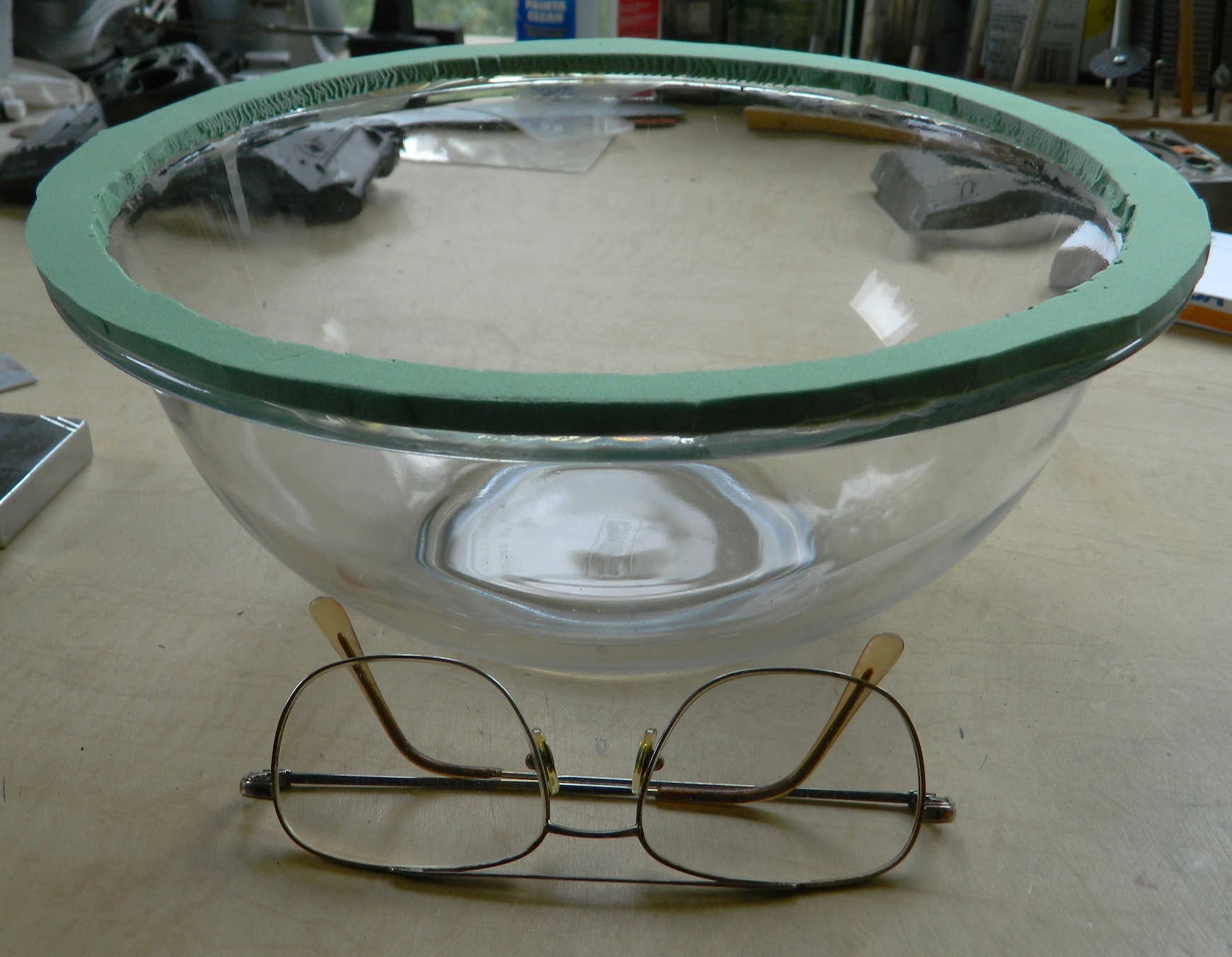
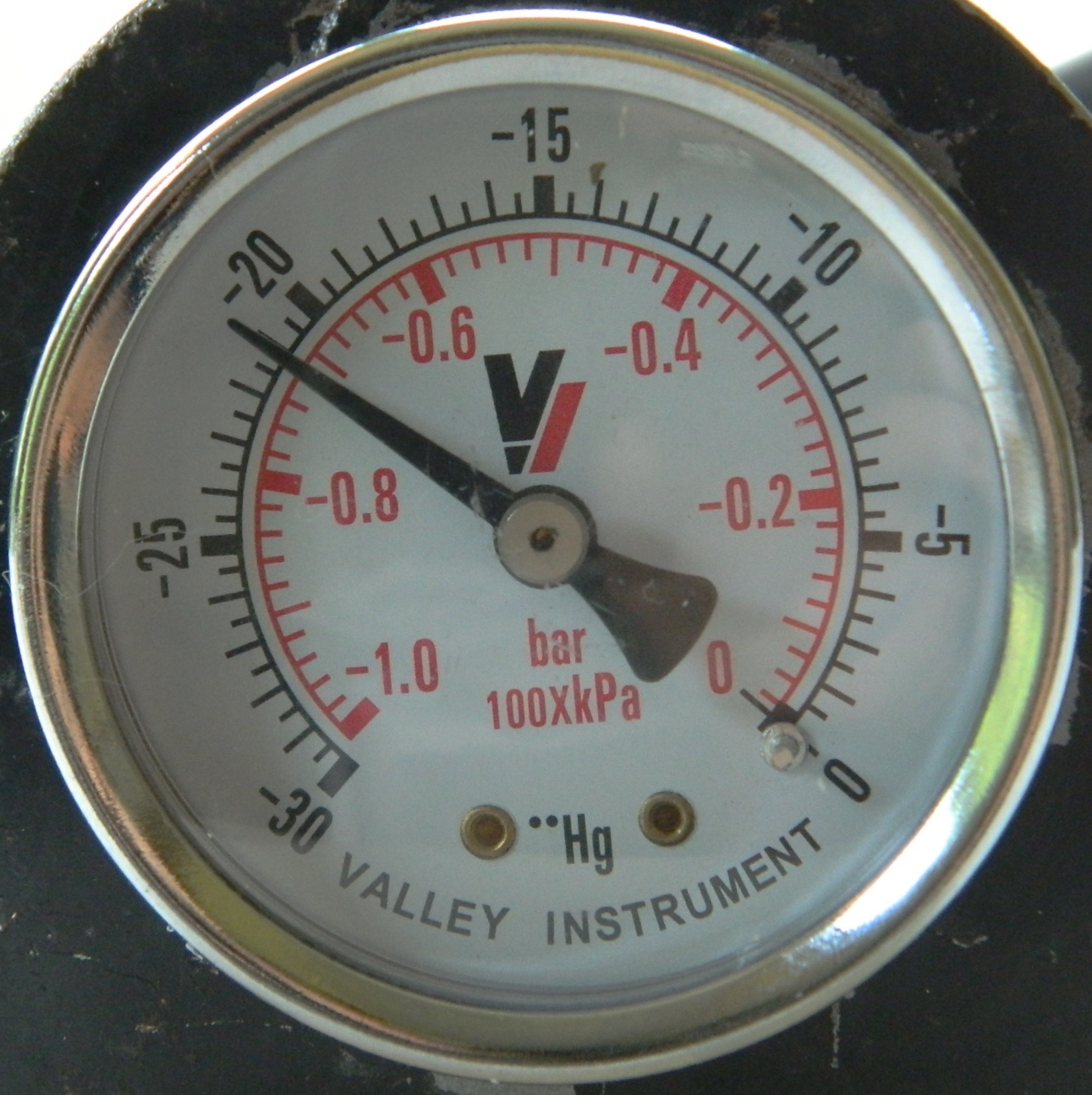
Because each component of this chamber could leak, I decided to test each component as I added it for vacuum tightness to make fixing what leaked easier. As with the V1.0 version of the pump, there was a V1.0 version of the chamber (which didn’t work; don’t use plywood for the base). I’d already checked the gauge and release valve for tightness, so each time I drilled a hole and screw a fitting in, I tested it:
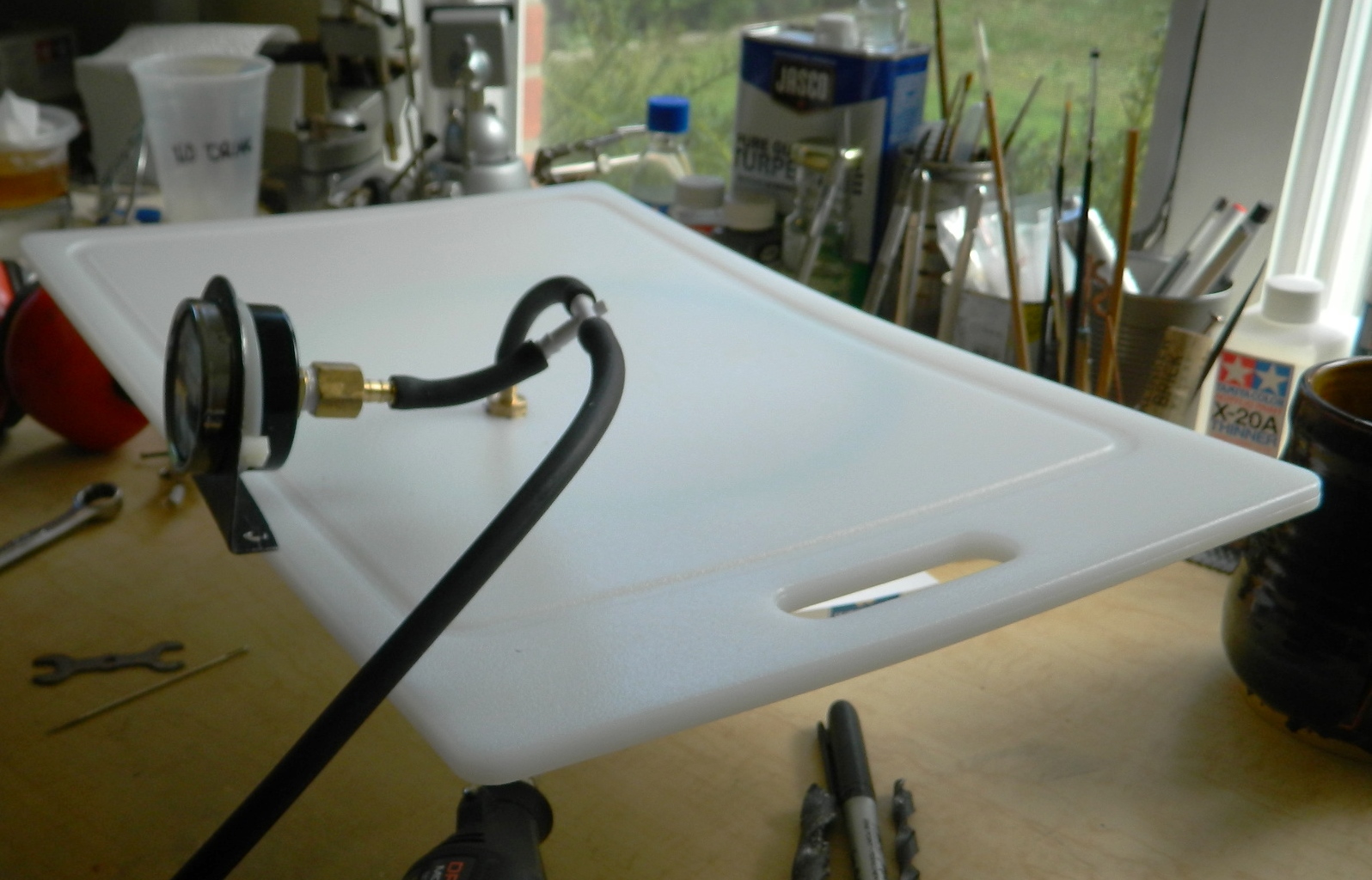
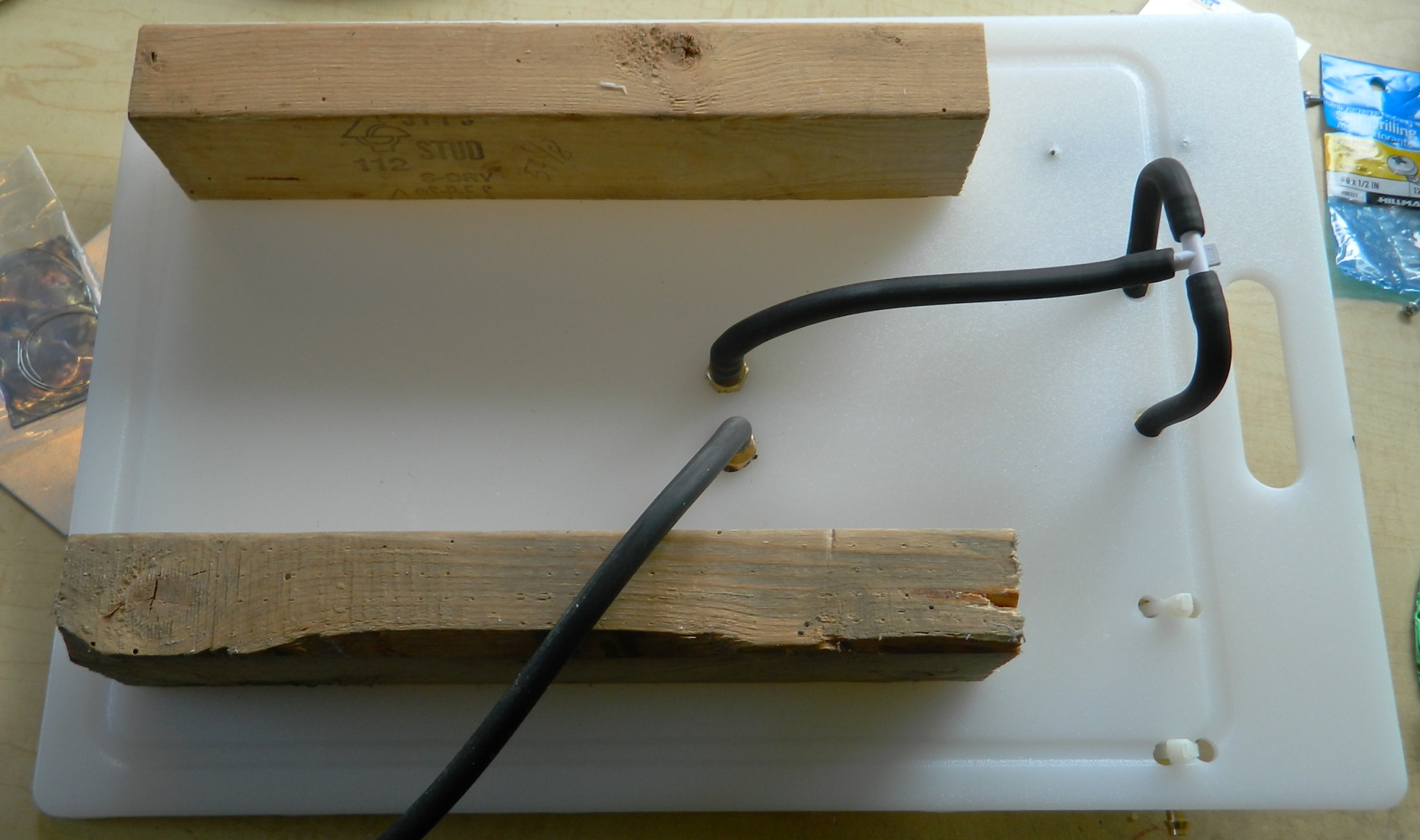
Yes, the acrylic board is a bit thin and under the pressure it bent. I’ll fix this later by adding stiffening legs underneath it to minimize the deflection.
It’s really a simple thing to build and it didn’t take long. This is the (mostly) completed vacuum chamber (because there are always tweaks, y’know). As you can see, I used some scrap wood to make the stiffening legs and they work fairly well. There is still deformation but it’s well within tolerances:

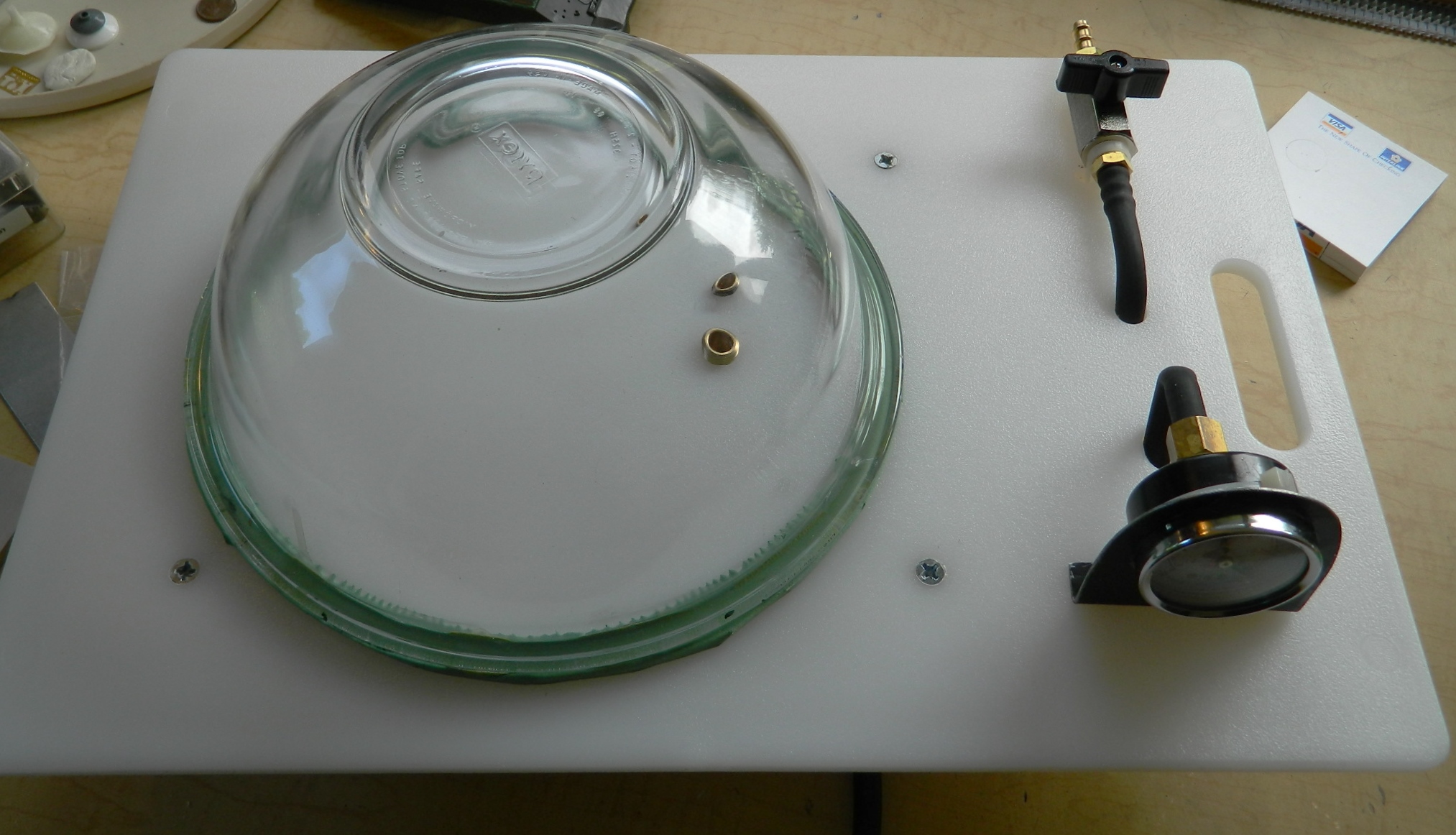
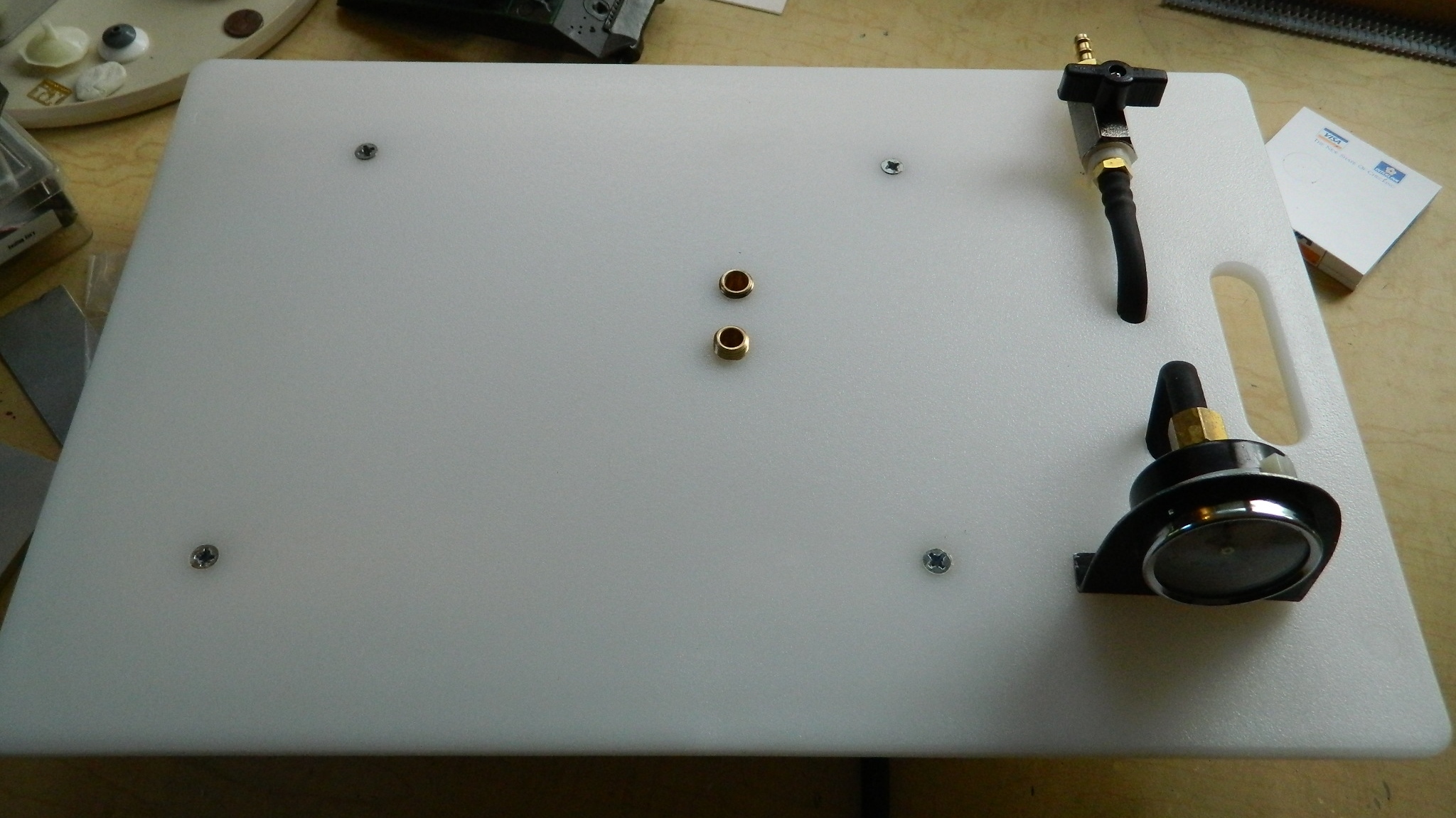
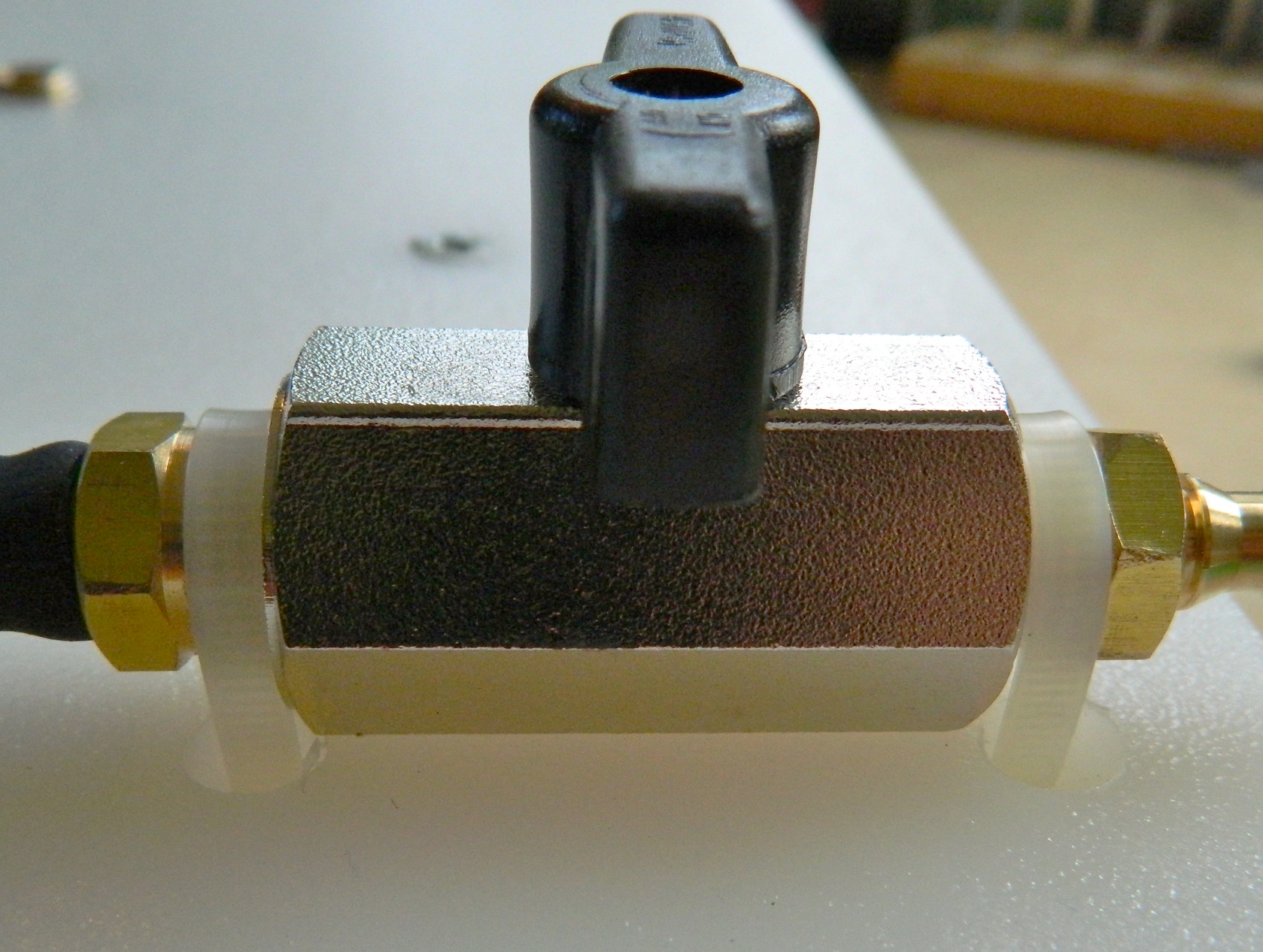
I attached the release valve using cable ties:

Because the surface of the acrylic board has a pebbled texture, I was curious to see if the foam gasket would seal well enough and it does.
During use, I’ve discovered that it’s VERY easy to have the silicone molding rubber overflow the mold boxes. To keep that from happening, I diddle with the release valve, increasing the vacuum, then releasing it when the bubbles threaten to overflow the box until enough of the air has been purged to keep that from happening.
Also be careful of what you’re using as the body of the chamber. You wouldn’t think that atmospheric pressure, 15 lbs. per square inch, would pack so much power…but it does. I haven’t had any problem with using a Pyrex bowl; it’s made of tempered glass and the hemispherical shape distributes the atmospheric pressure evenly. Just be careful AND USE EYE PROTECTION WHENEVER YOU’RE WORKING WITH A VACUUM CHAMBER!!
Making the Pump
I needed something to pump the air out of an enclosed space and, oddly enough, that’s called a pump. Most of this pump is made from PVC pipes and fittings you can get at Lowe’s, Home Depot, etc.
What you’ll need:
2” PVC end cap (bottom of the pump body) (possibly 2 if you can’t find the reducer below, as I couldn’t)
1 ¼“ PVC end cap x 2 (piston)
2” to 3” PVC adapter (base)
3”x4” PVC closet flange (base)
2”OD x 16”L PVC pipe (pump body) (might have to buy 2’)
3”OD PVC pipe (short; base) (might have to buy 2’)
1 ¼“ OD x 20”L PVC pipe (piston shaft) (might have to buy 5’)
1 ½” x 2” PVC Reducer (piston retainer) (if you can’t find one, get another 2″ PVC cap)
¾ x 10” dowel (pump shaft handle; I used oak, but you can use whatever you wish)
PVC primer/PVC cement (two-pack)
¼“ hose threaded fitting, male x 2 (to attach the pump and release valve and vacuum gauge to the vacuum chamber)
¼“ hose threaded fitting, female (to attach the vacuum gauge to a hose)
¼ “ vacuum hose
T-fitting (to attach the vacuum gauge and release valve)
Vacuum gauge
Valve (to release the vacuum)
1/8” sheet rubber x 4 (Plumb Pak 6-in Rubber Washer, found in the plumbing section)
1/16” sheet rubber (Plumb Pak 6-in Rubber Washer, found in the plumbing section)
So that confusion is minimized, I use the following terms to describe the various parts:
Pump base (closet flange, 3″-2″ reducer, 4″ piece of 3″ pipe)
Pump body (the part that holds the piston and attaches to the pump base)
Piston (the major moving part that rides up and down in the pump body to evacuate the air from the chamber)
Before you start cutting, drilling and gluing, a general note regarding PVC pipe and fittings. These things fit TIGHTLY. Having pipes seated all the way into the pipe is A Good Thing, so when I was gluing this all together, I hammered the pipe all the way into the pipe. When gluing, use adhesives specifically for PVC. It’s a two-part step. The first part is to prep the surface with the primer and the second step is to use the adhesive. The adhesive should not be a gel but rather it should be a thick liquid. Also, use in well-ventilated areas! This stuff is strong and is not good for you to inhale.
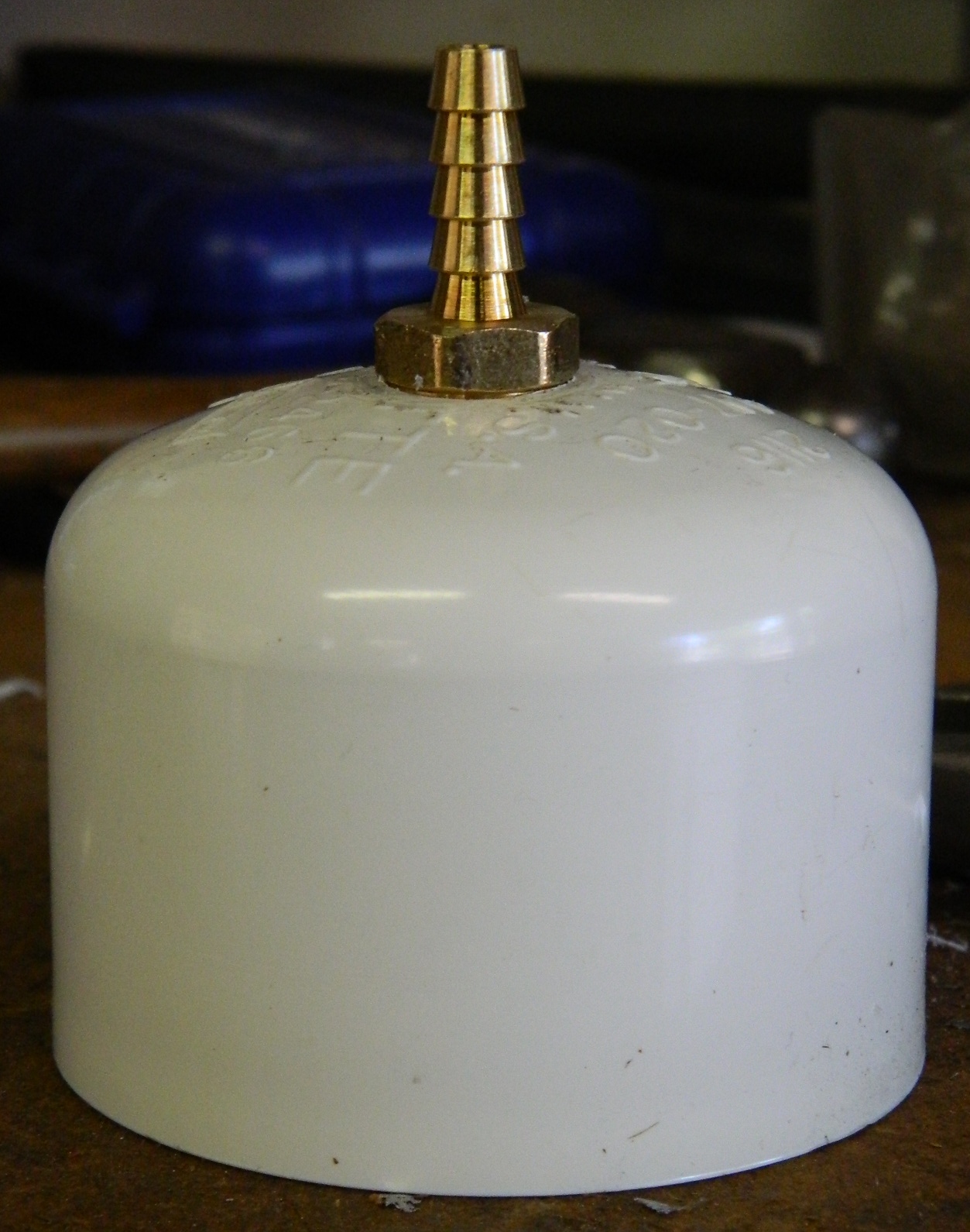
I started by drilling a 2″ end cap and seating a hose fitting to it:
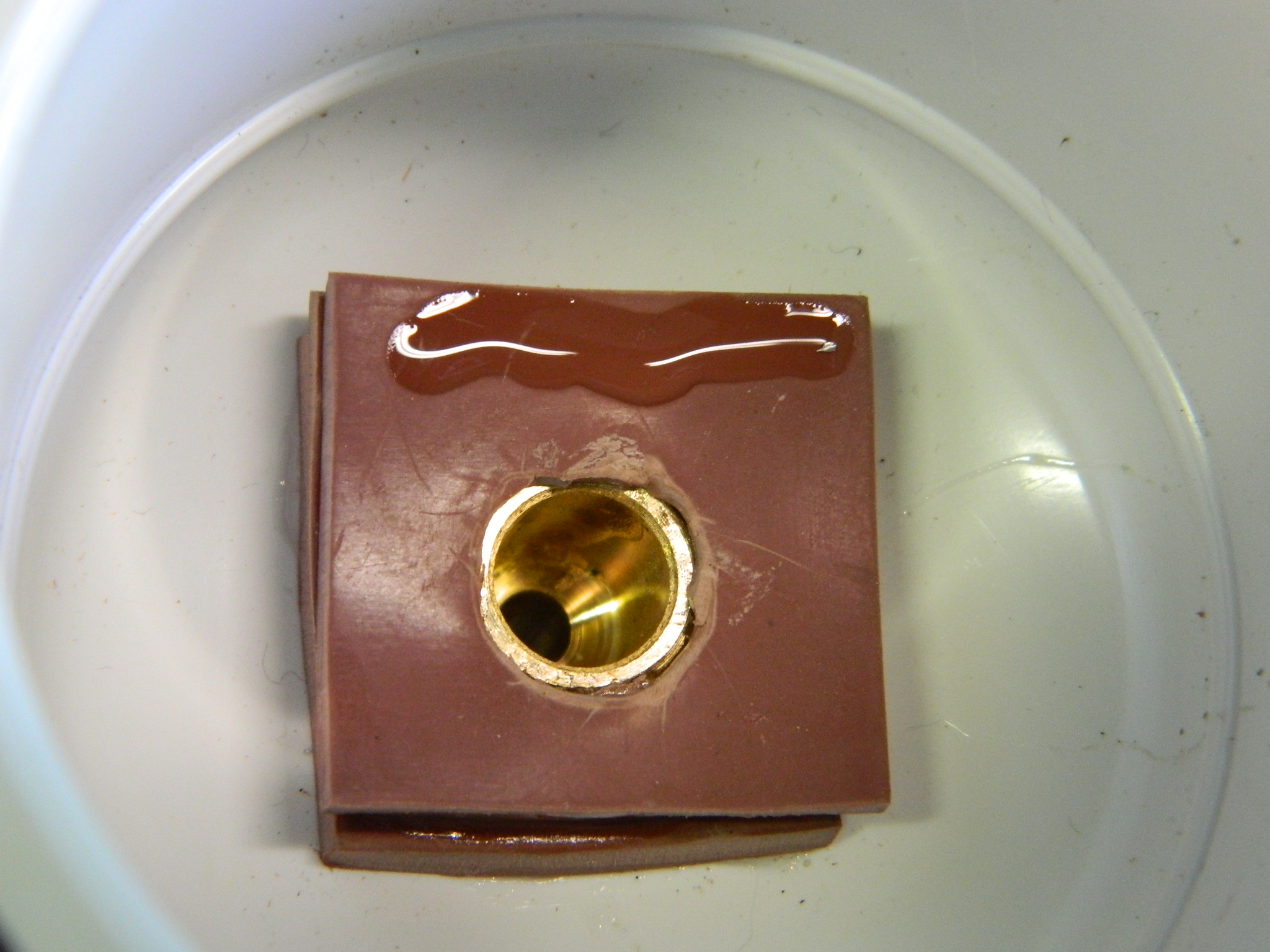
I made a flap valve using a few pieces of 1″x1″ 1/8″ rubber sheet by drilling out the centers. I used enough pieces so that the end of the brass fitting sits below the stack of rubber. Then I glued a 1″x1″ piece of 1/16″ rubber along one side only. This is the valve that closes under positive pressure to void the air pulled from the vacuum chamber to the outside:

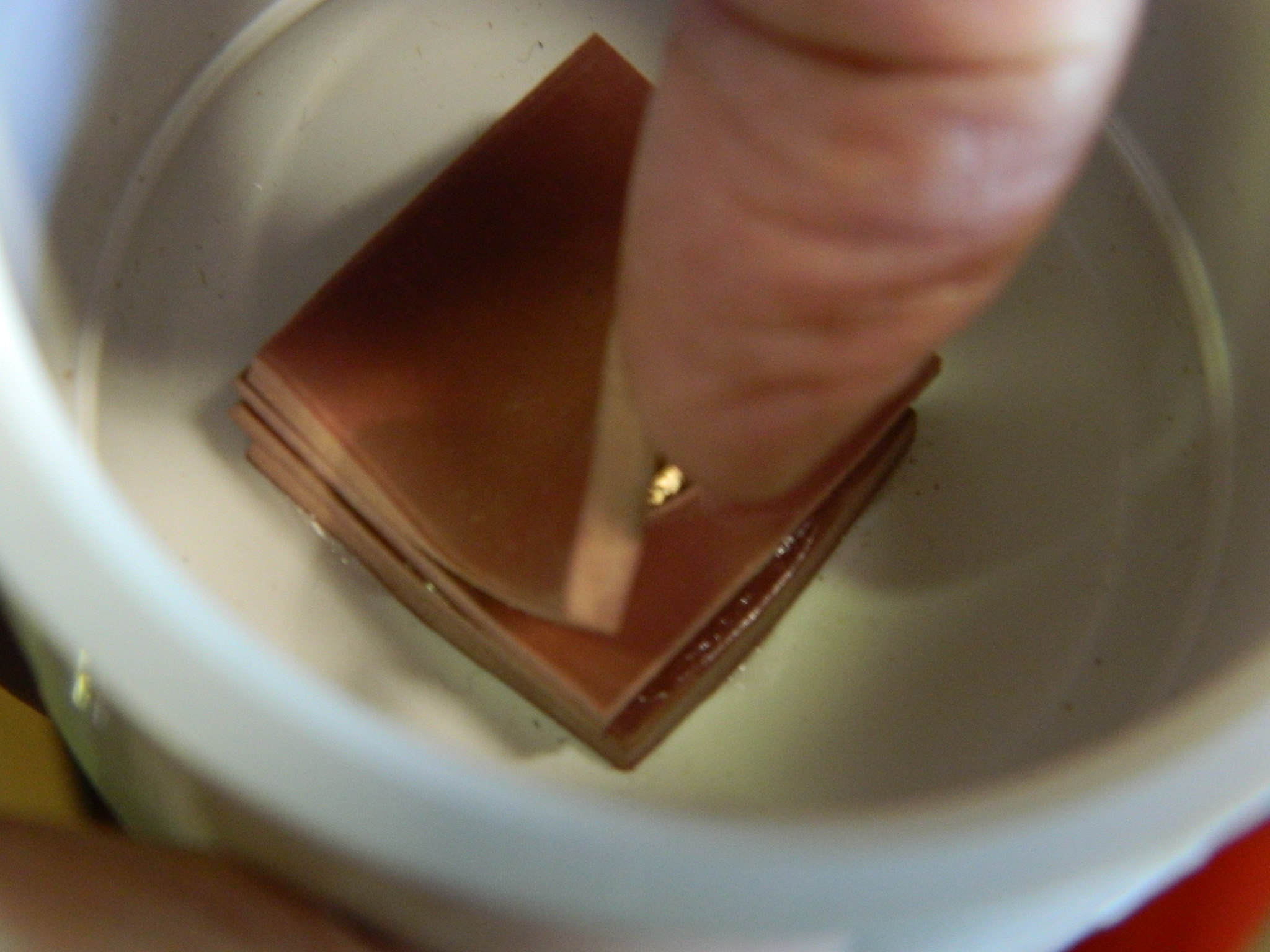
I had a massive problem with the V1.0 pump. The body of the pump didn’t go all the way into the end cap with the valve and fitting. The first time I pushed the piston all the way in, the O-ring passed the end of the pipe…where is stuck. Solidly stuck. Which is to say, wouldn’t sodding come out. After two hours of very colorful invective (using some words in combinations that I hadn’t used in decades when I had to start an English motorcycle in the rain), I did manage to extract it (drilled the body of the piston crosswise, put a 1/2″ stainless steel rod through, braced the edge of the cap in a vise, and HAMMERED THE SNOT out of it with an engineer’s hammer, which finally extracted the rod, but required sufficient force to bend the stainless steel rod). I needed to figure out a way that this would never, ever, happen again…
I took a short section of the 1 ¼“ pipe and glued it into the 2″ cap around the flap valve. I cut the corners off the flap valve so there would be no interference, and superglued that ring in. I measured (a lot) to be certain that it was physically impossible for the O-ring to ever pass the end of the pump body again. EVER:

Then I drilled near the bottom of this cap/valve/fitting assembly and made the valve that closes under negative pressure to keep the outside air from getting in and then glued the completed part to the 2″x16″ PVC pipe that constitutes the pump body. Make certain the pipe bottoms into the cap all the way:


A 1 ¼“ cap now needs to have a groove cut into it to seat the O-ring. With the V1.0 pump I didn’t cut this groove deep enough and on the first pump the O-ring popped out. I suggest that you cut the groove as deep as half the diameter of the O-ring’s thickness. The reason why the first groove was so shallow was because I was concerned that I would cut too deeply and the end of the cap would come off. I figured out a way around that.
Cut an inch from the 1 ¼“ tubing. You’ll need to sand/file the outside surface of it so that it fits easily (yet snugly) all the way into the cap and glue it in. This will give you enough thickness to cut the groove deeply enough:

Then it’s a matter of cutting the groove. Be patient and check your depth relatively frequently. Now that you have backed up the inside of the area you’re cutting the groove into, you don’t have to worry about cutting too deeply, but it does take some time to cut this groove and I didn’t want to cut any further than I needed to. And since I have a lathe, I roughed in the groove using a cutter and then finished its round shape with a rat-tail file (I actually went deeper than the photo on the right shows):


With the O-ring in place, this is the part that seals the piston inside the body of the pump and every time you pull up on the piston, it pulls air out of the vacuum chamber creating a vacuum. The end cap is glued onto the 1 ¼“ pipe and forms the business-end of the piston:
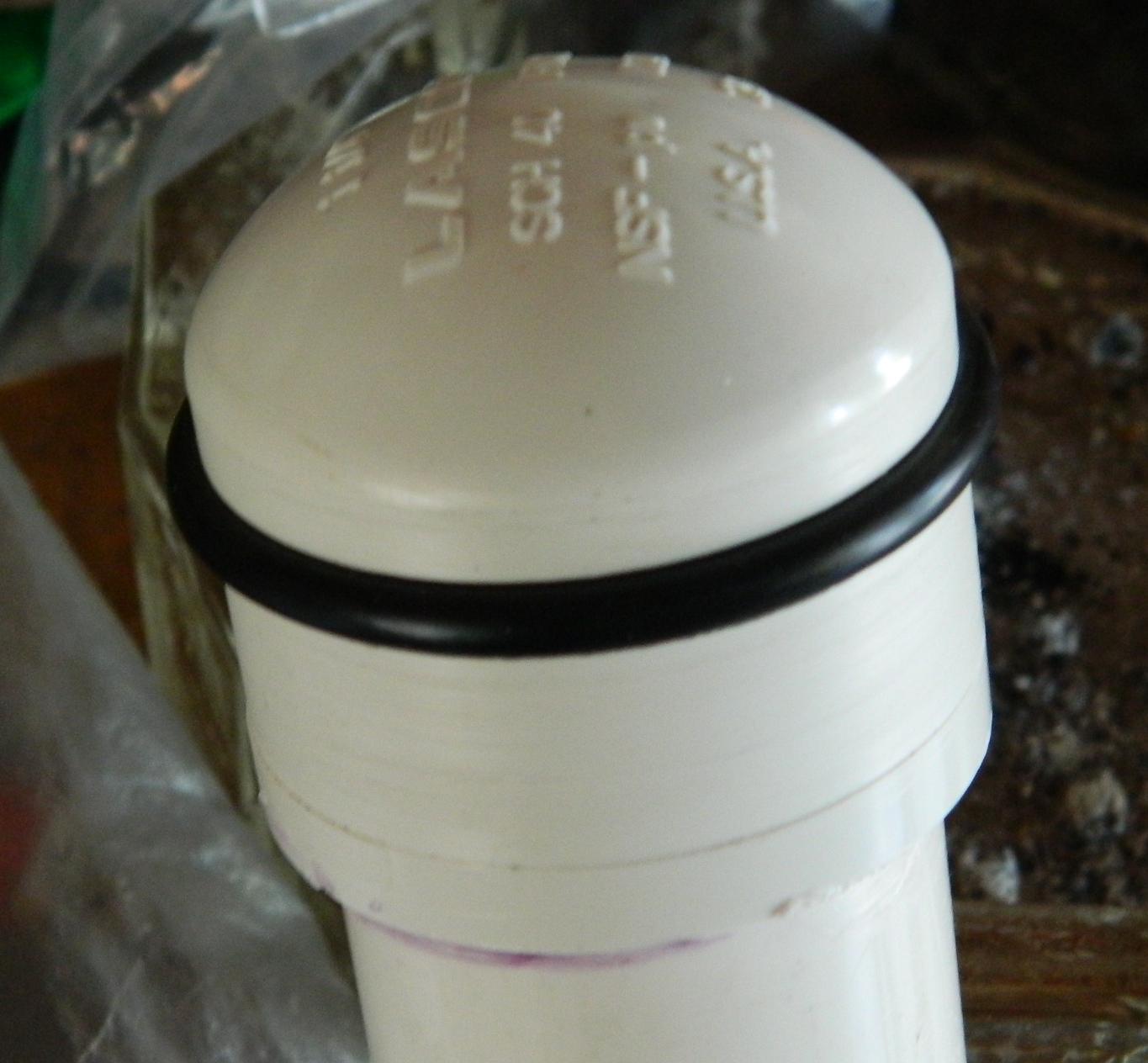
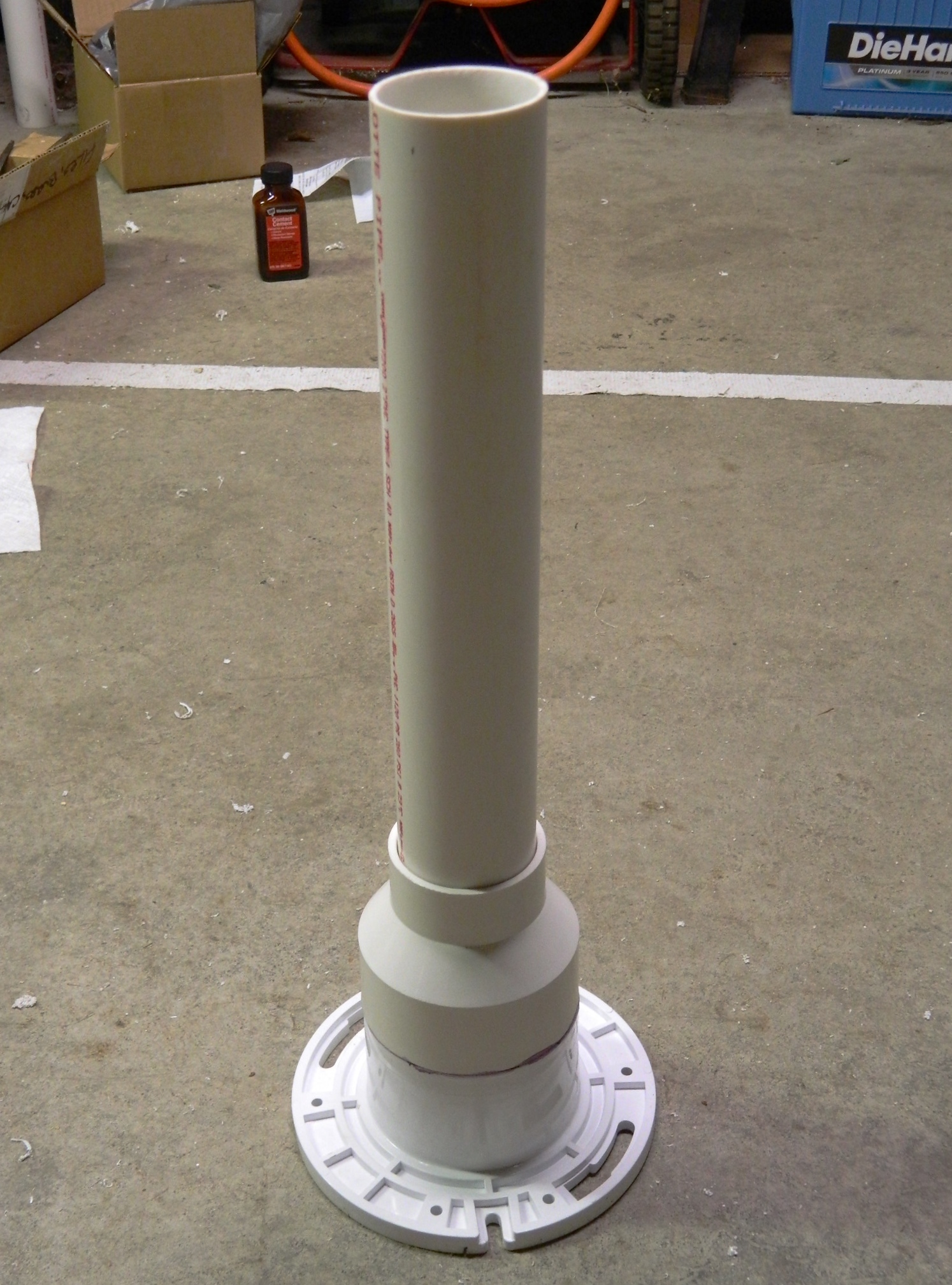
The base of the pump is assembled using the floor flange as the bottom. To that is added a 4″ length of 3″ pipe. But wait…there’s more. The 3″ piece of pipe needs a section cut out of it to allow the outer flap valve to work. Make sure your cut in the side of the 3″ is wide enough to accommodate the width of the outer flap valve. Once you’ve made that cut, the pipe will contract slightly. Reverse the piece you cut out and stuff it back into the opening. This will keep the section of pipe at the proper diameter and allow it to bond with the floor flange when you glue it (you’ll see what I had to do in the Vacuum Chamber section when I didn’t get this step quite correct).
With the reversed piece in place, the 3″ pipe gets glued into the floor flange. Let this sit for at least an hour (I let it sit for two) so that the parts bond solidly. You’re going to be standing on this and yanking upward firmly and often:

Reducers have a lip molded inside to keep the smaller pipe from slipping through the reducer. Since you’ll want the smaller pipe to slip through the reducer, that lip needs to be ground away. (If you have a Dremel or the like, that cuts down on the time this step takes.) Once you have that lip gone, you’ll need to open the inside diameter of the 2″ area of the reducer so that the body of the pump, a 2″ pipe, will slide through there. You want this to be snug but not immovable:

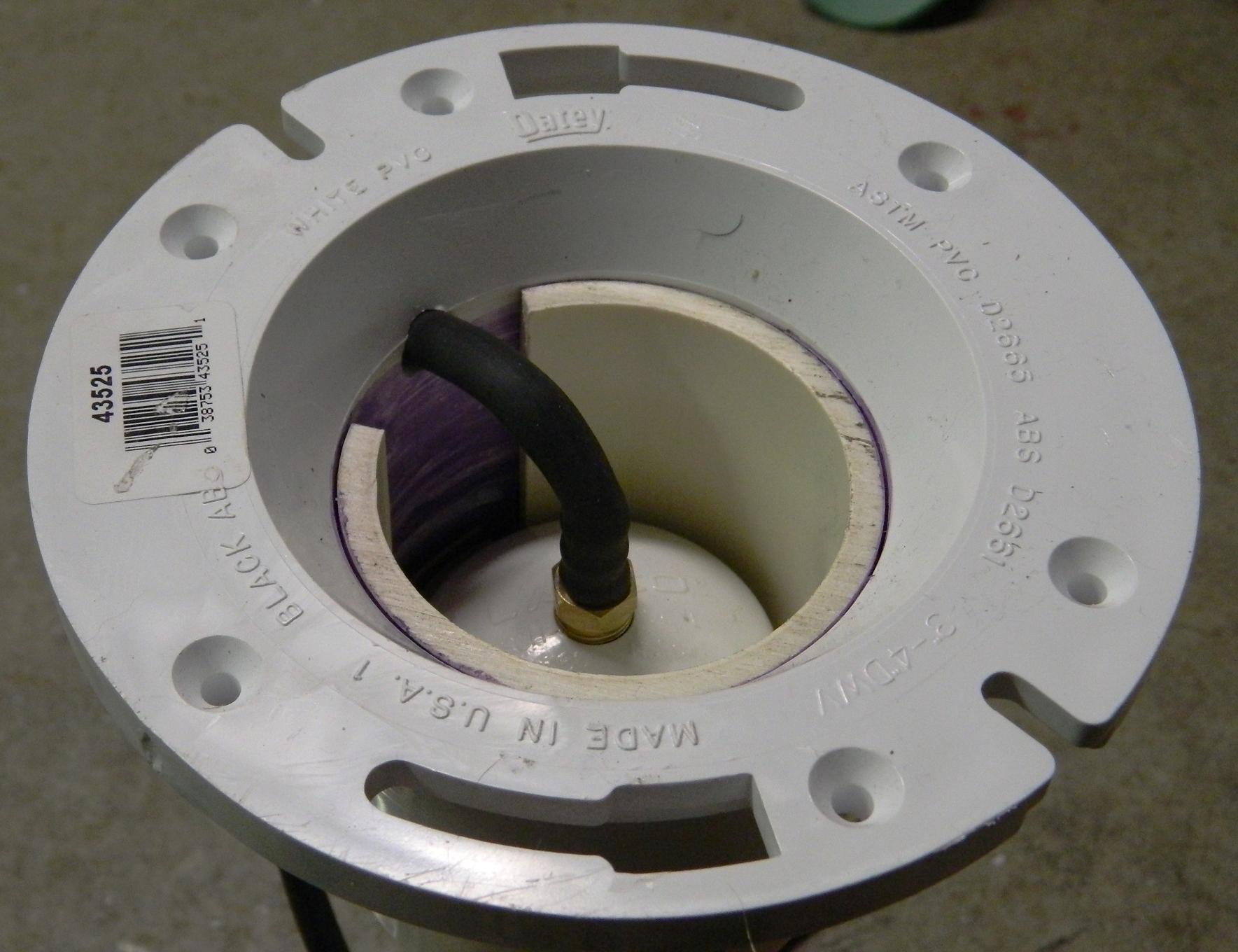
Snap the cut piece out of the pipe and then glue the modified reducer over it and drill a hole large enough for the vacuum tubing to fit through without pinching:
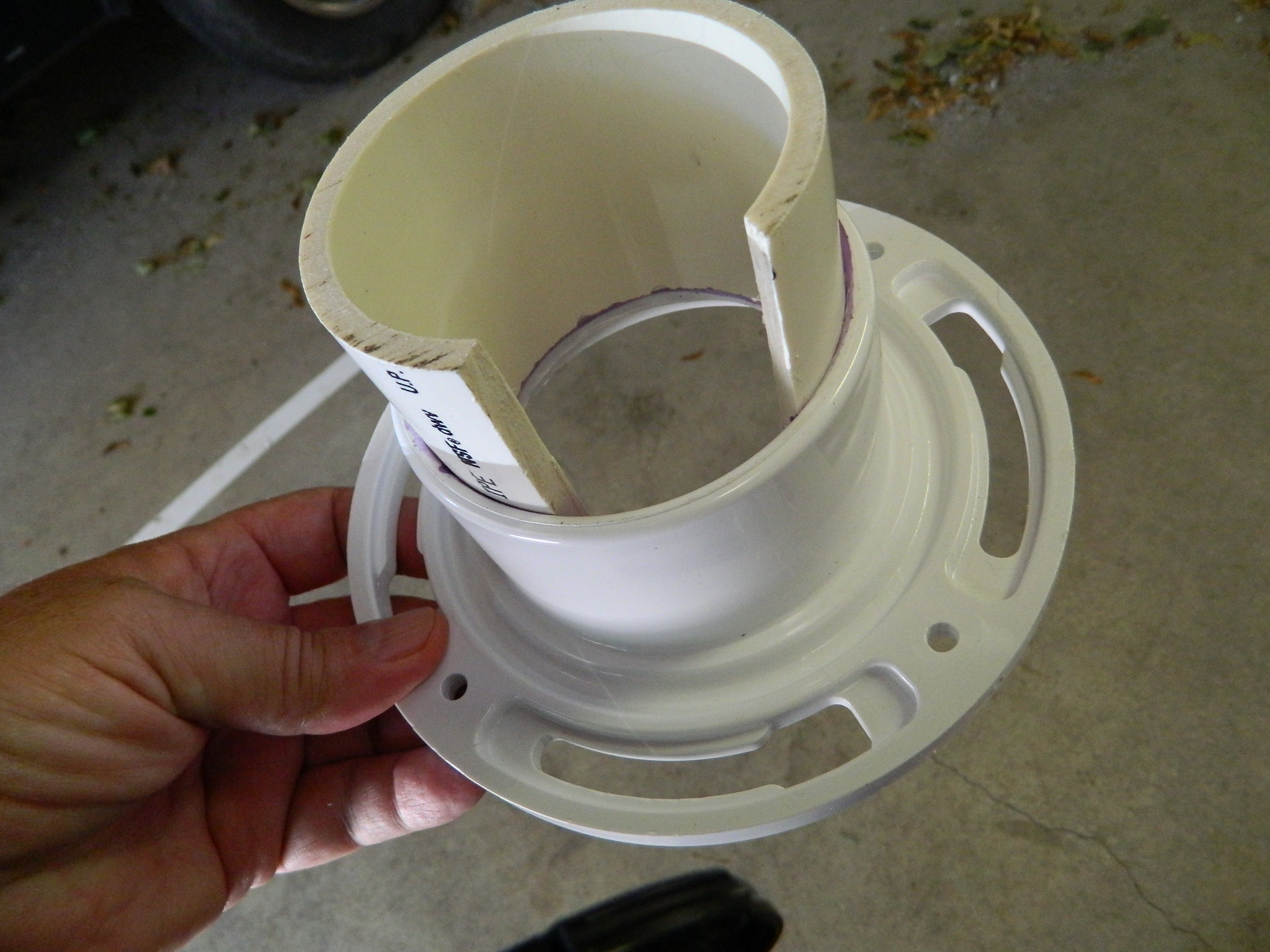

Now the body of the pump is fed up through the bottom of the base and glued, pushing the body in until the lip of the cap stops at the bottom edge of the reducer. Make sure that the flap valve and the cutout section of 3″ pipe align, otherwise the flap valve won’t work:
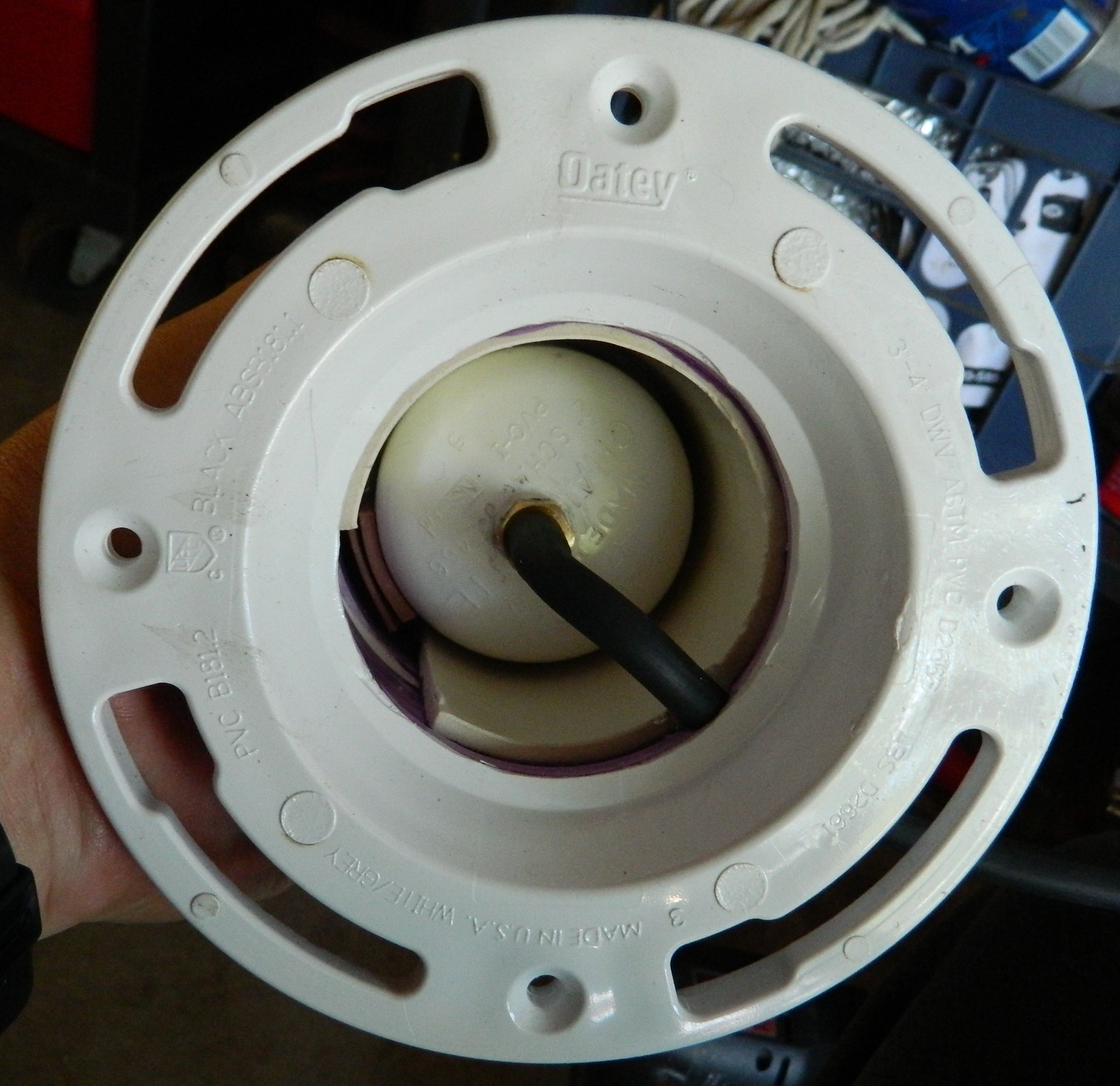
Time to insert the piston into the body. With the O-ring in place, THIS IS A TIGHT DAMNED FIT! The only way I was able to get the piston to go in was to chamfer the top of the body of the pump. I used a half-round file and sandpaper until the outer edge was about half the original thickness:

By now you should be here:
Feed the vacuum tubing through the hole and attach it to the fitting. Subsequent use of this pump showed me that the tubing doesn’t fit quite tightly enough so I used a cable tie pulled TIGHT to seal the tubing to the fitting:
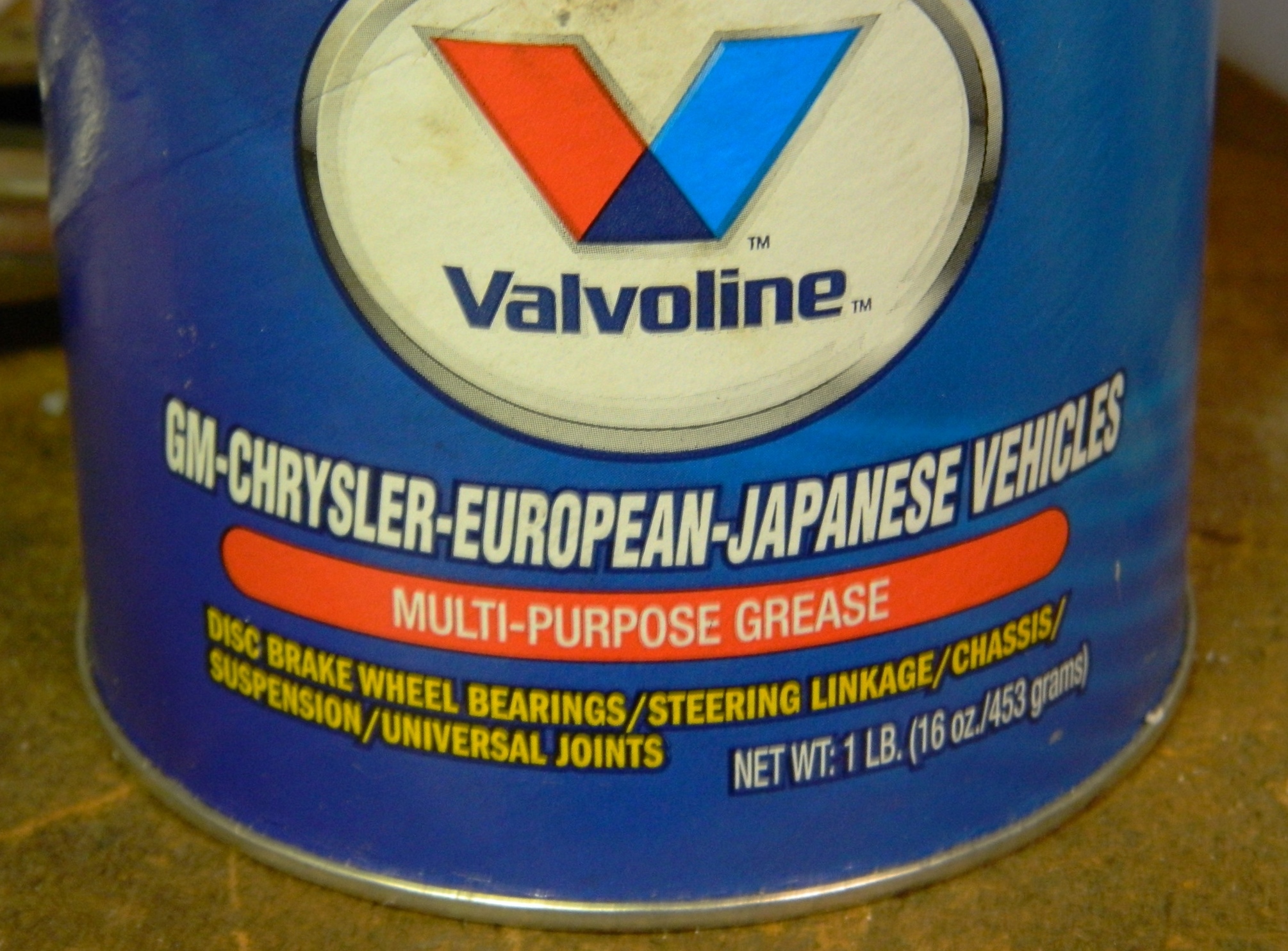
Time to install the piston. Use grease to help the seal, extend the life of the O-ring, and to get the TIGHT DAMNED FIT to…well…fit:


The retainer is needed to keep the piston in the pump because you will be pumping vigorously to build up vacuum. The video shows a reducer that I wasn’t able to locate locally. My way around that was to take the other 2″ cap, chuck it into my lathe, and cut enough away so that the body of the piston would slide freely within it (you can also mark the hole, start the hole with a bit, and either file or use a Dremel to get the diameter to where you want it):


And because I clearly remember how much sodding, freaking, GOD DAMNED FUN it was when the O-ring slipped past the body of the pump, I made sure that the O-ring would not slip past the body of the pump at the top, either:
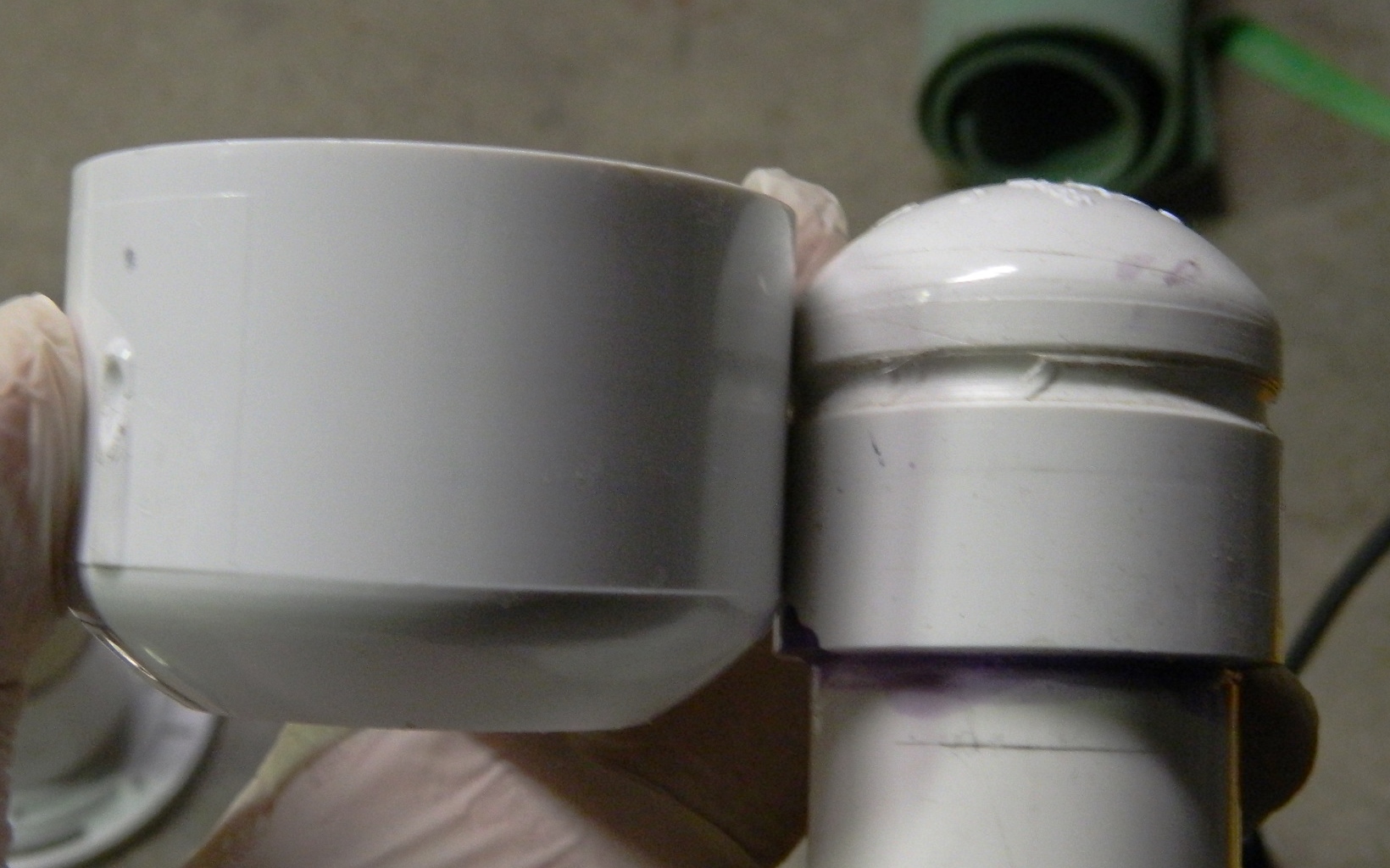
So, with the piston inside the pump body, slide your reducer over the body of the piston. Again, because these fittings fit TIGHTLY, I sanded the inside of the retainer (a lot) so it would fit easily over the end of the pump body and come off just as easily (eventually the O-ring will wear out and need replacing). To be certain that the O-ring would stay inside the pump body, I held the retainer in place with my hand and pulled (gently) up until the piston would go no further. Satisfied that all worked as intended, I glued the last 1 ¼“ cap in place on the end of the piston. I used self-tapping sheet metal screws to hold the retainer in place securely yet not intrude into the pump body and interfere with the piston:

All that remains now is to drill out the top of the piston and insert the 10″ long, 3/4″ diameter, dowel to use as my handle:
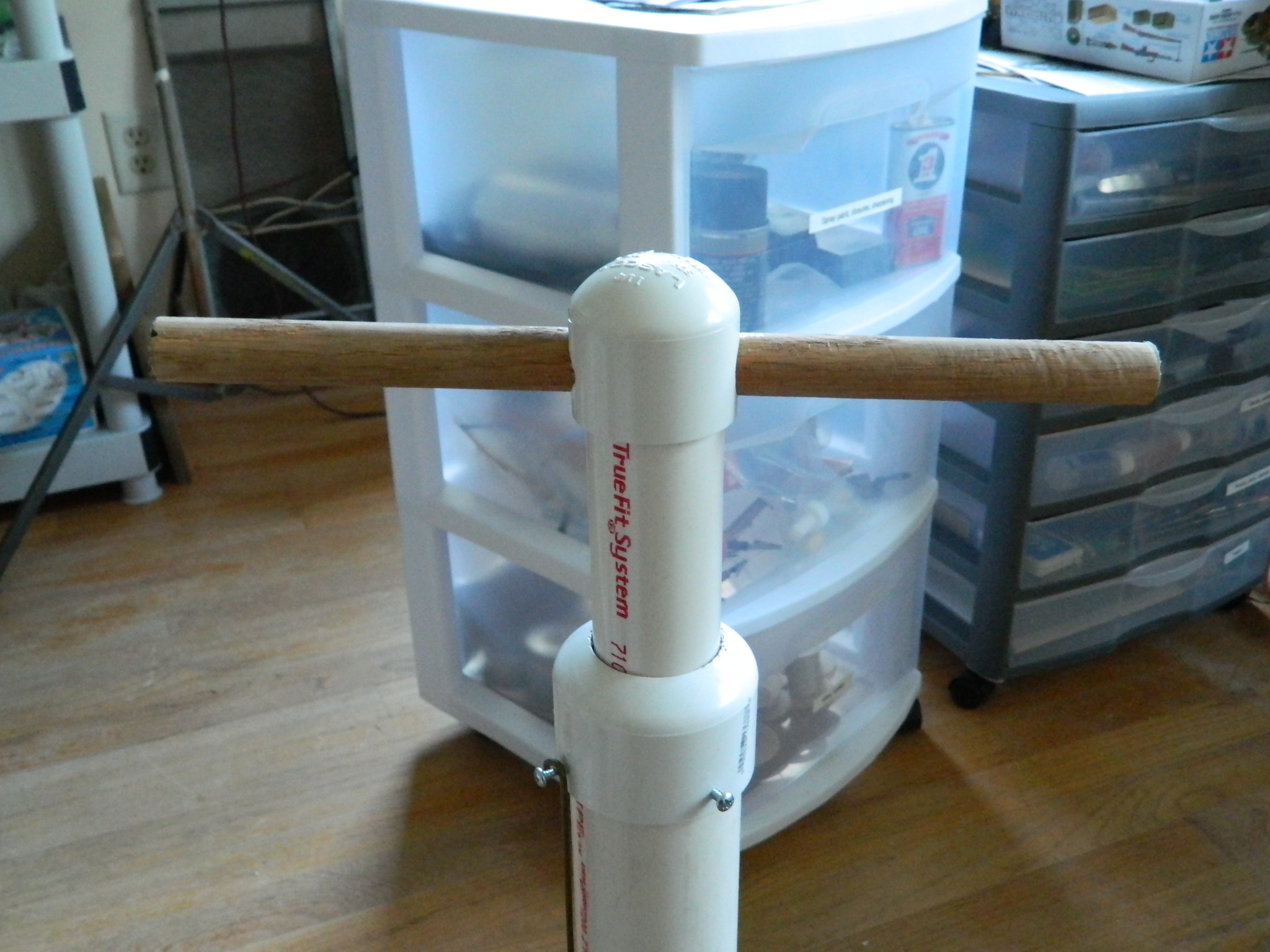
Next step, build a vacuum chamber!
Subsequent Edit:
In using the chamber, I found a couple of major problems to address.
During the construction of the pump, I wasn’t entirely sure that the 3″ section of pipe that connected the flange to the reducer had bonded properly and it turned on it hadn’t. Though the 3″ section bonded very well to the flange, only half of it bonded to the reducer and that snapped free. It doesn’t affect the pump’s ability to create suction, but it does compromise its strength. So I used screws to attach the loose section of pipe to the reducer:
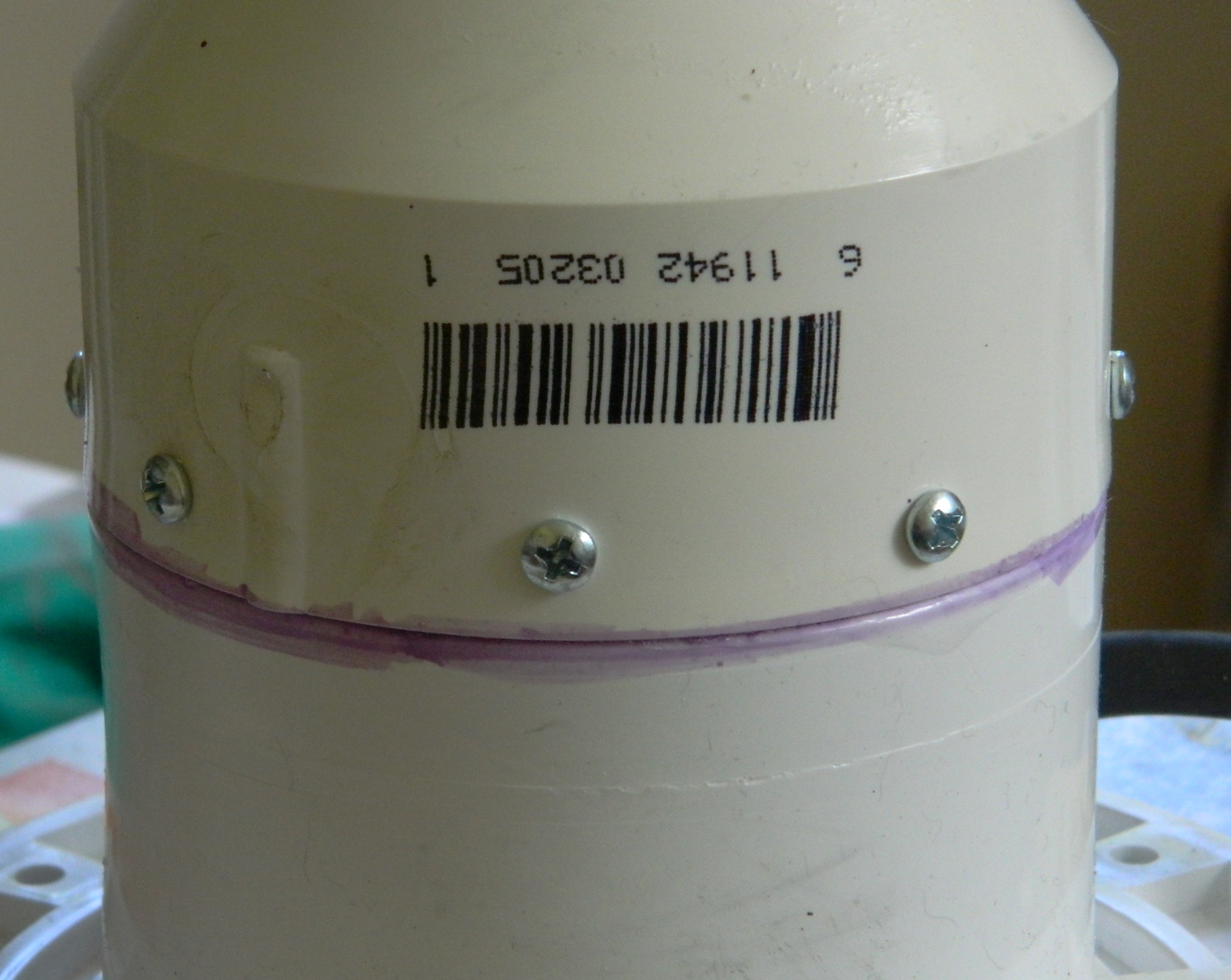
I’ve used the pump a number of times since its construction (and fix) and it’s holding up well.
Another thing I noticed during its first use is that the vacuum bleeds off over time. It takes just under two minutes to go from about 27″ of vacuum to 0″. In using it, I discovered that 15″ of vacuum is about the minimum I want to work with and that equates to a lot of pumping! I diddled about a bit. I added cable ties to seal the hose to the fittings more tightly and that decreased the vacuum bleed off a little. I still don’t know why I did this, but at one point I held the piston up (because vacuum with this pump is created on the up-stroke; it looks like a plastic bicycle pump but operates in the reverse in all ways). I noticed that this slowed the vacuum bleed off substantially. So I drilled a hole across the body of the piston and use a coat hanger to hold the pump up:

Okay…it does work. The emphasis should be on WORK. It takes A LOT of work to generate about 23-25″ of vacuum (the more vacuum generated, the better degassing works). Yes…that’s enough vacuum but it’s TOO MUCH WORK to keep the vacuum.
I needed a better pump.
Degassing – What Is It and Why Do I Need It?
“Degassing” is the term used to remove bubbles from a solution (as in a mixture, not what you need to solve a problem). It’s necessary when using a two-part compound that has to be mixed because not only are the two parts mixed together, so are air bubbles Those air bubbles can and will show up in the least appreciated places.
One way to get those bubbles out of solution is to expose the mixture to a vacuum, which by definition is a pressure less than atmospheric (getting a hard vacuum is possible, just expensive, and I’m a hobbyist, not a manufacturer). The bubbles, having been formed at normal atmospheric pressure (15 lbs/sq.in, if memory serves), are pulled out of the mixture by the drop in air pressure (partial vacuum) and then pop. To do that, one needs something to create the vacuum (a pump) and some place to contain and maintain the vacuum (a vacuum chamber).
Okay, so that’s what a degassing set up is. So…why would I need one?
Sometimes I have to make a part that doesn’t come with the kit or isn’t commercially available. If I need multiple copies of this part then I need some way to reproduce them, because my skills aren’t up to making two, five, a dozen that are identical. Making a mold and casting the part I make solves that situation. And since both the mold making rubber and resin* I’m using are two-part compounds, being able to get rid of bubbles is necessary.
What the degassing rig is for is to pull air bubbles out of both the mold making rubber and the resin* I pour into the mold.
I went online, googled “vacuum pumps,” and ended up being very glad I’m bald, because my hair would have fallen out at some of the prices I encountered (scientific applications need a harder vacuum than my wallet can provide). While searching (and listening to the delicate patter of hair falling out; I won’t have to trim my nose for a month) I found this little gem:
If you decide to build this pump, be aware that there are a few things that can turn and bite you during its construction that aren’t covered in the video. I’ve tried to cover them in the section on vacuum pumps but if you run into problems building one, feel free to contact me. I might be able to help.
*Some resins don’t respond well to degassing; certainly the one I’m using presently doesn’t. When exposed to vacuum the resin froths up. VERY messy. When poured into a mold and degassed, the frothing resumes and actually makes more bubbles not less. I’ve no idea why this is (I’m not a chemist). If the resin you’re using reacts the same way, try pressure casting.
Go here to find out more about pressure casting: Pressure Casting
M4A3 (Tamiya) Build #4
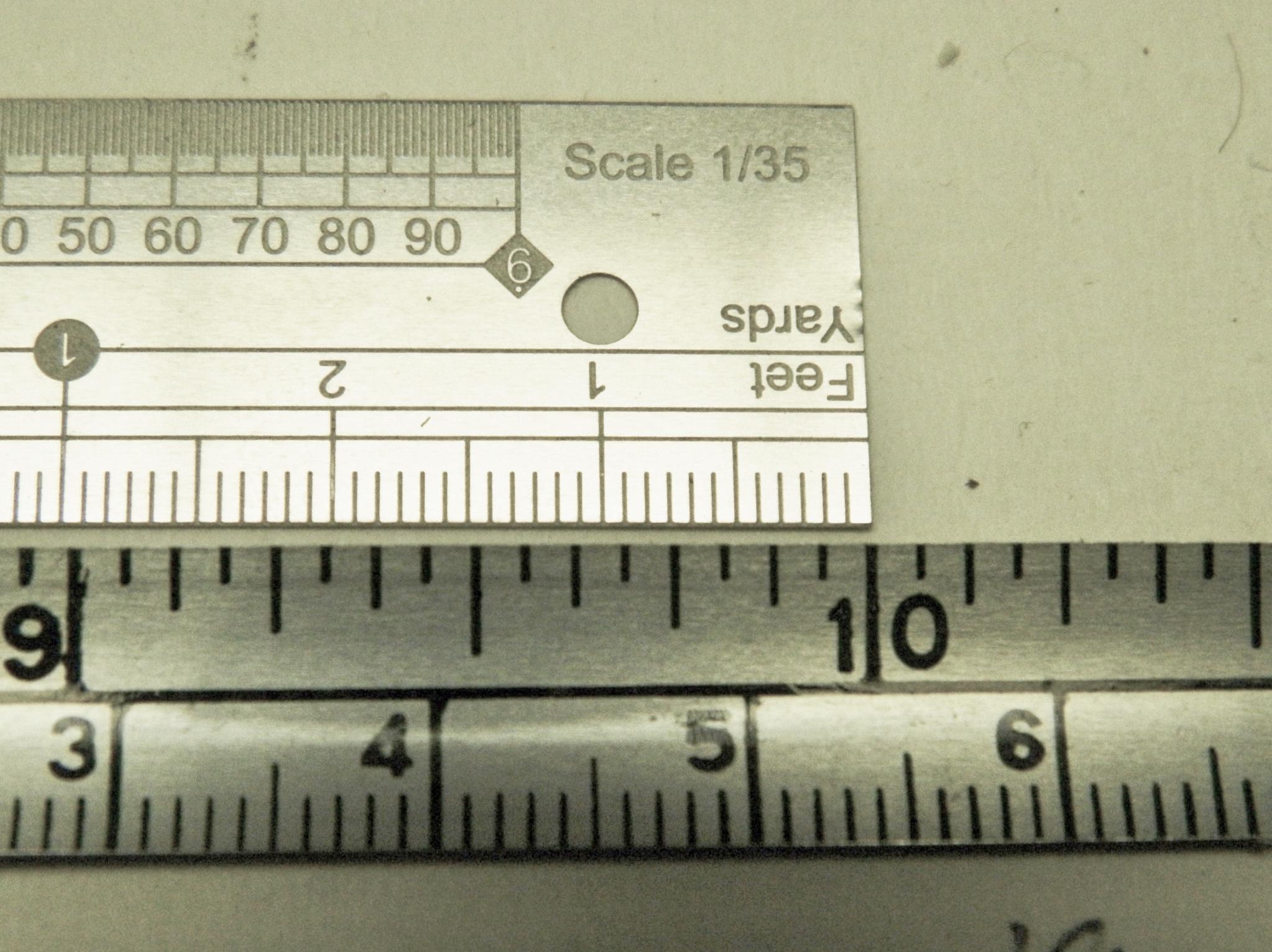
Now it’s time to finally address that outer radiator bulkhead and fix that. The drawings from my reference book are in 1/48 scale; ¼” equals 12”. And as it so happens, I just happened to have a 1/35 scale ruler. This is the difference in a scale foot:
So how do I, a math phobic talking monkey, convert accurately? CUE THE PROPORTIONAL DIVIDERS:
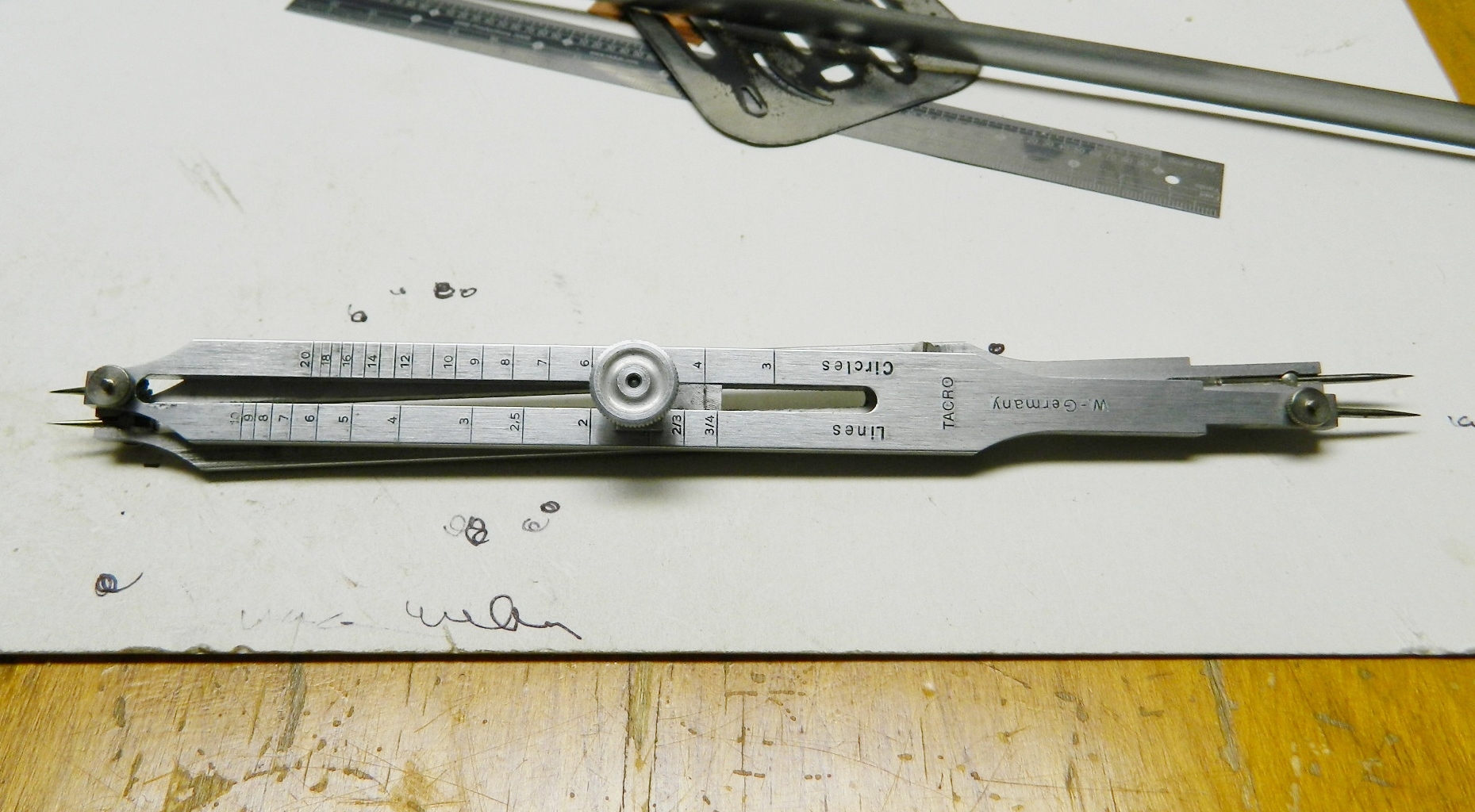
This is such a handy tool! The pivot will loosen and move. By positioning the pivot correctly, these dividers can transfer and convert a given dimension from one scale to another accurately. It starts by aligning the long tips to the larger scale and keep dicking with the position of the pivot until the small tips match the reference, which in this case is a foot:


Now I can take a measurement from a 1/48 scale drawing and reproduce that length in 1/35 scale. The scissors are pointing to the piece I need to replicate, the ducting that’s mounted on the rear of the radiator bulkhead:
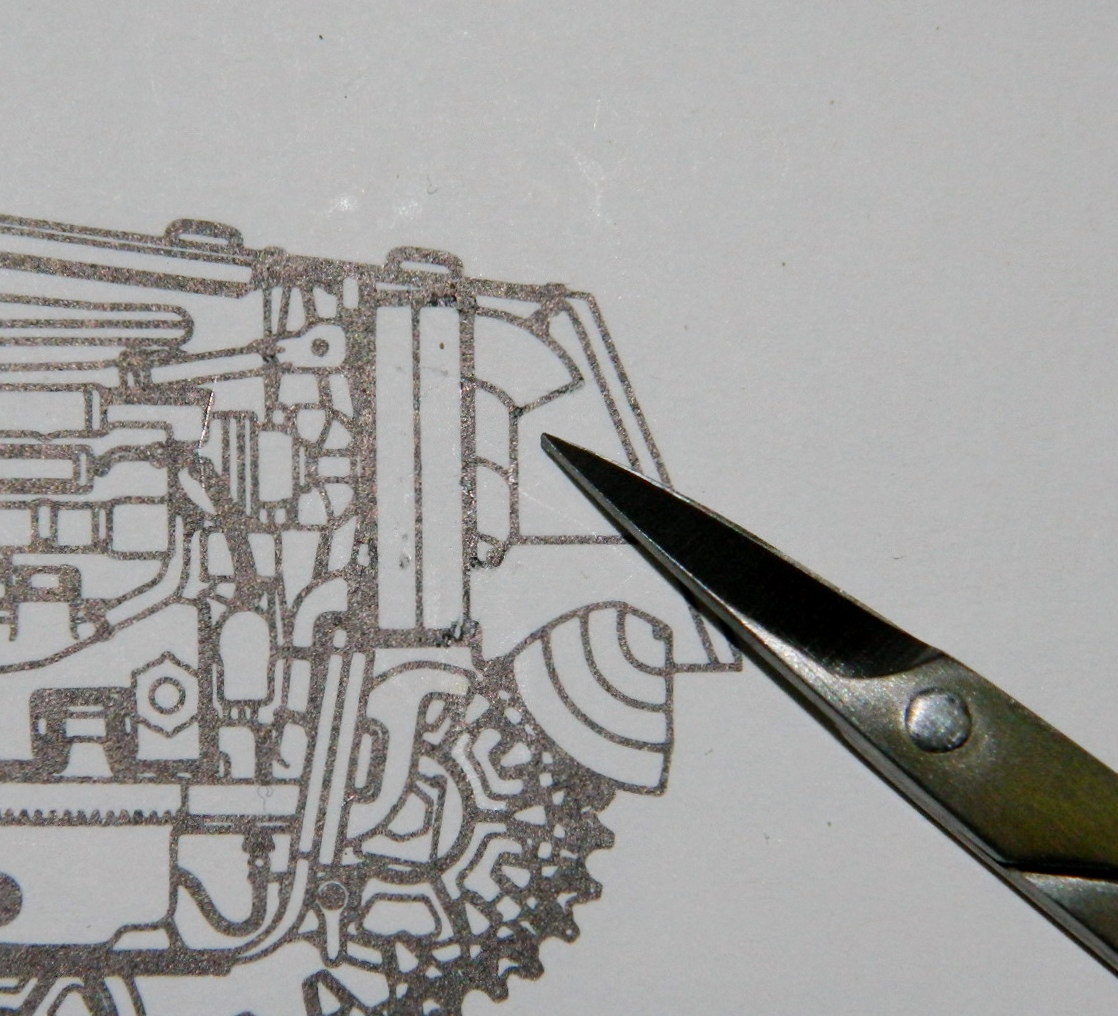
I decided to make a template using 010 brass shim stock (because it’s sturdier), then cut the template out, trace it onto sheet styrene, then cut that out:

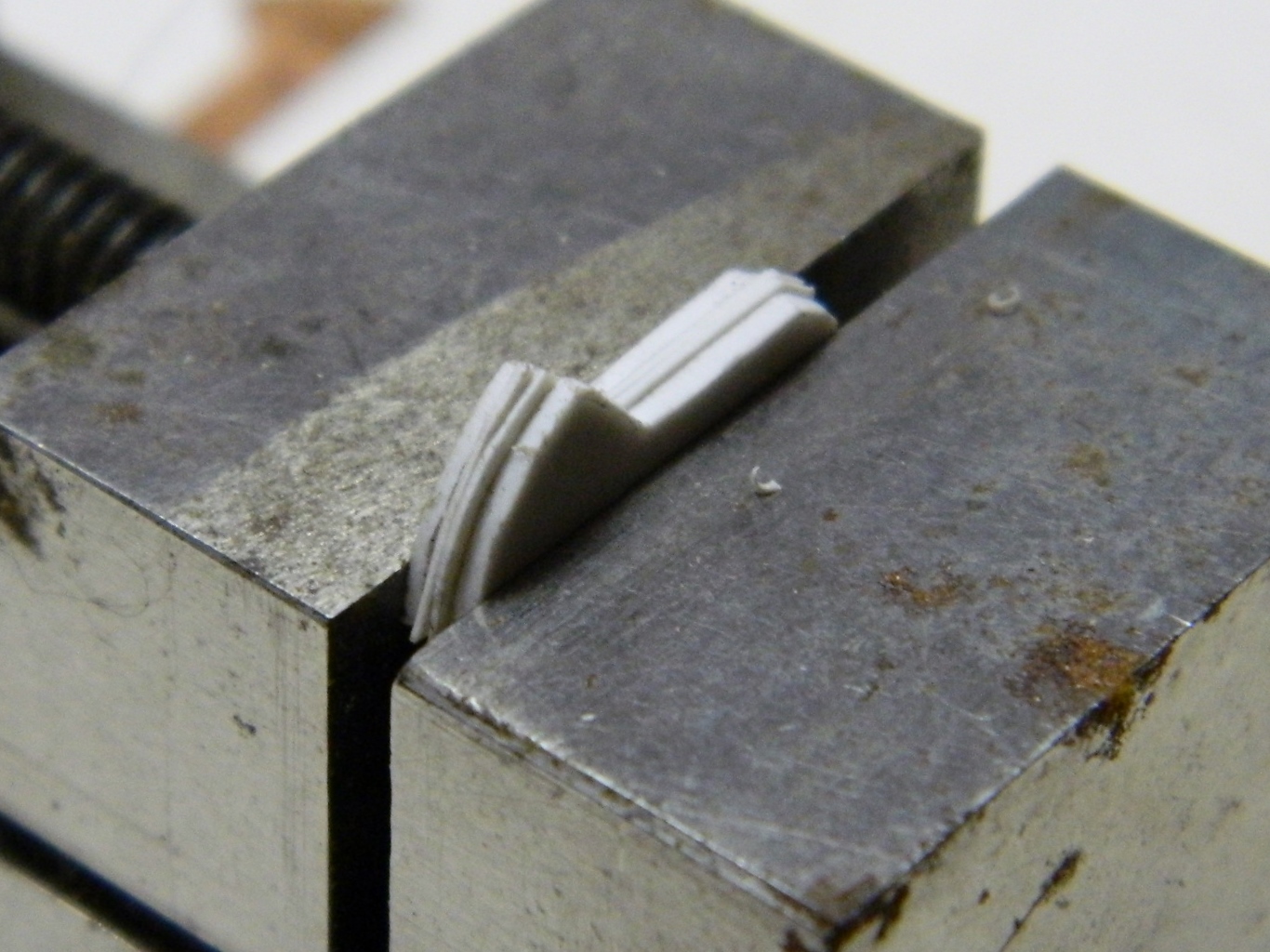
I need four vertical partitions. The outer ends look like they’re about twice as thick as the inner ones so I used .020 sheet plastic for the ends and .010 for the inners. I aligned them and then clamped them into a vise so that they would all be shaped the same:
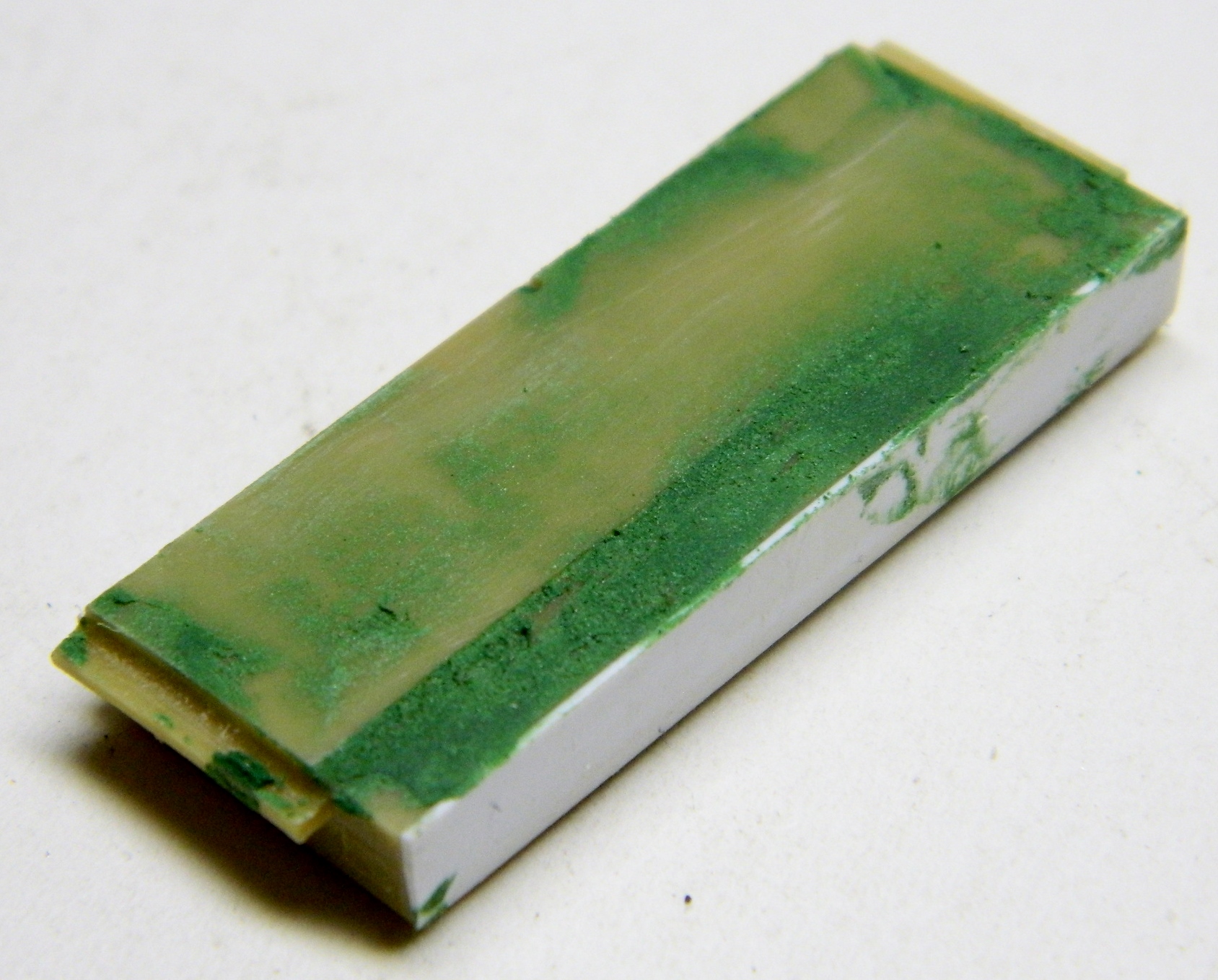
With the vertical partitions formed, it’s time to address the radiator bulkhead. I laid down a coat of modeling putty so that the final shaping would result in a flat surface without having to take too much material off to get there. If you think you’re going to need to add putty to a resin part, check before you commit to that course of action; not all resins will bond with putty:
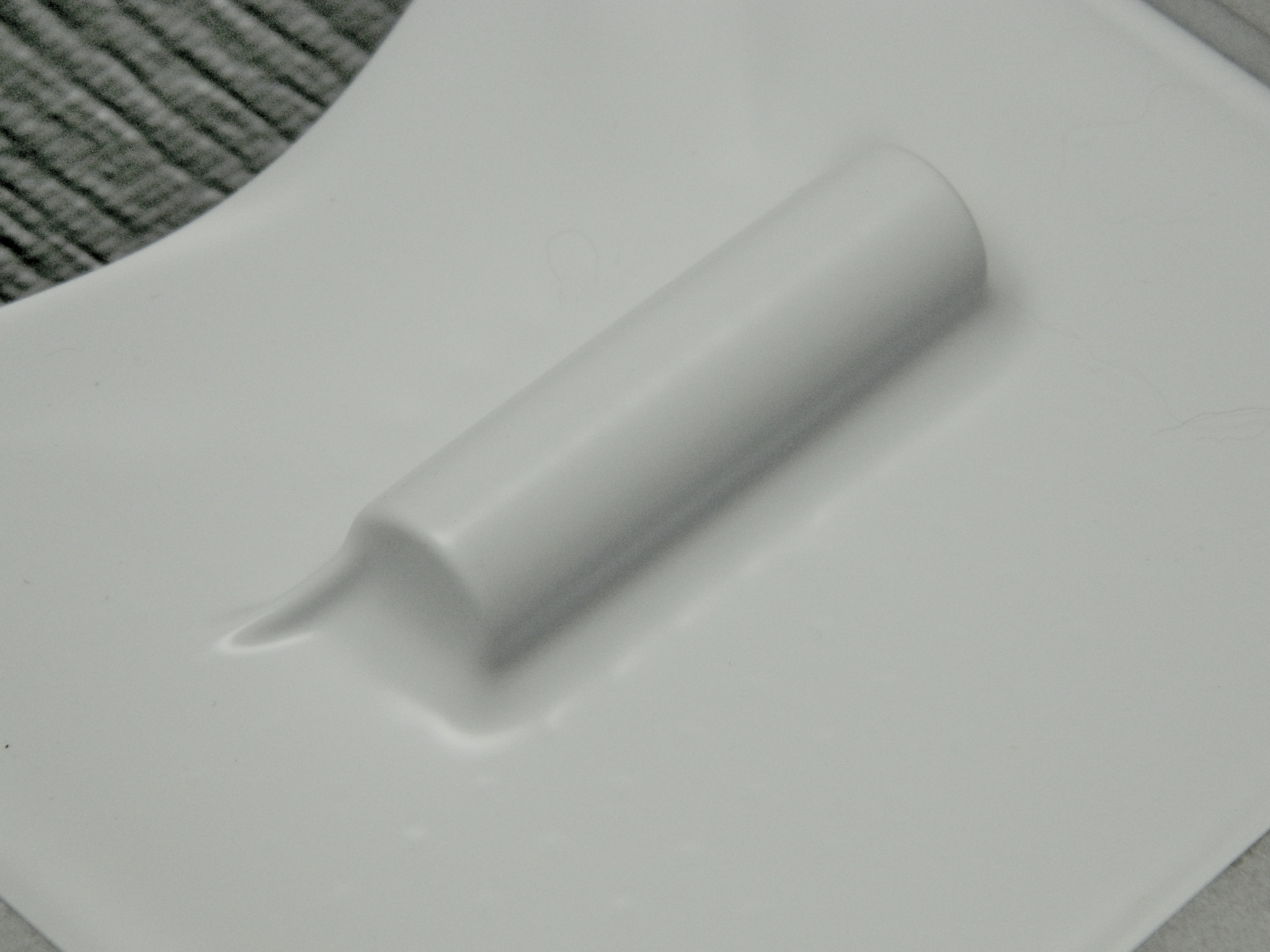
The lateral partitions of the ducting are curved so I need to create an even curve in plastic. I’d briefly considered doing the curved sections out of brass stock but I think plastic doesn’t solder well to that so I decided plastic would be better. How do I curve plastic evenly? CUE THE VACUUM MOLDER (you’ll find more information about that in “Side Projects” under “Vacuum Molder”). As it turned out, a half-inch dowel offered just the curve radius I needed:
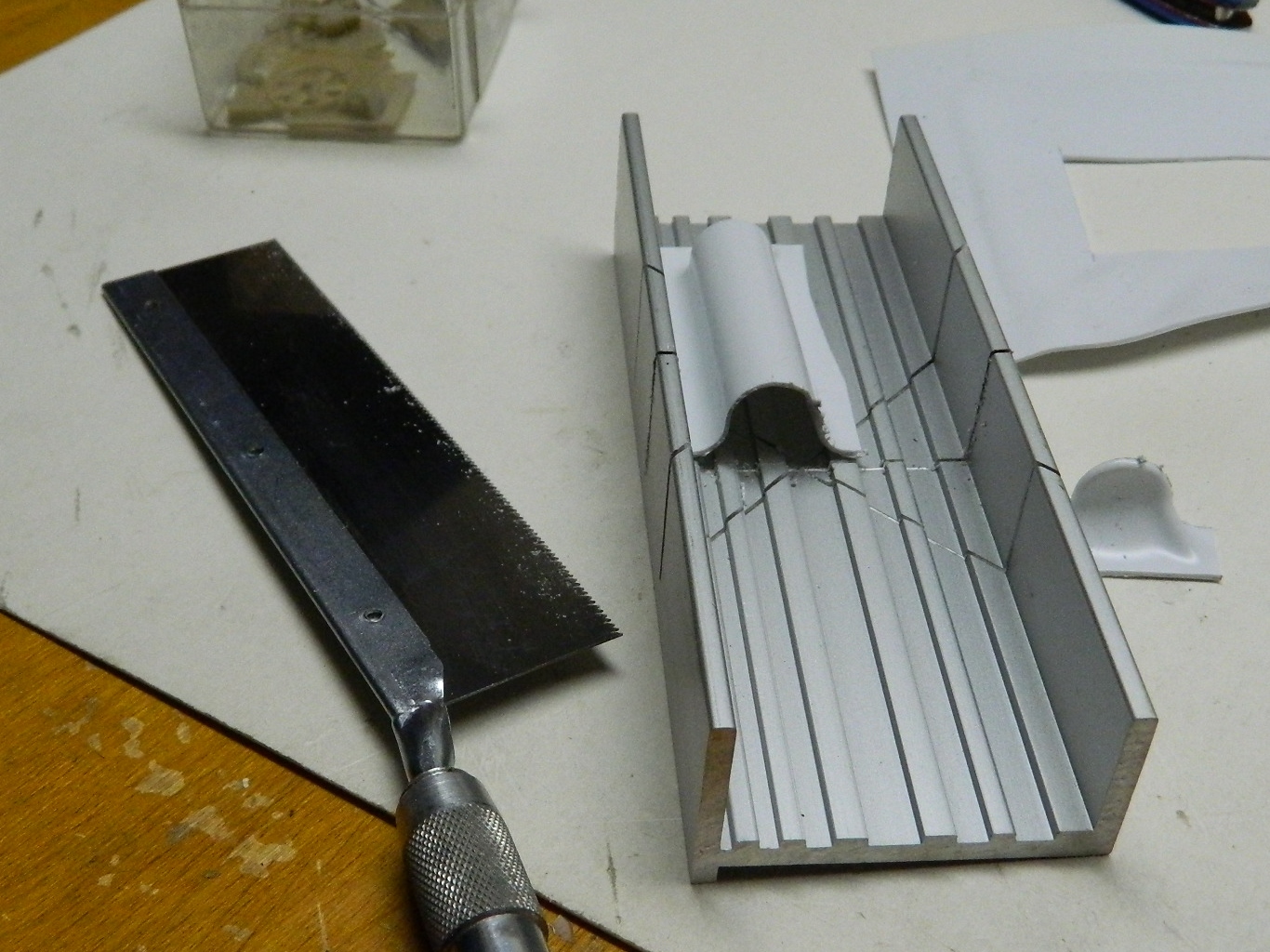
Then I pried the wood out of the plastic, trimmed roughly around the edges, trued up one side, and used my small miter box and razor saw to cut things to the approximate length:
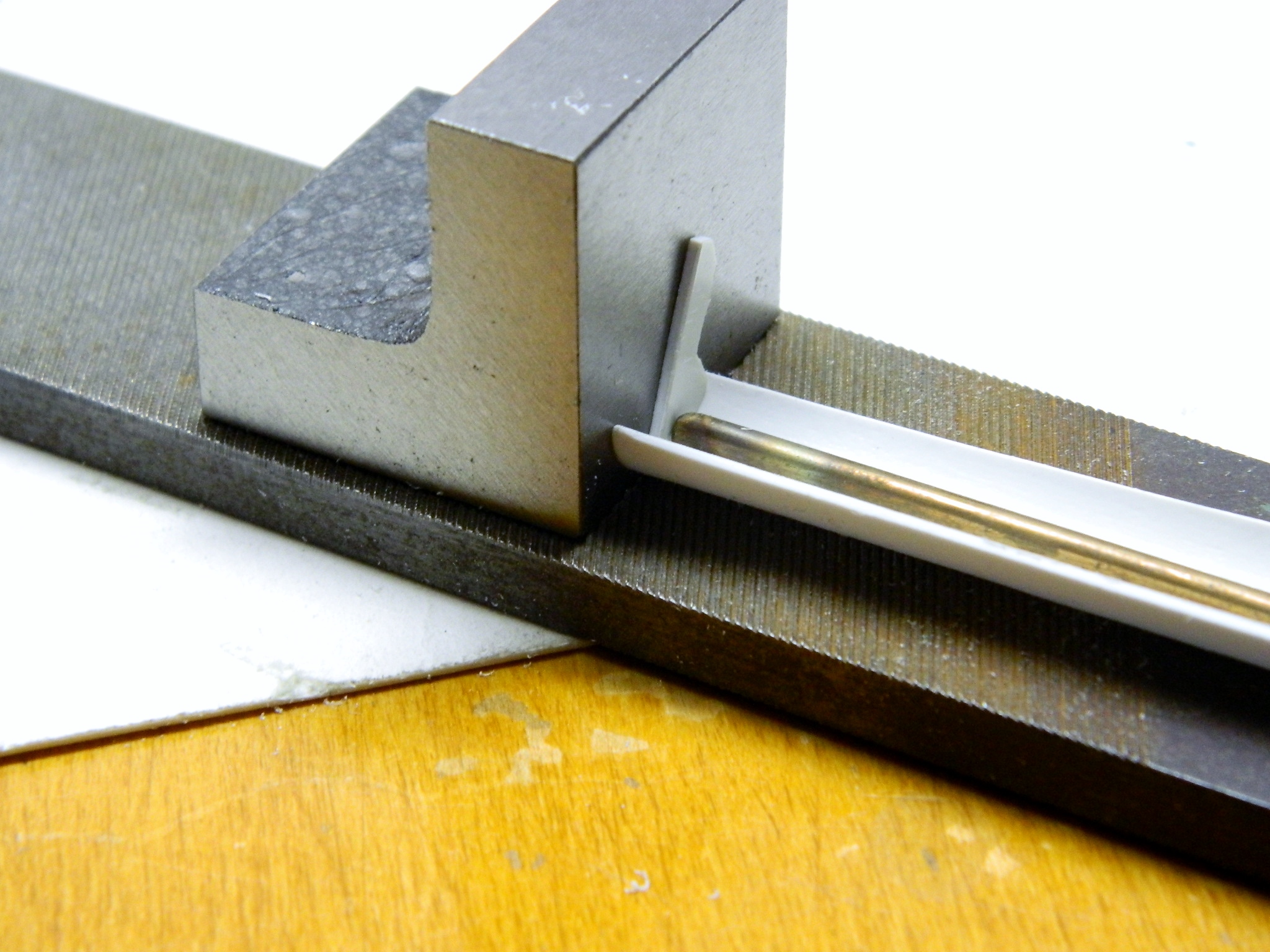
Next I needed a more exact straight-sided piece. I knew that flatness would be relative to the sides of the ducting assembly, so I started by using a machinist’s square to align an end and glued it on (I used a file as my surface plane because I knew it was flat):
I’ve found it’s fairly easy to add things to an existing structure. Things get interesting when one has to build the structure to attach things to. Since I have one end glued on, I taped the pieces to the back of the radiator bulkhead and glued the other end on:

While that glue was setting up, I attached the bolt strip to the top of the differential housing. This part is one casting on a Sherman, that meant I had to fill in the small (but perceptible) gap between the strip and the housing. Somewhere I figured out that if I didn’t get putty INto things, I didn’t have to figure out how to get the putty out, so I masked off the area and applied the putty:

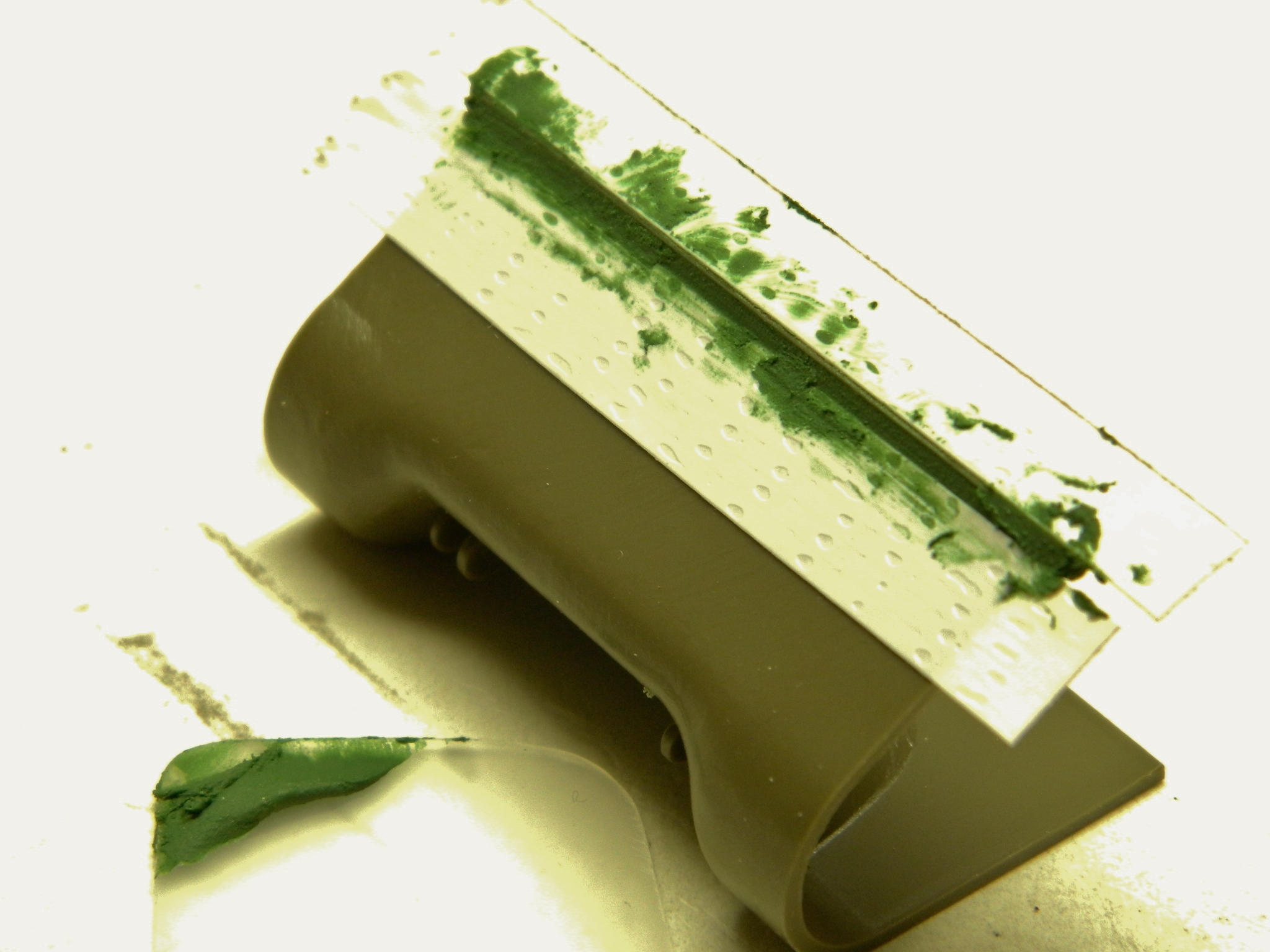
Now we let that cure…
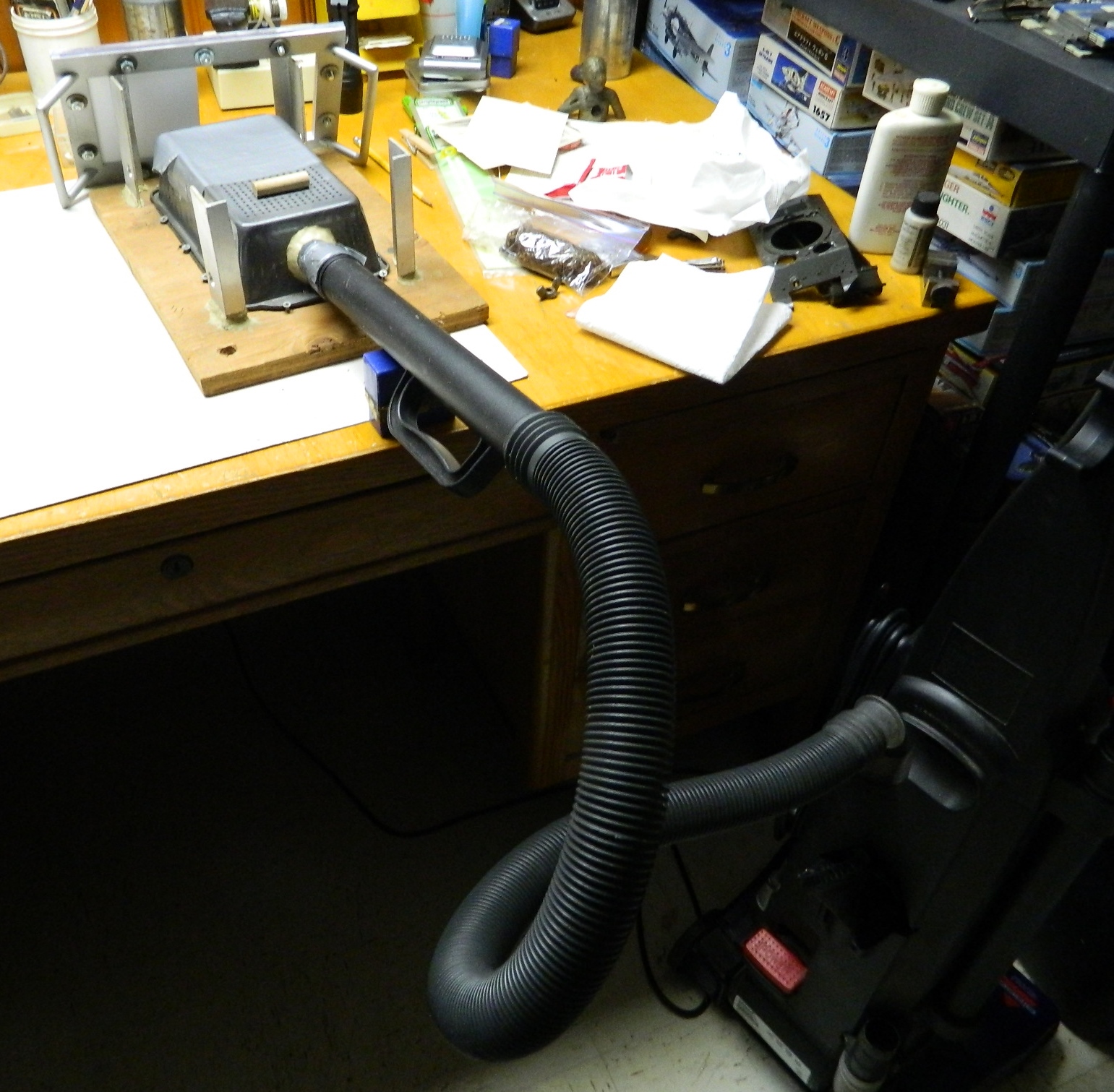
(Vacuum Molder
When getting into modeling a bit deeper than Out Of Box (OOB), having the ability to make your own parts is quite handy.
An example is the canopy on a 1/48 scale (or any scale, really) aircraft. Sure, the kit part is clear, but if you measure its thickness and convert that to scale dimensions, you’ll realize that the real canopy isn’t six inches thick. Light does “interesting” things when it has to work through thick sections of plastic, and unless you replace that kit part with something closer to scale thickness, it’s going to look like what it is. A small plastic part. That’s when being able to vacu-form scale parts comes in handy.
I got the basic plans from FineScale Modeler back in the ’90s. It’s an easy set up to build and isn’t expensive. (I tweaked it a bit because that’s just what I do.)
To make one of these handy gizmos, you’ll need:
A bread pan, 1/4″ graph paper, sharp 3/32″ drill bit, epoxy putty, silicone sealant, plywood, a piece of pvc or plastic tubing about 4-5″ long, 1/2″ to 3/4″ wood screws, and something to make a split frame with (I used 3/16″ aluminum sheet), a hot place or access to an electric stove (and an understanding mate if you screw things up and drop molten plastic onto the burner) (or someplace else to sleep for a week or two should understanding not be in plentiful supply)
The main part is the plenum. This is the volume that traps the air you’re going to want to suck out. A standard-size, sheet metal bread pan, works great. I strongly suggest you get one that is stamped; it will have rounded edges at the bottom of the pan.
Get some graph 1/4″ paper, where the squares on the paper are a quarter inch square. Turn the pan over so the bottom is up, trim the paper to fit over it, and then tape it down. Take a sharp punch and tap firmly enough to leave a dimple in the metal without deforming it every place the lines intersect.
Use a sharp 3/32″ bit and drill a hole everywhere you made a dimple. Once you’re done, if you end up with what I did, you’re going to need to deburr the surface. For that I used a combination of a fine finishing file and sandpaper. (You don’t want sharp projections to puncture the plastic you’re going to be forming.)
Next you need to cut a hole in one end of the bread pan to attach the pvc or plastic tube to. This is where you’re going to hook up your vacuum cleaner (which is what will draw the plastic down around your form). Once you have the hole cut just large enough for the tube to fit, use the epoxy putty to build a flange on both sides where the tube goes through the hole in the bread pan. Put it aside until the putty has completely cured.
Size your plywood (I used a scrap of 3/4″) large enough to offer a stable base and place your bread pan, upside down, onto the plywood and outline it with a pencil. Run a bead of silicone sealant around the inside perimeter of your outline, settle the bread pan upside down (or with the bottom and all those holes up) and screw it down to the plywood. Let the silicone sealant cure.
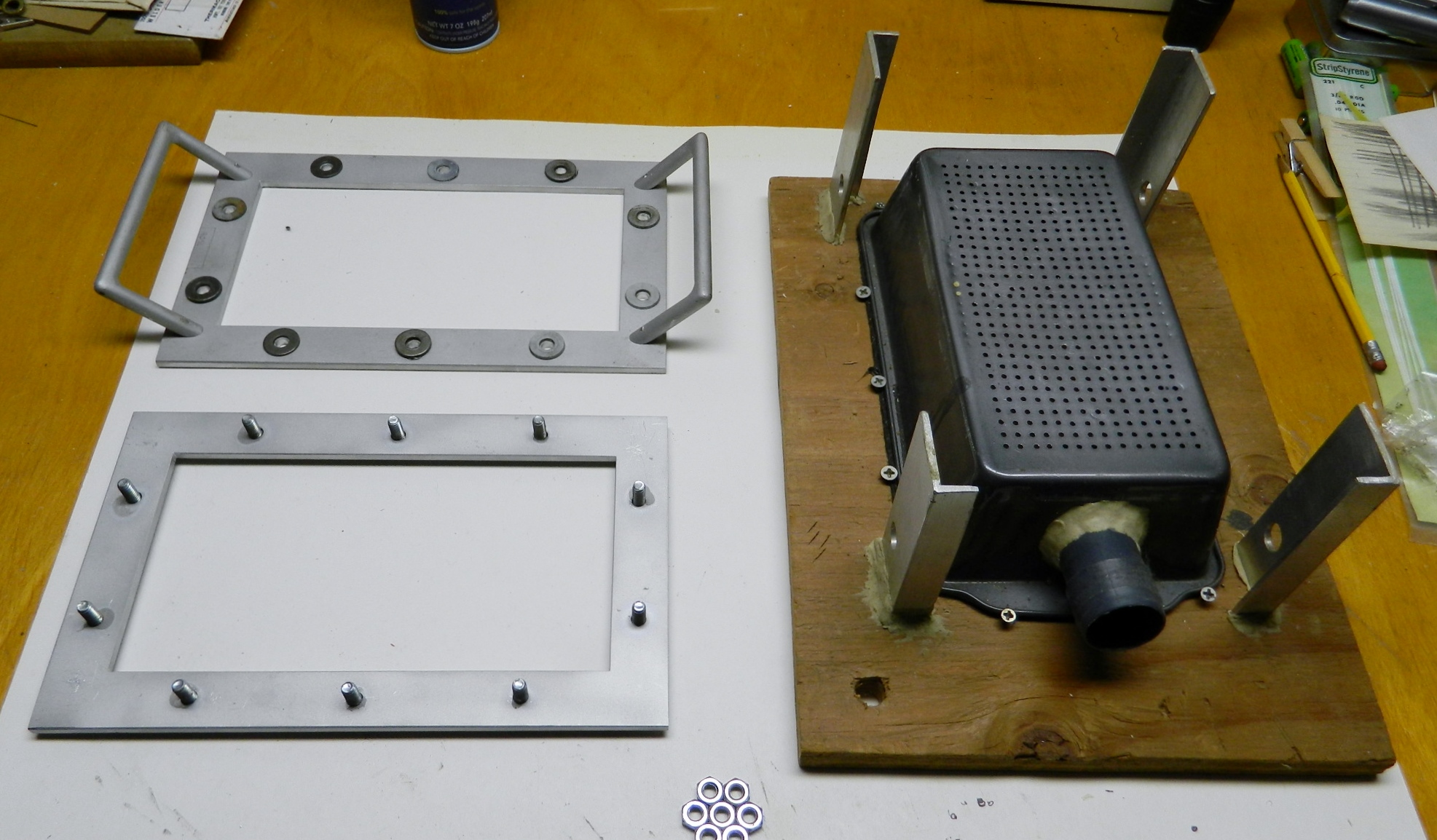
The purpose of the frame is to hold sheet styrene (or butyrate) firmly over a heat source (I use an electric hotplate but an electric stove works also). Here’s where I got a little fancy. I had a friend who worked in a machine shop make a frame (two frames, actually) for me from 3/16″ aluminum plate (anything sturdy will do). I sized the inner opening to be just slightly larger than the bottom of the bread pan and the width of the frame to be an inch. I used bolts and wingnuts to hold the two frames together (once all the holes were drilled, obviously, I used superglue to hold the bolts in place), and I guess he was having a boring day at work because he also made me two nice handles for the frame (comes in handy when protecting the delicate fingers from holding this over heat).
Because I’m clumsy, I later added the aluminum L-stock to guide the frame to a centered landing on the platen (bottom of the bread pan with all those holes).
Place your form of what you want to replicate onto the platen. It can be anything of the desired shape that you can pull the plastic down over, things like canopies, body panels, etc. Anything you need a thinner piece of. I’ve found that gluing the form onto a pedestal and getting the bottom of your form off the platen makes life SO much easier! I use a drop of superglue to hold the pedestal to the platen (if you don’t leave it there overnight, it will snap right off).
When you’re ready to have at it, attach the hose to a vacuum cleaner to the tube you epoxied to the bread pan. Put your form in place. Take a sheet of whatever you’re forming and fit it to your frame; once it fits, tighten the wingnuts securely, and then hold the plastic (or whatever) over your heat source and pay attention. You want to heat it until it’s flexible, but you do NOT want to heat it to the point where it falls out of the frame and onto your heat source, for reasons I sincerely hope are obvious. (Sure became obvious to me!)
Be prepared to waste plastic (or whatever). It takes a little, not much, experience for you to be able to tell when the plastic is soft enough to form, which will generally be once it starts to sag. Once you think it’s ready, turn the vacuum on and drop the frame over the platen, trapping your form underneath (don’t forget to turn off the vacuum…it doesn’t take long, just a few seconds) . Remember, this thing works on vacuum to suck the plastic around your form, so you’ll need to press down with the frame until the plastic seals against the platen, allowing the suction to pull the plastic down over the form (that’s why I made the inner opening of my frame just slightly larger than the bread pan). If you don’t heat it enough you can reheat it.

Home
So I’ll start by welcoming you.
Welcome.
Scale modeling is an interesting intersection of some things I really like doing; learning things, making things, figuring things out, research, and solving problems (lots of that in modeling). A few friends have been (and hopefully still are) interested in the stuff I make and I’ve been posting progress reports with pictures, explanations, and intentions and emailing them. This is starting to get top-heavy. Ever quick on the uptake, I decided to blog about it all and throw it onto the Interwebs should anyone else also be interested (and to make my life easier, of course).
And here we are! ::trumpet fanfare:: <- Copeland’s “Fanfare for the Common Man”.
The underlying theme should be, “I don’t really know what I’m doing but really enjoy figuring it out as I go”.
My main interests seem to be on equipment and machinery that people bet their lives on. That means I do aircraft (nothing smaller than 1/48 scale; I’m not a watchmaker) and armor (nothing smaller than 1/35 scale with the same caveat) primarily, but being a critter of mood and whimsy, will probably do the odd model here and there that are neither.
The really difficult part for me is knowing when enough really is ENOUGH. I see things in minute detail and unless I ride heard on my pre-conscious impulses, I might as well be a watchmaker. That means I try to maintain a 90-95% degree of accuracy.
Regarding this blog. I really don’t know what I’m doing! That means as things get figured out (trial and error with the emphasis on error) this…thing…you’re reading (and hopefully exploring) will change as I learn more about it.
If you like something, let me know. If you don’t like something, let me know that, too…though there’s no guarantees that any of what you don’t like will change, any more than there are guarantees that what you do like won’t change. I’m capricious. (I’m also crazy.)
What’s important to keep firmly in mind is that this is all just one maniac’s opinion. I’m no expert; if I was I would charge you money. What’s written here will be just my opinion and hopefully YMMV.
So, off the edge I step. I hope you enjoy what you find here. Time is a terrible thing to waste. That said, do please be patient will I get this…thing…formatted the way I want it to be.
Sherman – A Brief Overview
The M4 Sherman tank. Much loved, equally maligned, common wisdom states that it was not intended for the uses it was put to.
Yeah, most of them had low-velocity guns that couldn’t penetrate the armor of a Panther or Tiger tank at range, and yeah, the Panther and Tiger could light up (literally) a Sherman at ranges a Sherman could not reach. However, Panthers and Tigers combined only made up about 30% of the German armor the Allied tank crews faced after Normandy. The Sherman could go toe to toe with any German armor up to and including the Pkw. IV series (though the Pkw IV with the long-barreled 76mm did out range the Sherman’s 75mm).
Having said that over three years ago, subsequent research has shown that what follows and I had written back then is mostly inaccurate:
“But in line with the Armored Command’s battle doctrine, the Sherman was never intended for armor-on-armor engagements; that’s what tank destroyers were intended to do. The tactical application of the Sherman was a holdover from the WWI philosophy of using armor as infantry support like a mobile pillbox to break through enemy lines and create havoc and destruction behind the lines, or as a mobile fortification covering infantry on the advance.”
For an interesting look at the Sherman, its history and role, check out this YouTube video:
So it looks like I’m not the only to think the M4 series is a good tank! (And while you’re at YouTube, look for, “Oh bugger, the tank’s on fire.” QUITE fascinating.) The one major advantage the Sherman had over the Panther and Tiger (other than sheer numbers available in the field) was that it was reliable and a lot easier to work on. Panthers and Tigers were much more complicated machines and of all the terms tossed at the Sherman, “complicated” is not one I’ve encountered.
Being an evolutionary design, it carried over many traits of the M3 Lee…both bad (high profile, thin armor) and good (a well-developed drive train with robust components that are widely interchangeable). Its turret traverse would spin a turret faster than most German tanks; getting the first shot on target makes survival easier, and given that 70% of its armored adversaries weren’t Panthers (or Tigers which were MUCH rarer), that first shot stood a good chance of ending the encounter.
The major reason a Sherman would light up so easily and burn was not because it was gasoline-fueled, it was discovered to be the result of where the main gun ammunition was stored in the “dry-stowage” hulls where the ammo was stored high on the inside hull, leading to “wet-stowage,” where the ammo is encased in water jackets and stored on the floor of the hull. With dry-stowage hulls, any shot that penetrated would likely result in setting off the stowed ammo; wet-stowage hulls cut down on that happening drastically.
By the end of its production run with the M4A3E8, though the armor was still thinner than its adversaries, a great many of its problems were sorted out, it had an adequate gun, and the ride of the last suspension design was a lot smoother. The Army liked the A3 series enough to keep it in service after WWII and a number of them saw duty in Korea (and note the comment in the above video regarding the M-26 versus the M-4!).
There were about 50-55,000 of them made; as one clever sod once stated, “55,000 Shermans and 54,999 different from all the other ones.” That’s because parts interchangeability was profound. The transmission of a Sherman built in 1941 would fit a Sherman of an entirely different variant built in 1945 (as would many other major components). Disabled tanks would be scavenged for parts in the field to keep less damaged Shermans in service and fighting.
Some Shermans (M4 and M4A1) had a Cyclone radial engine (a holdover from the M3 line of medium tanks and was the reason the hull of the Sherman had such a high profile), some had the Chrysler “multi-bank” engine (M4A4) which was actually five engines built around a common crankshaft; go ahead, try routine maintenance on that one without pulling the power-plant, some had a 1000 cu. in. Ford V8 (M4A3 and M4A3E8), and though most Shermans were gasoline-fueled, a few were even diesel (M4A2 and a radial-engine diesel, the M4A6 of which only 75 were built).
Most had a low-velocity 75mm gun. Some were armed with a 105mm howitzer. Finally, a high-velocity 76mm gun was fitted (the 76mm, oddly enough, wasn’t as popular as the 75mm was, mainly due to the absence of a good high-explosive round). And all of that doesn’t take the British Shermans, called “Fireflies” into account with the 17 pounder gun. (And I haven’t even mentioned what the Israeli army did with them! Google M51.) There were even flamethrower variants the troops called “Zippos.” Some tanks had cast upper hulls, some had welded flat plates (of two varieties) and some had the forward upper cast hull welded to flat plate rear upper hulls. Most turrets had what’s called the “pistol port” (though it was actually intended to toss empty cannon brass out of) though many did not. Earlier turrets had a low bustle and no loader’s hatch; later ones had a high bustle with a loader’s hatch (and there were two variants of the loader’s hatch!). Early turrets had a flat, two-piece commander’s hatch, and later ones had a “vision block” cupola with a single hatch. Some turrets had applique armor over the gunner’s position, some had it cast in at the foundry. Two different gun mantles were fitted, early and late (of course) with an entirely different one for the 76mm gun. Early transmission casings were three-piece units bolted together (another M3 holdover), later ones had a one-piece cast casing and those could have rounded or pointed noses. And all of these parts were interchangeable!
And I haven’t even mentioned the assault variation of the Sherman M4A3E2 with a ton (actually, a couple of tons) of thickened armor or self-propelled artillery built on the Sherman chassis…
Three different types of suspensions, five different designs of tracks, some with applique armor over ammunition storage bins (dry-stowage, which had one design of engine air cleaners) some without (wet-stowage with different design and location of air cleaners), two different turrets, three different guns (75mm, 76mm, 105mm howitzer) and none of that takes into account individual crew modifications or field-expedient modifications (like the hedgerow cutters welded to the nose to keep them from hanging up on the Normandy hedgerows after the D-Day landings at Normandy) OR the specialized variants like the dual-drive Shermans intended for amphibious landings, tank retrievers (fitted with cranes), and on and on and on.
All the above just scratches the surface of what was done to the “basic” Sherman tank. So what the hell is a modeler to do? Model 54,999 tanks? (Even I’m not quite that crazy.)
I decided that I would do maybe five. An M4 (welded-plate upper hull), two M4A1s (cast upper hull armor), an early one with direct-vision slots and a later one without, all of these with low-bustle turrets and the Cyclone radial engine, the M4A3 which has different welded flat-plate armor from the M4 (less of an angle to the front glacis plate which was easier to build and had less places an incoming round would find a vertical surface to penetrate) and the V8 engine (made by Ford, 1000 cu. in., 500hp and 1100 lb/ft of torque from off-idle to 2500 rpm, aluminum, DOHC, four-valve per cylinder, twin carbs) and the high-bustle turret with the loader’s hatch, though there were also low-bustle turrets with loader’s hatches, too. And finally an M4A3E8 wet-stowage 76mm with the advanced suspension, considered by many to be the best of the Shermans (I may also do one of the British Firefly variants).
I decided to start with the M4A3… It was the variant the Army liked most and retained for use and upgrades after WWII.

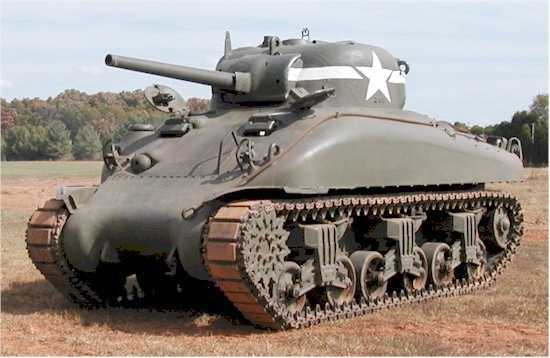
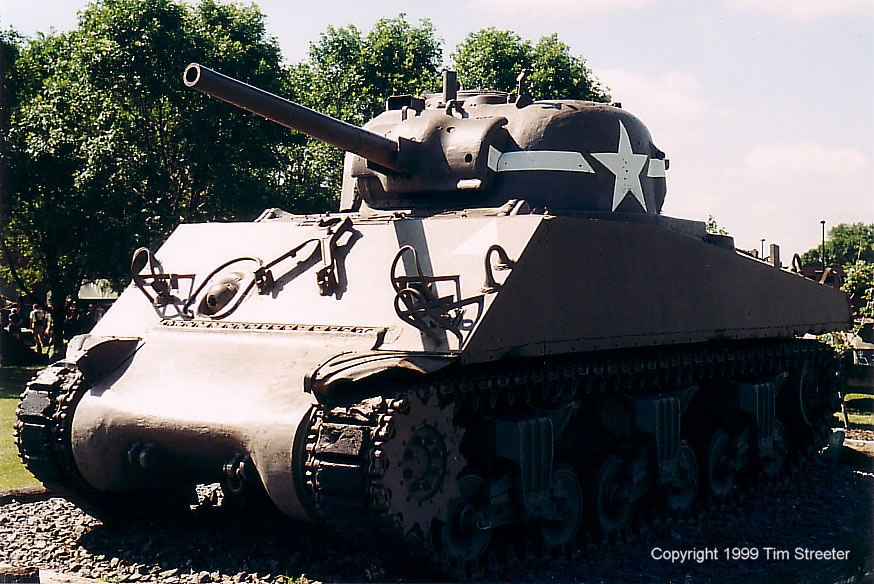
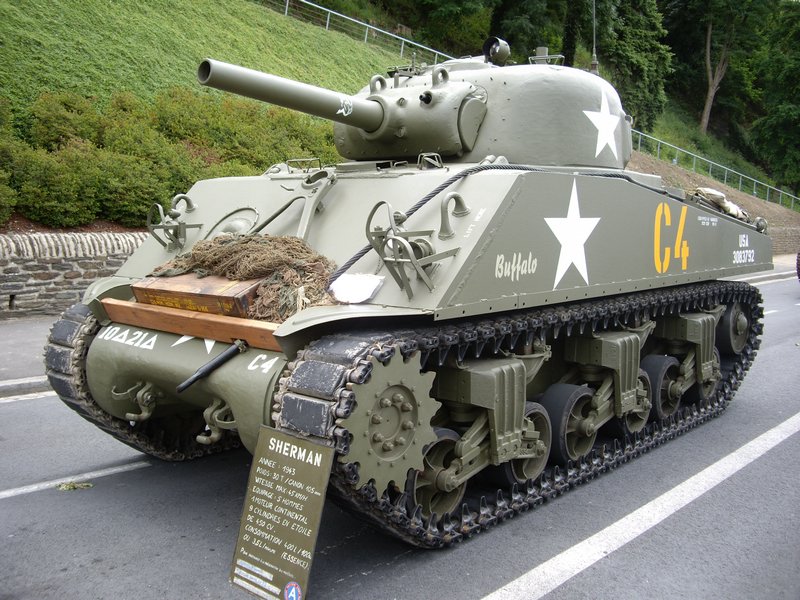
Stepping Off the Edge
So I’ll start by welcoming you.
Welcome.
Scale modeling is an interesting intersection of some things I really like doing; learning things, making things, figuring things out, research, and solving problems (lots of that in modeling). A few friends have been (and hopefully still are) interested in the stuff I make and I’ve been posting progress reports with pictures, explanations, and intentions and emailing them. This is starting to get top-heavy. Ever quick on the uptake, I decided to blog about it all and throw it onto the Interwebs should anyone else also be interested (and to make my life easier, of course).
And here we are! ::trumpet fanfare:: <- Copeland’s “Fanfare for the Common Man”.
The underlying theme should be, “I don’t really know what I’m doing but really enjoy figuring it out as I go”.
My main interests seem to be on equipment and machinery that people bet their lives on. That means I do aircraft (nothing smaller than 1/48 scale; I’m not a watchmaker) and armor (nothing smaller than 1/35 scale with the same caveat) primarily, but being a critter of mood and whimsy, will probably do the odd model here and there that are neither.
The really difficult part for me is knowing when enough really is ENOUGH. I see things in minute detail and unless I ride heard on my pre-conscious impulses, I might as well be a watchmaker. That means I try to maintain a 90-95% degree of accuracy.
Regarding this blog. I really don’t know what I’m doing! That means as things get figured out (trial and error with the emphasis on error) this…thing…you’re reading (and hopefully exploring) will change as I learn more about it.
If you like something, let me know. If you don’t like something, let me know that, too…though there’s no guarantees that any of what you don’t like will change, any more than there are guarantees that what you do like won’t change. I’m capricious. (I’m also crazy.)
What’s important to keep firmly in mind is that this is all just one maniac’s opinion. I’m no expert; if I was I would charge you money. What’s written here will be just my opinion and hopefully YMMV.
So, off the edge I step. I hope you enjoy what you find here. Time is a terrible thing to waste. That said, do please be patient will I get this…thing…formatted the way I want it to be.
M4A3 (Tamiya) Build #1
Tamiya makes an adequate kit of the A3 and this is the base for this build:


Since I haven’t done a model since 1991 and I wanted to ease back into the pastime, I decided I would add a COMPLETE interior to a kit that was never designed to have one. This means adding an engine and engine bay, a crew compartment, and all the turret details, not any of which were engineered to work with each other. (Let’s start easy, eh?)
One (of many) things I discovered is that not only is the state of the art for after-market (AM) detail sets MUCH different than it was 24 years ago, so is the Internet. I can find references (photographic and written) that were unavailable Back Then. So unlike Back Then, I don’t have to scratch build everything I want to add (as in, start with a pile of bits to make all the gizmos that a tank is full of).
So I started with the engine bay. There’s a Belgian company, Verlinden, that makes really beautifully-modeled AM sets for all sorts of models and one of them is the Ford engine. From the box art:
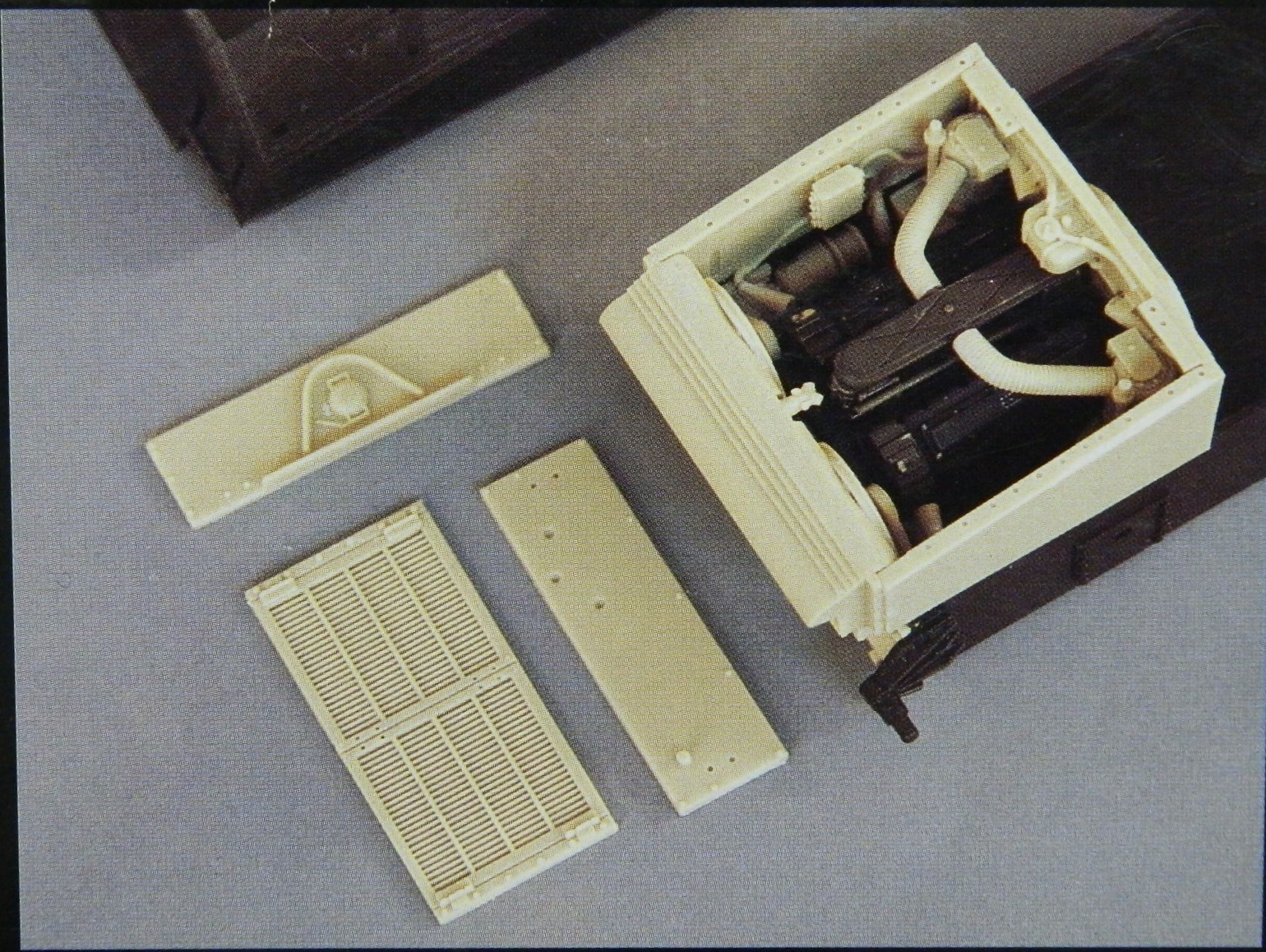
Most of the parts are resin (works about the same as fingernails) and this shows what the AM set includes:

So I started assembling the engine. The first step is separating the parts from the casting blocks:
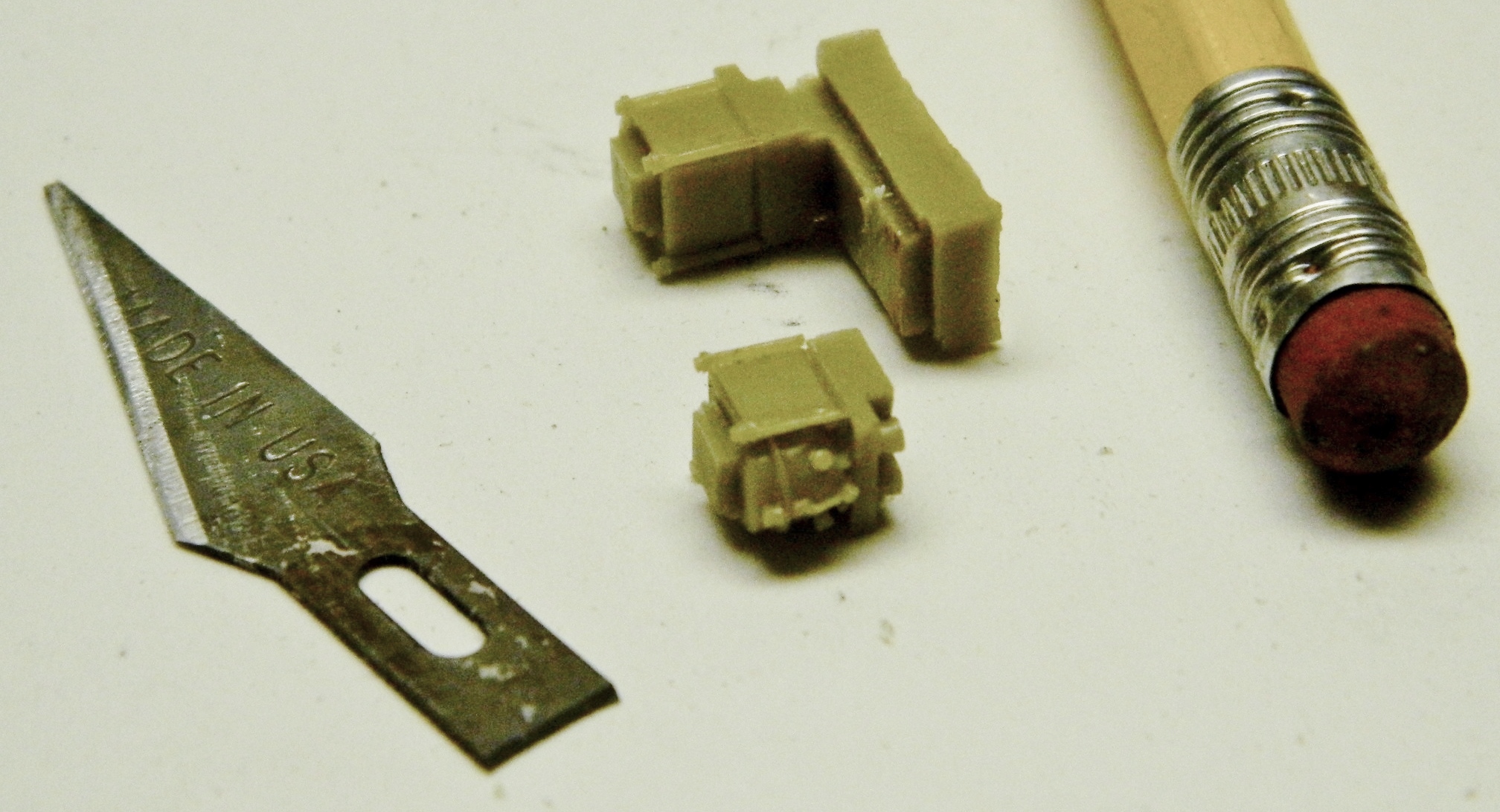

When dry-fitting pieces together, I saw that the starter motor didn’t quite reach the bell housing, so I added a piece of sprue from my bits-box using superglue:

While the glue was setting, I saw/filed/sanded the exhaust manifolds free:

Then I attached the modified sump (the added piece, dark-colored on the lower right, will get trimmed later):
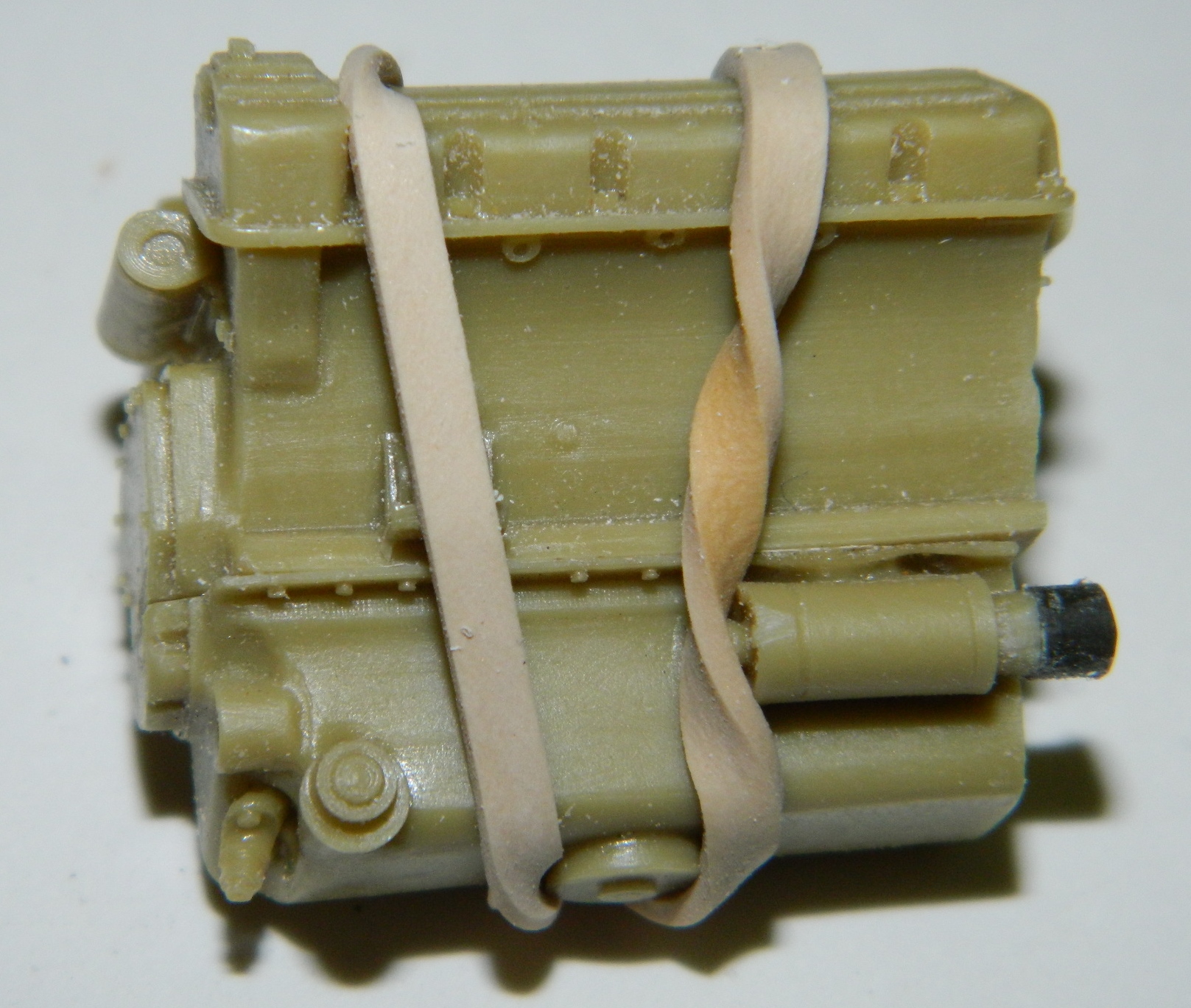
Dry fitting showed me that I’d trimmed one carb too closely so I had to add resin back (the tweezers are sitting on a lazy susan which makes aligning and gluing so much easier):


Fitted and trimmed the added plastic to discover that it doesn’t line up as it should. Short of remaking the entire starter, I realized that few would even see it much less realize it was “off” so I left it and glued the bell housing/clutch on:
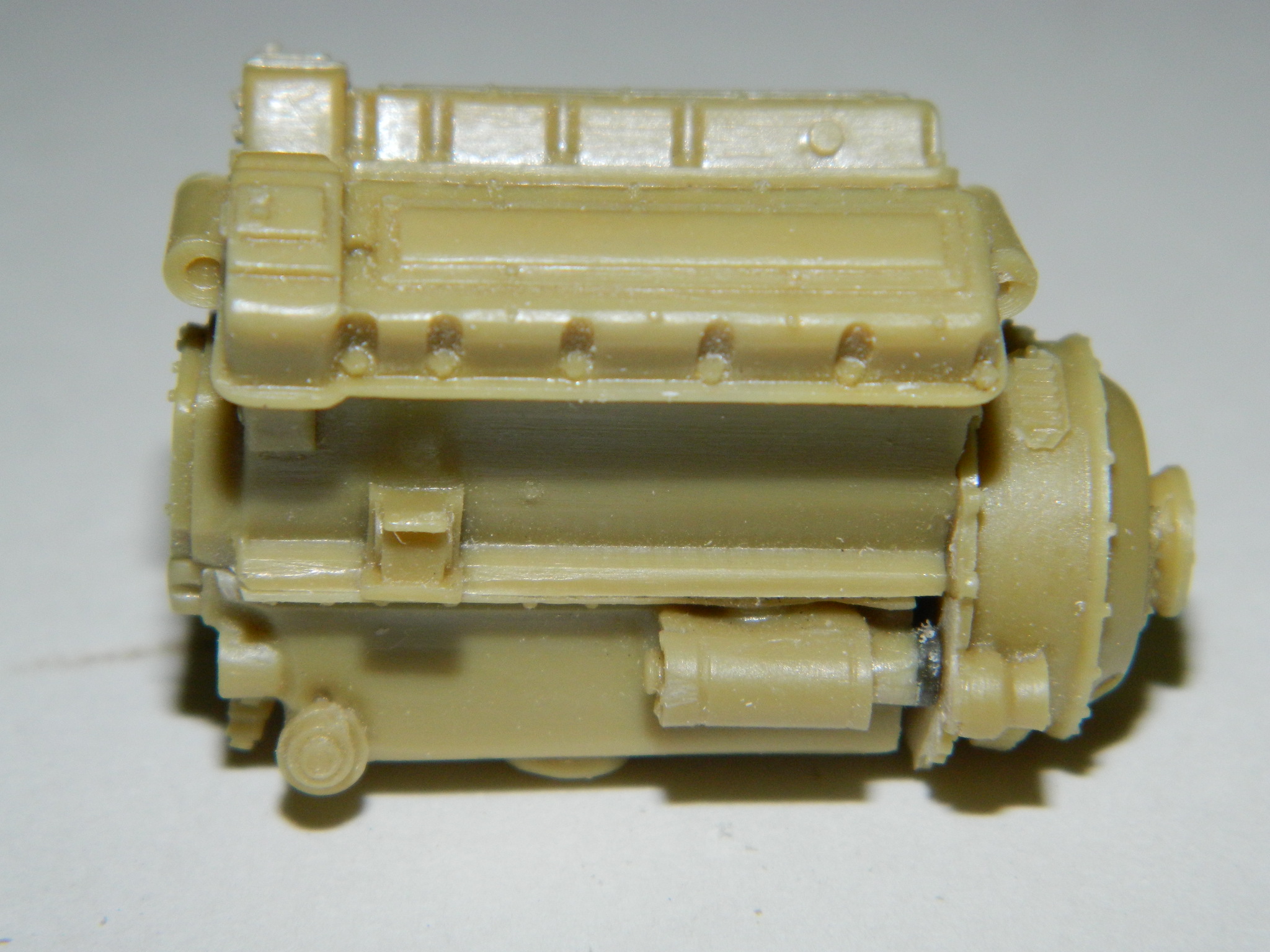
Then I saw that the water pump had a major part of the cooling system that did not actually reach the engine, so I took some sprue, heated it over a candle, and once it was…well…plastic, I pulled gently trusting my Mk I Eyecrometer to get the diameter close (larger is easier to fix than smaller).
Good ol’ Mk I Eyecrometer nailed it on the first pull, so that was glued and set aside to cure:

Trimmed the added resin on the carb with a razor saw:


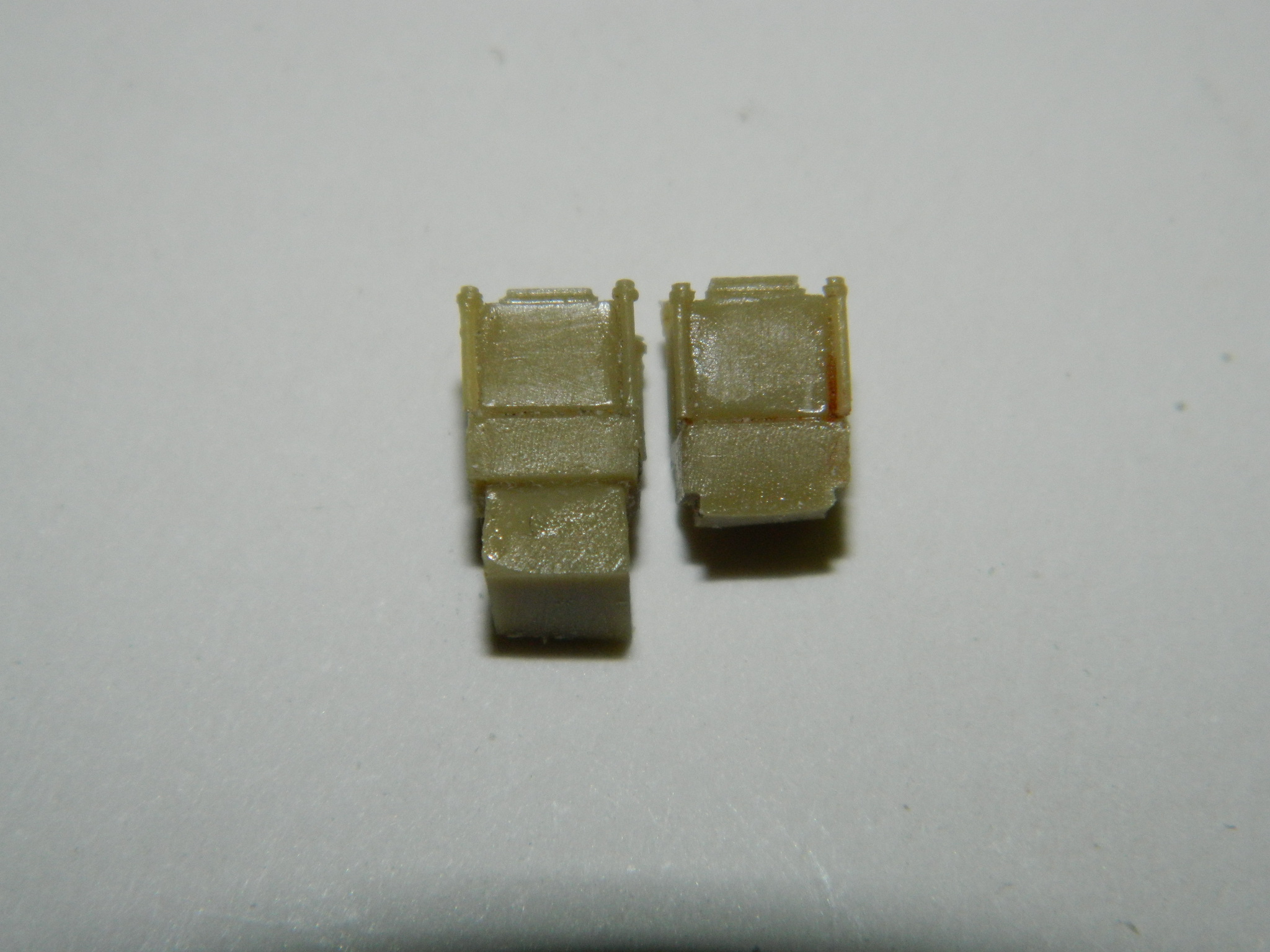
Then I added what looks like an air cleaner (it’s not, those are elsewhere in the engine bay, it’s actually a plenum chamber) and carbs to the engine as well as the modified water pump (later I had to snap the plenum off as I put it on backwards, lest you think this is one unbroken chain from a pile of parts to Modeling Glory):

In looking at reference photos, there is a fuel pump on top of the engine that the AM set didn’t provide. In the above photo, the round thing under the plenum is the oil filler; the fuel pump is just as obvious, so I decided I’d need to build one. I spent a few minutes whining that I’d sold my Unimat lathe because it was SO much more precise than the lathe I have now…and then I realized something. This is plastic, not metal. I didn’t need a lathe; I needed something that I could clamp a piece of sprue into and spin slowly (otherwise the plastic melts). Enter the variable speed drill:


With the basic shape of the pump done, it was time to add the details. I added the shafts of the bolts using lead wool (just like steel wool only lead…how odd…available from plumbing supply and A LOT easier to work than copper…gah…or plastic…annoying). Then I glued a piece of plastic to the side where the fuel line from the pump goes to the carbs. I tried a couple of ways of adding the fuel line and it became quite evident that butt-gluing (don’t go there…like you just did) wouldn’t work (not enough surface area for a secure bond) (you’re still there…aren’t you) so I drilled it out and will use a length of solder of .032 diameter as the fuel line because it’s easy to bend, maintains that bend, and is structurally sound:

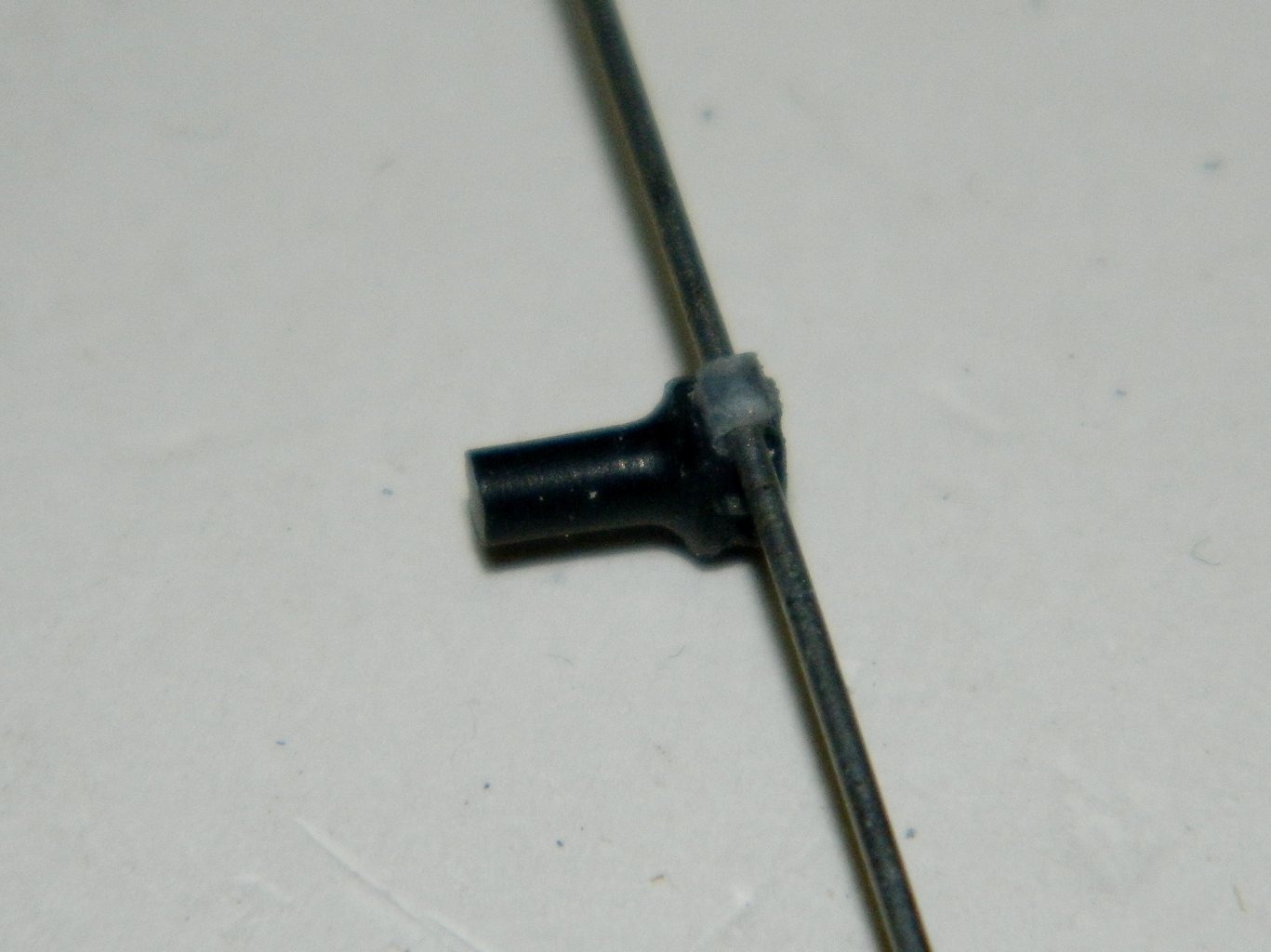
To replicate the bolts on top, I drilled the locating holes slightly, shaved sprue into an octagonal form (like the bolt heads I’m trying to replicate), and used the tweezers on stands to align and glue. I’ll trim them to size later (later on I would use Grandt Line styrene bolts for something like this but at the time I didn’t have them):
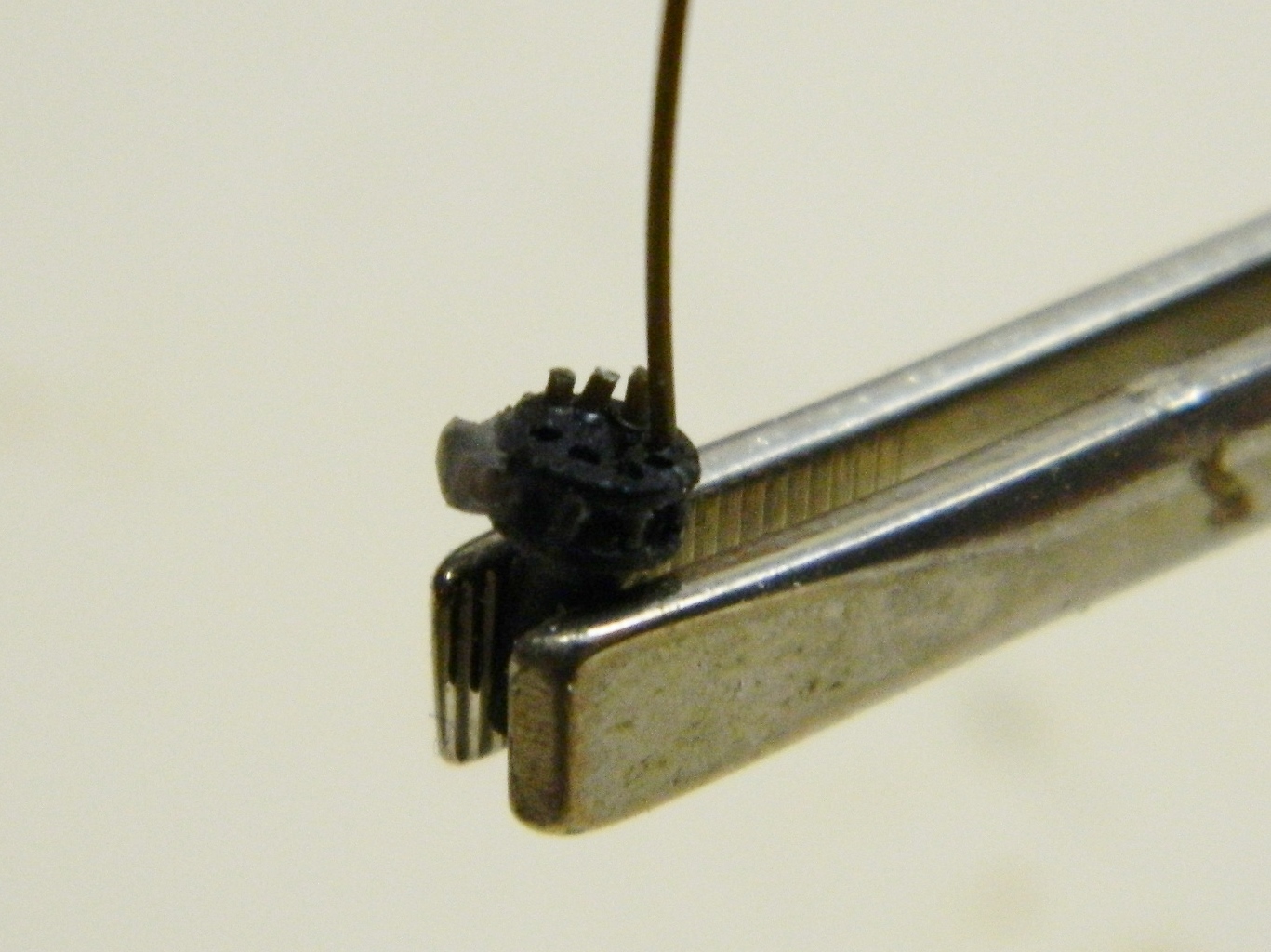
I wanted to add the magneto assembly next. I discovered that the back half of them weren’t modeled and since they would be easily seen needed to be. I used some of the cut off pouring stubs so make things easier to see:

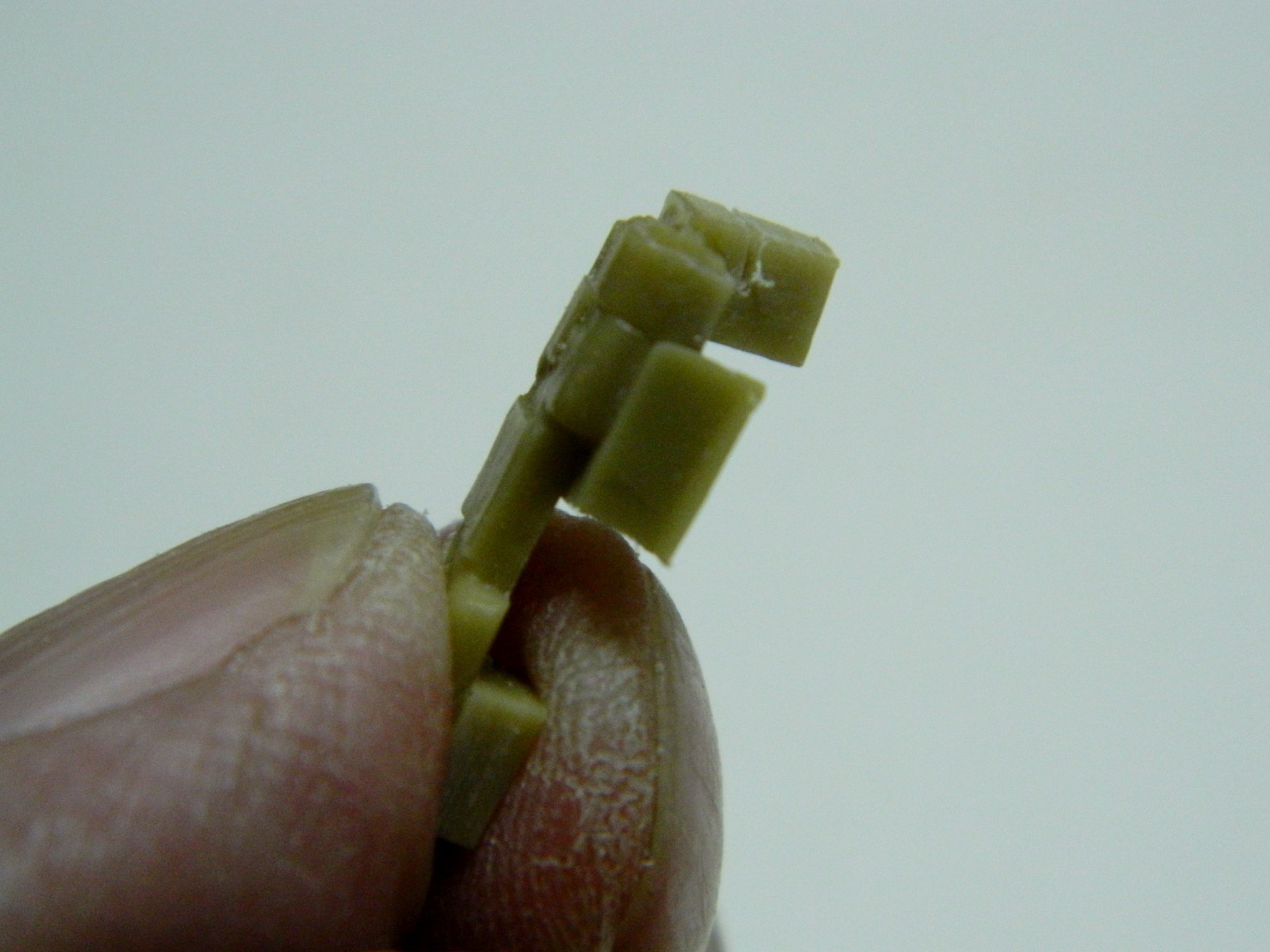
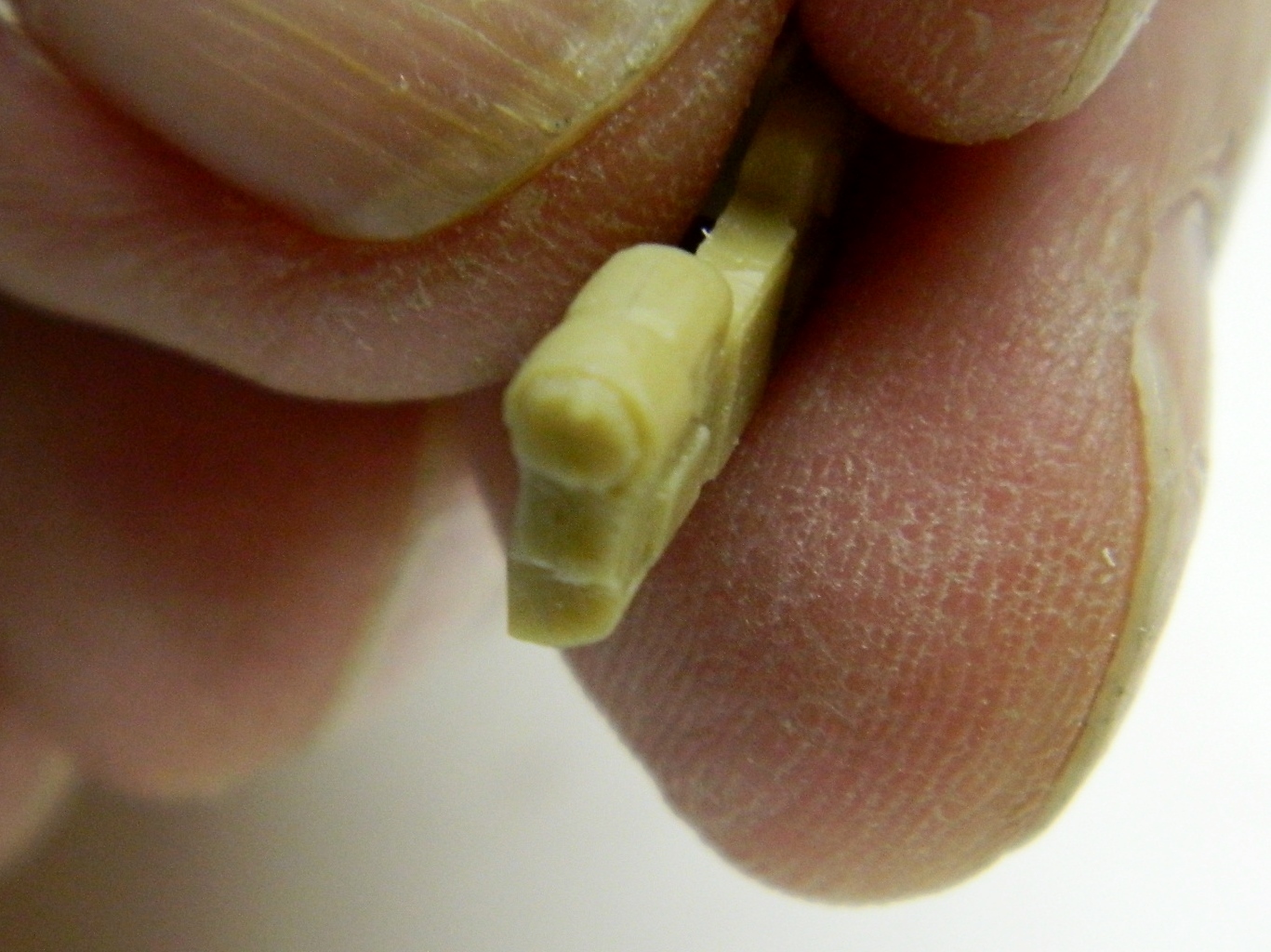
Since that worked well, I did the other side the same way.
 Scale Modeling Mania